


Customs Clearance Step by Step: The Complete Process
- Verified & Reviewed · Last updated February 2026
Customs clearance step by step helps international shipments move smoothly across borders. The customs clearance process is led by customs authorities to review shipping documents, enforce customs regulations, assess duties and taxes, and release cargo to its final destination.
This guide explains import customs clearance in a simple workflow, highlights the key documents, and shows how customs brokers help avoid customs clearance delays for more predictable delivery.
Process / Workflow
Key Documents
Duties & Taxes
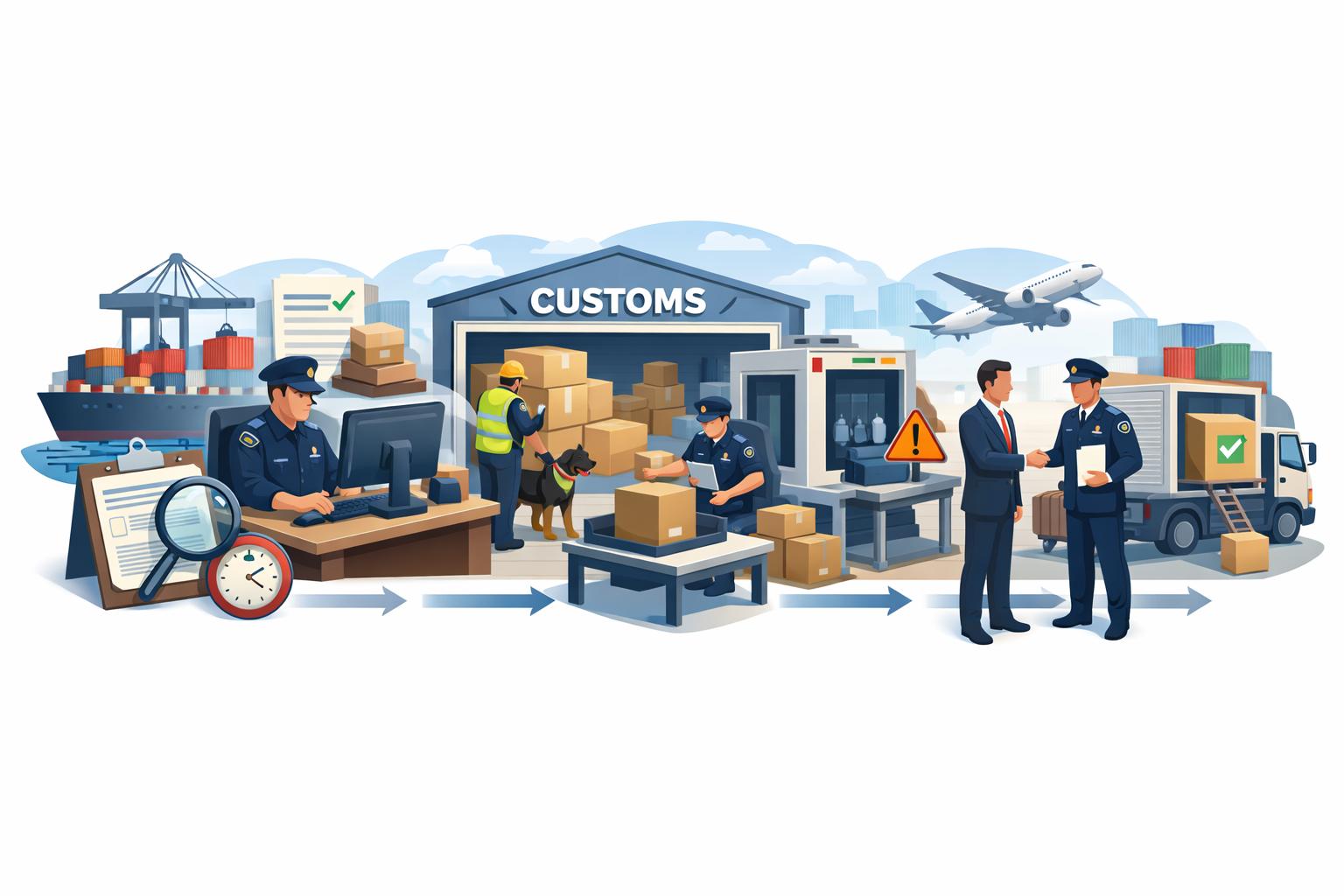
- Experienced China-based logistics specialists
10,000+ international shipments handled Global sea, air & DDP shipping solutions 24/7 shipment tracking & customer support
Table of Contents
Customs Clearance Step by Step Overview
What customs clearance is
Customs clearance is the legal approval for goods entering or leaving a country. For international shipments, customs officials confirm what the shipment is, whether it complies with customs regulations, and what duties and taxes apply. When a shipment is approved, it can clear customs and move into the domestic delivery network.
Why customs authorities run checks
Customs authorities enforce international trade laws, protect domestic industries, and prevent prohibited or restricted goods from crossing international borders. In many product categories, another government agency may also require permits, testing, or labeling approvals. This is why the customs clearance process is not only about taxes. It is also about compliance and risk screening.
The three questions that decide speed
Most customs clearance outcomes depend on three core checks:
Classification: what the product is and which HS codes apply for customs duties
Valuation: whether the declared value is reasonable and supported by the commercial invoice and payment terms
Compliance: whether the shipment follows import regulations, customs procedures, and trade rules
If you can answer these cleanly with shipping documents and supporting evidence, customs clearance is usually faster and more predictable.
Who Does What: Customs Brokers, Customs Brokerage, and Freight Forwarder
If you want a smooth customs clearance process, start by aligning ownership. This quick role map shows who controls what.
| Role | Main job | Key document / action | Biggest delay risk |
|---|---|---|---|
| Shipper | Provide accurate shipment details | Commercial invoice + packing list | Wrong description or declared value |
| Customs brokers | File and manage customs declaration | Customs declaration form data | HS code errors or missing data |
| Freight forwarder | Coordinate the full process | Bill of lading / air waybill alignment | Document mismatch across parties |
| Importer | Pay and approve charges | Duty payment for duties and taxes | Late payment blocks release |
Customs brokers
Customs brokers handle the entry filing. They submit the customs declaration, keep the customs declaration form data consistent with your shipping documents, and communicate with customs authorities when customs officials request clarification.
Customs brokerage firm vs independent customs broker
A customs brokerage firm is a strong fit for repeat international shipments where you need a standardized process and steady execution. An independent customs broker is often better for specialized goods or complex import regulations where commodity expertise can prevent customs clearance delays.
Freight forwarder
A freight forwarder coordinates the entire shipping process and keeps the handoffs clean. They align the commercial invoice, packing list, and bill of lading or air waybill, and they push updates quickly so the clearance process stays on track.
The one control that matters most
Keep one source of truth so product description, quantity, weight, and declared value stay consistent across all documents.
Customs Clearance Step by Step: The 10-Step Workflow
Step 1: Confirm importer details in the importing country
Confirm importer of record, tax ID, and broker authorization needed for import customs clearance. Also confirm whether the consignee can legally act as importer. If the importer cannot be validated, the shipment may be held even when all shipping documents look correct.
Operator checklist
Importer legal name and address match the destination requirements
Registration number is active and correct
Broker authorization is signed and on file
Import regulations for the commodity are understood
Step 2: Set responsibility using international commercial terms
Delivered duty paid usually means the seller handles customs clearance and pays duties and taxes. Deliver duty unpaid usually means the buyer pays import duties and clears customs at destination.
Operational reality
If the buyer is not prepared to pay import duties quickly, deliver duty unpaid often triggers customs clearance delays
If the seller chooses delivered duty paid without local capability, the clearance process can stall due to compliance gaps
Step 3: Appoint customs brokers for the lane and commodity
Pick customs brokers who understand the importing country rules, local systems, and the typical questions from customs authorities. For first-time lanes, ask your broker what causes most customs clearance delays for this commodity.
What to verify with customs brokers
Required documents for the commodity
Common compliance triggers under import regulations
Data format expectations for the customs declaration form
Duty payment method and timing
Step 4: Prepare necessary documentation and key documents early
Key documents should be ready before shipping internationally: commercial invoice, packing list, bill of lading or air waybill, and supporting product information.
Best practice
Lock final versions before filing. “Small edits” after filing often create mismatches across systems and lead to clearance process questions.
Use clear product descriptions, consistent units, and a declared value that can be supported. A commercial invoice must match the packing list and transport document.
Commercial invoice essentials
Accurate shipper and consignee details
Specific product description and country of origin
Quantity, unit price, currency, totals
Declared value that matches your sales terms
Step 6: Create a packing list that matches the cargo
The packing list must reflect packaging details, carton count, net and gross weight, and dimensions. This supports accurate and complete documentation.
Packing list controls
Carton count equals physical cartons
Weight totals reconcile with carrier record
Item quantities reconcile with the commercial invoice
Any mixed cartons are identified clearly
Step 7: Classify with HS codes and confirm duty rates
Correct HS codes drive customs duties, duty rates, and whether import regulations require permits. Good classification reduces clearance process disputes.
How to reduce HS code risk
Classify at SKU level, not at “product family” level
Keep a short HS code rationale: function, material, key features
Use consistent HS codes across repeat international shipments
Update HS codes when product specs change
Step 8: Submit the customs declaration and entry data
The customs declaration should match the commercial invoice, packing list, and bill of lading. Clean customs documentation reduces back-and-forth.
Data fields that must align
Consignee and importer identity
HS codes and item descriptions
Declared value and currency
Package count and weights
Transport references from the bill of lading or air waybill
Step 9: Respond fast to customs procedures and inspection triggers
Customs authorities may run risk checks with border protection. Customs officials may request proof, clarifications, or inspection. Fast responses reduce customs clearance delays.
A “query kit” that saves time
Product photos and a one-page spec sheet
Materials and use description
HS code rationale supporting customs duties
Declared value support documents
Any certificates required by import regulations
Step 10: Complete duty payment and release to the final destination
Settle duties and taxes, customs fees, and any taxes and duties such as VAT or GST. After duty payment, the shipment can clear customs and move to the final destination.
Payment discipline
Late duty payment is one of the most expensive causes of customs clearance delays because storage and handling charges can grow daily. Set an internal owner and approval deadline for paying import duties.
Core shipping documents
Commercial invoice
Packing list
Bill of lading for ocean freight
Air waybill for air freight
Shipping label data for courier and express
Often required under import regulations
Certificate of origin, especially when trade agreements apply
Import permits or licenses
Inspection certificates or test reports for regulated goods
Document consistency rules
Shipping documents should match on shipper, consignee, quantities, weights, and product descriptions. Inconsistency is a top cause of customs clearance delays.
Common document mistakes that slow the clearance process
Product description is too generic, causing classification questions
Declared value does not match totals or payment terms
Packing list weights do not reconcile with transport record
Importer name differs across the commercial invoice and customs declaration form
Missing certificates for regulated categories under import regulations
A simple document quality control routine
Before filing, run a quick cross-check:
Invoice line items equal packing list line items
HS codes map correctly to each item
Bill of lading or air waybill consignee matches importer data
Shipping label data matches invoice totals for courier shipments
Duties and Taxes: Customs Duties, Import Duties, and Landed Cost
How customs duties are assessed
Customs duties are determined by HS codes, declared value, origin, and duty rates in the importing country. If the classification or declared value is questioned, customs duties can be reassessed and cause customs clearance delays.
Taxes and duties that may apply
Many destinations charge taxes and duties such as VAT or GST. These are separate from customs duties but still block release if unpaid.
What to include in a landed cost model
Include customs duties, import duties, taxes and duties, customs fees, and import fees. This improves pricing accuracy and prevents payment delays.
Why duty payment timing matters
Even if the customs clearance process is approved, shipments can remain on hold until import duties are paid. Duty payment timing should be treated as a critical path item in the clearance process, not an afterthought.
What customs fees and import fees often cover
System filing and processing fees
Terminal documentation charges
Brokerage service charges
Warehouse handling fees for consolidated cargo
Knowing these cost items helps you avoid surprises and keep customer satisfaction high.

How to Avoid Customs Clearance Delays in Practice
The most common causes of customs clearance delays
Data mismatches across shipping documents
Incorrect HS codes leading to reassessment of customs duties
Weak product descriptions that trigger questions
Missing permits required under import regulations
Slow replies to customs authorities during review
Late duty payment due to unclear responsibility
A practical prevention system
To avoid customs clearance delays, implement these controls:
Pre-departure document check for accurate and complete documentation
Standard SKU description library so product language stays consistent
HS code library linked to duty rates and import regulations by destination
Single response channel so customs brokers receive answers fast
Duty payment readiness with a clear owner and approval timeline
What “smooth customs clearance process” looks like
A smooth customs clearance process is not just “no inspection.” It is predictable performance: clear customs with fewer questions, minimal rework, fast duty payment, and timely release to the final destination.
Metrics operators should track
Tracking a few metrics makes the customs clearance process easier to improve:
Time from arrival to release
Number of customs authorities queries per shipment
Percentage of shipments requiring document correction
Time from assessment to duty payment
Total customs fees and import fees per shipment
When these metrics improve, the clearance process becomes faster and more stable.
Compliance Checks: Customs Process, Border Protection, and Trade Rules
What compliance checks include
The customs process includes more than tax collection. Customs authorities and border protection enforce safety rules, restricted goods controls, licensing requirements, and product standards. In regulated categories, another government agency may require permits or certification proof before import customs clearance can complete.
Typical compliance triggers
regulated electronics, batteries, chemicals, medical items
restricted or controlled goods categories
labeling, safety, or certification requirements
origin claims linked to trade agreements
inconsistent customs documentation or unclear product scope
How to respond when customs officials ask questions
When customs officials request clarification, reply with evidence that makes verification easy:
product specs, photos, and a simple use description
material composition and model numbers
HS code rationale supporting customs duties assessment
declared value support documents
This protects the duties and taxes assessment and reduces the chance of reassessment for import duties.
A simple compliance routine for repeat shipments
check international trade laws and relevant rules before shipping a new commodity
confirm whether international trade regulations require permits, testing, or labeling
document the compliance path so customs brokers can answer questions quickly
This routine helps ensure compliance and supports smooth international trade.
Practical compliance habits that reduce delays
Use consistent, verifiable origin statements
Keep certificate files organized and ready for customs authorities
Avoid last-minute product description changes that conflict with HS codes
Confirm restricted item rules early to prevent a shipment from being blocked at international borders
Freight Forwarder and Tonlexing: How We Support a Smooth Customs Clearance Process
Tonlexing’s role
Tonlexing works as a freight forwarder that coordinates the customs clearance process end to end. Beyond booking, we align shipping documents, connect customs brokers with shippers and consignees, and support fast responses to customs authorities so international shipments can clear customs with fewer customs clearance delays.
Document control: verify the commercial invoice, packing list, bill of lading, and shipping label match before filing
Broker coordination: work with customs brokers and a customs brokerage firm when needed to submit clean entries
Compliance checks: flag import regulations, permits, and government agency requirements early
Duty payment readiness: keep responsibilities clear so duties and taxes and taxes and duties are paid without delay
What this improves
When shipment data is consistent and customs documentation is clean, the clearance process is more repeatable. That means fewer questions from customs officials, less risk of customs clearance delays, and better predictability to the final destination.
How Tonlexing keeps the clearance process operational
For repeat international shipments, Tonlexing helps build a working playbook:
Standard commercial invoice templates for each commodity
SKU-based HS code mapping with duty rates and notes
A compliance checklist tied to import regulations
A shared timeline for filing, review, and duty payment
This reduces rework and helps ensure smooth customs clearance across lanes.
Frequently Asked Questions
What are the steps in customs clearance
Prepare key documents, file the customs declaration, respond to review by customs authorities, complete duty payment for duties and taxes, then clear customs for delivery.
What documents are needed for customs clearance
Commercial invoice, packing list, bill of lading or air waybill, and customs declaration data. Some imported goods also need permits under import regulations.
How long does customs clearance take
Customs clearance takes from hours to several days depending on inspection selection and data quality. Clean shipping documents and fast duty payment reduce delays.
Can I clear customs without customs brokers
In some cases, yes. Many businesses prefer customs brokers or a customs brokerage firm to reduce compliance risk and manage the clearance process efficiently.
How do I ensure smooth customs clearance for repeat shipments
Build a standard process: consistent shipping documents, stable HS codes, a document quality control routine, and clear duty payment ownership. With this structure, customs clearance step by step becomes repeatable and the customs clearance process becomes more predictable.
Related Logistics Guides
Useful freight, customs and importing resources related to this shipping guide.
Related Guide
How to Clear Customs When Importing from China (2025 Guide)
Introduction to Customs Clearance How to clear customs when importing from China is one of the most critical steps in international trade. Whethe...
Read guide →
Related Guide
Understanding the Customs Clearance Process and Its Costs
Navigating the customs clearance process is a critical step in international shipping. Whether you’re importing goods from China to the USA, EU...
Read guide →
Related Guide
Customs Broker vs Freight Forwarder
Customs Broker vs Freight Forwarder Verified & Reviewed · Last updated April 2026 Customs broker vs freight forwarder is a common question for im...
Read guide →
Useful Resource
Customs Inspection Guide
Customs Inspection Guide: Holds, Inspection Process, and Smooth Clearance Verified & Reviewed · Last updated January 2026 Customs inspections are...
Learn more → Useful Resource Documents Required to Import from China (2025 Guide)Importing goods from China can be highly profitable—but only when you understand the necessary documents and import requirements. Whether you’re...
Learn more →