China–Singapore Shipping Guide · Updated August 2026

Shipping from China to Singapore

Compare sea freight, air freight, express and door-to-door shipping from China to Singapore. Review shipping costs, transit times, major routes, Singapore customs clearance and GST requirements before booking.

  • Sea Freight
  • Air Freight
  • Express
  • Door to Door

Freight quotes depend on cargo details, origin, service scope and current carrier capacity.

Sea and air shipping from China to Singapore
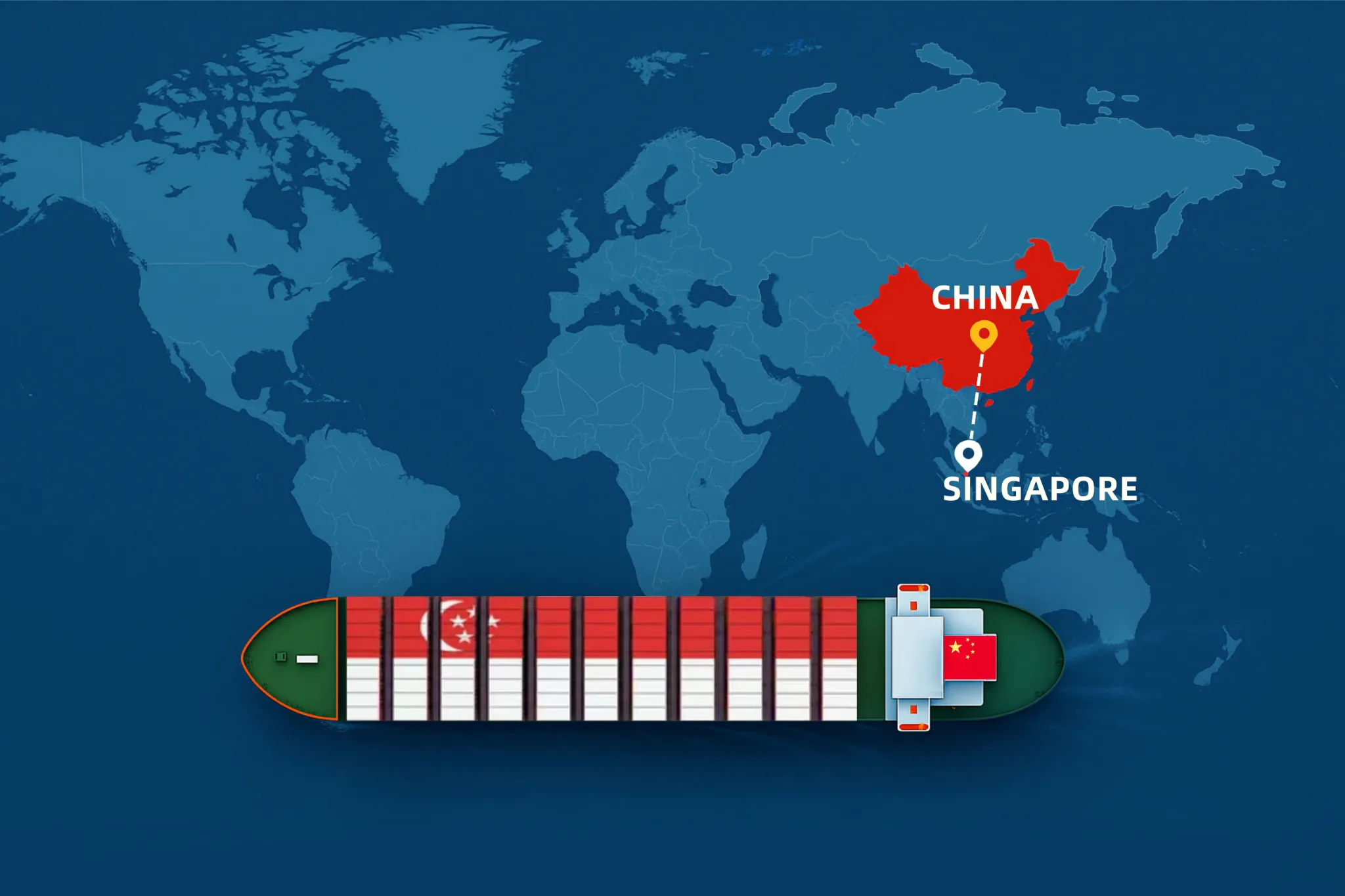
CHINA → SINGAPORE
Key Singapore Gateways Port of Singapore · Changi Airport (SIN)
FCL & LCL sea freight options
Air & express for urgent cargo
Customs & final delivery support in Singapore

Quick Shipping Overview

Compare Shipping Methods from China to Singapore

The right shipping option depends on cargo size, urgency, budget and delivery scope. Compare sea freight, air freight, express shipping and door-to-door delivery before choosing a service for your shipment to Singapore.

Sea Freight

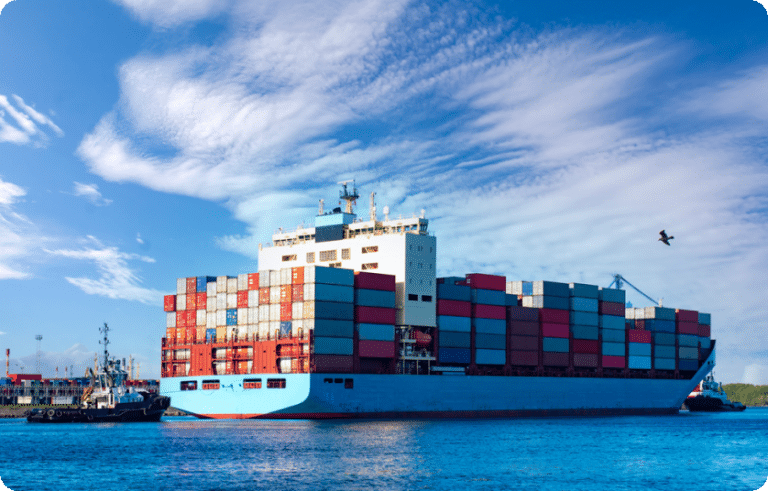
Sea freight from China to Singapore is generally the most cost-effective option for larger commercial shipments. Both FCL and LCL services are available from major Chinese ports.

Usually best for Pallets, machinery, wholesale cargo and larger shipments
Air Freight

Air freight from China to Singapore offers faster transportation for urgent commercial cargo and higher-value goods, with arrival through Singapore Changi Airport.

Usually best for Urgent replenishment and higher-value commercial cargo

Express Shipping

Express courier services are suitable for samples, documents and small parcels when fast delivery and simple shipment handling are more important than achieving the lowest freight cost.

Usually best for Samples, documents and small urgent parcels

Door-to-Door Shipping

Door-to-door shipping combines pickup in China, international freight, customs coordination and final delivery to the consignee in Singapore under the agreed service scope.

Usually best for Importers wanting one coordinated logistics service
Sea Lower unit cost Better for larger cargo
Air Faster transport Better for urgent cargo
D2D Managed delivery Pickup through final delivery

The best shipping method depends on cargo dimensions, actual or chargeable weight, shipment volume, delivery deadline and the services required at origin and destination.

Freight Cost Guide

Shipping Costs from China to Singapore

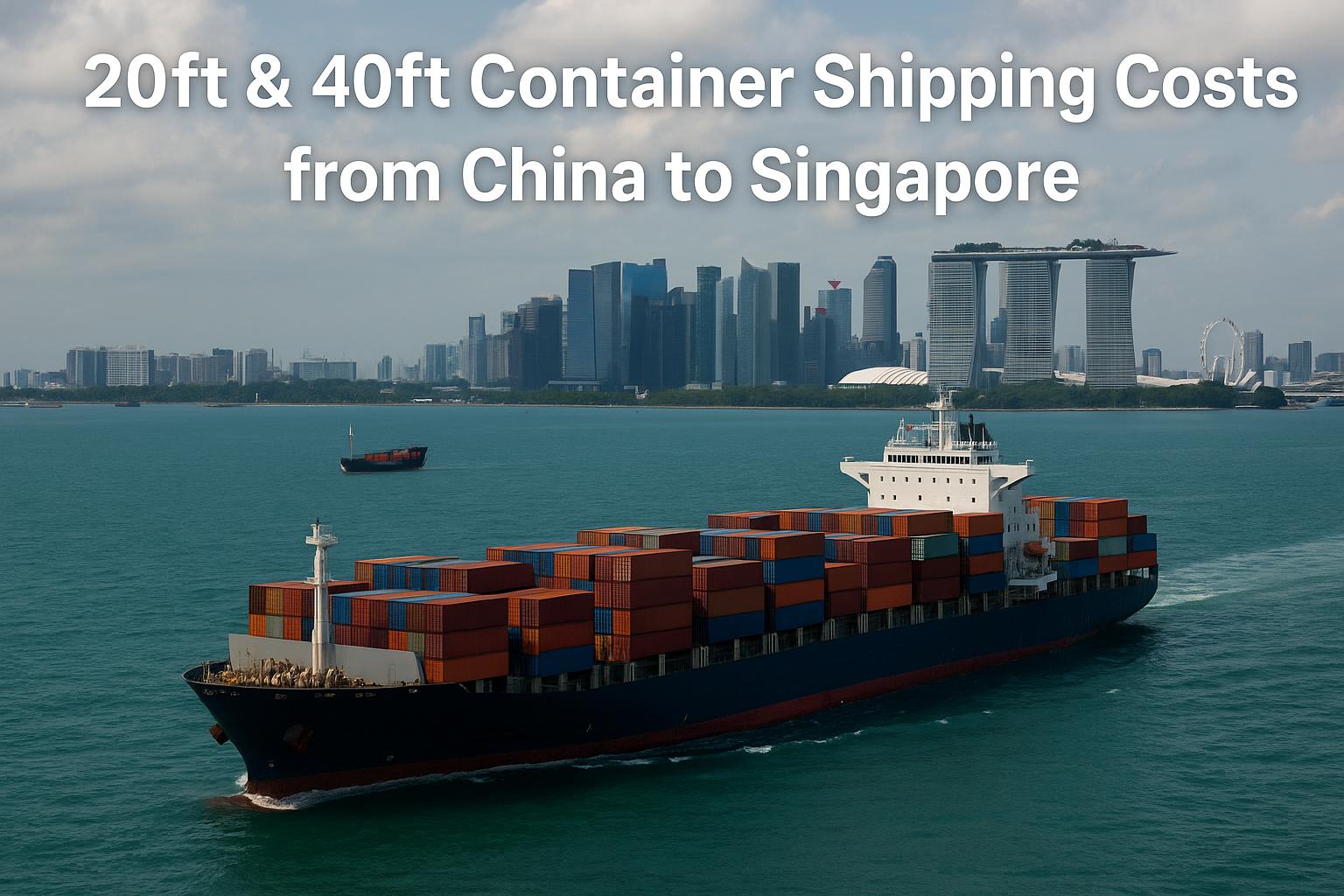
Shipping costs from China to Singapore vary by transport method, cargo volume or weight, origin in China and the required delivery service. The shipping rates from China to Singapore below are planning references for comparing LCL, FCL, air freight, express and door-to-door options.

Shipping Method Rate Basis Reference Rate Best For
LCL Sea Freight Per CBM US$5 / CBM Smaller commercial shipments that do not require a full container
20GP FCL Per container US$240–280 / container Medium-volume containerized cargo
40GP / 40HQ FCL Per container US$400–450 / container Larger or higher-volume commercial shipments
Air Freight Per kg of chargeable weight US$1.6–2.0 / kg Urgent and higher-value commercial cargo
Express Shipping Per kg US$2.0–2.4 / kg Samples, documents and small urgent parcels
General Cargo Door-to-Door Minimum 1 CBM US$450 / CBM Singapore import GST not included General commercial cargo requiring delivery in Singapore
Sensitive Goods Door-to-Door Minimum 1 CBM US$600 / CBM Singapore import GST not included Sensitive cargo subject to acceptance and additional handling requirements

These rates are planning references rather than guaranteed quotations. Actual shipping rates may change with cargo type, dimensions, chargeable weight, departure location, carrier capacity, customs requirements and final delivery address. Door-to-door reference rates above exclude Singapore import GST.

What Is Included in a Shipping Quote?

A freight quote may include the main international transportation charge together with selected origin and destination services. The exact scope depends on whether the shipment is booked as port-to-port, airport-to-airport or door-to-door.

Importers should confirm whether pickup, export handling, destination charges, Singapore customs clearance, GST and final delivery are included or charged separately.

01

Cargo Volume & Weight

LCL sea freight is commonly quoted per CBM, FCL by container, and air freight by chargeable weight.

02

Origin in China

Factory location, pickup distance and the selected Chinese port or airport affect the total logistics cost.

03

Cargo Type

Sensitive goods may require additional handling, documentation or carrier approval before shipment.

04

Delivery Scope

Port-to-port freight covers fewer logistics stages than a door-to-door service with customs coordination and final delivery in Singapore.

Need an Exact China–Singapore Freight Rate?

Send the product name, package count, weight, dimensions, pickup city in China and delivery location in Singapore for a current quotation.

Request a Quote

Transit Time Guide

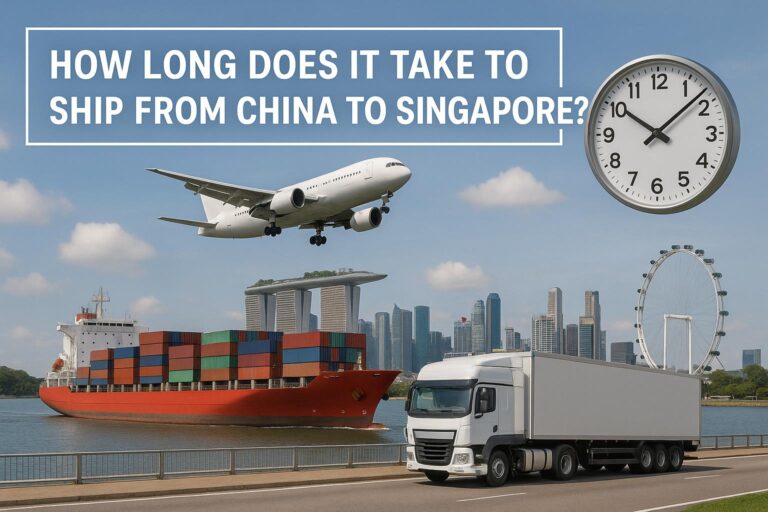
How Long Does Shipping from China to Singapore Take?

Shipping time from China to Singapore varies by transport method and origin. FCL sea freight is generally faster than LCL because consolidated cargo requires additional warehouse handling, while air freight and express services provide the shortest transit times.

Typical China–Singapore Transit Times Planning Estimates
Shipping Method Estimated Transit Time Basis Usually Suitable For
FCL Sea Freight Full container load
5–12 days Port to port Larger commercial and containerized shipments
LCL Sea Freight Consolidated cargo
10–15 days Main freight movement Smaller commercial shipments below a full container
Air Freight Commercial air cargo
1–3 days Airport to airport Urgent and higher-value commercial cargo
Express Shipping Courier service
2–5 days Typical delivery Samples, documents and small urgent parcels
These are planning estimates rather than guaranteed schedules. Pickup in China, LCL consolidation, export handling, customs clearance in Singapore and final delivery can add additional time.

Main Transit Time vs. Total Delivery Time

Port-to-port or airport-to-airport transit covers only the international transportation stage. It does not represent the complete time from the supplier in China to the final delivery address in Singapore.

A complete shipment may also require cargo pickup, warehouse handling, booking, export procedures, customs clearance and local delivery.

Origin in China South China routes may differ from Shanghai, Ningbo or northern Chinese ports.
FCL or LCL LCL requires cargo consolidation and deconsolidation, which usually adds handling time.
Carrier Schedule Vessel departures, flight availability and schedule changes affect the actual transit time.
Customs & Delivery Permit preparation, customs review and final delivery affect the total shipment lead time.

Ocean Shipping

Sea Freight from China to Singapore

Sea freight is a practical and cost-effective shipping method for larger commercial cargo moving from China to Singapore. Importers can choose FCL shipping for full-container shipments or LCL shipping when the cargo does not require an entire container.

FCL Shipping

Full Container Load gives one shipment use of the container and is commonly selected for larger cargo volumes or shipments that benefit from dedicated container space.

  • 20GP, 40GP and 40HQ container options
  • Suitable for larger or regular commercial shipments
  • Fewer consolidation and deconsolidation stages

LCL Shipping

Less than Container Load allows smaller shipments to share container space with other cargo. Charges are normally based on cargo volume or the applicable weight-and-measurement basis.

  • Suitable when a full container is not required
  • Cargo is consolidated before international shipping
  • Additional handling can make LCL slower than FCL

Main Sea Freight Gateways from China to Singapore

The most suitable departure port usually depends on the supplier location, inland pickup cost, sailing schedule and available container space.

Major Departure Ports in China
Shenzhen South China / Guangdong
Guangzhou Pearl River Delta
Shanghai East China
Ningbo-Zhoushan Zhejiang / East China
Qingdao Shandong / North China
Destination Port of Singapore

Main maritime gateway for containerized cargo arriving in Singapore.

When Is Sea Shipping the Better Option?

Sea shipping is usually more suitable when cargo volume is relatively large and the shipment is not extremely time-sensitive. The final choice between FCL and LCL should consider shipment volume, handling requirements, freight cost and the required delivery date.

Larger Cargo Better suited to pallets, machinery and wholesale cargo.
Flexible Volume Choose LCL for smaller volumes or FCL as cargo volume grows.
Container Options Standard 20GP, 40GP and 40HQ equipment can be selected according to cargo requirements.
Route Planning The departure port should be selected together with pickup cost and current sailing availability.

Fast Shipping Options

Air Freight and Express Shipping from China to Singapore

Air freight is suitable for time-sensitive commercial cargo, while express shipping is usually more convenient for samples, documents and smaller urgent parcels. Both options provide much faster transportation than sea freight.

Air Freight

Commercial air cargo
Fast commercial freight

Air freight from China to Singapore is commonly used for urgent replenishment, electronics, equipment, spare parts and other higher-value or time-sensitive goods. Cargo normally arrives through Singapore Changi Airport.

Typical Transit 1–3 days

Airport-to-airport planning range.

Charging Basis Chargeable weight

The higher of actual and volumetric weight.

View air freight rates →

Express Shipping

International courier
Small + urgent

Express services are generally the simplest option for samples, documents, replacement parts and small parcels. Courier networks combine pickup, international transport, tracking and final delivery within one service.

Typical Delivery 2–5 days

Subject to shipment acceptance and customs processing.

Charging Basis Actual or volumetric weight

Oversize or special-handling charges may also apply.

View express rates →

Main Air Freight Gateways from China to Singapore

The departure airport should be selected according to the supplier location, cargo requirements, available flight capacity and total origin handling cost.

Common Origin Airports
Shanghai (PVG) East China
Guangzhou (CAN) South China
Shenzhen (SZX) Pearl River Delta
Beijing (PEK) North China
Hong Kong (HKG) International cargo hub
Main Arrival Airport Changi Airport (SIN)

Singapore's primary international air cargo gateway for shipments arriving from China.

How Air Freight Chargeable Weight Works

Air freight and express shipping may be charged using either actual weight or volumetric weight. The chargeable weight is generally based on whichever calculation produces the higher billable weight, so lightweight but bulky cargo can cost more than its scale weight suggests.

Actual Weight The physical gross weight measured on a scale.
Volumetric Weight Calculated from the dimensions and space occupied by the cargo.
Cargo Dimensions Accurate carton dimensions are needed before confirming the rate.
Special Cargo Batteries and other sensitive goods should be declared before booking.

Singapore Import Compliance

Singapore Customs Clearance, GST and Import Permits

Imports into Singapore are regulated by Singapore Customs. Commercial importers should confirm the importer of record, HS classification, import permit, GST treatment and any product-specific approvals before the goods arrive.

Import GST 9%

Applied to the taxable import value unless a specific relief, exemption or approved GST scheme applies.

Import Declaration TradeNet

Customs import permit applications are generally submitted electronically through TradeNet.

Importer Setup UEN + Customs Account

The importing entity normally needs a UEN and an activated Singapore Customs Account.

Most Products Non-Dutiable

Most ordinary goods are not subject to customs duty, although GST and permit requirements can still apply.

How Import Clearance Works

Prepare before cargo arrives
  1. Confirm the Importer

    Identify the Singapore importing entity and confirm that the required UEN and Customs Account are in place before the import permit is submitted.

  2. Classify the Goods

    Confirm the product description, HS code, country of origin and whether the cargo is controlled, restricted or subject to a specific authority approval.

  3. Apply Through TradeNet

    The importer or appointed Declaring Agent submits the Customs Import Permit application through TradeNet using the shipment and valuation details.

  4. Pay GST and Duty

    Singapore Customs assesses import GST and any applicable customs duty. Controlled goods may also require approval from the relevant Competent Authority.

Singapore Import GST

GST Rate: 9%

Import GST is generally calculated using the customs value of the goods together with freight, insurance, applicable customs duty and other relevant incidental charges.

Simplified planning basis CIF value + applicable duty + relevant incidental charges → taxable value for GST

Which Goods Are Subject to Customs Duty?

Singapore is generally a low-duty import market. Customs duty is concentrated on specific categories, while other imported goods are normally non-dutiable and subject to GST instead.

Intoxicating Liquors Duty and GST may apply.
Tobacco Products Duty and GST may apply.
Motor Vehicles Subject to applicable duty and import requirements.
Petroleum Products Specific duty rules may apply.

Controlled and Prohibited Goods

Some products require approval from a Singapore Competent Authority before the import permit can be approved. Importers should confirm product restrictions before shipping from China rather than waiting until the cargo arrives in Singapore.

Sensitive cargo such as batteries, chemicals, medical products, food, telecommunications equipment or other regulated goods may require additional documents or authority approval depending on the exact product.

Check the HS Code Classification affects permits, duties and regulatory requirements.
Check Product Controls Determine whether a Competent Authority approval is required.
Match the Documents Invoice, packing list and transport documents should use consistent cargo details.
Confirm GST Responsibility Clarify whether GST is paid by the importer or handled under the agreed shipping arrangement.

Import requirements vary by commodity and transaction. Confirm the current Singapore Customs and relevant Competent Authority requirements before shipping controlled or regulated goods.

End-to-End Delivery

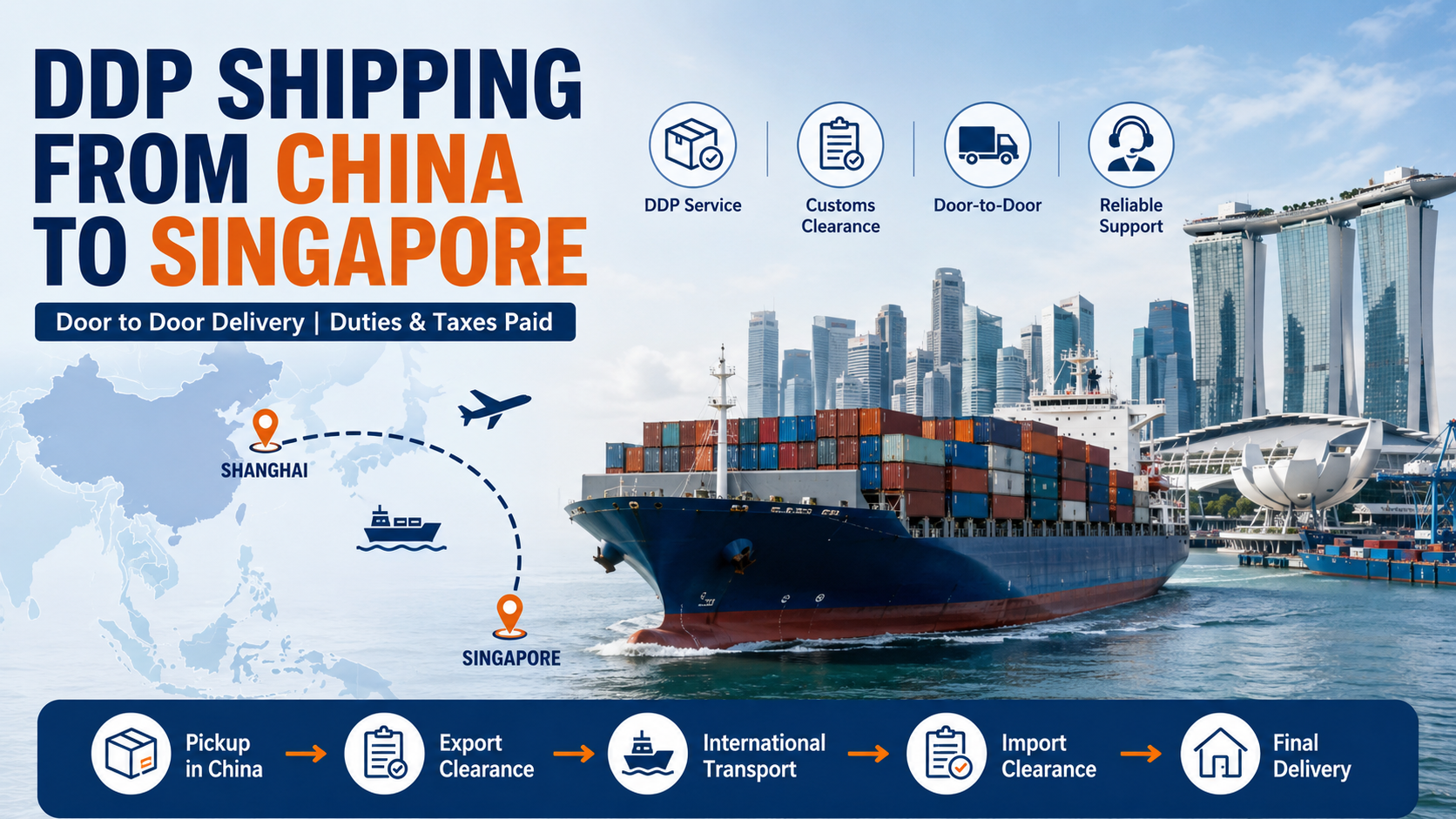
Door-to-Door and DDP Shipping from China to Singapore

Door-to-door shipping combines cargo collection in China, international transportation, customs coordination and final delivery in Singapore. Service scope can be arranged according to the cargo type, importer setup and agreed Incoterm.

General Cargo Door-to-Door

Standard commercial cargo
Minimum 1 CBM

Suitable for ordinary commercial goods that meet the selected service and carrier acceptance requirements. The shipment is collected in China and delivered to the agreed address in Singapore.

Reference Rate US$430–470 / CBM Planning reference
Reference Time 18–22 days Door-to-door estimate
Singapore GST Not Included 9% import GST handled separately
Typical service scope
  • Cargo collection in China
  • Export handling
  • International transportation
  • Customs coordination
  • Destination handling
  • Final delivery in Singapore

Sensitive Goods Door-to-Door

Subject to cargo acceptance
Minimum 1 CBM

Sensitive goods may require additional review before booking. Product details, packaging, documents and carrier acceptance should be confirmed before the cargo is collected in China.

Reference Rate US$570–630 / CBM Subject to cargo review
Reference Time 18–23 days Door-to-door estimate
Singapore GST Not Included 9% import GST handled separately
Confirm before booking
  • Exact product description
  • Packing details and dimensions
  • Battery or chemical information if relevant
  • Required product documents
  • Carrier acceptance
  • Singapore import requirements
Incoterm Option

What About DDP Shipping to Singapore?

DDP shipping can be arranged when the importer structure, product compliance, tax responsibility and delivery scope are confirmed in advance. A DDP quotation should clearly state which duties, GST and destination charges are included.

The door-to-door reference rates shown above are not presented as all-inclusive DDP rates because Singapore import GST is excluded.

Importer Arrangement Confirm who acts as the Singapore importer before booking.
GST Responsibility Confirm whether Singapore import GST is included or paid separately.
Controlled Goods Product permits and authority approvals must be checked in advance.
Final Delivery Provide the Singapore postcode and delivery requirements for quotation.

Door-to-door rates and transit times are planning references. Actual pricing and delivery time depend on cargo acceptance, pickup location, shipment volume, customs requirements and the final delivery address in Singapore.

Shipment Workflow

How the Shipping Process from China to Singapore Works

If you are deciding how to ship from China to Singapore, the exact shipping process depends on whether the cargo moves by sea freight, air freight, express or door-to-door service. Most commercial shipments still follow the same core stages from cargo confirmation in China through final clearance and delivery in Singapore.

01
Shipment Planning

Send Cargo Details and Confirm the Quote

Provide the product description, package count, gross weight, dimensions, pickup location in China and delivery address in Singapore. Sensitive or controlled goods should be identified before the shipping method is confirmed.

02
Origin Handling

Arrange Pickup or Cargo Consolidation

Cargo can be collected from the supplier or delivered to the forwarding warehouse. LCL shipments and orders from multiple suppliers may require consolidation before international transportation.

03
Export Preparation

Complete Export Handling and Carrier Booking

Shipping documents are checked and the required export procedures are completed before cargo is handed to the carrier. Booking details, cut-off times and departure schedules should be confirmed before dispatch.

04
International Freight

Transport the Shipment to Singapore

The goods move by the selected sea, air or express service. Important shipment updates should include departure status, schedule changes and expected arrival information.

05
Singapore Arrival

Clear Customs and Arrange Final Delivery

After arrival, the shipment proceeds through the applicable Singapore customs and import permit procedures. Once released, destination handling and final delivery are arranged according to the agreed service scope.

The workflow changes slightly by shipping method.

FCL avoids cargo consolidation, LCL requires consolidation and deconsolidation, while air freight and express shipments use airport or courier handling instead of container terminals. Customs requirements depend on the actual goods and import arrangement.

Booking Checklist

What to Confirm Before Shipping from China to Singapore

Accurate shipment information helps the freight forwarder select the right shipping method, calculate the correct rate and identify customs or cargo restrictions before booking.

01

Product and Cargo Type

Provide the exact product description and identify batteries, liquids, chemicals, branded goods or other sensitive or controlled items before booking.

02

Packages, Weight and Dimensions

Confirm carton or pallet count, gross weight and dimensions. Air freight and express rates may depend on chargeable or volumetric weight.

03

Pickup Location in China

Provide the supplier or warehouse city and address so origin pickup cost and the most suitable port or airport can be evaluated.

04

Singapore Delivery Address

For door-to-door shipping, provide the final delivery postcode and any access, appointment, lift or unloading requirements.

05

Commercial Documents

Prepare a consistent commercial invoice and packing list. Product permits, certificates or supporting documents may also be required for regulated goods.

06

Incoterm and Service Scope

Confirm whether the shipment is EXW, FOB, CIF, DAP, DDP or another agreed term, and clarify who is responsible for customs, GST and final delivery charges.

Information Needed for an Accurate Freight Quote

Send the product name, package count, gross weight, dimensions, pickup city in China and delivery postcode in Singapore. For sensitive cargo, include product documents or photos when available.

Get a Shipping Quote

Freight Forwarding Support

Why Choose Tonlexing as Your Freight Forwarder from China to Singapore

A reliable freight forwarding service should connect the China-side supplier, international transport and Singapore delivery requirements without making the importer coordinate every logistics stage separately.

China-Side Coordination

We can coordinate factory pickup, warehouse receiving, cargo consolidation and export preparation before the shipment leaves China.

Multiple Shipping Options

Compare FCL, LCL, air freight, express and door-to-door services according to cargo volume, urgency, budget and delivery requirements.

Customs & Document Coordination

Shipment information can be checked before departure so the importer can prepare the commercial documents, permit details and Singapore customs requirements in advance.

Clear Quote Scope & Updates

The quotation should identify the selected service scope, major inclusions and exclusions, while shipment updates help customers follow important transport milestones.

Planning a Shipment from China to Singapore?

Send the cargo details and delivery requirements to compare suitable sea freight, air freight or door-to-door options before booking.

Contact Tonlexing

Practical Shipping Answers

Shipping from China to Singapore FAQs

Practical answers about shipping methods, freight costs, transit times, Singapore customs clearance and final delivery from China to Singapore.

What is the best way to ship goods from China to Singapore?

The right shipping method depends on cargo size, urgency and delivery scope. Sea freight is usually more suitable for larger or less urgent commercial shipments, air freight is better for time-sensitive cargo, and express shipping is convenient for samples and smaller urgent parcels. Door-to-door service can be arranged when pickup, customs coordination and final delivery need to be managed together.

What is the cheapest way to ship from China to Singapore?

Sea freight generally offers the lowest unit transportation cost for larger shipments. LCL allows smaller cargo to share container space, while FCL can become more practical as shipment volume increases. Compare the total logistics cost rather than the ocean freight rate alone, because pickup, origin handling, destination charges, customs clearance and final delivery can also affect the final cost.

How long does shipping from China to Singapore take?

Typical planning ranges are around 5–12 days port to port for FCL sea freight and around 10–15 days for the main LCL movement. Air freight is usually around 1–3 days airport to airport, while express shipping commonly takes around 2–5 days.

Pickup, cargo consolidation, customs clearance and final delivery add time. Current door-to-door planning references are approximately 18–22 days for general cargo and 18–23 days for sensitive cargo.

How much does shipping from China to Singapore cost?

Current planning references include LCL sea freight from about US$5 per CBM, 20GP FCL at about US$240–280, 40GP / 40HQ at about US$400–450, air freight at about US$1.6–2.0/kg, and express shipping at about US$2.0–2.4/kg.

These are reference rates rather than guaranteed quotations. Actual shipping costs depend on cargo type, volume, weight, pickup location, carrier capacity, customs requirements and the required delivery scope.

Do I need to pay GST and clear customs when importing from China to Singapore?

Singapore's current import GST rate is 9%. Most ordinary imported goods are non-dutiable, but import GST can still apply. Commercial shipments generally require a Customs Import Permit submitted through TradeNet, together with accurate shipment and importer information.

Controlled or regulated goods may also require approval from the relevant Singapore authority. The commercial invoice, packing list and transport documents should contain consistent cargo information before customs clearance begins.

Planning note: freight rates, carrier schedules and Singapore import requirements can change. Confirm the current route, service scope, importer responsibilities, GST treatment and destination charges in the final quotation before booking.