

Shipping from China to USA – Sea, Air & DDP in 2026
Fast and reliable shipping from China to the USA by sea freight, air freight, express courier, and DDP door-to-door service. Compare estimated costs, transit times, customs requirements, and choose the right shipping method for your cargo.
Tonlexing provides FCL, LCL, air cargo, express, Amazon FBA, and door-to-door logistics solutions from major Chinese cities to destinations across the United States.
Sea Freight: 15–40 Days
Air Freight: 3–7 Days
Express: 2–5 Days
DDP Shipping: 7–50 Days
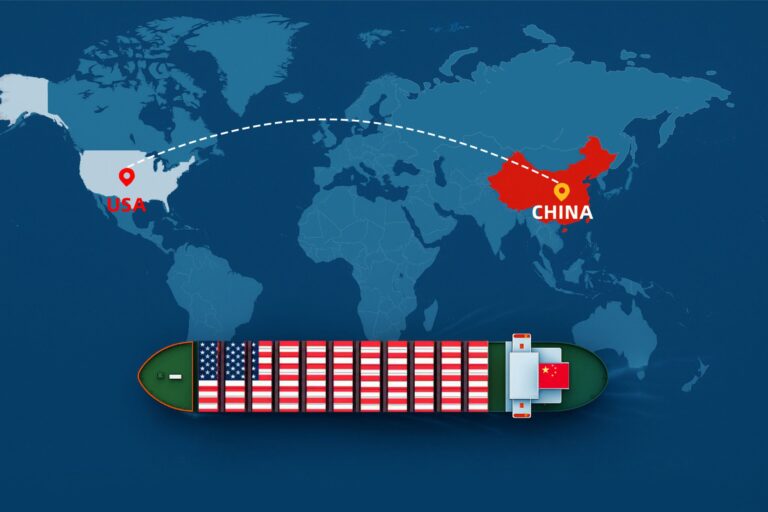
- Experienced China-based logistics specialists
Shipping Methods from China to the USA
Choose from air freight, sea freight, express courier, and DDP door-to-door shipping based on your cargo size, delivery urgency, budget, and customs requirements.
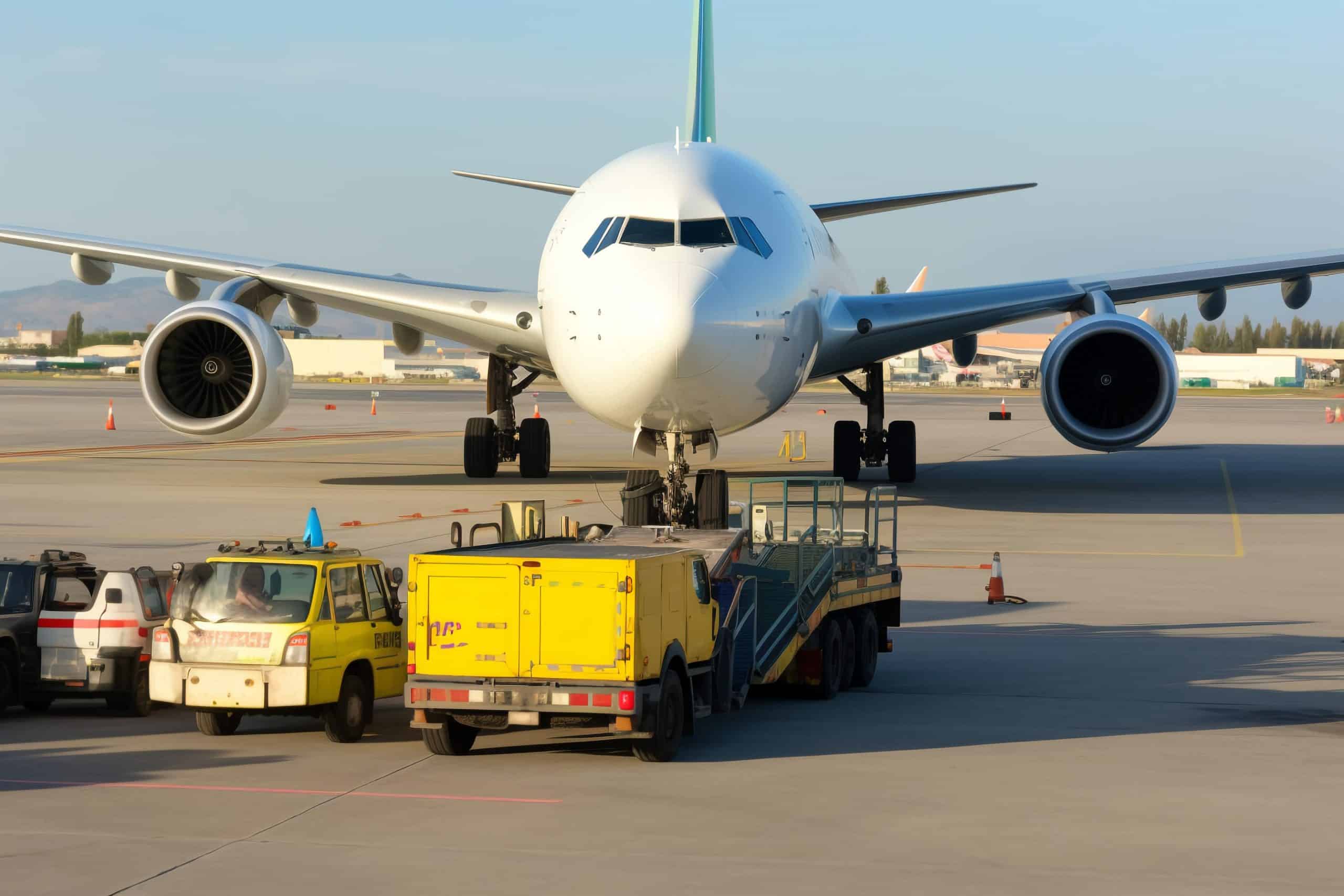
Fast air shipping to major U.S. airports like LAX, JFK, and ORD.
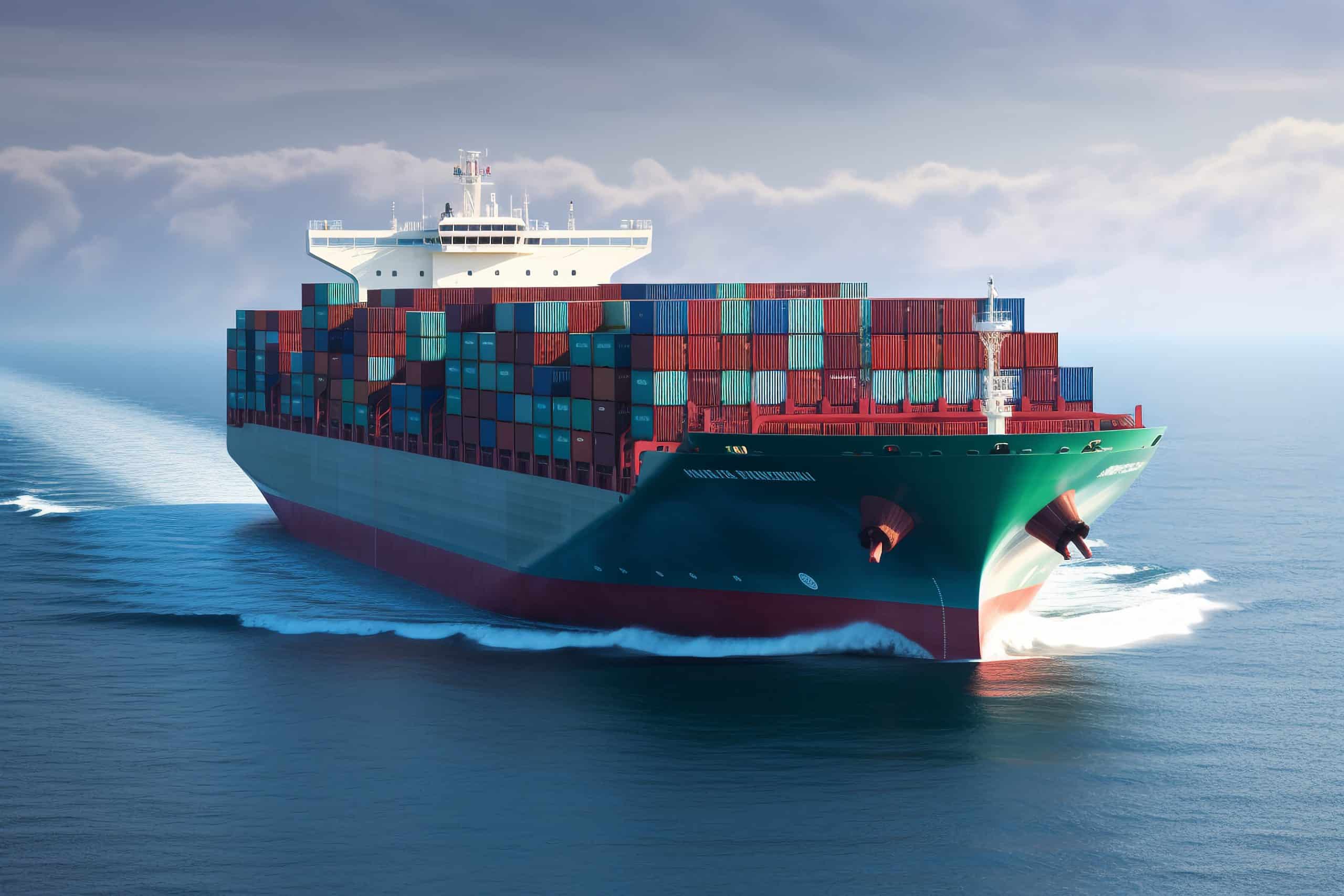
FCL/LCL to major U.S. ports like LA/Long Beach, NY/NJ, and Houston.
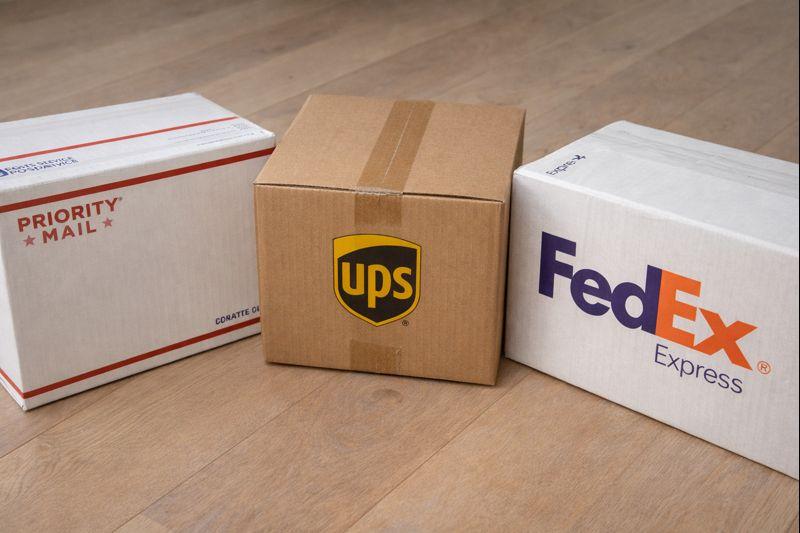
Best for small parcels, samples, and documents to the USA.
Customs, duties/taxes, and delivery included.
Shipping from China to the USA: Trade & Logistics Overview
Shipping from China to the USA supports Amazon sellers, retail importers, and manufacturers across multiple supply chains. This guide helps you compare ocean freight, air freight, and door-to-door DDP options with clear shipping costs, transit times, and customs clearance requirements—so you can choose a reliable freight forwarder for your lane.
You’ll find practical comparisons on the cheapest shipping routes, common U.S. destinations for container and air shipments, and top Chinese ports used for U.S. trade. We also highlight key cost drivers and risk points—such as hidden fees, documentation issues, and port congestion—to help you reduce delays and keep deliveries on schedule, including Amazon FBA shipments when needed.
Table of Contents
Best Shipping Methods from China to the USA
Choosing the right shipping method from China to the USA is the first step toward optimizing your supply chain. The method you select will depend on key factors like shipment size, urgency, budget, and final delivery requirements. Let’s explore the most commonly used options:
Ocean Freight: Ideal for Bulk & Cost-Effective Shipping
Ocean freight is the most popular method for large shipments due to its low cost per unit. It includes two primary modes:
FCL (Full Container Load) – You reserve the entire container for your goods.
LCL (Less than Container Load) – You share container space with other shipments, paying only for the volume you use.
Ocean freight is often considered the cheapest shipping option for large shipments due to its low cost per unit.
This method is best for non-urgent cargo like furniture, building materials, or wholesale inventory.
- Shipping time: 15–40 days
- Cost: $1,200–$2,400 for FCL
- Ports: Shanghai, Shenzhen, Ningbo, Qingdao → Los Angeles, New York, Houston
Best for: High-volume, non-urgent shipments
Air Freight: Fastest for Urgent & High-Value Cargo
Air freight from China to the USA is significantly faster than sea freight. Selecting the right air freight services is crucial for efficient and timely delivery, especially for time-sensitive shipments like electronics, fashion, or product launches.
While it comes with a higher price tag, you save on warehousing costs and reduce delivery uncertainty.
- Shipping time: 3–7 days
- Airports: PVG (Shanghai), CAN (Guangzhou), HKG (Hong Kong) → LAX, JFK, ORD
- Cost: $3.80–$4.50 per kg (100–300 kg range)
Best for: Urgent, seasonal, or high-value goods
Express Shipping: Small Parcels Delivered Fast
Express shipping is the go-to for samples, small e-commerce orders, and urgent documents. Carriers like DHL, UPS, and FedEx offer door-to-door express delivery within 2–5 days.
China Post also provides an express mail service, a fast shipping option suitable for urgent shipments with features like tracking and door-to-door delivery.
This is a premium service, but provides complete visibility, simplified clearance, and real-time tracking.
- Shipping time: 2–5 days
- Weight: Ideal for < 30 kg
- Cost: $25–$80 depending on size & urgency
Best for: Samples, e-commerce, Amazon FBA replenishment
DDP (Delivered Duty Paid) & Door-to-Door Shipping
With DDP shipping, your freight forwarder handles everything—from factory pickup in China to customs clearance and final delivery in the US. All import duties and taxes are prepaid, so you face no surprise charges.
It’s a favorite for Amazon sellers, first-time importers, and businesses that want a fully-managed experience.
- Available for: Sea freight (FCL/LCL), air freight, and express
- Includes: Taxes, customs clearance, local delivery
- Regions Covered: USA nationwide, including residential and warehouse delivery
Best for: Hassle-free shipping, new importers, FBA sellers
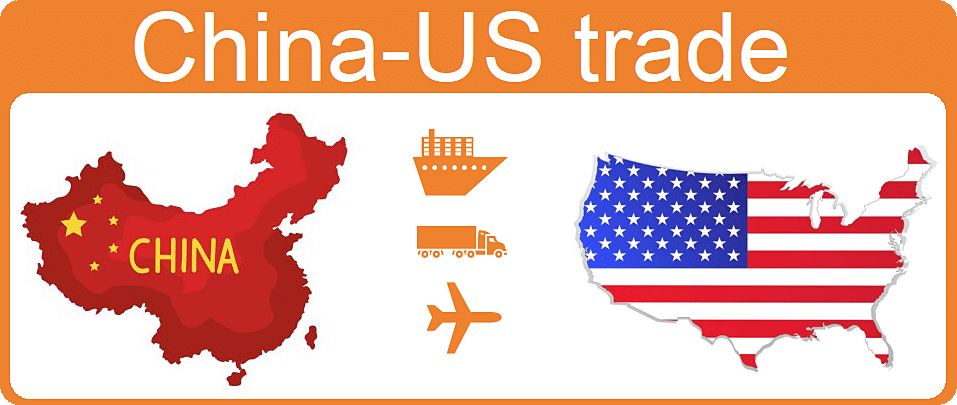
Shipping Companies That Ship from China to the USA
There are three main types of shipping companies that ship from China to the USA—each serving a different role in the international logistics chain. Understanding how they work helps you choose the right partner for your business.
International Shipping Carriers (Vessel & Air Operators)
These are the companies that physically move your goods across oceans and skies. They include:
Ocean freight carriers: MSC, COSCO, CMA CGM, MAERSK, ZIM
Air freight carriers: Air China Cargo, China Southern, Lufthansa Cargo, Emirates SkyCargo, which offer competitive air cargo services with various airlines providing cost-effective shipping options.
While reliable, these international shipping companies usually only serve freight forwarders and don’t work directly with small or mid-sized importers.
Courier & Express Companies
Companies like DHL, FedEx, and UPS provide express shipping services with integrated pickup, clearance, and last-mile delivery. They’re ideal for documents, samples, and small-volume goods.
While convenient, they’re often not cost-effective for heavy or bulk freight, especially above 30 kg or 0.5 CBM.
Freight Forwarders in China (Your Logistics Partner)
Freight forwarders in China are your one-stop solution for international shipping. Choosing the best freight forwarders is crucial for better rates and services, particularly for e-commerce businesses and Amazon FBA shipments. They handle everything: carrier booking, customs documentation, consolidation, cargo insurance, and door-to-door delivery.
At Tonlexing, we’re more than just a freight middleman. We tailor shipping solutions based on:
Your cargo size and urgency
Preferred shipping mode (air, sea, express, or rail)
Final delivery location and customs requirements
Unlike large platforms or marketplaces, we offer real-time support, DDP shipping options, and customized freight cost comparison to help you choose the most efficient route.
Why Choose Tonlexing?
We combine the flexibility of a local Chinese logistics provider with international standards. Our team provides:
- Fast FCL/LCL consolidation
- Competitive air freight from China to the USA
- Customs clearance and U.S. import compliance
Door-to-door delivery to Amazon FBA or private warehouses
Transparent, all-in pricing with no surprise fees
Whether you’re shipping 1 CBM or a full container, we ensure your cargo gets delivered smoothly, affordably, and on time.
Shipping Cost from China to the USA (2026)
Shipping costs from China to the USA vary depending on your shipment size, mode of transport, origin/destination, and delivery speed. Whether you’re comparing ocean freight vs air freight, calculating DDP pricing, or estimating small parcel charges, understanding the cost structure helps you choose the most cost-effective logistics plan.
Let’s break down the typical 2026 rates for freight shipping services from China to major U.S. cities.
Sea Freight (FCL & LCL)
| Route (Port-to-Port) | 20ft FCL (USD) | 40ft FCL (USD) | LCL Rate (USD/CBM) | Transit Time |
|---|---|---|---|---|
| Shanghai → Los Angeles | $1,000–$1,500 | $1,650–$2,450 | $45–60 | 15–18 days |
| Shenzhen → New York | $1,100–$1,600 | $1,900–$2,800 | $50–65 | 25–30 days |
| Ningbo → Houston | $1,000–$1,550 | $1,700–$2,500 | $48–63 | 24–28 days |
| Qingdao → Savannah | $1,050–$1,600 | $1,750–$2,650 | $50–68 | 26–35 days |
- LCL is calculated based on volume (CBM) and may include terminal handling and consolidation fees.
FCL pricing offers better value for larger shipments (above 15 CBM).
FCL shipping provides increased security and faster delivery times due to dedicated cargo space, making it a cost-effective option for larger shipments.
Air Freight Rates (Standard Cargo)
| Route (Airport-to-Airport) | 100 kg (USD/kg) | 300 kg (USD/kg) | Transit Time |
|---|---|---|---|
| Shanghai (PVG) → Los Angeles | $3.30–$5.10 | $3.00–$4.60 | 3–5 days |
| Guangzhou (CAN) → New York | $3.40–$5.20 | $3.20–$4.80 | 4–6 days |
| Shenzhen (SZX) → Chicago | $4.30–$6.50 | $4.00–$6.20 | 3–6 days |
| Hong Kong (HKG) → Miami | $3.20–$5.00 | $3.00–$4.70 | 4–7 days |
Air freight costs are influenced by global events like the coronavirus, seasonal variations, and promotional rates offered by different airlines. Utilizing freight forwarders can help access competitive rates for air cargo shipments from China to the USA.
Charges are based on chargeable weight: whichever is greater between actual and volumetric weight.
Ideal for high-value or urgent cargo, despite higher costs.
Express Shipping (DHL, FedEx, UPS)
Weight Range | Estimated Cost (USD) | Delivery Time |
|---|---|---|
0.5–5 kg | $15–$60 | 2–4 days |
5–10 kg | $60–$120 | 3–5 days |
10–30 kg | $100–$200 | 3–5 days |
Includes door-to-door delivery, customs clearance, and tracking.
Best for lightweight, time-sensitive shipments like samples, e-commerce orders, and Amazon replenishment.
DDP Shipping (All-Inclusive Door-to-Door)
With Delivered Duty Paid (DDP) shipping, all costs are bundled into a single price:
Pickup from your supplier
Export declaration
Ocean or air transport
Customs clearance and import duty prepayment
Final delivery to U.S. address
Typical DDP Rates:
LCL DDP: $80–$120 per CBM (depending on destination)
Air DDP: $5.50–$7.00/kg (100–300 kg)
Need a real-time quote? Use our CBM Calculator Tool to estimate chargeable volume or request a free quote directly from our team.
Shipping Time from China to the USA (2026)
One of the most common questions importers ask is: “How long does shipping take from China to the USA?” The answer depends on the shipping method, destination, and time of year. Here’s a detailed breakdown of transit times based on transport mode:
Sea Freight Transit Time (FCL & LCL)
Route | Estimated Transit Time |
|---|---|
Shanghai → Los Angeles | 15–18 days |
Shenzhen → New York | 25–30 days |
Ningbo → Houston | 24–28 days |
Qingdao → Savannah | 26–35 days |
Shipments to West Coast ports, such as Los Angeles, typically have shorter transit times due to more direct geographical routes.
Additional time may be needed for LCL consolidation, customs clearance, or port congestion during peak seasons.
Air Freight Transit Time
Route | Estimated Transit Time |
|---|---|
Shanghai → Los Angeles (LAX) | 3–5 days |
Guangzhou → New York (JFK) | 4–6 days |
Shenzhen → Chicago (ORD) | 3–6 days |
Hong Kong → Miami (MIA) | 4–7 days |
Air freight is ideal for time sensitive shipments, especially when product launches or seasonal sales are involved. Factors such as packing, customs clearance, and the choice between direct and indirect flights significantly influence air freight time. Always account for airport handling and customs clearance (1–2 days).
Express Shipping Transit Time (DHL, UPS, FedEx)
Origin in China | U.S. Destination | Transit Time |
|---|---|---|
Any major city | Nationwide | 2–5 days |
Express couriers offer door-to-door delivery including customs clearance.
Service may be delayed by holidays or incorrect documentation, but is usually reliable.
DDP & Door-to-Door Delivery Time
Shipping Mode | Estimated Time |
|---|---|
DDP by Sea | 25–40 days |
DDP by Air | 7–12 days |
DDP includes customs clearance, tax settlement, and final-mile delivery.
Time depends on the exact address, cargo volume, and destination state.
Factors That Affect Shipping Time
Several variables influence actual shipping times:
Port congestion in the U.S. or China
Weather delays or storms in ocean routes
Holidays like Chinese New Year or Golden Week
Incorrect or missing customs documentation
Proper planning and a reliable freight forwarder can help reduce unexpected delays and ensure smoother delivery.
Customs Clearance and Import Duties for USA Shipments
All shipments entering the United States must undergo customs clearance, whether they arrive by sea, air, or express courier. The process ensures your cargo complies with U.S. import laws, and that all applicable taxes and duties are properly assessed.
How Customs Clearance Works in the USA
When your shipment arrives at a U.S. port or airport, Customs and Border Protection (CBP) will review your shipping documents and inspect your goods if necessary. To ensure fast clearance, you must submit:
Commercial Invoice with accurate HS code and declared value
Packing List with item quantities and weights
Bill of Lading (for sea freight) or Air Waybill (for air freight)
Importer Security Filing (ISF) for ocean shipments
Additional permits or product certifications (if required)
How Import Duties Are Calculated
Import duties are determined by the product’s HTSUS classification, customs value, country of origin, and any applicable additional duties or trade remedies. Key points include:
- Low-Value Shipments: Shipments from China are not automatically eligible for duty-free entry. Duties, taxes, and entry requirements depend on the product, customs value, country of origin, shipping method, and current U.S. regulations.
- Base Duty Rate: The standard customs duty rate is determined by the product’s HTSUS classification.
- Additional Duties: Section 301 tariffs, anti-dumping duties, countervailing duties, or other trade remedies may apply to certain products from China.
- MPF (Merchandise Processing Fee): Generally applies to formal customs entries, regardless of the shipping method.
- HMF (Harbor Maintenance Fee): May apply to commercial cargo imported by sea through U.S. ports.
Delivered Duty Paid (DDP): Simplified Clearance
Want to simplify the import process? With DDP shipping, the logistics provider coordinates customs clearance, payment of applicable duties and taxes, and final delivery according to the agreed shipping terms.
Importers may still need to provide company information, product details, or compliance documents when required.
Benefits of DDP:
- Reduced customs and administrative workload for the importer
- Duties and taxes arranged in advance under the agreed quotation
- Suitable for Amazon FBA, warehouse, business, or residential deliveries
- Available for both sea and air freight, subject to cargo type and destination
Tips to Avoid Delays at Customs
- Use accurate HTSUS codes and provide clear, detailed product descriptions.
- Ensure the commercial invoice, packing list, Bill of Lading or Air Waybill, quantities, and declared values are consistent.
- Submit the Importer Security Filing (ISF) accurately and on time for ocean shipments.
- Prepare importer information and any required permits, licenses, or product certifications before departure.
- Work with a licensed U.S. customs broker, or a freight forwarder that coordinates with one, and respond promptly to requests for additional documents.
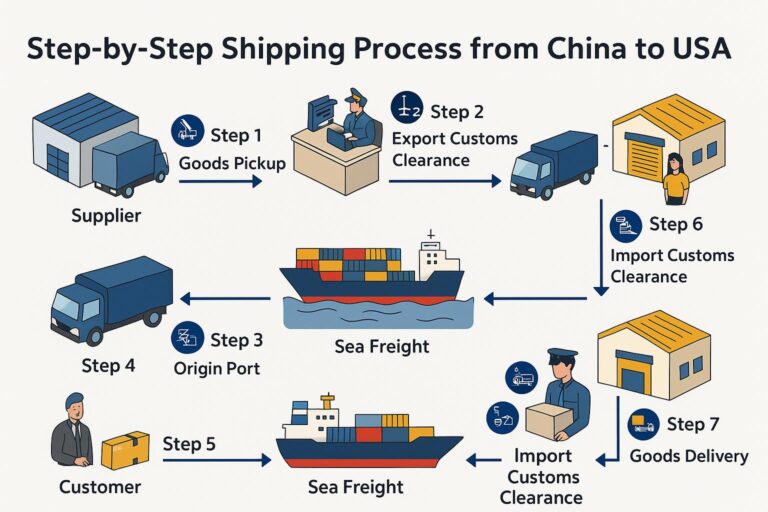
Step-by-Step Shipping Process from China to the USA
Shipping from China to the USA involves cargo preparation, freight booking, export clearance, international transportation, U.S. customs clearance, and final delivery. The exact process depends on the shipping method, Incoterm, cargo type, and destination.
Step 1: Confirm the Order and Prepare the Cargo
Before booking the shipment:
- Confirm the product name, quantity, value, dimensions, and gross weight
- Ensure the cargo is packed, labeled, and protected for international transport
- Check whether the goods contain batteries, liquids, chemicals, magnets, or other restricted materials
- Calculate the shipment volume and determine whether FCL, LCL, air freight, or express shipping is suitable
- Confirm the agreed Incoterm, such as EXW, FOB, or DDP
Step 2: Select the Shipping Method
Choose the shipping method based on cargo size, urgency, budget, and delivery requirements:
- Sea freight for large, heavy, or non-urgent cargo
- Air freight for urgent, high-value, or time-sensitive shipments
- Express courier for documents, samples, and small parcels
- DDP door-to-door shipping when customs clearance, duties, taxes, and final delivery are included in the agreed service
Step 3: Request a Quote and Book the Shipment
Provide the freight forwarder with:
- Pickup address in China
- Destination address or U.S. port or airport
- Cargo description, dimensions, weight, and number of packages
- Preferred shipping method and required delivery date
- Incoterm and customs requirements
After the quotation is confirmed, the freight forwarder books space with the carrier and arranges cargo pickup or warehouse delivery.
Step 4: Complete Export Customs Clearance in China
The exporter or freight forwarder prepares the required documents, which may include:
- Commercial Invoice
- Packing List
- Export declaration
- HS code and declared value
- Export license or product documents when required
Once China Customs releases the shipment, the cargo can be loaded for international transport.
Step 5: International Transportation
The cargo is transported according to the selected method:
- Sea freight: The container or LCL cargo is loaded at a Chinese port and shipped to the selected U.S. port
- Air freight: The cargo is delivered to the departure airport and flown to the selected U.S. airport
- Express courier: The shipment is collected and routed through the courier’s international network
Tracking updates should be provided during the main transportation stages.
Step 6: U.S. Customs Clearance
After arrival in the United States:
- The customs broker submits the required entry information and shipping documents
- U.S. Customs and Border Protection may review or inspect the shipment
- Applicable duties, taxes, and customs fees are assessed
- Additional permits or product compliance documents may be requested
For DDP shipments, the logistics provider coordinates customs clearance and payment of the agreed duties and taxes. The shipment must still satisfy all applicable U.S. import requirements.
Step 7: Final Delivery
After customs release, the cargo is collected from the port, airport, terminal, or courier facility and delivered to:
- A commercial warehouse
- An Amazon FBA fulfillment center
- A business or residential address
- A distribution center or third-party warehouse
Final delivery may be completed by truck, local courier, UPS, FedEx, or another last-mile carrier, depending on the shipment type and destination.
Common Shipping Challenges and How to Avoid Them
International shipping can be affected by carrier schedules, customs reviews, documentation errors, local delivery conditions, and seasonal demand. Planning each stage in advance helps reduce delays, unexpected costs, and cargo risks.
Port Congestion and Carrier Delays
Vessel schedule changes, rolled bookings, airport capacity, port congestion, and peak-season demand may affect the planned departure or arrival date.
Possible impact:
- Delayed departure or arrival
- Longer container or cargo waiting times
- Additional storage, demurrage, or detention charges
How to reduce the risk:
- Book space early before peak seasons and major Chinese holidays
- Allow additional time for important delivery deadlines
- Consider alternative ports, airports, or routes when practical
- Confirm container free time and final delivery arrangements before arrival
Unexpected Shipping Costs
The lowest freight rate does not always represent the total landed cost. Additional charges may arise at the origin, destination, customs clearance stage, or during final delivery.
Common additional charges may include:
- Pickup and export handling fees
- Terminal handling and destination charges
- Customs examination, storage, duties, and taxes
- Residential delivery, liftgate, appointment, or remote-area fees
- Demurrage, detention, or waiting-time charges
How to reduce the risk:
- Request a written, itemized quotation
- Confirm which origin, freight, customs, and delivery charges are included
- Verify the exact service scope before choosing DDP shipping
- Compare the total landed cost instead of comparing freight rates alone
Cargo Damage or Loss
Cargo may be damaged by inadequate packaging, moisture, vibration, stacking pressure, rough handling, or movement during international transportation.
How to reduce the risk:
- Use export-grade cartons, pallets, wooden crates, or protective packaging suitable for the cargo
- Add waterproofing, corner protection, cushioning, and secure strapping when required
- Take photos of the goods and packaging before pickup
- Purchase freight insurance for valuable, fragile, or sensitive cargo
- Check package marks, quantities, and external condition at delivery
Customs Delays Due to Incorrect Documentation
Missing, inconsistent, or inaccurate shipping information can result in customs questions, inspections, additional charges, or delayed cargo release.
How to reduce the risk:
- Ensure the Commercial Invoice, Packing List, Bill of Lading or Air Waybill contain consistent information
- Use accurate HTSUS classifications and clear product descriptions
- Confirm the importer information, declared value, quantities, and country of origin
- Prepare any required permits, licenses, or product certifications before shipment
- Submit the Importer Security Filing accurately and on time for ocean shipments
- Respond promptly when the customs broker requests additional documents
Lack of Shipment Visibility and Updates
Poor communication can make it difficult to manage inventory, customs clearance, warehouse appointments, and final delivery.
How to reduce the risk:
- Choose a freight forwarder that provides milestone-based shipment updates
- Request booking confirmation, departure, arrival, customs release, and delivery updates
- Assign one main contact person to manage the shipment
- Confirm the estimated arrival date and final delivery plan before the cargo reaches the United States
- Use door-to-door shipping services when one provider managing the complete route is more suitable
For current container pricing, see our 20ft & 40ft container shipping rates from China to the USA.
Freight Insurance and Risk Management
International freight may be exposed to loss, damage, theft, moisture, handling incidents, accidents, or other unexpected events during transportation. Freight insurance helps reduce the financial risk associated with these events, subject to the terms, coverage limits, and exclusions of the selected policy.
Carrier liability is not the same as cargo insurance and may not cover the full commercial value of the goods. Importers should confirm the insurance scope before shipment and keep accurate cargo records, invoices, packing lists, and packaging photos.
When Freight Insurance Is Recommended
Freight insurance should be considered for:
- High-value cargo
- Fragile or easily damaged products
- Electronics, machinery, furniture, and industrial equipment
- LCL shipments that involve consolidation and additional handling
- Cargo transported across multiple shipping stages
- Shipments with strict delivery deadlines or replacement costs
Before purchasing coverage, confirm:
- The insured cargo value
- Covered transportation stages
- Policy exclusions and deductibles
- Packaging requirements
- Required documents for filing a claim
- The time limit for reporting loss or damage
Peak Seasons and Holidays
Shipping demand may increase before Chinese New Year, Golden Week, Christmas, back-to-school periods, and other major retail seasons. Capacity shortages, rolled bookings, port congestion, and higher freight rates may occur during busy periods.
To reduce peak-season risk:
- Book cargo space early
- Allow additional transit time
- Confirm carrier schedules before cargo is ready
- Avoid planning critical delivery dates around major holidays
- Prepare customs and shipping documents before departure
- Consider alternative ports, airports, or shipping methods when necessary
Incoterms and Risk Allocation
Incoterms define the responsibilities, costs, and risk allocation between the buyer and seller. The agreed Incoterm should be clearly stated in the sales contract, quotation, and shipping documents.
Common terms include:
- FOB (Free on Board): The seller delivers the goods on board the vessel at the named port of shipment. Risk generally transfers to the buyer once the goods are on board.
- CIF (Cost, Insurance and Freight): The seller arranges ocean freight and insurance to the named destination port, but risk generally transfers once the goods are loaded on board the vessel at the port of shipment.
- DDP (Delivered Duty Paid): The seller is responsible for transportation, export and import formalities, applicable duties and taxes, and delivery to the agreed destination. Risk generally transfers when the goods are made available to the buyer at the named destination, ready for unloading.
The Incoterm does not replace a detailed shipping agreement. Both parties should clearly confirm the exact delivery point, included charges, customs responsibilities, insurance arrangements, and unloading obligations.
Warehousing and Storage Options
Warehousing may be required before export, during consolidation, after customs clearance, or before final distribution in the United States.
Common options include:
- Export warehouses in China for cargo collection, inspection, labeling, and consolidation
- Container freight stations for LCL consolidation and deconsolidation
- Bonded warehouses for eligible imported goods stored under customs control
- U.S. distribution centers for inventory storage and order fulfillment
- Amazon FBA preparation warehouses for labeling, palletizing, inspection, and appointment delivery
The selected warehouse should match the cargo type, storage period, customs status, delivery schedule, and final distribution requirements.
For help with customs clearance and freight insurance, contact Tonlexing before booking your shipment.

Tonlexing – Reliable Freight Forwarder from China to the USA
Tonlexing coordinates sea freight, air freight, express shipping, DDP, and door-to-door delivery from major Chinese origins to destinations across the United States.
Each shipment is planned according to the cargo type, weight, volume, required delivery time, customs requirements, Incoterm, and final delivery address.
As a China-based international freight forwarder operating since 2008, Tonlexing states that it is FMC compliant and a licensed NVOCC.
Why Choose Tonlexing?
End-to-End Shipment Coordination
We coordinate factory pickup, origin handling, carrier booking, export declaration, international transportation, customs clearance support, and final delivery according to the agreed service scope.
Flexible Shipping Options
Available shipping methods include:
- FCL and LCL sea freight
- Standard and priority air freight
- Express courier services
- DDP and door-to-door shipping
- Amazon FBA and commercial warehouse delivery
Clear Quotations and Service Scope
Each quotation should clearly state:
- Origin charges
- International freight charges
- Destination charges
- Customs clearance responsibilities
- Duties and taxes, when included
- Final delivery services
- Charges that may arise from customs examinations, storage, waiting time, or special delivery requirements
U.S. Customs Coordination
We help prepare and review shipping information and coordinate with customs brokers for U.S. import clearance.
Importers may still need to provide company information, product details, importer identification, permits, certifications, or other compliance documents when required.
Shipment Updates and Dedicated Support
Customers receive shipment updates at important milestones, including:
- Cargo pickup
- Carrier booking confirmation
- Departure
- Estimated arrival
- Customs clearance status
- Final delivery arrangement
Experience with Different Cargo Types
Tonlexing coordinates shipments for:
- General commercial cargo
- Machinery and industrial equipment
- Electronics and electrical products
- Furniture and building materials
- Textiles and consumer goods
- Amazon FBA inventory
- Fragile or high-value cargo
Our Service Highlights
Sea Freight – FCL and LCL services from major Chinese ports to U.S. West Coast, East Coast, and Gulf Coast destinations.
Air Freight – Airport-to-airport and door-to-door services for urgent and time-sensitive commercial cargo.
DDP Shipping – Customs clearance, applicable duties and taxes, and final delivery coordinated according to the agreed quotation and shipping terms.
Amazon FBA Shipping – Cargo pickup, labeling, palletizing, customs coordination, and delivery appointment support.
Customs and Insurance Support – Document preparation, customs broker coordination, duty estimation support, and optional freight insurance.
Request a Freight Quote
For an accurate quotation, please provide:
- Pickup city or supplier address in China
- U.S. destination ZIP code
- Product name and cargo description
- Number of cartons or pallets
- Gross weight and package dimensions
- Total volume in CBM
- Preferred shipping method
- Required delivery date
- Incoterm, such as EXW, FOB, or DDP
- Whether the cargo contains batteries, liquids, chemicals, magnets, or other restricted materials
Learn more in our freight forwarders from China to USA guide, or contact our logistics team for a shipping plan and quotation.
USA Shipping Case Studies
Explore selected shipments handled from China to the United States, covering sea freight DDP, full-container transportation, customs coordination, inland delivery, and oversized door-to-door cargo.
Yantian → Chicago
Golf Bags Shipped by Sea Freight DDP
A bulk sports-goods shipment transported from Yantian, including U.S. customs coordination and final delivery to Chicago.
Shanghai → Cincinnati
Brown Rice Protein Powder in a 40HQ
Full-container sea freight with moisture-control preparation, export documentation, customs coordination, and inland delivery.
Shanghai → Los Angeles
Oversized Artificial Palm Trees
Oversized cargo managed from supplier pickup in Shanghai through customs procedures and final delivery in Los Angeles.
Frequently Asked Questions
Answers to common questions about shipping costs, transit times, customs clearance, DDP services, and freight delivery from China to the United States.
How much does shipping from China to the USA cost?
Shipping costs depend on the cargo weight, volume, shipping method, origin, destination, commodity type, customs requirements, and current carrier capacity. Sea freight is normally more economical for large or heavy shipments, while air freight and express services are generally more suitable for smaller or urgent cargo.
An accurate quotation requires the package dimensions, gross weight, cargo description, pickup location, and U.S. destination ZIP code.
How long does shipping from China to the USA take?
Typical transit times are approximately 2–5 days for express courier, 3–7 days for airport-to-airport air freight, 15–40 days for port-to-port sea freight, 7–15 days for air DDP, and 25–50 days for sea DDP.
Actual delivery times depend on the route, carrier schedule, customs clearance, final destination, and peak-season conditions.
What is the cheapest way to ship from China to the USA?
Sea freight is usually the most economical option for large, heavy, or non-urgent cargo. FCL is generally suitable when the shipment can use a full container, while LCL allows smaller shipments to share container space.
For very small parcels, express courier may be more practical after minimum freight, handling, customs, and final-delivery charges are compared.
Should I choose sea freight, air freight, express, or DDP?
- Sea freight is suitable for large and cost-sensitive shipments.
- Air freight is suitable for urgent and higher-value commercial cargo.
- Express courier is suitable for samples, documents, and small parcels.
- DDP is suitable when an agreed door-to-door service is required.
What does DDP shipping from China to the USA include?
Under an agreed DDP service, the logistics provider coordinates cargo pickup, international transportation, customs clearance, applicable duties and taxes, and final delivery to the named destination.
The exact service scope and excluded charges should be confirmed in the written quotation. The importer may still need to provide company information, product details, permits, certifications, or compliance documents when required.
What documents are required to import goods into the USA?
Common documents include a Commercial Invoice, Packing List, Bill of Lading or Air Waybill, product description, HTSUS classification, declared customs value, and importer information.
Ocean shipments may also require an Importer Security Filing. Certain products may require additional permits, licenses, testing reports, or certifications.
Do shipments from China have to pay U.S. import duties?
Shipments from China are not automatically eligible for duty-free entry. The amount payable depends on the product’s HTSUS classification, customs value, country of origin, and any applicable Section 301 tariffs, anti-dumping duties, countervailing duties, fees, or other trade measures.
What information is needed to receive a freight quote?
- Pickup city or supplier address in China
- U.S. destination address or ZIP code
- Product name and detailed cargo description
- Number of cartons, pallets, or packages
- Gross weight and package dimensions
- Total shipment volume in CBM
- Preferred shipping method and required delivery date
- Incoterm, such as EXW, FOB, or DDP
- Details of batteries, liquids, chemicals, magnets, or restricted materials
Related USA Shipping Guides
Explore detailed guides covering shipping costs, transit times, sea freight, air freight, DDP delivery, containers, and freight forwarding from China to the United States.
Shipping Cost from China to the USA
Compare estimated sea, air, express, and door-to-door freight costs for different shipment sizes.
Read Guide → 02Sea Freight from China to the USA
Learn about FCL, LCL, major ports, ocean transit times, and container shipping procedures.
Read Guide → 03Air Freight from China to the USA
Review air cargo rates, chargeable weight, airport routes, handling requirements, and delivery options.
Read Guide → 04Shipping Time from China to the USA
Compare typical delivery times by sea, air, express courier, and DDP door-to-door service.
Read Guide → 05DDP Shipping from China to the USA
Understand door-to-door delivery, customs coordination, duties, taxes, service scope, and quotations.
Read Guide → 06Door-to-Door Shipping to the USA
See how pickup, international transport, customs clearance, and final delivery can be coordinated.
Read Guide → 0720ft & 40ft Container Shipping Rates
Compare container sizes, estimated freight rates, loading capacity, routes, and destination charges.
Read Guide → 08Freight Forwarders from China to the USA
Learn how to select a freight forwarder and compare services, quotations, customs support, and delivery coverage.
Read Guide →