Sea Freight
FCL and LCL shipping provide an economical option for larger commercial shipments moving from China to Canada.
Usually best for Pallets, machinery and larger cargo volumes

China–Canada Shipping Guide · Updated August 2026
Compare sea freight, air freight, express and door-to-door shipping from China to Canada. Review current shipping costs, transit times, major routes, customs clearance requirements and the information needed before booking your shipment.
Freight quotes depend on cargo details, route, delivery location and current carrier capacity.
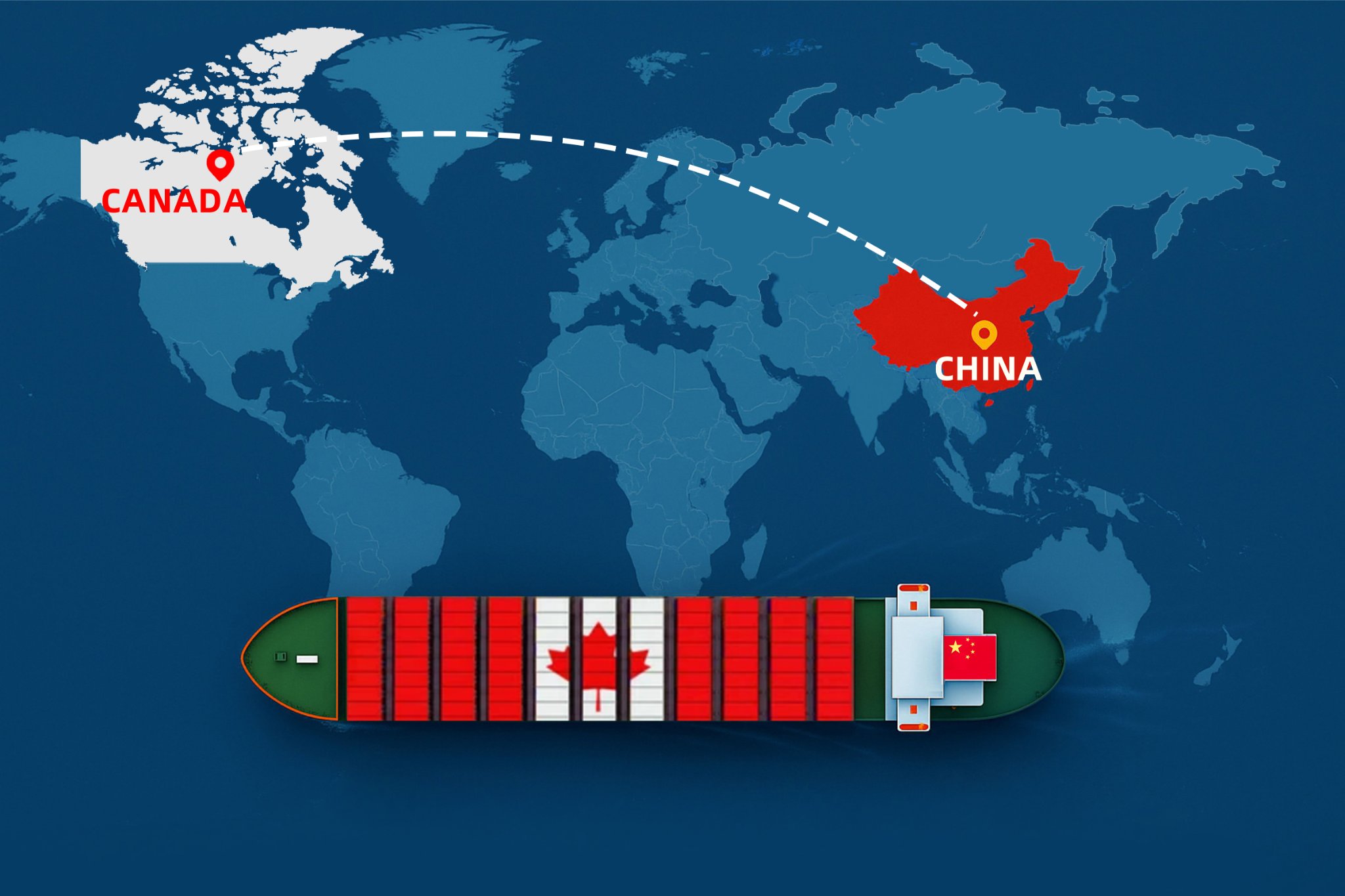
Quick Shipping Overview
The best shipping method depends on cargo size, delivery urgency, budget and final destination in Canada. Compare the main options below before reviewing detailed freight costs, transit times and routes.
FCL and LCL shipping provide an economical option for larger commercial shipments moving from China to Canada.
Usually best for Pallets, machinery and larger cargo volumesAir freight offers faster transportation for time-sensitive, higher-value or medium-sized commercial cargo.
Usually best for Urgent and higher-value commercial shipmentsCourier services such as DHL, FedEx and UPS are suitable for samples, documents and smaller urgent parcels.
Usually best for Samples, parcels and small urgent shipmentsA coordinated service can cover pickup in China, international freight, customs support and final delivery in Canada.
Usually best for Importers wanting one managed shipping solutionThese are planning ranges rather than guaranteed schedules. Actual transit time depends on origin, destination, carrier schedule, routing, customs clearance and final delivery location.
Freight Rates
Shipping costs from China to Canada vary by freight method, cargo volume or chargeable weight, origin in China and final delivery location in Canada. Sea freight is generally more economical for larger shipments, while air and express services are used when delivery speed is more important.
China to Canada Freight Rate Guide
Updated August 2026| Shipping Method | Pricing Basis | Indicative Rate | Best For |
|---|---|---|---|
| LCL Sea Freight | Per CBM | USD 70–110/CBM | Smaller commercial shipments and pallets |
| FCL Sea Freight | Per container | 20GP: USD 2,000–3,500 40GP: USD 3,350–5,800 | Larger shipments and full container loads |
| Air Freight | Per kg | USD 4.00/kg | Urgent, high-value or time-sensitive cargo |
| Sea DDP Shipping | Per kg / shipment | USD 1.68/kg Based on cargo and delivery location | Door-to-door sea shipping with import handling |
| Express Shipping | Per kg | USD 9–11/kg | Samples, documents and small urgent parcels |
Shipments delivered to Toronto, Ontario or other inland Canadian destinations may require an additional rail or truck leg after arrival at a Canadian gateway. Inland transportation and final delivery charges should therefore be confirmed according to the destination city and postal code.
Delivery Planning
Shipping time depends strongly on where the cargo enters Canada. Vancouver and Prince Rupert provide direct Pacific gateways, while shipments continuing to Toronto, Ontario or other inland destinations require an additional Canadian rail or truck leg.
Typical port-to-port planning range for direct services to Vancouver or Prince Rupert.
Typical planning range when ocean cargo continues inland to destinations such as Toronto.
Typical freight planning range to major Canadian air cargo gateways.
Typical courier delivery range for smaller urgent shipments.
Major China ports connect with Vancouver and Prince Rupert. Actual sailing time depends on the carrier, service schedule and whether the booking uses a direct or transshipment route.
| China Origin | Canada Gateway | Planning Time | Scope |
|---|---|---|---|
| Shanghai | Vancouver | about 22–30 days | Port to port |
| Shanghai | Prince Rupert | about 18–26 days | Port to port |
| Ningbo | Vancouver | about 27–35 days | Port to port |
| Yantian / Shenzhen | Vancouver | about 29–38 days | Port to port |
| Yantian / Shenzhen | Prince Rupert | about 24–32 days | Port to port |
LCL cargo requires consolidation in China and deconsolidation after arrival, so it normally takes longer than a direct FCL shipment.
Cargo continuing from Vancouver or Prince Rupert to Toronto and other inland cities requires additional rail or truck transit.
CBSA clearance, inspections, terminal availability and cargo release can affect the final delivery schedule.
Shipping Options
The best shipping method depends on how much cargo you have, how quickly it must arrive and where it will be delivered in Canada. Ocean freight is the main choice for commercial volumes, while air, express and sea DDP services solve different delivery and handling requirements.
Sea freight is usually the most economical choice for larger commercial shipments. Containers from major Chinese ports can enter Canada through Pacific gateways such as Vancouver and Prince Rupert, with inland rail or truck connections available for Toronto, Ontario and other Canadian markets.
FCL gives one shipper use of the container and avoids LCL consolidation and deconsolidation. It is generally preferred when the cargo volume justifies a dedicated 20GP or 40GP container.
LCL allows several importers to share container space and is useful when an order does not require a full container. Additional consolidation and deconsolidation steps normally make LCL slower than FCL.
Air freight is suitable when commercial cargo cannot wait for ocean transit. Toronto Pearson and Vancouver are important Canadian air cargo gateways, with other airports used according to destination and available flight capacity.
Sea DDP is useful when the importer wants a more integrated door-to-door shipping solution instead of coordinating the international freight and Canadian delivery separately. The exact quotation should clearly state the customs, duty, tax and final-delivery scope included.
Express courier service is the simplest option for samples, documents and smaller urgent parcels. DHL, FedEx and UPS can provide pickup-to-address delivery without the importer arranging a separate airport freight movement.
Quick Decision Which shipping method should you choose?
Canada Freight Network
Route selection depends on the final Canadian market. Western Canada is commonly served through Pacific ports, while cargo for Ontario and central Canada may continue inland by rail or truck. Air freight usually enters through major cargo airports such as Toronto Pearson or Vancouver.
Common China Origins Major departure ports
Vancouver is the main Canadian gateway for many container shipments arriving from Asia. It is particularly important for cargo destined for British Columbia and for containers continuing inland by rail to central Canadian markets.
Shipping from China to Prince Rupert provides access to a short trans-Pacific route, with the port closely integrated with CN Rail. It can be a strong option for containers continuing inland toward Toronto and other North American distribution markets.
Montreal is an important gateway for Quebec and eastern Canadian markets. For shipping from China to Montreal, Atlantic or connecting services may be used depending on the carrier schedule and selected routing.
Halifax can be used for Atlantic Canada and selected east-coast container routings. Its suitability for cargo from China depends on carrier service, routing and the final Canadian delivery point.
Important Canada Difference Shipping Sea Freight to Toronto
Airport selection depends on the final destination, available flight capacity and whether the shipment uses direct uplift or a connecting service.
Canada’s largest air cargo hub and the main air-freight gateway for Toronto, Ontario and much of central Canada.
A key Pacific air gateway for cargo moving between China, British Columbia and western Canadian markets.
Useful for air shipments serving Montreal, Quebec and selected eastern Canadian destinations.
Canada Import Compliance
For businesses importing from China to Canada, commercial goods must complete the applicable Canada Border Services Agency procedures. Importers should confirm their CARM registration, tariff classification, customs value and product requirements before cargo leaves China so customs clearance in Canada can be prepared before arrival.
A business importing commercial goods into Canada needs the appropriate Business Number and import-export program account. CARM is the CBSA system used to manage commercial import accounts, duties and taxes.
Canada uses a complete 10-digit tariff classification number for imported goods. The classification determines the applicable tariff treatment and is also used to assess customs duty.
Shipment descriptions, value, origin, quantities and transport documents should match. The importer or appointed customs broker can then prepare the commercial import declaration.
CBSA assesses customs duty, GST and other applicable charges. Selected shipments may require additional documentation or inspection before release.
A customs broker can prepare declarations and coordinate clearance, but the Canadian importer should still provide accurate product descriptions, classification, value, origin and supporting records.
Product controls and packaging requirements should be checked before the supplier loads the shipment in China.
Commercial importers should have the correct CBSA account setup before arrival. Account issues can delay customs clearance.
Food, plants, medical products, chemicals and other regulated goods may require permits or approval from another Canadian authority.
Solid-wood pallets, crates and dunnage from China should comply with Canadian wood-packaging requirements before shipment.
Small differences in tariff classification can change the applicable duty rate. Confirm the Canadian 10-digit classification and current tariff treatment before using a duty figure in the landed-cost calculation.
Shipment Readiness
A reliable freight quote needs more than the cargo weight. The final Canadian destination, packing dimensions, product type and required delivery scope can change the shipping method, routing and total cost.
Provide the actual destination city and postal code rather than only saying “Canada.” A shipment ending in Vancouver may use a different routing and cost structure from cargo continuing inland to Toronto, Ontario or another province.
Freight should be quoted from the final packed cargo, not the product-only size. LCL is normally calculated by CBM or weight/measurement, while air and express freight use chargeable weight.
Provide a clear product description and HS code if known. Batteries, chemicals, liquids, food, plants and other controlled or special cargo should be identified before the carrier or route is selected.
Supplier location affects origin pickup and export planning. The cargo-ready date is also needed before a vessel, flight or courier schedule can be selected.
Confirm whether the quote should cover port-to-port, airport-to-airport, door-to-door or Sea DDP shipping. For Canadian inland destinations, specify whether local rail, truck delivery and final-address delivery need to be included in the quotation.
Canada covers a very large delivery area. Final delivery costs can differ substantially between a major gateway city, an inland metropolitan area and a remote location. The destination postal code should therefore be confirmed before a door-delivery or Sea DDP rate is treated as final.
Shipping Process
A China-to-Canada shipment usually moves through several operational stages before final delivery. The exact process changes by FCL, LCL, air freight, express or Sea DDP service, but the main handover points remain similar.
Provide the commodity, carton count, packed dimensions, gross weight, supplier location and final Canadian city or postal code. Special cargo should be identified before the freight solution is selected.
The shipment is reviewed for FCL, LCL, air freight, express or Sea DDP service. For inland Canadian destinations, the route should also account for any rail or truck movement after arrival at the main gateway.
Cargo is collected from the supplier or delivered to the nominated warehouse. If several Chinese suppliers are involved, shipments can be coordinated for consolidation before export.
Export documents, carrier booking and origin customs formalities are coordinated before cargo enters the port or airport. The shipment then departs China using the confirmed vessel, flight or courier service.
After arrival in Canada, the importer or appointed customs broker completes the required import declaration and coordinates cargo release with CBSA. Any duty, GST, inspection or documentation issue should be resolved before the shipment moves onward.
Cargo can be released at the Canadian port or airport, or continue to the final destination. Shipments entering through Vancouver or Prince Rupert may move inland by rail or truck to Toronto, Ontario and other Canadian markets.
For example, a container may arrive at Vancouver or Prince Rupert and then continue inland before reaching the consignee in Ontario. When comparing quotations, check whether the price ends at the port, an inland terminal or the final delivery address.
Why Tonlexing
For importers looking for a freight forwarder from China to Canada, Tonlexing coordinates China-side pickup, international freight and destination handover. The shipping plan can also account for inland rail or truck movement when cargo continues beyond the Canadian gateway to Toronto, Ontario or other inland destinations.
Available Shipping Options One China-side freight coordinator
Tonlexing can coordinate factory pickup, origin handling and consolidation when goods are sourced from one or several suppliers. Packing information and cargo details can be checked before the international booking is finalized.
A container arriving at Vancouver or Prince Rupert may still need a rail or truck leg before reaching Toronto, Ontario or another inland market. The freight plan can therefore be compared according to the actual final destination rather than only the ocean port.
FCL and LCL cover different ocean volumes, while air freight and express services are available when delivery speed matters. Sea DDP can also be considered when the shipment requires a more integrated door-delivery arrangement.
Canada quotations should clearly identify whether the service ends at the port, airport, inland terminal or final address. Customs brokerage, duties, GST, inspections and destination charges should also be confirmed rather than assumed to be included.
Practical Shipping Answers
Practical answers about China-to-Canada freight costs, transit times, shipping methods, import duties and Sea DDP delivery.
Current reference rates are USD 70–110/CBM for LCL sea freight, USD 2,000–3,500 for a 20GP container and USD 3,350–5,800 for a 40GP container. Air freight is about USD 4.00/kg and express shipping is around USD 9–11/kg.
The final freight cost depends on cargo size, origin in China, destination in Canada and whether inland or final-address delivery is included.
Sea freight is usually the most economical option for commercial cargo. LCL is useful when a shipment does not require a full container, while FCL can become more economical as cargo volume increases.
For Toronto, Ontario and other inland Canadian destinations, compare the total cost including rail or truck movement, terminal handling and final delivery rather than comparing the ocean freight rate alone.
Sea freight to Vancouver or Prince Rupert typically requires about 18–30 days port to port. Cargo continuing inland to Toronto or other Ontario destinations may require approximately 37–55 days depending on the routing and whether the shipment moves by FCL or LCL.
Air freight usually takes about 6–10 days, while express courier delivery is typically around 3–6 days.
Canadian customs duty depends on the product's 10-digit Canadian tariff classification, origin, customs value and applicable tariff treatment. There is no single duty percentage that applies to every product imported from China.
GST of 5% applies to most imported goods. Some products may also be subject to excise taxes, additional duties or other product-specific charges.
Sea DDP can be arranged for suitable cargo and Canadian delivery locations. The service can combine China pickup, ocean freight, import handling and final delivery according to the confirmed quotation scope.
The current reference rate on this page is USD 1.68/kg. The final rate depends on the commodity, packed weight and dimensions, destination city or postal code and the customs, duty and tax scope included in the quotation.
Planning note: Freight rates, carrier schedules and Canadian import requirements can change. Confirm the current route, service scope, importer responsibilities, customs charges and final delivery requirements before booking.
Further Reading
Continue with focused guides covering Canada sea freight, shipping costs, transit times, air cargo, DDP delivery and full-container shipping from China.

Ocean Shipping
Review FCL and LCL shipping, Canadian port gateways, container options and ocean routes for commercial cargo moving from China.
View sea freight
Cost & Pricing
Compare sea, air and other freight costs and understand how cargo size, Canadian destination and inland delivery affect the final quotation.
Compare costs
Delivery Planning
Compare ocean, air and express transit times and see why cargo moving beyond Vancouver or Prince Rupert may require additional inland time.
View transit times
Door to Door
Understand how pickup, international freight, import handling and final Canadian delivery can be coordinated under a DDP shipping service.
Explore DDP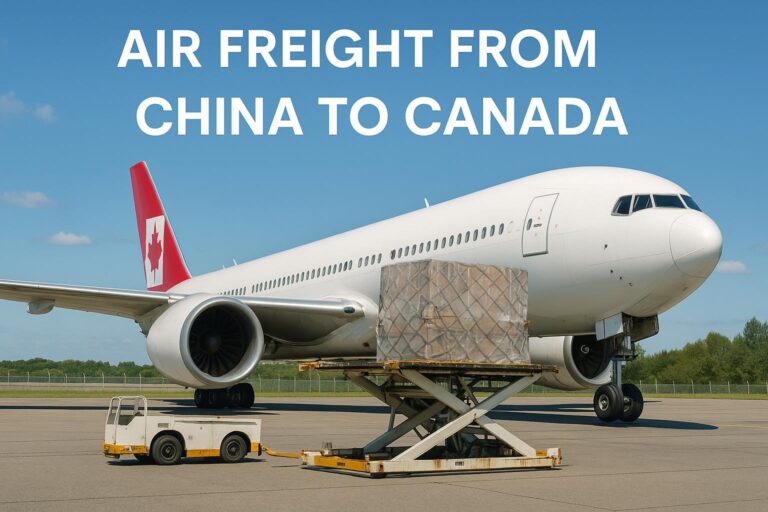
Air Cargo
Review chargeable weight, air cargo pricing, Canadian airport gateways and service options for urgent or higher-value commercial shipments.
View air freight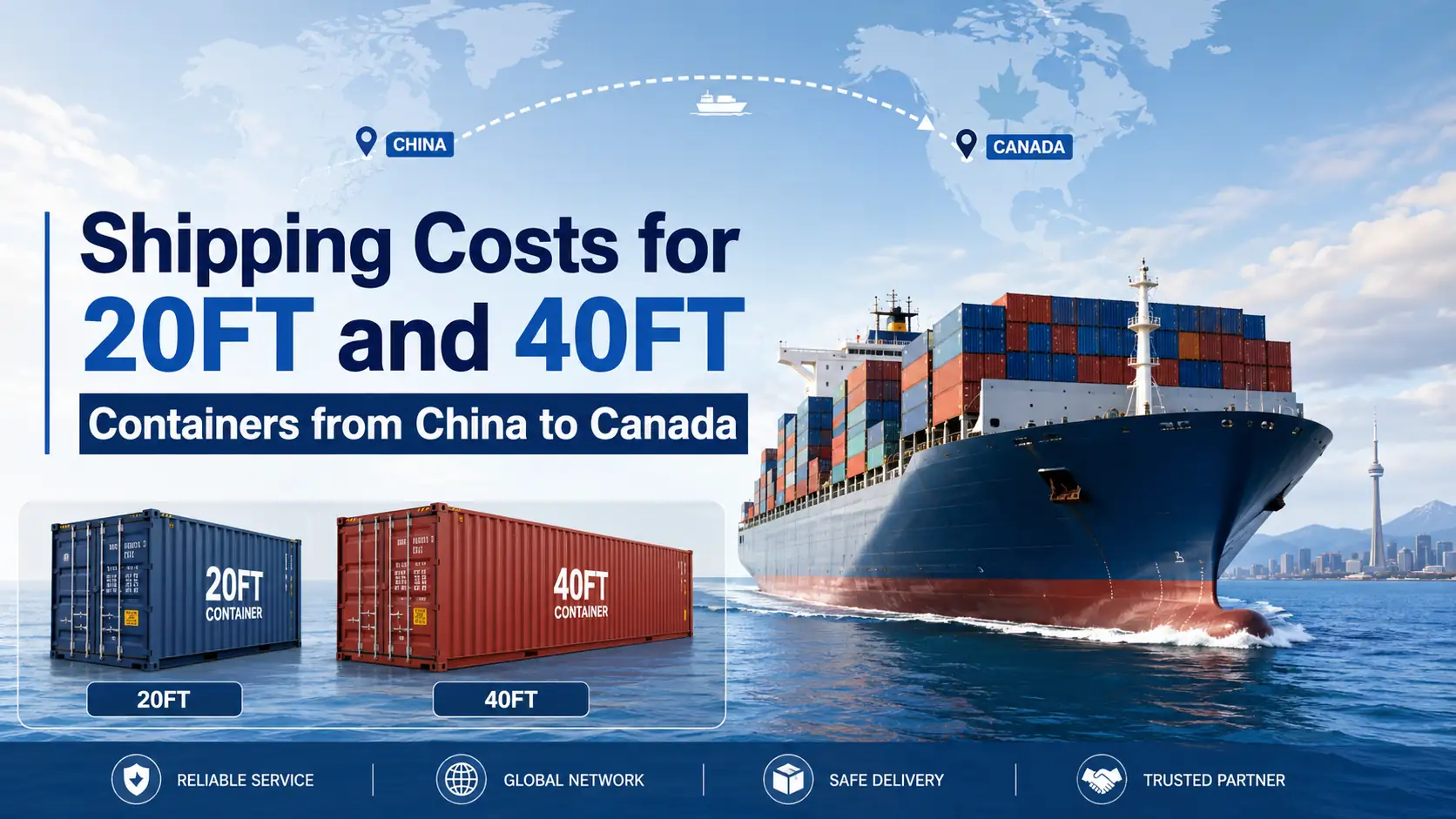
FCL Container Rates
Compare 20GP and 40GP container freight rates and the route, port and inland-delivery factors that affect FCL shipping to Canada.
Check container costsWhatsApp us