Sea Freight
FCL and LCL cargo mainly enters Mexico through Manzanillo or Lázaro Cárdenas before inland delivery.
Usually best for Shipments from 1 CBM, pallets and container loads

China–Mexico Freight Guide · Updated August 2026
Compare ocean freight through Manzanillo and Lázaro Cárdenas, air cargo via AIFA (NLU), express delivery and door-to-door shipping from China to Mexico. Review planning costs, transit times, customs steps and the documents your Mexican importer needs before booking.
Final rates and DDP availability depend on cargo details, HS code, Mexican importer setup, route and delivery postcode.
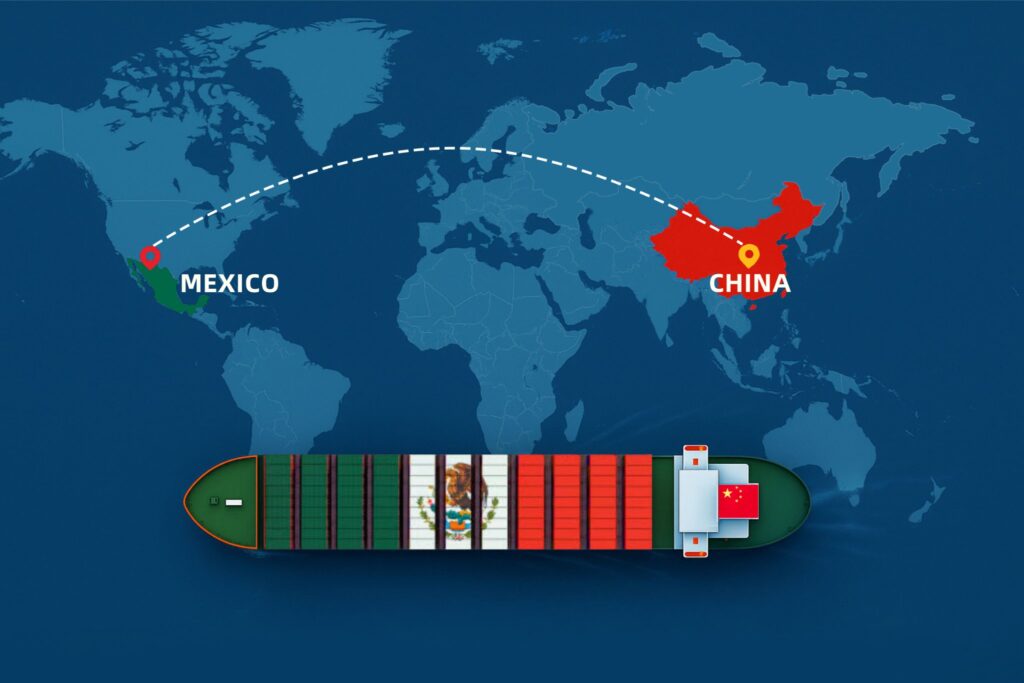
Quick shipping overview
Most China–Mexico sea freight enters through Pacific ports, while urgent cargo is commonly routed through AIFA, Guadalajara or Monterrey. The best option depends on shipment size, delivery city, importer status and the required customs service.
FCL and LCL cargo mainly enters Mexico through Manzanillo or Lázaro Cárdenas before inland delivery.
Usually best for Shipments from 1 CBM, pallets and container loadsAir cargo can move through AIFA (NLU), Guadalajara (GDL) or Monterrey (MTY), depending on the delivery region.
Usually best for Time-sensitive commercial shipments from 45 kgDHL, UPS and FedEx provide fast door-to-door delivery, subject to courier customs and commodity restrictions.
Usually best for Urgent commercial cartons from 45 kgPickup, international freight, Mexico customs coordination and final delivery are managed under an agreed service scope.
Usually best for Importers needing coordinated customs and deliveryTransit ranges reflect normal operating conditions and exclude customs delays and final delivery. Carrier schedules, transshipment, inspections and the destination city can affect total shipping time.
Mexico freight pricing
A China–Mexico quote must be read together with its service scope. A sea rate to Manzanillo may cover only port freight, while delivery to Mexico City, Guadalajara, Monterrey or another inland postcode adds local handling, customs and domestic transport costs.
Current China to Mexico freight rate guide
Updated August 2026| Shipping method | Pricing basis | Current rate | Mexico service scope |
|---|---|---|---|
| Sea LCL | Per CBM or W/M | USD 5–20/RT Minimum 1 CBM | Consolidated cargo through Manzanillo or Lázaro Cárdenas |
| Sea FCL | Per container | 20GP: USD 5,500–6,500 40HQ: USD 6,000–7,000 | Full containers to Pacific Mexico or onward inland delivery |
| Air Freight | Per kg of chargeable weight | USD 7–9/kg Minimum 45 kg | Airport service through NLU, GDL or MTY |
| Express Shipping | Per kg of chargeable weight | USD 10–13/kg Minimum 45 kg | Courier delivery to eligible Mexican postcodes |
| Door-to-Door / DDP | Per CBM | Sea DDP: USD 430–500/CBM Customs scope must be confirmed | Quoted after reviewing the HS code, importer setup and delivery postcode |
The LCL range mainly reflects the ocean freight component and does not automatically include Mexico destination charges. Mexican import costs may include IGI based on the HS code, generally 16% IVA, DTA, customs broker fees, NOM-related checks, inspections, storage and inland delivery. Charges are included only when listed in the confirmed quotation.
Mexico transit time guide
Direct Pacific services to Manzanillo or Lázaro Cárdenas are normally faster than routes requiring transshipment or onward movement to a Gulf gateway. Carrier transit time does not include Mexican customs clearance or inland delivery.
Typical China to Mexico transit times
Normal conditions| Shipping method | Main transit | Door-to-door planning | Common Mexico routing |
|---|---|---|---|
| Sea FCL | 22–35 days Port to port | 30–45 days Including normal origin and delivery stages | Direct or connecting service to Manzanillo or Lázaro Cárdenas |
| Sea LCL | 25–40 days Port to port | 35–50 days Consolidation and deconsolidation add time | Consolidated service through a Pacific gateway before inland delivery |
| Air Freight | 3–7 days Airport to airport | 5–10 days Including normal handling and clearance | AIFA (NLU), Guadalajara (GDL) or Monterrey (MTY) |
| Express | 2–4 days Courier network transit | 3–7 days Customs processing can extend delivery | DHL, UPS or FedEx delivery to eligible Mexican postcodes |
These are planning ranges under normal conditions, not guaranteed delivery times. Mexican customs inspections, NOM verification, port congestion, cargo release and domestic truck availability can extend the total time.
Mexico gateway Pacific and Gulf gateways can require different routings.
Port and inland capacity Congestion or limited rail and truck space can delay release.
Importer and documents RFC, Padrón, pedimento or NOM issues can hold the cargo.
Destination city Inland and remote postcodes require additional delivery time.
Shipping methods
For Mexico, the destination region matters as much as cargo weight and urgency. Pacific ports suit most container cargo, while NLU, GDL and MTY provide different air options for central, western and northern Mexico.
Most China–Mexico container cargo enters through Manzanillo or Lázaro Cárdenas. Cargo for Veracruz, Altamira or Gulf-side destinations may require a connecting service or inland movement from a Pacific port.
Use LCL from 1 CBM, or compare FCL and LCL shipping to Mexico for pallets, machinery, wholesale orders and larger loads.
Compare the Mexico gateway with the final delivery city, not the ocean rate alone.
AIFA (NLU) is a major cargo gateway for Mexico City and central Mexico. Guadalajara and Monterrey can reduce inland movement for western or northern destinations, while some passenger-belly cargo may arrive through MEX.
Commercial shipments from 45 kg, urgent replenishment and higher-value products.
Arrival airport, chargeable weight, customs broker and final delivery distance.
Express shipping provides pickup, tracking, customs processing and final delivery within one courier network. Acceptance still depends on the commodity, declared value, consignee information and destination postcode.
Urgent commercial cartons from 45 kg that fit courier size and commodity limits.
Import restrictions, remote-area fees, dimensional weight and Mexican consignee requirements.
Door-to-door shipping can combine China pickup, sea or air freight, Mexico customs coordination and final delivery. It does not automatically mean that import duty and taxes are included.
Importers wanting one coordinator from the Chinese supplier to the Mexican delivery address.
Importer of record, RFC, Padrón, HS code, IGI, IVA, DTA and any NOM requirements.
For Mexico DDP shipping, confirm whether the quotation includes the importer arrangement, customs entry, IGI, IVA, DTA, broker fees, inspections, storage and final delivery. DDP availability depends on the commodity, HS code and importer setup.
Mexico freight network
China–Mexico container services mainly use Pacific gateways, while Gulf ports may require connecting services or a different inland plan. For air cargo, the arrival airport should be selected around the Mexican delivery region and customs setup.
Trans-Pacific services connect major Chinese ports with Mexico’s Pacific coast. Cargo for Mexico City and central Mexico can continue by rail or truck, while Gulf-side destinations require a separate routing comparison.
AIFA (NLU) is an important freighter gateway for central Mexico. GDL and MTY may reduce domestic transport for western or northern deliveries, while MEX may be used for available passenger-belly services.
A major Pacific container gateway for western and central Mexico, with onward rail and truck connections.
A deep-water Pacific gateway serving central Mexico and inland industrial markets by rail and truck.
A Gulf gateway for eastern and central Mexico. Services from China commonly require a connecting route.
A Gulf port serving industrial cargo and northeastern Mexico, including routes toward Monterrey.
The lowest international freight rate does not always produce the lowest delivered cost. Confirm the port or airport against the Mexican delivery postcode, customs broker arrangement and available inland transport before booking.
Mexico import compliance
Commercial imports are cleared through Mexico’s customs system under ANAM. Before departure, the consignee should confirm its importer registration, tariff classification, customs broker arrangement and any product-specific NOM or permit requirement.
The importer normally needs an active RFC and registration in the Padrón de Importadores . Certain product categories may also require a sector-specific registration.
Confirm the Mexican tariff fraction, NICO where applicable, customs value and country of origin. Check NOM standards, Spanish labeling and permits before shipping.
The appointed customs broker prepares the Mexican pedimento using the invoice, packing list, transport document and importer data, then calculates the applicable border charges.
ANAM may release the shipment or select it for document review or inspection. Cargo can move inland after customs requirements and applicable payments are completed.
Import duty, known as IGI, depends on the Mexican tariff classification, origin and current tariff treatment. IVA is generally 16%, while DTA and customs processing costs may also apply. Do not use one duty percentage for every product.
Electrical products, textiles, toys, consumer goods and other regulated items may be subject to a specific NOM requirement . Compliance or Spanish-language labeling may need to be arranged before customs release, depending on the applicable standard.
Food, cosmetics, medical products, chemicals, batteries, vehicles and agricultural goods may need extra registration, permits or regulator approval. Confirm admissibility before booking.
The Mexican importer and appointed licensed customs broker remain responsible for admissibility, tariff classification, the pedimento, duties, taxes and required approvals. Tonlexing can coordinate freight and shipment documents under the confirmed service scope.
Review Mexico booking requirements →Mexico shipment readiness
A usable Mexico freight quote needs more than cargo weight. The delivery postcode, importer status, customs scope and product compliance can change the route, cost and whether door-to-door or DDP service is available.
Provide the product name, material, intended use, model, declared value and HS code if known. Identify batteries, liquids, powders, magnets, chemicals or branded goods.
Confirm package count, gross weight, carton or pallet dimensions, total CBM and stackability. State whether solid-wood packaging is used.
Provide the China pickup city and exact Mexican delivery postcode. Confirm whether the quote should end at a port, airport, warehouse, business or residential address.
Confirm the importer of record , RFC, Padrón registration and appointed customs broker. Check the tariff fraction, NICO, NOM, labeling and permit requirements.
Provide the realistic factory completion date and any required delivery deadline. Carrier space and rates should be checked again when the cargo is ready.
Confirm EXW, FOB, CIF, DAP or DDP and identify who handles import entry, IGI, IVA, DTA, broker fees, inspections and final delivery in Mexico.
From China pickup to Mexico delivery
A China–Mexico shipment connects supplier pickup, export clearance, international freight, Mexican customs and domestic delivery. Importer and broker preparation should begin before the cargo reaches the selected Mexican gateway.
Provide the China pickup city, Mexican delivery postcode, commodity, HS code, declared value, package count, weight, dimensions and cargo-ready date.
Compare sea, air, express or door delivery by total cost, timing and final location. Confirm the Incoterm and whether customs charges are included.
Cargo is collected from the Chinese supplier or delivered to the warehouse for receiving, measurement, consolidation and export preparation under the confirmed plan.
Carrier booking, export documentation, China customs procedures and loading are coordinated before the vessel or flight departs for Mexico.
While the cargo is in transit, the Mexican importer and licensed customs broker prepare the pedimento, tariff classification and supporting documents.
After ANAM clearance and any required inspection or regulator release, the shipment is collected from the port, airport or depot for domestic delivery.
China–Mexico freight coordination
As a China-based freight forwarder for Mexico-bound cargo, Tonlexing coordinates origin pickup, international freight, shipment documents and handover to the importer’s licensed customs broker. The route must fit the Mexican delivery region, while the importer and broker arrangements should be ready before the cargo arrives.
Mexico-specific route planning
We compare Manzanillo, Lázaro Cárdenas, Veracruz or Altamira for sea freight and NLU, GDL or MTY for air freight according to the cargo, schedule and inland delivery requirement.
Supplier contact, pickup, consolidation, packing information and export preparation are coordinated before departure. This is especially useful when one Mexico shipment contains goods from several Chinese suppliers.
One shipment plan before cargo leaves ChinaThe lowest international freight rate is not always the lowest delivered cost. Port congestion, rail or truck connections and the destination city are considered when comparing available routes.
Route planning around the Mexican delivery regionCommercial documents and shipment data are prepared for handover to the Mexican importer and appointed customs broker. RFC, Padrón de Importadores, tariff classification and permit requirements should be checked before arrival.
Earlier preparation for the Mexican pedimentoThe quotation identifies the freight basis, included services and known exclusions. For door-to-door or DDP requests, the customs, tax and importer arrangement must be confirmed instead of being assumed.
Clear responsibility before bookingBefore booking: confirm whether IGI, IVA, DTA, customs-broker fees, inspections, storage and inland delivery are included or excluded. These charges should never be assumed to be included simply because the quotation uses “door-to-door” or “DDP.”
Practical shipping answers
Answers to common questions about China–Mexico freight costs, transit times, customs clearance, import taxes and door-to-door delivery.
Typical planning ranges are 22–35 days port to port for sea FCL, 25–40 days for the main LCL movement, 3–7 days airport to airport by air freight and 2–4 days by express.
Supplier pickup, consolidation, Mexican customs clearance and final delivery can extend the total door-to-door time.
August 2026 reference rates are USD 5–20/RT for sea LCL, USD 5,500–6,500 for a 20GP, USD 6,000–7,000 for a 40HQ, USD 7–9/kg for air freight and USD 10–13/kg for express shipping.
Tonlexing generally accepts LCL from 1 CBM and air or express cargo from 45 kg. The final rate depends on the origin, gateway, cargo details, season and Mexican delivery postcode.
Sea freight normally provides the lowest unit cost for larger or non-urgent cargo. LCL is suitable when the shipment does not require a full container, while FCL can become more economical as cargo volume increases.
The comparison should include destination handling, customs clearance and inland delivery. A lower rate to one Mexican port may cost more overall if the cargo must travel farther to its final destination.
Most commercial shipments require a commercial invoice, packing list, bill of lading or air waybill, accurate product description, tariff classification and Mexican importer details.
The importer generally needs an RFC and registration in the Padrón de Importadores. The appointed Mexican customs broker prepares the pedimento and confirms whether NOM compliance, permits or other supporting documents are required.
Import duty, known as IGI, depends on the product’s Mexican tariff classification, origin and any applicable trade treatment. It should not be estimated using one general duty percentage for all goods.
Import VAT, known as IVA, is generally 16%. The shipment may also be subject to DTA, customs-broker charges and product-specific taxes or regulatory costs.
Door-to-door and sea DDP services can be arranged for suitable cargo and destinations. The current sea DDP reference is USD 430–500/CBM, but the customs and tax scope must be confirmed for each shipment.
DDP should not automatically be treated as all-inclusive. The quotation must state who acts as importer, and whether IGI, IVA, DTA, customs-broker fees, inspections, storage and final delivery are included or excluded.
Planning note: freight rates, carrier schedules and Mexican import requirements can change. Confirm the current route, importer arrangement, customs scope and destination charges in the final quotation before booking.
Further reading
Continue with detailed guides covering freight rates, sea and air shipping, container costs, delivery times and DDP service to Mexico.

Cost and pricing
Compare FCL, LCL, air freight and DDP reference rates and the charges affecting delivered cost.
Compare shipping costs
Ocean shipping
Review FCL and LCL services, Mexican port options, container planning and ocean delivery.
View sea freight guide
Air cargo
Compare air freight costs, chargeable weight, airport routes and customs preparation.
View air freight guide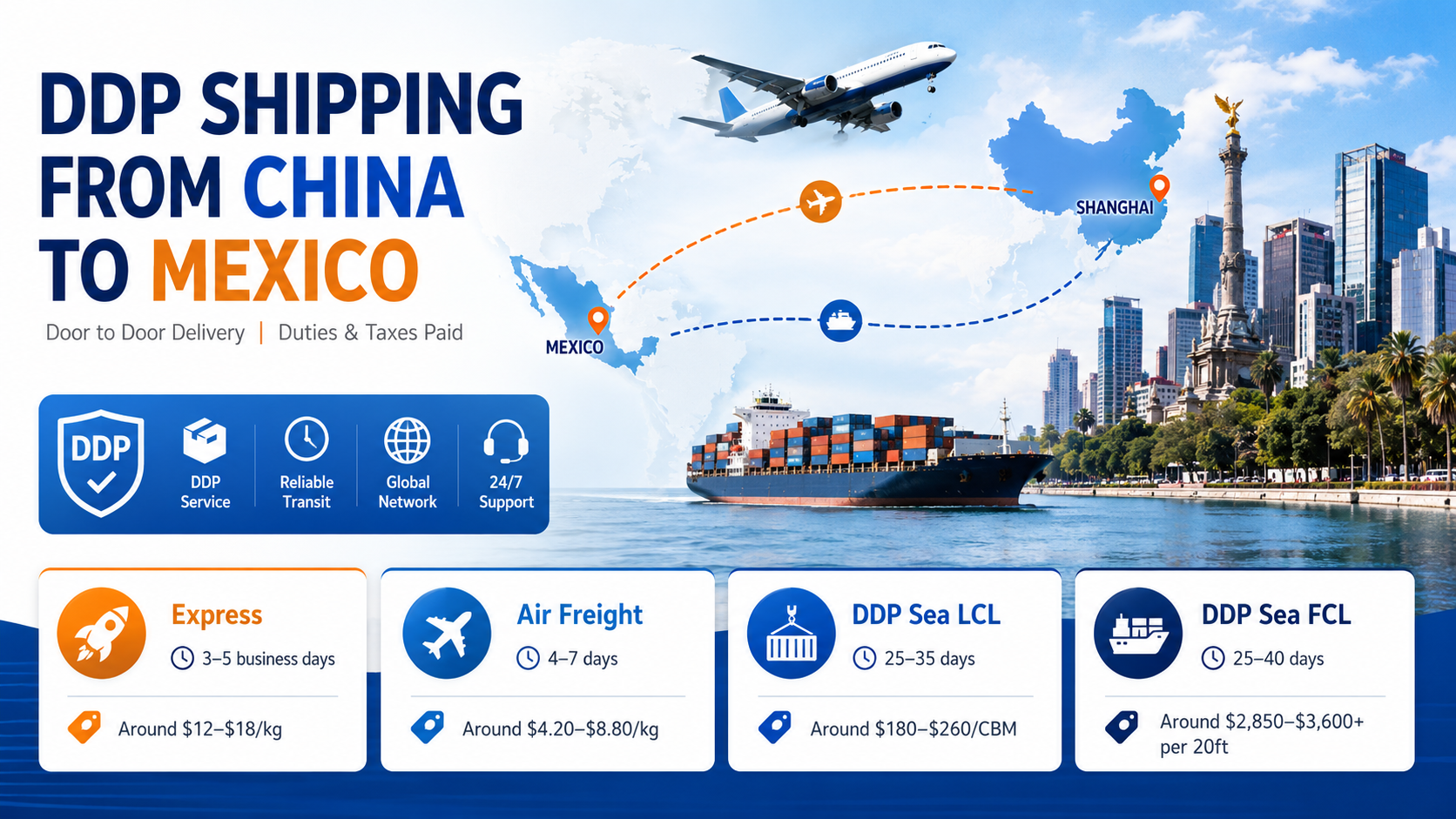
Door to door
Understand freight, Mexican customs clearance, import charges and final delivery scope.
Explore DDP shipping
FCL container rates
Compare container sizes, FCL rate factors, Mexican ports and route planning.
View container costs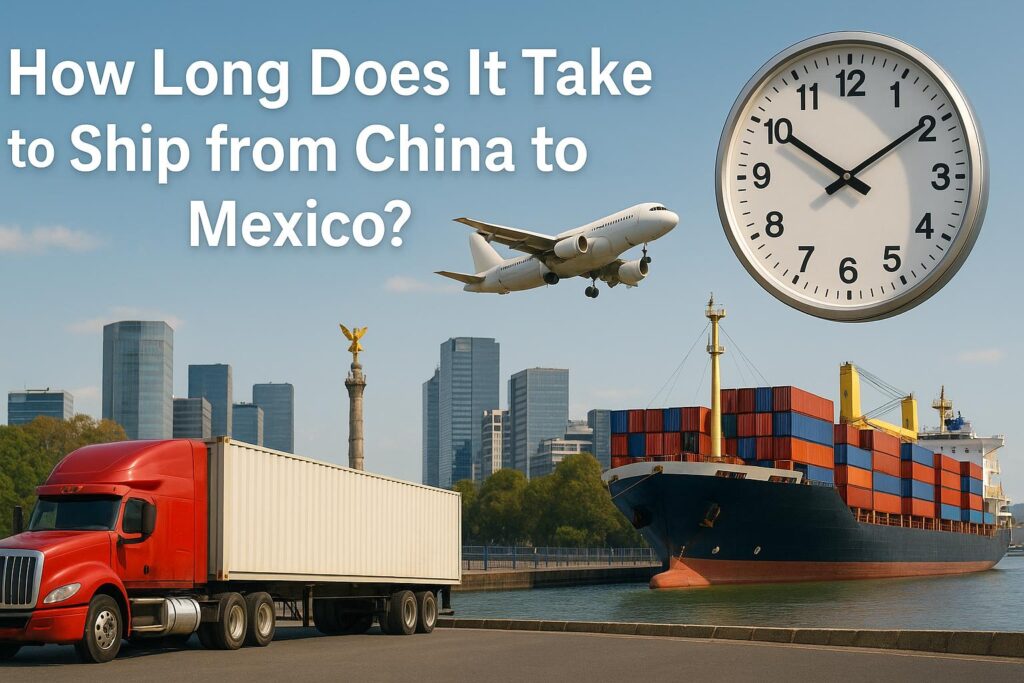
Transit time
Compare sea, air, express and door-to-door delivery times from China to Mexico.
View transit timesA real shipment showing how cargo size, handling requirements and the Mexican destination affect the selected service.
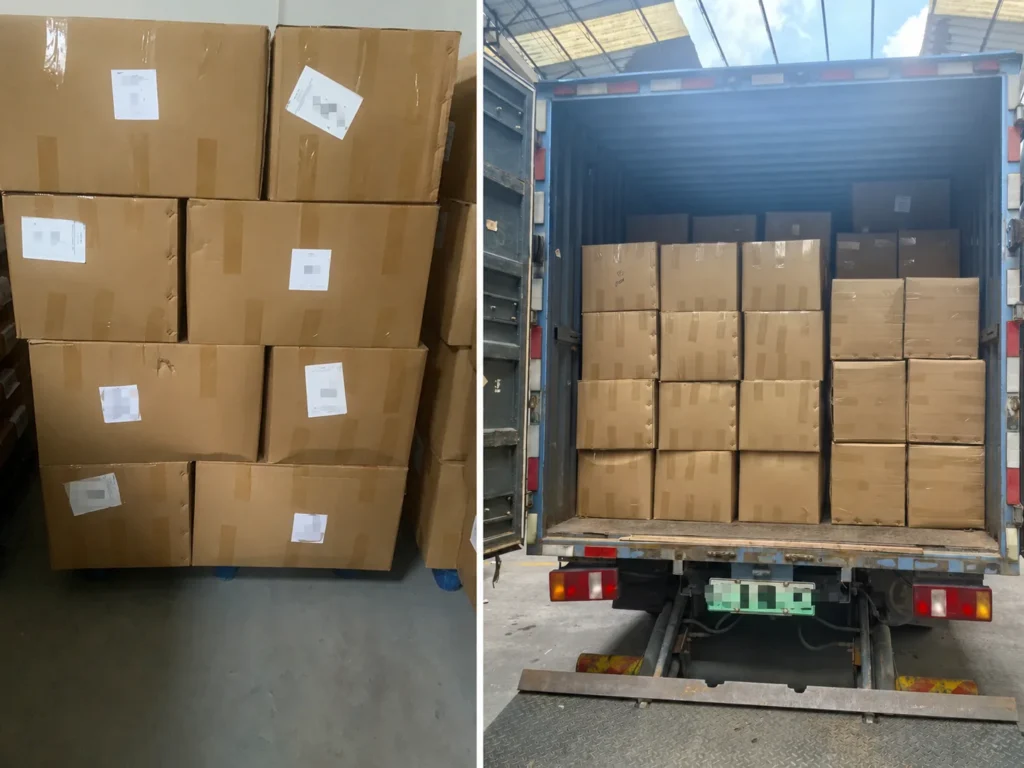
Shenzhen, China → Manzanillo, Mexico
Tonlexing coordinated an FCL shipment of 140 cartons weighing 2,449.5 kg and measuring 14.92 CBM. A full container arrangement kept the cargo together and reduced consolidation handling.
View the Mexico case studyWhatsApp us