Sea Freight
FCL and LCL ocean freight are the main choices for heavy, bulky or high-volume cargo moving from China to Germany.
Usually best for Pallets, machinery, wholesale orders and container loads

China–Germany Shipping Guide · Updated September 2026
Compare sea freight, air freight, rail freight and DDP shipping from China to Germany. Review shipping costs, transit times, major routes, German customs requirements and the best freight option for your cargo before booking.
Rates and transit times depend on cargo details, route, service scope and current carrier capacity.

Quick shipping overview
The best shipping method depends on cargo size, urgency, budget and the required delivery scope. Sea freight offers the lowest unit cost for larger shipments, while air and rail provide faster alternatives. DDP is useful when a more complete door-to-door service is required.
FCL and LCL ocean freight are the main choices for heavy, bulky or high-volume cargo moving from China to Germany.
Usually best for Pallets, machinery, wholesale orders and container loadsAir freight provides faster transport for urgent commercial cargo, higher-value goods and inventory that cannot wait for an ocean sailing.
Usually best for Urgent, time-sensitive and higher-value shipmentsRail freight offers a middle option between air and sea, connecting major Chinese logistics hubs with inland destinations such as Duisburg and Hamburg.
Usually best for Cargo needing better speed than sea at a lower cost than airDDP shipping can combine pickup in China, international freight, customs coordination and final delivery to an agreed address in Germany under one service scope.
Usually best for Importers wanting a simpler managed delivery solutionTransit times are planning ranges. Actual delivery time depends on the origin city, route, carrier schedule, consolidation, customs clearance and final delivery address in Germany.
Cost & Pricing
Freight rates vary by cargo size, chargeable weight, route, season and delivery scope. Use these indicative rates to compare methods, then request a shipment-specific quote.
Indicative freight rate comparison
Updated September 2026| Shipping method | Pricing basis | Indicative range | Usually suitable for |
|---|---|---|---|
| Sea LCL | Per RT | USD 5/RT Minimum charge may apply | Smaller commercial cargo and pallets |
| Sea FCL | Per container | 20ft: USD 2,100 40ft: USD 3,400 | Larger or container-volume shipments |
| Air Freight | Chargeable weight | USD 3.5–4.5/kg Varies by weight tier and route | Urgent, valuable or time-sensitive cargo |
| Rail Freight | Per CBM | USD 140/CBM Route and service dependent | Cargo balancing transit time and freight cost |
| DDP & Door-to-Door | Per kg | USD 1.1–1.4/kg Based on cargo and delivery scope | Importers needing one managed solution |
Freight rates vary by cargo, route, carrier capacity, season and service scope. Import duty, VAT, inspections, storage, destination handling and inland delivery may affect the total landed cost unless specifically included in the quotation.
Transit Time Guide
Shipping time from China to Germany varies by transport mode, origin, route and delivery scope. Express and air freight are the fastest options, rail freight provides a middle ground, and sea freight is normally used when cost matters more than speed.
Typical China–Germany transit time comparison
Planning ranges| Shipping method | Typical time | Timing basis | Usually suitable for |
|---|---|---|---|
| Express Courier | 2–5 days | Typical door-to-door courier service | Samples, documents and smaller urgent parcels |
| Air Freight | 3–7 days | Airport-to-airport | Urgent commercial cargo and higher-value goods |
| Rail Freight | 15–20 days | Main terminal transit | Cargo needing faster transit than sea without using air freight |
| Sea Freight | 30–40 days | Port-to-port | Larger, heavier and less time-sensitive shipments |
These are planning ranges rather than guaranteed delivery times. LCL consolidation, flight or sailing schedules, port congestion, customs clearance and final delivery can extend the total shipping time.
Door-to-door shipping takes longer than the main international transit because pickup, export handling, customs clearance and final delivery in Germany are included.
Ocean Freight
Sea freight is one of the main shipping methods for moving larger commercial cargo from China to Germany. Importers can choose between FCL for a full container load and LCL for smaller shipments that share container space with other cargo. The right option depends mainly on shipment volume, cargo type, budget and delivery timing.
FCL gives one shipper the use of an entire container and is normally the more practical ocean freight option when cargo volume is large enough to justify dedicated equipment.
Machinery, large wholesale orders, palletized cargo and shipments that require dedicated container space.
Fewer consolidation and deconsolidation stages than LCL, with the container moving under one shipment.
LCL shipping allows several shipments to share the same container. It is useful when the cargo is too large for air freight but does not require a full container.
Smaller commercial orders, several pallets or cargo that does not justify paying for an entire container.
Consolidation and deconsolidation add handling stages and can make LCL transit less predictable than FCL.
Major Chinese ports connect with Germany through established ocean freight services. The exact transit time depends on sailing schedules, routing and port conditions.
Ocean freight usually makes the most sense when reducing the shipping cost per unit is more important than achieving the shortest possible delivery time.
Air Cargo
Air freight from China to Germany is mainly used for urgent, time-sensitive or higher-value commercial cargo. Typical airport-to-airport transit is around 3–7 days, depending on the departure airport, destination airport, flight schedule and whether the service is direct or routed through another hub.
Air freight is usually worth considering when delivery speed matters more than achieving the lowest possible freight cost. It can also be useful when the shipment is too large for a normal courier parcel but still suitable for scheduled air cargo.
Common air cargo can include electronics, machinery parts, replacement components, samples, fashion products and other commercial goods where inventory availability or delivery deadlines are important.
Major Chinese cargo airports connect with Germany through direct and connecting air services. These transit times are planning ranges and can vary with flight schedules and available capacity.
The destination airport depends on the airline, route, available capacity and the final delivery location in Germany. Frankfurt is a major gateway, while Munich and Leipzig/Halle can also be used for China–Germany air cargo.
China–Europe Rail
Rail freight from China to Germany provides a middle option between air freight and ocean shipping. Typical rail transit is around 15–20 days on many services, making it useful for commercial cargo that needs faster delivery than sea freight without using air transport.
Rail freight is especially useful for inland China–Germany supply chains where the shipment is too time-sensitive for normal ocean freight but does not justify the cost of air freight.
Services connect major Chinese rail hubs with logistics centers in Germany, after which cargo can continue by truck to the final destination.
Rail services can originate from several inland logistics hubs in China and connect with German rail destinations. Schedules vary by departure terminal, service and routing.
Rail shipments can be arranged for smaller consolidated cargo or for larger containerized loads. The right format depends on shipment volume, loading requirements and the available rail service from the origin terminal.
Suitable for smaller commercial shipments that can share container space with other cargo.
Suitable for larger shipments requiring dedicated container capacity on the rail service.
Managed Delivery
Door-to-door shipping can combine supplier pickup in China, international freight, customs coordination and final delivery to an address in Germany. DDP shipping goes further by defining how import clearance, duties, taxes and delivery responsibilities are handled within the agreed service.
Door-to-door shipping focuses on managing the transport journey from the supplier or warehouse in China to the consignee's delivery address in Germany.
DDP is used when the agreed shipment scope includes import clearance and delivery to the named destination, with duties and taxes handled according to the confirmed DDP arrangement.
A managed shipment normally covers pickup in China, international transport, German customs coordination and final delivery to the consignee.
Cargo is collected from the supplier or delivered to the origin warehouse.
Cargo details, export documents and the international freight booking are prepared.
The shipment moves by sea, air or rail according to the selected service.
Import documents and customs requirements are processed for entry into Germany.
Released cargo is delivered to the confirmed address and postal code in Germany.
The importer arrangement, customs requirements, tax treatment and product compliance should be checked before the shipment leaves China. These details can affect whether a DDP service is suitable and what is included in the quotation.
Confirm the importer arrangement and the EORI details required for the planned customs procedure.
Confirm how German import VAT will be handled and whether it is included in the quoted service.
Products subject to EU requirements may need CE marking, certificates, test reports or other compliance documents.
Provide the full address and postal code so inland, residential or remote-area delivery requirements can be checked.
Freight Network
Shipping from China to Germany can move through major seaports, cargo airports and China–Europe rail terminals. The best route depends on the cargo origin, shipping method, available carrier capacity and the final delivery location in Germany.
Ocean freight routing is selected according to the Chinese origin port, German destination gateway, carrier sailing, cargo readiness and the final inland delivery location.
Air cargo can move on direct or connecting services depending on airline capacity. Frankfurt, Munich and Leipzig/Halle can be used according to the route, cargo requirements and final delivery location.
Rail freight provides an inland alternative between air and sea freight. After arrival at the German rail terminal, cargo can continue by truck to the final consignee address.
Used for FCL and LCL cargo arriving from major Chinese ports before customs clearance and inland delivery.
Another Germany gateway for containerized cargo moving from China and continuing to inland destinations.
Can be used for China–Germany ocean freight depending on carrier routing, sailing schedule and destination needs.
A Germany rail destination used for China–Europe freight before onward trucking to the final delivery address.
The final port, airport or rail terminal should be confirmed when booking because carrier capacity, schedules, connections and the German delivery address can change the most practical routing.
Import Compliance
Goods shipped from China to Germany must complete import customs clearance before they can be released for final delivery. Accurate product classification, importer details and shipping documents are important because errors can lead to customs delays, additional checks or storage charges.
Confirm an accurate product description and HS code and check whether the product is subject to specific EU compliance or import requirements.
The importer information and EORI details required for the customs declaration should be confirmed before arrival.
The customs broker or responsible party submits the import declaration using the commercial and transport documents.
Customs may assess duties and import VAT, request additional information or inspect the cargo before releasing it.
The exact document set depends on the product and shipping method, but most commercial imports require the following information before customs clearance can be completed.
German importers carrying out customs activities need the appropriate EORI details for customs procedures. Confirm the importer and EORI arrangement before the goods arrive rather than waiting until customs clearance begins.
The HS code affects customs treatment, applicable duties and product requirements. Avoid selecting a code only because it appears to have a lower duty rate; the classification should match the actual goods.
Certain products entering Germany must meet applicable EU requirements. Depending on the product category, this can include CE marking, technical documentation, test reports, labeling or other conformity requirements.
Incomplete invoices, inconsistent product descriptions, incorrect HS codes, missing importer information and unavailable compliance documents can delay customs clearance. Preparing the commercial invoice, packing list, importer details and product documents before departure helps reduce avoidable amendments and storage time.
Shipping Process
A China–Germany shipment normally starts with cargo information and service selection, followed by pickup or warehouse handling, export preparation, international transport, German customs clearance and final delivery. Working with an experienced freight forwarder from China to Germany helps coordinate these stages across sea, air, rail and door-to-door services.
Providing complete shipment information at the beginning helps the freight forwarder choose the correct service, calculate the chargeable weight or volume and avoid unnecessary changes after booking.
Provide the product name, number of packages, carton dimensions, gross weight, total volume, pickup location in China and the German delivery address or postal code.
Cargo can be collected from the supplier or delivered to the origin warehouse. For warehouse-handled shipments, the packages are checked and the final weight and dimensions can be confirmed before billing.
Once the actual shipment data and service scope are confirmed, the final freight bill can be issued. Payment and booking arrangements are then completed according to the selected shipping method.
Export documents are prepared and the cargo is declared for export in China. The shipment is then scheduled on the confirmed vessel, flight or rail service.
The cargo moves from China to Germany by sea freight, air freight or rail freight. Tracking and shipment updates are provided according to the selected service.
After arrival, the shipment completes the agreed import customs procedure. Once released, the cargo can be delivered to the consignee, warehouse or other confirmed destination in Germany.
FCL shipments may load directly at the supplier or container yard, while LCL, air freight and rail LCL normally involve additional warehouse or consolidation handling. Door-to-door and DDP services also require the customs and delivery scope to be confirmed before booking.
Choosing a Service
The best shipping method depends on shipment size, urgency, cargo value, delivery scope and budget. There is no single option that is best for every China–Germany shipment, so the practical choice is usually based on the trade-off between freight cost, transit time and handling requirements. A China-based shipping agent or freight forwarder can also compare routing, carrier schedules and delivery scope for the same shipment.
Sea freight is usually the first option to consider for larger or heavier shipments where reducing the transportation cost per unit matters more than fast delivery.
Air freight is more suitable when commercial cargo must reach Germany quickly and the shipment can justify a higher transportation cost.
Rail is useful when sea freight is too slow but air freight is faster or more expensive than the shipment actually needs.
Express courier is normally the simplest option for smaller parcels where very fast door-to-door delivery is more important than achieving the lowest freight rate.
A managed delivery service is useful when the importer wants one logistics provider to coordinate more of the journey from China through customs and final delivery in Germany.
Before selecting a freight method, compare the shipment against these four factors rather than choosing only by the lowest quoted rate.
Practical Shipping Answers
Quick answers about shipping costs, transit times, sea and air freight, German customs clearance, import VAT and door-to-door delivery from China to Germany.
The best shipping method depends on cargo size, urgency and budget. Sea freight is generally better for larger or less urgent cargo, air freight for urgent commercial shipments, rail freight for shipments needing a balance between speed and cost, and express courier for smaller urgent parcels.
Shipping cost depends on the transport method, cargo volume or chargeable weight, origin in China, destination in Germany, season and delivery scope. Sea LCL is normally calculated by volume or weight/measurement, FCL by container and route, while air freight is based on chargeable weight.
Destination handling, customs clearance, duties, import VAT and final delivery should also be checked when comparing freight quotations.
Typical planning ranges are about 2–5 days by express courier, 3–7 days airport to airport by air freight, 15–20 days for the main rail movement and around 30–40 days port to port by sea freight. Pickup, consolidation, customs clearance and final delivery can extend the total delivery time.
Imported goods may be subject to customs duty and German import VAT. The applicable customs duty depends on the product's HS classification and customs treatment. Germany's standard VAT rate is 19%.
The exact tax treatment should be confirmed for the specific product, importer and customs procedure rather than estimated only from the freight value.
Most commercial shipments require a commercial invoice, packing list, bill of lading or air waybill, accurate HS code and importer details. The appropriate EORI information should also be confirmed for the customs procedure.
Certain regulated products may additionally require CE-related documentation, certificates, test reports or other EU compliance documents.
Yes, door-to-door services can be arranged for suitable China–Germany shipments by sea, air or rail. DDP availability depends on the cargo, importer arrangement, tax treatment, product compliance and final delivery requirements.
Before booking, confirm whether the quotation is DDP, DAP or another service arrangement and exactly which customs duties, VAT and destination charges are included.
Planning note: freight rates, carrier schedules and transit times can change with season, capacity and cargo requirements. For an accurate China–Germany quotation, provide the cargo description, package dimensions, weight, pickup city and final German delivery postcode.
Further Reading
Continue with focused resources for sea freight, shipping costs, rail transport, DDP delivery, air cargo and container shipping from China to Germany.
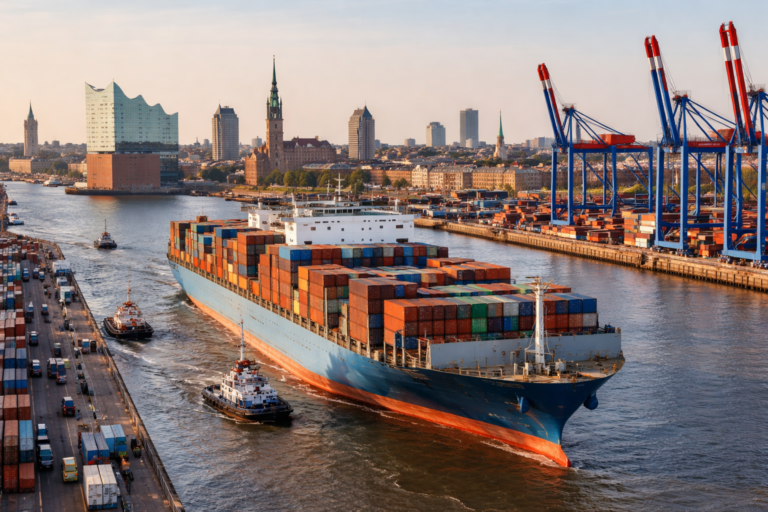
Ocean Shipping
Review FCL and LCL services, German port routes, container options and ocean-freight planning for commercial cargo.
View sea freight
Cost & Pricing
Review sea, air and rail freight cost factors and the charges that affect the total cost of shipping goods from China to Germany.
Compare costs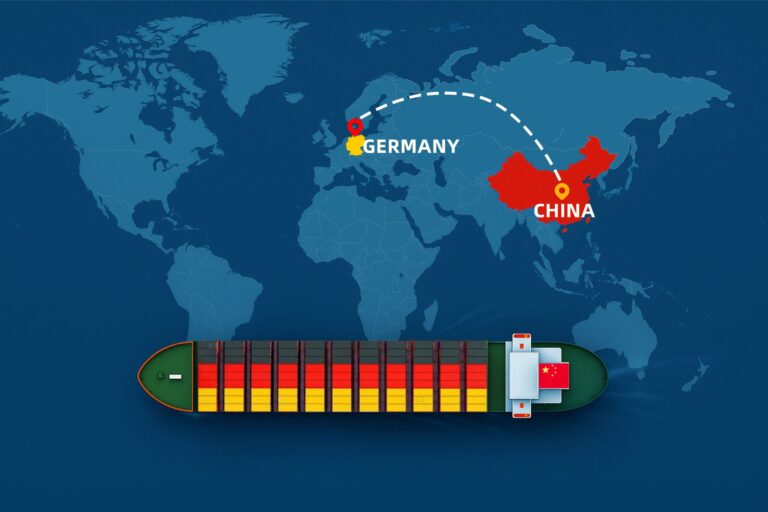
Transit Time
Compare typical transit times for sea freight, air freight, rail freight and express shipping from China to Germany, including the factors that can extend final delivery time.
Check transit times
Door to Door
Understand pickup, international freight, German customs, duties, import VAT and final delivery under a coordinated DDP service.
Explore DDP
Air Cargo
Compare chargeable weight, major airport routes, air-cargo transit times and delivery options for urgent commercial shipments.
View air freight
FCL Container Rates
Compare container sizes, major port pairs and the factors affecting full-container shipping costs from China to Germany.
Check container costsA real Tonlexing FCL sea freight shipment from Shanghai to Hamburg showing a practical China–Germany container route.

Shanghai, China → Hamburg, Germany
Tonlexing arranged an FCL sea freight shipment of EPDM gaskets from Shanghai to Hamburg using one 20GP container. The shipment involved cargo coordination, export handling, container transport and ocean freight to Germany through Hamburg.
View Case StudyWhatsApp us