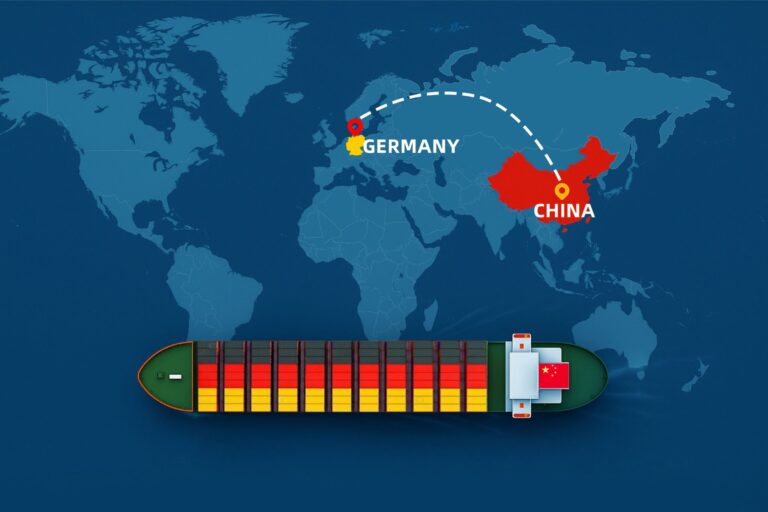
Related Guide
Shipping from China to Germany
Shipping from China to Germany includes efficient logistics via air and ocean freight. Compare transit times, shipping costs, and import requirem...
Read guide →

20ft 40ft Container Shipping Costs from China to Germany vary depending on sea freight rates, container size, loading port, destination port, transit time, and total shipping charges. For most importers, sea freight is still the most cost effective option for full container load shipments. Rail freight is faster but more expensive, while air freight is mainly used for urgent small shipments rather than full ocean container transport.
This guide covers container shipping rates, 20ft and 40ft price ranges, FCL shipping, LCL shipping, sea freight routes, transit time, customs clearance, port fees, door-to-door delivery, and the key factors that affect your final shipping cost.
Container Rates
Transit Time
FCL / LCL Shipping
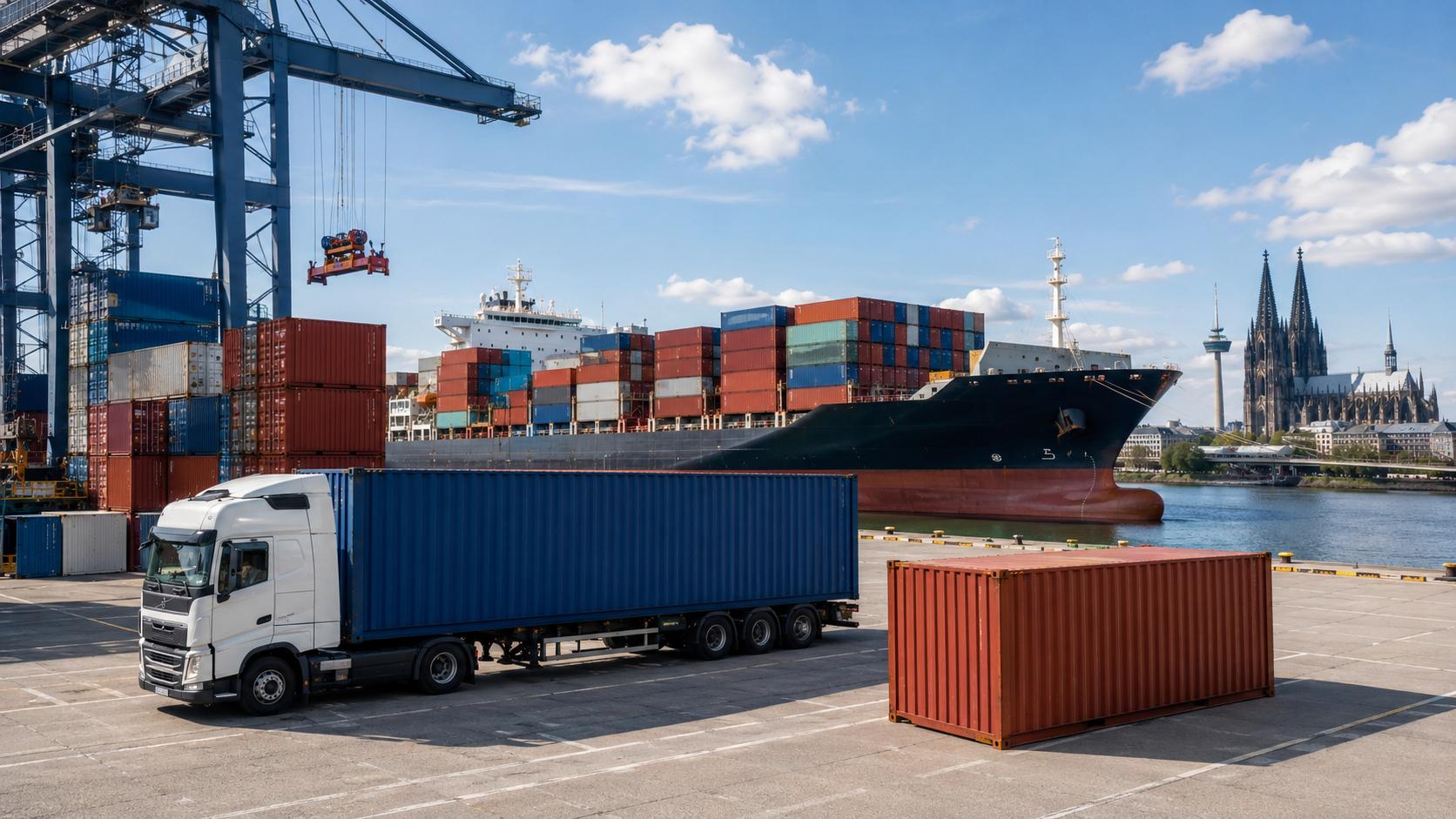
The cost to ship a container from China to Germany depends on container size, loading port, destination port, shipping route, cargo type, season, and delivery terms. Port-to-port sea freight is usually the cheapest option, while door-to-door delivery costs more because it includes pickup, customs clearance, destination charges, and final delivery.
| Shipping Method | 20ft Container Cost | 40ft / 40HQ Container Cost | Transit Time |
|---|---|---|---|
| Sea Freight Port to Port | $1,500–$3,000 | $2,500–$5,600 | 30–45 days |
| Door-to-Door Sea Freight | $4,000–$7,500+ | $6,500–$13,500+ | 35–55 days |
| Rail Freight | $4,500–$6,500 | $7,000–$10,000 | 18–25 days |
| LCL Shipping | Charged by CBM | Charged by CBM | 35–50 days |
These average price ranges are for reference only. Actual container shipping costs may change because of peak seasons, port congestion, oil prices, container availability, customs duties, port fees, and final delivery distance in Germany.
A low sea freight rate does not always mean a low total shipping cost. Importers should compare the full landed cost, including local charges in China, destination charges in Germany, VAT, customs clearance fees, and last mile delivery.
A 20ft container is suitable for heavy and compact cargo, such as machinery, metal parts, tiles, hardware, building materials, industrial goods, and auto parts. It can hold about 33 CBM, while the practical loading volume is usually around 28–30 CBM after considering cartons, pallets, and packaging.
The average 20ft container shipping cost from China to Germany is usually $1,500–$3,000 by sea freight port to port.
A 20ft container is usually a good choice when:
The cargo is heavy but not very bulky
The shipment is around 20–30 CBM
You want better control than LCL shipping
The goods are machinery, hardware, tiles, or industrial parts
For heavy cargo, a 20ft container can be more cost effective than a shared container because it reduces handling and avoids mixing your goods with other shipments.
A 40ft or 40HQ container is better for bulky and large-volume cargo, such as furniture, textiles, e-commerce goods, packaging materials, plastic products, fitness equipment, home goods, and light industrial products. A standard 40ft container can hold about 67 CBM, while a 40HQ provides more internal height and better loading efficiency.
The average 40ft or 40HQ container shipping cost from China to Germany is usually $2,500–$5,600 by sea freight port to port.
A 40ft or 40HQ container is usually suitable when:
The cargo volume is over 50 CBM
The goods are light but bulky
You want a lower cost per cubic meter
You are shipping furniture, textiles, home goods, or e-commerce products
For most large-volume shipments, a 40HQ container is more economical than LCL shipping or multiple smaller shipments. It also helps importers reduce the average shipping cost per unit.
Container shipping rates vary by port pair, carrier schedule, vessel space, and destination port. Major port-to-port routes are usually more competitive because many shipping companies operate regular services between China and Northern Europe.
China Loading Port | Germany Destination Port | 20ft Container Cost | 40ft / 40HQ Container Cost |
|---|---|---|---|
Shanghai | Hamburg | $1,600–$2,900 | $2,600–$5,200 |
Ningbo | Hamburg | $1,500–$2,800 | $2,500–$5,000 |
Shenzhen | Hamburg | $1,700–$3,000 | $2,800–$5,400 |
Qingdao | Bremerhaven | $1,700–$3,100 | $2,900–$5,500 |
Xiamen | Hamburg | $1,800–$3,200 | $3,000–$5,600 |
Tianjin | Hamburg | $1,900–$3,300 | $3,100–$5,700 |
These rates are estimated sea freight rates for standard dry containers. Special container types, such as open top, flat rack, and refrigerated containers, cost more because they require special equipment and handling.
Transit time is an important part of the shipping process. Importers should not only compare container shipping costs, but also consider the route, sailing schedule, customs clearance time, and inland delivery in Germany.
For comparison, shipping from China to North America often takes 15–40 days, depending on whether the cargo goes to the west coast or east coast. Germany pricing is different because container rates are mainly based on the China loading port, German destination port, and inland delivery city.
Shipping Mode | Estimated Transit Time | Best Use Case |
|---|---|---|
Sea Freight (FCL) | 28–40 days | Bulk or non-urgent cargo |
Sea Freight (LCL) | 30–45 days | Small, mixed cargo |
Rail Freight | 15–24 days | Time-sensitive goods |
Multimodal (Sea + Truck) | 35–50 days | Remote final destinations |
Door to Door Shipping | 30–42 days | End-to-end delivery convenience |
Ocean freight routes often pass through the Suez Canal and Northern Europe, ending at major ports like Hamburg or Bremerhaven. From there, cargo is distributed across Germany and Europe by truck or rail.
Popular origin ports in China include:
Shanghai – largest outbound volume
Shenzhen (Yantian Port) – ideal for electronics and high-value goods
Ningbo – popular for textiles and consumer products
Qingdao – heavy machinery and industrial goods
These connect with German ports such as:
Hamburg – Germany’s largest and busiest port
Bremerhaven – efficient customs clearance and container handling
Duisburg – key rail freight hub for the China-Europe Railway
For international shipments requiring inland delivery in Germany, it’s common to use rail or truck from the port to cities like Berlin, Munich, Frankfurt, or Stuttgart.
A container shipping cost calculator can help importers estimate the total budget before booking. However, the final price is not based on sea freight alone. It also depends on pickup location, destination port, cargo value, customs duties, port fees, and final delivery address in Germany.
A simple way to estimate the total cost is:
Total shipping cost = China pickup + origin charges + sea freight + destination charges + customs duties and VAT + final delivery
Main cost items usually include:
Factory pickup in China
Export customs clearance
Origin port fees
Ocean freight
Destination port charges in Germany
Import customs clearance
Customs duties and VAT
Cargo insurance if required
Last mile delivery to the final address
For a more accurate quote, importers should prepare the cargo name, HS code, cargo value, total weight, cargo volume, pickup address in China, destination address in Germany, and preferred container size. This allows the freight forwarder to calculate the actual cost more clearly and avoid unexpected extra costs.
Sea freight is the main solution for full container load shipments from China to Germany. It offers the best balance between capacity and price, especially for large commercial orders that are not urgently needed.
Most ocean freight from China arrives at Hamburg, Bremerhaven, or Bremen. From there, cargo can be delivered to inland German cities or nearby European countries by truck or rail.
Sea freight is suitable for:
Full container load shipments
Heavy or bulky cargo
Regular commercial imports
Non-urgent goods
Large-volume orders with stable delivery planning
Sea freight rates are affected by shipping routes, carrier capacity, container availability, oil prices, port congestion, seasonal demand, and global supply chains. Larger ports usually provide more sailing options and more competitive container rates.
Rail freight is faster than sea freight and cheaper than air freight. It is suitable for importers who need shorter transit time but cannot justify the high price of air cargo.
Rail service from China to Germany usually takes 18–25 days, depending on departure city, route stability, customs inspection, and arrival terminal. Common German rail hubs include Duisburg, Hamburg, Munich, Frankfurt, and Nuremberg.
Estimated rail freight costs are usually around $4,500–$6,500 for a 20ft container and $7,000–$10,000 for a 40ft or 40HQ container.
Rail freight is often used for:
Electronics
Machinery parts
Automotive components
Industrial equipment
Cargo with tighter delivery schedules
Rail freight is not always available for every product or route, so cargo details should be checked before booking.

FCL and LCL are the two main options for container shipping from China to Germany. The right choice depends on cargo volume, cargo weight, product type, budget, and delivery schedule.
FCL shipping means your goods use the full container. It is usually better for medium and large shipments because the cargo is not mixed with other importers’ goods. FCL also offers better control, faster handling, and lower risk of damage.
FCL shipping is usually suitable for:
Cargo over 20–25 CBM
Heavy or high-volume goods
Regular commercial imports
Products that need better protection
Shipments with tighter delivery schedules
LCL shipping means Less than Container Load. Your goods share container space with other shipments, and LCL shipping costs are calculated based on volume, usually by cubic meter. It is a practical choice for smaller shipments that do not need a full container.
LCL shipping is usually suitable for:
Cargo below 15 CBM
Small commercial orders
Trial shipments
Samples
Importers with limited cargo volume
Although LCL has a lower starting cost, it is often more expensive per cubic meter than FCL. For smaller shipments, LCL is a flexible option. When cargo volume becomes large enough, FCL is usually more cost effective.
Door-to-door container transport means the freight forwarder manages the full process from the supplier’s factory in China to the final destination in Germany. This option is useful for importers who want fewer surprises and less coordination with different service providers.
This service can include supplier pickup, container booking, export declaration, port handling, sea freight shipping, Germany import support, tax guidance, and last mile delivery to a warehouse or business address.
The final door-to-door cost depends on:
Pickup city in China
Destination address in Germany
Container size
Cargo type and cargo value
Delivery appointment requirements
Local delivery distance
Door-to-door service is especially useful for first-time importers, e-commerce sellers, and buyers without their own customs broker or trucking partner in Germany.
When shipping containers from China to Germany, navigating the customs clearance process is a vital part of the international shipping journey. Failing to prepare the correct documents or comply with import regulations can lead to costly delays and even cargo holds.
To ensure smooth customs clearance, make sure you provide the following documents:
Commercial Invoice – must clearly state the value, HS codes, and description of goods
Packing List – itemizing the contents of each container
Bill of Lading – issued by the shipping line as proof of cargo carriage
Import License – required for regulated items (e.g., electronics, chemicals)
Certificates of Origin or Conformity – depending on product type
Working with a customs broker or a professional freight forwarder can help you navigate these requirements accurately.
Germany, as part of the EU, imposes the following charges on imports from China:
Import Duties – based on the HS code and customs value
VAT (Value Added Tax) – currently 19% in Germany, applied on CIF (Cost + Insurance + Freight) value
Excise Duties – for specific goods like alcohol, tobacco, and fuel
Importers should also account for additional costs such as port handling fees, customs inspection charges, and possible delays due to document errors.
A reliable freight forwarder can coordinate the entire customs clearance process on your behalf, ensuring accurate documentation, timely filing, and communication with German customs authorities.
Some forwarders also offer Delivered Duty Paid (DDP) solutions, where they handle all import taxes and compliance in exchange for a fixed cost. This model is especially useful for eCommerce sellers or new importers seeking simplified logistics.
By partnering with experts, you can avoid compliance risks, minimize delays, and focus on your core business instead of tangled paperwork.
Choosing the right freight forwarder is just as important as choosing the right shipping method. An experienced logistics partner can help reduce shipping costs, avoid delays, and ensure smooth customs clearance throughout the shipping process.
Tonlexing provides reliable container shipping services from China to Germany for importers, wholesalers, manufacturers, and e-commerce businesses. Whether you need a 20ft container, 40ft container, FCL shipment, LCL shipment, or door-to-door delivery, we can provide a tailored logistics solution based on your cargo requirements.
Key advantages of working with Tonlexing include:
Competitive sea freight and rail freight rates
20ft, 40ft, and 40HQ container shipping solutions
FCL and LCL shipping services
Pickup from suppliers across China
Export customs clearance support
Germany import customs assistance
Door-to-door delivery options
Cargo consolidation from multiple suppliers
Real-time shipment tracking and updates
Transparent quotations with no hidden charges
Our team works closely with major shipping lines, carriers, and logistics partners to provide stable schedules, efficient transportation, and professional support from origin to destination.
Whether you are shipping industrial equipment, furniture, building materials, electronics, textiles, or consumer products, Tonlexing can help you find the most cost effective and reliable shipping solution from China to Germany.
A 20ft container from China to Germany usually costs around $1,500–$3,000 by sea freight port-to-port. Final pricing depends on the loading port, destination port, season, container availability, cargo type, and local charges.
A 40ft or 40HQ container usually costs around $2,500–$5,600 by sea freight port-to-port. Door-to-door service costs more because it includes pickup, local charges, import processing, and final delivery.
Sea freight is usually the cheapest method for full container load cargo. It is suitable for large orders, bulky goods, and regular imports.
Sea freight from China to Germany usually takes 30–45 days port to port. Door-to-door delivery may take 35–55 days, depending on pickup, customs clearance, port congestion, and inland trucking.
FCL is usually more cost effective for larger shipments. LCL is better for smaller shipments because you only pay for the space used. When the cargo reaches a certain volume, a full container often becomes the better option.
Useful freight, customs and importing resources related to this shipping guide.
Shipping from China to Germany includes efficient logistics via air and ocean freight. Compare transit times, shipping costs, and import requirem...
Read guide →
Shipping Cost from China to Germany (2026 Guide) Verified & Reviewed · Last updated June 2026 Shipping cost from China to Germany in 2026 typical...
Read guide →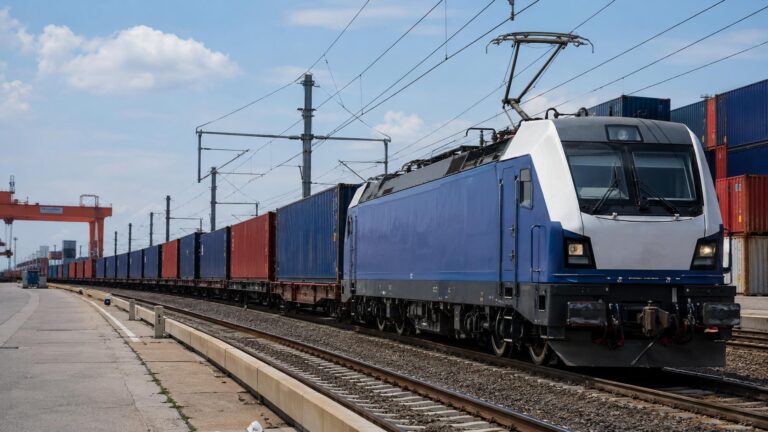
Rail Freight from China to Germany Verified & Reviewed · Last updated June 2026 Rail freight from China to Germany offers a balanced shipping sol...
Read guide →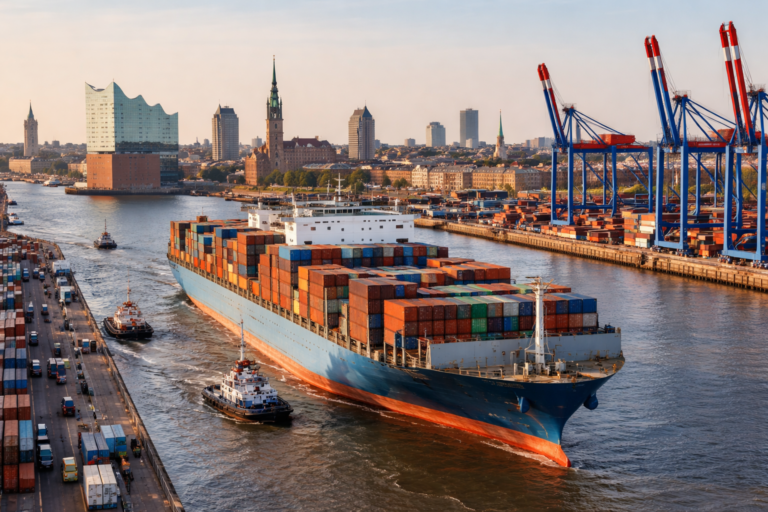
Sea Freight From China to Germany Verified & Reviewed · Last updated April 2026 Sea freight from China to Germany remains one of the most cost ef...
Read guide →Shipping from China to Germany involves multiple logistics steps, including choosing the right transport method, calculating import duties, and e...
Learn more → Useful Resource DDP Shipping from China to GermanyDDP Shipping from China to Germany Verified & Reviewed · Last updated June 2026 DDP shipping from China to Germany helps importers manage the ful...
Learn more →WhatsApp us