20ft Shipping Container Size and Specifications

A standard 20ft shipping container is one of the most widely used container sizes for international freight, secure storage, construction sites, and commercial cargo movement.

This guide explains 20ft shipping container size and specifications, including exterior dimensions, internal length, internal width, internal height, door opening, storage volume, tare weight, gross weight, payload capacity, and common uses for shipping or storage.

Container dimensions

Payload capacity

Storage volume

20ft shipping container dimensions with labeled length, width, and height in 2025 at a port background
10,000+ international shipments handled    Global sea, air & DDP shipping solutions    24/7 shipment tracking & customer support

Table of Contents

Standard 20ft Shipping Container Dimensions

A 20ft container is designed for sea freight, truck transport, rail movement, stacking, lifting, and long-term use. Although container sizes are generally standardized, small variations may exist depending on the manufacturer, shipping line, and container type.

Exterior Dimensions

DimensionImperial UnitsMetric Units
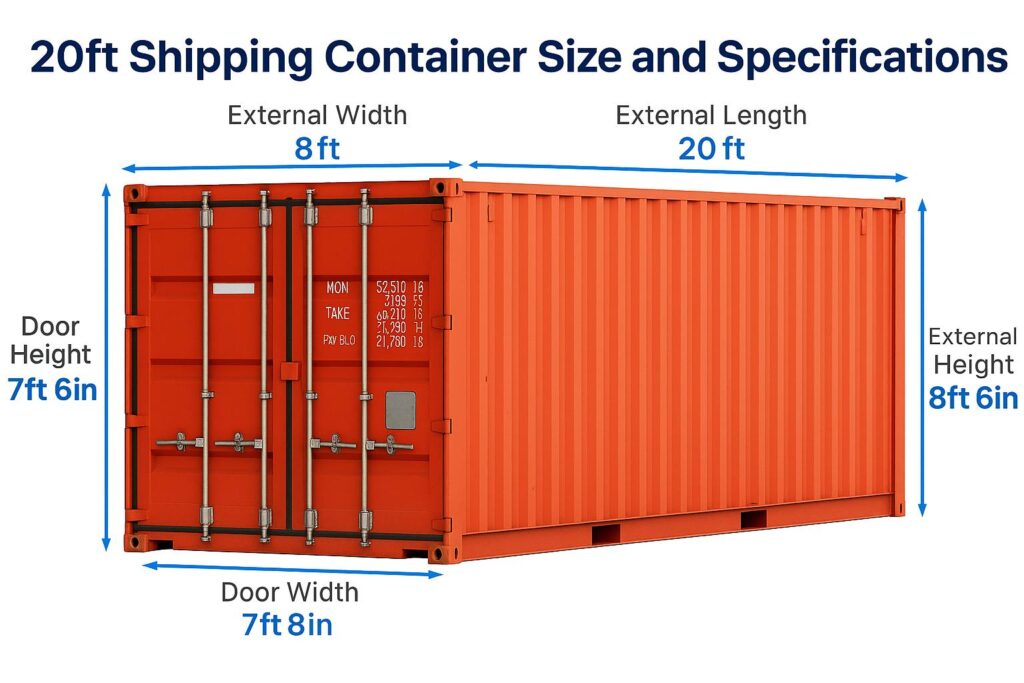
Exterior Length20'0"6.06 m
Exterior Width8'0"2.44 m
Exterior Height8'6"2.59 m

The exterior size matters for truck delivery, container placement, construction sites, commercial properties, and locations with limited access. Compared with a 40ft container, the smaller size makes a 20ft unit easier to transport and position.

Interior Dimensions

DimensionImperial UnitsMetric Units
Internal Length19'4"5.90 m
Internal Width7'8"2.35 m
Internal Height7'10"2.39 m
Storage VolumeAbout 1,172 cu ftAbout 33 CBM

The internal dimensions are used to calculate how much cargo, equipment, tools, inventory, or household goods can fit inside. When planning a shipment, leave enough space for loading gaps, securing materials, pallet clearance, and safe door closing.

Door Opening Dimensions

Door DimensionImperial UnitsMetric Units
Door Opening WidthAbout 7'8"About 2.34 m
Door Opening HeightAbout 7'5"–7'6"About 2.28 m

The door opening height is especially important for machinery, crates, pallets, and oversized equipment. Some items may fit inside the container but fail to pass through the doors, so door measurements should always be checked before loading.

20ft Container Weight, Payload, and Capacity

A 20ft container is often selected for heavy cargo because it provides strong load capacity in a compact unit. This makes it suitable for machinery, tiles, stone products, batteries, hardware, and construction materials.

Tare Weight, Gross Weight, and Payload

SpecificationApproximate Value
Tare WeightAbout 4,800 lbs / 2,200 kg
Maximum Gross WeightAbout 67,200 lbs / 30,480 kg
Maximum PayloadAbout 62,000 lbs / 28,000 kg

The tare weight is the empty container weight. Gross weight means the container plus cargo. Payload refers to the maximum cargo weight that can be loaded inside.

Actual payload capacity may vary depending on the container condition, route, carrier rules, road weight limits, and destination regulations. For dense cargo, proper weight distribution is important to avoid loading imbalance and transport problems.

Storage Volume and Floor Space

Capacity ItemApproximate Value
Storage VolumeAbout 33 CBM
Floor SpaceAbout 13.8 m²
Standard Pallets10 pallets
Euro Pallets11 pallets

A 20ft container provides enough floor space for compact cargo, tools, small equipment, seasonal inventory, garage overflow, and many business storage needs. It can also hold the contents of a small apartment, depending on how the items are packed.

20ft Standard Container vs 20ft High Cube Container

Most 20ft containers used in international shipping are standard dry containers. A 20ft high-cube container has the same length and width but provides more height.

Container TypeExterior HeightInternal HeightStorage Volume
20ft Standard Container8'6" / 2.59 m7'10" / 2.39 mAbout 33 CBM
20ft High Cube Container9'6" / 2.90 mAbout 8'10" / 2.69 mAbout 37 CBM

A high-cube unit is useful for taller cargo, light bulky goods, custom build projects, workshops, pop-up shops, and modified container uses. However, 20ft high-cube containers are less common than standard units, so availability depends on local supply, carrier equipment, and delivery location.

20ft vs 40ft vs 40HQ Container

Choosing the right container size depends on more than length. Cargo weight, loading volume, carton height, pallet layout, delivery cost, and destination weight limits all affect the final choice.

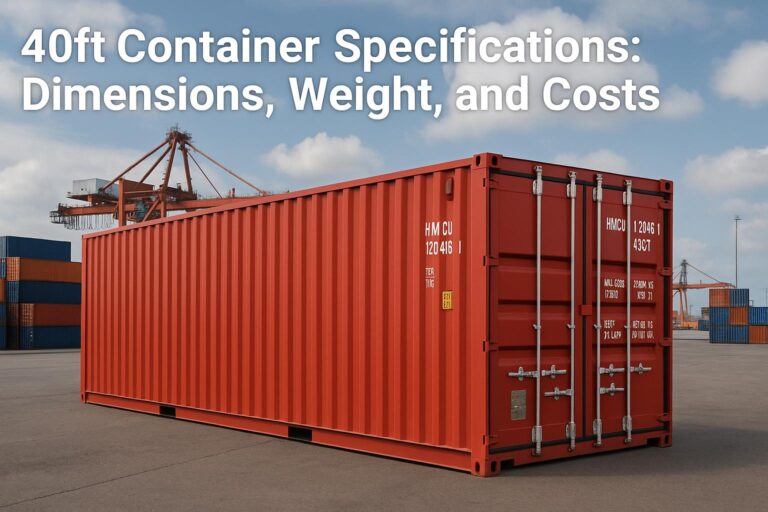
Item20ft Container40ft Container40HQ Container
Exterior Length20 ft40 ft40 ft
Exterior Height8'6"8'6"9'6"
Internal VolumeAbout 33 CBMAbout 67 CBMAbout 76 CBM
Pallet Capacity10–11 pallets20–25 pallets20–25 pallets
Best Cargo TypeHeavy and compact goodsLarger general cargoBulky and lightweight cargo
Common UseMachinery, tiles, metal parts, toolsFurniture, retail goods, cartonsHome goods, e-commerce goods, tall cartons
Main AdvantageStrong payload in a smaller unitMore floor spaceExtra height and larger volume

A 20ft container is often the better option for heavy goods, compact shipments, construction sites, residential storage, and locations with limited access. A 40ft container is usually more cost effective when cargo is bulky but not too heavy.

20ft shipping container dimensions and door size chart

How Much Cargo Fits in a 20ft Container?

A 20ft container has about 33 CBM of internal volume, but the practical usable capacity is usually lower. Cargo shape, pallet size, carton strength, forklift access, ventilation needs, and loading method all affect the final result.

Carton Cargo and CBM Calculation

For carton cargo, use this formula:

CBM = Length × Width × Height × Number of Cartons

All measurements should be in meters. For example, if each carton is 0.5 m × 0.4 m × 0.3 m, and there are 500 cartons, the total volume is:

0.5 × 0.4 × 0.3 × 500 = 30 CBM

Although 30 CBM may fit by volume, you still need to consider pallet space, loading gaps, cargo protection, and whether the cartons can be stacked safely.

Pallet Loading Capacity

A standard 20ft container usually fits:

  • 10 standard pallets measuring 1200 × 1000 mm

  • 11 Euro pallets measuring 1200 × 800 mm

The final pallet capacity depends on pallet height, cargo weight, stacking method, and whether forklift loading is required. Fragile cargo, irregular crates, heavy machines, and non-stackable goods may use less than the full storage volume.

Heavy Cargo and Weight Limits

A 20ft container is ideal for dense cargo because it can reach the legal weight limit before the container is full by volume. Common heavy cargo includes:

This is why many heavy shipments use 20ft containers instead of 40ft containers.

Materials and Construction of a 20ft Container

A standard 20ft container is constructed from corrugated corten steel, designed to withstand harsh marine environments, stacking pressure, lifting, rain, humidity, and repeated transport by ship, truck, and rail.

Common structural parts include:

  • Corrugated corten steel walls and roof

  • Marine-grade plywood floor

  • Double cargo doors with locking bars

  • Rubber door seals

  • Corner castings for lifting and stacking

  • Forklift pockets on many units

  • Base rails and steel cross members

  • Ventilation openings on standard dry containers

The steel structure provides strength and security, while the plywood floor supports cargo, tools, machinery, and storage items. For long-term use, check the door seals, locks, floor condition, surface rust, minor dents, ventilation, and water tightness before choosing a used unit.

Buying, Renting, or Using a 20ft Container for Storage

A 20ft container is commonly used for secure storage, construction storage, commercial storage, and project space. When comparing containers for sale or rental, the most important factors are condition, location, delivery access, and long-term use requirements.

New, One-Trip, and Used Units

A used container can still be reliable if the doors close properly, the floor is strong, and the unit is wind and water tight. For clean inventory, residential use, or custom build projects, many customers prefer a new or one-trip unit.

Pricing, Location, and Delivery

The cost of a 20ft container depends on condition, location, local supply, and delivery distance. In some markets, a used 20ft container may cost around $800 to $1,600, while a one-trip container is usually more expensive because it is in better condition.

Renting can be a better choice for short-term storage, with prices often starting around $125 per month. A 40ft container usually costs more than a 20ft unit, but it may offer better value if you need extra storage volume.

Before buying or renting, check the container condition, door operation, floor strength, water tightness, delivery location, and site access. Delivery cost should also be included when comparing prices, especially if the site is far from the supplier or difficult for trucks to reach.

Frequently Asked Questions

Get Expert Advice on 20ft Container Shipping from China

  • Compare 20ft, 40ft, and 40HQ container options
  • Check cargo size, weight, and loading capacity
  • Get reliable FCL, LCL, and door-to-door solutions

Send your cargo details to receive suitable container shipping options from China, including cost, transit time, and delivery advice.