Reliable & Cost-Effective Shipping from China

Tailored Logistics Solutions for Your Business

  1. Home
  2. »
  3. Resources
  4. »
  5. How to Import and Ship Lithium Batteries from China

How to Import and Ship Lithium Batteries from China

Importing and shipping lithium batteries from China requires more preparation than moving ordinary cargo. Lithium batteries are regulated as dangerous goods, so the battery type, UN classification, test documentation, packaging, labeling and selected transport method must be confirmed before booking.

For importers, the first step is to identify whether the shipment contains lithium-ion or lithium-metal batteries and whether the batteries are shipped alone, packed with equipment or contained in equipment. These details affect the applicable UN number, packing requirements and carrier acceptance.

Before arranging air freight or sea freight from China, shippers may need supporting documents such as UN38.3 test information, an SDS or MSDS, battery specifications, a commercial invoice and packing list. The exact requirements depend on the battery configuration, transport mode, carrier and destination country.

This guide explains how to import and ship lithium batteries from China, including:

  • lithium battery types and shipping classifications

  • documents required before export

  • packaging, marking and labeling requirements

  • air freight and sea freight options

  • lithium battery shipping costs and transit considerations

  • customs clearance and common reasons battery shipments are delayed or rejected

Tonlexing can also check the shipment details before booking and help importers select a suitable transport solution based on the battery model, cargo quantity, destination and delivery requirements.

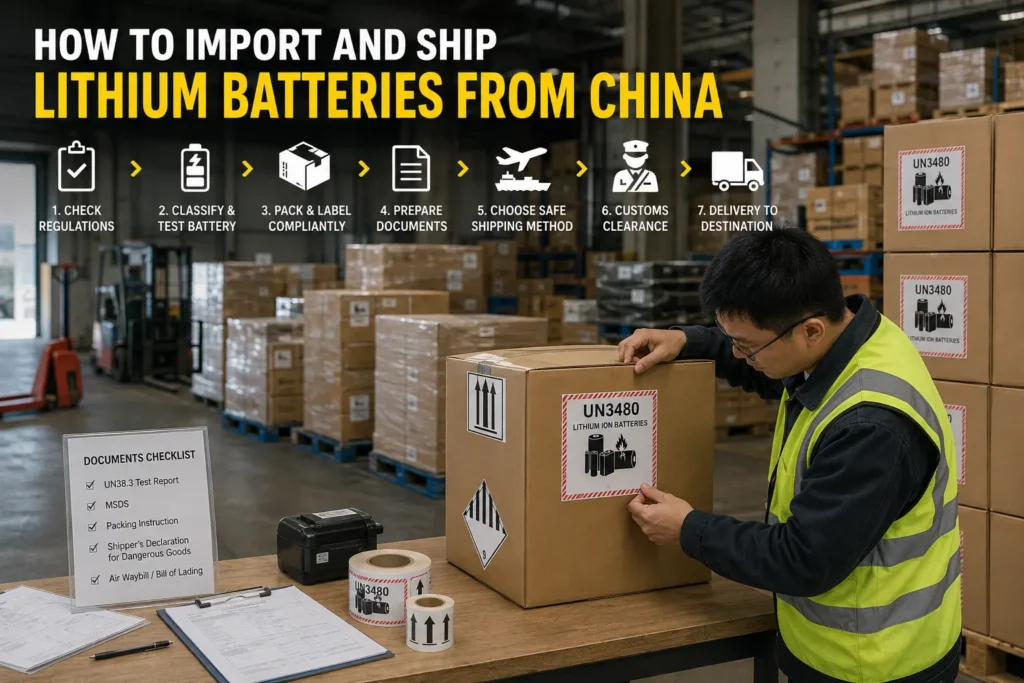
Lithium battery shipment from China with labeled export cartons prepared for international transport

Understanding Lithium Battery Categories

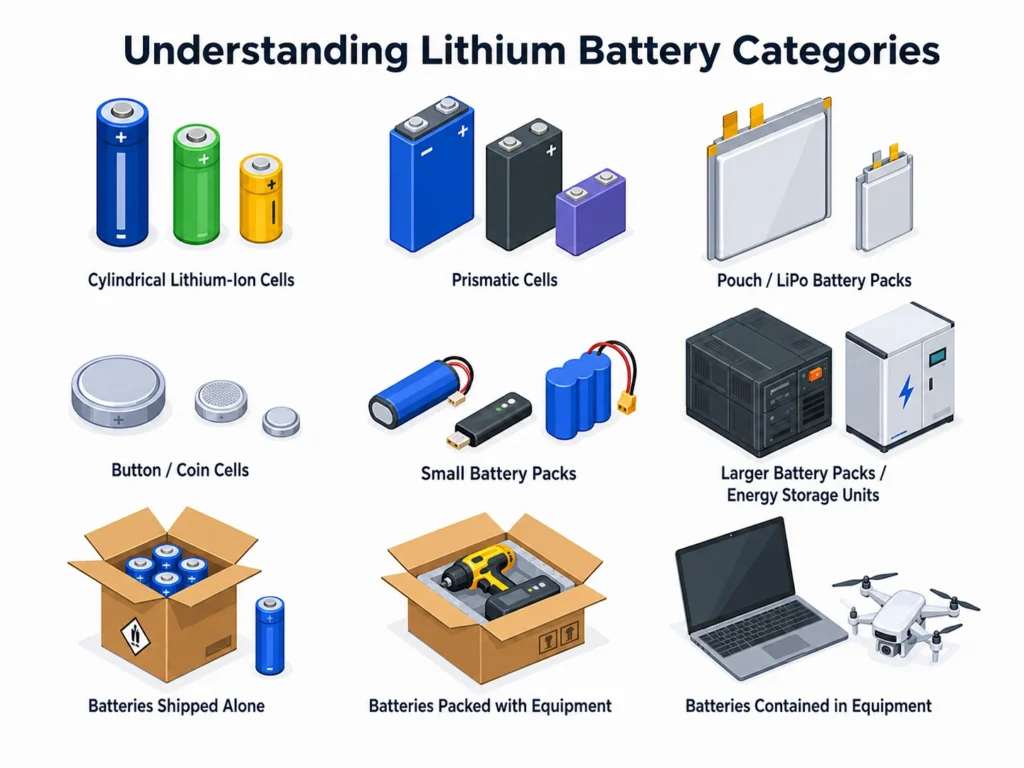
Before shipping lithium batteries from China, importers need to identify both the battery chemistry and how the batteries are presented for transport. The same battery may be subject to different shipping requirements depending on whether it is shipped alone, packed with equipment or installed in equipment.

Correct classification helps determine the UN number, packing instruction, marks and labels, documentation requirements and whether an airline or shipping line will accept the shipment.

Lithium-Ion and Lithium Metal Batteries

Lithium-ion batteries are rechargeable batteries commonly used in electronics, power tools, electric scooters, electric vehicles and energy storage systems.

Lithium metal batteries are generally non-rechargeable batteries containing lithium metal or lithium alloy. They are commonly used in watches, sensors, medical devices and other equipment requiring long-life primary batteries.

Lithium polymer (LiPo) batteries are generally transported under the lithium-ion battery provisions rather than treated as a completely separate dangerous-goods category.

UN Numbers for Lithium Battery Shipments

For transport purposes, the battery chemistry and packing configuration are more important than the commercial product name.

Battery configurationTypical UN numberProper shipping classification
Lithium-ion cells or batteries shipped aloneUN 3480Lithium ion batteries
Lithium-ion cells or batteries packed with or contained in equipmentUN 3481Lithium ion batteries packed with equipment / contained in equipment
Lithium metal cells or batteries shipped aloneUN 3090Lithium metal batteries
Lithium metal cells or batteries packed with or contained in equipmentUN 3091Lithium metal batteries packed with equipment / contained in equipment

Other classifications may apply to battery-powered vehicles, damaged or defective batteries, batteries for disposal or recycling, and newer battery technologies such as sodium-ion batteries. These should be checked separately before booking.

What to Confirm Before Booking

Before Tonlexing requests space from an airline or shipping line, the importer or supplier should provide enough information to identify the cargo correctly, including:

  • battery chemistry
  • exact battery model
  • cell or battery configuration
  • Watt-hour (Wh) rating for lithium-ion batteries
  • lithium content where applicable for lithium metal batteries
  • whether batteries are shipped alone, packed with equipment or contained in equipment
  • number of batteries, carton quantity, gross weight and dimensions
  • available UN38.3 test information and battery specifications

Do not classify a shipment only as “battery,” “power bank” or “energy storage product.” The actual battery configuration and technical specifications must match the shipping documents and the cargo presented for transport.

Lithium battery categories including cylindrical cells, prismatic cells, pouch batteries and different shipping configurations

Sourcing Lithium Batteries from China

China is one of the world’s major lithium battery manufacturing centers, with suppliers producing batteries for consumer electronics, electric vehicles, energy storage systems and industrial applications. Major manufacturing regions include Guangdong, Jiangsu and Zhejiang.

For importers, choosing a supplier involves more than comparing price and production capacity. Product quality, documentation, export experience and familiarity with dangerous goods requirements can all affect whether an order can be shipped smoothly.

How to Find Reliable Lithium Battery Suppliers in China

Use Verified B2B Platforms to Identify Trusted Suppliers

China has several B2B sourcing platforms where businesses can connect with lithium battery manufacturers and exporters:

  • Alibaba – One of the largest global B2B marketplaces, with supplier profiles, factory information, transaction history and Trade Assurance options
  • Made-in-China – Provides detailed company profiles that can help buyers compare production capabilities, product ranges and available certifications
  • Global Sources – Focuses on export-oriented suppliers with experience serving international buyers

When comparing suppliers, review their company information, production capabilities, buyer feedback, transaction history and available verification information. Platform verification and Trade Assurance can be useful, but buyers should still verify the supplier and product independently before placing a large order.

Check Safety and Compliance Documents

Before confirming an order, ask the supplier what technical and compliance documents are available for the product.

Common documents and standards may include:

  • UN38.3 test information – Relevant to the transport testing requirements for lithium cells and batteries
  • SDS or MSDS – Provides safety, handling and hazard information
  • IEC 62133 – May apply to certain portable rechargeable cells and batteries depending on the product and market
  • CE marking – May be relevant when the finished product falls within applicable EU legislation
  • RoHS compliance – May apply to electrical and electronic products placed on certain markets

These requirements are not identical for every battery or destination. Product compliance and transport documentation should be checked separately according to the product type, destination country and shipping method.

Request Product Samples Before Bulk Orders

Before committing to a large purchase, request samples where practical to evaluate the product and supplier.

Check:

  • battery performance and capacity
  • physical condition and workmanship
  • packaging quality
  • product labels and specifications
  • consistency between the sample and supplier documentation

For larger commercial orders, independent testing or a factory inspection may also be considered where necessary.

Negotiate MOQ and Lead Times

Minimum order quantities and production lead times vary between manufacturers.

They may depend on:

  • battery type and capacity
  • standard or customized specifications
  • production batch size
  • supplier production schedule
  • packaging and labeling requirements

Confirm the MOQ and expected production time before placing the order, especially if the shipment must meet a fixed delivery schedule.

Verify the Supplier’s Export and Shipping Experience

Because lithium batteries are regulated cargo, it is useful to work with suppliers that have experience preparing goods for international transport.

Ask whether the supplier has experience with:

  • exports to your destination market
  • air or sea shipments of similar products
  • dangerous goods packaging and labeling
  • preparing technical and shipping documents
  • coordinating with freight forwarders before cargo pickup

A supplier with previous export experience can usually respond more quickly when additional information or documents are requested during booking.

Why Choosing the Right Supplier Matters

A suitable supplier should be able to provide consistent products, accurate specifications and the supporting information needed for export.

Careful supplier selection can help reduce:

  • product quality problems
  • document inconsistencies
  • booking delays
  • rejected or repacked shipments
  • unexpected production delays

For first-time orders, verifying both the supplier and the product before arranging international shipping is generally safer than relying only on marketplace listings or price comparisons.

Customs Regulations for Importing Lithium Batteries

Importing lithium batteries from China involves both customs clearance requirements and dangerous goods transport requirements. The exact documents and import rules vary by destination country, battery type and product use.

Before shipping, importers should confirm the product description, customs value, HS code and any destination-specific permits or product requirements. Battery-related transport documents should also be prepared before the cargo is submitted to the airline or shipping line.

Required Documentation for Customs Clearance

The documents commonly used for lithium battery imports include:

  • Commercial Invoice – Shows the seller, buyer, product description, quantity, value and trade terms
  • Packing List – Shows carton quantity, net and gross weight, dimensions and packing details
  • Bill of Lading (B/L) or Air Waybill (AWB) – Transport document for sea freight or air freight
  • Certificate of Origin – May be required depending on the destination country or applicable trade agreement
  • Import Permit – May be required for certain battery products or regulated applications in the destination market

Product descriptions should be specific. Avoid declaring the goods simply as “battery” when details such as battery type, model and intended use are available.

Additional Documents for Lithium Battery Transport

Some battery documents are mainly used for dangerous goods classification and carrier acceptance rather than ordinary customs clearance.

Depending on the shipment, these may include:

  • UN38.3 test summary or supporting test information
  • SDS or MSDS
  • battery specification sheet
  • Dangerous Goods Declaration where required
  • packing and labeling information requested by the carrier

The required documents depend on whether the batteries are shipped alone, packed with equipment or contained in equipment, as well as the transport method and applicable dangerous goods rules.

The information shown on the battery, technical documents and shipping declaration should be consistent. Model mismatches or incomplete documents can result in additional checks or booking delays.

HS Codes for Lithium Batteries

HS classification affects customs declarations, import duty and other import requirements.

For rechargeable lithium-ion batteries, a commonly used HS classification is:

8507.60 – Lithium-ion accumulators

The final tariff code may contain additional digits depending on the destination country.

Lithium metal primary batteries should not automatically be declared under the same code as rechargeable lithium-ion batteries. The correct HS classification should be confirmed according to the actual battery type and destination customs tariff.

Customs Tariffs for Lithium Batteries by Region

The following table provides the tariff information currently shown on this page for lithium-ion batteries under HS Code 8507.60.00. Actual duty and tax treatment should be confirmed before shipment because national tariff rules and additional trade measures can change.

RegionHS CodeImport DutyVAT/GST
USA8507.60.000% – 3.4%No VAT
EU8507.60.002.7%19%–21% VAT (varies by country)
UK8507.60.002.7%20% VAT
Canada8507.60.006%5% GST
Australia8507.60.005%10% GST

The USA generally has lower import duties on lithium-ion batteries than some other markets. However, the final amount payable may also depend on the product classification, customs value, country of origin, local tax rules and any additional tariffs or trade measures.

Importers should confirm the current duty and VAT/GST treatment with their customs broker or destination agent before shipment.

Common Customs Clearance Problems

Lithium battery imports may be delayed when the customs declaration does not match the actual goods or supporting documents.

Common problems include:

  • vague product descriptions
  • incorrect HS codes
  • invoice and packing list discrepancies
  • incorrect declared values
  • missing import permits where required
  • battery model differences between the goods and supporting documents
  • incomplete technical information requested during clearance
  • changes to the product or battery model after booking

Checking these details before the goods leave the supplier can reduce the risk of customs queries and document corrections.

Confirm Destination Requirements Before Shipping

Import regulations are not identical in every market. In addition to customs duty and tax, some battery products may be subject to local product safety, environmental, labeling or importer registration requirements.

Before arranging shipment, confirm:

  • destination country
  • exact battery or product type
  • HS classification
  • customs value
  • required import permits
  • local product compliance requirements
  • commercial invoice and packing list details

For commercial lithium battery shipments, Tonlexing can coordinate the China export and freight process, while country-specific import requirements should be confirmed with the importer or destination customs broker before departure.

Shipping Lithium Batteries from China

Shipping lithium batteries from China requires compliance with dangerous goods transport regulations. The applicable requirements depend on the battery type, UN classification, packing configuration and transport method.

Incorrect classification, packaging, labeling or documentation can result in carrier rejection, shipment delays or additional handling requirements. Before booking, the battery details and supporting documents should therefore be checked against the requirements of the selected airline, shipping line or courier.

Shipping Methods for Lithium Batteries

The appropriate shipping method depends on shipment size, delivery requirements, battery configuration and carrier availability.

Shipping MethodBest forRegulations & RequirementsEstimated Transit Time
Air FreightSmall or time-sensitive commercial shipmentsIATA DGR, applicable packing instruction and carrier acceptance5–10 days
Sea Freight (FCL/LCL)Bulk shipments and larger battery ordersIMDG Code, applicable dangerous goods documentation and shipping line acceptance20–40 days
Express ShippingSamples and smaller urgent shipments where acceptedCourier-specific battery restrictions, package limits and acceptance requirements5–8 days
  • Air Freight offers shorter transit times but is subject to stricter airline acceptance and dangerous goods requirements
  • Sea Freight is generally more suitable for larger commercial shipments, although carrier acceptance and dangerous goods documentation must be confirmed before booking
  • Express Shipping may be available for samples and small shipments, but acceptance varies by battery type, packing configuration, courier and destination

These transit times are general planning estimates rather than guaranteed schedules. Actual shipping time depends on the route, carrier schedule, dangerous goods approval, customs clearance and final delivery arrangements.

For large commercial shipments, sea freight is usually more economical, while air freight may be considered when delivery time is more important. The final method should be selected according to the battery classification, cargo size, destination and carrier availability.

Packaging and Labeling Requirements for Lithium Batteries

Proper packaging and labeling are essential for lithium battery transport. The exact requirements depend on the UN number, battery configuration, transport mode and applicable packing instruction.

Packaging should protect the batteries from damage, movement and short circuits under normal transport conditions.

Packaging Requirements for Lithium Batteries
  1. Suitable Outer Packaging – Use packaging that meets the requirements applicable to the battery classification and packing instruction
  2. Protection Against Damage and Movement – Batteries should be secured inside the package to prevent movement that could cause damage during transport
  3. Short-Circuit Prevention – Exposed terminals should be protected against contact, and batteries should be separated or secured where necessary
  4. Inner Packaging and Cushioning – Inner packaging, dividers or cushioning materials may be required to prevent batteries from contacting each other or shifting inside the outer package

Packaging requirements are not identical for every lithium battery shipment. The applicable packing instruction and carrier requirements should be checked before the cargo is packed for export.

Labeling Requirements for Lithium Battery Shipments

The marks and labels required on a lithium battery package depend on the UN number, packing instruction, battery quantity and transport mode. Not every battery shipment uses the same combination of labels.

Common marks and labels may include:

  1. Lithium Battery Mark – Used where required under the applicable packing provisions
  2. Class 9 Lithium Battery Hazard Label – Required for shipments classified and declared as fully regulated Class 9 dangerous goods where applicable
  3. Cargo Aircraft Only Label – Required for certain lithium battery air shipments that are permitted only on cargo aircraft
  4. UN Number and Proper Shipping Name – Applied where required according to the dangerous goods classification and package type
  5. Other Carrier-Required Marks – Airlines, shipping lines or couriers may impose additional marking requirements for specific routes or services

The package marks, labels and shipping documents should match the actual battery classification. Incorrect or inconsistent labeling can result in the cargo being held or rejected before departure.

Regulatory Compliance for Shipping Lithium Batteries

Different transport modes are governed by different dangerous goods rules. Importers should distinguish between transport testing, carrier documentation and mode-specific regulations.

Regulation / DocumentApplicable Transport ModePurpose
UN38.3 Testing and Test SummaryAir, Sea and other regulated transportDemonstrates that the battery type has passed the applicable UN transport tests
IATA Dangerous Goods Regulations (DGR)Air FreightSets requirements for classification, packing, marking, labeling and documentation for air transport
IMDG CodeSea FreightGoverns the maritime transport of dangerous goods, including lithium batteries
SDS / MSDSCommonly requested for multiple modesProvides safety, composition, handling and emergency information and may support carrier review

UN38.3 should not be treated simply as a general “shipping certificate.” The relevant battery model and test information should correspond to the actual cells or batteries being shipped.

An SDS or MSDS may also be requested during dangerous goods review or carrier acceptance, but the exact documentation required depends on the shipment and transport service.

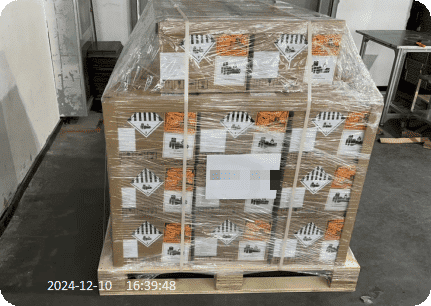
Air freight shipment of lithium metal batteries from Zhengzhou China to the USA

Lithium Battery Shipping Costs from China (Updated August 2026)

Lithium battery shipping costs depend on the destination, shipment size, battery classification, transport method and carrier acceptance. For commercial shipments, DDP shipping can simplify the process by combining international freight, customs clearance and final delivery into one logistics arrangement.

The following rates are planning estimates based on current Tonlexing lithium battery shipping channels. Final prices should be confirmed according to the actual cargo details before booking.

Estimated DDP Shipping Rates for Lithium Batteries

Destination

Sea Freight DDP ($/CBM)

Air Freight DDP ($/kg)

Estimated Transit Time

North AmericaUSA, Canada

$195–$335

$6.30–$9.40

Sea: 25–35 days / Air: 5–8 days

EuropeUK, Germany, France and other major markets

$240–$385

$6.80–$10.60

Sea: 30–40 days / Air: 6–9 days

Australia & New Zealand

$290–$435

$7.80–$11.50

Sea: 18–25 days / Air: 5–7 days

Southeast AsiaSingapore, Malaysia and nearby markets

$85–$145

$3.40–$5.30

Sea: 9–15 days / Air: 3–5 days

Factors Affecting Lithium Battery Shipping Costs

The final quotation is usually affected by several factors.

  • Battery type and classification – The applicable dangerous goods classification and packing requirements can affect carrier options and handling charges

  • Shipment weight and volume – Air freight is normally calculated by actual or chargeable weight, while LCL sea freight is commonly affected by cargo volume and minimum charges

  • Packaging and dangerous goods handling – Special packing, labeling, documentation or warehouse handling can add to the total cost

  • Destination and route – Freight rates vary between airports, ports and final delivery locations

  • Carrier acceptance – Not every airline, shipping line or courier accepts every type of battery shipment, which can reduce available routing options

  • Peak season and capacity – Freight rates may increase when airline or vessel capacity is limited

Getting an Accurate Lithium Battery Shipping Quote

A rate per kilogram or cubic meter is only a starting point. To prepare a more accurate quotation, Tonlexing needs the basic cargo and battery information before checking the available transport options.

Please provide:

  • origin city in China

  • destination country and city

  • battery type or product name

  • battery model

  • quantity

  • number of cartons or pallets

  • gross weight

  • package dimensions or total CBM

  • available UN38.3 information

  • SDS or MSDS if available

  • preferred shipping method or required delivery time

Once these details are available, Tonlexing can check the route and carrier requirements and provide a quotation based on the actual shipment.

How to Ship Lithium Batteries from China: Step-by-Step Process

Shipping lithium batteries internationally requires coordination between the supplier, freight forwarder, carrier and destination customs team.

The general process includes battery identification, document preparation, carrier approval, export handling and final delivery.

Step 1: Confirm Battery Details and Shipping Requirements

Before requesting a quotation, confirm the basic cargo information:

  • battery type and chemistry
  • battery model
  • lithium-ion or lithium metal classification
  • battery configuration
  • quantity and packaging details
  • gross weight and dimensions
  • destination country and delivery address

These details help determine the suitable shipping method and applicable dangerous goods requirements.


Step 2: Collect Required Battery Documents

Prepare the available technical and shipping documents before booking.

Common documents include:

  • UN38.3 test information or test summary
  • SDS or MSDS
  • battery specification sheet
  • commercial invoice
  • packing list
  • additional documents requested by the carrier or destination country

The information in these documents should match the actual battery model and shipment details.


Step 3: Confirm Transport Method and Carrier Acceptance

Choose the transport method according to shipment requirements.

Consider:

  • delivery time
  • shipment size
  • battery classification
  • destination restrictions
  • available airline, shipping line or courier services

Before cargo pickup, confirm that the selected carrier accepts the battery type and route.


Step 4: Prepare Packaging, Marks and Labels

The supplier or shipper should prepare the cargo according to the applicable packaging requirements.

Before shipment, confirm:

  • packaging condition
  • battery protection against short circuits and damage
  • required marks and labels
  • consistency between cargo labels and shipping documents

Incorrect packaging or labeling can cause delays or rejection during transport.


Step 5: Complete Export Clearance and International Transport

After the cargo is accepted, the shipment can proceed through:

  • China export customs clearance
  • airport or port handling
  • international transportation
  • destination customs clearance
  • final delivery

For DDP shipments, the logistics provider may also coordinate destination clearance and delivery according to the agreed service scope.


Step 6: Complete Destination Delivery

After customs clearance, the shipment is delivered according to the selected service.

The importer should confirm:

  • import duties and taxes
  • local delivery requirements
  • final receiving arrangements
  • any product-specific compliance requirements

Why Work with an Experienced Lithium Battery Freight Forwarder?

Lithium battery shipments require more than simply booking transportation. A suitable freight forwarder should understand:

  • dangerous goods classification
  • battery documentation review
  • carrier acceptance requirements
  • packaging and labeling requirements
  • export and import procedures

Tonlexing helps businesses review battery shipping information, select suitable transport options and coordinate international delivery from China.

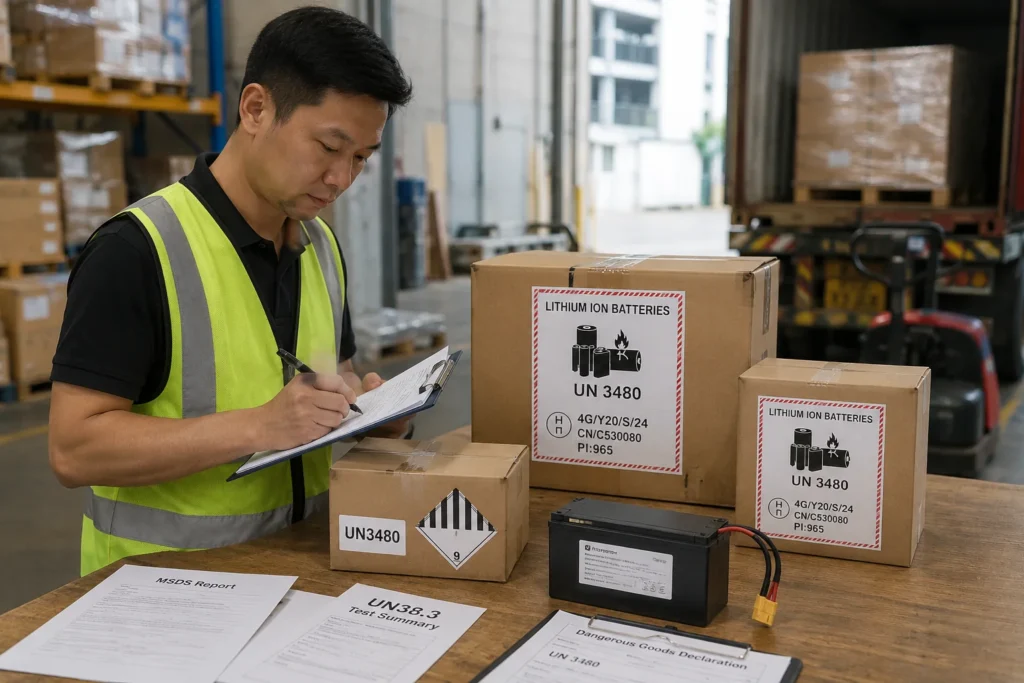
Lithium battery shipment from China with UN3480 labels, UN38.3 test summary, MSDS and dangerous goods documents

Best Practices for Safe and Compliant Lithium Battery Shipping

Lithium battery shipments are more likely to move smoothly when the cargo details, documents and carrier requirements are checked before the goods reach the airport or port. The following practices can help reduce unnecessary corrections, repacking and booking delays.

Confirm the Exact Battery Details Before Booking

Do not request space using only a general description such as “battery” or “power bank.”

Confirm:

  • battery chemistry
  • battery model
  • Watt-hour rating where applicable
  • whether the batteries are shipped alone, packed with equipment or contained in equipment
  • quantity, gross weight and package dimensions

Check That the Documents Match the Actual Cargo

The battery model and technical specifications shown in the available UN38.3 information, SDS or MSDS and battery specification sheet should be consistent with the goods being shipped.

If the supplier changes the battery model, capacity or configuration after quotation, the shipping requirements should be checked again before dispatch.

Confirm Packaging Before Cargo Pickup

Packaging should be completed according to the applicable requirements before the cargo is delivered to the freight warehouse.

Check:

  • protection against short circuits
  • batteries secured against movement
  • suitable inner and outer packaging
  • required package marks and labels
  • carton condition and gross weight

Confirm Carrier Acceptance Before Dispatch

Airlines, shipping lines and couriers may apply their own acceptance policies in addition to the general dangerous goods regulations.

A route that accepts one battery configuration may not necessarily accept another. Carrier acceptance should therefore be confirmed for the actual shipment rather than assumed from a previous booking.

Check Destination Requirements in Advance

Before departure, the importer should confirm any destination-specific requirements that may affect customs clearance or final delivery.

These can include:

  • import permits where applicable
  • customs classification
  • duties and taxes
  • local product requirements
  • consignee information
  • final delivery restrictions

Early checks are especially important for first-time shipments or new battery models because document corrections become more difficult after the cargo has already entered the transport process.

Why Choose Tonlexing for Lithium Battery Shipping?

Tonlexing supports businesses shipping lithium batteries from China by coordinating dangerous goods requirements, transport arrangements, customs procedures and final delivery. Whether you are shipping small commercial orders or larger battery shipments, the transport plan should be based on the battery type, cargo details, destination and carrier acceptance.

Our Services Include:

  • Dangerous Goods Shipping Support – Reviewing battery information and coordinating transport requirements for applicable air and sea freight shipments
  • Document Review Before Booking – Checking available UN38.3 information, SDS or MSDS, battery specifications and shipment details before carrier submission
  • Air and Sea Freight Solutions – Arranging suitable transport options according to shipment size, destination, urgency and battery classification
  • Customs and DDP Coordination – Supporting export clearance in China and DDP delivery solutions on available routes
  • Supplier and Carrier Coordination – Communicating with Chinese suppliers, warehouses, airlines and shipping lines to help keep cargo information and transport arrangements consistent

If you need to ship lithium batteries from China, contact Tonlexing with the battery type, quantity, weight, dimensions and destination. We can review the shipment details and check suitable transport options before booking.

Frequently Asked Questions

Can I import lithium batteries from China?

Yes. Lithium batteries can be imported from China, but the shipment must meet the applicable customs and dangerous goods transport requirements.

Before ordering, confirm the battery type, product specifications, available transport documents and destination import requirements. The process may differ depending on whether the batteries are lithium-ion or lithium metal and whether they are shipped alone, packed with equipment or contained in equipment.

Can lithium batteries be shipped from China by air?

Yes, but air freight is subject to stricter dangerous goods requirements and carrier acceptance.

The applicable requirements depend on the battery classification, packing configuration, Watt-hour rating and relevant IATA packing instruction. Airlines may also apply additional restrictions for specific routes or battery types.

Can lithium batteries be shipped by sea from China?

Yes. Sea freight is commonly used for larger commercial lithium battery shipments and is generally more suitable when transit time is less critical.

Shipments must comply with the applicable IMDG Code requirements, and shipping line acceptance should be confirmed before the cargo is delivered to the port or warehouse.

What documents are required to ship lithium batteries from China?

Common documents may include:

  • commercial invoice

  • packing list

  • UN38.3 test information or test summary

  • SDS or MSDS

  • battery specification sheet

  • Dangerous Goods Declaration where required

  • additional documents requested by the carrier or destination country

The exact document list depends on the battery type, transport method, carrier and destination.

How much does it cost to ship lithium batteries from China?

The cost depends on the destination, shipment weight and volume, battery classification, transport method and dangerous goods handling requirements.

For DDP shipments, the quotation may also include destination customs clearance, duties and taxes, and final delivery depending on the service scope.

To receive an accurate quote, provide the battery type, quantity, gross weight, package dimensions, destination and available UN38.3 and SDS information.