
Related Guide
How to Prepare a Material Safety Data Sheet (MSDS)
A Material Safety Data Sheet (MSDS) is essential for shipping hazardous materials, ensuring that proper safety guidelines are followed during han...
Read guide →

Shipping dangerous goods from China requires strict compliance with carrier acceptance checks, port or airport rules, and export documentation.
This 2026 China-origin guide explains how to ship and transport dangerous goods with fewer rejections, covering required paperwork, SDS in Chinese and English, packaging and labeling requirements, Limited Quantity and Excepted Quantity, and mode selection for air freight, ocean freight, sea transport, and road transport.
Documents checklist
Packaging & labeling
Air vs Ocean
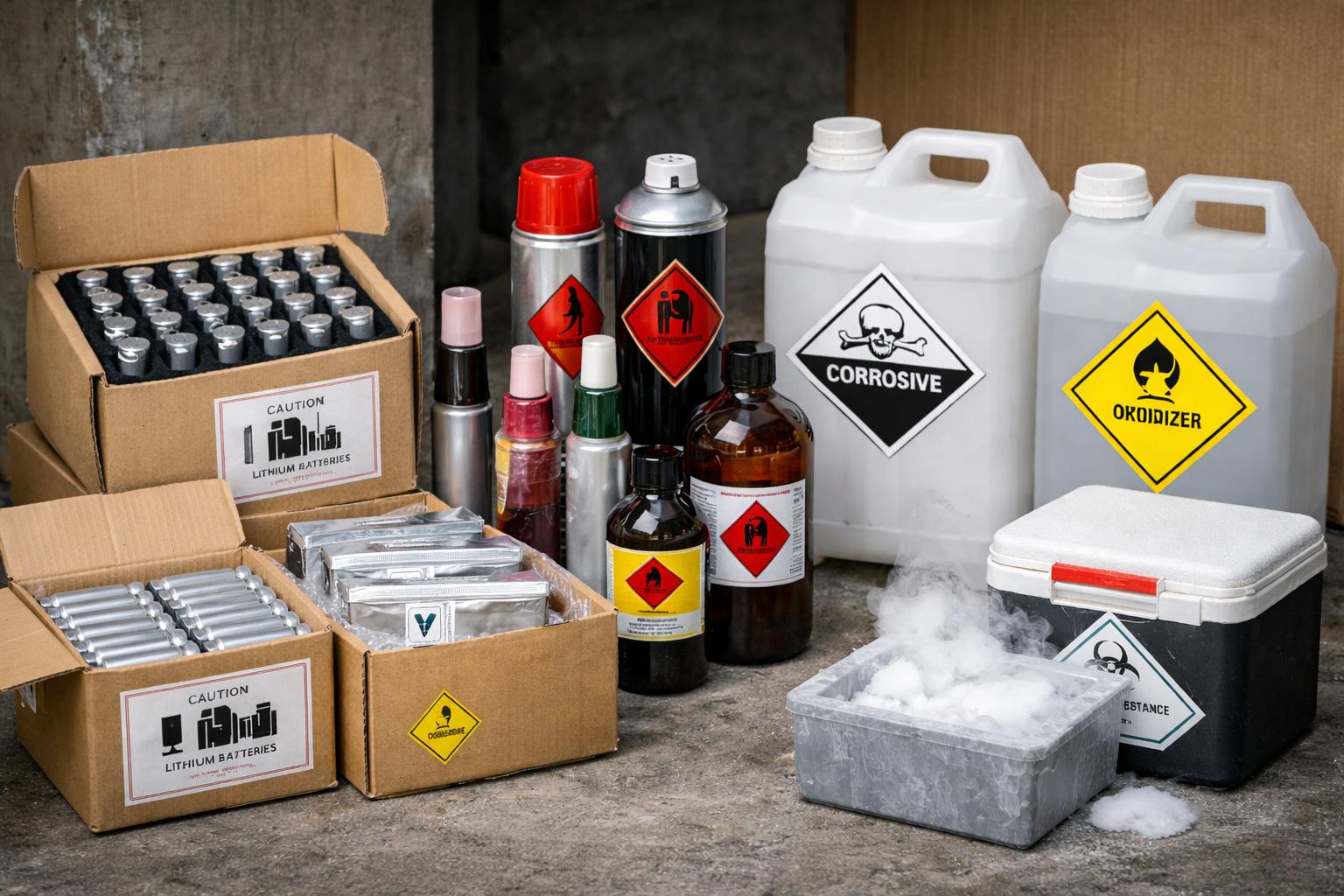
Shipping dangerous goods from China is different from regular cargo because your shipment must pass acceptance checks before it can even move. In practice, dangerous goods shipments are reviewed at three points: the forwarder warehouse, the port or airport terminal, and the export documentation check. If packaging, labels, and paperwork don’t match, the shipment is often refused or delayed.
Stricter acceptance at origin: ports, terminals, and airline handlers apply tight checks for hazardous materials.
Local operating rules: some ports and terminals limit storage or handling for certain categories, which affects booking and gate-in.
Mismatch triggers refusal: even if the product is allowed, inconsistent SDS, labels, and declarations can cause the shipment to be treated as non-compliant.
Many shippers assume the goods are “safe enough” to move as regular cargo. But once SDS, battery data, or flash point information is reviewed, the shipment may be classified as hazardous goods and must follow full dangerous goods shipping rules. That’s why this guide focuses on getting classification, documentation, packaging, and labeling aligned—so you can ship dangerous goods from China with fewer rejections.
Shipping dangerous goods from China sits under layered rule sets. Your goal is to follow the applicable regulations for each mode and lane, then align carrier acceptance requirements.
The United Nations publishes the model regulations that define dangerous goods classification logic, proper shipping names, and core hazard communication. Many countries and modal rulebooks align to these UN recommendations.
Air cargo moves under the IATA dangerous goods regulations used by airlines and handlers.
Ocean moves under international maritime dangerous goods requirements (IMDG), plus port and terminal controls.
China domestic legs must follow road transport policies and local enforcement.
In China-origin exports, the written rulebooks are only half of the story. The International Air Transport Association publishes the IATA dangerous goods regulations that airlines rely on, but each carrier still applies its own acceptance program for hazardous materials. The same is true for ocean lanes: a shipping company may accept one entry on paper yet refuse it at a specific terminal because of storage limits, seasonality, or port safety policy. This is why forwarders often describe China-origin DG as an acceptance game.
A practical way to reduce refusals is to document the shipment as if it will be audited. Make the hazard class obvious and consistent across SDS, marks, and the dangerous goods declaration. When an operator cannot quickly confirm the risk profile, the cargo is treated as higher-risk dangerous cargo, even if the shipper intended a simplified pathway. That is especially common for mixed cartons and for hazardous goods that look like consumer products.
Use this SOP for every China-origin shipment. It is designed around what forwarder teams and carrier acceptance staff actually check.
Collect product details before any booking:
Current SDS and product composition
Battery data for lithium batteries and battery-powered devices
Flash point data for flammable liquids
Concentration for corrosive substances like acids
Any notes for dry ice, aerosols, or oxidizers
If goods fall into regulated categories, treat the shipment as dangerous goods from the start.
A complete record should include:
Proper shipping name and UN identification
Subsidiary risk if applicable
Packaging group level when required
Any special provisions that affect packing, marking, and allowable quantities
Avoid guessing. Misclassification is the root cause of most China-origin dangerous goods failures.
Use a mode that fits the lane:
If speed matters, you may consider air freight only when the lane accepts the exact entry and quantity.
If volume and stability matter, choose ocean freight with earlier cutoffs and stronger terminal planning.
Confirm China domestic pickup rules and terminal appointment constraints for any road transport leg.
Do not print labels until packing is locked. A packing change can change marks, label placement, and statements.
Before tendering cargo, run a pre-check with photos and a document match review. This is where the best freight forwarders reduce rejection risk.
Terminal acceptance is where many China-origin dangerous goods shipments fail due to label mismatch, carton quality issues, or incomplete paperwork.
Repeatable shipping improves acceptance, reduces storage costs, and protects your carrier relationship over time.
The fastest way to lose a lane is sloppy paperwork. Proper documentation is the shipping foundation for regulated cargo.
SDS that matches the shipped product and pack-out
A dangerous goods declaration consistent with the label and packing method
A container packing statement for containerized ocean moves
Evidence of tested pack-out when required
Emergency contact details where the lane requires it
Failure to provide the correct documentation can lead to customs delays, fines, or even the return or destruction of the shipment. That is why correct documentation and consistency matter more than speed.
Many shippers provide SDS in both Chinese and English to support local review and overseas handling, aligned with GHS hazard communication and China SDS drafting expectations. The SDS or MSDS is also commonly required during the booking process for dangerous goods.
For hazardous materials, the booking team will often compare SDS statements with labels and the declared entry. If your SDS suggests flammable liquids, corrosive substances, oxidizing substances, or other controlled characteristics, the lane may demand full DG procedures even when the shipper assumed simplified handling.
Poor packing is the fastest route to refusal. Packaging for dangerous goods is not “just a box.” It is a safety control that must match the classification.
Carton strength and closure integrity
Inner containment for liquids and acids
Separation that prevents friction and short circuits
Evidence of compliant pack-out when required
Your outer packaging must withstand stacking, vibration, and pressure changes. Your packaging material must be compatible with the contents, especially for corrosive substances. Using the wrong inner bottle, cap, liner, or absorbent system can cause leaks during transport and immediate rejection at warehouse or terminal acceptance.
When UN performance packaging is required, using non-certified containers or ignoring required performance tests can result in leaks or spills during transport. Even when a UN test is not required for a specific entry, many China-origin operators still expect robust pack-out for safe shipping.
Incorrect packaging includes weak cartons, missing inner containment, mixed contents that should not be packed together, and pack-outs that do not match the paperwork. In China export shipping, once a dangerous goods carton is rejected, rework costs quickly exceed any savings.
Labelsa are not decoration. They are the fastest way for handlers to identify risk during pickup, terminal checks, and loading.
Hazard labels or pictograms that match the declared hazard profile
Proper shipping name / UN details when required by the lane and mode
Supplier information so the shipment is traceable
Liquid handling marks such as orientation arrows when applicable
Using the wrong hazard labels or missing labels can result in customs or carriers refusing to load or unload the shipment. When labels conflict with documentation, acceptance staff will treat the shipment as misdeclared dangerous goods.
Limited Quantity (LQ) and Excepted Quantity (EQ) can simplify shipping for certain dangerous goods from China, but only when the shipment qualifies and the pack-out matches the rules. In China-origin export screening, most “upgrades to full DG” happen because the shipment looks like LQ/EQ on paper, but the physical cargo or documents do not prove it.
Wrong eligibility assumption: shippers assume small quantities automatically qualify.
Packaging doesn’t meet LQ/EQ conditions: inner limits, outer packaging rules, or required marks are not followed.
Labels and documents don’t match: the SDS, marks, and declaration describe different goods or packing methods.
Mixed cartons or overpacks: combining items can break the simplified conditions and trigger full DG handling.
Lane policy is stricter than expected: a carrier or terminal may require full DG procedures for certain categories even if LQ/EQ is theoretically possible.
Full dangerous goods documentation and acceptance checks
Full labeling and inspection requirements
Higher handling scrutiny, possible delays, and rework costs
Confirm the shipment qualifies for LQ/EQ under the specific UN entry and mode.
Keep the pack-out simple and consistent with the declared method.
Apply the correct marks and keep them visible for inspection.
Avoid last-minute packing changes after documents are prepared.
Use a photo-based pre-check with your freight forwarder before tendering cargo.
Simple rule: LQ/EQ only works when the cargo, packaging, marks, and documents all tell the same story. If anything conflicts, China-origin acceptance will treat it as full DG.

This section is about China-origin practicality, not theory.
Air freight is fast, but acceptance is strict. Many lanes apply restrictive controls, and documentation is scrutinized. If you plan air freight, confirm acceptance for the exact entry, quantity, and packing method, and prepare the shipper’s declaration only when required by the lane.
Ocean freight is typically more stable for volume. Sea transport is often more cost-effective for regulated cargo, but port storage rules and terminal appointment systems matter. Confirm whether the port allows the hazard category, whether there are storage limitations, and whether special gate-in timing applies.
China domestic road transport is governed by local rules that may differ across regions. This matters for pickup, transfer to terminals, and night or route restrictions. A compliant export shipment can still fail if the domestic leg is not aligned.
Lithium batteries are one of the most common China-origin dangerous goods categories. Your plan must cover configuration, protection against short circuits, and a pack-out that matches the declared entry. Many shippers fail acceptance because battery configuration statements do not match the pack-out. If you ship batteries frequently, standardize your carton design and documentation workflow. When you ship batteries through air channels, build a photo-based pre-check to minimize rework and rejection.
Flammable liquids such as nail polish and solvent-based cosmetics are frequently rejected due to weak inner containment and label mismatch. Build leak prevention into the pack-out and keep documentation aligned. Do not treat these as ordinary consumer products during shipping.
Flammable gases in aerosols face strict acceptance on many lanes. Quantity limits and carton marking discipline matter. Confirm lane acceptance early.
Corrosive substances such as sulfuric acid and hydrochloric acid require careful packaging material selection and leak prevention. This category is heavily scrutinized during China export acceptance.
Oxidizing substances, organic peroxides, and self reactive substances can have unique reaction risks. Expect tighter acceptance, stronger pack-out requirements, and stricter segregation logic.
Infectious substances are highly controlled. Use specialized lanes and expert forwarder handling only.
Dry ice is commonly regulated during shipping because it releases gas and can create pressure hazards. Ensure documentation and carton marks are consistent with the lane requirement.
When shipping dangerous goods from China, port and terminal rules can be stricter than the base international regulations. Even if your cargo is properly classified, a port, terminal, or carrier may still limit acceptance due to storage capacity, safety policy, or seasonal controls.
Terminal storage limits: some terminals restrict how much hazardous cargo can be stored at one time.
Lane and port policy differences: the same hazard class may be accepted at one port but limited at another.
Appointment and cut-off controls: DG cargo often has earlier gate-in deadlines and additional checks.
Local enforcement changes: local rules can tighten quickly after incidents or during peak periods.
Confirm the terminal’s DG gate-in rules and cut-off time before booking.
Pre-check SDS, labels, and the dangerous goods declaration with your freight forwarder.
Keep packaging and marking consistent to avoid “extra inspection” escalation, especially for lithium batteries, flammable liquids, and corrosive substances.
Choosing the right freight forwarders is critical because they control the acceptance pipeline: warehouse checks, terminal handoff, and operator booking rules.
A DG-capable logistics partner helps you:
Validate the shipment record and lane acceptance
Pre-check documents and carton photos
Align labels, pack-out, and paperwork for consistency
Prevent avoidable holds at terminals and customs
Mistakes in shipping dangerous goods can lead to costly delays, rejected shipments, and serious reputational damage. The most common causes are still the basics: classification errors, carton issues, and paperwork mismatch.
Refusal at warehouse acceptance
Refusal at terminal gate-in or airline acceptance
Customs holds due to mismatch or missing documents
Forced rework, storage charges, and missed cutoffs
Long-term carrier restrictions after repeated issues
Deliberately or accidentally declaring dangerous goods as general cargo can lead to severe fines, criminal liability, and permanent carrier blacklisting. Consequences vary by jurisdiction and incident severity, but the risk is real enough that your SOP must prioritize accuracy.
Confirm if goods fall under dangerous goods control
Confirm the applicable regulations by mode and lane
Confirm classification details and quantity limits
Choose a realistic shipping plan with buffer time
Use strong cartons and stable closures
Ensure inner containment for liquids and acids
Confirm outer packaging strength and seal
Confirm packaging requirements and avoid incorrect packaging
Confirm labels match the declared entry
Confirm SDS matches the exact product shipped
Confirm the dangerous goods declaration matches carton details
Keep correct documentation consistent across all forms
Many China-origin lanes commonly request SDS in both languages to support local review and overseas handling. The key is that the SDS matches the shipped product and the declared entry.
Not always. Sea transport can be more stable for volume, but port restrictions and storage policies can add friction. Air freight can work for time-critical shipments, but acceptance is strict and mistakes are punished quickly.
The number one cause is mismatch: the pack-out, labels, and paperwork disagree. That is why proper documentation and pre-check photos matter.
Yes, limited quantity can simplify parts of the process, but only if the shipment qualifies and every condition is met. Misuse often triggers full DG handling.
Useful freight, customs and importing resources related to this shipping guide.
A Material Safety Data Sheet (MSDS) is essential for shipping hazardous materials, ensuring that proper safety guidelines are followed during han...
Read guide →
Shipping lithium batteries by air, whether from China to Russia or the USA, requires compliance with strict international safety regulations. One...
Read guide →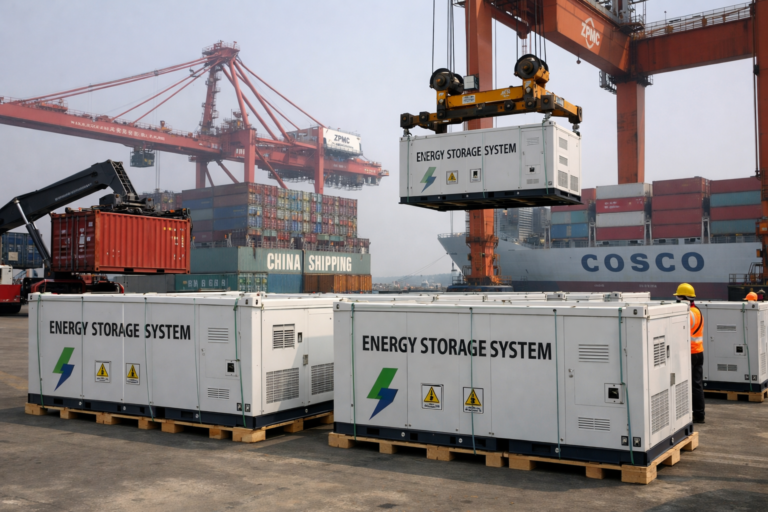
Shipping Energy Storage Systems from China Verified & Reviewed · Last updated March 2026 Shipping energy storage systems from China requires care...
Read guide →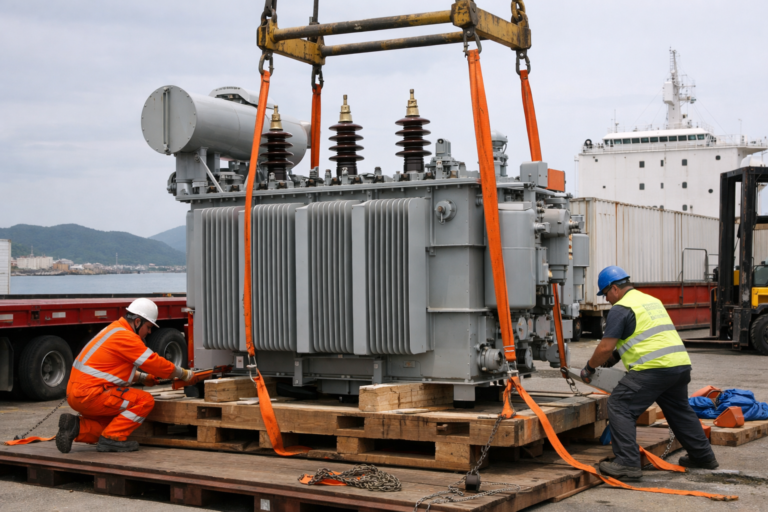
A practical guide to safe oil filled transformer shipping, including oil handling, pressure protection, packing, and installation support.
Read guide →Electric Motorcycle Shipping from China Verified & Reviewed · Last updated May 2026 Electric motorcycle shipping from China requires the right fr...
Learn more → Useful Resource Shipping Electric Forklifts from China: 2026 Guide for ImportersShipping Electric Forklifts from China Verified & Reviewed · Last updated July 2026 Shipping electric forklifts from China requires careful plann...
Learn more →WhatsApp us