Related Guide
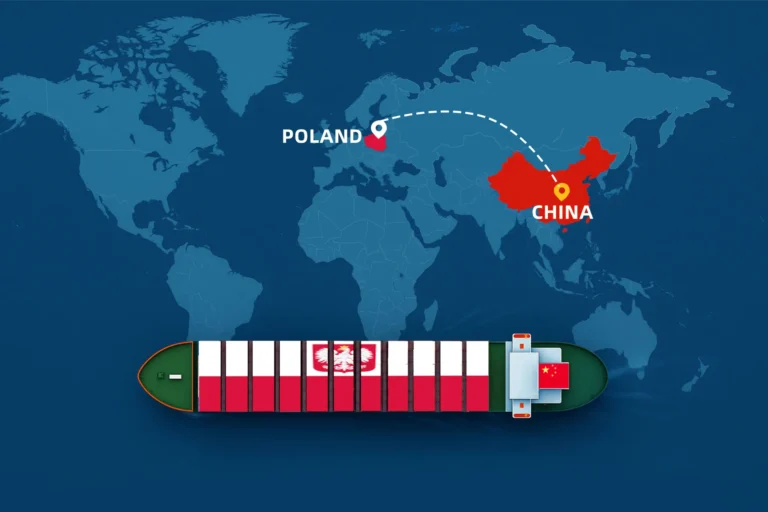
Shipping from China to Poland
Shipping from China to Poland – Rail, Sea & Door-to-Door in 2026 Fast, reliable shipping from China to Poland for B2B importers, eCommerce seller...
Read guide →

20ft and 40ft container shipping costs from China to Poland usually range from USD 1,500 to USD 3,500, depending on container type, cargo volume, sea freight rates, shipping route, and final delivery requirements.
This guide explains 20ft, 40ft, and 40HQ container shipping costs from China to Poland, including sea freight, rail freight, FCL and LCL shipping, major ports such as Gdansk and Gdynia, transit times, customs clearance, duties, VAT, and cost-saving tips for importers.
Shipping method / Mode
Transit time range
DDP / Door to Door
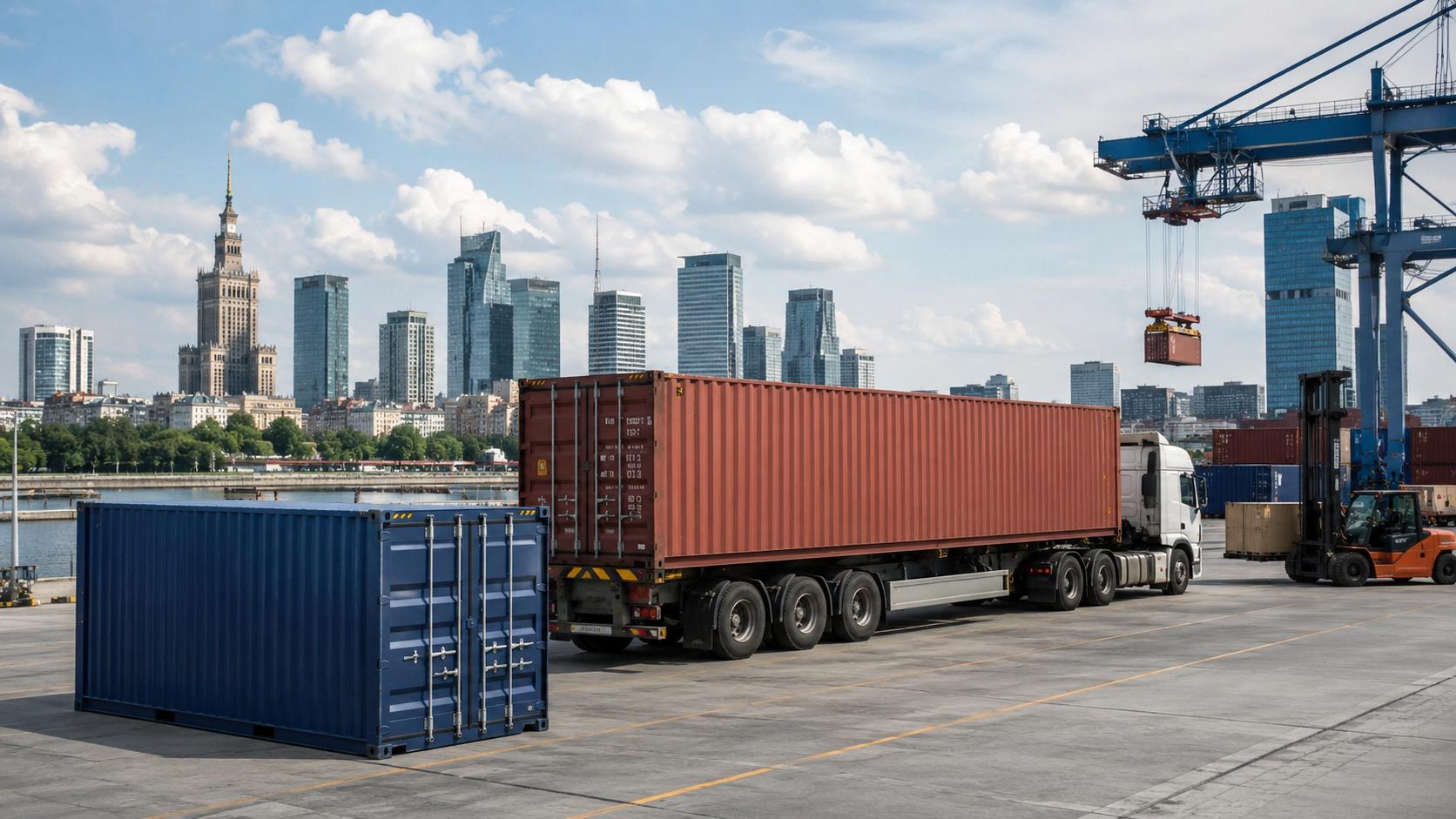
The average cost to ship a container from China to Poland is usually between USD 1,500 and USD 3,500 by sea freight, depending on container size, shipping route, cargo details, market conditions, and final delivery requirements.
| Shipping Option | Average Price Range | Best For | Estimated Transit Time |
|---|---|---|---|
| 20ft Container | USD 1,500–2,000 | Heavy cargo, dense products, machinery | 30–45 days |
| 40ft Container | USD 2,000–3,500 | Large shipments, commercial cargo | 30–45 days |
| 40HQ Container | USD 2,100–3,500 | Bulky cargo, furniture, light goods | 30–45 days |
| LCL Shipping | USD 35–100 per CBM | Smaller shipments below full container load | 35–50 days |
| Rail Freight 40ft Container | USD 2,500–5,500 | Faster container transport to inland Poland | 15–25 days |
These average price ranges are for reference only. The actual cost may vary widely depending on freight rates, fuel price, container availability, port congestion, customs fees, terminal handling charges, cargo insurance, and final delivery address.
A container shipping cost calculator can provide a rough estimate, but it cannot replace a real quote based on cargo volume, cargo weight, supplier location, destination city, container type, shipping method, and customs clearance requirements.
Understanding standard container dimensions helps importers choose the right container type and estimate cargo volume before booking.
| Container Type | Internal Dimensions | Approx. Loading Capacity | Best For |
|---|---|---|---|
| 20ft Container | 5.9 × 2.35 × 2.39 m | Around 28 CBM | Heavy cargo, machinery, metal products, tiles |
| 40ft Container | 12.03 × 2.35 × 2.39 m | Around 58 CBM | Large shipments, furniture, retail goods |
| 40HQ Container | 12.03 × 2.35 × 2.69 m | Around 68 CBM | Bulky but lightweight cargo, large cartons, ecommerce goods |
The actual loading volume may be lower because of carton size, pallet layout, cargo shape, packaging strength, and loading method. Oversized cargo may require special equipment such as flat rack containers or open top containers, which usually have higher container costs and stricter freight carrier requirements.
Sea freight is the most common and cost effective shipping method for moving 20ft and 40ft containers from China to Poland. For large shipments, full container load cargo, machinery, furniture, building materials, and wholesale goods, sea freight usually provides the lowest overall shipping costs compared with air freight or express delivery.
The average sea freight cost from China to Poland currently ranges between USD 1,700 and USD 4,200 for FCL shipping, while the average transit time is around 35 to 45 days depending on the shipping route, vessel schedule, port congestion, and customs clearance process.
Most container shipping routes from China arrive directly or indirectly at Poland’s two major seaports.
Port of Gdansk
The largest container port in Poland, equipped with deep-water terminals capable of handling large international container vessels. It is one of the main gateways for containerized cargo entering Poland.
Port of Gdynia
A modern Baltic Sea container port commonly used for feeder services and regional European shipping connections.
Depending on freight carrier schedules and direct routes, some shipments may also move through Hamburg, Rotterdam, Antwerp, or Bremerhaven before final delivery to Poland.
There are two main shipping route options for sea freight from China to Poland.
Direct Shipping Routes
Some freight carriers offer direct routes from major Chinese ports to Gdansk. Direct routes usually provide faster transit times and more stable schedules because the container does not need to change vessels during transport.
Transshipment Routes
Many shipments first arrive at major European hub ports such as Hamburg, Rotterdam, Antwerp, or Bremerhaven, then continue to Poland by feeder vessel, truck, or rail. Transshipment routes are sometimes slower but may offer more competitive freight rates and better container availability.
When shipping goods from China to Poland, importers usually choose between FCL shipping and LCL shipping. The right option depends on cargo volume, cargo value, delivery urgency, and how much control you need during the shipping process.
FCL means full container load. Your goods occupy the entire container, such as a 20ft, 40ft, or 40HQ container.
FCL shipping is better when your cargo volume is large, usually around 15–20 CBM or more. It is also suitable for high-value goods, fragile cargo, heavy products, and regular bulk orders.
The main advantages of FCL shipping are lower handling risk, faster container release, better cargo control, and more stable total shipping cost for large shipments.
LCL shipping is used when your cargo is not enough for a full container. Your goods are shipped together with other importers’ cargo in one container.
LCL is suitable for smaller shipments, sample orders, trial purchases, or cargo below full container volume. It helps importers avoid paying for unused container space.
However, LCL shipping usually takes longer than FCL because goods need to be consolidated in China and deconsolidated after arrival in Europe. It may also involve more handling, which can increase the risk of delay or cargo damage.
For small shipments below 10 CBM, LCL shipping is usually more cost effective. For shipments around 15–20 CBM, it is worth comparing LCL shipping costs with the cost to ship a 20ft container.
For large shipments, regular orders, or cargo that needs better protection, FCL shipping is usually the better choice from China to Poland.
Rail freight is a faster alternative to sea freight and a more cost effective option than air freight for many China to Poland shipments. It is commonly used for ecommerce goods, electronics, automotive parts, machinery parts, retail stock, and seasonal products that need shorter transit times.
The average rail freight cost from China to Poland is usually USD 2,500 to USD 5,500 for a 40ft container, depending on the departure city, rail terminal, cargo type, container availability, and destination city in Poland.
China to Poland rail freight usually departs from major inland railway hubs in China and enters Poland through key China-Europe rail corridors.
Common departure cities in China include:
Xi’an
Chengdu
Chongqing
Zhengzhou
Wuhan
Yiwu
Suzhou
Common destinations in Poland include:
Malaszewicze
Warsaw
Lodz
Poznan
Wroclaw
Malaszewicze is one of the most important rail gateways for China-Europe freight entering Poland. From there, containers can be moved to inland warehouses, distribution centers, or final delivery addresses.
| Shipping Option | Average Cost | Estimated Transit Time | Best For |
|---|---|---|---|
| 40ft Rail Container | USD 2,500–5,500 | 15–25 days | Faster container shipping |
| LCL Rail Freight | $200/cbm | 18–30 days | Medium-size shipments |
| Door-to-Door Rail Freight | Case by case | 20–35 days | Inland delivery in Poland |
Rail freight is usually faster than sea freight, but rates can change due to train space, route capacity, border processing, container availability, and seasonal demand.
Rail freight is a good choice when sea freight is too slow, but air freight is too expensive. It works especially well for medium-value goods that need better delivery speed without the high cost of air transport.
Rail freight is suitable for:
Ecommerce inventory
Electronics and accessories
Automotive parts
Machinery parts
Retail products
Seasonal goods
Medium-value commercial cargo
For importers shipping to inland Polish cities such as Warsaw, Lodz, Poznan, and Wroclaw, rail freight can be a practical solution because it reduces total transit time compared with sea freight plus long inland transport.
Container shipping costs from China to Poland are not fixed. The final price can change depending on the container type, cargo volume, shipping route, port conditions, and customs clearance requirements.
A 20ft container is usually better for heavy cargo, while a 40ft or 40HQ container is more cost effective for large-volume goods. If the cargo volume is small, LCL shipping may be cheaper than booking a full container.
Shipping from major ports such as Shanghai, Ningbo, Shenzhen Port, Qingdao, and Xiamen usually provides more carrier options and better freight rates. In Poland, Gdansk and Gdynia are common destination ports, while inland delivery to Warsaw, Lodz, Poznan, or Wroclaw will increase the total shipping cost.
Direct routes are usually faster, while transshipment routes may offer lower ocean freight rates. Freight carrier space and container availability can also affect the actual cost, especially during peak season.
Port congestion may cause delays, storage fees, demurrage, or detention charges. Fuel price and oil prices also affect sea freight rates and inland container transport costs.
Incorrect shipping documents, unclear cargo value, wrong HS codes, or missing compliance certificates may cause customs delays and extra customs brokerage fees. Oversized cargo, batteries, branded goods, fragile products, and regulated goods may also require special handling or additional documents.

Goods shipped from China to Poland must complete EU customs clearance before final delivery. Importers are required to pay customs duties and import VAT, while also preparing complete shipping documents to avoid delays, inspections, or additional customs fees.
For container shipping from China to Poland, importers usually need the following shipping documents:
EORI Number
An EORI number is required for customs clearance within the European Union. Any company importing goods into Poland from outside the EU must have a valid EORI registration.
Commercial Invoice
The commercial invoice should clearly show the seller and buyer information, invoice date, product name, HS code, unit price, total cargo value, currency, and shipping terms such as FOB or CIF.
Packing List
The packing list should include cargo details such as carton quantity, packaging type, dimensions, gross weight, net weight, and cargo volume.
Bill of Lading
The bill of lading is the main shipping document issued by the freight carrier for sea freight shipments. Rail freight shipments may require rail transport documents instead.
Certificate of Origin
Some products may require a certificate of origin to support customs declaration or apply for preferential import duties under trade agreements.
CE Certificates and Compliance Documents
Products such as electronics, toys, machinery, medical products, and industrial equipment may require CE marking and additional compliance documents before entering the Polish market.
Import taxes in Poland mainly include customs duties and import VAT. The tax calculation is usually based on the CIF value, which includes cargo value, international freight, and cargo insurance.
Customs Duties
Customs duty rates usually range from 0% to 15%, depending on the HS code and product category.
Some electronics may have low or zero import duties
Clothing, footwear, plastics, and consumer products may have higher duty rates
Machinery and industrial products may use different tariff classifications
Importers can check the EU TARIC database to confirm the latest customs duty rates before shipping goods from China to Poland.
Import VAT
Poland’s standard import VAT rate is usually 23%.
The import VAT is generally calculated based on: CIF Value + Import Duty + Local Import Charges × VAT Rate
For regular importers with a valid VAT registration, Poland may allow postponed VAT accounting, which can help reduce cash flow pressure during customs clearance.
Customs inspections may increase transit times and overall shipping costs. Common inspection risks include:
Under-declared cargo value
Incorrect HS codes
Missing shipping documents
Intellectual property or branded product issues
Incorrect product labeling
Missing CE compliance documents
Poland customs authorities may request additional payment proof, product specifications, or compliance certificates if the declared cargo information appears inaccurate.
To avoid customs delays, importers should confirm HS codes, cargo value, product compliance, and customs requirements before the container leaves China.
Reducing container shipping costs is not only about choosing the lowest freight rate. A very low quote may exclude terminal handling charges, customs fees, destination port charges, customs brokerage, final delivery, or cargo insurance.
To reduce the total shipping cost, importers should compare the full shipping solution, not only the ocean freight rate.
Practical ways to reduce shipping costs include:
Choose the right container type based on cargo volume and weight
Compare 20ft, 40ft, and 40HQ container options
Use FCL shipping when the cargo volume is large enough
Use LCL shipping only for smaller shipments
Avoid peak season when possible
Book earlier when container availability is tight
Ship from major ports with more direct routes
Prepare accurate shipping documents before departure
Confirm HS code and customs requirements in advance
Consolidate goods from multiple suppliers into one full container
Compare sea freight, rail freight, and air freight based on delivery urgency
Buy cargo insurance for high-value or fragile cargo
For large shipments, full container load shipping is usually more cost effective than multiple LCL shipments. If your cargo volume is close to 15–20 CBM, it is worth comparing LCL shipping costs with the cost to ship a 20ft container.
For bulky but lightweight cargo, a 40HQ container may reduce the average price per unit. For heavy cargo, a 20ft container may be safer and more practical.
Importers can also use a container shipping cost calculator as a rough reference, but the final cost still depends on real cargo details, shipping route, freight carrier, container availability, port congestion, and customs clearance requirements.
A reliable freight forwarder can help importers manage the full container shipping process from China to Poland, including pickup, export customs declaration, sea freight, rail freight, customs clearance coordination, and final delivery.
For international shipping needs, working with an experienced freight forwarder is especially useful when you buy from multiple suppliers, ship large shipments, or need a door-to-door solution.
A freight forwarder can help with:
Comparing container shipping rates
Booking 20ft, 40ft, or 40HQ containers
Checking container availability
Arranging pickup from suppliers in China
Consolidating cargo in a China warehouse
Preparing export shipping documents
Coordinating ocean freight or rail freight
Tracking vessel or train schedules
Coordinating customs brokerage in Poland
Arranging final delivery to warehouse or business address
Advising on cargo insurance and risk control
Tonlexing can support container shipping from China to Poland by sea freight, rail freight, FCL shipping, LCL shipping, and door-to-door delivery. Whether you need to ship a full container, smaller shipments, oversized cargo, or regular commercial goods, a customized shipping plan can help reduce overall shipping costs and avoid unnecessary delays.
The average cost to ship a 20ft container from China to Poland is usually USD 1,500 to USD 2,000 by sea freight. The actual cost depends on the shipping route, origin port, destination port, container availability, cargo weight, port congestion, and final delivery requirements.
The average cost to ship a 40ft container from China to Poland is usually USD 2,000 to USD 3,500. A 40HQ container may cost around USD 2,100 to USD 3,500, depending on freight rates, cargo volume, shipping season, and destination charges.
Yes. Sea freight is usually the cheapest shipping method for full container load and large shipments. Rail freight is faster but usually more expensive, while air freight is best for urgent and high-value cargo.
Sea freight from China to Poland usually takes 30 to 45 days. LCL shipping may take 35 to 50 days because of consolidation and deconsolidation. Rail freight usually takes 15 to 25 days, while air freight may take 3 to 8 days.
A 20ft container is better for heavy cargo, machinery, metal products, tiles, and dense goods. A 40ft or 40HQ container is better for bulky cargo, furniture, textiles, ecommerce stock, and large-volume commercial goods.
Useful freight, customs and importing resources related to this shipping guide.
Shipping from China to Poland – Rail, Sea & Door-to-Door in 2026 Fast, reliable shipping from China to Poland for B2B importers, eCommerce seller...
Read guide →Shipping Cost from China to Poland (2026 Guide) Verified & Reviewed · Last updated May 2026 Shipping cost from China to Poland in 2026 typically...
Read guide →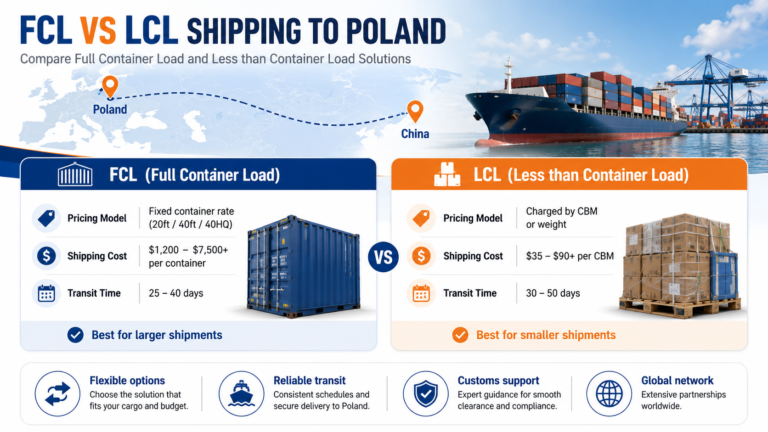
FCL vs LCL Shipping to Poland Verified & Reviewed · Last updated June 2026 FCL vs LCL Shipping to Poland from China is one of the most common que...
Read guide →
Sea freight is the most cost effective shipping method for large volumes and container load cargo. It is ideal for businesses looking to reduce s...
Read guide →Air Freight from China to Poland Verified & Reviewed · Last updated May 2026 Air freight from China to Poland is a fast and reliable shipping opt...
Learn more → Useful Resource DDP Shipping from China to PolandDDP Shipping from China to Poland Verified & Reviewed · Last updated May 2026 Shipping costs for DDP shipments from China to Poland vary dependin...
Learn more →WhatsApp us