

If you’re wondering how much does a shipping container cost in 2025, this updated guide breaks down all the essential information — from 20ft and 40ft container prices to delivery costs, condition grades, and key factors that influence the final price.
In 2025, shipping containers remain the backbone of international shipping, supporting global trade and providing secure, long-lasting storage solutions. Whether you’re importing goods, expanding warehouse capacity, or setting up modular buildings, understanding the full shipping container cost helps you make better purchasing decisions and avoid hidden expenses.
Container prices vary based on size, condition, and location. While new shipping containers (often called one-trip containers) offer superior quality and longer lifespan, used containers are a more cost-effective choice for storage, office space, or small-scale projects. In this comprehensive 2025 guide, we’ll show you how to find the best deals and choose the perfect shipping container for your specific needs.
Average Shipping Container Prices in 2025
The global container market has stabilized compared to the post-pandemic years, though regional differences still exist. Here’s an overview of typical container prices you can expect in 2025:
Container Type | Condition | Average Price (USD) | Common Use |
|---|---|---|---|
20ft Standard | New | $1,000 – $2,500 | Shipping or export cargo |
20ft Standard | Used | $800 – $2,000 | Storage or small projects |
40ft Standard | New | $2,000 – $3,500 | Large cargo transport |
40ft High Cube | New | $2,300 – $5,000 | Bulky or tall goods |
40ft Used | Used | $1,500 – $2,800 | Long-term storage |
Prices vary based on current location, delivery costs, and demand. Buying from China or port depots often offers wholesale prices, while inland delivery can add $200–$500 to your final cost. For businesses planning multiple shipments, combining orders or buying multiple units can lower expenses and improve logistics efficiency.
20ft & 40ft Shipping Container Cost Breakdown
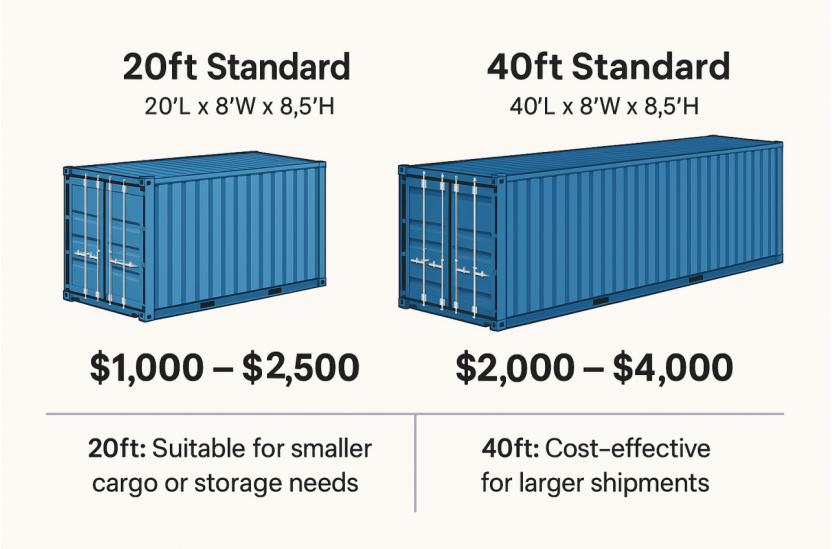
The 20ft and 40ft shipping containers are the two most common sizes used for global trade and storage. Their container cost depends on the condition, type, and delivery location.
20ft Containers
A new 20ft container—often a one-trip unit—costs around $1,000 to $2,500. These new containers are cargo worthy, wind and watertight, and ideal for international shipping or long-term storage.
A used 20ft container, on the other hand, ranges between $800 and $2,000 depending on its grade:
Cargo worthy: Safe for transporting goods, inspected and certified.
Wind & Watertight (WWT): Perfect for storage or office space conversions.
As-is containers: Lowest price, may have minor dents or rust but still usable.
If you buy from a depot nearest to your site, you’ll save significantly on delivery costs. Local truck transportation usually ranges between $150–$500 depending on distance and access.
40ft Containers
The 40ft container provides double the capacity of a 20ft box but costs only about 30% more—making it highly cost-effective for large shipments or multiple units.
A new 40ft shipping container costs around $2,000–$3,500, while a 40ft high cube (extra one-foot height) averages $2,300–$5,000. Used containers in this size typically fall between $1,500–$2,800.
These containers are also popular for long-term storage, office conversions, and construction projects, providing exceptional durability and value per cubic meter.
Used vs New Shipping Containers: Which Is Better?
Choosing between new shipping containers and used ones depends on your budget and purpose.
Used Containers
Used shipping containers are affordable and widely available. They’re great for storing items, long-term storage, or short-distance transportation. However, check for structural integrity, watertight seals, and minor dents before purchase. Prices range from $1,000 to $2,200, depending on location and wear and tear.
New or One-Trip Containers
A new shipping container (often labeled as one-trip) offers the best balance of quality and value. Used only once from China to the destination country, they’re nearly new, cargo worthy, and free from corrosion or damage. Costs range from $2,000–$3,500, depending on size and delivery site.
If you need a cost-effective unit for storage or building projects, go for used containers. For businesses planning frequent international shipping or resale, one-trip containers are the smarter long-term investment.
Factors Affecting Shipping Container Prices
The shipping container cost varies based on several key factors. Understanding these helps you make an informed decision and avoid paying more than necessary.
Container Size and Type
Naturally, container size affects the price. 20ft containers are cheaper, while 40ft and high cube models cost more due to added steel and capacity. Specialized types such as double door, open-top, or refrigerated containers also have higher container prices because of their unique structures.
Condition and Grade
Condition determines both usability and final price.
New / One-trip containers – Highest quality, no rust, cargo worthy, and ideal for international shipping.
Used containers – Available as cargo worthy, wind and watertight, or as-is.
Cargo worthy: Certified for export, strong structural integrity.
Wind & watertight: Good for storage, not suitable for export.
As-is: Lowest cost, may show wear and tear but functional.
Location and Delivery
Your current location and proximity to a depot or port heavily influence container cost. Buying near ports in China or manufacturing hubs can save hundreds due to wholesale prices and lower delivery costs. Inland transport may require truck or crane delivery, increasing expenses by $200–$800.
Supply and Demand
Container pricing fluctuates with global demand. During trade booms or peak shipping seasons, container prices increase. When supply exceeds demand, prices stabilize or drop. Monitoring market cycles can help you secure best deals.
Custom Modifications
Extra features—such as doors, insulation, or ventilation—raise the final price. Standard units may cost $2,000–$4,000, while modified versions can reach $4,000–$6,000 depending on customization.
Delivery Costs
Even after purchase, delivery costs add up. Factors include distance, truck type, and delivery site accessibility. Always confirm if delivery is included in your quote or billed separately.
Explore more shipping guides:
- 20ft & 40ft Container Shipping Costs from China to Mexico
- 20ft & 40ft Container Shipping Costs from China to Kenya
- 20ft & 40ft Container Shipping Costs from China to France
- 20ft & 40ft Container Shipping Costs from China to Germany
- 20ft & 40ft Container Shipping Costs from China to Argentina
- 20ft & 40ft Container Shipping Costs from China to USA
Container Grades and Common Conditions
When purchasing used shipping containers, understanding container grades ensures you pay the right price for your needs.
Cargo Worthy Containers
These containers pass international inspection standards for transporting goods overseas. They are watertight, structurally strong, and safe for multiple trips. Average cost: $1,500–$2,800.
Wind & Watertight Containers (WWT)
Ideal for storage or on-site projects. They protect cargo from dust and moisture but aren’t certified for export. Average cost: $1,000–$2,500 depending on age and location.
As-Is Containers
Cheapest option, perfect for long-term storage or conversions where appearance isn’t critical. May have minor dents or rust. Price: $800–$1,500.
If your goal is international shipping, always choose cargo worthy or one-trip containers. For storing items or temporary use, WWT or as-is containers offer excellent cost-effective alternatives.
Where to Buy Shipping Containers
Knowing where to buy shipping containers can make a big difference in both price and quality. The best option depends on whether you value cost, inspection access, or delivery convenience.
Local Depots
Buying from a local depot lets you inspect the unit’s condition and avoid long-distance delivery costs. Depots often sell used, cargo worthy, or wind-watertight containers, and you can usually negotiate a better final price for self-pickup.
Pros: Quick delivery, visible condition, lower transportation cost.
Cons: Limited inventory in smaller cities.
Online Marketplaces
Platforms like Container xChange, Conex Depot, and Container One allow you to compare container prices by size, condition, and current location. These websites often list one-trip containers and provide transparent offers.
Pros: Wide selection, convenient ordering, competitive pricing.
Cons: Can’t inspect physically; delivery fees vary by location.
Wholesale Suppliers and Manufacturers
If you’re buying multiple units, working directly with wholesale suppliers or factories—especially in China—can significantly reduce your container cost.
Pros: Factory pricing, consistent stock, customization available.
Cons: Longer shipping time, import procedures, higher shipping costs.
When buying online or through resellers, always verify photos, inspection reports, and delivery terms to ensure the container cost matches its actual condition.
Delivery and Cost-Saving Tips
While the container’s base price is important, delivery costs and logistics planning can greatly impact your final price. A few smart steps can help you save money without compromising quality.
Choose the Nearest Depot
Buying from the depot nearest your delivery site minimizes truck distance and saves $200–$500 per trip. For multiple containers, coordinate deliveries together to share transportation costs.
Confirm Delivery Method
Common methods include tilt-bed trucks (best for 20ft containers), flatbeds (for 40ft or high cube), and crane trucks for tight-access sites. Always confirm whether offloading is included in the delivery fee.
Schedule During Low Demand
Buy during off-peak shipping seasons—usually early Q2 or late Q4—when container demand dips. Many suppliers offer discounts or free delivery promotions at these times.
Inspect Before Final Payment
For used shipping containers, ask for clear photos or on-site inspection to verify structural integrity, watertight seals, and absence of serious wear and tear. A quick inspection prevents costly surprises after delivery.
Leverage Bulk or Group Purchases
If possible, purchase multiple units or coordinate with other buyers to access wholesale prices. Bulk orders often include free or reduced-cost delivery, making them more cost-effective overall.
By combining these strategies, buyers can easily save 10–25% on the total container cost, ensuring a smooth purchase from order to delivery.
Conclusion: Making a Smart Container Purchase in 2025
Buying a shipping container in 2025 is no longer just about price — it’s about finding the right balance between cost, condition, and purpose. Whether you’re using it for international shipping, storing items, or building office space, understanding the key cost factors helps you make the most informed decision.
In summary:
20ft containers are affordable and versatile, perfect for storage or small-scale shipping.
40ft and high cube containers offer the best value for large cargo and conversion projects.
Used containers provide cost-effective flexibility, while one-trip containers combine reliability with long lifespan.
Always consider delivery costs, location, and supply conditions before confirming your purchase.
Partnering with a reliable supplier or freight forwarder can simplify the process, ensuring that you get the perfect shipping container for your needs—delivered safely, quickly, and within budget.
Frequently Asked Questions (FAQs)
How much does a shipping container cost in 2025?
Prices vary depending on size and condition. On average, a 20ft container costs $1,000–$2,500 new and $800–$2,000 used. A 40ft container costs $2,000–$3,500, while high cube units may reach $5,000.
Are used shipping containers reliable?
Yes. Used containers that are cargo worthy or wind-watertight are fully safe for storage and short-distance transportation. Just check for minor dents and watertight seals before buying.
What affects the final container price?
Main factors include container size, type, condition, location, delivery distance, and market demand. Extra modifications like double doors or insulation can also increase the final cost.
How can I reduce shipping container costs?
Buy from the depot nearest your site, compare quotes from multiple suppliers, and purchase during off-peak seasons. Ordering multiple units often unlocks wholesale prices and discounted delivery.
What’s the best container type for storage?
For long-term storage, choose wind and watertight containers to keep contents dry and protected. If you need taller space or plan to store heavy cargo, a 40ft high cube container is ideal.
Final Word:
The shipping container market continues to evolve with global demand, but informed buyers can still find cost-effective options by comparing suppliers, inspecting conditions, and planning delivery smartly. Whether you’re purchasing one unit or multiple containers, this 2025 guide gives you the insights to secure the best deals and maximize value for every dollar spent.