Related Guide
FCL Shipping from China
FCL Shipping from China: Full Container Load Guide for Importers Verified & Reviewed · Last updated May 2026 FCL shipping from China is a reliabl...
Read guide →

FCL shipping, short for Full Container Load shipping, is an international freight method where one shipper books an entire container for exclusive use. The container is sealed at origin and transported to the destination without being shared with other shippers.
This guide explains what FCL shipping means, how the full container load process works, the difference between FCL and LCL, common container sizes, cost factors, customs clearance, and when importers should choose FCL shipping.
Container Type
FCL vs LCL
Container Shipping Process
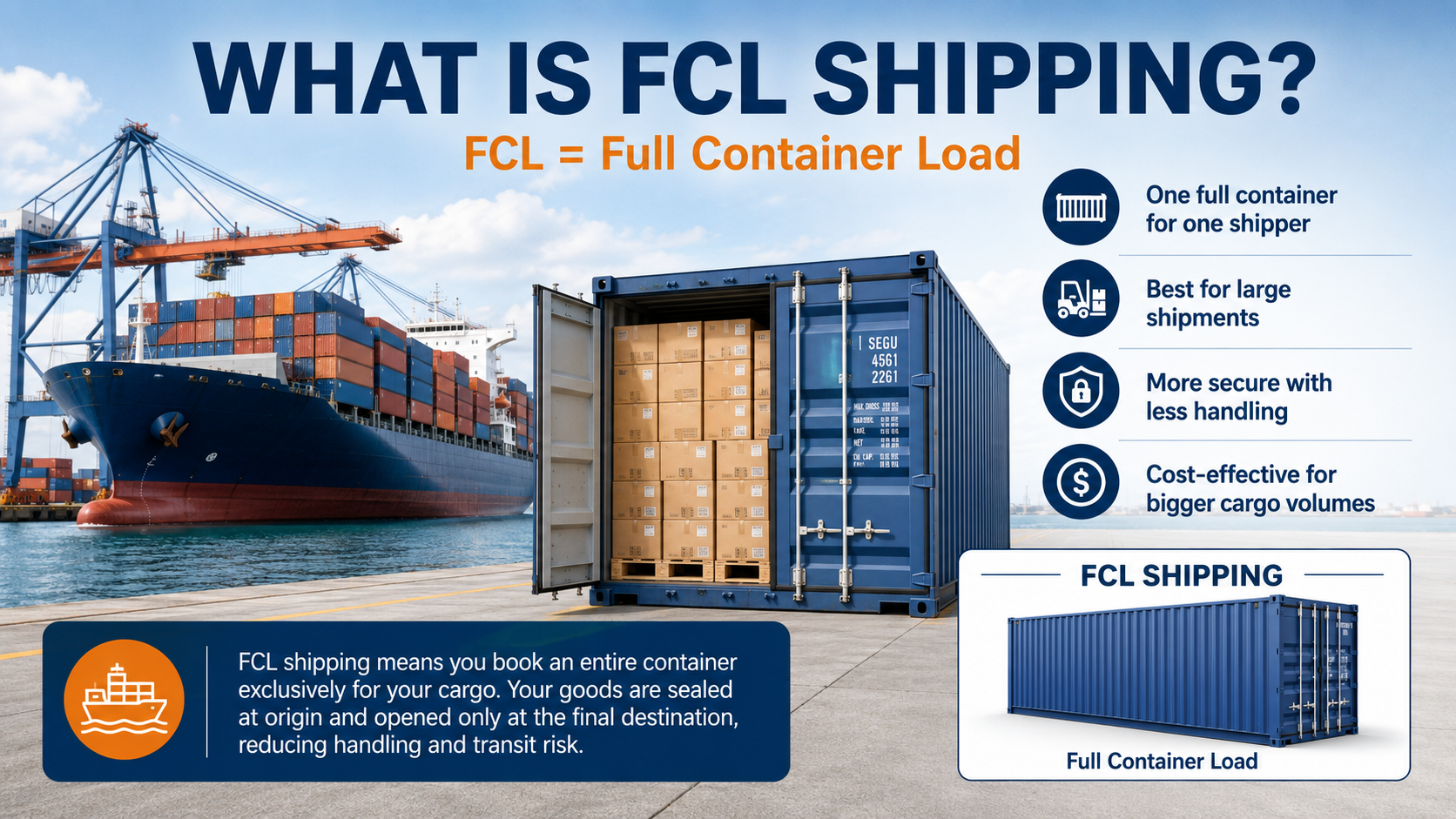
FCL shipping (Full Container Load) refers to an ocean freight arrangement where a single shipper books and occupies an entire shipping container exclusively for their cargo. Unlike shared shipping methods, the container space is reserved entirely for your goods, regardless of whether you fill the container to its absolute capacity.
The defining characteristic of an FCL shipment is its security chain:
The empty container is delivered directly to your supplier’s facility or a designated warehouse.
The goods are loaded, blocked, and braced (secured with structural supports to prevent shifting).
The container is sealed with a unique, high-security bolt seal.
The sealed container moves directly to the port, onto the vessel, and remains unbroken until it reaches your final destination or warehouse.
To maximize your FCL strategy, you must match your cargo profile with the correct standard ISO container type. Choosing the wrong container size can lead to severe underutilization or overweight penalties at the destination port.
| Container Type | Internal Dimensions (L × W × H) | Max Volume | Practical Loading Capacity |
|---|---|---|---|
| 20ft Standard (20GP) | 5.90 × 2.35 × 2.39 m | 33 CBM | 25–28 CBM |
| 40ft Standard (40GP) | 12.03 × 2.35 × 2.39 m | 67 CBM | 55–58 CBM |
| 40ft High Cube (40HQ) | 12.03 × 2.35 × 2.69 m | 76 CBM | 65–68 CBM |
Critical Freight Insight: Notice that a 40ft container offers more than double the volume of a 20ft container, but its maximum weight capacity is actually lower due to the structural weight of the container itself.
Use 20ft containers for heavy, dense cargo (e.g., machinery, steel, liquid flexitanks).
Use 40ft/40HQ containers for lightweight, bulky, or high-volume cargo (e.g., apparel, electronics, plastics).
FCL shipping follows a structured process from container booking to final delivery. Because one shipper uses the entire container, there is no cargo consolidation or deconsolidation, making the process more efficient than LCL shipping.
The shipper or freight forwarder books a suitable container with the shipping line based on the cargo volume, weight, destination, and sailing schedule. The carrier then issues a booking confirmation.
An empty container is collected from the container yard and delivered to the supplier’s warehouse or factory. The cargo is loaded, properly secured, and the container is sealed with a unique seal number.
Before the container enters the port, export customs declarations are completed. Required documents usually include:
Booking Confirmation
Export Declaration
Other certificates if required
After customs approval, the container is released for export.
The sealed container arrives at the terminal, passes port inspections, and is loaded onto the scheduled vessel. The shipping line then issues the Bill of Lading (B/L).
The vessel transports the container to the destination port. Depending on the route, shipments may travel directly or via a transshipment hub.
During transit, importers can track the container using the container number or Bill of Lading number.
After arrival, the consignee or customs broker submits the required import documents, pays applicable duties and taxes, and completes customs clearance before cargo release. In FCL, the shipper pays for the entire container even if some space goes unused.
Once customs clearance is completed, the container is delivered by truck or rail to the consignee’s warehouse, factory, or distribution center.
The consignee unloads the cargo, inspects the shipment, and returns the empty container to the designated container depot within the carrier’s free time to avoid detention charges.

Many importers mistakenly believe that if they cannot fill a whole container, they must use LCL (Less than Container Load). In reality, freight forwarders analyze the cost equation based on a specific financial tipping point.
LCL is usually priced per CBM (cubic meter) or weight ton, with additional CFS handling charges at both origin and destination. FCL is priced at a flat rate per container, so shipment volume matters: lcl prices are often lower for small loads, but FCL is ideal and usually more cost-effective once cargo is above roughly 12 to 15 cubic meters.
As a general guideline:
Below about 13 CBM: LCL is usually the most economical option.
10–14 CBM: Compare both LCL and FCL quotes. Destination handling charges may make a 20ft FCL container cheaper overall.
15 CBM and above: FCL is often more cost-effective per unit, with better cargo protection and faster transit.
| Factor | FCL Shipping | LCL Shipping |
|---|---|---|
| Container Use | Entire container for one shipper | Shared container space |
| Pricing Method | Fixed rate per container | Charged by CBM or weight |
| Best For | Larger shipments | Small shipments |
| Cargo Handling | Less handling | More handling during consolidation |
| Transit Time | Usually faster | Usually slower |
| Customs Risk | Lower, one shipment per container | Higher, multiple shipments involved |
| Damage Risk | Lower | Higher due to more handling |
| Cost Efficiency | Better for larger volume | Better for small cargo |
FCL moves directly to the destination without consolidation, so it is often ideal for large, high-value, or fragile cargo that benefits from minimal handling. By contrast, if you choose LCL shipping, lcl shipments share space and may be separated again at the destination, so businesses often ship lcl when they do not need a full container.
When budgeting for FCL shipping, your freight quote involves far more than just the “ocean freight rate.” An expert freight forwarder breaks down the pricing structure into clear line items to avoid unexpected bills upon arrival:
Ocean Freight Rate: The base cost of container space on the ship, influenced by seasonal supply and demand; peak season surcharges commonly apply between August and November.
THC (Terminal Handling Charges): Fees collected by ports for loading/unloading containers via mega cranes at both origin and destination.
Documentation / Bill of Lading Fee: Administrative costs for processing shipping manifests and titles.
Customs Brokerage Fees: The charge for professional declaration processing.
Fuel Surcharges: Carrier adjustments that fluctuate with fuel costs and affect the total shipping price.
Congestion Surcharge: An extra charge that may apply when ports are heavily congested, reflecting delay and handling impacts.
Customs Clearance Fees: Administrative or inspection-related import charges that may apply during customs processing, separate from brokerage services.
To prevent financial leaks, you must monitor your Port Free Time allowances closely. If you exceed these contractual timelines, carriers apply massive daily penalties:
Demurrage Charges: Fees levied by the shipping line for allowing a loaded container to sit inside the port terminal past the permitted free days (typically 4-7 days).
Detention Fees: Fees levied for keeping the physical container chassis outside the port terminal (at your warehouse) longer than the allowed turnaround time.
To navigate the FCL shipment process confidently, it’s helpful to understand common shipping terms:
TEU (Twenty Foot Equivalent Unit): Standard unit of measurement for shipping containers.
Demurrage Charges: Fees incurred when containers stay too long at the port.
Detention Fees: Fees for holding onto the container beyond the agreed timeframe.
Freight Forwarder: A professional intermediary who arranges FCL container load shipments and handles documentation and logistics.
Working with an experienced freight forwarder ensures your FCL shipments avoid unnecessary delays and unexpected demurrage and detention fees.
Reducing FCL shipping cost is not only about finding the cheapest ocean freight rate. Better container utilization can deliver cost savings by reducing wasted space, cutting avoidable fees, and improving delivery efficiency.
Practical ways to reduce FCL cost include:
Choose the right container size based on CBM and weight.
Use compact and strong export packaging.
Avoid shipping during peak season when possible.
Book space early before holidays.
Load pallets and cartons efficiently.
Confirm destination free time before shipment.
Prepare accurate documents before container arrival.
Compare port-to-port and door-to-door shipping options.
Use cargo insurance for valuable goods.
Work with a freight forwarder familiar with your route.
For large-volume importers, consolidating several supplier shipments into one FCL container can also reduce the average shipping cost per unit and create additional savings. This is especially useful when sourcing from different factories in China.
FCL shipping means Full Container Load shipping. One shipper books an entire container for exclusive use, and the cargo is usually sealed at origin and opened at destination.
Yes. FCL stands for Full Container Load. However, the container does not have to be completely full. It means you pay for exclusive use of the container.
FCL is better for large, valuable, fragile, or time-sensitive shipments. Some importers choose air freight for very small or urgent cargo, while LCL is better for small shipments that do not justify paying for a full container and FCL is usually the better option for larger sea shipments.
The main risks include poor cargo loading, customs inspection, port congestion, container shortage, demurrage, detention, moisture damage, and incorrect shipping documents.
FCL customs clearance usually includes document review, HS code confirmation, duty and tax assessment, possible inspection, cargo release, and final delivery approval.
Useful freight, customs and importing resources related to this shipping guide.
FCL Shipping from China: Full Container Load Guide for Importers Verified & Reviewed · Last updated May 2026 FCL shipping from China is a reliabl...
Read guide →
Sea freight is the most cost effective shipping method for large volumes and container load cargo. It is ideal for businesses looking to reduce s...
Read guide →
Learn how LCL shipping and consolidated shipments help reduce shipping costs for smaller cargo from China.
Read guide →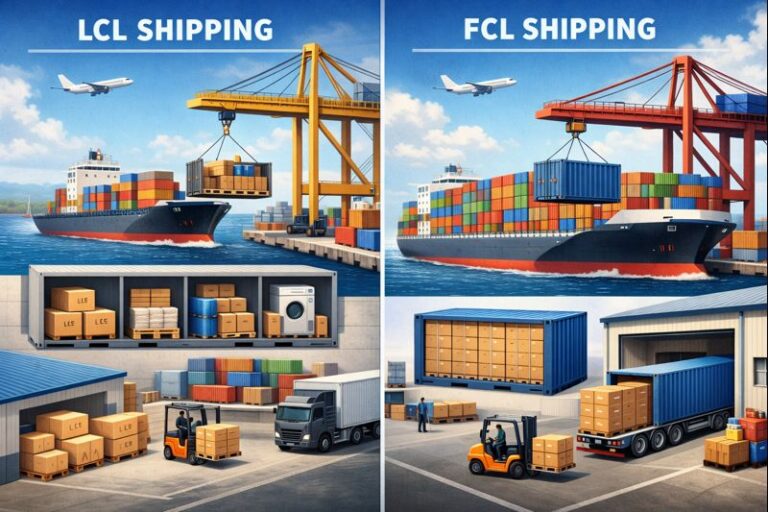
LCL vs FCL Shipping: What They Mean, Key Differences, and Which One to Choose Verified & Reviewed · Last updated January 2026 FCL vs LCL shipping...
Read guide →EXW Container Shipping from China: Complete Guide for Importers Verified & Reviewed · Last updated April 2026 EXW container shipping from China m...
Learn more → Useful Resource Top Tips for Container Shipping from China in 2025Planning container shipping from China? Learn about shipping options, costs, and practical tips for efficient logistics. This guide covers everyt...
Learn more →WhatsApp us