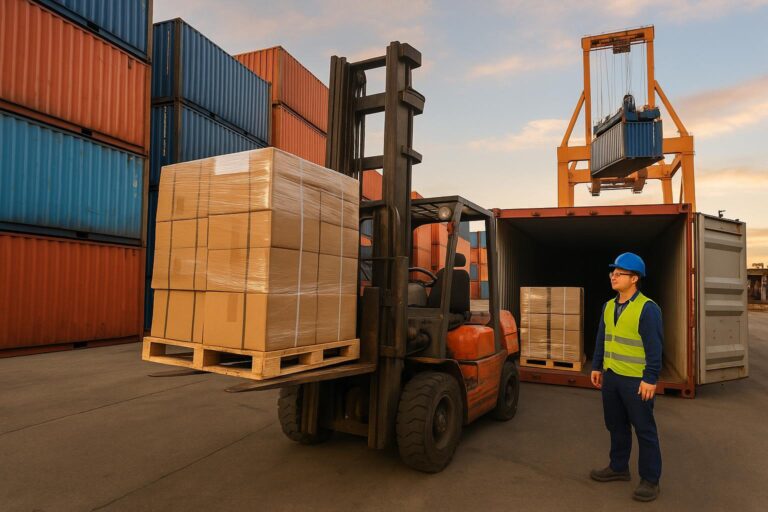


What Is Container Freight Station CFS in Shipping?
- Verified & Reviewed · Last updated April 2026
A Container Freight Station CFS is a logistics facility where loose cargo is received, sorted, consolidated, deconsolidated, inspected, stored, and released during international shipping.
This guide explains what CFS means in shipping, how origin CFS and destination CFS work, why CFS is important for LCL shipments, and how CFS charges, customs clearance, storage, and final delivery may affect your shipment.
Container Freight Station
LCL Shipping
CFS Charges
- Experienced China-based logistics specialists
10,000+ international shipments handled Global sea, air & DDP shipping solutions 24/7 shipment tracking & customer support
Table of Contents
What Does CFS Mean in Shipping?
CFS means Container Freight Station. It refers to a freight station used to handle cargo that does not move as a full container load.
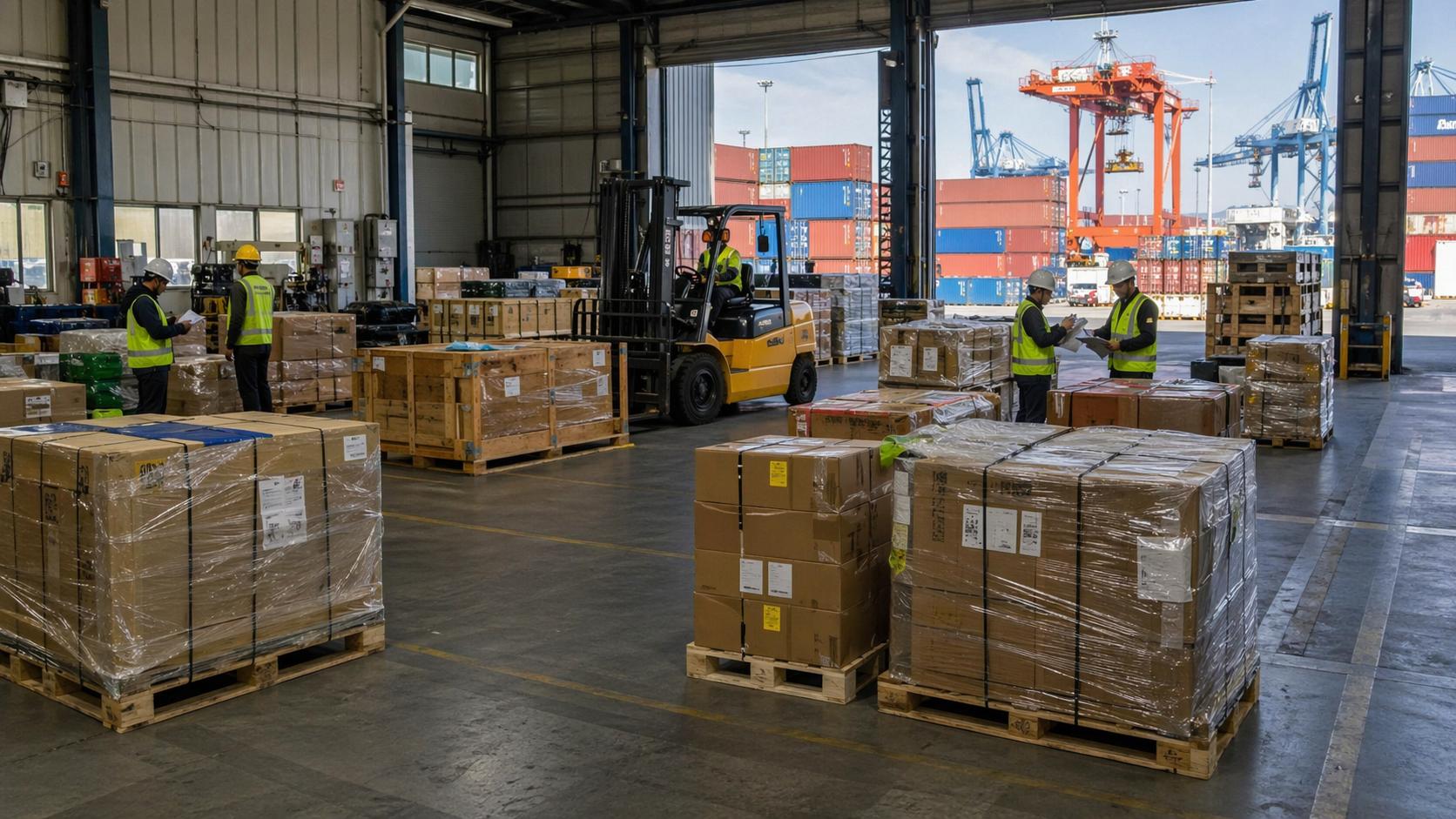
A CFS is usually located near a port, container yard, bonded warehouse, inland terminal, logistics park, or major transportation hub. It connects different parties in the supply chain, including freight forwarders, shipping lines, customs agents, truckers, importers, and exporters.
A container freight station is mainly used for:
receiving cargo from suppliers or shippers
consolidating LCL cargo into one container
unloading and separating imported cargo
supporting customs inspection
providing temporary storage
preparing cargo for pickup or final delivery
CFS plays a key role in shipping operations because it allows smaller shipments to move efficiently through the global container shipping system.
How Does a Container Freight Station Work?
The CFS process depends on whether the shipment is being exported or imported. In most LCL shipments, there is an origin CFS before departure and a destination CFS after arrival.
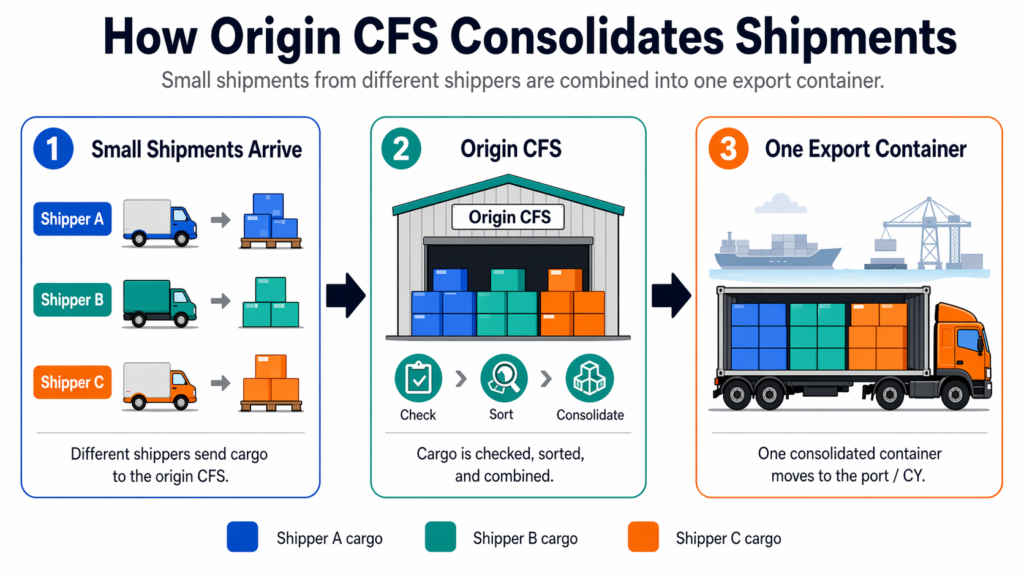
Origin CFS: Cargo Consolidation Before Shipping
At the origin CFS, cargo from different shippers is received, checked, measured, and prepared for loading. The CFS confirms packing details, carton count, volume, weight, and cargo condition before grouping shipments going to the same destination.
After this process, multiple shipments are consolidated into one container. The container is then moved to the container yard or port and handed over to the shipping line for ocean transportation.
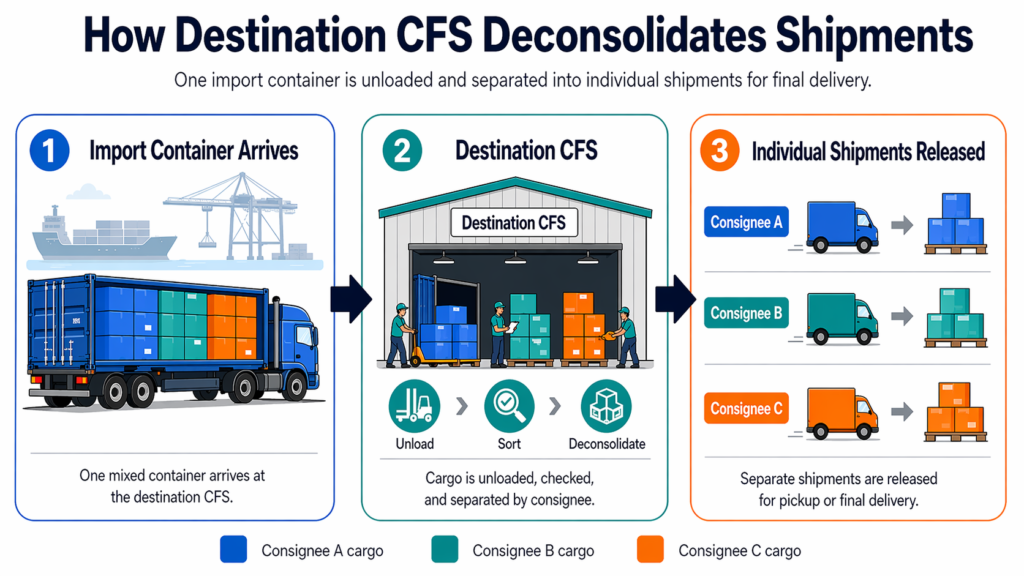
Destination CFS: Cargo Deconsolidation After Arrival
At the destination side, the container arrives at the destination port and may be moved to the destination CFS. The CFS unloads the container, separates the cargo by consignee, checks the shipment details, and prepares each shipment for customs clearance, pickup, truck delivery, or warehouse transfer.
This process is called deconsolidation. It is especially important for LCL cargo because one container may contain goods for many importers.
A typical CFS process includes:
Cargo arrives at the CFS facility
Cargo documents and packing are checked
Weight and volume are confirmed
Cargo is consolidated or deconsolidated
Customs inspection is arranged if required
Cargo is released after clearance
Pickup or final delivery is completed
Main Functions of a Container Freight Station
A container freight station is not just a warehouse. It is a working cargo handling facility used in international container freight.
Its main functions include:
cargo receiving and checking
consolidation for LCL shipments
deconsolidation at destination
loading and unloading containers
temporary storage before release or delivery
customs inspection support
labeling, repacking, weighing, and palletizing
cargo release coordination with freight forwarders and customs agents
For export cargo, the CFS prepares shipments before loading them into shipping containers. For import cargo, the CFS separates and releases shipments after the container is unloaded.
Some CFS facilities also provide value-added services such as cargo counting, carton checking, shrink wrapping, damaged cargo reporting, and container sealing.
CFS and LCL Shipments
CFS is closely connected with LCL shipments. LCL means less than container load, which is used when cargo is not enough to fill a full container.
In LCL shipping, cargo from multiple shippers is delivered to the origin CFS and consolidated into one container. After the container arrives at the destination port, it is moved to the destination CFS, where the cargo is unloaded and separated for different consignees.
This is why LCL shipments usually involve CFS handling. Compared with FCL shipments, LCL cargo needs more sorting, loading, unloading, documentation, and temporary storage.
For smaller shipments, CFS-based LCL shipping is often more cost-effective than booking a full container. However, it may also take longer because the cargo must be consolidated at origin and deconsolidated at destination.
CFS is mainly used for LCL shipments and consolidated cargo. FCL shipments usually move through a container yard, although CFS services may still be needed for inspection, devanning, repacking, or special handling.
CFS vs CY: What Is the Difference?
CFS and CY are two common terms in container shipping, but they refer to different places and different types of handling.
A Container Freight Station handles cargo, especially loose cargo and LCL shipments. A Container Yard handles shipping containers, especially full container load shipments.
| Item | CFS | CY |
|---|---|---|
| Full name | Container Freight Station | Container Yard |
| Handles | Loose cargo | Full containers |
| Common shipment type | LCL shipments | FCL shipments |
| Main operation | Consolidation and deconsolidation | Container storage and movement |
| Handling object | Cargo inside containers | Shipping containers |
| Common users | Freight forwarders, importers, customs agents | Shipping lines, terminals, truckers |
| Typical location | Near ports, warehouses, inland hubs | Inside or near port terminals |
The simple difference is:
CFS handles cargo. CY handles containers.
If your shipment is LCL, it will usually involve a CFS. If your shipment is FCL, it will usually move through a container yard.
What Are CFS Charges?
CFS charges are local handling fees related to cargo received, loaded, unloaded, stored, inspected, or released at a container freight station.
These charges are common in LCL shipments because loose cargo requires more labor, warehouse space, documentation, and equipment than a sealed full container.
CFS charges may include:
cargo receiving fee
warehouse handling fee
loading and unloading fee
consolidation fee
deconsolidation fee
document handling fee
storage fee after free time
customs inspection handling fee
palletizing or repacking fee
truck loading fee
CFS charges are usually calculated based on cargo volume, gross weight, revenue ton, local tariff, cargo type, shipment type, and destination rules.
For bulky cargo, the cost is often based on CBM. For heavy cargo, weight-based calculation may apply. For special cargo, additional handling charges may be added.
In most shipments, origin CFS charges are paid by the shipper, while destination CFS charges are paid by the consignee. For door-to-door shipping, these fees may already be included in the total freight quote.
How to Reduce CFS Delays and Extra Fees
Many CFS delays are caused by incomplete documents, unclear cargo information, customs issues, late payment, or late pickup.
To reduce CFS delays and extra fees, importers should:
provide accurate cargo volume and gross weight
confirm carton count and packing details
prepare commercial invoice and packing list early
check HS code and import requirements before shipping
confirm whether CFS charges are included in the quote
monitor shipment tracking before the container arrives
arrange customs clearance in advance when possible
pay destination charges on time
book truck pickup or final delivery quickly
work with an experienced freight forwarder
For importers shipping LCL cargo, a reliable freight forwarder can help coordinate the origin CFS, destination CFS, shipping line, customs agents, truckers, import clearance, and final delivery more smoothly.
This helps reduce unexpected costs, avoid storage charges, and keep the shipment moving through the supply chain.
Frequently Asked Questions
What is Container Freight Station CFS in shipping?
A Container Freight Station CFS is a cargo handling facility where goods are received, consolidated, deconsolidated, inspected, stored, and released before or after container transportation.
Is CFS used for LCL shipments?
Yes. CFS is commonly used for LCL shipments because cargo from multiple shippers must be consolidated at origin and separated at destination.
What is the difference between CFS and CY?
CFS handles loose cargo and LCL shipments, while CY handles full containers and FCL shipments. CFS deals with cargo; CY deals with containers.
What are CFS charges?
CFS charges are local handling fees for cargo received, loaded, unloaded, stored, inspected, or released at a container freight station.
Who pays CFS charges?
It depends on the shipping terms. Usually, the shipper pays origin CFS charges, and the consignee pays destination CFS charges unless they are included in a door-to-door shipping quote.
Related Logistics Guides
Useful freight, customs and importing resources related to this shipping guide.
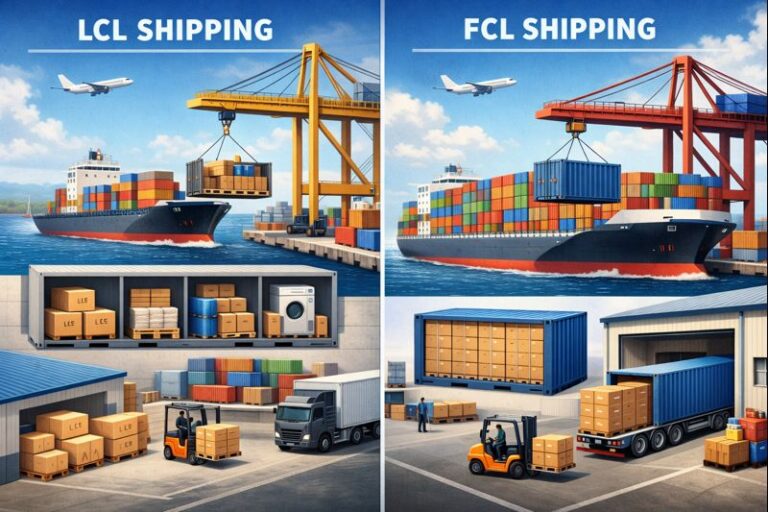
Related Guide
LCL vs FCL Shipping: What They Mean, Key Differences, and Which One to Choose
LCL vs FCL Shipping: What They Mean, Key Differences, and Which One to Choose Verified & Reviewed · Last updated January 2026 FCL vs LCL shipping...
Read guide →
Related Guide
Introduction to Consolidated Shipping
Introduction to Consolidated Shipping Verified & Reviewed · Last updated January 2026 Consolidated shipping is a freight strategy that combines m...
Read guide →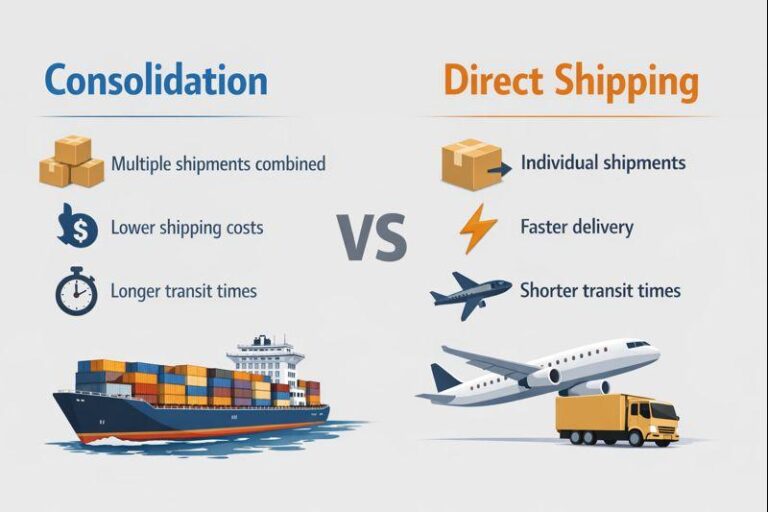
Related Guide
Consolidation vs Direct Shipping
Consolidation vs Direct Shipping Verified & Reviewed · Last updated January 2026 Consolidation vs direct shipping affects shipping costs, deliver...
Read guide →
Useful Resource
China Warehouse Consolidation Service
China Warehouse Consolidation Service Verified & Reviewed · Last updated May 2026 China warehouse consolidation service helps importers collect g...
Learn more → Useful Resource Sea Freight Shipping from ChinaSea freight is the most cost effective shipping method for large volumes and container load cargo. It is ideal for businesses looking to reduce s...
Learn more →