International Shipping Time Guide

How Long Does It Take to Ship from China? (2026 Guide)

Shipping from China typically takes 3–7 days by express, 7–12 days by air freight, 15–25 days by rail freight, and 15–45 days by sea freight. Actual shipping times and final delivery dates depend on the destination, shipping route, service level, customs clearance and inland delivery.

These are typical planning ranges. Carrier transit time may only cover the main international journey, while pickup, export handling, customs clearance and last-mile delivery can extend the complete shipping timeline.

Reviewed by the Tonlexing Operations Team

FMC-Compliant NVOCC
Worldwide Shipping Routes
Door-to-Door Options

Quick comparison

Typical Shipping Times

4 Modes
Express Shipping EXP
3–7 days
Air Freight AIR
7–12 days
Rail Freight RAIL
15–25 days
Sea Freight SEA
15–45 days

Shipping Times from China by Method

Compare the four main shipping options by estimated total delivery time, relative shipping costs and cargo suitability. The right shipping method depends on shipment size, destination and how urgently the goods are needed.

Comparison of typical shipping times from China by shipping method
Shipping MethodTypical Total TimeRelative CostBest ForKey Consideration
Express Shipping DHL, FedEx or UPS
3–7 days Door to door Highest Samples, documents and small time-sensitive shipments Fastest option, but dimensional weight can increase the charge
Air Freight Standard air cargo
7–12 days Typical planning range High Medium-size, high-value or time-sensitive shipments Airport handling and customs clearance add time beyond the flight
Rail Freight China–Europe routes
15–25 days To major European hubs Medium European cargo needing a balance of speed and cost Coverage is route-dependent and may involve terminal transfers
Sea Freight FCL or LCL cargo
15–45 days Varies widely by route Lowest Large, heavy, bulk or less time-sensitive shipments Sailing schedules, port congestion and LCL handling affect timing
Fastest option Express for urgent, smaller shipments
Balanced option Air globally or rail on suitable Europe routes
Lowest unit cost Sea freight for large and bulk shipments
These are typical planning ranges, not guaranteed delivery dates. Origin, destination, direct or connecting routes, carrier schedules, customs clearance and inland delivery can all affect the final timeline.

Transit Time vs Total Delivery Time

A carrier's transit time is only one part of the shipping timeline. Production lead time before the cargo-ready date is separate from shipping time. For inventory planning, use the total delivery time from pickup in China to delivery at the final destination.

Transit Time

The main international journey
Carrier Scope

Transit time usually measures the period from the scheduled departure at the origin port, airport or rail terminal to arrival at the destination terminal.

Starts
Carrier departure in China
Ends
Arrival at destination terminal
Includes
Main air, sea or rail movement
Usually Excludes
Pickup, customs and final delivery

Total Delivery Time

The complete door-to-door timeline
Planning Scope

Total delivery time begins when the shipment is collected from the supplier and ends when the cargo reaches the consignee, including handling, customs clearance and inland delivery.

Starts
Supplier pickup or cargo receipt
Ends
Delivery to the final address
Includes
Every origin-to-destination stage
Best Used For
Inventory and arrival planning

What Makes Up the Complete Shipping Timeline?

Total delivery time = all five stages below

  1. 01 Pickup Supplier to origin warehouse
  2. 02 Origin Handling Booking, export and departure
  3. 03 Main Transit Carrier transit time
  4. 04 Import Clearance Customs and cargo release
  5. 05 Final Delivery Terminal to consignee

Before comparing quotes, confirm the time scope. Check whether the estimate is port-to-port, airport-to-airport or door-to-door, whether quoted days are business days or calendar days, and whether waiting time before the next flight, sailing or train departure is included.

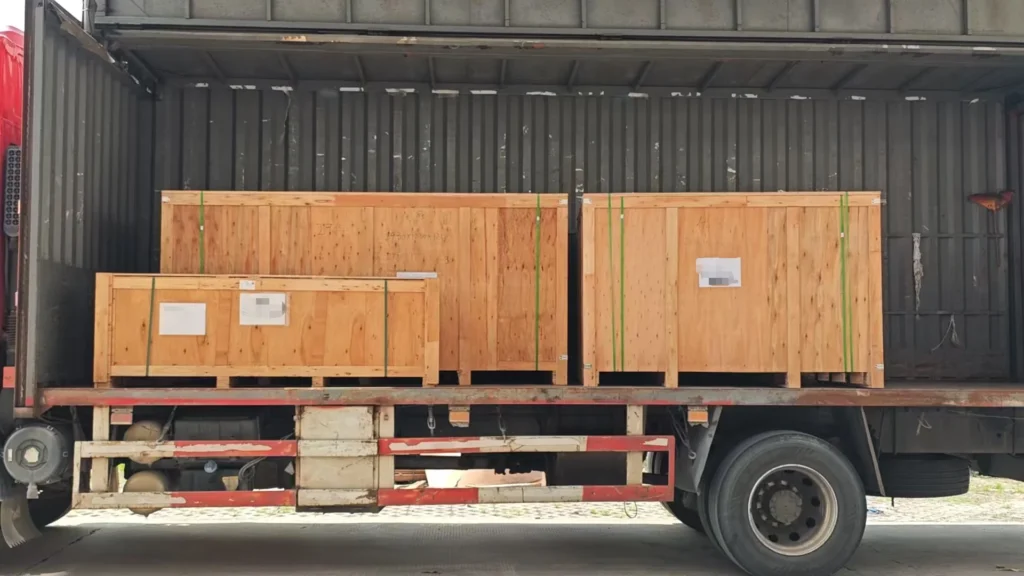
Three wooden cases of aluminum windows and quartz countertops shipped from Shenzhen to Miami
Actual cargo: 3 wooden cases · 5,850 KG · 11.071 CBM

Real Shipment Example

Shenzhen to Miami: Transit Time vs Complete Shipping Time

Tonlexing arranged an LCL sea freight shipment of aluminum windows and quartz stone countertops from Shenzhen to Miami. The carrier's ocean transit was shorter than the complete shipment timeline.

Ocean Transit
Approx. 24 Days
Complete Shipping Time
Around 32 Days

The additional time covered operational stages outside the vessel transit: warehouse receiving, LCL consolidation, export clearance, vessel waiting, Miami deconsolidation, import clearance and final cargo release.

View the Full Shipment Case

How Each Shipping Method Affects Delivery Time

The best shipping method depends on shipment size, urgency, destination and budget. These typical total delivery ranges from China include more than the main international transit, so they are better for practical shipment planning.

Fastest Door-to-Door

Express Shipping

3–7 Days Total

Express courier services combine pickup, air transport, customs processing and final delivery in one network. They are usually the quickest option for small and time-sensitive shipments.

Best for Samples Documents Urgent parcels
  • Route pattern Courier hub-to-hub network with integrated last-mile delivery.
  • Time changes Remote-area delivery, customs review and restricted cargo can extend the schedule.
Use a complete product description and accurate value to reduce avoidable courier clearance questions.
Fast Commercial Cargo

Air Freight

7–12 Days Total

Air freight is designed for commercial cargo that needs faster delivery than ocean freight without relying on an express parcel network. It suits urgent, valuable or production-critical cargo.

Best for High-value goods Urgent stock Medium shipments
  • Route pattern Direct or connecting airport service, followed by import handling and inland delivery.
  • Time changes Flight frequency, space availability, transfer hubs and special-cargo checks affect timing.
Direct flights can reduce transfer risk, but the fastest airport route is not always the fastest complete door-to-door option.
China–Europe Alternative

Rail Freight

15–25 Days Total

Rail freight offers a middle ground between air and sea for many China–Europe routes. It works well for larger shipments that need more speed than ocean freight at a lower cost than air.

Best for China–Europe cargo Larger loads Planned inventory
  • Route pattern Inland pickup, China rail terminal, cross-border rail legs, European terminal and final delivery.
  • Time changes Departure frequency, border processing, gauge transfers and terminal congestion may add time.
Rail is region-specific; confirm that the destination has a practical terminal connection and efficient final-mile route.
Best for Volume

Sea Freight

15–45 Days Total

Sea freight, also called ocean freight, is usually the most cost-effective option for large shipments, heavy cargo, full containers and bulk orders when speed is not the main priority. A full container load (FCL) normally has fewer consolidation steps, while LCL shares container space with other cargo.

Best for FCL cargo LCL cargo Bulk shipments
  • Route pattern Origin handling, vessel schedule, destination port, customs clearance and inland delivery.
  • Time changes Port pair, direct or transshipment service, sailing frequency and FCL/LCL handling affect timing.
For LCL, include time for consolidation and deconsolidation; for FCL, check the actual vessel cutoff and sailing date.

Shipping Times from China by Major Region

Destination distance, direct service availability and customs procedures can change the schedule considerably. Use these typical route-level transit ranges to compare major regions, then check the destination guide for more precise planning.

North America

USA, Canada and Mexico
NA
Sea freight 15–40 days
Air freight 5–10 days
Express shipping 3–7 days

China to US shipping time: Services to major West Coast ports, including Los Angeles and Long Beach, are generally faster than East Coast routes, while inland delivery can add several days.

Europe

UK, EU and Central Europe
EU
Sea freight 20–40 days
Rail freight 15–25 days
Air / express 3–12 days

Planning choice: Rail offers a middle ground between air and sea, while port congestion can extend European ocean schedules.

Middle East

Gulf and regional gateways
ME
Sea freight 10–25 days
Air freight 3–7 days
Express shipping 2–5 days

Key gateway: Jebel Ali handles frequent China services; onward delivery to other Gulf markets may add border-processing time.

Asia

Southeast and East Asia
AS
Sea freight 3–18 days
Air freight 2–7 days
Express shipping 1–5 days

Short-haul advantage: Frequent regional sailings and flights shorten the main journey, but local import rules still matter.

Australia & New Zealand

Oceania trade routes
OC
Sea freight 15–35 days
Air freight 5–10 days
Express shipping 3–7 days

Port coverage: Sydney, Melbourne and Brisbane usually have more frequent service than smaller ports or inland destinations.

Africa

East, North and West Africa
AF
Sea freight 20–45 days
Air freight 5–12 days
Express shipping 3–7 days

Schedule factor: Transshipment and less frequent sailings can widen sea-freight ranges for many African destinations.

Regional ranges are a starting point, not a delivery guarantee.

The estimates above mainly reflect typical route-level transit. Pickup, export handling, consolidation, customs clearance and last-mile delivery can extend the complete door-to-door timeline.

Get a Route-Specific Estimate

Factors Affecting Shipping Time from China

A quoted transit time is a planning range, not a guaranteed delivery date. The final schedule depends on a combination of cargo readiness, route design, customs processing and external operating conditions.

Factor type Mostly controllable Route dependent External disruption

Direct Route vs Transshipment

Route

Direct sailings and nonstop flights usually provide a shorter, more predictable transit time. A connecting service may require cargo transfer at a hub and introduces another carrier schedule.

Planning tip: Compare the number of connections, not only the advertised port-to-port time.

Carrier Schedule and Space

Route

Shipping lines and airlines operate on fixed departures. Missed cut-off times, limited cargo space, rolled bookings or a cancelled sailing can move a shipment to the next available departure.

Planning tip: Book before the cargo-ready date and confirm both space and departure.

FCL vs LCL Handling

Route

An FCL container moves as one shipment. LCL sea freight requires consolidation in China and deconsolidation after arrival, so the complete delivery timeline is normally less direct.

Planning tip: Include warehouse consolidation and destination release in an LCL estimate.

Cargo Readiness and Origin Handling

Controllable

Production delays, incomplete packing, late pickup, export customs filing or missing a warehouse cut-off can postpone departure even when the international service itself remains on schedule.

Planning tip: Confirm the cargo-ready date, packing status and supplier pickup address early.

Documents and Cargo Compliance

Controllable

Incorrect HS codes, inconsistent invoice details or missing certificates can stop export or import processing. Batteries, chemicals, food and regulated goods may require additional review.

Planning tip: Review the commercial invoice, packing list and product requirements before booking.

Customs Clearance and Inspection

External

Routine customs clearance may be quick, but document queries, valuation review, duty payment issues or a physical inspection can extend the release process at origin or destination.

Planning tip: Arrange importer details, permits and duty payment before the shipment arrives.

Peak Seasons, Weather and Congestion

External

Chinese New Year, Golden Week, year-end demand, severe weather, strikes and port or airport congestion can reduce capacity and disrupt otherwise normal freight schedules.

Planning tip: Reserve capacity early and add schedule buffer around major holidays and peak demand.

Destination and Last-Mile Delivery

Route

Delivery to an inland city takes longer than delivery near the arrival port or airport. Appointments, remote areas, oversized cargo and limited unloading access can also affect final delivery.

Planning tip: Quote with the full postal code and confirm delivery-site requirements in advance.

Shipping Time During Chinese Holidays and Peak Seasons

Major holidays can affect the supply chain before and after the official closure. Chinese New Year usually creates the largest operating impact, while Golden Week and year-end demand can tighten capacity and make departure dates less predictable.

Largest Annual Disruption

Chinese New Year Shipping Delays

2–4 Week Impact Window

Chinese New Year falls in January or February, depending on the lunar calendar. The official holiday is only part of the disruption: factories, trucking capacity and warehouse staffing often change before the holiday and recover gradually afterward.

1–2 Weeks Before Pre-Holiday Rush

Factories rush to finish orders, export volumes rise and late bookings face tighter truck, air and ocean freight capacity.

Holiday Period Reduced Operations

Many factories close. Ports, airports and some customs services may continue, but origin support and staffing can be limited.

2–3 Weeks After Backlog Recovery

Production, trucking and warehouse operations resume in stages while carriers clear cargo accumulated around the closure.

Planning advice: Confirm the supplier's real cargo-ready date and reserve space well before the holiday. Do not plan from the carrier departure alone if production or pickup may stop first.
October Holiday

Golden Week

About 1 Week

China's National Day holiday begins on October 1. Many factories close for roughly one week, while freight volume often rises before the break and creates a short backlog after operations resume.

  • Confirm factory completion and pickup before the holiday cut-off.
  • Reserve space early when the planned departure is near October 1.
Global Demand Cycle

Year-End Peak Season

Typically Sep–Dec

Retail demand before Black Friday, Christmas and New Year can tighten ocean and air freight capacity. Destination holidays may also reduce customs, warehouse or last-mile delivery availability.

  • Work backward from the required delivery date, not the ship date.
  • Add buffer for destination clearance, appointments and final delivery.

Holiday impact varies by year, origin city, supplier schedule, carrier, shipping method and destination. These periods are planning guidance, not guaranteed delay durations.

Shipping Times from China by Country

Select a region to find typical shipping times, available transport options and detailed route guidance for your destination.

Time guide links open a dedicated country transit-time page. Route guide links open a broader destination page that includes typical shipping times together with freight methods, costs and customs information. All ranges remain estimates rather than guaranteed delivery dates.

Frequently Asked Questions About Shipping Time from China

These answers use typical total delivery ranges for planning. The actual arrival date depends on the destination, route, cargo, service arrangement, customs clearance and final delivery.

How long does it take to ship from China?

Typical total delivery takes 3–7 days by express, 7–12 days by air freight, 15–25 days by rail freight and 15–45 days by sea freight. The destination and complete service scope can change the final timeline.

How long does a package from China take?

An express package from China typically arrives in 3–7 business days. China Post, ePacket and other economy postal services commonly take 10–30 days or longer, depending on the destination, customs clearance and remote-area delivery. Postal tracking updates may also be less frequent than express courier tracking.

How long does sea freight from China take?

Sea freight commonly requires 15–45 days for total delivery. Route distance, vessel schedule, transshipment, FCL or LCL handling, port congestion and customs can all affect the estimate. See the method-by-method breakdown for context.

How long does air freight from China take?

Air freight typically takes 7–12 days for total delivery. Direct flights can be faster, while consolidation, connecting flights, security screening, customs and inland delivery may extend the schedule.

How long does rail freight from China to Europe take?

Rail freight to major European destinations usually takes 15–25 days for total delivery. Terminal handling, border transfers, route changes and final trucking can affect the arrival date.

Does DDP shipping take longer than port-to-port shipping?

Usually, yes. DDP is a door-to-door service arrangement, not a separate transport mode. Its total time includes the underlying sea, air, rail or express movement plus customs clearance, duties and taxes handling, and last-mile delivery.

Is FCL faster than LCL shipping?

FCL is often more predictable because one shipper uses the full container. LCL can require extra time for origin consolidation and destination deconsolidation, although the vessel transit may be the same.

How does customs clearance affect shipping time?

Correct documents and compliant cargo may clear normally, but a customs inspection, classification query, missing permit or invoice error can delay release. Review the main shipping time factors before booking.

Are shipments from China delayed?

Not every shipment from China is delayed. Current conditions vary by route, carrier capacity, weather, port congestion, customs inspections and peak-season demand. Check the current carrier schedule before booking instead of relying only on a general annual average, and use the holiday and peak-season planning guide to build a realistic buffer.

How can I get a more accurate shipping time estimate?

Provide the China pickup location, destination address, cargo-ready date, commodity, weight, dimensions, preferred transport mode and required service scope. A freight forwarder can then check the current shipping schedule, route availability and destination requirements instead of relying on a broad average. You can also review the country shipping time guides first.