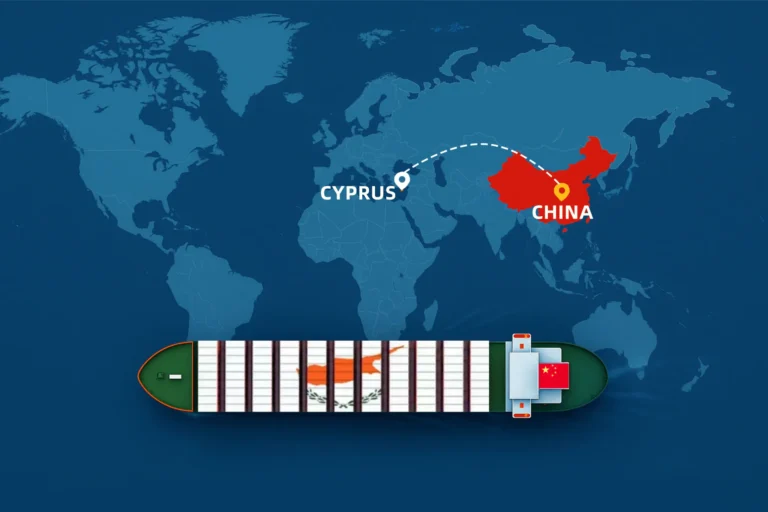
Related Guide
Shipping from China to Cyprus
Shipping from China / Shipping from China to Cyprus China–Cyprus Shipping Guide · Updated August 2026 Shipping from China to Cyprus Compare sea f...
Read guide →

Shipping from China to Cyprus usually takes 3–8 days by air freight, 25–45 days by sea freight, and 3–5 working days by express courier. These are practical ranges for most commercial shipments, but the final delivery time depends on your origin city in China, routing and available capacity, and how quickly the shipment passes customs clearance in Cyprus.
Whether you are an importer or an e-commerce seller, shipping decisions usually come down to two goals: predictable transit time and cost control. This guide breaks down expected delivery timelines by shipping method, highlights key airports and ports, explains how door-to-door delivery works, and lists the documents that help avoid customs delays.
Shipping method / Mode
Transit time range
DDP / Door to Door
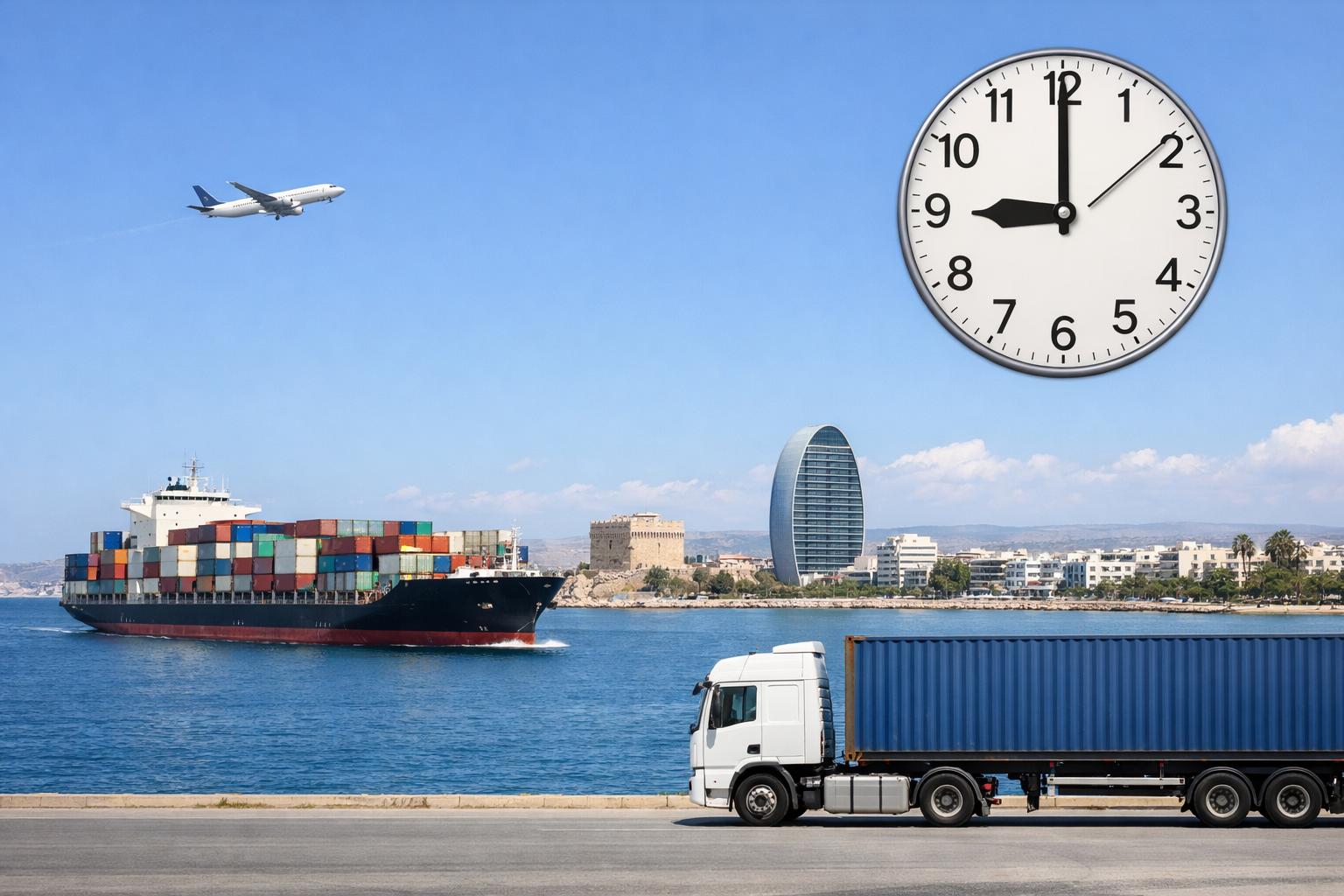
| Shipping Method | Typical Transit Time | Best For |
|---|---|---|
| Express courier | 3–5 days | Documents, samples, urgent small parcels |
| Air freight | 3–8 days | Time-sensitive or high-value cargo |
| Rail + sea | 22–32 days | Medium-priority cargo balancing speed and cost |
| Sea freight | 25–45 days | Heavy cargo, bulk shipments, containers |
These are planning ranges, not fixed promises. During peak seasons, especially around Chinese New Year, transit time can increase because factories close, shipments surge, and space becomes tight. For sea freight, port congestion and vessel schedule changes are also common reasons for delays.
If you need door to door delivery, your timeline should include pickup, export handling, customs processing, and last-mile delivery in Cyprus.
Express courier is usually the fastest option for smaller shipments. Many businesses use it for samples, spare parts, lightweight e-commerce orders, and urgent documents.
Common providers include DHL, FedEx, and UPS. The main benefit is simplicity: one provider handles pickup, linehaul, tracking, and delivery.
What to expect
Fast pickup and frequent departures from major cities in China
Reliable tracking and predictable delivery windows
Direct delivery to business addresses and homes
What can slow it down
Customs inspection or missing item descriptions on the commercial invoice
Peak season backlogs and limited delivery capacity
Incorrect receiver details that delay last-mile delivery
Standard postal services
Some shippers use China Post for lower cost. Transit time is often longer, commonly 15–45 days, and tracking can be limited compared with express courier.
If your parcel is urgent and needs reliable delivery, express courier is usually the better choice.
Air freight is a strong choice when you need fast shipping from China to Cyprus, but your cargo is too large or heavy for express courier pricing. It is widely used for electronics, medical products, fashion, and other time-sensitive goods.
Depending on the route, many shipments arrive in Cyprus within 3–7 days when handling and customs clearance are smooth. A broader planning range is 3–8 days, and in some weeks it can extend toward 10 days if flights are limited.
Most air cargo shipments arrive through:
Larnaca International Airport
Paphos International Airport
These airports connect Cyprus to international cargo networks. When direct capacity is limited, shipments may be routed through transfer hubs and then flown into Cyprus.
Air cargo can depart from different gateways depending on supplier location and space availability. Common departure airports include:
Hong Kong International Airport
These airports are important because they often have more flight options, better cargo handling capacity, and more stable schedules.
Air freight transit time is influenced by:
Flight schedules and space availability
Route design and the number of transfers
Export handling speed in China
Customs clearance time in Cyprus
If you want faster air freight delivery, prepare documents early and avoid last-minute bookings during peak weeks.
Rail + sea is a middle option between air freight and ocean freight. It is used when air is too expensive but you still want a faster timeline than standard sea freight.
China rail departure area → rail to a European hub → sea connection → Cyprus
In practice, many shipments connect through a hub such as Piraeus in Greece or another Mediterranean transfer point, then sail onward to Cyprus. The exact European hub depends on the forwarder’s network and the schedule.
A realistic planning range is 22–32 days.
The main time driver is the connection. If rail arrives and connects smoothly to the next sailing, the shipment stays near the lower end of the range. If the connection is missed, the cargo may wait for the next vessel, which adds days.
Cargo that is not urgent but still needs faster replenishment than sea
Importers who want a better balance between cost and speed
Buyers who need a more stable supply plan than pure spot sea freight
Sea freight, also called ocean freight, is the most cost-effective option for heavy cargo, bulk goods, and containerized shipments. For many importers, sea freight is the default solution because it supports large volumes at lower cost per unit.
Sea freight transit time from China to Cyprus is commonly quoted as 25–45 days, but it can vary. Some routes may be closer to 22–32 days under strong schedules, while other weeks can extend toward the high end when congestion or transshipment delays occur. Many businesses plan around 40–45 days as a practical average for stable supply planning.
Your origin port affects sailing frequency, routing, and container shipping rates. Common export ports include:
If your supplier is inland, the port choice will usually be based on trucking distance, available sailings, and the forwarder’s route options.
Typical Cyprus ports used for imports include:
Limassol
Larnaca
Vasilikos for certain industrial cargo
Limassol is widely treated as the primary choice for containerized cargo because it has strong commercial shipping activity and frequent services.
Full Container Load is ideal for high volumes and better cargo separation. You use the entire container, which often reduces handling steps and improves predictability.
Less Than Container Load is used when cargo does not fill a full container. Your cartons share space with other shippers’ cargo. LCL can reduce cost for smaller shipments, but it may take longer because of consolidation and deconsolidation.
China to Cyprus sea shipping often involves transshipment through major hubs before reaching Cyprus. This is common for Mediterranean routes. Depending on the carrier and schedule, transshipment may happen through hubs such as Piraeus, Port Said, Dubai, or Athens. Transfers can add days compared with a more direct service.
To reduce delays, ask your freight forwarder to confirm:
The full route, including transshipment points
The vessel schedule window and cut-off times
Whether alternative sailings are available if the schedule changes
The most common sea freight delays come from port congestion, missed connections during transshipment, and vessel schedule changes. Congestion can happen at origin ports, hub ports, or destination ports. During high-demand periods, bookings can be rolled to a later vessel if space becomes tight.
If your cargo is time-sensitive, choose routes with fewer transfers and book earlier than usual.
Door to door delivery means one provider handles the shipment from pickup in China to delivery at your address in Cyprus. For many importers and e-commerce sellers, door to door delivery is popular because it reduces coordination and keeps the shipping process easier to manage.
These are practical planning ranges:
Express courier door to door: 3–7 days
Air freight door to door: 5–12 days
Sea freight door to door: 35–60 days
Door to door transit time includes more steps than port to port or airport to airport. It includes pickup, export handling, main transport, customs clearance, and local delivery.
A standard door to door delivery plan often includes:
Pickup from the supplier in China
Export handling and export clearance
Main transport to Cyprus
Import customs clearance support
Local delivery to the final address
Some providers also support delivery appointments for warehouses or business parks, which helps when the consignee can only receive goods in fixed time windows.
Door to door can be arranged in different responsibility styles:
Delivered to your address, but you still pay customs fees and taxes
Delivered to your address with taxes included, depending on the Incoterms you choose
This is why you should match door to door delivery with the right Incoterms later in this guide.
Shipping cost is not just one number. A clear quote should show a breakdown so you can compare offers and avoid surprises.
This is the core transport cost from China to Cyprus. It changes with season, capacity, and market demand.
For sea freight, the base rate is usually tied to:
FCL container size such as 20-foot or 40-foot
LCL pricing per cubic meter
For air freight, pricing is based on chargeable weight.
Airlines charge by the higher of:
Gross weight
Volumetric weight
If your cartons are large but light, volumetric weight can increase the cost. This is common for pillows, shoes, bags, and retail packaging.
Common items include:
Factory pickup and local trucking to the origin port or airport
Export paperwork handling
Warehouse handling, weighing, security checks
Port or terminal handling at origin
These fees happen after arrival. Common items include:
Port or agent release and processing fees
Document and delivery order fees when required
Local trucking to your address if not included
Separate from freight:
Customs clearance service fees paid to a customs broker or agent
Import VAT and import duties
Possible excise duty for regulated goods
Depending on cargo and route, you may also see:
Fuel surcharges
Cargo insurance if selected
Special handling fees for batteries, oversized cargo, or restricted goods
Storage fees if cargo is not cleared on time
Rates change often, but many quotes fall into ranges like:
20-foot container: USD 1,300–3,850
40-foot container: USD 1,850–4,950
Use these as planning ranges, not fixed prices.
Ask for a quote in four lines:
Base freight rate
Origin charges
Destination charges
Customs clearance fees and who pays VAT and duties
If a quote is only one total number, it is harder to compare and more likely to create surprises later.
Many buyers compare only the base freight rate and ignore destination charges. But in real shipping, destination charges and customs costs can change your final landed cost.
Cyprus follows EU customs rules. Goods shipped from China are treated as non-EU imports and are assessed under the EU Common Customs Tariff. Before cargo can be released, importers usually need to settle VAT, any applicable customs duty, and possibly excise duties.
Import VAT: The standard VAT rate in Cyprus is 19% for most goods. Reduced VAT rates of 9%, 5%, and 3% apply to specific categories under local VAT rules.
Import duties: There is no single fixed duty rate. Import duties depend on your product’s HS/TARIC classification under the EU Common Customs Tariff. Some items may be low or even 0%, while others are higher depending on the category.
Excise duty: Certain goods may face excise duty, commonly including fuel products, alcohol, tobacco, and some vehicles or similar regulated goods.
In many cases, VAT and duties are assessed using the shipment’s customs value, which is linked to the goods value and may include freight and insurance under customs valuation practice.
For most commercial shipments, prepare:
Commercial invoice with clear product name, quantity, and value
Packing list with carton count, weights, and dimensions
Bill of lading (sea freight) or air waybill (air freight)
Import declaration filed by the importer or broker
EORI number when applicable for EU business import procedures
Sometimes required, depending on the goods:
Certificate of Origin
Document of Conformity or other compliance documents
Import license or permit for restricted items
If you are unsure about HS classification under the Common Customs Tariff, using a customs broker can reduce errors and improve clearance speed.
Use specific product names and consistent quantities on all documents
Keep values accurate and easy to verify
Send paperwork before arrival so the broker can pre-check and reduce questions
Incoterms explain who pays and where responsibility changes during shipping from China to Cyprus. The three most common terms in practice are FOB, CIF, and DDP.
FOB means the seller delivers the cargo to the origin port in China and completes export steps. After loading, the buyer manages:
Freight cost to Cyprus
Destination charges in Cyprus
Customs clearance
VAT, duties, and any excise duty
Final delivery if needed
FOB is best for buyers who want control of the freight forwarder and total cost.
CIF means the seller pays ocean freight and basic insurance to the Cyprus port. After arrival, the buyer still pays:
Destination port charges
Customs clearance
VAT and import duties
Local delivery after the port
CIF is best for buyers who want a simple port quote but still manage customs locally.
DDP means the seller or logistics provider delivers to your address in Cyprus as a full service. In most cases it includes:
Pickup in China
Export clearance
Main transport
Cyprus customs clearance
VAT and duties
Delivery to the address
DDP is easiest for the buyer, but DDP quotes can vary widely. Always confirm what is included.
One easy check before booking
Ask for a short included and excluded list that clearly states:
Destination charges in Cyprus
Customs clearance service fees
Import VAT and import duties
Final delivery to the address
When these four points are clear, FOB, CIF, and DDP become easy to compare.

A freight forwarder manages routing, booking, documents, and coordination from China to Cyprus. For most importers and e-commerce sellers, a good freight forwarder saves time, reduces risk, and makes costs more transparent.
A forwarder can arrange:
Pickup from the supplier in China
Booking by sea freight, air cargo, express courier, or rail + sea
Export paperwork and origin handling
Arrival handling in Cyprus
Customs broker support
Door to door delivery if required
A reliable freight forwarder helps you:
Choose a route that matches your transit time needs
Avoid unclear cost quotes by providing a breakdown
Coordinate customs steps and reduce last-minute confusion
Adjust the plan when schedules change
To keep things simple, ask for three items in one message:
Route and estimated transit time
Final Cyprus port or airport on the booking
A clear cost breakdown showing origin, freight, and destination
For example, Tonlexing can support shipments from China to Cyprus with routing options, cost breakdowns, and door to door delivery coordination. If you are comparing two providers, ask both to show the same breakdown format so the comparison is fair.
A Cyprus buyer ordered a small restock from a supplier in Shenzhen and did not want to wait until there was enough volume for a full container. The shipment was LCL door to door, around 2–3 CBM, packed in multiple cartons and ready for pickup within the week.
Tonlexing planned a simple, practical route: pickup in Shenzhen → export via South China gateway → Mediterranean hub connection → Cyprus port → final delivery. The buyer’s priority was not the fastest headline transit time, but a stable plan with fewer avoidable delays. To keep the shipment moving, Tonlexing aligned pickup with the cut-off schedule, sent the invoice and packing list for a quick check before departure, and made sure the product description was clear enough for Cyprus customs to process without back-and-forth questions.
On arrival, the cargo followed the normal release flow, including terminal handling and local port procedures, then moved to last-mile delivery. The full door to door timeline stayed within the typical 35–60 day planning range for sea-based door to door, with the main variable being the hub connection schedule.
The buyer received a clear cost breakdown that separated freight, origin handling, destination handling, and customs-related charges, so there were no “surprise fees” at the end. This is a common pattern for Cyprus LCL: clean documents, clear routing, and transparent destination charges usually matter more than chasing the lowest number.
To reduce delays, focus on the few issues that cause most problems.
1) Prevent document holds
Use clear product names on the invoice. Avoid vague descriptions like “parts” or “accessories.” Make sure invoice and packing list match carton count, weight, and value.
2) Reduce routing risk
If timing is critical, choose routes with fewer transfers. For sea freight, fewer hub connections usually means fewer chances of missing a sailing.
3) Control handover timing
For LCL, consolidation timing matters. Ask when the warehouse cut-off is and when the container is planned to be loaded.
4) Avoid last-minute changes
Late packing, late pickup, and last-minute booking often force slower routings. Booking earlier gives your forwarder more schedule options.
5) Prepare for destination release
Many shipments are delayed after arrival because destination charges or customs fees are not settled quickly. Plan who pays and how payment is handled before the cargo lands.
These steps reduce delays without making the process complicated.
Use this short checklist to keep shipping from China to Cyprus smooth and avoid surprise charges.
Confirm origin city in China and destination city in Cyprus
Choose door to door or port/airport to port/airport
Confirm the estimated transit time and the route (direct or with transfers)
Confirm carton count, gross weight, and dimensions
Make sure packaging is ready and labels match the packing list
Check if your cargo is restricted or needs special handling
Prepare commercial invoice and packing list early
Use clear product names and accurate values
Ask your forwarder to confirm the cut-off time for the chosen port or airport
Request a quote breakdown showing freight, origin charges, and destination charges
Confirm whether the quote includes customs clearance, VAT, and duties
Make sure the consignee details are correct to avoid delivery delays
Be ready to pay destination fees quickly and provide any missing details
Arrange delivery appointments early if the address is a warehouse or business park
Air freight usually takes 3–8 days, depending on flight space, handling time, and Cyprus customs clearance speed.
Sea freight commonly takes 25–45 days. Transit time can increase during congestion or when a transshipment connection is missed.
Often yes. Rail + sea is usually 22–32 days. The key factor is whether the rail arrival connects smoothly to the next sea sailing.
Express courier is usually fastest at 3–5 working days, ideal for documents, samples, and urgent small shipments.
Yes. Less than container load (LCL) is designed for smaller shipments. Your cargo shares container space with other shippers’ cargo, which helps save cost, but it can add time due to consolidation.
A freight forwarder manages booking, routing, export steps, arrival coordination, and often customs broker support. They also help you compare options and avoid delays.
Yes. Cyprus applies import VAT on non-EU imports. The standard VAT rate is 19%, and reduced rates of 9%, 5%, and 3% may apply to certain categories.
VAT is a consumption tax applied on most imports. Import duties are tariff charges that depend on HS code and product type. Both can affect your landed cost.
Useful freight, customs and importing resources related to this shipping guide.
Shipping from China / Shipping from China to Cyprus China–Cyprus Shipping Guide · Updated August 2026 Shipping from China to Cyprus Compare sea f...
Read guide →
International shipping from China to Europe remains one of the most vital trade routes in global logistics. With Europe being a massive consumer...
Read guide →
Sea freight is the most cost effective shipping method for large volumes and container load cargo. It is ideal for businesses looking to reduce s...
Read guide →
Air freight from China to Cyprus is now one of the fastest-growing logistics channels for importers seeking reliable, rapid, and cost-efficient t...
Read guide →20ft & 40ft Container Shipping Costs from China to Cyprus Verified & Reviewed · Last updated June 2026 20ft and 40ft container shipping costs fro...
Learn more → Useful Resource DDP Shipping from China to EuropeDDP Shipping from China to Europe Verified & Reviewed · Last updated June 2026 DDP shipping from China to Europe helps importers move cargo door...
Learn more →WhatsApp us