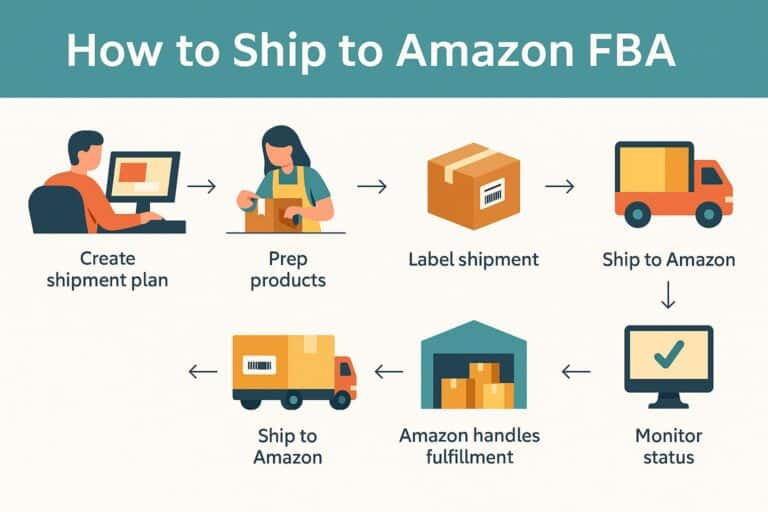
To avoid delays, rejections, or penalties, it’s critical that every FBA shipment follows Amazon’s strict guidelines. Many new sellers overlook labeling or packaging rules—leading to shipment status errors, stranded inventory, or warehouse refusal. Another common mistake is not preparing for the challenges of shipping to different fulfillment centers, as Amazon may require you to send inventory to multiple locations. Failing to follow these requirements can result in additional fees or shipment issues.
Here’s what you need to know:
Tracking and Managing FBA Shipments
Efficiently tracking and managing your FBA shipments is essential for maintaining smooth operations and ensuring your products reach Amazon fulfillment centers on time. Amazon provides robust tools within your Amazon Seller Central account to help you oversee every stage of the shipping process, from the moment you create a shipment to its final delivery.
The “Manage FBA Shipments” page in Seller Central is your command center for all things related to FBA shipments. Here, you can view the status of each shipment, access detailed tracking information, and monitor delivery dates. This dashboard allows you to quickly identify any issues, such as delays or missing boxes, so you can take action before they impact your inventory or sales.
Proper use of shipping labels and box labels is crucial for accurate tracking. Each label contains unique shipment IDs and barcodes, enabling Amazon to scan and update the shipment status as your inventory moves through the supply chain. By ensuring your shipping labels are correctly applied and scannable, you help prevent lost or delayed shipments and keep your inventory flowing smoothly into Amazon’s network.
Additionally, Seller Central offers notifications and shipment history logs, making it easy for any Amazon seller to review past shipments, analyze performance, and adjust future shipping plans. Staying proactive with these tools not only streamlines your shipping process but also helps you maintain high seller performance metrics and customer satisfaction.
FBA Shipping Strategies for 2025
To stay ahead in the competitive world of ecommerce, Amazon FBA sellers must continually refine their shipping strategies. In 2025, the most successful sellers will be those who leverage the latest tools and best practices to optimize every aspect of their FBA shipping process.
One of the most effective strategies is to utilize Amazon’s partnered carriers. These carriers offer discounted shipping rates and seamless integration with Amazon’s systems, making it easier to generate shipping labels and box labels that meet all requirements. By choosing partnered carriers, you can reduce your FBA shipping costs and benefit from reliable, trackable deliveries to Amazon fulfillment centers.
Another key approach is to maximize the advantages of Amazon’s fulfillment centers. By strategically shipping inventory to multiple fulfillment centers, you can ensure faster delivery times to customers across different regions, which can boost your Prime eligibility and sales potential. Using the right shipping process and keeping your box labels accurate helps minimize errors and avoid costly delays.
Investing in advanced inventory management tools is also crucial for 2025. These tools help you monitor stock levels, forecast demand, and automate replenishment, reducing the risk of stockouts or excess inventory. Effective inventory management not only lowers storage costs but also improves your ability to respond to market trends and customer needs.
Finally, regularly reviewing your shipping process and analyzing performance data will help you identify areas for improvement. By staying informed and agile, you can adapt to changes in Amazon’s policies, shipping rates, and customer expectations—ensuring your FBA shipping strategy remains efficient and profitable in the year ahead.
1. Shipping Labels
Each outer carton must have Amazon shipping labels applied. These contain shipment IDs and scannable barcodes. Follow these rules:
- Labels must be printed clearly (preferably thermal)
- Use “Print box labels” in your shipping plan
- Place labels on a flat surface (not on edges or seams)
- Avoid wrinkles, smudges, or faded ink
If using Amazon Partnered Carrier, labels must match their shipping integration exactly.
2. Packaging & Box Dimensions
Amazon requires every box in your FBA shipment to meet the following:
Maximum weight: 50 lbs per box (unless single unit exceeds this weight)
Box dimensions: Max 25″ on any side recommended
No mixed-SKU boxes unless explicitly allowed
Use strong, double-walled corrugated boxes
Each box must include complete packing details in the shipping plan—accurate box weight, box dimensions, and number of units.
3. Common Mistakes to Avoid
Using unscannable or incorrect labels
Missing or wrong ship-from address
Failing to update shipment status after carrier pickup
Shipping to the wrong fulfillment center
Combining SKUs not approved for mixed packaging
Ignoring drop-down menus in Seller Central for shipping method
Not using Amazon’s partnered carriers, which can help you obtain discounted rates and streamline the shipping process for small parcel and LTL freight shipments
Amazon may charge non-compliance fees, reject your boxes, or even suspend FBA privileges if you repeatedly violate requirements.
For worry-free compliance, many sellers work with freight forwarders or 3PLs that specialize in Amazon FBA shipments.