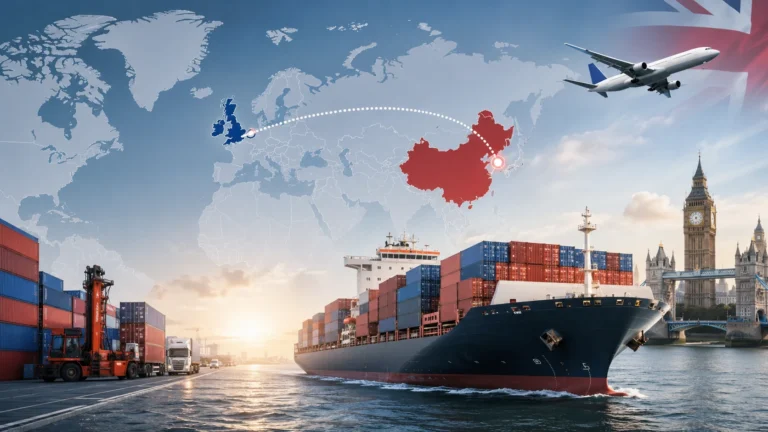
Related Guide
Shipping Cost from China to UK (2026 Guide)
Shipping Cost from China to UK (2026 Guide) Verified & Reviewed · Last updated June 2026 Shipping cost from China to UK in 2026 typically ranges...
Read guide →

Reliable shipping from China to the UK for importers, e-commerce sellers, and manufacturers,
covering London, Felixstowe, Southampton, and nationwide delivery.
Compare sea freight, air freight, and DDP options with clear transit times,
costs, and customs handling — before you book.
Sea freight: 25–35 days
Air freight: 3–7 days
DDP: 30–45 days
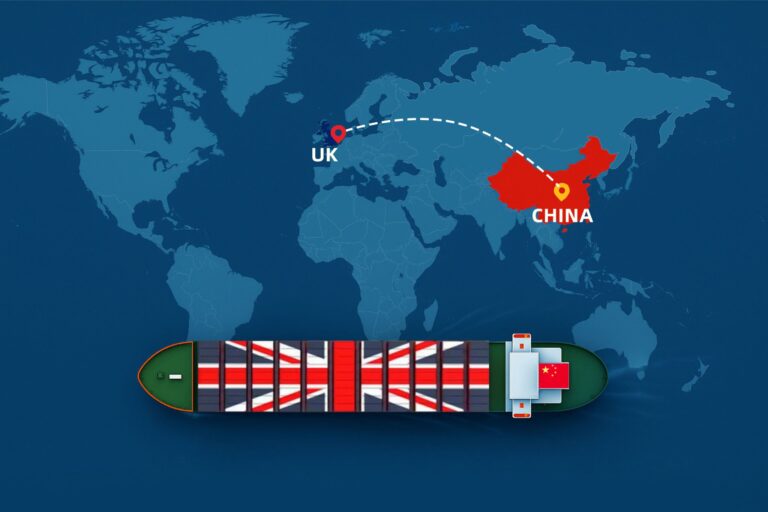
Compare UK shipping options by speed, cost, and clearance—especially for London and Manchester deliveries.
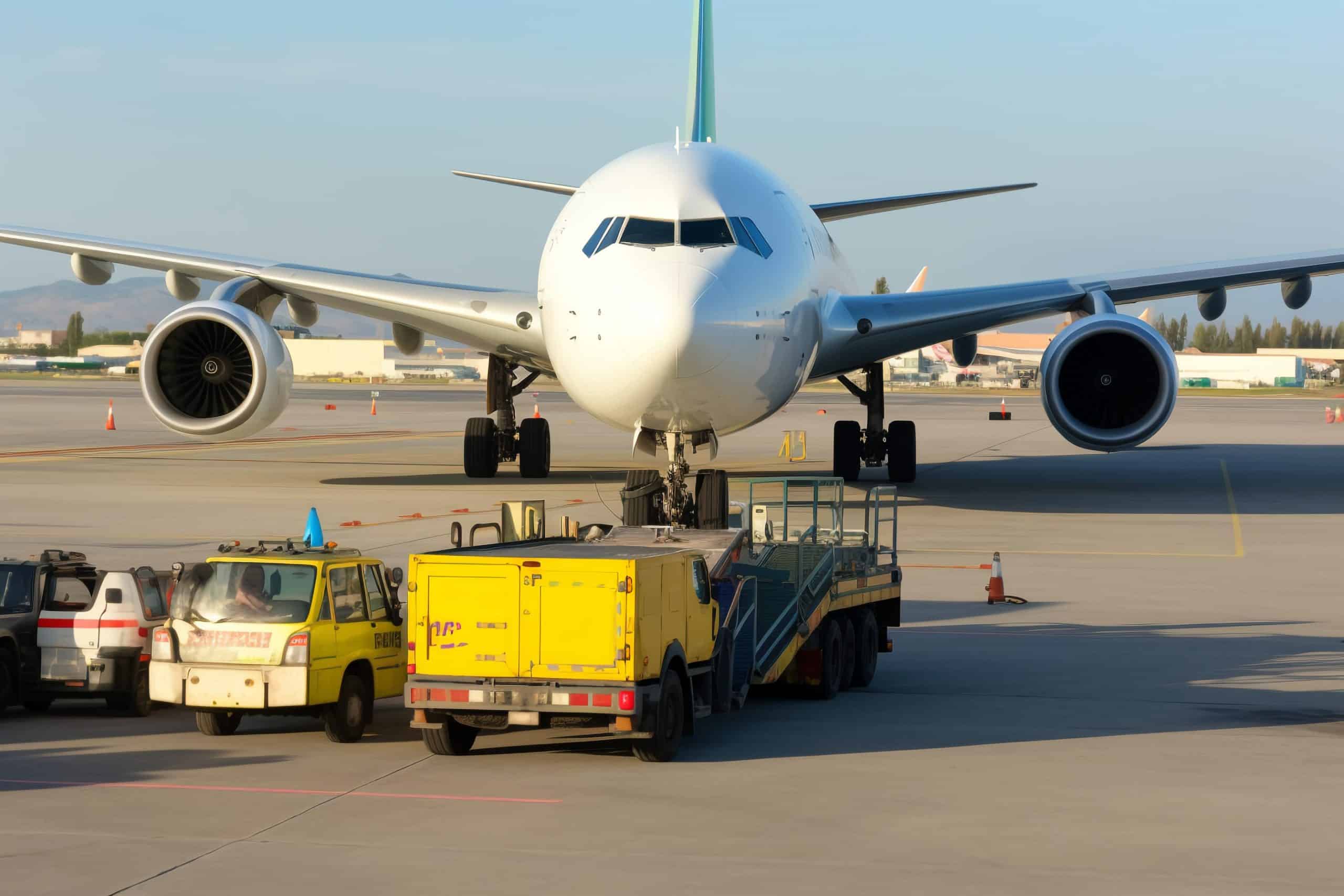
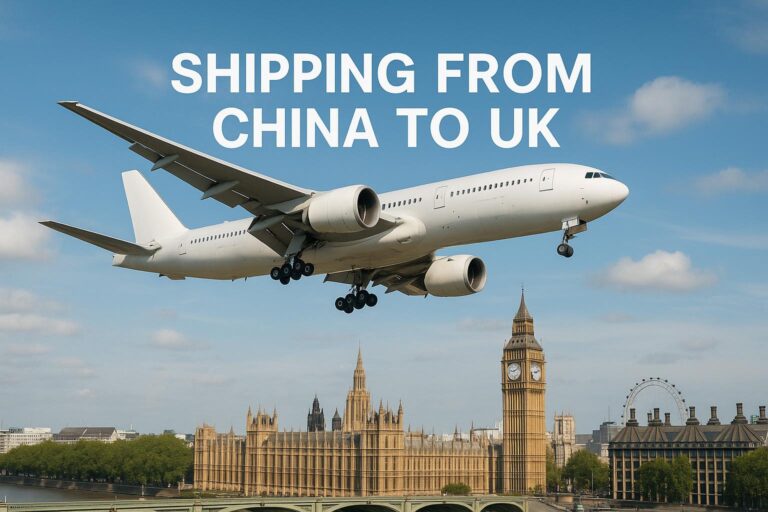
Quick and efficient shipping for urgent or high-value cargo.
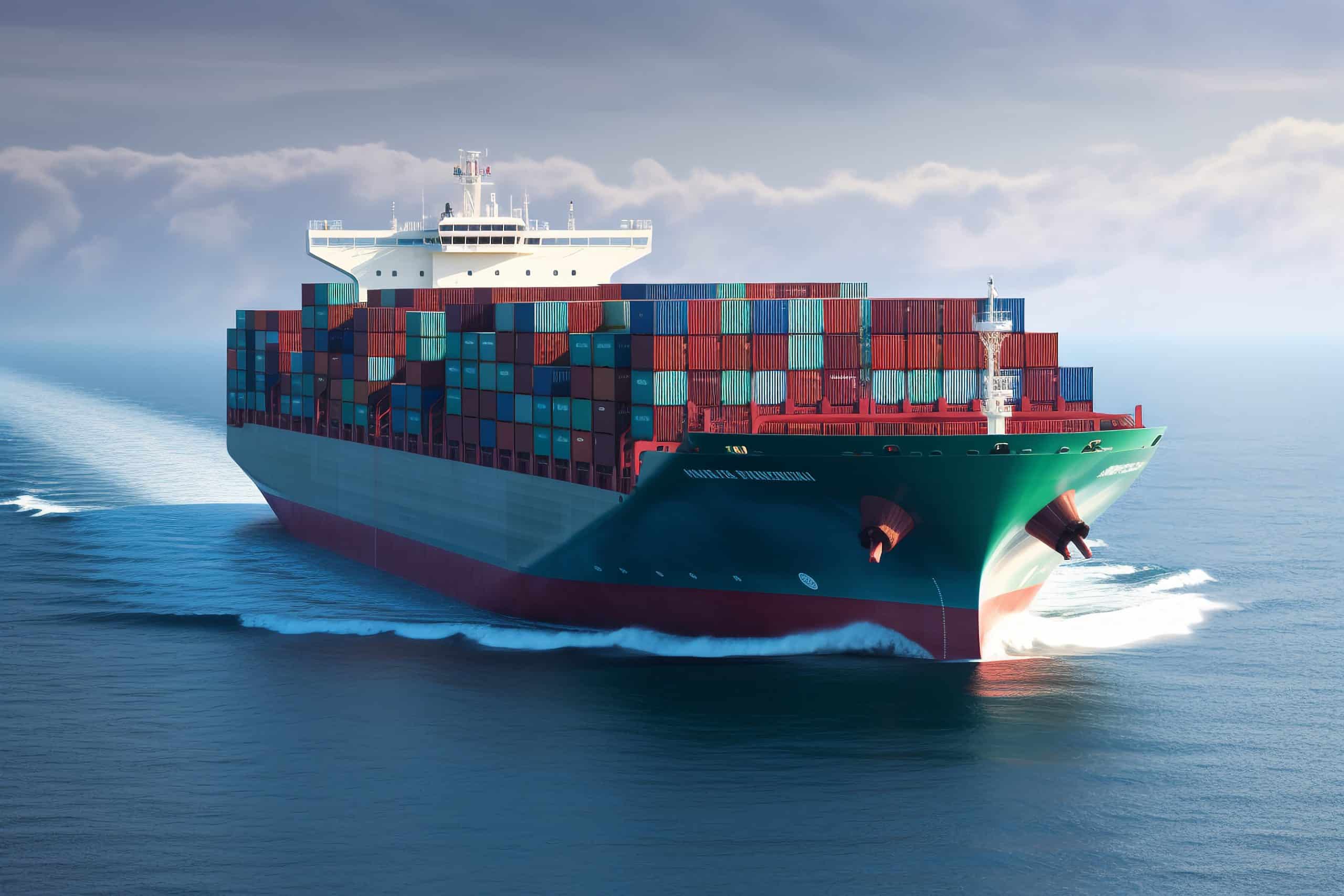
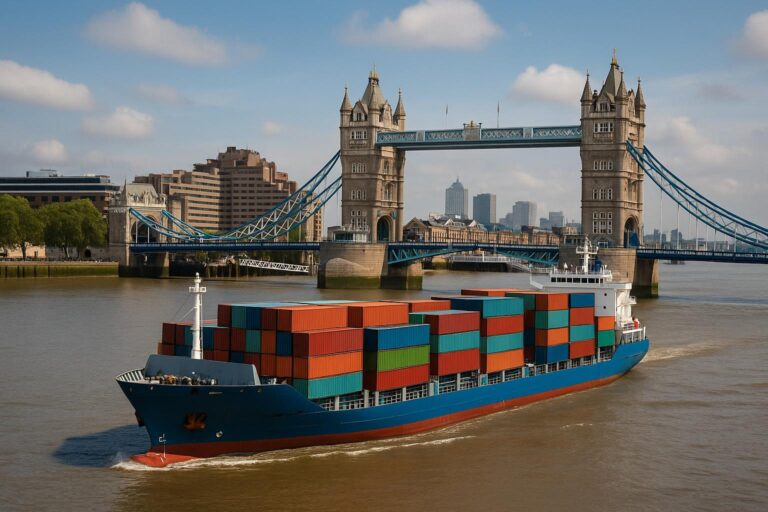
Cost-effective sea freight to UK ports like Southampton and Felixstowe.
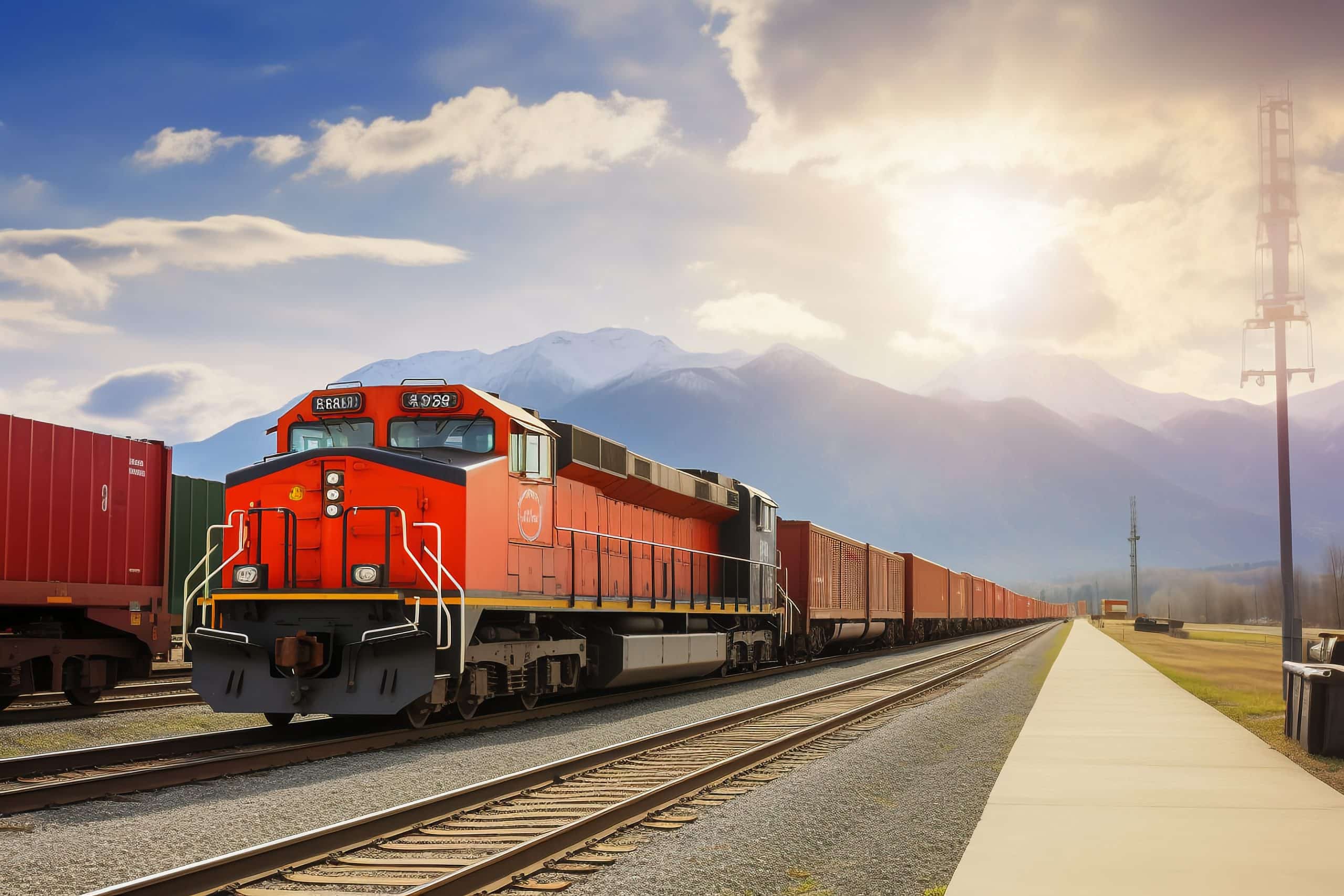
Efficient rail freight to UK cities such as Birmingham and Liverpool.
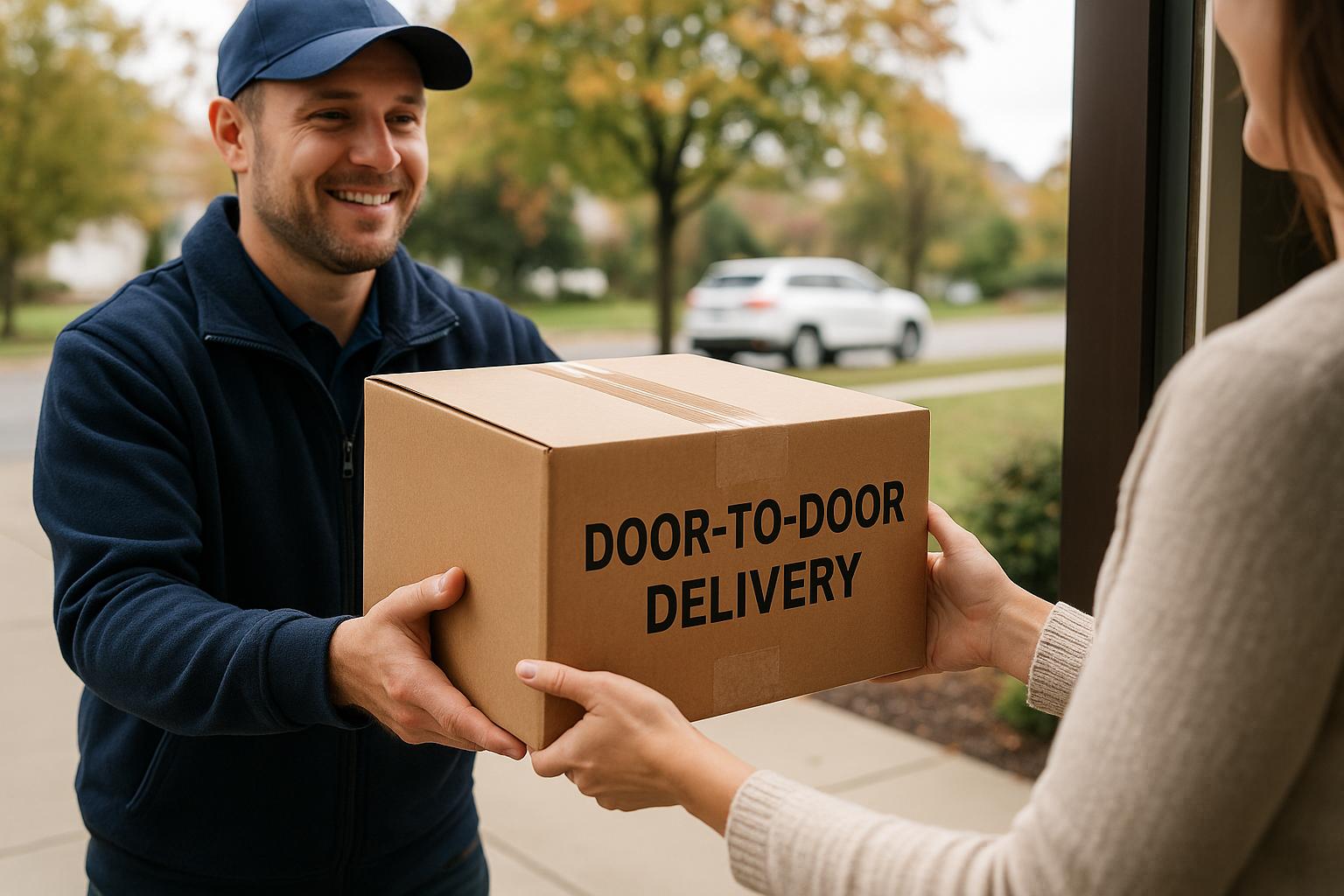
Pickup in China, delivered to your UK address with taxes and customs included.
Trade between China and the United Kingdom continues to flourish, with goods ranging from electronics and textiles to industrial machinery and e-commerce parcels. Shipping from China to the UK plays a vital role in global commerce. However, managing the complexities of shipping—such as selecting the right shipping method, navigating customs procedures, and ensuring timely delivery—can be challenging. Understanding these factors can help UK importers reduce costs and streamline their supply chain.
Whether you’re choosing air, sea, or rail freight, this guide helps you compare shipping methods, freight costs, and customs procedures. Our goal is to provide you with the most cost-effective and efficient logistics solutions, whether you’re shipping to major UK ports like London or regional centers.
Importers have four primary methods to transport goods from China to the UK: sea freight, air freight, rail freight, and express courier. Each shipping mode has unique advantages depending on your cargo type, delivery time, and budget.
Sea freight is the most common and cost-effective choice for large shipments or bulky goods. Importers can book either FCL shipping (Full Container Load) or LCL shipping (Less than Container Load) depending on cargo volume.
Routes from major ports like Shanghai, Ningbo, and Shenzhen reach UK destinations such as Felixstowe or Southampton via the Suez Canal. Typical transit time: 25–40 days. It’s slower than air but significantly cheaper per unit.
For fast delivery, air freight connects China and the UK within 5–8 days. Ideal for high-value or time-sensitive shipments, it offers security and reliability. Major airports include Shanghai Pudong (PVG), Beijing Capital (PEK), Guangzhou (CAN), and London Heathrow (LHR).
Though air freight rates are higher, it remains a cost-effective option for smaller volumes needing quick turnaround.
Rail freight provides a middle ground between sea and air — faster than ocean, cheaper than air. Trains depart from Wuhan, Chengdu, and Yiwu to the UK via Europe, reaching destinations within 18–25 days.
This mode suits e-commerce businesses looking for consistent delivery time and lower carbon impact.
Express courier services (DHL, FedEx, UPS, TNT) handle time-sensitive packages and samples with door-to-door delivery in 3–5 days.
It’s the most expensive shipping mode, but ensures guaranteed delivery and full tracking — a stress-free choice for urgent goods.
After containers arrive in continental Europe by rail, road freight often completes the final leg to UK warehouses. It offers flexible scheduling and is especially useful for consolidated shipments.
Sea freight remains the backbone of China to UK trade, ideal for large shipments that aren’t urgent. It’s the most cost-effective shipping method, providing the lowest unit cost for heavy cargo.
FCL (Full Container Load): Best for shippers with enough goods to fill a container. Booking a full container minimizes handling and potential damage.
LCL (Less than Container Load): Suited for smaller shipments. Cargo is consolidated with others, which may add a few days but is significantly cheaper for limited volumes.
If your goods occupy more than 18 m³, switching to FCL shipping is often more economical than paying by cubic meter.
Most ocean freight departs from major ports such as Shanghai, Shenzhen, Ningbo, Qingdao, and Guangzhou. Routes pass through the Suez Canal to UK destination ports including Felixstowe, Southampton, and London Gateway.
These shipping routes are supported by leading carriers like COSCO, MSC, and Maersk, ensuring reliable weekly sailings.
Average transit time for sea freight is 25–40 days, depending on the origin and destination port.
Typical freight rates (2026):
Additional logistics costs — such as documentation, terminal handling, and customs fees — should be considered when budgeting. Seasonal market conditions or port congestion can also significantly affect delivery times.
For stable, non-urgent cargo like furniture, building materials, or equipment, FCL sea freight delivers the best value among all different methods. It supports consistent supply chains at a manageable cost.
When time is critical, air freight provides the fastest solution. Most standard air freight services take 5–8 days, while express air cargo can reach within 3–5 days.
Frequent departures from Shanghai (PVG), Beijing (PEK), Guangzhou (CAN), and Shenzhen (SZX) connect directly to UK air freight destinations such as London Heathrow (LHR), Manchester (MAN), and Birmingham (BHX).
These shipping routes ensure reliable schedules for time-sensitive shipments and short delivery time.
Rates are based on chargeable weight — whichever is greater between actual and volumetric weight.
Average air freight rates (2026):
Standard air freight: USD 4–6/kg
Express courier: USD 8–12/kg
Costs depend on route, season, and freight forwarder. Working with an experienced logistics partner ensures you get competitive rates and avoid hidden fees.
The typical shipping process includes:
Cargo pickup and export customs clearance in China.
Flight departure and arrival in the UK.
Import customs clearance and door-to-door delivery.
Partnering with a reliable freight forwarder simplifies this entire procedure, keeping your logistics predictable and stress-free.
Air freight is perfect for e-commerce businesses shipping electronics, apparel, or urgent restocks. Though costlier than ocean freight, its shorter transit time and minimal risk make it a cost-effective choice for fast-moving supply chains.
Rail freight offers a fast, cost-effective alternative to ocean and air. The China–Europe Railway Express connects inland Chinese cities to London and other European destinations, helping importers balance transit time and cost.
Regular trains depart from Wuhan, Chengdu, Chongqing, and Yiwu, crossing Kazakhstan, Russia, Belarus, Poland, and Germany before reaching the UK.
The average transit time is around 18–25 days, almost twice as fast as sea freight yet much cheaper than air freight.
Shipping mode comparison:
Sea Freight: Cheapest but slowest (25–40 days).
Rail Freight: Balanced solution (18–25 days).
Air Freight: Fastest but most expensive (5–8 days).
Rail freight rates for a container load usually range between USD 4,000–6,000 per FCL depending on origin, route, and carrier.
LCL services are also available for smaller shipments, and containers can be transferred to road freight for final delivery across the UK.
Choosing a reliable freight forwarder helps secure the best schedule and avoid unnecessary costs or delays.
Cost-effective for medium-volume cargo.
Predictable delivery time for e-commerce businesses.
Lower emissions compared to air or sea.
Door-to-door services available through intermodal logistics.
This mode suits importers needing steady China to UK deliveries without paying for premium air transport. It’s now a central link in the modern Eurasian supply chain.
For urgent or small parcels, express shipping provides the fastest delivery — usually within 3–5 days door to door. Leading courier services such as DHL, FedEx, UPS, and TNT operate daily between China and the UK, ensuring speed, tracking, and reliability.
Goods are picked up from your supplier in China.
Export customs clearance and flight booking are handled by the courier.
Upon arrival, UK customs clearance and local delivery are completed automatically.
Everything is managed for you, making this a completely stress-free and door-to-door solution. It’s particularly suitable for time-sensitive packages, product samples, and small e-commerce orders.
Typical 2026 rates range from USD 12–15 per kg, depending on shipment weight and service level.
To avoid hidden fees, confirm whether quotes include customs fees, VAT, and final delivery charges. Some freight forwarders offer DDP (Delivered Duty Paid) door-to-door services that already include these.
For lightweight or urgent shipments (samples, documents, electronics).
For sellers on e-commerce platforms like Amazon or Shopify.
For shipments under 50 kg where quick delivery time matters more than price.
Although expensive, express shipping provides a guaranteed arrival window and simplified logistics process, making it a valuable tool for maintaining customer satisfaction and brand reliability.
For importers who prefer a simple, stress-free experience, door-to-door shipping is the most convenient option. This full-service solution covers every stage — from supplier pickup in China to final delivery in the UK.
A trusted freight forwarder handles:
Cargo pickup and consolidation.
Export and import customs clearance.
International transport by sea freight, air freight, or rail freight.
Local UK customs handling, customs fees, and last-mile delivery.
All you need to provide are your shipment details, documents, and consignee address — the forwarder manages the rest. For many e-commerce businesses, this is the smoothest and most cost-effective way to import from China.
DDP (Delivered Duty Paid): The freight forwarder or seller pays all customs fees, VAT, and import duties in advance. The buyer receives goods at their doorstep with no additional payment required.
DDU (Delivered Duty Unpaid): The buyer pays taxes and duties when the cargo arrives in the UK.
For small or medium importers, DDP shipping is often preferred because it provides predictable shipping costs and a door-to-door solution without administrative stress.
Simplifies the entire shipping process
Avoids unexpected customs fees or VAT surprises
Faster release from UK customs
One invoice covering all freight rates and delivery
Perfect for Amazon FBA or direct warehouse delivery
By outsourcing to a reliable freight forwarder, importers save time and eliminate risks while maintaining compliance with UK import regulations.
Shipping costs vary depending on weight, volume, shipping mode, and transit time. Below is a summary of average freight rates in late 2026 to help you compare and plan your UK shipping budget.
Shipping Method | Estimated Cost (2026) | Transit Time | Best For |
|---|---|---|---|
Sea Freight (FCL Shipping) | USD 1,500 – 2,500 per 20ft container load | 25–40 days | Bulk & large shipments |
Sea Freight (LCL Shipping) | USD 30 – 80/m³ | 30–45 days | Small or mixed cargo |
Rail Freight | USD 4,000 – 6,000 per container | 18–25 days | Medium-volume goods |
Air Freight | USD 4 – 6/kg | 5–8 days | Urgent cargo |
Express Shipping | USD 8 – 12/kg | 3–5 days | Samples & parcels |
Note: Rates fluctuate based on season, market conditions, and origin/destination. Always request updated quotes before booking.
LCL Ocean Freight: Shenzhen → Felixstowe, 2 m³ / 400 kg — USD 60–160 (port-to-port, taxes excluded)
Air Freight: PVG → LHR, 200 kg — USD 5.5/kg airport-to-airport
Express Courier: Shenzhen pickup → UK door, 10 kg — USD 80–120, DDP shipping available
Cargo size and weight (affects container or volumetric charge).
Shipping routes and chosen freight forwarder.
Customs clearance, VAT, and documentation.
Fuel surcharges and peak season demand.
Additional logistics costs like storage or insurance.
Choosing the right combination of service and timing allows you to achieve truly cost-effective logistics between China and the UK.
Every shipment from China to the UK must go through customs clearance before delivery. Understanding how UK customs works is essential to avoid customs fees, import duty, and costly delays.
The shipping process for import clearance includes:
Submitting all required documentation — commercial invoice, packing list, bill of lading or air waybill.
Declaring HS codes and customs value.
Paying import duty, VAT, and any handling or inspection fees.
Final release and delivery to the consignee.
A professional freight forwarder or customs broker can manage these steps, ensuring smooth clearance and compliance with UK regulations. Many door-to-door or DDP shipping services already include all customs handling and taxes in their shipping costs.
Commercial Invoice
Bill of Lading / Air Waybill
Import License (if required)
EORI Number (mandatory for UK importers)
UK importers should confirm their VAT registration method (standard VAT, postponed VAT accounting, or IOSS for small parcels). Restricted products — such as batteries, cosmetics, or food — may need special permits before UK customs release.
Import Duty: Varies by product HS code. Most manufactured products imported into the UK are subject to 2%–10% import duty, though some categories (e.g., textiles, footwear, electronics) may be higher.
VAT: Usually 20% of CIF value (goods + freight + insurance); some goods like books or kids’ clothing have 0%–5% reduced rates.
Customs Fees: Administrative costs collected by UK customs or the freight forwarder.
Clear documentation prevents potential delays due to incomplete filings, port congestion, or weather conditions. For e-commerce businesses, choosing a forwarder experienced with UK import rules guarantees faster and more predictable delivery time.
Selecting the right shipping method often depends on transit time. The table below compares delivery speed and cost for each option between China and the UK.
Shipping Method | Average Transit Time | Best For | Cost Level |
|---|---|---|---|
Sea Freight | 25–40 days | Large shipments, heavy cargo | 💰 Low |
Rail Freight | 18–25 days | E-commerce businesses, mid-volume cargo | 💰💰 Medium |
Air Freight | 5–8 days | Time-sensitive shipments | 💰💰💰 High |
Express Shipping | 3–5 days | Samples, small parcels | 💰💰💰💰 Very High |
DDP Door-to-Door | 10–25 days | Simplified all-in-one shipping | 💰💰 Medium |
Actual transit time may vary depending on shipping routes, carrier schedule, customs clearance, and market conditions.
Sea Freight: Best for bulk cargo and stable schedules — the most cost-effective option.
Rail Freight: Balanced delivery for regular China to UK shipments.
Air Freight: Fast and reliable for high-value or perishable goods.
Express Shipping: Instant door-to-door delivery for urgent parcels.
DDP Services: Hassle-free for importers seeking complete logistics management.
Evaluating cost versus delivery time helps build an efficient and predictable supply chain that supports your UK operations.
Working with a reliable freight forwarder is key to ensuring smooth UK shipping from start to finish. A forwarder coordinates every part of the shipping process — from supplier pickup, export customs clearance, and international transport to import procedures and door-to-door delivery.
Experience in international logistics — especially with China to the UK routes.
Transparent pricing with no hidden fees or extra surcharges.
Full-service options for sea freight, air freight, rail freight, and express shipping.
In-house customs clearance expertise to handle UK import regulations.
Real-time tracking and proactive communication.
A professional shipping company helps you select the most cost-effective route, consolidate shipments, and negotiate competitive rates with carriers. This partnership simplifies logistics, reduces shipping costs, and minimizes risks across your supply chain.
Tip: Always request a detailed quotation listing all charges — including freight rates, customs fees, and final delivery — to ensure accurate cost planning.
Importing from China doesn’t have to be complicated or expensive. The following tips will help you optimize shipping costs, maintain stable delivery times, and ensure a stress-free experience:
Plan ahead and book early — Avoid peak season rate increases by reserving space in advance.
Choose the right shipping method — Balance transit time and cost between sea, air, rail, and courier.
Work with an experienced freight forwarder — They manage the entire shipping process and resolve customs clearance efficiently.
Consolidate shipments — Combine multiple orders to reduce per-unit cost and simplify logistics.
Ensure accurate documentation — Prevent potential delays and storage fees by submitting all required paperwork correctly.
Track your shipment regularly — Use tracking tools and maintain communication for real-time updates.
Following these steps ensures a predictable logistics system and helps e-commerce businesses maintain strong delivery performance between China and the UK.
Shipping from China to the UK is now easier than ever, with multiple shipping options catering to different budgets and timelines.
By understanding freight rates, customs procedures, and delivery times, and by partnering with a reliable freight forwarder, you can achieve efficient, cost-effective, and stress-free logistics for your global business.
Get a quote today — send your cargo details, CBM, and delivery postcode, and we’ll recommend the best sea, air, rail, or DDP shipping solution tailored for you.
Shipping costs depend on method, volume, and season:
Sea freight: USD 1,500–2,500 per 20ft container.
Air freight: USD 4–6 per kg.
Rail freight: USD 4,000–6,000 per container.
Express courier: USD 8–12 per kg.
For small e-commerce shipments, DDP door-to-door shipping offers the most transparent pricing.
Average transit time by mode:
Sea freight: 25–40 days.
Rail freight: 18–25 days.
Air freight: 5–8 days.
Express: 3–5 days.
Choosing the right freight forwarder helps ensure on-time delivery.
Typical required documentation includes:
Commercial Invoice
Packing List
Bill of Lading / Air Waybill
EORI Number
Import License (if needed)
Your freight forwarder will help prepare and file all customs paperwork.
DDP shipping (Delivered Duty Paid) means all customs fees, VAT, and duties are prepaid by the shipper or freight forwarder. Importers receive the goods at their address without extra charges — a fully door-to-door, stress-free, and cost-effective solution.
It depends on your needs:
Sea freight: Large volumes and lower costs.
Rail freight: Balanced cost and speed.
Air freight: Urgent, high-value goods.
Express: Small parcels, fastest delivery.
Your forwarder can compare all shipping methods to find the best value plan.
Yes. Many freight forwarders provide DDP door-to-door services that deliver goods straight to Amazon FBA centers. They handle labeling, packaging checks, and customs clearance to ensure smooth UK shipping.
Useful freight, customs and importing resources related to this shipping guide.
Shipping Cost from China to UK (2026 Guide) Verified & Reviewed · Last updated June 2026 Shipping cost from China to UK in 2026 typically ranges...
Read guide →
Overall, understanding how long does it take to ship from China to UK helps importers plan efficient logistics, choose the best freight mode, and...
Read guide →
Explore sea freight from China to UK, including sea freight costs, transit times, ocean freight options, customs clearance, full container load...
Read guide →Air Freight from China to UK Verified & Reviewed · Last updated June 2026 Air freight from China to UK is one of the fastest shipping methods for...
Read guide →Shipping from China to the UK has become increasingly efficient and accessible, thanks to international logistics innovations and the rising popu...
Learn more → Useful Resource Cost of Shipping 40ft Container from China to UK: 2025 Full GuideA Complete Overview of Shipping from China to the United Kingdom In today’s global economy, shipping from China plays a critical role for busines...
Learn more →WhatsApp us