Related Guide
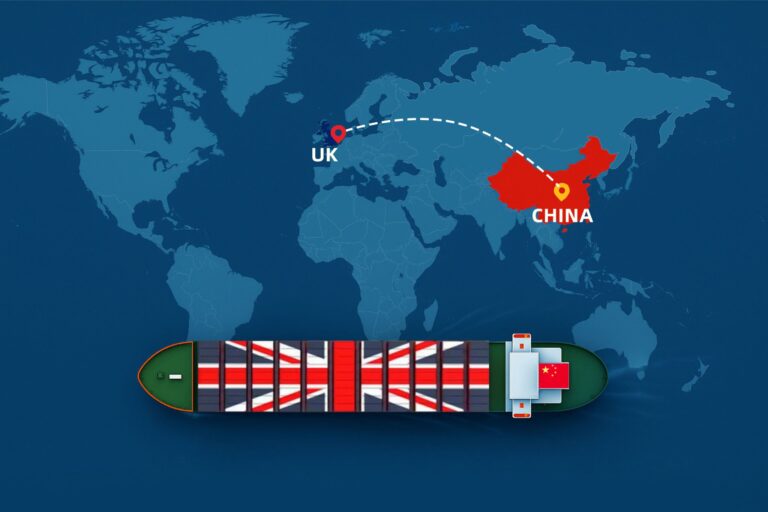
Shipping from China to the UK
Shipping from China to the UK offers flexible air and sea freight solutions. Learn about delivery time, shipping costs, and customs clearance.
Read guide →

Air freight from China to UK is one of the fastest shipping methods for importers who need reliable delivery, shorter transit time, and better control over urgent cargo.
This guide explains air freight from China to UK, covering air freight costs, transit time, major airports such as Shanghai Pudong International Airport, Hong Kong International Airport, Beijing Capital International Airport and London Heathrow, as well as customs clearance, chargeable weight, express shipping, door to door service, and DDP air freight.
Air Freight Cost / Rates
Transit time range
Customs Clearance
Air freight is usually the best choice when speed, cargo value, and supply chain reliability are more important than the lowest possible shipping costs. It is much faster than sea freight and ocean shipping, making it suitable for urgent restocking, seasonal goods, and time-sensitive commercial orders.
For many importers, air freight from China to the UK becomes practical when the shipment is too large for express courier but too urgent for sea freight. It is also useful when a delay may affect sales, production, or customer delivery schedules.
Air freight is commonly used for:
Electronics and consumer devices
Fashion and seasonal products
Machinery spare parts
Medical equipment
Beauty products
E-commerce inventory
Amazon FBA shipments
Samples and prototypes
High value commercial cargo
Air freight costs from China to the UK are usually calculated by chargeable weight. Airlines compare the actual gross weight and volumetric weight, then charge based on the higher value. This means lightweight but bulky goods may cost more than expected.
| Shipment Size | Estimated Air Freight Rate | Best For |
|---|---|---|
| 45–100 kg | USD 5.50–8.00/kg | Samples and small urgent shipments |
| 100–300 kg | USD 4.50–7.00/kg | Regular commercial cargo |
| 300–500 kg | USD 4.00–6.00/kg | Bulk air cargo |
| 500 kg+ | USD 3.50–5.50/kg | Larger air shipments |
| Express courier | USD 8.00–13.56+/kg | Small parcels and urgent delivery |
These shipping prices change frequently because airline space, fuel costs, peak season demand, customs processes, and port congestion can all affect total freight costs.
Air freight shipping costs from China to the UK depend on more than the per kg rate. The final quote is mainly affected by cargo weight, carton size, chargeable weight, flight space, customs clearance, and the final delivery address in the UK.
Main cost factors include:
For an accurate quote, freight forwarders usually need the product name, total weight, carton dimensions, pickup address in China, and delivery address in the UK.
Air freight from China to the UK is usually charged by chargeable weight. Airlines compare the actual weight and the volume weight of your cargo, then use the higher one to calculate the air freight cost.
The common formula is: Length × Width × Height / 6000
The size is usually calculated in centimeters.
For example, if one carton is 60 × 50 × 40 cm: 60 × 50 × 40 / 6000 = 20 kg
If the actual weight is 15 kg, the chargeable weight is 20 kg.
If the actual weight is 25 kg, the chargeable weight is 25 kg.
You can also use the Tonlexing CBM Calculator to quickly check cargo volume and estimate chargeable weight before shipping.
To reduce air freight costs, try to make the packaging smaller and avoid empty space inside cartons.
Useful tips include:
Use suitable carton sizes
Avoid oversized packaging
Pack goods tightly and safely
Confirm weight and dimensions before shipping
Ask your freight forwarder to confirm the final chargeable weight before booking
For air cargo, accurate weight and carton size help you get a more reliable quote and avoid unexpected shipping costs.
Transit time depends on the shipping method, flight schedule, customs clearance, and local delivery arrangement. The flight itself may take less than one day, but the full shipping process includes supplier pickup, warehouse handling, export declaration, air transport, UK customs clearance, and final delivery.
Standard air freight typically takes 5–8 days from China to the UK. Airport-to-airport air freight can take around 3 to 8 days, while door to door air shipping usually takes 6–12 days.
Standard air freight is suitable for commercial cargo over 100 kg. It is slower than express air freight, but usually much cheaper for medium-sized shipments.
Typical standard air freight steps include:
Pickup from the supplier’s warehouse in China
Cargo delivery to the airport warehouse
Export customs clearance
Airline booking and air transport
Arrival at the UK airport
UK customs clearance
Inland transportation and final delivery
Express air freight and express shipping are usually faster. For urgent parcels, documents, and small packages, delivery may take 1–3 days or 3–5 days, depending on the service level and destination.
Express courier is convenient because the courier company manages most of the shipping process. However, it is usually more expensive than standard air freight when the shipment becomes heavier.
China to the UK air freight routes connect major Chinese manufacturing regions with key UK air cargo hubs. The best shipping routes depend on supplier location, cargo type, airline space, and final delivery city.
Common departure airports include:
Shanghai Pudong International Airport and Hong Kong International Airport are widely used for electronics, e-commerce goods, high value goods, and general air cargo. Beijing Capital International Airport is useful for suppliers in northern China, while Guangzhou, Shenzhen, and Hong Kong are common choices for South China shipments.
Some shipments use direct flights, while others may move through airline hubs operated by Air China or other international freight airlines.
Common UK air freight arrival points include:
London Heathrow
Manchester Airport
Birmingham Airport
East Midlands Airport
London Stansted Airport
London Heathrow is one of the main gateways for UK air freight, especially for cargo delivered to London, southern England, and nearby distribution centers. Manchester and Birmingham are useful for northern and central UK shipping destinations.

Air freight is fast, but it is not always the most cost effective shipping method. For larger shipments or cargo that is not urgent, sea freight, ocean freight, or rail freight can be a better choice.
The right shipping mode depends on your cargo volume, delivery time, budget, product value, and final delivery address in the UK.
Sea freight from China to the UK is commonly used for large shipments, heavy goods, and regular bulk orders. It is slower than air freight, but the overall shipping cost is usually much lower.
FCL shipping uses a full container load for one importer. It is suitable for larger cargo, high-volume orders, and goods that need better control during transport. LCL shipping shares container space with other shipments, making it a practical option for smaller sea freight shipments.
Common sea freight options include:
Full container load
LCL sea freight
Port-to-port shipping
Door to door sea freight
UK ocean freight delivery
Ocean freight from China to the UK usually takes around 30–40 days. Major Chinese ports include Shanghai, Shenzhen, Ningbo, Qingdao, and Guangzhou. Common UK ports include Felixstowe, Southampton, and London Gateway.
Rail freight can be a middle option between air freight and sea freight. It is usually faster than ocean freight and cheaper than air freight, making it suitable for shipments that need a balance between cost and transit time.
Rail freight may be suitable when:
Sea freight is too slow
Air freight is too expensive
The shipment is not extremely urgent
The cargo is suitable for rail transport
The importer wants better cost control than air freight
For urgent cargo, air freight is usually the better option. For large and non-urgent cargo, sea freight is often the most cost effective choice.
Customs clearance is an important step when shipping air freight from China to the UK. Even if the flight time is short, missing or incorrect documents can still cause delays, extra customs fees, or storage charges.
For most commercial imports, UK customs require clear product information, accurate declared value, and the correct HS codes. Importers usually also need an EORI number for customs declaration.
The main documents usually include:
Commercial invoice
Packing list
Air waybill
EORI number
HS codes or commodity codes
Product description
Customs value
Import license or certificate, if required
The commercial invoice and packing list should match each other. Product name, quantity, weight, carton details, declared value, and country of origin should be clear and accurate.
Customs duties depend on the product type, HS codes, customs value, and origin of goods. The UK Trade Tariff service can be used to check commodity codes, duty rates, and VAT rates for goods imported into the UK.
The UK standard VAT rate is 20% for most goods and services, although some goods may be reduced-rated or zero-rated.
A typical landed cost may include:
Product value
International shipping cost
Insurance if used
Customs duties
Import VAT
Customs clearance fee
Local delivery fee
Storage or inspection charges if applicable
Door to door service means the logistics provider manages the full shipping process from the supplier’s warehouse in China to the final delivery address in the UK. This is useful for importers who do not want to coordinate multiple transportation services.
DDP air freight means Delivered Duty Paid. Under DDP, customs clearance, customs duties, tax handling, and final delivery are usually arranged by the supplier or freight forwarder.
A typical door to door air shipping process includes:
Pickup from supplier in China
Warehouse receiving and cargo checking
Export customs clearance
Air freight booking
Air cargo departure
UK customs clearance
Inland transportation
Final delivery
Door to door air freight is practical for e-commerce sellers, Amazon FBA sellers, wholesalers, and businesses that need a simple and predictable delivery process.
A DDP quote should clearly explain what is included. Importers should not only compare the total price, but also check whether customs fees, customs duties, import VAT handling, destination handling, and local delivery are included.
Before booking DDP air freight, confirm:
Product restrictions
Whether duty and tax are included
Whether final delivery is included
Delivery address coverage
Customs clearance responsibility
Possible extra charges
Whether the service is suitable for your product category
DDP can simplify the shipping process, but the quote must be transparent.
Air shipping is commonly used for goods that need fast delivery or better control during transit. It is especially suitable for high value, lightweight, or time-sensitive products.
Common products include:
Consumer electronics
Mobile accessories
Fashion products
Beauty products
Medical equipment
Auto parts
Machinery spare parts
Industrial components
E-commerce inventory
Samples and prototypes
Some products are restricted or require special handling. Lithium batteries, liquids, chemicals, powders, and dangerous goods may need additional documents, special packaging, or airline approval before shipment.
Freight forwarders manage logistics for shipping goods internationally. They coordinate transportation services between shippers, airlines, carriers, warehouses, customs brokers, and local delivery partners.
A professional China to UK freight forwarder can help importers compare air freight, express shipping, sea freight, and rail freight, then choose the right shipping method based on cargo size, delivery time, budget, and customs requirements.
Freight forwarders can help with:
Supplier pickup in China
Cargo consolidation
Export customs clearance
Air cargo booking
UK customs clearance
Commercial invoice checking
Packing list checking
HS code guidance
Door to door delivery
DDP shipping arrangements
Choosing the right freight forwarder is important for shipping efficiency. It reduces logistical burdens, helps avoid customs delays, and makes international shipping from China to the UK more predictable.
DAP means the buyer handles import clearance and pays import duties and import taxes. DDP means the seller is responsible for import clearance and paying import duties and taxes.
Under DAP, the buyer handles customs clearance and works with a customs broker in the destination country.
In most cases, the seller arranges main transport to the delivery location, while the buyer pays import duties, import taxes, and import fees.
DDP is commonly used as door to door because the seller handles import clearance and duty payment up to the buyer’s location.
Risk transfers under DAP at delivery ready for unloading. Risk transfers under DDP after import customs clearance at the final destination.
Useful freight, customs and importing resources related to this shipping guide.
Shipping from China to the UK offers flexible air and sea freight solutions. Learn about delivery time, shipping costs, and customs clearance.
Read guide →
Shipping Cost from China to UK (2026 Guide) Verified & Reviewed · Last updated June 2026 Shipping cost from China to UK in 2026 typically ranges...
Read guide →
Overall, understanding how long does it take to ship from China to UK helps importers plan efficient logistics, choose the best freight mode, and...
Read guide →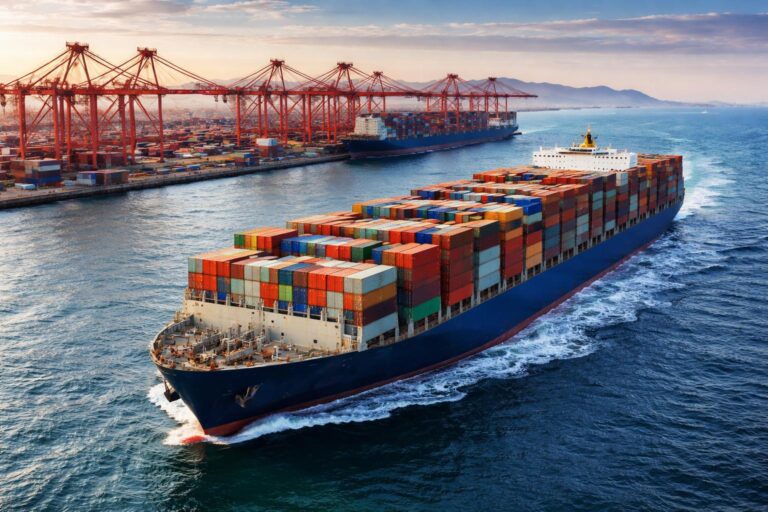
Explore sea freight from China to UK, including sea freight costs, transit times, ocean freight options, customs clearance, full container load...
Read guide →A Complete Overview of Shipping from China to the United Kingdom In today’s global economy, shipping from China plays a critical role for busines...
Learn more → Useful Resource DDP Shipping from China to UKShipping from China to the UK has become increasingly efficient and accessible, thanks to international logistics innovations and the rising popu...
Learn more →WhatsApp us