Related Guide
Shipping from China to the UK
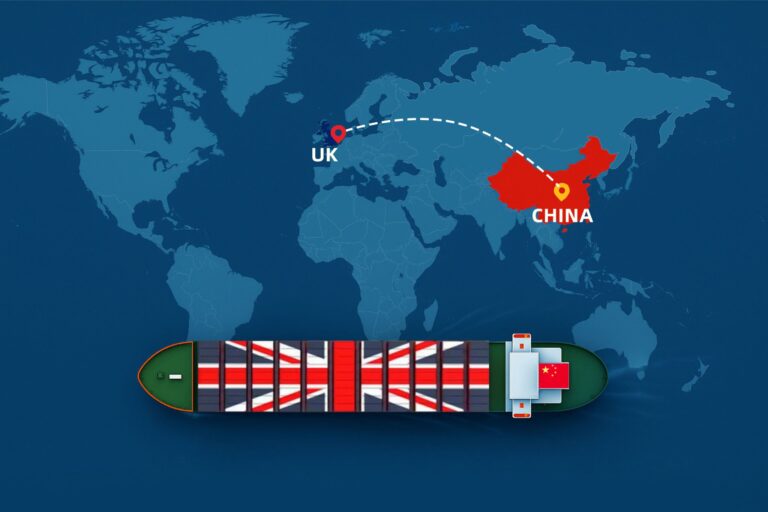
Shipping from China to the UK offers flexible air and sea freight solutions. Learn about delivery time, shipping costs, and customs clearance.
Read guide →

Shipping cost from China to UK in 2026 typically ranges from $3.5–$8 per kg for air freight, $6–$12 per kg for express shipping, and $100–$150 per CBM for LCL sea freight, depending on shipment size, delivery speed, and UK destination.
Shipping cost from China to UK depends on cargo weight, cargo volume, shipping method, delivery speed, departure city, UK destination postcode, customs requirements, and seasonal demand.
For most shipments, express shipping is best for small parcels and urgent goods, air freight works well for time-sensitive or valuable cargo, and sea freight is the most cost effective option for larger shipments or full container load cargo.
If you want a simpler shipping process, door to door shipping can cover supplier pickup, export handling, international transport, UK customs clearance, import tax, and final delivery to your address.
Shipping method / Mode
Transit time range
DDP / Door to Door
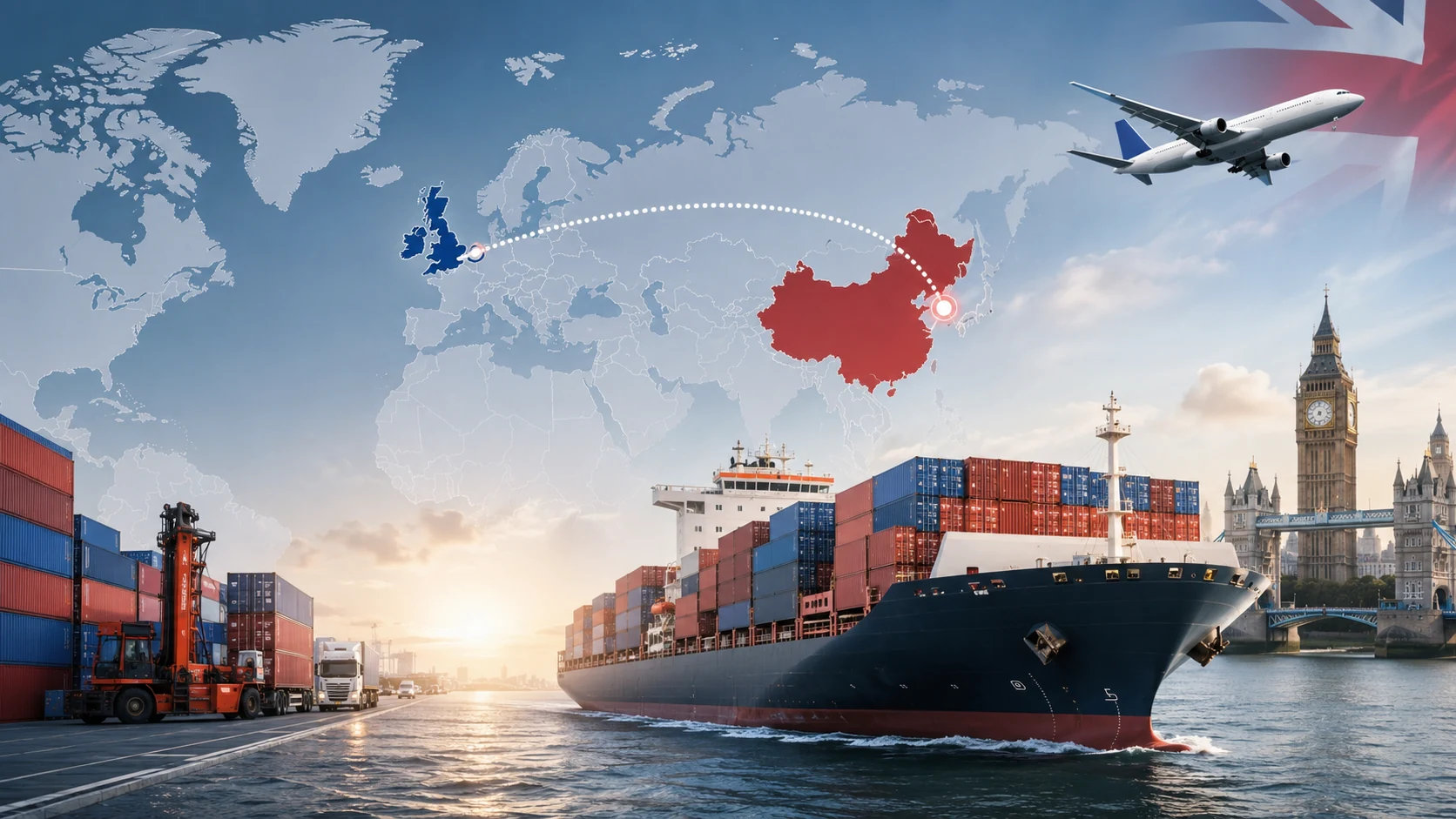
The average shipping costs from China to the UK vary depending on the shipping mode, chargeable weight, container load, shipping route, and final delivery requirements.
| Shipping Method | Estimated Shipping Cost | Transit Time | Best For |
|---|---|---|---|
| Express Shipping | $6–$12/kg | 3–5 days | Samples, small parcels, urgent orders |
| Express Air Freight | $5–$10/kg | 3–5 days | Time sensitive shipments |
| Standard Air Freight | $3.5–$8/kg | 5–7 days | 100kg+ air shipment, high value carg |
| LCL Sea Freight | $100–$150/CBM | 30–40 days | Smaller shipments, shared container space |
| 20ft Container | $1,200–$2,500 | 30–40 days | Full container load |
| 40ft Container | $2,000–$4,500 | 30–40 days | Larger shipments and bulk cargo |
| Door to Door Shipping | Depends on cargo details | Depends on method | Importers needing full service |
These shipping prices are market reference ranges. The final price may change because of fuel surcharges, port congestion, customs duties, handling fees, delivery postcode, packaging dimensions, and carrier space.
Different shipping services are charged in different ways. Couriers and airlines usually charge by gross weight or dimensional weight, while ocean freight is usually charged by cubic meter for LCL shipping or by entire container for FCL shipping.
Express shipping is the fastest option for small parcels, samples, documents, accessories, and e-commerce goods. Major providers include DHL, UPS, and FedEx.
Suitable for shipments that:
Express shipping typically delivers from China to the UK in 3–5 days. However, costs can be higher than standard air freight, especially for parcels with large dimensional weight.
Air freight is ideal for medium-size shipments that are too heavy for express courier but too urgent for sea freight. Common cargo includes electronics, fashion goods, medical supplies, spare parts, and other high-value items.
Key points:
Air freight is faster than sea freight but more expensive, suitable when balancing speed and cost is important.
Sea freight is the most cost effective option for transporting goods in larger volume. It is widely used for furniture, machinery, building materials, auto parts, consumer goods, and bulk commercial shipments.
Ocean freight from China to the UK normally takes around 30–40 days for standard shipping. In some cases, ocean freight may take 25–60 days depending on the shipping route, port congestion, sailing schedule, customs clearance, and final delivery address.
Sea freight has two main options:
LCL shipping: You share container space with other shipments.
FCL shipping: You use the entire container.
UK ocean freight is usually better when delivery speed is not urgent and the cargo volume is large enough to reduce the average freight costs.
Door to door shipping covers the entire process from supplier pickup in China to delivery at your UK address. This shipping solution can include export clearance, international shipping, import customs clearance, tax handling, and last-mile delivery.
Door to door is suitable for importers who want to avoid delays and reduce communication with multiple parties during the shipping process.
It is commonly used for:
Container shipping is a cost-effective way to transport large shipments from China to the UK. Costs vary depending on container size, departure port, destination port, seasonal demand, port congestion, and customs requirements.
Both 20ft and 40ft containers are commonly used for FCL, or full container load, shipments.
20ft Container: Suitable for medium-volume or dense cargo such as machinery, hardware, tiles, tools, and industrial goods. Estimated cost: $1,200–$2,500, depending on ports and season.
40ft Container: Suitable for larger shipments or bulkier goods such as furniture, textiles, packaging products, and consumer goods. Estimated cost: $2,000–$4,500, depending on ports and market conditions.
Choosing the right container size helps reduce the average unit shipping cost. A 20ft container is often better for heavy cargo, while a 40ft or 40HQ container is better for large-volume products.
LCL shipping is better for smaller shipments that cannot fill a full container. It allows importers to pay based on cubic meter instead of booking an entire container.
FCL shipping is better when:
As a simple rule, when your shipment becomes large enough, FCL often becomes more cost effective than LCL.
Most shipments from China to the UK move by sea freight, air freight, or express shipping. The best shipping route depends on your cargo type, delivery speed, shipping costs, and final delivery address in the UK.
For ocean freight, common departure ports in China include Shanghai, Ningbo, Shenzhen, Guangzhou, Qingdao, Xiamen, and Tianjin. In the UK, major ports include Felixstowe, Southampton, London Gateway, and Liverpool.
Air freight usually departs from Shanghai, Shenzhen, Guangzhou, Hong Kong, Beijing, or Zhengzhou and arrives at London Heathrow, Manchester, or other UK air cargo hubs. This route is suitable for high value, urgent, or time sensitive shipments.
For door to door shipping, the route usually includes supplier pickup in China, export handling, international transport, UK customs clearance, and final delivery to your warehouse, Amazon FBA center, or business address.

Shipping costs from China to the UK are not decided by one single rate. The final price is usually affected by cargo size, transport mode, route, customs requirements, and delivery conditions. That is why two shipments with the same weight may have different shipping costs if their volume, destination postcode, or customs process is different.
For air freight and express shipping, cargo weight and dimensional weight are key factors. Carriers charge based on the higher value between actual weight and volumetric weight, so large but lightweight cartons may cost more than expected. For sea freight, the cost is usually based on CBM for LCL shipping or container size for FCL shipping.
The shipping method also has a major impact. Express shipping is the fastest but usually the most expensive. Air freight is suitable for time-sensitive or high-value goods, while sea freight is more cost effective for larger shipments and full container load cargo.
Other factors can also increase the final price, such as:
To avoid hidden fees, importers should provide accurate cargo details, including product name, carton dimensions, total weight, packing list, commercial invoice, and HS code if available. This helps the freight forwarder calculate a more accurate cost breakdown and recommend the most suitable shipping solution.
When importing goods from China to the UK, shipping costs are only part of the total landed cost. Importers may also need to pay import duty, VAT, customs clearance fees, and other handling charges before the cargo can be released and delivered.
The exact amount depends on the product type, customs value, HS code, and applicable UK duty rates.
Most commercial shipments imported into the UK are subject to import duty and VAT. Import duty rates vary depending on the product category and UK Trade Tariff Commodity Code.
Key points include:
Before importing goods, it is important to verify the correct commodity code and applicable duty rates to avoid unexpected costs.
Accurate documentation helps ensure smooth customs clearance and reduces the risk of delays.
Common documents required for importing goods into the UK include:
Packing list
Bill of lading or air waybill
HS code or commodity code
EORI number
Product certificates or licenses (if required)
The commercial invoice should clearly show the seller, buyer, product description, quantity, value, currency, and trade terms. The packing list should include package quantity, dimensions, weight, and cargo details.
Many customs clearance problems are caused by incomplete paperwork or incorrect declarations. To avoid delays:
Proper preparation can help speed up customs clearance, reduce additional inspections, and ensure faster final delivery throughout the UK.
A shipping cost calculator can help estimate shipping costs from China to the UK before requesting a formal quote. It is useful for comparing different shipping methods, including air freight, sea freight, express shipping, and door-to-door services.
To get a more accurate estimate, you will usually need to provide:
Keep in mind that most online calculators only provide an estimated rate. The final price may vary depending on customs clearance, import duty, VAT, fuel surcharges, handling fees, and final delivery requirements.
For commercial shipments, working with an experienced freight forwarder is often the best way to obtain an accurate cost breakdown and choose the most cost-effective shipping solution.
A reliable freight forwarder can help compare different shipping services and recommend the best shipping solution for your cargo. This is especially important when importing goods that require customs documents, or time sensitive delivery.
When choosing a freight forwarder, check whether they can provide:
A good freight forwarder should not only provide shipping prices. They should also explain the shipping route, transit time, customs requirements, possible risks, and the most cost effective option for your cargo.
Shipping cost from China to UK depends on weight, volume, shipping method, customs clearance, and final delivery address. Express shipping may cost about $6–$12/kg, air freight may cost $3.5–$8/kg, LCL sea freight may cost $100–$150 per cubic meter, and a 20ft container may cost around $1,200–$2,500.
Sea freight is usually the cheapest way to ship larger shipments from China to the UK. For smaller shipments, LCL shipping may be more cost effective. For urgent small parcels, express shipping is faster but more expensive.
For small parcels, 1kg shipping from China to the UK is usually handled by express courier. The cost depends on courier service, package size, fuel surcharge, and delivery address. If the package is large, dimensional weight may be charged instead of actual weight.
Express shipping usually takes 3–5 days. Standard air freight takes about 5–7 days. Ocean freight usually takes 30–40 days. Rail freight may take around 25 days depending on the route and final delivery arrangement.
Shipping can be expensive because of fuel surcharges, seasonal demand, port congestion, container shortages, customs clearance, handling fees, and final delivery costs. Air freight and express freight are also more expensive because they offer faster delivery.
Useful freight, customs and importing resources related to this shipping guide.
Shipping from China to the UK offers flexible air and sea freight solutions. Learn about delivery time, shipping costs, and customs clearance.
Read guide →
Overall, understanding how long does it take to ship from China to UK helps importers plan efficient logistics, choose the best freight mode, and...
Read guide →
Explore sea freight from China to UK, including sea freight costs, transit times, ocean freight options, customs clearance, full container load...
Read guide →
Air Freight from China to UK Verified & Reviewed · Last updated June 2026 Air freight from China to UK is one of the fastest shipping methods for...
Read guide →Shipping from China to the UK has become increasingly efficient and accessible, thanks to international logistics innovations and the rising popu...
Learn more → Useful Resource Cost of Shipping 40ft Container from China to UK: 2025 Full GuideA Complete Overview of Shipping from China to the United Kingdom In today’s global economy, shipping from China plays a critical role for busines...
Learn more →WhatsApp us