
Related Guide
Door to Door Shipping from China
Door to door shipping from China by air, sea, rail or express. Compare DDP vs DAP, costs, transit times, customs clearance and final delivery.
Read guide →

Door to door shipping to the UK lets one provider handle pickup, main transport, customs clearance, and final delivery to your address.
This 2026 guide explains the door to door shipping process, compares shipping costs and transit times across courier, air freight, and sea freight, and shows how to choose a reliable freight forwarder for UK shipping while reducing customs delays and unexpected fees.
Shipping Services
Shipping Costs and Rates
Transit Times and Delivery Speed
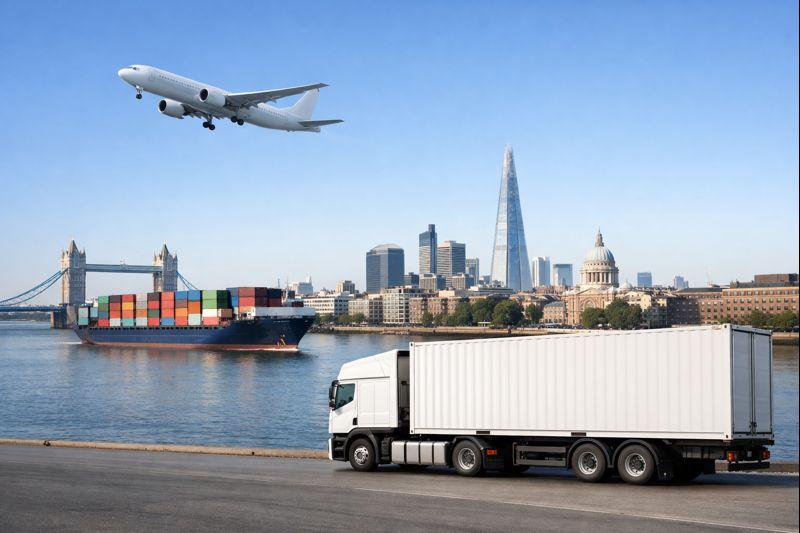
Door to door shipping means your shipment is collected from a pickup address and delivered to a final UK address under a single coordinated service. Instead of arranging trucking, export clearance, international transport, and last-mile delivery separately, one logistics provider manages the entire process end to end.
Most door to door shipping UK services fall into two lanes. Courier services are built for parcels and documents with fast scan-based tracking. Freight services are built for cartons, pallets, and shipping cargo, often involving consolidation and broker coordination.
You typically choose between:
Courier services for small parcels and urgent deliveries where tracking and delivery speed are the priority
Freight shipping for pallets, mixed cartons, and commercial volumes where consolidation and cost control matter most
Door to door is a strong fit when you want simplicity and fewer handoffs. It is especially useful when you do not want to manage multiple parties or when customs clearance needs a consistent workflow.
In practice, it is most useful when:
You want one provider to manage the shipping process from pickup to final delivery
You ship regularly and want repeatable steps for future shipments
You want fewer delays caused by document mistakes or handoff gaps
Use this table first. It prevents overpaying and reduces planning mistakes.
| Shipment Type | Best Option | Why It Works | Typical Use Case |
|---|---|---|---|
| Small parcels, documents | Express courier | Fast tracking, simpler customs clearance process | samples, urgent replacements |
| Mid-sized cartons with deadlines | Air freight service | Best balance of speed and shipping costs | restocks, seasonal inventory |
| Heavy or bulky cargo | Sea freight and ocean freight | Lowest cost per unit for large, heavy shipments | inventory, equipment |
| Pallets and mixed cartons | Freight forwarder service | Consolidation and stronger control of customs requirements | B2B shipping cargo |
| Household goods and personal effects | Specialist mover | Built for relocation workflow and packing | personal use moves |
If you are planning shipments regularly, this decision logic stays the same. What changes most is quote structure, peak-season capacity, and how duties and VAT are collected at delivery.
A reliable shipping process is repeatable and document-driven. The goal is simple: move the shipment without handoff confusion and clear UK customs with minimal friction. If you set up your shipment data correctly before pickup, the rest of the workflow becomes far more predictable.
Start with carton count, dimensions, and weight. If you are shipping freight, confirm pallet size, stackability, and handling requirements. Incorrect measurements distort quotes, increase shipping costs, and create last-minute rework.
Before booking, gather:
Carton count, dimensions, and gross weight
Product category and declared value
Pickup location and UK delivery address type
Whether you need delivery to a business address or a home address
Pick express if you need the fastest delivery for a parcel. Choose air freight when timing matters but the shipment is larger than a typical parcel. Choose sea freight when the cargo is heavy, bulky, or you need the lowest cost per unit.
Practical guidance:
Express is ideal for urgent parcels and documents
Air freight is ideal for time-sensitive cartons and higher-value cargo
Ocean freight is ideal for bulky shipping cargo and planned inventory moves
Most delays start here. Prepare a commercial invoice and packing list that match each other line by line. Use clear product descriptions, accurate values, and include HS codes where required. This is the fastest way to reduce customs delays later.
The provider arranges pickup, checks packaging condition, and supports export documentation. A good provider will spot missing data early and fix it before the shipment is in motion, which can save time and prevent avoidable delays.
Your shipment moves by courier network, air shipping, or ocean freight. Tracking visibility is usually best with courier networks. Freight shipments often use milestone tracking, which can still be effective when the milestones are clear and updates are consistent.
A customs declaration is filed, the shipment is assessed, and any duties or VAT are handled according to your service structure. After release, final delivery is completed to a business address, fulfillment center, or the recipient’s home address.
Pickup-to-delivery service does not automatically mean all taxes are included. Many cheap quotes become expensive because responsibility for import duties and VAT is unclear. This is one of the biggest causes of unexpected fees and last-mile delays.
DDP shipping to the UK means the shipper pays import duties and VAT on the buyer’s behalf. This is often preferred for eCommerce and first-time importers because it reduces payment collection at the destination.
DDP is commonly chosen when:
The recipient is an end customer and you want fewer delivery holds
You want predictable delivery speed for customer experience
You want fewer surprises in the final landed cost
DAP means the provider delivers to the destination address, but the importer or receiver pays UK import VAT and any duties. DAP can look cheaper upfront, but it can create customs delays if the recipient does not pay promptly or importer details are incomplete.
Before booking, require one clear statement in writing:
Who pays duties and who pays VAT
When payment is collected and what triggers a hold
Whether clearance and brokerage fees are included
Your shipping mode determines delivery speed and pricing structure. The best choice is the one that matches your cargo and timeline, not the one that sounds fastest.
Express shipping is generally more reliable and quicker than standard mail services. It is designed for parcels and documents, with strong tracking and consistent delivery windows. If the shipment is small and time-critical, this is usually the simplest option.
Key fit:
Small parcels, samples, replacement parts
Tight delivery deadlines
High tracking visibility needs
Air freight is typically faster but more costly compared to ocean freight. It is ideal for urgent replenishment, high-value goods, and time-sensitive commercial cargo. For many businesses, air freight is the best “middle lane” between express and sea freight.
Key fit:
Mid-sized cartons with deadlines
Seasonal inventory and restocks
Time-sensitive commercial shipments
Sea freight and ocean freight are the most cost-effective options for large and heavy shipments, though transit times are longer. This is where you get the lowest unit cost when you can plan ahead and manage inventory timing.
Key fit:
Heavy cargo and bulky cartons
Planned inventory shipments
Container load moves or higher-volume consolidation
Transit times for shipping to the UK can be affected by pickup location, shipment size, season, and customs inspection risk. The cleaner your documents, the less likely you are to lose time at the border. If you ship us to the uk often, build realistic buffers during peak season and holiday windows.
Typical planning ranges:
Express courier often delivers in about 1 to 4 business days on many lanes
Economy courier options often take 4 to 10 business days
Air freight shipments often land around 5 to 12 days when handling and clearance are included
Sea freight and ocean freight typically require 25 to 45 days, depending on route and destination delivery complexity
Shipping by sea can take around 30 to 40 days on many routes. Air shipping can take as little as 1 to 5 days in flight time, but pickup-to-delivery timelines include handling and customs clearance.
To protect delivery speed, focus on:
Early document preparation
Accurate consignee details and reachable phone numbers
Fast response when customs officials request clarification
Shipping costs depend on weight, volume, service level, and how complex clearance will be. They also change based on who pays import duties and VAT, which is why DDP and DAP quotes can look very different. If your goal is cheapest shipping, you still need to compare the full cost structure and risk of added fees.
For parcels and air shipping, pricing is often based on chargeable weight, meaning actual weight versus volumetric weight. For ocean freight, pricing depends on LCL volume or container booking for FCL. For freight shipping, pickup and last-mile conditions can add surcharges that affect shipping costs.
Check these cost drivers in every quote:
Chargeable weight rules for air and express
LCL volume and minimum charges for sea freight
Pickup and delivery fees, including residential delivery
Clearance and broker fees
Fuel surcharges and seasonal capacity changes
Insurance and special handling for dangerous goods
Cheapest shipping often becomes expensive when there are holds, storage fees, or surprise tax collection at delivery. A better target is the lowest total cost that still meets your delivery speed needs.
To save time and reduce cost:
Optimize carton dimensions to reduce volumetric pricing
Consolidate shipments to reduce repeated handling fees
Use sea freight for slow movers and air freight for fast movers

UK customs regulations shape how goods are released for delivery and how charges are assessed. Door to door shipping can handle filing and communication, but customs outcomes are most predictable when invoice details, HS codes, and declared values are consistent.
VAT is often the biggest import charge. The standard VAT rate in the UK is 20% for most goods and services. Some categories may qualify for reduced VAT at 5%, and some goods are zero-rated at 0% depending on the product type and rules.
Import duty is not a single fixed number. It depends mainly on the HS code, the customs value, and the tariff treatment for origin. As a simple reference example used in tariff listings, some apparel lines such as cotton T-shirts under HS 6109 are commonly shown around 12%.
Customs holds usually happen when product identity, classification, or value cannot be confirmed quickly. To clear customs smoothly:
Use specific product descriptions and stable HS codes across documents
Keep declared values realistic and consistent with commercial records
Ensure the commercial invoice and packing list match the shipment details exactly
The customs clearance process in the UK usually involves a customs declaration supported by a commercial invoice and packing list. A clean set of customs documents is the fastest way to clear customs and avoid delays, especially for us to the uk shipping that runs on tight schedules.
Most shipments should have these ready before pickup:
Commercial invoice with accurate descriptions, values, and currency
Packing list with carton count, weights, and dimensions
HS codes where required
Consignee phone number and correct address format
Importer details including EORI for business imports
Depending on shipment type, you may also need customs forms or supporting declarations for regulated goods.
You do not need complicated tactics. You need consistency and clarity so customs officials can verify the entry quickly.
Practical ways to avoid delays:
Avoid vague invoice lines like “accessories” or “gift”
Keep invoice values consistent with payment records
Respond quickly if the broker requests clarification
Standardize descriptions for future shipments to save time
Online booking tools make it easier to compare shipping rates, but they only work when your shipment measurements are accurate. If you guess weight or dimensions, the quote will be corrected later and shipping costs will rise.
Online booking is most reliable when:
You have final carton dimensions and weights
You are shipping a standard parcel lane
You are comparing two service tiers for delivery speed
Digital tools can help you save time on repeat us to the uk shipments by storing shipment profiles and document templates.
For larger freight, container load planning matters. Even if you are not using a full container, consolidation can reduce cost per unit and stabilize shipping rates.
If you ship regularly:
Consolidate multiple suppliers into one shipment
Plan sea freight cycles for slow movers
Use air shipping for urgent inventory gaps
Some shipments require extra planning because customs requirements differ by scenario. This is where a freight forwarder often adds real value in international freight workflows and global trade shipping lanes.
Northern Ireland may follow different practical requirements than Great Britain depending on product type and route. If you ship to Northern Ireland, confirm the destination region early and verify that your provider supports the correct customs workflow.
Relocation shipments can follow different rules than commercial cargo. If you are shipping household goods for personal use, confirm what evidence and documentation is needed to keep clearance smooth.
Batteries, liquids, cosmetics, and regulated items can require special handling and documentation. Confirm acceptance requirements before booking to avoid delays, rework, or rejected shipments.
A reliable partner is not just the lowest rate. For UK shipping, the best providers combine quote transparency, customs competence, and responsive support. This matters even more for us to the uk shipments where customers expect fast delivery and predictable handling.
What to look for in a reliable partner:
Clear quote structure and clear responsibility for VAT and duties
Strong documentation support and fast customs query responses
Service match to your delivery timeline and shipping needs
Insurance options and a clear claims process for valuable cargo
If you want to scale future shipments, choose a provider who can support repeat workflows and help you save time with consistent templates and processes.
Cheapest shipping depends on shipment size and urgency. Lightweight parcels often fit economy courier tiers, while heavy cargo usually favors sea freight or ocean freight. The cheapest option is the one that stays low after fees and taxes, not just the lowest headline rate.
Common reasons include incomplete customs documents, vague product descriptions, inconsistent values, and missing or incorrect HS codes. A clean customs clearance process reduces holds and helps you clear customs faster.
For business imports, an EORI is commonly required for declarations. Confirm importer readiness early, especially for repeat us to the uk shipments.
Use consistent invoices, accurate HS codes, complete customs documents, and respond quickly to customs questions. Standardizing product descriptions for future shipments is one of the simplest ways to save time and reduce delays.
Sometimes. It depends on how the service is quoted. Some door to door options include VAT and duties in the price, while others require the receiver to pay them on arrival, which can cause a delivery hold.
Useful freight, customs and importing resources related to this shipping guide.
Door to door shipping from China by air, sea, rail or express. Compare DDP vs DAP, costs, transit times, customs clearance and final delivery.
Read guide →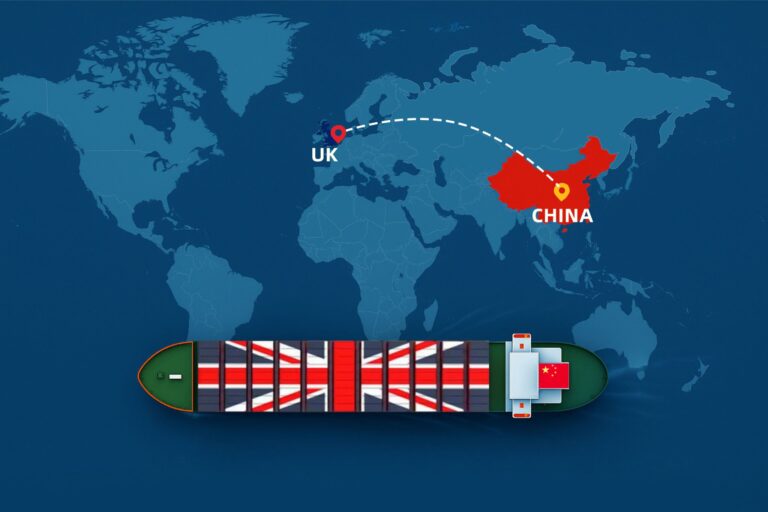
Shipping from China to the UK offers flexible air and sea freight solutions. Learn about delivery time, shipping costs, and customs clearance.
Read guide →
A Complete Overview of Shipping from China to the United Kingdom In today’s global economy, shipping from China plays a critical role for busines...
Read guide →
Explore sea freight from China to UK, including sea freight costs, transit times, ocean freight options, customs clearance, full container load...
Read guide →Air Freight from China to UK Verified & Reviewed · Last updated June 2026 Air freight from China to UK is one of the fastest shipping methods for...
Learn more → Useful Resource Sea Freight vs Air Freight from China to the UKSea Freight vs Air Freight from China to the UK (2026) Verified & Reviewed · Last updated February 2026 If you’re comparing sea freight vs air fr...
Learn more →WhatsApp us