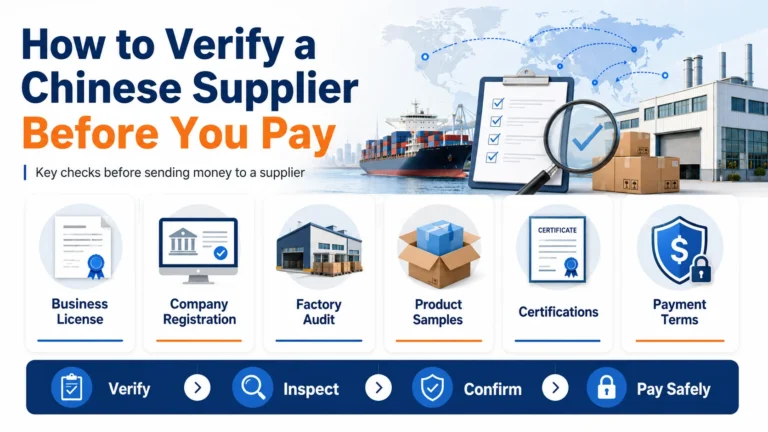
Related Guide
How to Verify a Chinese Supplier Before You Pay
How to Verify a Chinese Supplier Before You Pay Verified & Reviewed · Last updated July 2026 Before you pay a Chinese supplier, do not rely only...
Read guide →

Importing makeup and cosmetics into the US requires more than booking freight. Importers need to understand FDA rules, cosmetic labeling, customs clearance, and the documents required for compliant entry.
This guide explains how importing cosmetics into the United States works, including FDA review, CBP entry requirements, cosmetic labeling standards, HTS classification, duties, and the most common reasons cosmetics shipments are delayed or refused entry.
FDA / CBP compliance
Labeling requirements
HTS / Duties / Customs
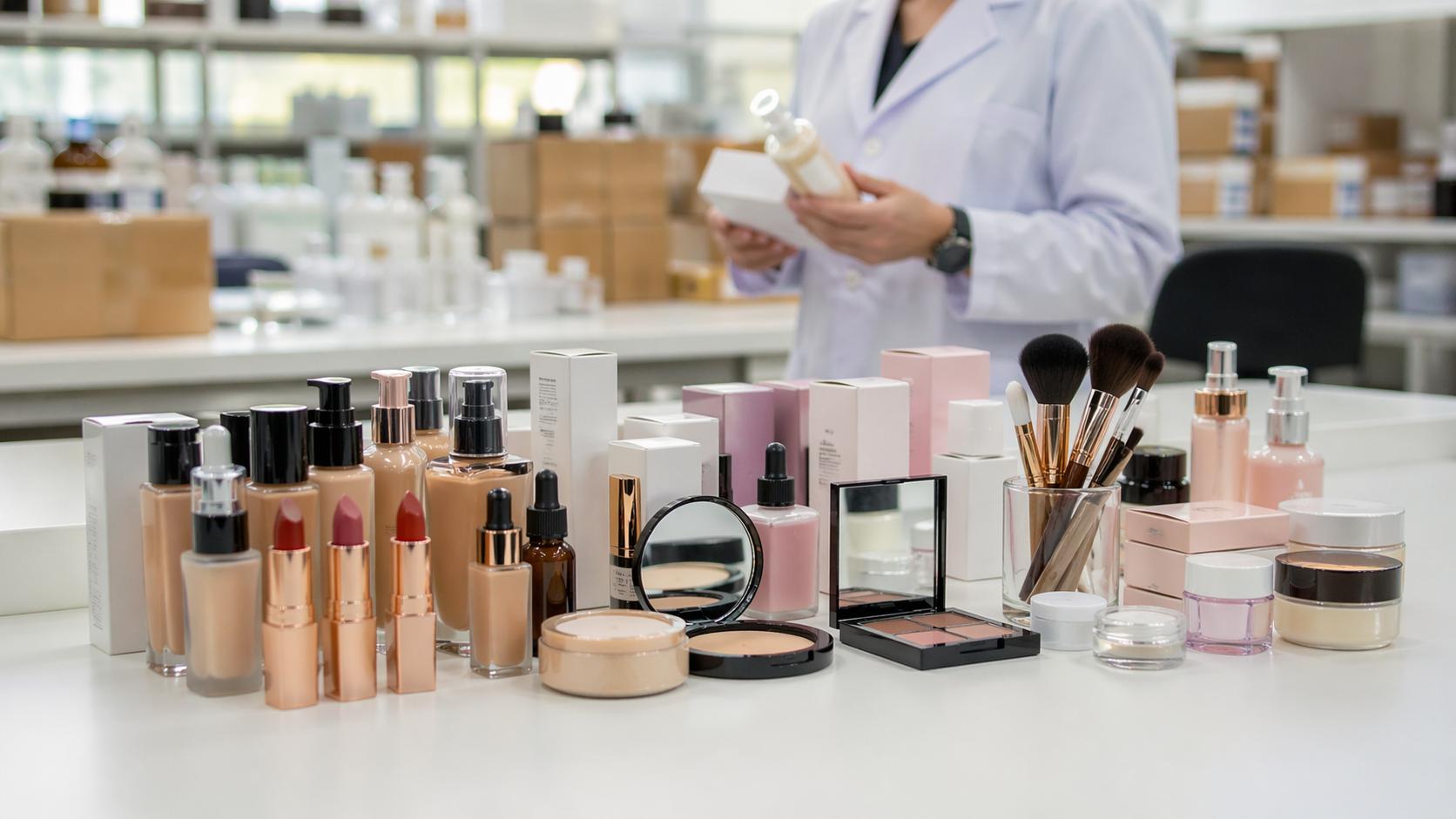
Before importing cosmetics, the first step is understanding how the product is viewed under US rules. That decision affects every later stage, from labeling and customs paperwork to FDA review and possible duty treatment.
In general, a cosmetic is a product intended for cleansing, beautifying, promoting attractiveness, or altering appearance. This includes many cosmetic products commonly imported into the United States, such as lipstick, eye shadow, foundation, blush, face powder, facial cleanser, moisturizer, serum, and other beauty and skincare products.
The key issue is intended use. If a product is sold as a beauty product, it will usually remain in the cosmetics category. If the same product claims it can prevent disease, treat medical conditions, heal damaged skin, reduce wrinkles in a therapeutic way, or change body structure or function, it may be regulated as a drug rather than a cosmetic.
That distinction matters because unlike drugs, most cosmetics do not require pre market approval. Once the product falls into drug territory, the importer may face far stricter FDA requirements, and in some cases the goods can be treated as unapproved new drugs.
For that reason, importers should review product classification carefully before shipment. Product identification, external features, display label wording, website copy, and ingredient positioning all contribute to how the product is understood at import.
The FDA is the US agency that oversees cosmetic safety, labeling, ingredient compliance, and product claims, which is why importers need to pay attention to its rules before shipping.
Most cosmetics do not require pre market approval before they are imported into the United States. That is the general rule for standard cosmetic products. However, this does not mean there are no FDA regulations.
Instead, importers are responsible for making sure cosmetic products are safe, properly labeled, and compliant before they enter the US market. This is why casual supplier claims such as “FDA approved” are often misleading in the cosmetics industry. For standard cosmetics, the better question is whether the product complies with FDA requirements.
Some products face closer review than others. Color additives are one example, especially when they are not permitted for the intended use. Products with health-related or therapeutic claims may also receive stricter attention because they may no longer be treated as standard cosmetics.
So while most cosmetics do not require pre market approval, importers still need to verify compliance before shipping.
When importing makeup and cosmetics into the US, both the FDA and US Customs and Border Protection are involved in the review process. CBP mainly focuses on import entry, duties, and customs documentation, while the FDA focuses on whether the products meet US safety and labeling requirements.
The FDA mainly reviews whether cosmetic products are compliant, safe, and properly presented for the US market. Its main checks usually include:
Product classification: whether the item is a cosmetic, a drug, or both. Products with treatment claims or certain SPF claims may face stricter review.
Labeling compliance: whether the label is truthful, not misleading, and properly presented in English.
Ingredient declaration: whether ingredients are listed correctly and in the proper order.
Responsible business information: whether the manufacturer, packer, or distributor details are clearly shown.
Net quantity statement: whether the package clearly shows the amount of product.
Color additives: whether the product uses color additives permitted for the intended use.
MoCRA-related compliance: whether the business has considered facility registration, product listing, and other current compliance obligations where applicable.
CBP focuses more on whether the goods can be legally entered into the United States and whether the shipment has been declared correctly. Its main checks usually include:
HTS classification: whether the goods are classified under the correct Harmonized Tariff Schedule code.
Country of origin: whether the product and documents clearly identify the origin country.
Entry documents: whether the commercial invoice, packing list, bill of lading or air waybill, and other filing details are complete.
Duties and fees: whether applicable duty, merchandise processing fee, and other import charges have been properly handled.
Customs bond: whether a customs bond is required for the shipment and has been arranged correctly.
Cosmetic labeling is one of the biggest risk points in cosmetics imports. In many real shipments, labeling causes more problems than freight itself.
FDA regulates cosmetic labeling, and the required labeling must be truthful, not misleading, clearly presented, and easy to review. Labels for cosmetics imported into the United States should be prepared with real care, especially for foreign cosmetics coming from suppliers more familiar with other countries than with US standards.
A properly labeled cosmetic product should generally include:
identity statement
net quantity
ingredient declaration
name and place of business of the manufacturer, packer, or distributor
other required information where applicable
Under labeling rules, the required information should be clear, legible, and presented in English. This is a basic but critical standard for cosmetics entering the United States
The ingredient declaration is especially important. Cosmetic ingredients are generally listed in descending order, and ingredients present in smaller amounts may appear after the major ingredients according to applicable rules. Importers should also pay attention to international nomenclature cosmetic ingredient naming practices so the declaration aligns with what is expected in the US market.
For beauty and skincare products, this is not a minor detail. A weak ingredient declaration can slow customs clearance, attract scrutiny, and create doubts about whether the product is properly labeled.
The most common cosmetic labeling problems include incomplete ingredient declaration, missing net quantity, weak product identification, unsupported claims, inconsistent inside and outside packaging, and display label wording that suggests medical use.
This is especially important for skincare products, eye shadow, suntan lotion, and other cosmetic products where claims, external features, and ingredients present can quickly attract closer review. A product may look commercially polished and still fail basic labeling requirements if the required labeling is incomplete.
For most cosmetics imports, the most sensitive compliance areas are cosmetic ingredients, color additives, and product claims.
Color additives are one of the most heavily watched issues in cosmetics. Importers should not assume that ingredients allowed in other countries are automatically acceptable in the United States. If a product contained noncompliant color additives, the shipment can be blocked even if the rest of the formula appears normal.
This is particularly relevant for importing makeup such as eye shadow, lipstick, blush, and other color-heavy beauty products.
The same caution applies to cosmetic ingredients more broadly. Some substances are prohibited or restricted, and importers should not rely only on supplier confidence. For foreign cosmetics, pre-shipment review is often far cheaper than dealing with a held shipment after arrival.
A serious importer should confirm that the ingredients present are suitable for cosmetic use in the United States, that the formula does not create hidden safety concerns, and that the product classification remains accurate.
Drug claims are another major danger point. A cosmetic product marketed only for appearance will usually remain a cosmetic. But if the wording suggests it can prevent disease, treat medical conditions, or deliver therapeutic results, the product may be treated as a drug. That can create a much higher compliance burden.
For importers, this is one of the easiest mistakes to avoid and one of the most expensive to ignore.

A smooth customs clearance process starts before the goods arrive. By the time a cosmetics shipment lands, most of the important decisions should already have been made.
For most cosmetics imports, the key documents include:
bill of lading or air waybill
customs bond when required
importer and consignee details
country of origin
product description
Harmonized Tariff Schedule classification
The commercial invoice should not be vague. Using only the word “cosmetics” is often too broad. A better approach is to describe the products clearly, such as facial cleanser, serum, eye shadow palette, lipstick set, or skincare products. The packing list should match the actual shipment details exactly.
For many formal entries, a customs bond is required. This is a practical point importers should confirm early, because the customs bond is not something to leave until the cargo is already at the port. If it is not in place when needed, customs clearance can slow down quickly.
A customs broker plays a crucial role in cosmetics imports. A good customs broker helps with tariff classification, entry filing, document accuracy, and coordination with customs and border protection requirements. For importers new to importing cosmetics, this support often reduces delays, storage fees, and filing errors significantly.
For cosmetics importers, the Harmonized Tariff Schedule is one of the key factors in total landed cost. It affects how the product is classified at entry, what duty rate may apply, and what additional import fees may need to be paid. That is why correct tariff classification is not just a customs formality. It directly affects compliance, clearance, and cost planning.
Many cosmetics, beauty products, and skincare products are commonly classified under HTS Chapter 33, especially heading 3304, which generally covers beauty or make-up preparations and preparations for the care of the skin.
Common examples under this category may include:
3304.10.00 — lip makeup preparations, such as lipstick and lip gloss
3304.20.00 — eye makeup preparations, such as eye shadow and mascara
3304.30.00 — manicure and pedicure preparations, such as nail polish and nail remover
3304.91.00 — powders, including pressed and loose face powder
3304.99.50 — other cosmetic or skincare products, such as creams, lotions, sunscreens, and similar items
These examples can help importers understand the general structure of cosmetics classification, but the final HTS code should still be confirmed based on the actual product, formula, and intended use.
Duty is usually calculated based on the product’s customs value and depends largely on the HTS classification and country of origin. For many cosmetic products, duty rates may be low, and some goods may qualify for duty-free treatment. However, not all products are treated the same.
Importers should pay attention to:
the general duty rate for the product
whether any special duty treatment applies
whether additional tariffs apply based on origin
whether the item may be classified as a drug or medicated product instead of a cosmetic
If the goods are sourced from countries subject to additional trade measures, the final duty cost may be significantly higher than expected.
In addition to duty, CBP may also collect other import-related charges. The most common ones include:
Merchandise Processing Fee
usually applies to formal customs entry
may also apply in different ways depending on entry type and shipment value
Harbor Maintenance Fee
applies to qualifying ocean shipments
does not apply to air freight in the same way
Other possible costs may include customs broker fees, inspection-related charges, and storage fees if customs clearance is delayed. Even when duty is low, these additional import fees can still affect profit margin if they are not included in landed cost planning.
Most cosmetics shipment problems come from a small number of repeat mistakes.
Labeling issues
If the product is not properly labeled, if the ingredient declaration is incomplete, or if the required information is misleading or weak, the shipment may be delayed. Cosmetic labeling remains one of the most common failure points.
Product claims and classification issues
If the product marketed language creates drug claims, or if the intended use is unclear, the shipment may face much closer review. Confusion between cosmetics and drugs is a major source of refused entry risk.
Filing and documentation mistakes
Incomplete commercial invoice details, weak product descriptions, missing customs bond arrangements, wrong tariff classification, or poor coordination with the customs broker can all delay release. If problems are not fixed quickly, the cargo may accumulate storage fees or be refused entry entirely.
No. Most cosmetics do not require pre market approval, but they still must comply with FDA regulations, safety expectations, and cosmetic labeling requirements.
No. Product classification depends on intended use, ingredients, and product claims. Some beauty products may be treated as drugs if they make therapeutic or disease-related claims.
The most common documents are the commercial invoice, packing list, bill of lading or air waybill, customs bond when required, country of origin details, and Harmonized Tariff Schedule classification.
Common reasons include labeling problems, noncompliant ingredients, color additives issues, drug claims, inaccurate customs filing, and weak product classification.
Not always. Many products may be duty free or low duty, but treatment depends on tariff classification, product type, and country of origin.
Useful freight, customs and importing resources related to this shipping guide.
How to Verify a Chinese Supplier Before You Pay Verified & Reviewed · Last updated July 2026 Before you pay a Chinese supplier, do not rely only...
Read guide →
Introduction: Why Import Packaging Supplies from China How to import and ship packaging supplies from China is a question many businesses ask whe...
Read guide →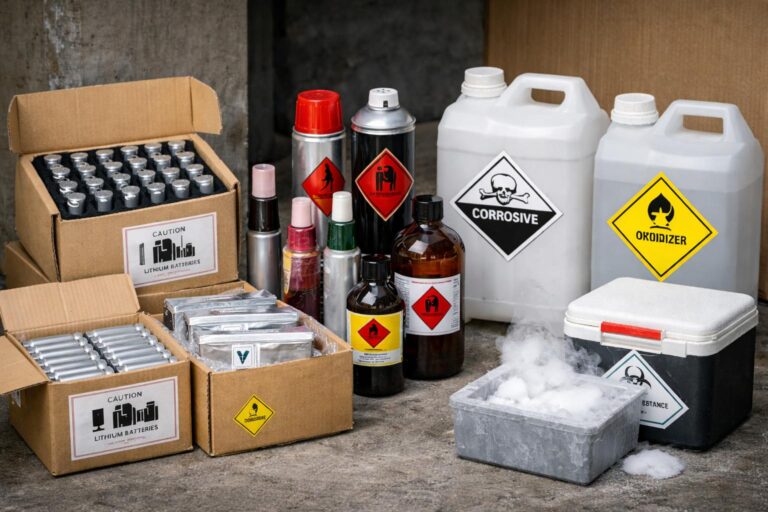
Shipping Dangerous Goods From China Verified & Reviewed · Last updated February 2026 Shipping dangerous goods from China requires strict complian...
Read guide →
A Material Safety Data Sheet (MSDS) is essential for shipping hazardous materials, ensuring that proper safety guidelines are followed during han...
Read guide →Importing goods from China can be highly profitable—but only when you understand the necessary documents and import requirements. Whether you’re...
Learn more → Useful Resource Customs Inspection GuideCustoms Inspection Guide: Holds, Inspection Process, and Smooth Clearance Verified & Reviewed · Last updated January 2026 Customs inspections are...
Learn more →WhatsApp us