
Related Guide
Kitchen Cabinet Shipping from China
Kitchen Cabinet Shipping from China: Complete Import Guide Verified & Reviewed · Last updated May 2026 Kitchen cabinet shipping from China requir...
Read guide →

Shipping kitchen cabinets from China to USA requires careful planning across product sourcing, packaging, shipping methods, customs clearance, and final delivery. Because cabinets are bulky, fragile, and often customized, buyers need to control both logistics and product details from the start.
This guide explains how to ship kitchen cabinets from China to USA, including how to choose the right shipping method, reduce shipping costs, prepare packing lists, manage customs clearance, and avoid common problems when importing kitchen cabinets for residential or commercial projects.
Shipping method
Packaging & Packing List
Customs Clearance

Many buyers choose kitchen cabinets from China because Chinese kitchen cabinet manufacturers can offer flexible customization, stable production capacity, and cost effective pricing. Compared with many local markets, China gives buyers more options in style, materials, hardware, and finish.
For many customers, the main advantages include:
competitive prices
custom kitchen cabinets based on project drawings
large production capacity
wide choice of materials and finishes
easier sourcing for full-house cabinetry and related furniture
better value for residential and commercial business projects
Chinese kitchen cabinets are commonly used in:
new kitchen renovation projects
apartment and villa developments
wholesale and distribution business
contractor purchasing programs
showroom and retail cabinet sales
For buyers who manage the process carefully, importing kitchen cabinets can be both practical and profitable.
Choosing a reliable supplier is the most important thing at the beginning of the process. Even if shipping is arranged well, poor factory management can still cause quality issues, missing parts, weak packaging, and delivery problems.
A supplier with export experience usually understands production planning, packaging, document preparation, and communication better than a factory that mainly serves the domestic market.
You should confirm whether the supplier has experience with:
cabinets from China shipped to the USA
custom kitchen cabinets for overseas projects
export packing standards
packing lists and shipping marks
hardware and accessory matching
communication in English during production
Before placing an order, ask the supplier to confirm:
cabinet box materials
door panel materials
finish options
hardware brands
countertop options if included
installation accessories
assembled or flat-pack solutions
This step helps buyers compare quality, style, and production ability more accurately.
Good service is not only about quick replies. It also means the supplier can explain details clearly, handle changes professionally, and respond to problems during production and shipping.
A strong supplier should show:
clear communication
organized quotations
detailed drawings or specifications
stable production schedule
willingness to solve problems
understanding of specific requirements
There are different ways to find chinese kitchen cabinet manufacturers, and each sourcing channel has its own advantages.
Online sourcing is often the first step for many importers. It makes it easier to compare factory profiles, styles, materials, and pricing. However, buyers should not rely only on online product photos.
Online sourcing works best when you also verify:
factory background
product consistency
service level
communication quality
export experience
Canton Fair and other trade shows are useful for buyers who want to compare suppliers face to face. Trade shows allow you to review materials, cabinetry details, hardware, and finish quality more directly.
These events are especially useful when you want to:
meet multiple suppliers in one trip
compare product styles quickly
discuss custom requirements in person
build long-term sourcing relationships
For larger projects, a factory visit can be very helpful. It allows buyers to inspect production, packaging, and quality control more directly.
During a visit, pay attention to:
workshop organization
machinery and equipment
raw material storage
finished product protection
packaging method
staff coordination
quality control system
Not all kitchen cabinets are shipped in the same way. Buyers should determine the right product type before discussing logistics, cost, and installation.
Flat-pack cabinets are packed in cartons and shipped in pieces. They are popular because they help save space in the container and reduce shipping costs.
Flat-pack cabinets are often suitable for:
buyers focused on freight efficiency
wholesale orders
large volume projects
customers with installation teams
Assembled cabinets arrive in completed form and require less installation work. However, they occupy more space and usually increase shipping cost.
They are commonly chosen when:
labor cost at destination is high
installation speed matters
the buyer prefers less on-site assembly
Custom kitchen cabinets need the most planning because they involve exact measurements, specific materials, unique finishes, and project-based layouts.
Before production, buyers should confirm:
drawings
dimensions
cabinet codes
hardware details
finish samples
countertop coordination
installation requirements
The best shipping method depends on cargo volume, budget, urgency, and final delivery needs. Since kitchen cabinets are bulky and heavy, sea shipping is usually the main option.
Full container shipping is usually the best choice for medium and large cabinet orders. It keeps the shipment together and reduces repeated handling during transit.
Main benefits of full container shipping:
better cargo protection
lower handling risk
easier loading plan
stronger packaging control
more cost effective for larger orders
This option is often ideal for:
full kitchen projects
villa and apartment orders
wholesalers
repeat import business
LCL shipping is used when the cargo volume is too small for a full container. It may be practical for sample shipments or small projects, but it creates more handling points.
Possible disadvantages include:
higher risk of damage
slower movement
more complex destination handling
less control over loading conditions
Air shipping is not suitable for full cabinets because the cost is too high. It is mainly used for:
urgent replacement doors
missing hardware
small accessories
sample materials
Shipping costs are a key part of importing kitchen cabinets from China to the USA, but ocean freight is only one part of the total expense. Since cabinets are bulky and often shipped in large volumes, buyers should look at the full landed cost, including freight, customs clearance, duties, destination charges, and final delivery.
| Shipping Method | Destination | Estimated Freight (March 2026) | Transit Time |
|---|---|---|---|
| 20GP | U.S. West Coast (LA/LB) | $1,900–$2,300 | 15–20 days |
| 40HQ | U.S. West Coast (LA/LB) | $2,200–$2,700 | 15–20 days |
| 40HQ | U.S. East Coast (NY/SAV) | $3,100–$3,400 | 25–35 days |
| LCL | Major U.S. ports | about $110/m³ | 20–40 days |
Besides ocean freight, the total shipping cost can also be influenced by:
flat-pack or assembled cabinet design
shipment volume
packaging level
customs clearance fees
import duties and related charges
destination handling
local delivery and unloading
In general, flat-pack cabinets are more cost-effective to ship because they make better use of container space. For medium and large orders, a 40HQ is usually the better option, as it offers much more capacity without a proportionally higher freight cost.

Packaging is critical when shipping kitchen cabinets. Even high quality products can arrive damaged if the packaging is weak or poorly organized.
Cabinets are made of panels, doors, edges, glass parts, hardware, and finished surfaces. These materials can be damaged easily during loading, shipment, unloading, and local delivery.
A durable packaging plan should include:
thick cartons
foam protection
corner guards
moisture protection
internal separation
clear labels
secure outer packing
Packing lists are just as important as packaging itself. A clear packing list helps buyers, warehouse teams, and installers understand exactly what is in the shipment.
Good packing lists should show:
carton numbers
item descriptions
quantities
room or cabinet reference
hardware or accessory identification
For custom kitchen cabinets, strong packing lists help reduce confusion during installation and make site checking faster.
Customs clearance is one of the most sensitive parts of importing kitchen cabinets. A shipment can be delayed even when production and shipping are completed correctly if the importer is not ready with documents and product details.
Most cabinet shipments require:
commercial invoice
packing lists
bill of lading
shipper and consignee details
product description
delivery information
Buyers should prepare customs clearance before the shipment arrives. Waiting until the container reaches the destination often leads to delays, storage costs, and unnecessary pressure.
Early customs planning helps with:
document accuracy
smoother release
lower delay risk
better delivery coordination
clearer cost planning
Kitchen cabinets often involve wood products, panels, hardware, and building materials. Buyers should review whether the materials and packaging comply with destination market requirements before shipment.
Quality control is essential for importing kitchen cabinets successfully. Problems that look small at the factory can become expensive after the goods arrive at the project site.
A proper quality control check should include:
dimensions
materials
finish color
door style
hardware
drilling positions
labels
carton condition
accessories
overall packing quality
Inspection before shipment helps buyers:
detect problems early
avoid rework after arrival
reduce installation delays
protect business reputation
improve communication with the supplier
For custom and high-volume projects, quality control is not optional. It is part of a professional import process.
Many problems happen not because cabinets from China are poor, but because buyers skip important steps in the process.
A factory may offer low pricing but weak service, poor communication, or unstable production. This often creates bigger losses later.
Poor packaging can lead to:
broken corners
scratched surfaces
carton collapse
mixed-up items
higher damage claims
This is especially risky for a new kitchen project. Wrong measurements can delay installation and increase cost.
If shipping, customs clearance, and delivery are not coordinated early, the shipment may face storage charges, delivery delays, or confusion at destination.
A cost effective cabinet import project is built on planning, not on chasing the cheapest quote.
Buyers can save money by:
choosing a reliable supplier
confirming details before production
using flat-pack solutions where suitable
improving container loading efficiency
strengthening packaging
preparing customs clearance early
reducing urgent revisions
checking quality before shipment
The smartest buyers compare:
quality
service
communication
shipping efficiency
packaging strength
production stability
total landed cost
This approach usually creates better results than focusing only on factory pricing.
For most medium and large shipments, full container shipping is the best option because it reduces repeated handling and offers better protection.
Many buyers choose kitchen cabinets from China because of competitive prices, wide style choices, custom options, and better sourcing flexibility.
Yes. Custom kitchen cabinets require more detailed drawings, better packing lists, and stricter quality control because every item must match the project layout.
Packing lists help with receiving, customs clearance, item checking, and installation. They are especially important for custom cabinetry projects.
You can reduce shipping costs by improving planning, using flat-pack designs where appropriate, optimizing container space, and reducing mistakes during production and shipping.
Useful freight, customs and importing resources related to this shipping guide.
Kitchen Cabinet Shipping from China: Complete Import Guide Verified & Reviewed · Last updated May 2026 Kitchen cabinet shipping from China requir...
Read guide →
Importing furniture from China has become a profitable venture for retailers, interior designers, and business owners worldwide. As China is the...
Read guide →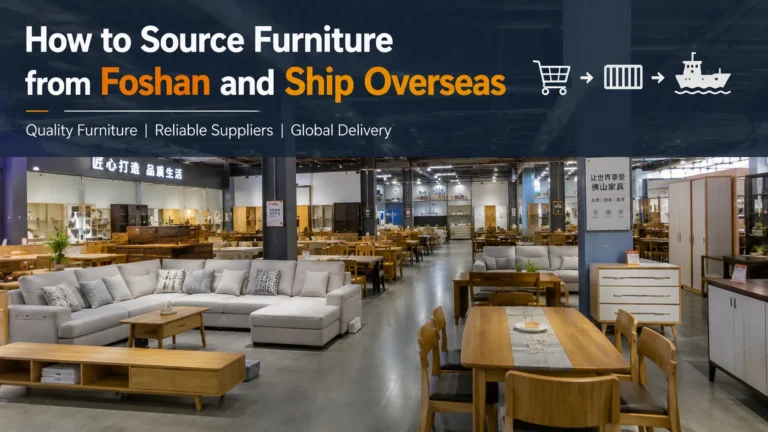
How to Source Furniture from Foshan and Ship Overseas Verified & Reviewed · Last updated July 2026 Sourcing furniture from Foshan gives internati...
Read guide →
Doors and Windows Shipping from China: Complete Import Guide Verified & Reviewed · Last updated May 2026 Importing doors and windows from China i...
Read guide →Building Materials Shipping from China Verified & Reviewed · Last updated May 2026 Building materials shipping from China helps importers, contra...
Learn more → Useful Resource Shipping Furniture from China to USAShipping furniture from China to USA is one of the most in-demand logistics services in today’s global trade market. In recent years, large-scale...
Learn more →WhatsApp us