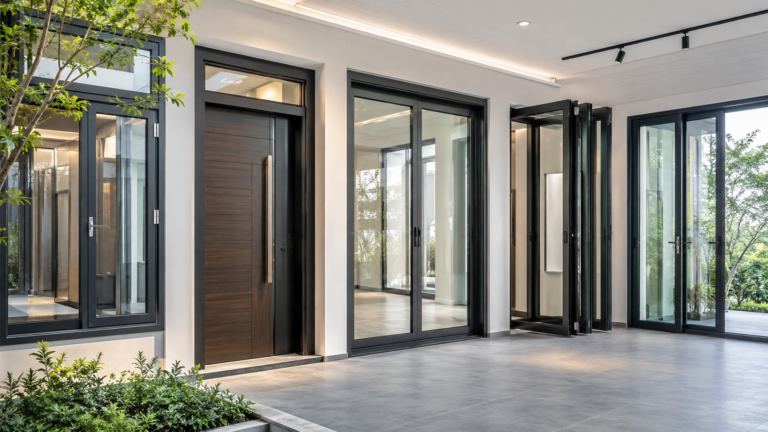
Related Guide
Doors and Windows Shipping from China
Doors and Windows Shipping from China: Complete Import Guide Verified & Reviewed · Last updated May 2026 Importing doors and windows from China i...
Read guide →

Kitchen cabinet shipping from China requires more than booking sea freight. Importers need to consider cabinet type, packing volume, export packaging, container loading, customs clearance, and final delivery costs.
This guide explains how to ship kitchen cabinets from China, including ready-to-assemble cabinets, pre assembled cabinets, cabinet doors, wall cabinets, pantry cabinets, FCL and LCL shipping, packaging requirements, customs documents, and cost factors.
Shipping methods
Packaging & container loading
Customs clearance
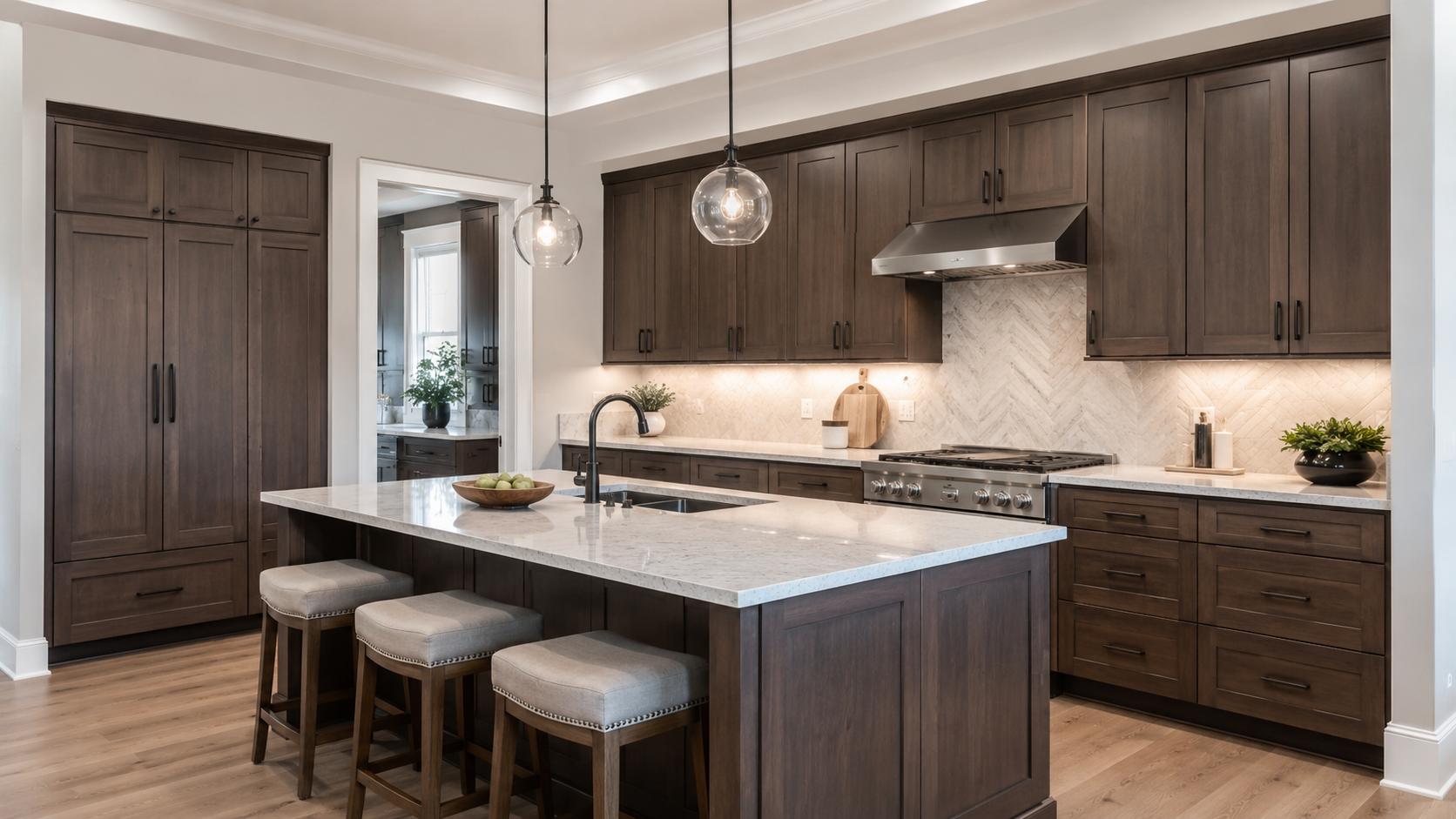
Sourcing is the foundation of a successful kitchen cabinet import project. A low factory price may look attractive at first, but the final result depends on supplier reliability, product quality, packaging, export experience, and logistics coordination.
China remains an attractive option for buying cabinets because of its mature furniture and building materials supply chain. Many Chinese cabinets factories can produce different styles for different markets, from affordable price kitchen cabinets for rental projects to premium custom cabinetry for hotels, villas, apartments, and commercial spaces.
Importers often choose kitchen cabinets from China because suppliers can offer:
Competitive pricing for bulk orders and project-based purchasing
Customization options for size, color, kitchen style, material, layout, and finish
Different styles, including modern, classic, frameless, shaker, and minimalist designs
Complete product systems, including base cabinets, wall cabinets, pantry cabinets, cabinet doors, drawers, countertops, and hardware
Export support, such as packing lists, carton labels, loading photos, and basic shipping documents
For wholesalers and contractors, this makes imported kitchen cabinets a practical choice. Buyers can work with one cabinet supplier or several factories, then consolidate the goods in China before shipping.
The key is not only finding a low price. Importers should focus on whether the supplier can deliver high quality products consistently, meet project details, and support international shipping requirements.
Kitchen cabinets are not one single product. Different cabinet types have different packing needs, shipping volumes, and damage risks.
Common products include:
Base cabinets: lower cabinets used under countertops
Wall cabinets and upper cabinets: mounted cabinets for storage above the counter
Pantry cabinets: tall cabinets that take more space and require stronger protection
Cabinet doors: shaker style doors, lacquered doors, glass doors, solid wood doors, and high-gloss doors
Panels and accessories: side panels, shelves, fillers, toe kicks, handles, hinges, and drawer slides
Pre assembled cabinets: finished cabinet units that are easier to install but larger in volume
Ready-to-assemble cabinets: flat packed cabinets that are more efficient for international shipping
For international shipping, the most important detail is not only what you buy, but how the cabinets are packed. Flat packed cabinets usually save more space, while pre assembled cabinets need more container volume and stronger protection.
A dependable kitchen cabinet supplier should provide more than a low quotation. Cabinets are customized products with many parts, so supplier accuracy is very important. A small mistake in dimensions, color, finish, hardware, or carton labeling may create serious problems after arrival.
Before placing an order, importers should check whether the supplier can provide:
Clear cabinet drawings and product lists
Material details for boards, doors, finishes, and hardware
Photos or samples before mass production
Accurate packing list with carton quantity, weight, and volume
Export packaging suitable for long-distance shipping
Clear labels for each carton and cabinet part
Support for missing parts or replacement parts
Coordination with your freight forwarder in China
For project orders, each cabinet should match the installation plan. Cartons should be marked by room, unit, cabinet number, or installation sequence. This helps the destination team receive, sort, and install the goods more efficiently.
Many importers only contact a freight forwarder after the kitchen cabinets are finished. This often creates problems because the packing method, carton size, total CBM, and loading plan have already been decided.
A better approach is to confirm sourcing and logistics together before production starts. Importers should prepare:
Final cabinet drawings
Product material and finish requirements
Flat packed or pre assembled design
Estimated carton quantity, CBM, and gross weight
Supplier address in China
Destination address
Preferred shipping method
Customs document requirements
Packaging and labeling standards
Early planning helps avoid weak packaging, unclear documents, excessive volume, and last-minute freight cost increases.
The product type directly affects kitchen cabinet shipping from China. Cabinets are bulky, so freight cost is often based more on volume than weight. Before booking shipping, importers should confirm whether the cabinets are flat packed or pre assembled, as this will affect CBM, container space, packaging, and final delivery cost.
Ready-to-assemble cabinets are usually better for international shipping. They are flat packed as panels, cabinet doors, shelves, drawers, and hardware, which helps reduce shipping volume and save container space.
They are a good option for:
Wholesalers and distributors
Online sellers and retailers
Buyers who want lower sea freight cost
Projects with local installation teams
This method is more cost effective, but clear labels and installation instructions are important, especially when the order includes base cabinets, wall cabinets, pantry cabinets, and different cabinet styles.
Pre assembled cabinets are built at the factory before shipping. They are easier to install after arrival, but they take up more space and usually increase freight cost.
They are more suitable for:
Contractors and builders
Hotels, apartments, and commercial projects
Buyers with tight installation deadlines
Premium or custom kitchen projects
Because pre assembled cabinets have finished surfaces and exposed corners, stronger packaging is needed. Cabinet doors, shaker style doors, drawers, and solid wood panels should be protected carefully to reduce scratches and damage during shipping.
Before booking freight, importers should ask the supplier for total CBM, gross weight, carton quantity, and package dimensions. Accurate volume data helps choose the right FCL, LCL, or door-to-door shipping solution.
The best shipping method depends on order volume, budget, timeline, destination country, and delivery requirements. For most kitchen cabinet orders, sea freight is the main shipping method because cabinets are bulky and not suitable for regular air freight.
Sea freight is the most practical option for kitchen cabinet shipping from China. It is suitable for full kitchen sets, wholesale orders, project cargo, and building material shipments.
Kitchen cabinets can be shipped by FCL or LCL. FCL is better for larger orders, while LCL is useful for small trial orders, cabinet doors, samples, and replacement parts.
Sea freight takes longer than air freight, but it gives importers better cost control. For bulky cargo like kitchen cabinets, this is usually the most economical solution.
FCL shipping means your cargo uses a full container. This is often the best option for larger kitchen cabinet orders because the goods stay in one container from China to the destination port.
FCL shipping offers several advantages:
Less handling compared with LCL
Lower risk of damage during warehouse transfers
More control over loading and container space
Better unit shipping cost for large orders
Suitable for project shipments and wholesale orders
A 20GP container may work for smaller full-container orders. A 40HQ container is often used for larger kitchen cabinet shipments because it offers more space for bulky cabinets.
LCL shipping means your cargo shares container space with other shipments. It is suitable when the order volume is not enough to fill a full container.
LCL can be useful for:
Small kitchen cabinet orders
Cabinet doors and panels
Hardware and accessories
Samples before mass production
Replacement parts
However, LCL cargo goes through more warehouse handling at both origin and destination. For kitchen cabinets, this means stronger packaging is very important. Palletizing, corner protection, moisture-proof wrapping, and clear carton labels can help reduce damage risk.
Air freight is usually not recommended for full kitchen cabinet shipments because cabinets take up too much space and air freight is expensive. But it can be useful for urgent small items.
Air freight is suitable for cabinet samples, missing parts, hardware, hinges, handles, drawer slides, small cabinet doors, and urgent replacement accessories. If a project is delayed because one part is missing, air freight can help solve the problem faster.
Door-to-door shipping is suitable for importers who want one logistics partner to manage the full process. It can include supplier pickup in China, export customs handling, sea freight, customs clearance coordination, destination handling, and final delivery.
This option is helpful for new importers, furniture retailers, contractors, and project buyers who do not have their own customs broker or trucker at the destination.
Door-to-door shipping can reduce communication problems because one freight forwarder helps coordinate the shipment from factory to final address.
Good packaging is important for kitchen cabinet shipping from China. Cabinets are large, easy to scratch, and often shipped with many separate parts. Clear labels and proper loading can help reduce damage, missing items, and installation delays.
Standard domestic packaging is not enough for international shipping. Kitchen cabinets need stronger protection during warehouse handling, sea freight, customs inspection, and final delivery.
Important packaging points include:
Use strong cartons for cabinet parts and panels
Add foam and corner protection for cabinet doors
Protect shaker style doors, glass doors, and high-gloss surfaces carefully
Use moisture-proof wrapping for solid wood, MDF, plywood, and particle board cabinets
Pack hinges, handles, drawer slides, screws, and other hardware separately
For pre assembled cabinets, extra protection is needed because the corners and finished surfaces are already exposed. For flat packed cabinets, the panels should be packed tightly to avoid movement inside the carton.
A kitchen cabinet order may include many cartons, so clear labels are necessary. Good labeling helps with customs clearance, warehouse sorting, and final installation.
Each carton should show:
Product name
Order number
Carton number
Cabinet or room number
Gross weight and dimensions
Fragile or keep-dry marks if needed
For project orders, labels should match the packing list and cabinet drawings. This helps the installation team find base cabinets, wall cabinets, pantry cabinets, cabinet doors, drawers, and hardware more quickly.
Container loading should protect the cabinets and make good use of space. Heavy items should be placed at the bottom, while lighter panels and cabinet doors should be placed where they will not be crushed.
Empty gaps should be reduced to prevent the cargo from moving during sea freight. If the shipment includes countertops, sinks, or other building materials, fragile items should be separated and protected.
Importers should ask for loading photos before the container leaves China. This helps confirm the packaging, stacking, and container condition before shipment.

The cost of kitchen cabinet shipping from China depends mainly on cargo volume, shipping method, container space, destination country, customs clearance, and final delivery address. Since kitchen cabinets are bulky products, total CBM usually has a bigger impact on freight cost than weight.
Importers should not only compare the ocean freight rate. The real cost may include China pickup, export handling, sea freight, destination charges, customs duties, taxes, and local delivery. For door-to-door shipping, more services are included. For port-to-port shipping, the importer needs to handle more costs after the cargo arrives.
For most kitchen cabinet shipments, the total cost may include:
Pickup in China: factory pickup or delivery to the freight forwarder’s warehouse
Export handling: warehouse receiving, measurement, loading, and export customs declaration
Ocean freight: FCL or LCL shipping from China to the destination port
Destination charges: port fees, terminal handling, warehouse fees, or local agent charges
Customs clearance: customs broker fee, duties, VAT, GST, or other import taxes
Final delivery: trucking from port or warehouse to your business address, showroom, or project site
These costs can vary depending on the loading port, destination country, shipment size, and service type. A small LCL shipment may look cheaper at first, but destination handling fees can increase the final cost. A full container may cost more upfront, but it is often more stable for larger kitchen cabinet orders.
Several details can change the final shipping cost:
Total CBM: pre assembled cabinets take more space than flat packed cabinets
Packaging method: stronger packaging may increase volume but reduce damage risk
Loading port: Shenzhen, Guangzhou, Ningbo, Shanghai, Qingdao, and Xiamen may have different rates
Destination country: customs duties, taxes, and local charges vary by market
Delivery address: delivery to a warehouse is usually easier than delivery to a construction site or residential area
Customs requirements: wood products, cabinet materials, and compliance documents may affect clearance
Ready-to-assemble cabinets are usually more cost effective to ship because they are flat packed. Pre assembled cabinets are easier to install, but they take up more container space and usually cost more to transport.
For an accurate quote, importers should provide the supplier address in China, destination address, total CBM, gross weight, carton quantity, cargo value, and delivery requirements. A good freight forwarder should help compare the full landed cost, not only the cheapest ocean freight rate.
Customs clearance is an important part of importing kitchen cabinets from China. Requirements vary by destination country, but accurate documents are always necessary.
Most kitchen cabinet shipments require:
Packing list
Bill of lading
Product description
Sales contract if required
Material declaration if requested
Wood packaging documents if applicable
Compliance documents if required by local customs
The commercial invoice should match the packing list and bill of lading. Product names should be clear and accurate. Vague descriptions may cause customs questions or delays.
The HS code should be confirmed according to product material, function, and local customs classification. Kitchen cabinets may be classified under furniture, wooden furniture, furniture parts, or other related categories depending on the actual product.
Importers should avoid using random HS codes from suppliers without checking with a customs broker. Incorrect classification may lead to duty problems, clearance delays, or penalties.
Customs duties, VAT, GST, anti-dumping duties, and destination charges vary by country. Some markets may also have special import rules for wood products, furniture, or building materials.
Before shipping, importers should check:
Import duty rate
VAT or GST
Local customs requirements
Anti-dumping or additional tariffs if applicable
Port and terminal charges
Customs broker fees
Final delivery charges
For door-to-door shipping, some of these costs may be included in the freight solution. For port-to-port shipping, the importer usually needs to handle destination customs clearance and local charges separately.
If the shipment uses solid wood packaging, pallets, or wooden crates, the packaging may need to meet ISPM 15 requirements. Treated wood packaging should usually be marked properly.
This requirement is related to the packaging, not necessarily the cabinet product itself. Importers should confirm with the supplier and freight forwarder whether wooden pallets or crates are used.
Kitchen cabinet shipments can face several risks if the order is not planned carefully.
Damage during handling is one of the most common problems. Cabinet doors, corners, glass panels, and finished surfaces can be damaged if packaging is weak or if the cargo is handled too many times.
Missing parts and poor labeling can delay installation. A cabinet set may include many small accessories, and unclear labels make it difficult to identify parts after arrival.
Moisture and deformation may affect wood cabinets and engineered wood panels. Proper moisture protection is important during storage, sea freight, and delivery.
Customs delays may happen if documents are incomplete, HS codes are unclear, product descriptions are inaccurate, or compliance documents are missing.
Unexpected destination charges can occur when importers only check ocean freight but forget customs clearance, port charges, warehouse fees, local trucking, or residential delivery costs.
The best way to reduce these risks is to confirm supplier details, packaging, shipping method, documents, and delivery requirements before the cargo leaves China.
Tonlexing helps importers arrange kitchen cabinet shipping from China with practical solutions for different order sizes, destinations, and delivery needs.
If your kitchen cabinets come from one supplier, Tonlexing can arrange pickup from the factory and move the cargo to the export warehouse or loading port.
If your order includes products from multiple suppliers, such as kitchen cabinets, countertops, sinks, lighting, furniture, tiles, or other building materials, Tonlexing can help consolidate the goods in China before export. This can make shipping more organized and reduce repeated logistics costs.
Tonlexing can help compare FCL, LCL, air freight for urgent parts, and door-to-door shipping based on your cargo volume, budget, and timeline.
For large cabinet orders, FCL may reduce handling and lower damage risk. For smaller orders, LCL can be more flexible. For importers who want a simpler process, door-to-door shipping can help manage pickup, export, freight, customs clearance coordination, and final delivery.
Kitchen cabinet shipping requires accurate documents and clear communication. Tonlexing can help review basic shipping information, coordinate export handling, and support customs clearance planning based on your destination requirements.
We can also help plan final delivery to warehouses, showrooms, project sites, or business addresses. Since kitchen cabinets are bulky, final delivery should be confirmed early to avoid access problems, unloading issues, or unexpected local costs.
Sea freight is usually the best way to ship kitchen cabinets from China because cabinets are bulky and expensive to ship by air. Large orders usually move by FCL, while smaller orders can use LCL.
FCL is better for large kitchen cabinet orders because it reduces handling and damage risk. LCL is suitable for small orders, samples, cabinet doors, and hardware, but the packaging must be stronger.
Yes. Pre assembled cabinets can be shipped from China, but they take more space and usually cost more to transport than flat packed cabinets. They also need stronger packaging.
The cost depends on total CBM, gross weight, shipping method, loading port, destination country, customs clearance, packaging, and final delivery address. For an accurate quote, importers should provide cargo volume, weight, supplier address, and destination details.
Common documents include commercial invoice, packing list, bill of lading, HS code, product description, and material declaration if required. Some countries may also require environmental or compliance documents.
Useful freight, customs and importing resources related to this shipping guide.
Doors and Windows Shipping from China: Complete Import Guide Verified & Reviewed · Last updated May 2026 Importing doors and windows from China i...
Read guide →
Importing furniture from China has become a profitable venture for retailers, interior designers, and business owners worldwide. As China is the...
Read guide →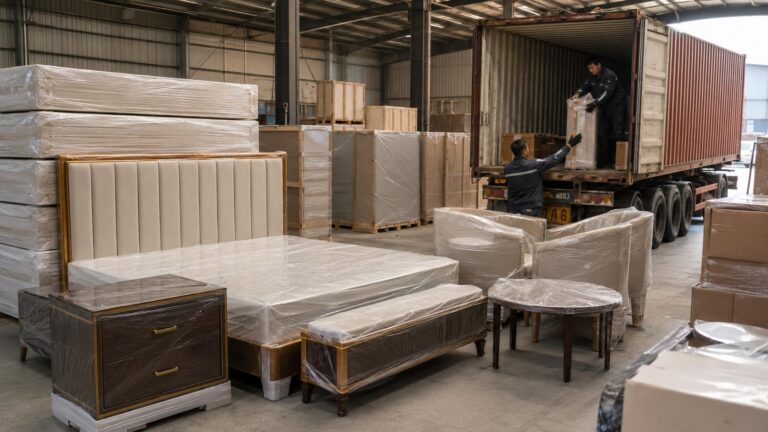
Hotel Furniture Shipping from China: 2026 Comprehensive Guide Verified & Reviewed · Last updated May 2026 Shipping hotel furniture from China req...
Read guide →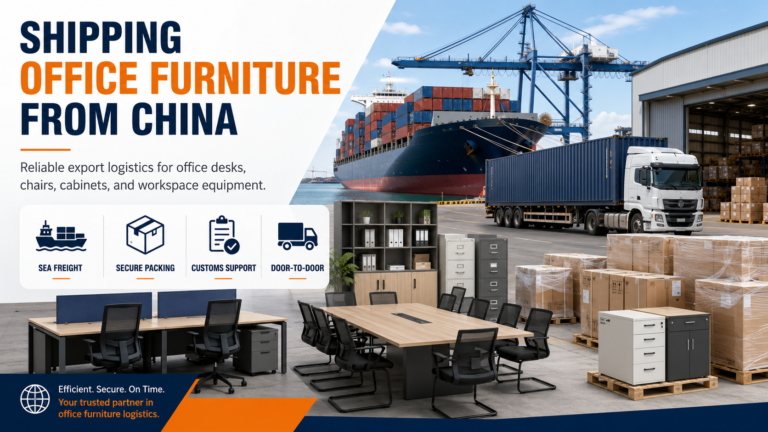
Learn how to ship office furniture from China by sea freight, air freight, FCL, LCL, and door-to-door delivery. Compare costs, customs clearance...
Read guide →How to Source Furniture from Foshan and Ship Overseas Verified & Reviewed · Last updated July 2026 Sourcing furniture from Foshan gives internati...
Learn more → Useful Resource How to Import and Ship Container Houses from ChinaIn recent years, the global interest in container houses has skyrocketed, and for good reason. Container houses offer a unique blend of affordabi...
Learn more →WhatsApp us