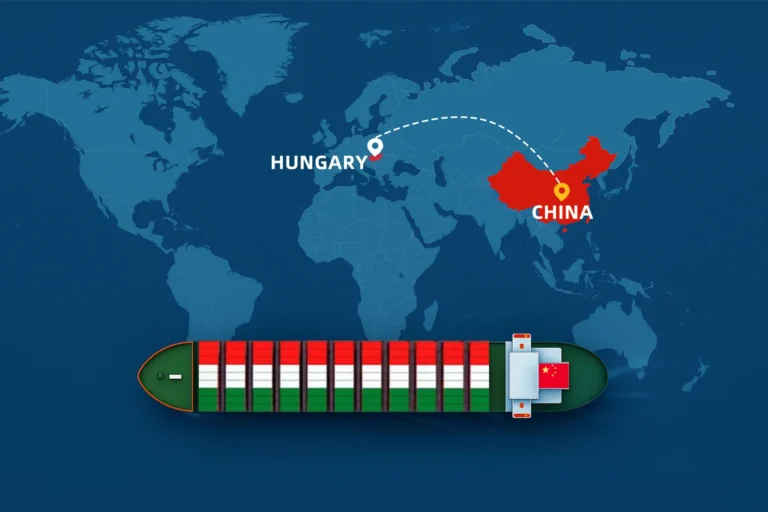
Related Guide
Shipping from China to Hungary
Shipping from China to Hungary – Sea, Air & DDP in 2026 Fast, reliable shipping from China to Hungary for B2B importers, eCommerce sellers, and p...
Read guide →

Shipping cost from China to Hungary in 2026 typically ranges from US$4–US$9 per kg for air freight, US$6–US$12 per kg for express shipping, US$80–US$160 per CBM for LCL sea freight, and US$120–US$250 per CBM for rail freight, depending on cargo volume, shipment weight, delivery speed, and final destination in Hungary.
Shipping from China to Hungary can be arranged by sea freight, rail freight, air freight, express shipping, or DDP door-to-door service. The best option depends on cargo volume, shipment weight, delivery time, customs clearance, and the final delivery address in Hungary.
For large shipments, sea freight is usually the most cost-effective choice, while rail freight offers a faster option for medium-volume cargo. Air freight and express shipping are better for urgent goods, samples, and high-value shipments.
Sea, Rail & Air Freight
Transit Time & Cost
DDP / Door to Door

The total Hungary shipping cost is affected by multiple variables, including cargo type, cargo volume, shipment weight, container space, freight rates, customs duties, inland transport, and final delivery requirements. The following table gives a general cost overview for shipping from China to Hungary.
| Shipping Method | Estimated Cost Reference | Best For |
|---|---|---|
| LCL Sea Freight | US$80–US$160 per CBM | Smaller shipments and mixed cargo |
| 20ft Full Container Load | US$2,000–US$3,800 per container | Medium-volume cargo |
| 40ft Full Container Load | US$3,200–US$5,800 per container | Large cargo and bulk shipments |
| Rail Freight | US$120–US$250 per CBM | Medium cargo needing faster delivery |
| Air Freight | US$4–US$9 per kg | Urgent shipments and high-value goods |
| Express Shipping | US$6–US$12 per kg | Samples and small parcels |
| DDP Door to Door Service | Based on cargo details | Importers needing full delivery |
These are estimated shipping cost ranges for reference only. Actual freight charges may change due to season, fuel cost, cargo type, shipping routes, container availability, air freight space, rail terminals, customs requirements, and final destination in Hungary. For an accurate shipping quote, provide product name, HS code, packing list, commercial invoice, cargo volume, actual weight, parcel dimensions, pickup address in China, and delivery address in Hungary.
Sea freight from China to Hungary is the most popular method for importers handling large shipments or heavy cargo. It offers the lowest shipping costs compared to other modes, making it ideal for bulk goods and businesses operating under budget constraints. Even though Hungary is a landlocked country without its own seaport, cargo is first unloaded at nearby container ports in Europe and then transported to Budapest by truck or rail.
Common entry points for Hungarian-bound shipments include:
From these ports, containers are transported to Hungary, mainly to Budapest, which acts as the distribution hub for Eastern Europe.
Importers can choose between two main container shipping methods:
On average, sea freight from China to Hungary takes 30–40 days, depending on the origin port in China and the European destination port. Delays may occur due to peak seasons, customs clearance procedures, or adverse weather conditions.
| Route | Container Type | Estimated Cost Reference | Transit Time |
|---|---|---|---|
| Shanghai → Koper → Budapest | 20ft FCL | USD 1,800–2,600 | 30–38 days |
| Shanghai → Koper → Budapest | 40ft FCL | USD 3,000–4,200 | 30–38 days |
| Shenzhen → Hamburg → Budapest | 20ft FCL | USD 1,900–2,800 | 32–42 days |
| Shenzhen → Hamburg → Budapest | 40ft FCL | USD 3,200–4,600 | 32–42 days |
| Ningbo → Rotterdam → Budapest | LCL | USD 60–100/CBM | 35–45 days |
Advantages of Sea Freight:
Disadvantages:
Air freight from China to Hungary is the best solution for businesses dealing with time-sensitive cargo or high-value products. It provides fast and reliable shipping service, reducing the risk of delays compared to sea freight. Many companies choose air freight when they need to deliver goods quickly to Hungary or neighboring European countries.
Shipments typically depart from major international airports in China, such as:
The main destination is Budapest Ferenc Liszt International Airport (BUD), which serves as Hungary’s largest air cargo hub. In some cases, shipments may arrive in Vienna International Airport (VIE), with goods then transferred to Hungary by road.
Direct flights are available on certain routes, while others use air transport via European hubs such as Frankfurt or Amsterdam before reaching Budapest.
Air freight rates fluctuate depending on container space availability, peak seasons, and fuel prices. Importers should always request updated quotes from a freight forwarder before shipping.
Air freight is ideal for:
Advantages of Air Freight:
Disadvantages:
Rail freight from China to Hungary has become increasingly popular thanks to the China–Europe Railway Express, which connects major Chinese cities with Eastern Europe. This option is faster than sea freight and cheaper than air freight, making it a cost-effective solution for businesses looking for balance between price and delivery time.
Trains depart from logistics hubs in China such as:
The cargo usually arrives at Budapest directly or through other European terminals like Duisburg (Germany) or Warsaw (Poland), before being forwarded to Hungary. This makes rail a stable option for container shipping services to Central and Eastern Europe.
This provides importers with a reliable middle-ground solution, especially when budget constraints prevent the use of air freight.
Rail freight is ideal for:
Advantages of Rail Freight:
Disadvantages:
Door-to-door shipping from China to Hungary is the most convenient shipping service for importers who want a complete logistics solution. A professional freight forwarder takes care of the entire shipping process: picking up goods from the supplier in China, arranging international transportation, handling customs clearance in Hungary, and delivering the cargo directly to the consignee’s warehouse or office.
This method is especially popular for e-commerce sellers and businesses that need quality service without dealing with complex logistics.
When arranging door shipping, two common terms are used:
For most importers, DDP shipping is the preferred option because it ensures smooth delivery and avoids unexpected costs.
These services include packing list preparation, commercial invoice checks, and customs requirements, ensuring compliance with Hungarian customs regulations.
This method is most suitable for:

The total shipping cost from China to Hungary depends on multiple factors:
Tip: Always request a landed cost quote, which includes freight, customs duties, VAT, and final delivery charges, to avoid surprises.
The shipping time from China to Hungary depends on shipping method, route, customs clearance, and final delivery location.
| Shipping Method | Estimated Transit Time | Best For |
|---|---|---|
| Express Shipping | 3–7 days | Samples and small parcels |
| Air Freight | 5–10 days | Urgent cargo and high-value goods |
| Rail Freight | 18–28 days | Medium cargo needing balanced cost and speed |
| Sea Freight + Inland Delivery | 30–45 days | Large shipments and container cargo |
| DDP Door-to-Door | Depends on service type | Importers needing full delivery support |
These transit times are estimates. Peak seasons, customs inspections, weather, port congestion, rail terminal delays, and incomplete documents may extend the delivery timeline.
Shipping to Hungary requires compliance with EU and Hungarian customs regulations. Proper documentation and understanding of duties and taxes are essential.
Tip: Work with an experienced freight forwarder like Tonlexing to avoid customs delays, calculate duties accurately, and ensure smooth final delivery.
When shipping from China to Hungary, there are several location-specific factors importers should consider:
Inland Transport to Final Destination
Hungary is landlocked; all sea freight passes through European ports such as Hamburg, Rotterdam, or Antwerp, then transported by truck to Budapest, Debrecen, Győr, or Szeged.
Rail freight usually arrives at Budapest rail terminals before distribution.
Rail Corridors
Main China-Europe rail corridors connect cities like Chengdu, Zhengzhou, and Wuhan to Hungary via Central European hubs.
Rail is cost-effective for medium-volume, time-sensitive shipments.
Customs Authorities & Compliance
Hungary follows EU customs regulations. Ensure accurate HS codes, commercial invoices, and packing lists to avoid delays.
Certain product types (electronics, industrial machinery, food, chemicals) may require additional certificates.
Delivery Timeline Expectations
Sea Freight: 35–50 days including port handling and inland transport
Rail Freight: 18–28 days
Air Freight: 5–10 days
Express Shipping: 3–7 days
DDP Door-to-Door: depends on service, usually within air or rail timelines
Consolidate Shipments – Combine multiple small shipments into one container or rail shipment to reduce per-unit cost.
Use LCL for Small Cargo – Less than Container Load (LCL) is ideal for shipments under 10 CBM.
Optimize Cargo Packaging – Efficient packaging reduces volumetric weight charges, especially for air and express shipments.
Plan Transit Windows – Avoid peak seasons (e.g., Chinese New Year, EU holidays) to prevent surcharges and delays.
Choose DDP for Convenience – Using DDP door-to-door service reduces risk of customs delays and simplifies cost calculation.
Tonlexing helps importers ship goods from China to Hungary by sea freight, rail freight, air freight, express shipping, and DDP door-to-door delivery. Our team can recommend the right shipping solution based on cargo type, shipment size, delivery time, destination city, and budget.
Our China to Hungary freight service includes:
Whether you are shipping small parcels, LCL cargo, full container loads, e-commerce goods, industrial equipment, or regular commercial shipments, Tonlexing can help you reduce shipping risk and manage the full process more efficiently.
LCL (Less than Container Load) is for small shipments, charged per CBM. FCL (Full Container Load) is for large shipments, charged per container.
Approximately 18–28 days, depending on the rail corridor and final city destination.
Delivered Duty Paid (DDP) covers pickup in China, freight, customs duties, VAT, and final delivery to the Hungarian address.
Based on chargeable weight (actual or volumetric), airport fees, fuel surcharges, and handling costs.
Commercial invoice, packing list, bill of lading or air waybill, HS code, EORI number, and any required certificates.
Useful freight, customs and importing resources related to this shipping guide.
Shipping from China to Hungary – Sea, Air & DDP in 2026 Fast, reliable shipping from China to Hungary for B2B importers, eCommerce sellers, and p...
Read guide →
How long does it take to ship from China to Hungary? This is one of the most common questions importers ask when sourcing goods from Asia. Shippi...
Read guide →
Sea freight is the most cost effective shipping method for large volumes and container load cargo. It is ideal for businesses looking to reduce s...
Read guide →
Air freight from China to Hungary is increasingly popular among European importers who need fast, predictable delivery instead of waiting weeks f...
Read guide →As trade between China and Hungary continues to grow, more businesses are seeking reliable and cost-effective logistics solutions to move their g...
Learn more → Useful Resource 20ft & 40ft Container Shipping Costs from China to Hungary20ft & 40ft Container Shipping Costs from China to Hungary Verified & Reviewed · Last updated June 2026 20ft and 40ft container shipping costs fr...
Learn more →WhatsApp us