Related Guide
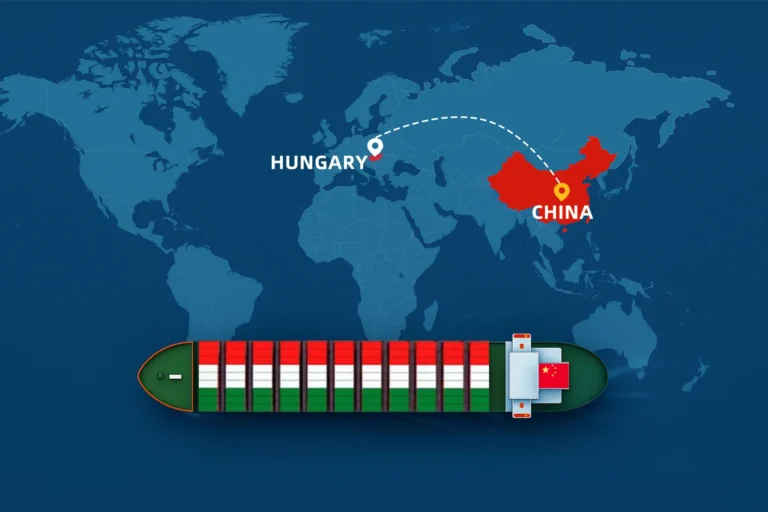
Shipping from China to Hungary
Shipping from China to Hungary – Sea, Air & DDP in 2026 Fast, reliable shipping from China to Hungary for B2B importers, eCommerce sellers, and p...
Read guide →

20ft and 40ft container shipping costs from China to Hungary vary depending on the shipping route, container size, cargo type, inland transport, and final delivery address.
This guide explains container shipping costs from China to Hungary, including FCL rates, LCL shipping, sea freight routes via Koper, Rijeka, Hamburg, Bremerhaven, and Rotterdam, rail freight options, customs clearance, import duties, VAT, and door to door delivery.
Shipping method / Mode
Transit time range
DDP / Door to Door
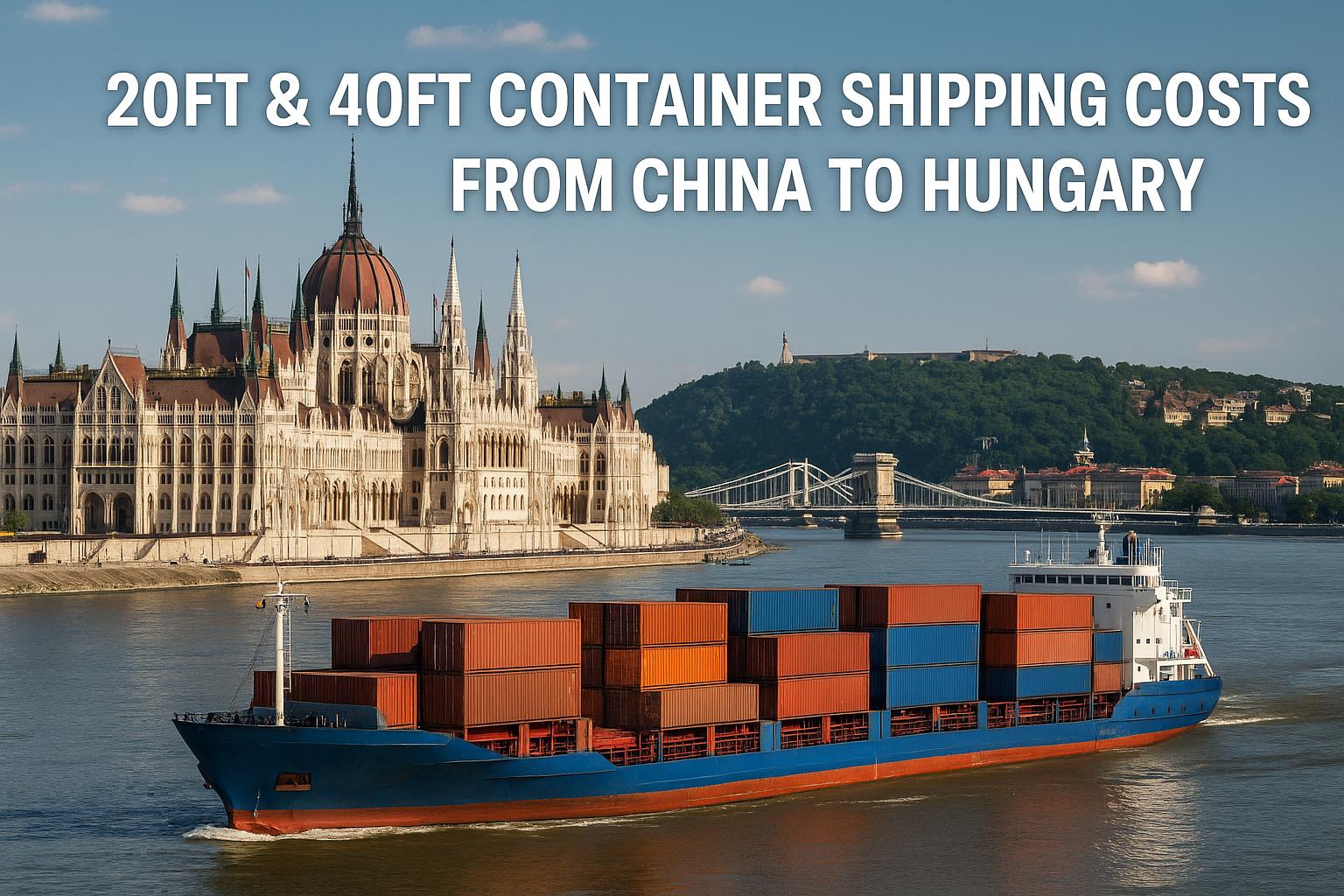
The cost to ship a container from China to Hungary varies depending on the loading city in China, the destination port in Europe, inland delivery distance, cargo weight, container type, and service terms. Shipments to Budapest are usually easier to arrange, while delivery to smaller cities or industrial areas may require additional land transportation.
| Shipping Method | Estimated Cost | Transit Time | Best For |
|---|---|---|---|
| 20ft FCL Container | USD 2,450 – 3,200 | 30 – 45 days | Heavy cargo, machinery, building materials |
| 40ft FCL Container | USD 3,900 – 5,500 | 30 – 45 days | Furniture, electronics, textiles, mixed goods |
| 40HQ Container | USD 4,480 – 5,440 | 30 – 45 days | Bulky goods and large-volume cargo |
| LCL Shipping | USD 45 – 120 / CBM | 35 – 50 days | Smaller shipments |
| Rail Freight | USD 4,000 – 7,200+ | 15 – 25 days | Faster container transport |
The average price above is only for general reference. Final freight charges may vary depending on current carrier space, fuel surcharges, port fees, customs clearance fees, and delivery requirements.
Choosing the right container size is important because it affects both loading efficiency and total transport costs. A 20ft container may have a lower base rate, but it is not always the best option if the cargo is light and bulky. For larger shipments, a 40ft or 40HQ container often gives a better cost per cubic meter.
A 20ft container is suitable for heavy or dense cargo that may reach the weight limit before filling the full container space. It is often used for machinery, metal parts, tools, tiles, stone, building materials, and industrial components.
This option is usually better when:
Cargo is heavy but not very bulky
The shipment does not need the full volume of a 40ft container
Weight control is more important than loading space
A 40ft container is a better choice for larger commercial shipments. It provides much more loading space than a 20ft container, while the freight rate is usually not double. This makes it practical for furniture, electronics, textiles, household goods, auto parts, and mixed supplier cargo.
Importers often choose a 40ft container when they need more space but still want to keep the average shipping cost per unit under control.
A 40HQ container provides extra height compared with a standard 40ft container. It is ideal for bulky but lightweight goods, especially when cargo volume is more important than cargo weight.
A 40HQ container is commonly used for:
Large furniture
Lightweight consumer goods
Bulky packaging materials
E-commerce products
Plastic products and mixed commercial cargo
Full container load shipping is the most common solution when your cargo can fill most of a container. Compared with LCL shipments, FCL usually offers fewer handling steps, better cargo protection, and more stable transit times.
Most container shipping from China to Hungary moves through Adriatic or Northern European ports before continuing inland. Koper and Rijeka are often practical choices for cargo going to Budapest because they offer shorter inland distance than many northern routes.
Major Chinese Ports | Hungary Destination | Common Route | 20ft Container | 40ft Container | Average Transit Times |
|---|---|---|---|---|---|
Shanghai | Budapest | via Koper / Rijeka | USD 2,450 – 3,050 | USD 4,100 – 5,300 | 32 – 42 days |
Ningbo | Budapest | via Koper / Rijeka | USD 2,480 – 3,100 | USD 4,150 – 5,350 | 32 – 42 days |
Shenzhen | Budapest | via Koper / Rijeka | USD 2,500 – 3,150 | USD 4,200 – 5,400 | 30 – 40 days |
Guangzhou | Budapest | via Koper / Rijeka | USD 2,550 – 3,200 | USD 4,250 – 5,450 | 32 – 43 days |
Qingdao | Budapest | via Hamburg / Koper | USD 2,600 – 3,250 | USD 4,300 – 5,500 | 35 – 45 days |
Xiamen | Budapest | via Koper / Rijeka | USD 2,500 – 3,150 | USD 4,200 – 5,400 | 32 – 42 days |
These container shipping rates are market references. They may not include customs duties, VAT, inspection charges, storage, demurrage, special handling for dangerous goods, or oversized cargo fees.
LCL shipping is suitable when your cargo volume is too small for a full container load. Instead of paying for the whole container, your goods share space with other shipments.
For China to Hungary, LCL shipping usually costs around USD 45 to USD 120 per cubic meter. The final price depends on cargo volume, weight, origin warehouse, destination handling, and delivery address in Hungary.
LCL is suitable for:
Trial orders
Small commercial shipments
E-commerce inventory
Mixed supplier cargo
Cargo below 10–15 CBM
LCL usually takes longer than FCL because goods must be consolidated in China and separated again after arrival in Europe. If the cargo volume is close to 15 CBM, it is worth comparing LCL with a 20ft container.
Because Hungary is a landlocked country, containers cannot be shipped directly to a Hungarian seaport. Most shipments first arrive at a European gateway port, then continue to Hungary by rail or truck. For this reason, the best route is not always the one with the lowest sea freight rate. Importers should compare the total landed cost, including port charges, inland delivery, customs clearance, and final delivery time.
Koper in Slovenia is one of the most practical gateway ports for shipments to Hungary. It is often used for cargo going to Budapest and other Central European logistics areas because the inland distance is relatively short and the rail connection is well developed.
This route is usually suitable for:
Regular FCL shipments
Cargo delivered to Budapest or central Hungary
Importers looking for a balance between cost and transit time
Rijeka in Croatia is another common option for Hungary-bound cargo. It can be a good alternative when Koper is congested, carrier space is limited, or the sailing schedule through Rijeka is more competitive.
For shipments to western or central Hungary, Rijeka may provide flexible inland delivery by truck or rail. It is worth comparing this route with Koper before booking, especially during peak season.
Northern European ports such as Hamburg, Bremerhaven, and Rotterdam are also used for shipments from China to Hungary. These ports usually offer frequent sailings and strong carrier coverage, which can be useful when importers need more schedule options.
However, the inland distance to Hungary is longer than from Adriatic ports. This route may be suitable when:
Cargo is linked to Germany or wider EU distribution
The importer uses a warehouse in Northern or Western Europe
The sailing schedule is more reliable than Adriatic routes
Rail freight is a faster alternative for cargo that cannot wait for normal sea freight transit time. It is commonly used for electronics, automotive parts, machinery components, seasonal inventory, and other commercial shipments with tighter delivery schedules.
Rail freight from China to Hungary usually takes around 15 to 25 days, depending on the departure station, border handling, rail capacity, and final delivery arrangement.
Importers can choose different shipping methods depending on budget, urgency, cargo type, and delivery timeline. Sea freight is usually the best choice for large-volume cargo. Rail freight is faster, while air freight is mainly used for urgent shipments.
Sea freight is the most widely used method for shipping goods from China to Hungary. It is suitable for full containers, large-volume cargo, and non-urgent commercial orders.
Although Hungary has no seaport, sea freight remains cost-effective because containers can be moved through major ports in Europe and then delivered inland by truck or rail.
Rail freight is faster than sea freight and cheaper than air freight for many commercial shipments. It is commonly used for electronics, automotive parts, machinery components, and seasonal stock.
Rail freight from China to Hungary usually takes around 15 to 25 days, depending on the departure station, rail corridors, border handling, and final delivery arrangement.
Air freight from China to Hungary usually costs around USD 3.50 to USD 7.00 per kg. It is suitable for urgent, lightweight, or high-value cargo.
Common air freight cargo includes:
Electronics
Spare parts
Samples
Medical-related goods
High-value commercial cargo
Air shipments usually require an air waybill, commercial invoice, packing list, HS code, and product documents if required.
Customs clearance is an essential part of shipping goods from China to Hungary. Even when a shipment arrives on schedule, cargo can still be delayed if the customs declaration is inaccurate, the HS code is incorrect, or supporting documents are incomplete. Since Hungary is a member of the European Union, imports must comply with both EU customs regulations and Hungarian tax requirements.
For importers, preparing accurate documentation before departure is one of the most effective ways to avoid inspections, storage charges, and clearance delays.
Most shipments from China to Hungary require several standard import documents. The information on all documents should be consistent and match the actual cargo being shipped.
Common documents include:
Bill of lading or air waybill
Certificate of origin if required
Importer EORI number
Product compliance certificates when applicable
Cargo insurance certificate if insurance is purchased
The commercial invoice should clearly show the product description, quantity, unit price, total value, supplier details, consignee details, and trade terms. The packing list should accurately state the number of packages, dimensions, gross weight, net weight, and total cargo volume.
When goods enter Hungary from China, import taxes are generally made up of customs duties and import VAT. The exact duty rate depends on the product classification and corresponding HS code.
Hungary follows the European Union Common Customs Tariff (CET) system. While some products may have relatively low duty rates, others can be subject to higher tariffs, anti-dumping measures, or additional import requirements.
Importers should typically budget for:
Customs duties based on the HS code
Import VAT at the standard Hungarian rate of 27%
Customs clearance fees
Inspection or compliance-related charges if required
Import VAT is usually calculated using the following formula:
Customs Value + International Freight + Cargo Insurance + Customs Duties = VAT Tax Base
Because Hungary has one of the highest VAT rates in the European Union, import taxes can represent a significant portion of the total landed cost. Understanding these costs before shipment helps businesses calculate accurate profit margins and avoid unexpected expenses.
The European Union’s Import Control System 2 (ICS2) requires advance electronic submission of cargo security information before goods are loaded for transport to the EU.
For shipments from China to Hungary, carriers and logistics providers must submit shipment data before departure. Incorrect or incomplete information may lead to additional inspections, customs delays, or requests for further documentation.
To reduce clearance risks, importers should ensure that:
Product descriptions are accurate and detailed
HS codes are correctly declared
Consignee and importer information is complete
Commercial invoices match the actual cargo
Compliance documents are prepared before shipment
After cargo arrives in Europe, customs authorities review the declaration, supporting documents, cargo value, and product classification. Most shipments are released after document verification, while selected shipments may be subject to physical inspection.
The typical customs clearance process includes:
Submission of import documentation
Customs declaration review
Duty and VAT assessment
Payment of taxes and applicable fees
Customs release approval
Inland delivery to the final destination
Working with an experienced freight forwarder can help ensure documentation accuracy, reduce clearance delays, and simplify the import process when shipping from China to Hungary.
Door to door shipping is one of the most convenient logistics solutions for importers buying goods from China. Instead of coordinating multiple service providers for pickup, export customs clearance, international transportation, customs procedures, and local delivery, a single freight forwarder manages the entire shipment from the supplier’s location in China to the final destination in Hungary.
The scope of service may vary depending on the shipping method and Incoterms, but a typical door to door shipment usually includes most or all of the following steps:
Cargo pickup from the supplier in China
Warehouse consolidation if multiple suppliers are involved
Export customs declaration in China
Sea freight, rail freight, or air freight transportation
Customs clearance support in Europe
Import duty and VAT coordination when applicable
Inland transportation within Hungary
Final delivery to a warehouse, office, retail location, or fulfillment center
By using one provider throughout the process, importers can simplify communication and gain better visibility over shipment progress.
Several transportation methods are available depending on the cargo size, urgency, and budget.
Shipping Method | Estimated Transit Time | Suitable For |
|---|---|---|
Sea Freight Door to Door | 35–55 days | Large shipments and full containers |
Rail Freight Door to Door | 18–30 days | Time-sensitive commercial cargo |
Air Freight Door to Door | 5–10 days | High-value or urgent goods |
Express Courier | 3–7 days | Samples and small parcels |
Sea freight remains the most economical choice for large shipments, while rail freight offers a balance between cost and speed. Air freight and express services are typically selected when delivery time is the highest priority.
Many importers choose DDP (Delivered Duty Paid) shipping because it simplifies the import process. Under a DDP arrangement, the logistics provider handles most transportation and customs-related procedures before delivery.
A DDP solution may include:
Export customs clearance in China
International transportation
Import customs procedures
Customs duties and VAT handling
Local delivery within Hungary
However, not all DDP quotations include the same services. Importers should always confirm whether duties, VAT, customs clearance fees, inspection charges, and final delivery costs are included in the quoted price.
Door to door shipping is often the best choice when convenience, simplicity, and predictable logistics management are more important than managing each stage separately.
This service is particularly suitable for:
First-time importers
Amazon and e-commerce sellers
Businesses purchasing from multiple suppliers
Companies without an EU customs broker
Importers seeking a single logistics contact throughout the shipment
For businesses importing goods regularly from China to Hungary, door to door shipping can reduce administrative work, improve shipment visibility, and help avoid coordination issues between carriers, customs agents, warehouses, and local transport providers.
Choosing the right freight forwarder is important when shipping from China to Hungary. Since Hungary is landlocked, the shipment does not end at the European port. Cargo still needs inland transport, customs coordination, and final delivery to Budapest or other Hungarian cities.
Tonlexing provides sea freight, rail freight, air freight, LCL, FCL, DDP, and door to door shipping solutions from China to Hungary. We help importers compare routes, control costs, prepare documents, and manage delivery more smoothly.
Different cargo requires different shipping plans. Tonlexing can arrange 20ft, 40ft, and 40HQ container shipping, LCL consolidation, rail freight, air freight, and door to door delivery based on your cargo size, budget, and delivery timeline.
Our services cover:
FCL and LCL shipping
Rail and air freight
DDP door to door service
Multi-supplier consolidation
Cargo insurance
Final delivery in Hungary
Shipping to Hungary requires careful route planning through ports such as Koper, Rijeka, Hamburg, Bremerhaven, or Rotterdam. Tonlexing helps compare the total cost of each route, including inland delivery, port charges, and transit time.
We also support customs-related preparation, including commercial invoice review, packing list checking, HS code guidance, EORI-related requirements, and customs clearance coordination.
Tonlexing provides clear quotations based on real cargo details, including product name, volume, weight, pickup city, destination address, and preferred shipping method. Our team explains what is included in the quote and helps reduce unexpected destination charges.
We regularly handle machinery, electronics, furniture, textiles, auto parts, solar products, batteries, building materials, industrial components, and e-commerce goods shipped from China to Hungary.
A 20ft container from China to Hungary usually costs around USD 2,450 to USD 3,200 in 2026. The final price depends on the loading port, European gateway port, cargo weight, inland delivery distance, and season.
A 40ft container usually costs around USD 3,900 to USD 5,500. A 40HQ container may cost around USD 4,480 to USD 5,440, depending on the route and cargo details.
Sea freight is usually the cheapest option for large shipments. LCL is suitable for smaller cargo, while rail freight is better when the shipment is more urgent.
Sea freight usually takes around 30 to 45 days, including ocean transport to a European port and inland delivery to Hungary. Transit time may be longer if there is port congestion, customs inspection, rail capacity pressure, or delays in inland delivery. Delays at European ports can also result in extra handling charges, storage costs, or delivery rescheduling.
Yes. Rail freight is available and usually takes around 15 to 25 days. It is faster than sea freight and cheaper than air freight for many commercial shipments. As a market reference, rail freight for a 20GP container may cost around USD 4,039 to USD 4,936, while a 40HQ container may cost around USD 5,875 to USD 7,180, depending on the departure station, route, and final delivery arrangement.
Yes. Hungary applies 27% VAT on most imported goods. Customs duties may also apply depending on the HS code and product category. Importers should calculate customs duties, VAT, customs clearance fees, and possible inspection charges before shipping to avoid unexpected landed costs.
Useful freight, customs and importing resources related to this shipping guide.
Shipping from China to Hungary – Sea, Air & DDP in 2026 Fast, reliable shipping from China to Hungary for B2B importers, eCommerce sellers, and p...
Read guide →
Shipping Cost from China to Hungary (2026 Guide) Verified & Reviewed · Last updated May 2026 Shipping cost from China to Hungary in 2026 typicall...
Read guide →
How long does it take to ship from China to Hungary? This is one of the most common questions importers ask when sourcing goods from Asia. Shippi...
Read guide →
Sea freight is the most cost effective shipping method for large volumes and container load cargo. It is ideal for businesses looking to reduce s...
Read guide →Air freight from China to Hungary is increasingly popular among European importers who need fast, predictable delivery instead of waiting weeks f...
Learn more → Useful Resource DDP Shipping from China to Hungary (2025 Guide)As trade between China and Hungary continues to grow, more businesses are seeking reliable and cost-effective logistics solutions to move their g...
Learn more →WhatsApp us