China–Australia Shipping Guide · Updated August 2026

Shipping from China to Australia

Compare sea freight, air freight, express and door-to-door shipping from China to Australia. Review planning costs and transit times, major routes to Sydney, Melbourne, Brisbane and Fremantle, Australian customs and biosecurity requirements, and the cargo details needed for an accurate freight quote.

  • Sea Freight
  • Air Freight
  • Express
  • Door to Door / DDP

Quotes are based on cargo details, route and current carrier capacity.

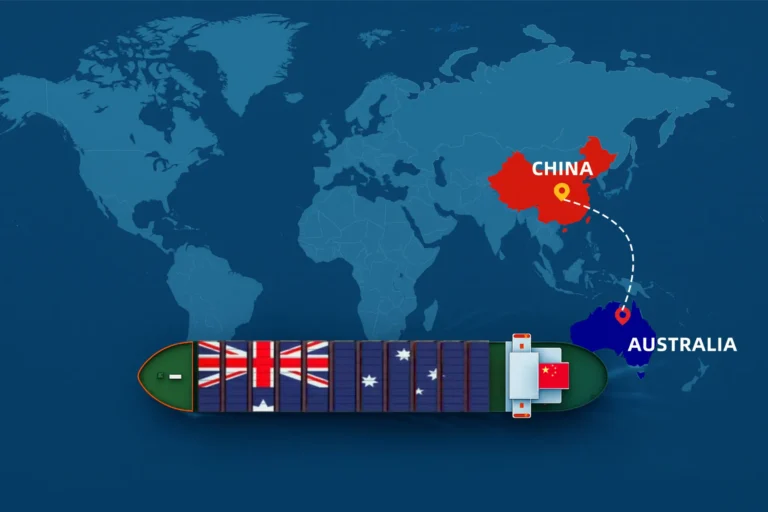
Container ship representing freight shipping from China to Australia
CHINA → AUSTRALIA
Key Australian gateways Sydney · Melbourne · Brisbane · Fremantle
FCL & LCL sea freight options
Air & express for urgent cargo
Customs & delivery support across Australia

Quick Shipping Overview

Compare Shipping Methods from China to Australia

The right shipping method depends mainly on cargo size, urgency, budget and the final delivery address in Australia. Sea freight is normally used for larger commercial shipments, while air freight and express services are better suited to faster or smaller cargo.

Sea Freight

FCL is suitable for container-sized cargo, while LCL allows smaller commercial shipments to share container space. Ocean freight usually offers the lowest unit cost for larger or less urgent cargo.

Usually best for Pallets, machinery, wholesale cargo and container loads
Air Freight

Air freight provides faster international transportation for commercial goods when delivery time matters more than the lower cost of sea freight.

Usually best for Urgent, higher-value and time-sensitive cargo

Express Shipping

Express courier services are designed for smaller urgent shipments and provide a simple door-to-door option for samples, documents and compact parcels.

Usually best for Samples, small packages and urgent parcels

Door-to-Door / DDP

Sea or air freight can be combined with pickup in China, customs coordination and final delivery in Australia. DDP service can be arranged when suitable for the cargo and import requirements.

Usually best for Importers wanting one coordinated logistics service
13–36 Sea Freight Days for the main ocean transit
6–10 Standard Air Freight Days as a typical planning lead time
SYD · MEL · BNE · FRE Key Australian Gateways Sydney, Melbourne, Brisbane and Fremantle

These are planning ranges rather than guaranteed schedules. Actual transit time depends on the Chinese origin, Australian destination, carrier service, consolidation, customs clearance, biosecurity requirements and final delivery arrangements.

Freight Cost Planning

Shipping Costs from China to Australia

Shipping costs from China to Australia vary by transport method, cargo volume or chargeable weight, departure point in China and destination in Australia. Use the rates below as planning references before requesting a shipment-specific quotation.

China to Australia Freight Rate Reference Tonlexing Freight Reference · 2026
Shipping Method Destination Reference Rate Best For
20GP FCL Sea Freight Melbourne US$1,700–2,200 Medium container loads
40GP FCL Sea Freight Melbourne US$2,500–4,500 Larger-volume cargo
LCL Sea Freight Sydney From US$35 / CBM Smaller commercial shipments
Air Freight Sydney US$5.30–7.50 / kg Urgent commercial cargo
Express Shipping Australia Around US$8.45 / kg Samples, parcels and small goods

Melbourne FCL rates use Tonlexing's current freight references. LCL, air freight and express figures are planning benchmarks. Actual shipping costs vary with the Chinese origin, Australian destination, cargo details, carrier capacity, booking date and required service scope. Destination charges, customs clearance, biosecurity-related costs and inland delivery should be confirmed in the final quotation.

Get an Accurate China to Australia Freight Quote

Send your product name, package count, gross weight, dimensions or CBM, supplier location and Australian delivery postcode.

The cheapest freight rate is not always the lowest total shipping cost. Compare China origin handling, international freight, Australian destination charges, customs clearance and final delivery before choosing FCL, LCL, air freight or express.

Transit Time Guide

How Long Does Shipping from China to Australia Take?

Compare the main port-to-port or airport-to-airport transit with a realistic door-to-door planning range. Actual shipping time depends on the Chinese origin, Australian destination, carrier schedule, customs clearance, biosecurity requirements and final delivery address.

Typical China to Australia Transit Time Comparison

Planning Ranges
Shipping Method Main Transit Door-to-Door Planning Usually Suitable For
Sea FCL 13–32 days Port to port 30–40 days Typical overall planning Full-container and larger-volume cargo
Sea LCL 18–36 days Main ocean movement 35–45 days Consolidation can add time Pallets and smaller commercial shipments
Air Freight 3–5 days Airport to airport 6–10 days Including handling and clearance Urgent commercial cargo
Express 3–6 days Courier network 3–7 days Remote areas may take longer Samples, documents and smaller parcels

These are indicative planning ranges rather than guaranteed delivery times. Sea schedules vary by Chinese departure port and Australian destination, while customs, biosecurity, carrier capacity and inland delivery can extend the timeline. For more route-specific planning, see our shipping time from China to Australia guide →

Schedule & Routing Direct sailings are generally faster than transshipment services.

Peak-Season Capacity Space shortages or cargo rollovers can delay departure.

Customs & Biosecurity Document checks, inspections or treatment can extend clearance.

Final Delivery Western Australia and regional delivery may require additional time.

Ocean Shipping

Sea Freight from China to Australia

Sea freight is the main option for larger commercial shipments moving from China to Australia. Importers can choose between Full Container Load (FCL) for dedicated container space and Less than Container Load (LCL) when the cargo does not require a full container.

FCL Shipping

Full Container Load
Dedicated Container

FCL gives one shipment the use of an entire container and is commonly selected for larger volumes, heavy cargo, machinery and regular wholesale orders moving to Australia.

Container Options

Common equipment includes 20GP, 40GP and 40HC containers. The right size depends on cargo volume, weight and loading requirements.

Main Advantage

Cargo is not consolidated with unrelated LCL shipments, reducing consolidation stages and simplifying planning for larger loads.

Learn More About FCL Shipping

LCL Shipping

Less than Container Load
Shared Container

LCL allows smaller commercial shipments to share container space with other cargo. It is useful when an importer does not have enough volume to justify booking a full container.

Best For

Pallets, cartons and smaller commercial orders that need ocean freight without paying for an entire container.

Planning Point

LCL requires consolidation and deconsolidation, so handling and total delivery time can be longer than a comparable direct FCL movement.

Learn More About LCL Shipping
FCL or LCL? Choose based on cargo volume and total logistics cost
Smaller shipment LCL usually makes more sense when the cargo occupies only part of a container and the importer wants to pay for shared space.
Larger shipment FCL becomes more practical as cargo volume increases or when a dedicated container is preferred for loading and handling.
Compare the full cost At higher LCL volumes, compare both quotations because local handling and consolidation charges can change which option is more economical.

Sea freight services connect major Chinese ports such as Shanghai, Ningbo, Shenzhen and Guangzhou with Australian gateways including Sydney, Melbourne, Brisbane and Fremantle. The most suitable route depends on the supplier location, destination and available carrier schedule.

Faster Shipping Options

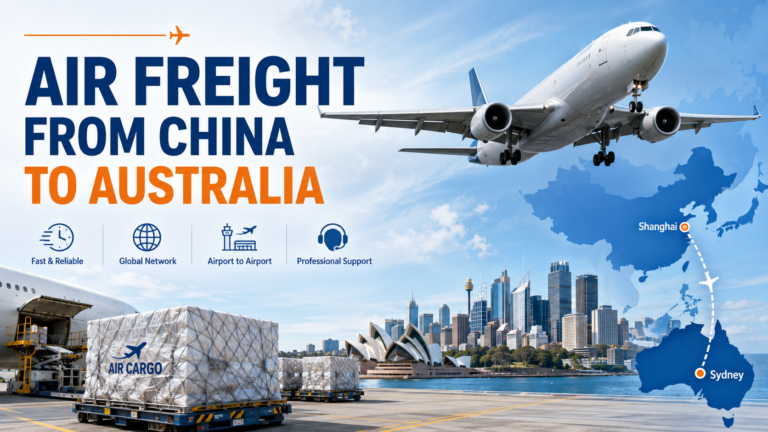
Air Freight and Express Shipping from China to Australia

Air freight and express shipping are used when cargo needs to reach Australia faster than ocean freight. Standard air freight is usually better for larger commercial shipments, while express courier services are more practical for small urgent parcels, samples and documents.

Air Freight

Airport-to-airport or coordinated delivery
Commercial Cargo

Air freight is suitable for time-sensitive commercial cargo that is too large or costly for express courier service but cannot wait for sea freight. It is commonly used for electronics, components, samples, fashion goods and other higher-value shipments.

Charging Basis

Air freight is generally charged by chargeable weight, based on the greater of actual weight and volumetric weight.

Planning Point

Airport handling, flight availability, customs clearance and final delivery all affect the complete shipping time.

2026 Planning Rate US$5.30–7.50 / kg
Typical Planning Time 6–10 days door to door

Express Shipping

Door-to-door courier service
Small & Urgent

Express shipping is designed for small urgent shipments that need a simple courier network from China to the Australian delivery address. It is commonly used for samples, documents, spare parts and compact parcels.

Main Advantage

Courier service combines international transport and final delivery in one network, reducing the coordination required for smaller shipments.

Planning Point

Large, heavy or bulky parcels can become expensive because courier charges are also based on chargeable weight.

2026 Planning Rate Around US$8.45 / kg
Typical Delivery About 3–7 days
Air Freight or Express? Choose according to shipment size and urgency
Choose air freight Better for commercial cargo when the shipment is larger than a typical courier parcel but still needs faster delivery than ocean freight.
Choose express Better for samples, documents, spare parts and smaller urgent packages where simple door-to-door delivery is the priority.
Check special cargo early Batteries, power banks, liquids and other restricted goods may require specific documents, packaging or carrier approval before an air or courier booking is accepted.

Major China–Australia air freight flows commonly use airports in Shanghai, Guangzhou, Shenzhen and Hong Kong, with Australian gateways such as Sydney, Melbourne, Brisbane and Perth. The final route depends on cargo type, airline capacity and the delivery location in Australia. For detailed air cargo rates, airport routes and chargeable-weight planning, see our Air Freight from China to Australia guide.

End-to-End Delivery

Door-to-Door and DDP Shipping from China to Australia

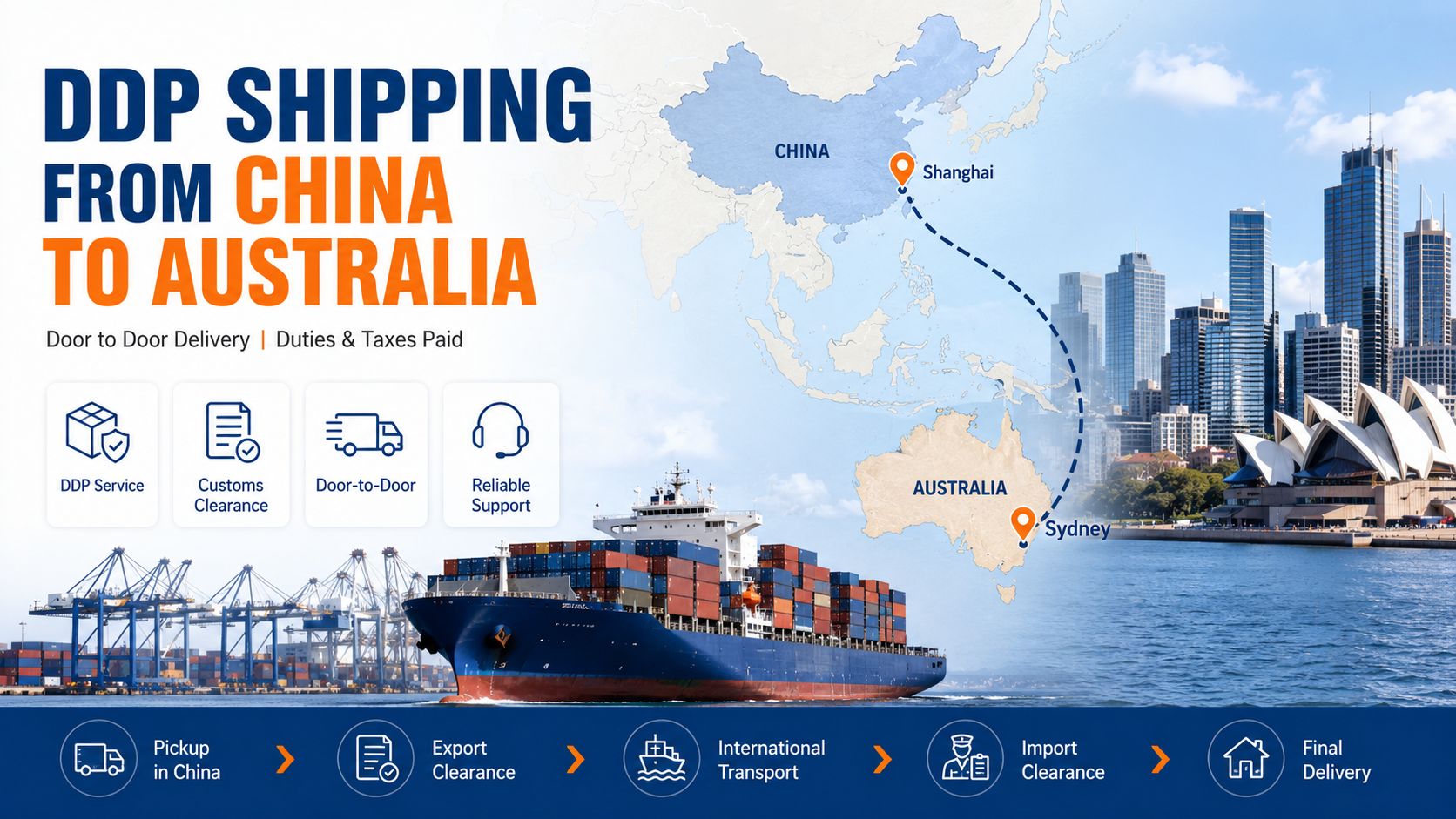
Door-to-door shipping combines international freight with pickup, customs coordination and delivery to the agreed address in Australia. Depending on the cargo and importer arrangement, Tonlexing can also coordinate DDP shipping with a defined delivery and import service scope.

Door-to-Door Shipping

Sea or air freight with final delivery
Coordinated Service

Door-to-door shipping is suitable for importers who want one logistics provider to coordinate the movement from the supplier in China through to the agreed Australian delivery address. The international leg can move by sea freight or air freight.

Typical Scope

Factory pickup, origin handling, international freight, destination coordination and final delivery can be combined under one shipment plan.

Confirm First

Customs entry, duties, GST, biosecurity-related charges and other destination fees depend on the agreed quotation and Incoterm.

Door to Door Shipping from China

DDP Shipping

Delivered Duty Paid service arrangement
Simplified Delivery

DDP shipping is designed for customers who want a more consolidated delivery arrangement, with import handling and final delivery coordinated as part of the agreed service. Availability depends on the goods, importer setup and destination requirements.

Why Use DDP?

It can reduce the number of separate logistics steps the buyer needs to coordinate between China pickup, transport, clearance and final delivery.

Check the Quote

Confirm the importer arrangement and whether duty, GST, customs clearance, biosecurity-related costs and final delivery are included before booking.

DDP Shipping from China to Australia
Typical Service Scope From the supplier in China to the delivery address in Australia
China origin Supplier pickup, warehouse handling, consolidation where required and export shipping preparation.
International transport The main shipment moves by sea freight or air freight according to cargo size, budget and required delivery time.
Australia delivery Destination coordination, agreed customs services and delivery to the final postcode according to the quotation scope.

Door-to-door and DDP are not the same thing. Door-to-door describes the pickup-to-delivery service scope, while DDP also defines import responsibility under the agreed trading arrangement. The quotation should clearly state the Incoterm, importer arrangement, duty and GST treatment, customs-clearance scope and any excluded destination charges.

Check DDP Availability

Australian door-delivery rates are postcode-sensitive. Provide the final delivery postcode when requesting a quote for Sydney, Melbourne, Brisbane, Adelaide, Perth, regional areas or other Australian destinations.

Freight Network

China–Australia Shipping Routes, Ports and Airports

Freight from China reaches Australia through established ocean and air cargo gateways. The best route depends on the supplier location in China, cargo type, final Australian destination, available carrier schedule and required delivery time.

Ocean Freight Routes

FCL and LCL cargo
Common China Origins Shanghai · Ningbo · Shenzhen · Guangzhou
Australia Gateways Sydney · Melbourne · Brisbane · Fremantle

Major ocean services connect China's coastal manufacturing regions with Australia's east and west coast ports. Shanghai, Ningbo, Shenzhen and Guangzhou are common origins, while Qingdao and Xiamen may also be used according to supplier location and carrier schedule.

Air Freight Routes

Commercial and urgent cargo
Common China Origins PVG · CAN · SZX · HKG
Australia Gateways SYD · MEL · BNE

Air cargo can move on direct or connecting services depending on airline capacity and cargo requirements. Sydney and Melbourne are major gateways, while Brisbane or Perth may be more practical when the final delivery is in Queensland or Western Australia.

Main Sea Freight Gateways in Australia

Choose around the final delivery area
Sydney / Port Botany New South Wales

A major container gateway for Sydney and wider New South Wales, with connections to large commercial and population centres on Australia's east coast.

Port of Melbourne Victoria

Commonly used for cargo destined for Melbourne, Victoria and surrounding inland markets, including FCL and LCL imports from China.

Port of Brisbane Queensland

A practical gateway for Brisbane and Queensland, especially when the final consignee or distribution point is located in eastern or southeastern Queensland.

Fremantle Port Western Australia

The key sea freight gateway for Perth and much of Western Australia, helping avoid unnecessary east-to-west inland transportation for suitable shipments.

Main Cargo Airports

SYD Sydney Airport Main air cargo gateway for Sydney and New South Wales.
MEL Melbourne Airport Major air freight gateway serving Melbourne and Victoria.
BNE Brisbane Airport Useful for air cargo destined for Brisbane and Queensland.

The closest Australian port or airport is not automatically the cheapest routing. Compare international freight, carrier schedule, destination handling and inland delivery together. Adelaide, Perth and other gateways can also be used when the shipment or final delivery location makes them more practical.

Border Compliance

Australia Customs Clearance, GST, ChAFTA and Biosecurity

Imports into Australia are subject to customs requirements administered by the Australian Border Force, while biosecurity conditions are managed by the Department of Agriculture, Fisheries and Forestry. Check tariff classification, customs value, origin, import documents and any BICON requirements before the cargo leaves China.

How Import Clearance Works

Prepare before cargo leaves China
  1. Classify the Goods

    Confirm the product description, HS classification, customs value and country of origin. Also check whether the goods are prohibited, restricted or subject to biosecurity import conditions.

  2. Prepare the Import Entry

    Commercial consignments valued over AUD 1,000 generally require an Import Declaration. The importer or appointed licensed customs broker submits the required shipment, valuation and tariff information.

  3. Calculate Duty and GST

    Customs duty depends on tariff classification, origin and available concessions. GST on a taxable importation is generally calculated at 10% of the taxable import value. Eligible Chinese-origin goods may receive ChAFTA preferential tariff treatment.

  4. Obtain Border Release

    ABF and, where applicable, biosecurity authorities review the consignment. Selected cargo may require additional documents, inspection, treatment or other action before release and final delivery.

Duty, GST & ChAFTA

Do not assume every import from China attracts a flat 5% customs duty. The applicable rate depends on tariff classification and origin. Goods that qualify as Chinese originating under ChAFTA may be eligible for preferential treatment. GST is generally 10% on taxable importations .

Biosecurity & BICON

Australia applies commodity-specific biosecurity conditions. Use BICON to check whether the goods are permitted and whether supporting documents, treatment or an import permit are required. Inspections are risk-based rather than automatic for every shipment. Solid timber packaging and dunnage should also be checked against Australia’s ISPM 15 and BICON requirements before shipment.

Restricted or Controlled Goods

Food, plant or animal products, timber, used machinery, chemicals, medicines, batteries, vehicles and other regulated goods may need additional approvals or evidence. Confirm admissibility before booking ; freight arrangements do not replace an import permit.

Importer Responsibility

The Australian importer remains responsible for product admissibility, accurate customs declarations, duties, GST and required approvals. When claiming ChAFTA preference, the importer should also hold the required origin evidence. Tonlexing can coordinate freight documents and work with the importer or appointed licensed customs broker.

Real Tonlexing Shipment

China to Australia Freight Case Study: Qingdao to Melbourne

This real FCL shipment shows how Tonlexing coordinated a high-volume sea freight movement from Qingdao, China to Melbourne, Australia using a dedicated 40HQ container.

66 CBM of Iron Grid Frames Shipped in One 40HQ Container

For this shipment, full container load sea freight was selected because the cargo volume was suitable for a dedicated 40HQ container and the delivery was not urgent. The iron grid frames were loaded in Qingdao and transported by MSC to Melbourne, where the shipment proceeded through import customs clearance before final delivery.

01 Booking & Loading

A 40HQ container was arranged for the 66 CBM shipment and loaded at origin in Qingdao.

02 Sea Freight to Melbourne

MSC handled the main ocean transport from Qingdao to the Port of Melbourne.

03 Clearance & Delivery

After arrival and Australian customs clearance, the container shipment proceeded to final delivery.

This is a historical Tonlexing shipment example, not a current carrier schedule or guaranteed transit time. Current Qingdao to Melbourne rates, vessel schedules and delivery times should be reconfirmed before booking.

Why Tonlexing

Why Choose Tonlexing as Your China–Australia Freight Forwarder?

Tonlexing is a China-based freight forwarder and shipping agent supporting commercial cargo from China to Australia. We coordinate supplier pickup, export handling, sea or air freight, shipping documents and destination handover under one clearly defined logistics plan.

Freight Forwarding Experience

China-Based Operations · Serving International Freight Since 2008

Our operations team works directly with suppliers, warehouses, carriers and destination partners to coordinate commercial shipments from China to Australia.

Freight Forwarder Since 2008 China-Based Operations

Cargo-Specific Planning

The shipping method is selected according to cargo volume, urgency, destination, Incoterm and service scope rather than forcing every shipment into the same logistics solution.

Sea, air, express and door-to-door options

Origin Control in China

Supplier contact, pickup, warehouse receipt, consolidation, cargo verification and export preparation can be coordinated before the shipment leaves China.

Shenzhen, Guangzhou and Ningbo warehouse support

Document & Milestone Coordination

Commercial documents, transport records and shipment updates are coordinated around pickup, departure, arrival, customs clearance and final delivery.

Clear handoffs with the importer or appointed customs broker

Responsive Issue Handling

If carrier schedules, documents, customs requirements, biosecurity procedures or delivery conditions change, available next steps are coordinated with the responsible parties.

Practical follow-up through shipment completion
Since 2008 Freight Forwarding Experience
150+ Countries Served
FCL & LCL Flexible Ocean Freight
Air · Sea · Door to Door Multiple Service Options

Clear quotation scope: the selected route, charge basis, included services, exclusions and document responsibilities should be confirmed before booking. For higher-value or fragile cargo, cargo insurance options can also be reviewed before shipment.

Practical Shipping Answers

Shipping from China to Australia FAQs

Practical answers about shipping methods, freight costs, transit times, customs clearance, import requirements and final delivery from China to Australia.

What is the best way to ship goods from China to Australia?

The best option depends on cargo size, urgency and delivery scope. Sea freight usually suits larger or less urgent commercial shipments, air freight suits time-sensitive cargo, and express shipping is more practical for samples and small urgent parcels. Door-to-door delivery can be coordinated with sea or air freight.

What is the cheapest way to ship from China to Australia?

Sea freight normally provides the lowest unit cost for larger shipments. LCL lets smaller cargo share container space, while FCL can become more economical as shipment volume increases. Compare the complete cost—including China origin handling, international freight, Australian destination charges, customs clearance and final delivery—not the ocean rate alone.

How long does shipping from China to Australia take?

Typical planning ranges are around 13–32 days port to port for FCL sea freight, 18–36 days for the main LCL movement, 3–5 days airport to airport by air freight, and about 3–6 days for express courier transport. Pickup, consolidation, customs clearance, biosecurity procedures and inland delivery can extend the total door-to-door time.

How much does shipping from China to Australia cost?

Current planning references on this page include US$1,700–2,200 for a 20GP FCL to Melbourne, US$2,500–4,500 for a 40GP FCL to Melbourne, LCL from about US$35/CBM, air freight around US$5.30–7.50/kg, and express shipping around US$8.45/kg. Actual shipping costs depend on the China origin, Australian destination, cargo weight or volume, carrier capacity and required service scope.

What customs, GST and biosecurity requirements apply when importing from China to Australia?

Commercial consignments valued over AUD 1,000 generally require an Import Declaration. Customs duty depends on tariff classification, origin and any available concession rather than a universal flat rate. Eligible Chinese-origin goods may qualify for ChAFTA preferential treatment, while GST on taxable importations is generally 10%.

Australia also applies commodity-specific biosecurity conditions. Check BICON before shipping food, timber, plant or animal products, used machinery and other goods that may require permits, treatment, supporting documents or inspection.

Need a shipment-specific answer? Send the commodity, package count, gross weight, dimensions or CBM, supplier location in China and Australian delivery postcode. Tonlexing can compare suitable sea, air, express or door-to-door options based on the actual cargo.