Related Guide
Certificate of Origin (COO) Explained
Certificate of Origin (COO) Explained: Customs Use, FTA Savings, and Error-Free Docs Verified & Reviewed · Last updated January 2026 A Certificat...
Read guide →

A Certificate of Origin COO in shipping is an official export document that verifies the country where goods were produced, manufactured, grown, or processed. It is commonly used for customs clearance, duty assessment, and origin verification in international trade.
This guide explains what a Certificate of Origin means, when it is required, the difference between preferential and non-preferential COO, and how it supports customs compliance, trade agreement claims, and smoother import clearance.
Preferential COO
Who Issues COO
COO vs Commercial Invoice
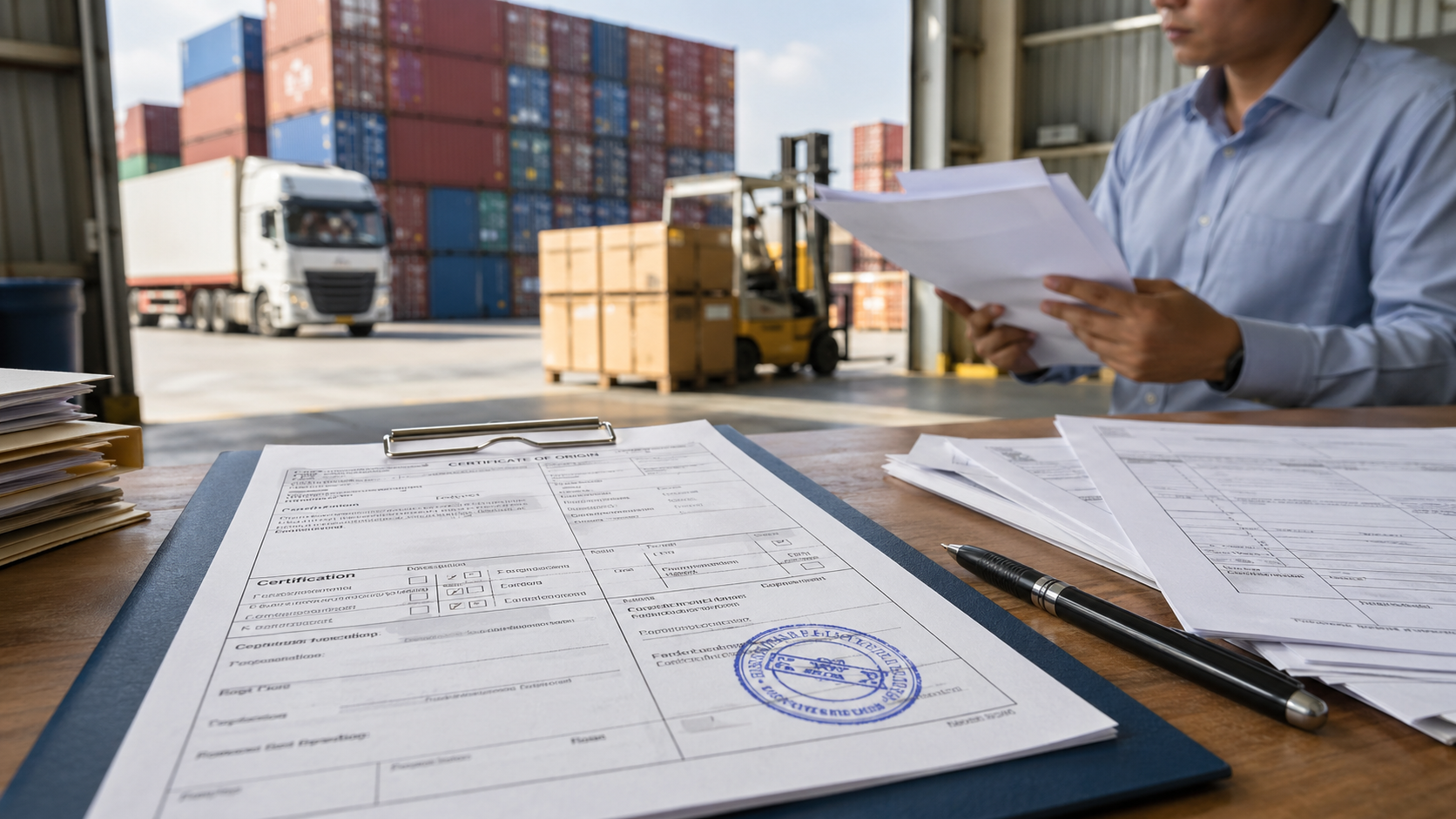
A Certificate of Origin is important because it helps customs authorities verify where goods come from. This can affect customs clearance, import duty, and whether the importer can claim benefits under a free trade agreement.
A COO is commonly used to:
prove the country of origin
support customs clearance
help customs calculate import duties
confirm eligibility for preferential treatment
meet documentary requirements in the destination country
reduce the risk of inspection, reassessment, or clearance delays
If the COO is missing, incorrect, or inconsistent with the commercial invoice and packing list, customs officials may request additional proof. This can delay clearance and create extra costs for the importer.
A Certificate of Origin is not mandatory for every shipment. Whether it is required depends on the importing country, product type, customs requirements, trade agreements, buyer request, and the purpose of import.
In some cases, customs authorities may not ask for it. In other cases, the COO becomes an essential document before the shipment can clear customs.
A Certificate of Origin may be required when:
the destination country requires proof of origin
the importer wants to claim free trade agreement benefits
the goods qualify for preferential duty rates
the buyer requests it in the sales contract
the bank requires it for payment documents
customs officials request additional proof
the shipment involves certain products under special regulations
the goods are made with materials from multiple countries
Many countries require origin certificates only for specific situations. A standard shipment may not need a COO, but the same product may require one if the importer wants reduced tariffs under a trade agreement.
For this reason, importers should confirm COO requirements before shipment. Waiting until the goods arrive at the destination port or airport may cause avoidable customs clearance delays.
In international trade, Certificates of Origin are usually divided into two main types: preferential and non-preferential. Both prove the country of origin, but they are used for different customs purposes.
| Type | What It Means | Main Use |
|---|---|---|
| Preferential Certificate of Origin | Proves that goods qualify under a free trade agreement or special trade arrangement | Used to claim reduced tariffs, zero-duty treatment, or preferential treatment |
| Non-Preferential Certificate of Origin | Confirms where goods were produced, manufactured, or processed, without providing duty benefits | Used for customs purposes, trade statistics, import control, buyer requirements, or bank documents |
A preferential COO can directly affect import duty rates, so customs authorities usually review it more carefully. A non-preferential COO does not reduce duties by itself, but it can still be important for customs clearance and origin verification.
A Certificate of Origin usually includes the key details needed to identify the exporter, consignee, goods, and country of origin.
Common information includes:
exporter and consignee details
country of origin
product description and HS code
quantity, weight, and package details
commercial invoice number
shipping route or transport mode
exporter declaration
official stamp, signature, or digital signature
The COO information should match the commercial invoice, packing list, bill of lading, and other export documents. If the details are inconsistent, customs officials may request additional proof or delay customs clearance.
A Certificate of Origin is usually issued or certified by an authorized organization in the exporting country. The issuer may be a local chamber of commerce, customs authority, trade agency, or government-authorized body.
In many countries, the chamber of commerce is the most common issuer for a non-preferential Certificate of Origin. For preferential certificates under a free trade agreement, customs authorities or approved trade agencies may be involved.
Some trade agreements also allow self-certification, where the exporter, producer, or importer makes an origin declaration directly. This is only accepted when the agreement allows it and the goods meet the required rules of origin.
COO requirements vary by country, product type, customs rules, and trade policy. Some countries require a Certificate of Origin for many imports, while others request it only for certain products, trade agreement claims, or customs review situations.
A Certificate of Origin may be more common for shipments involving:
agricultural products
animal and plant products
textiles and garments
chemicals and raw materials
machinery and industrial equipment
products under import restrictions
goods made with materials from multiple countries
products claiming preferential duty rates
endangered species or wild fauna related goods
For regulated products, a COO may not be the only document required. The importing country may also ask for health certificates, inspection certificates, product compliance documents, import permits, or test reports.
Before shipping, it is best to confirm documentary requirements with the buyer, freight forwarder, customs broker, or local customs authority in the destination country.
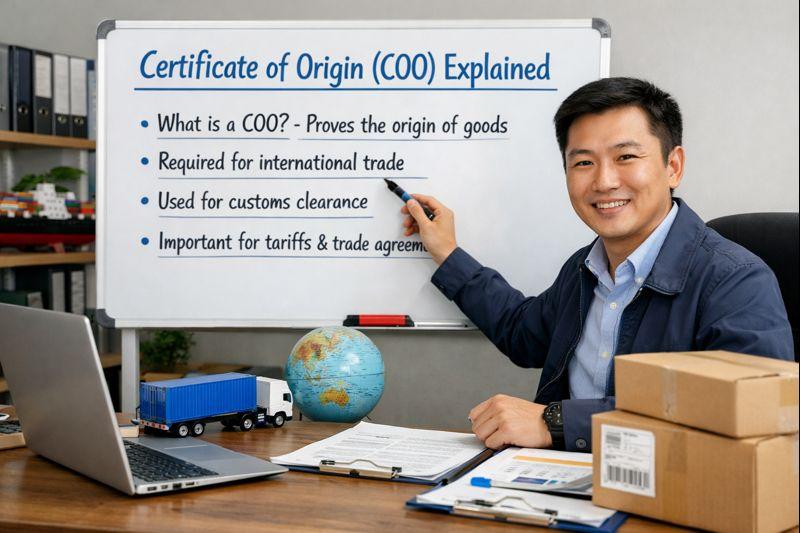
The way to get a Certificate of Origin depends on the destination country, product type, and whether the goods are shipped under a free trade agreement. In most cases, the exporter applies before shipment so the importer can use the certificate for customs clearance.
First, confirm whether the shipment needs a preferential or non-preferential Certificate of Origin.
Non-preferential Certificate of Origin: Used for general customs purposes. It confirms the country of origin but does not provide duty benefits.
Preferential Certificate of Origin: Used when the importer wants to claim reduced tariffs or preferential treatment under a free trade agreement. This type usually requires proof that the goods qualify under the agreement’s origin rules.
For most COO applications, the exporter prepares the required shipment and product details first, then submits them to an authorized issuing body.
Common details include:
HS code
product description
exporter and consignee information
country of origin
manufacturer details if required
The issuing body may be a local chamber of commerce, trade authority, customs-related agency, or approved online certification platform.
After review, the Certificate of Origin may be issued in one of two formats:
Electronic COO: Issued online with a digital signature or electronic stamp.
Paper COO: Issued as a physical document with an official stamp and signature.
The accepted format depends on the importing country and customs requirements.
Some free trade agreements allow exporters, producers, or importers to make an origin declaration without applying for a traditional chamber-issued certificate.
This is usually called self-certification or an origin declaration. It may be accepted only when the goods meet the required rules of origin and the declaration includes the necessary shipment and product details.
Because rules vary by agreement and destination country, importers should confirm whether self-certification is accepted before shipping. If the wrong format is used, customs may reject the preferential duty claim and apply the normal import duty rate.
Certificate of Origin problems usually happen when the information does not match other shipping documents.
Common mistakes include:
using the export country instead of the real country of origin
choosing the wrong certificate type
using an incorrect HS code or product description
claiming free trade agreement benefits when the goods do not qualify
missing the required stamp, signature, or digital signature
submitting the COO too late
failing to provide additional proof when customs requests it
For example, goods may be exported from China but manufactured in another country. In this case, customs authorities care about where the goods were produced or substantially transformed, not only where the shipment departed.
The COO, commercial invoice, packing list, and transport documents should also show consistent product details, quantity, HS code, and origin information. Clear and accurate documents can help reduce customs questions, corrections, and clearance delays.
A freight forwarder usually does not issue the Certificate of Origin directly, but can help coordinate the document process and reduce customs risks.
Tonlexing helps importers shipping from China review key documents before departure, including the commercial invoice, packing list, HS code, product description, and origin information. We can also coordinate with suppliers, exporters, and customs brokers to support smoother customs clearance.
For shipments involving sea freight, air freight, door to door delivery, or DDP shipping, early document checking can help reduce delays, corrections, and unexpected clearance problems. If you are unsure whether your shipment needs a Certificate of Origin, Tonlexing can help confirm the requirement before cargo departure.
A Certificate of Origin COO in shipping is an official origin document that proves where goods were produced, manufactured, grown, or substantially transformed. It is used for customs clearance, origin verification, and trade agreement review.
COO stands for Certificate of Origin. In international trade, it confirms the country of origin for exported or imported goods.
No. A COO is not required for every shipment. It depends on the importing country, product type, customs requirements, buyer request, and whether the importer wants to claim benefits under a free trade agreement.
The exporter typically prepares the application and supporting export documentation. The origin certificate may then be issued or certified by a local chamber of commerce, trade authority, approved platform, or government-authorized body.
Yes. Certificate of Origin CO and COO usually refer to the same export certificate. Both are used to prove the origin of goods for customs purposes and import review.
Useful freight, customs and importing resources related to this shipping guide.
Certificate of Origin (COO) Explained: Customs Use, FTA Savings, and Error-Free Docs Verified & Reviewed · Last updated January 2026 A Certificat...
Read guide →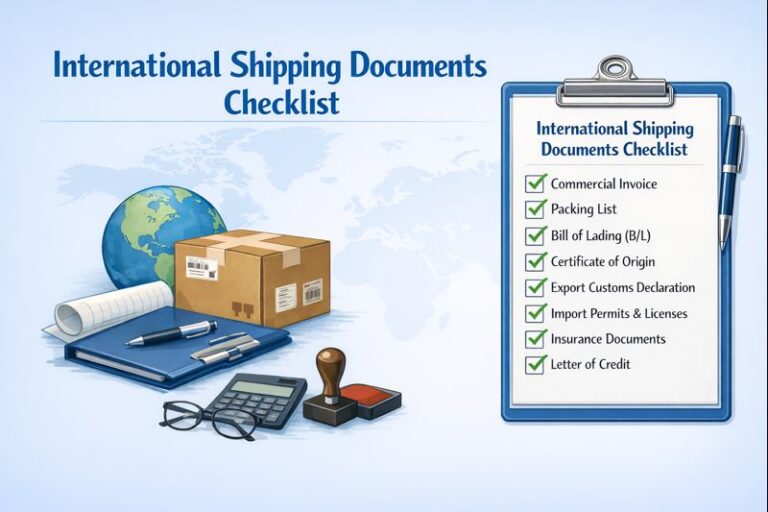
International Shipping Documents Checklist Verified & Reviewed · Last updated January 2026 International shipping fails for boring reasons: a shi...
Read guide →
Learn the difference between a commercial invoice, packing list, and bill of lading in international shipping. Understand customs clearance, carg...
Read guide →
Importing goods from China can be highly profitable—but only when you understand the necessary documents and import requirements. Whether you’re...
Read guide →Customs Clearance Step by Step: The Complete Process Verified & Reviewed · Last updated February 2026 Customs clearance step by step helps intern...
Learn more → Useful Resource Import Duties from China to EuropeImport Duties from China to Europe Verified & Reviewed · Last updated July 2026 Import duties from China to Europe depend on the HS code, customs...
Learn more →WhatsApp us