Related Guide
Shipping from Multiple Suppliers in China
Shipping from Multiple Suppliers in China Verified & Reviewed · Last updated May 2026 Shipping from multiple suppliers in China can be difficult...
Read guide →

China warehouse consolidation service helps importers collect goods from multiple suppliers in China, combine multiple packages into one shipment, and arrange international shipping more efficiently.
This updated guide explains how China warehouse consolidation works, who needs this service, how a consolidation warehouse handles receiving, storage, repacking, export documents, customs clearance, and final delivery, and how global buyers can reduce shipping costs through sea freight, air freight, LCL consolidation, door to door shipping, or DDP delivery.
China consolidation service
Multiple suppliers
International shipping
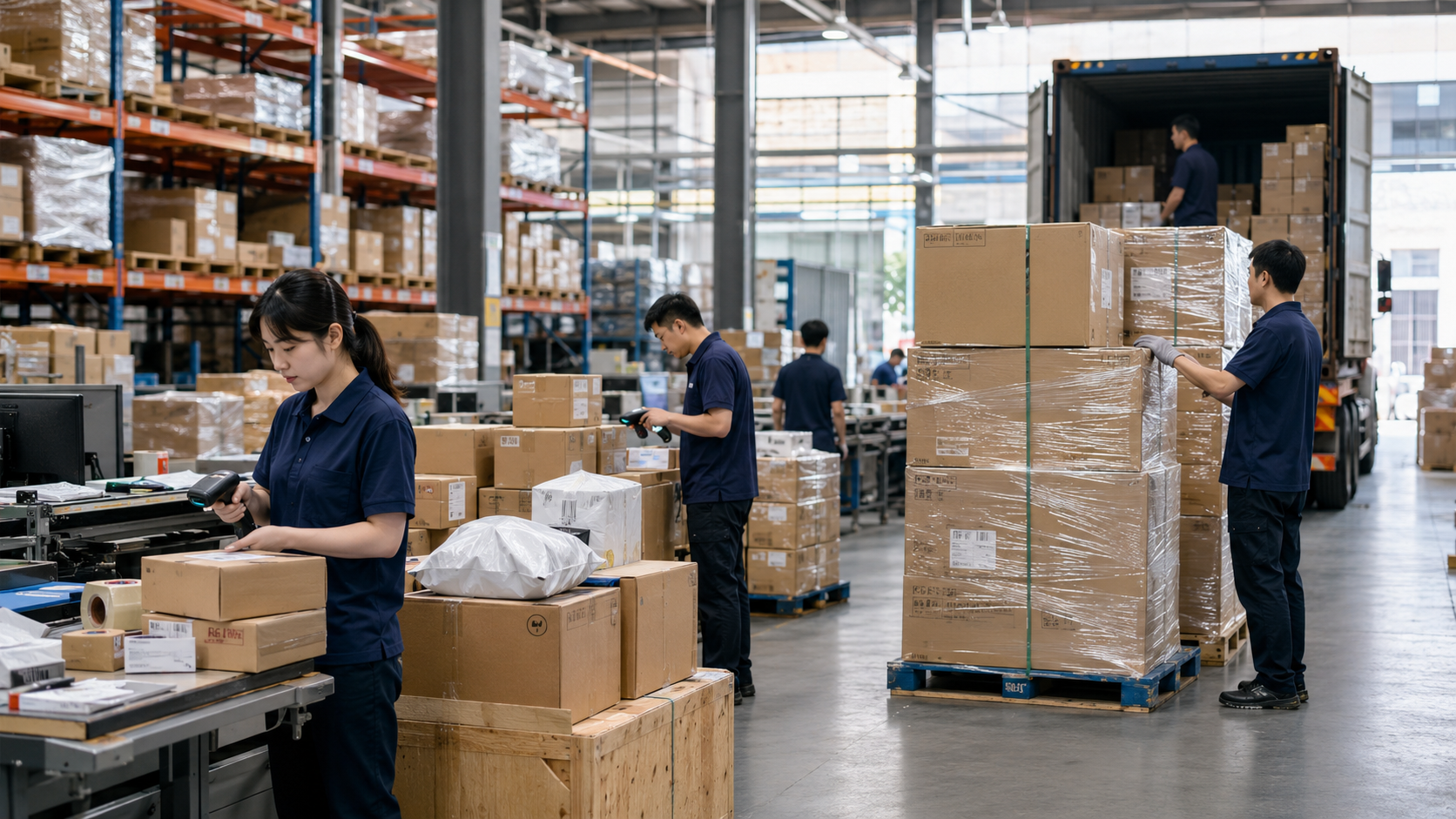
China warehouse consolidation means collecting multiple packages from different suppliers and combining them into a single shipment before export.
For example, one buyer may order packaging from Yiwu, electronics from Shenzhen, furniture parts from Foshan, and accessories from Guangzhou. If each supplier ships separately, the buyer may pay repeated domestic delivery fees, international shipping charges, customs fees, and final delivery costs.
With a consolidation warehouse, all suppliers in China send their goods to one address. The warehouse team receives the cargo, checks carton quantity, stores the goods, and consolidates everything for international transport.
A consolidation service is especially useful when your sourcing process involves more than one supplier.
You may need it if you:
buy from multiple suppliers in China
purchase small parcels from different online platforms
source products from multiple factories
need to combine samples before shipping
want to reduce shipping costs
need repacking or labeling before export
ship to Amazon warehouses
want one freight forwarder to handle the whole process
need customs clearance and final delivery support
want transparent pricing before international shipping
Many global buyers start with separate orders from different agents, suppliers, or platforms. As the business grows, managing every package separately becomes difficult. Warehouse consolidation helps turn scattered purchasing into one organized logistics process.
A professional consolidation warehouse should do more than store goods. It should help the buyer manage packages, supplier communication, export documents, shipping methods, and delivery time.
After confirming the service, your freight forwarder or consolidation company provides a warehouse address in China. You send this address to each supplier.
Every supplier should mark the cartons clearly with:
buyer name
order number
supplier name
carton quantity
product name
destination country
This simple step is important. If packages arrive without clear labels, the warehouse may not know which customer the cargo belongs to.
Each supplier arranges domestic delivery to the consolidation warehouse. Once the package arrives, the warehouse team records the shipment and checks basic details.
The receiving process may include:
counting cartons
checking outer package condition
confirming supplier information
taking arrival photos
recording weight and volume
updating the customer
This helps buyers know which suppliers have delivered and which orders are still pending.
After receiving goods, the warehouse can store them for a period of time. This is useful when different suppliers finish production on different dates.
Some consolidation warehouses provide free storage for a limited number of days. After that, storage fees may apply based on cartons, pallets, cubic meters, or storage days.
Good storage management helps prevent missing cargo, mixed packages, and shipping delays.
Before international shipping, the warehouse can check and sort the cargo based on your instructions.
Common value-added services include:
package photos
carton counting
SKU sorting
barcode labeling
Amazon FBA labeling
removing supplier invoices
repacking weak cartons
reducing oversized packaging
palletizing cargo
adding protective materials
Repacking can be very helpful because many suppliers use oversized cartons or weak packaging. Since shipping costs are often based on actual weight or volume, reducing empty space can help minimize freight cost.
When all packages are ready, the warehouse consolidates them into one shipment.
This may mean combining small parcels into stronger cartons, loading cartons onto pallets, or preparing goods for LCL consolidation or container shipments. The goal is to make the cargo safer, cleaner, and easier to handle during international shipping.
A well-prepared consolidated shipment reduces the chance of damaged cartons, missing labels, wrong documents, and customs problems.
After consolidation, the freight forwarder measures the final cargo weight and volume. Then they recommend the best shipping methods based on your delivery time, destination country, product type, and budget.
The main options are sea freight, air freight, express shipping, and door to door delivery. For larger cargo, sea freight or LCL consolidation is often more cost-effective. For urgent cargo, air freight may be better. For small parcels, express carriers can be faster.
Once the shipping plan is confirmed, the freight forwarder prepares export documents and arranges international transport.
The process may include:
export declaration in China
commercial invoice review
packing list preparation
customs clearance
freight booking
cargo loading
overseas customs handling
local delivery
final delivery to your address or warehouse
For door to door or DDP service, the freight forwarder can also help handle import customs clearance, duties, taxes, and last-mile delivery.
| Comparison Point | Separate Supplier Shipping | Warehouse Consolidation |
|---|---|---|
| Best for | One supplier or urgent small parcel | Multiple suppliers and mixed orders |
| Shipping cost | Higher when packages ship separately | Usually lower after consolidation |
| Supplier coordination | Harder to manage | Easier through one warehouse |
| Cargo control | Limited before export | Better checking and repacking |
| Customs documents | May be scattered | More organized |
| Shipping methods | Depends on each supplier | Planned by one freight forwarder |
| Final delivery | Multiple deliveries | One shipment to one destination |
If you only buy from one supplier, direct shipping may be simple enough. But if you are buying from multiple suppliers, warehouse consolidation is usually more efficient.
The right freight forwarder should not use one shipping method for every customer. They should compare cost, delivery time, cargo type, and destination country before recommending a plan.
Sea freight is suitable for bulky, heavy, or non-urgent cargo. It is commonly used for furniture, building materials, home goods, machinery, packaging materials, and wholesale products.
If your cargo does not fill a full container, LCL consolidation allows your goods to share container space with other shipments. This helps reduce cost for smaller volumes.
For larger shipments, full container shipping may be better because it gives more control and fewer handling steps.
Air freight is suitable for urgent or higher-value goods. It is faster than sea freight but more expensive.
It is often used for electronics, samples, fashion products, accessories, medical supplies, and time-sensitive orders.
For air shipping, chargeable weight is important. If your cartons are oversized, repacking can reduce volume and lower cost.
Express delivery is suitable for small parcels, samples, and urgent packages. It is fast and convenient, but the cost can be high for heavy or bulky goods.
If you have multiple small parcels from different suppliers, consolidating them first may help reduce repeated express charges.
Door to door delivery is ideal for buyers who want a simpler process. The freight forwarder handles the shipment from the China warehouse to the final address.
This may include warehouse receiving, export declaration, international shipping, customs clearance, tax handling, and final delivery.
DDP shipping is popular among ecommerce sellers and importers who do not want to manage customs and tax payments by themselves.
With DDP service, the freight forwarder helps handle customs clearance, duties, taxes, and delivery to the final destination. This option is often used for Amazon FBA, business warehouses, and commercial addresses.
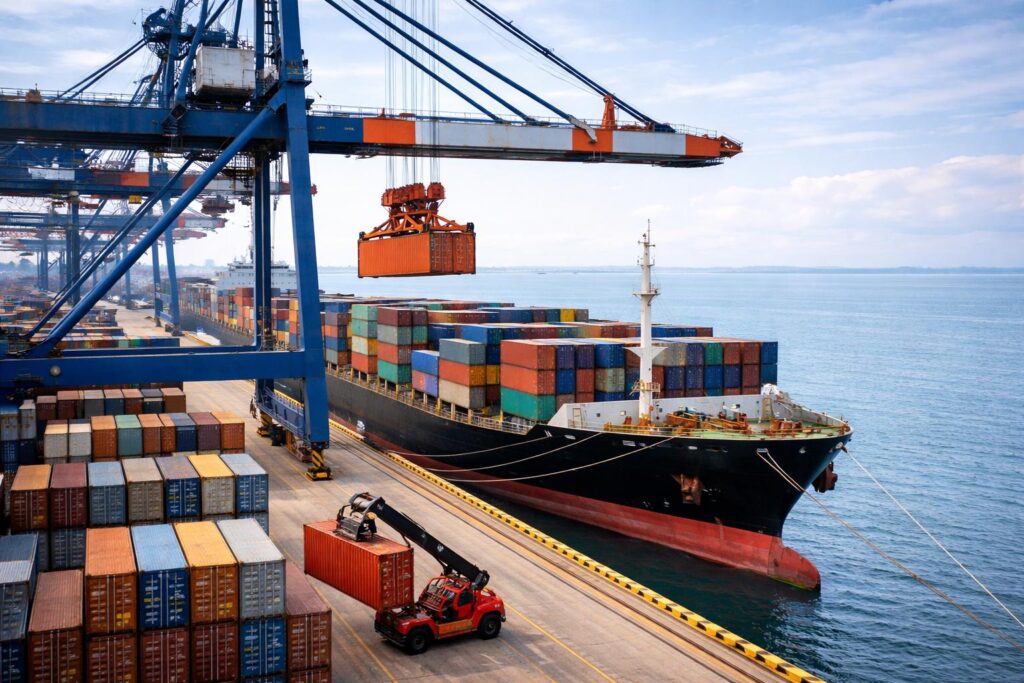
The total cost depends on the warehouse service, cargo volume, shipping method, destination country, and final delivery requirements.
Common cost items include:
| Cost Item | What It Means |
|---|---|
| Receiving fee | Warehouse receives and records supplier packages |
| Storage fee | Goods are stored before consolidation |
| Repacking fee | Weak or oversized cartons are repacked |
| Labeling fee | SKU labels, shipping labels, or FBA labels are applied |
| Palletizing fee | Cargo is prepared on pallets for safer handling |
| Documentation fee | Invoice, packing list, and export documents are prepared |
| Freight cost | Sea freight, air freight, express, or other transport charges |
| Customs clearance fee | Import or export customs handling |
| Final delivery fee | Delivery to your warehouse, home, business address, or Amazon FBA |
A reliable company should provide transparent pricing before shipment. Be careful with very low quotations that do not include warehouse handling, customs clearance, or destination charges.
Warehouse consolidation can save money, but only if the process is managed correctly.
Packages Arrive Without Labels
If suppliers do not label packages clearly, the warehouse may not identify the goods quickly. Always ask each supplier to mark cartons with your name and order number.
Goods Arrive at Different Times
If one supplier delays production, the entire consolidated shipment may wait. For urgent orders, consider shipping ready goods first and leaving delayed goods for the next shipment.
Weak or Oversized Cartons
Poor packaging can increase shipping costs and damage risks. Ask the warehouse to check carton condition before shipping.
Wrong Product Information
Incorrect product names, values, or HS codes can delay customs clearance. Make sure product details on the invoice and packing list match the actual cargo.
Choosing the Wrong Shipping Method
The cheapest method is not always the best. Sea freight may save cost but takes longer. Air freight is faster but more expensive. Door to door service may be better if you need simple delivery and customs support.
The right freight forwarder should do more than provide a warehouse address in China. A professional partner should help you manage supplier coordination, warehouse receiving, package checking, repacking, export documents, customs clearance, international shipping, and final delivery.
Before choosing a provider, check whether they can offer:
clear warehouse receiving rules
fast package updates
photo confirmation
repacking and labeling service
LCL consolidation
sea freight and air freight options
door to door delivery
customs clearance support
Amazon FBA shipping experience
transparent pricing
reliable English communication
experience with your destination country
Tonlexing helps global buyers consolidate cargo from multiple suppliers in China and arrange international shipping by sea freight, air freight, express, LCL consolidation, and door to door delivery. Whether you are purchasing from Alibaba, 1688, Taobao, Chinese factories, or different agents, our team can help turn multiple orders into one organized shipment with clear communication, transparent pricing, customs clearance support, and flexible final delivery options.
It is a logistics service that collects goods from multiple suppliers in China, stores them in one warehouse, combines them into one shipment, and arranges international shipping to the destination country.
It means your package has reached the consolidation warehouse in China. The warehouse may need to receive, check, store, repack, or combine it with other packages before international shipping begins.
Yes. Many buyers consolidate packages from Alibaba, 1688, Taobao, factories, and different agents. The key is to make sure every supplier uses the correct warehouse address and labels each package clearly.
In many cases, yes. Consolidation can reduce repeated shipping costs, handling fees, documentation charges, and final delivery costs.
Yes. Amazon sellers often use warehouse consolidation for carton checking, FBA labeling, palletizing, and delivery to Amazon warehouses.
Useful freight, customs and importing resources related to this shipping guide.
Shipping from Multiple Suppliers in China Verified & Reviewed · Last updated May 2026 Shipping from multiple suppliers in China can be difficult...
Read guide →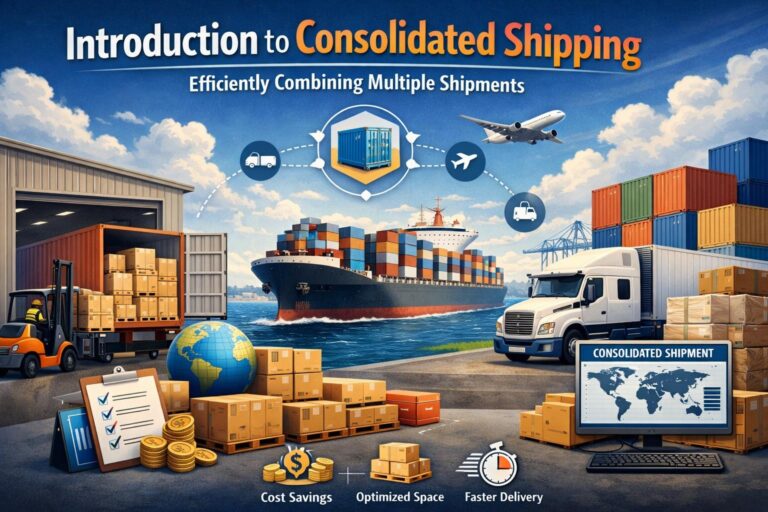
Introduction to Consolidated Shipping Verified & Reviewed · Last updated January 2026 Consolidated shipping is a freight strategy that combines m...
Read guide →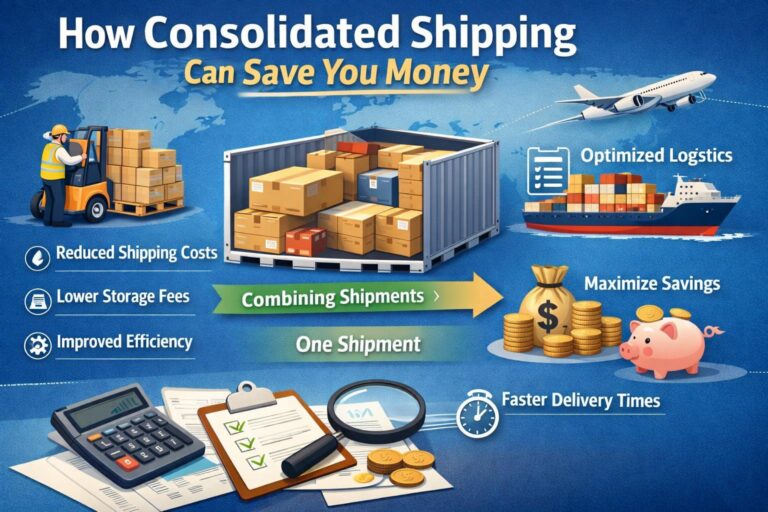
How Consolidated Shipping Can Save You Money Verified & Reviewed · Last updated January 2026 Consolidated shipping is a proven shipping strategy...
Read guide →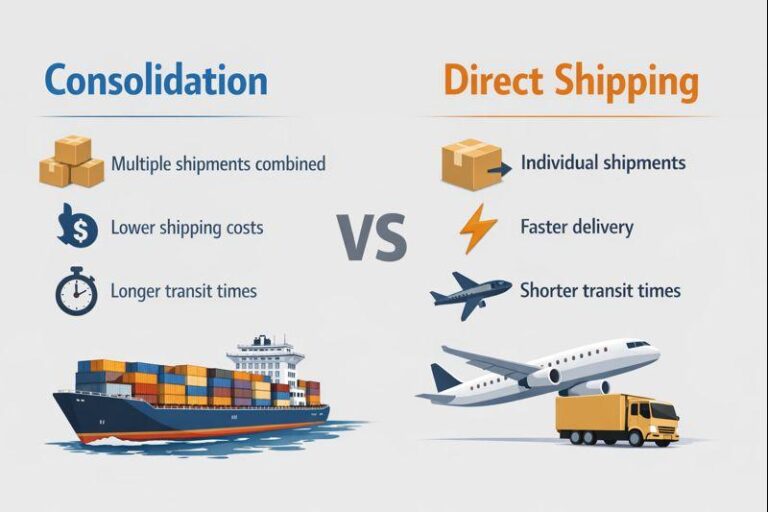
Consolidation vs Direct Shipping Verified & Reviewed · Last updated January 2026 Consolidation vs direct shipping affects shipping costs, deliver...
Read guide →Learn how LCL shipping and consolidated shipments help reduce shipping costs for smaller cargo from China.
Learn more → Useful Resource Pre-Shipment Inspection in China for ImportersPre-Shipment Inspection in China for Importers Verified & Reviewed · Last updated July 2026 A pre-shipment inspection helps importers identify de...
Learn more →WhatsApp us