Related Guide
China Sourcing Trip Guide
China Sourcing Trip Guide Verified & Reviewed · Last updated June 2026 China Sourcing Trip Guide for importers: A sourcing trip to China can be o...
Read guide →

A pre-shipment inspection helps importers identify defective products, quantity shortages, packaging problems, and labeling errors before goods leave the factory.
This guide explains when to arrange an inspection, what inspectors check, how AQL sampling works, how to read the inspection report, and what to do when a shipment fails.
What Inspectors Check
AQL & Defect Limits
Cost & Inspection Process
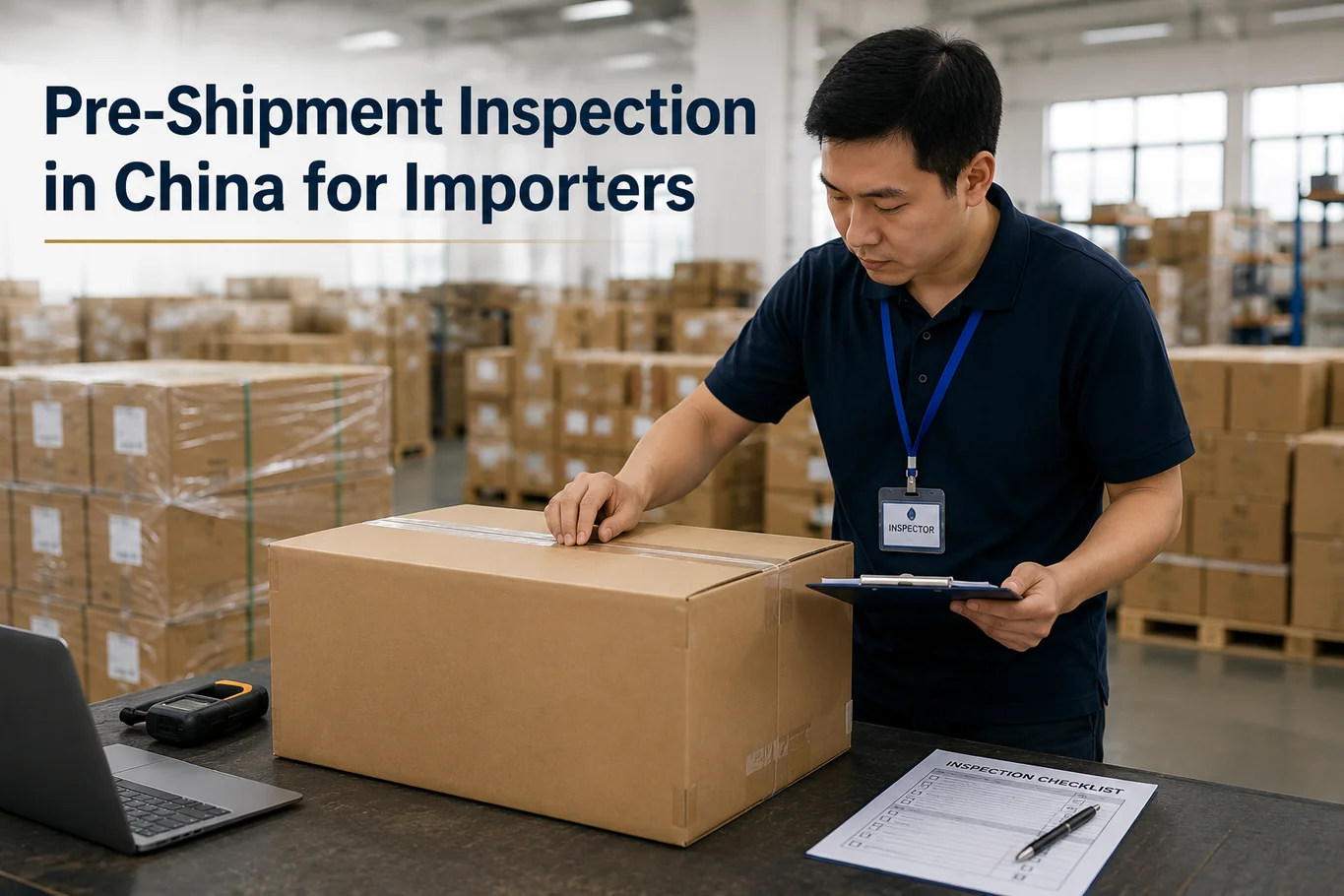
A pre shipment inspection is an independent examination of finished goods before they are released for export. It is also commonly called a final random inspection because samples are selected randomly from different cartons and production batches.
The purpose is to verify:
Product quality and workmanship
Order quantity and assortment
Product dimensions and specifications
Functionality
Packaging and labeling
Compliance with the buyer’s requirements
The inspector compares the selected samples with the purchase order, approved sample, technical drawings, packaging files, and inspection criteria provided by the buyer.
Unlike the supplier’s internal quality control process, third-party pre shipment inspection services provide an independent assessment. The inspector represents the buyer’s interests rather than the manufacturer’s production team.
A standard inspection does not guarantee that every unit is free from defects. It provides a statistical evaluation of the overall shipment based on an agreed sampling method.
Even reliable suppliers can experience quality issues caused by production pressure, material changes, subcontracting, staff turnover, or unclear specifications. Supplier photos and internal factory reports may not provide enough evidence that the full order meets the required quality standards.
An independent shipment inspection gives the buyer a clearer basis for deciding whether the goods should be accepted, corrected, or rejected.
The inspector checks whether the finished products match the approved sample and agreed product specifications.
This can reveal problems such as:
Incorrect materials
Poor workmanship
Functional failures
Missing components
Wrong colors or dimensions
Damaged surfaces
Incorrect branding
Identifying these issues in China is usually easier and less expensive than arranging repairs, replacements, or returns after delivery.
Quantity verification confirms that the number of cartons and units matches the purchase order and packing list.
The inspector may also check whether the supplier has packed the correct:
Models
Sizes
Colors
Accessories
Spare parts
Manuals
Product variations
This reduces the risk of shortages or incorrect products being discovered after customs clearance.
Defective or non-compliant goods can lead to product recalls, replacement shipments, marketplace penalties, customs problems, lost sales, and customer complaints.
A pre shipment inspection helps identify these risks before the goods enter the international supply chain. It also gives the supplier time to complete rework without causing unnecessary delays at the destination.
Importers are responsible for the products they sell, even when defects originate at the factory.
Consistent quality assurance helps reduce returns, negative reviews, distributor complaints, and damage to the importer’s brand reputation.
The inspection should be completed before the final payment is released.
When major defects or quantity problems are found, the buyer can hold payment and request corrective actions. This provides much more leverage than trying to resolve the problem after the supplier has been fully paid and the goods have already shipped.
Timely scheduling is essential to the pre shipment inspection process.
The inspection should normally take place when:
Production is 100% complete
At least 80% of the products are packed
Export packaging and labels are available
The goods have not been loaded
The final payment has not been released
Although some inspection companies accept bookings when production is 80% complete, inspecting a fully completed order usually provides a more reliable result.
The inspection should be scheduled at least two working days before container loading. Three to five working days is safer for customized products, large orders, technically complex goods, or suppliers with previous quality issues.
Before booking, confirm the following information with the supplier:
Finished production quantity
Packed quantity
Total number of cartons
Factory or warehouse address
On-site contact person
Planned loading date
Required testing equipment
Booking several days in advance gives the inspection company time to assign an inspector with suitable product experience. It also leaves enough time for rework or reinspection if the shipment fails.
The inspection scope should be adapted to the product, order value, target market, and regulatory requirements. A standard China pre shipment inspection usually covers quantity, specifications, workmanship, functionality, packaging, labeling, and documentation.
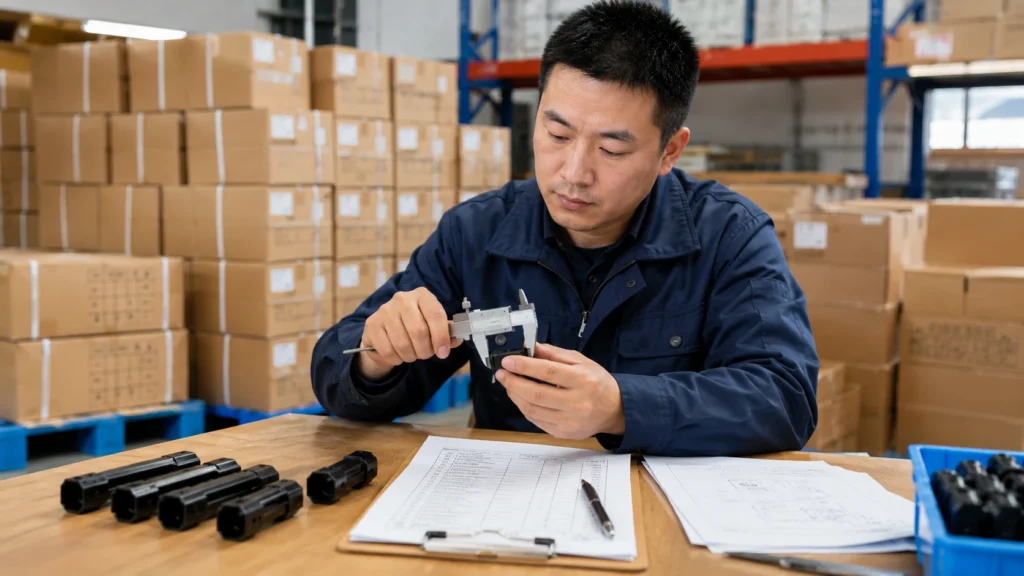
The inspector checks whether the available goods match the order quantity.
This may involve:
Counting finished cartons
Checking units per carton
Verifying product assortments
Confirming model numbers
Checking accessories and spare parts
Comparing the goods with the packing list
If the required quantity is not available, the inspector should record the actual production and packing status in the inspection report.
The inspector compares the finished goods with the purchase order, approved sample, and product specifications.
Common checks include:
Dimensions
Unit weight
Materials
Components
Color
Surface finish
Logo placement
Printing
Product configuration
Included accessories
The buyer should provide measurable tolerances wherever possible. Instructions such as “good quality” or “same as before” are too general to serve as reliable inspection criteria.
A visual inspection checks the appearance, assembly, and overall manufacturing quality of the product.
Typical visible defects include:
Scratches
Dents
Cracks
Stains
Loose components
Sharp edges
Uneven stitching
Poor printing
Paint defects
Glue marks
Color differences
Incorrect assembly
Defect acceptance depends on the product and destination market. A small cosmetic mark may be acceptable on industrial machinery but unacceptable on a premium retail product.
On site tests verify whether the selected products perform as expected.
Depending on the product, testing may include:
Power-on testing
Charging tests
Button and switch checks
Assembly tests
Zipper tests
Leak tests
Load and stability tests
Barcode scanning
Measurement checks
Carton drop tests
Adhesion tests
The buyer should provide the testing method, acceptable result, and required equipment before the inspection.
A standard inspection service cannot replace accredited laboratory testing. Chemical analysis, electrical safety testing, electromagnetic compatibility, and other regulated tests may require specialist facilities.
Packaging inspection determines whether the goods are adequately protected for storage, handling, and transportation.
The inspector may check:
Retail boxes
Inner cartons
Master cartons
Plastic bags
Moisture protection
Carton sealing
Pallet condition
Shipping marks
Barcodes
Warning labels
Country-of-origin labels
Compliance marks
User manuals
The packaging should be suitable for the chosen shipping method. LCL cargo, fragile products, and heavy goods may require stronger protection than standard domestic packaging.
Documentation review confirms that the physical goods match the buyer’s approved files.
Relevant documents may include:
Purchase order
Packing list
Approved sample
Technical drawings
Product specifications
Packaging instructions
Artwork files
Label files
Testing procedures
Compliance requirements
Clear documentation reduces disputes and helps the inspector distinguish actual defects from acceptable production variation.
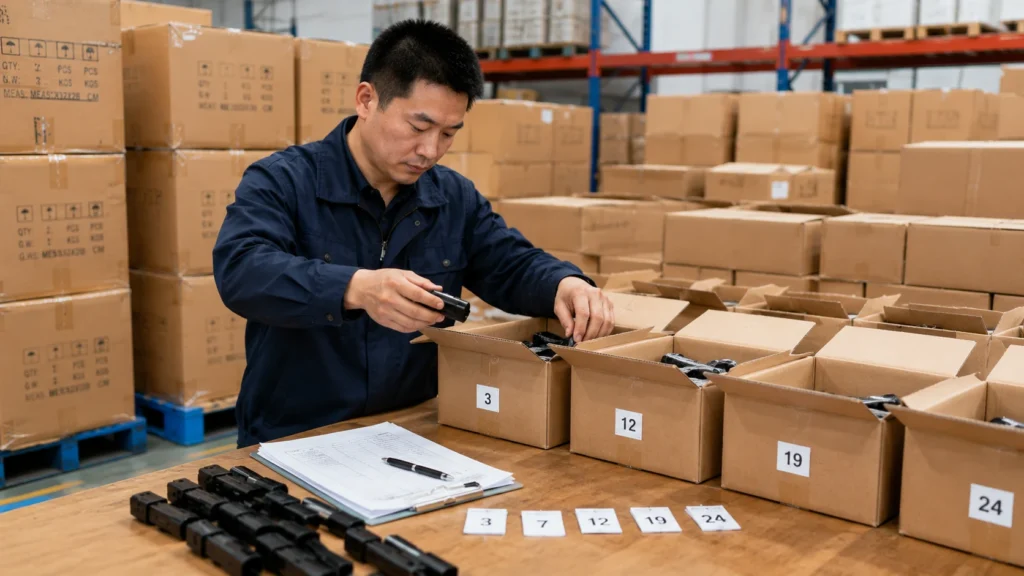
Most inspection companies do not check every unit. They use random sampling to select a representative number of products from the shipment.
The commonly used ANSI/ASQ Z1.4 and ISO 2859-1 standards determine the sample size according to the order quantity and inspection level.
The buyer then sets the acceptable quality limits, or AQL. These limits establish how many defects can be accepted in the sample before the shipment fails.
Defects are divided into three main categories.
Critical defects create a safety risk, violate regulatory standards, or make the product dangerous or illegal to sell.
Examples include exposed wiring, missing safety devices, contamination, dangerous sharp edges, and incorrect mandatory safety warnings.
The acceptable limit for critical defects is usually zero.
Major defects affect product function, usability, durability, appearance, or marketability.
Examples include:
Products that do not work
Broken components
Incorrect dimensions
Missing accessories
Serious color differences
Incorrect branding
Packaging that cannot protect the product
AQL 2.5 is commonly used for major defects.
Minor defects do not prevent normal product use but reduce appearance or overall quality.
Examples include small scratches, slight printing variations, minor stitching problems, and cosmetic marks in less visible areas.
AQL 4.0 is commonly used for minor defects.
These levels are common reference points rather than fixed rules. Premium products, medical devices, automotive parts, children’s products, and safety-related equipment may require stricter quality standards.
Buyers who need every product checked can arrange a 100% inspection instead of a standard final random inspection.
A clear PSI process helps the buyer, supplier, inspection company, and freight forwarder understand their responsibilities.
The buyer determines which quality requirements, product details, tests, and packaging conditions must be checked.
The inspection scope should be specific to the order rather than based only on a generic checklist.
The buyer sends the inspection company the required reference materials, including the purchase order, approved sample, product specifications, technical drawings, packaging files, and inspection criteria.
Previous inspection findings should also be provided when the supplier has had earlier quality issues.
The inspection company confirms that enough finished goods are available for sampling.
When the factory is not ready, the inspector may be unable to complete the inspection properly, resulting in additional costs and a second visit.
The inspector selects cartons and products from different parts of the shipment.
The supplier should not prepare or select the samples. Random selection is necessary to provide a more reliable view of the complete order.
The inspector follows standardized procedures and the buyer’s customized requirements.
The work normally includes:
Quantity verification
Product measurements
Visual checks
Functional tests
Packaging inspection
Label verification
Documentation review
Defect classification
Photographic evidence
After completing the site visit, the inspection company prepares a detailed inspection report.
The result may be shown as:
Pass
Fail
Pending
Conditional pass
The final classification depends on the inspection findings and the agency’s reporting system.
The buyer reviews the report and decides whether to release the final payment and authorize shipment.
A pass result should not be accepted without reading the full report. Some minor defects or observations may fall within the acceptable quality limits but still require attention.
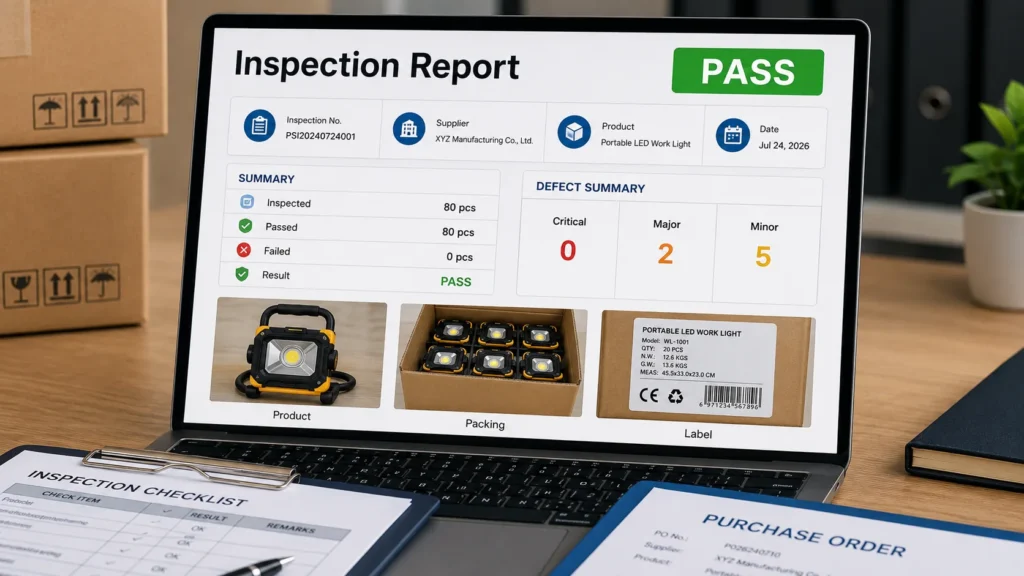
A detailed inspection report should provide enough evidence for the buyer to make a shipment decision without visiting the factory.
A comprehensive inspection report normally includes:
Factory and supplier information
Inspection date and location
Product description
Purchase order quantity
Production and packing status
Sample size
Inspection scope
Product measurements
Test results
Quantity findings
Critical, major, and minor defects
Packaging and labeling findings
Product and carton photographs
Final inspection result
The report should clearly distinguish confirmed quality issues from general observations.
It should also state which checks could not be completed. For example, a load test may be omitted if the factory does not provide suitable equipment.
The buyer should review the PSI report promptly so the shipment schedule is not affected by delayed approval.
A failed inspection does not automatically mean the entire order must be rejected. The next step depends on the severity and extent of the problems.
Check the defect photos, test results, sample size, and AQL outcome.
Determine whether the failure relates to:
Critical defects
Major defects
Excessive minor defects
Incorrect quantity
Packaging problems
Labeling errors
Missing documents
The supplier may need to:
Replace defective goods
Sort the full production batch
Repair damaged units
Correct labels
Repack cartons
Add missing accessories
Reprint manuals
Improve protective packaging
Reproduce unacceptable products
The required work and completion date should be confirmed in writing.
The final payment should not be released while serious quality issues remain unresolved.
Payment terms should be structured so that inspection approval is required before cargo release.
Supplier photos may confirm that some corrections were made, but they do not always prove that the entire shipment has been reworked.
A reinspection is recommended when the original failure involved widespread defects, safety concerns, major functionality problems, or a high-value order.
The purchase agreement should clarify who pays the additional inspection costs when a shipment fails.
Pre shipment inspection costs are commonly calculated per man-day. One man-day usually means one inspector working for one standard business day.
Basic inspection services may start at approximately $198 per man-day, while some established providers charge around $268 per man-day or more.
The final cost depends on:
Factory location
Product category
Number of product models
Sample size
Inspection scope
Testing complexity
Number of inspectors
Travel requirements
Urgent scheduling
Reporting requirements
Remote factories and complex products may require additional travel fees or more than one inspector-day.
Buyers normally pay for the initial inspection because the inspection company is working on their behalf. The supplier may be required to pay for reinspection when the goods fail to meet the agreed quality requirements.
Price should not be the only consideration. An inexpensive inspection service offers little value when the inspector lacks product knowledge, misses important defects, or provides an incomplete report.
A reliable pre shipment inspection company should be independent, responsive, and experienced with the relevant product category.
Before selecting an inspection service, ask:
Does the company cover the factory location?
Has it inspected similar products?
Can it follow a customized checklist?
Does it use recognized international standards?
Can it perform the required on site tests?
Does the detailed report include clear photographs?
How quickly will the report be delivered?
Are travel costs included?
Can it arrange urgent inspections or reinspections?
How does it prevent conflicts of interest?
Large international inspection companies often provide broad geographical coverage and standardized procedures. China-based inspection companies may offer faster scheduling, competitive pricing, and stronger local factory coverage.
For regulated or technically complex imported goods, confirm that the inspector understands the relevant quality and regulatory standards. A general consumer goods inspector may not be suitable for electrical equipment, medical products, industrial machinery, or automotive components.
A standard inspection can usually be completed within one working day. Orders involving several product models, complex testing, or large sample sizes may require more time. The inspection report is often issued within 24 hours after the site visit.
PSI inspections are normally conducted by independent third-party inspection companies. Some sourcing agents also provide quality control services, although buyers should confirm that the inspector is independent from the supplier.
Yes. Buyers can request a 100% inspection rather than AQL random sampling. A full inspection takes longer and costs more but may be appropriate for high-value, safety-sensitive, or previously failed goods.
No. Random sampling cannot guarantee that every unit is defect-free. A passed inspection means the sampled products met the defined inspection criteria and acceptable quality limits.
No. A visual and functional shipment inspection cannot replace accredited laboratory testing for chemical, electrical, safety, or regulatory compliance requirements.
Useful freight, customs and importing resources related to this shipping guide.
China Sourcing Trip Guide Verified & Reviewed · Last updated June 2026 China Sourcing Trip Guide for importers: A sourcing trip to China can be o...
Read guide →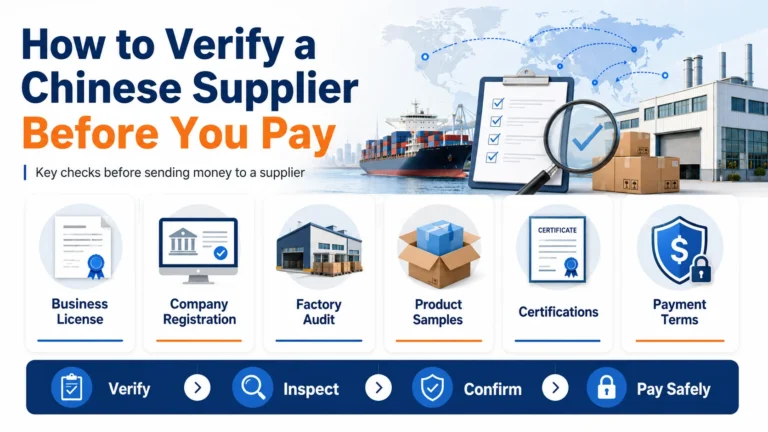
How to Verify a Chinese Supplier Before You Pay Verified & Reviewed · Last updated July 2026 Before you pay a Chinese supplier, do not rely only...
Read guide →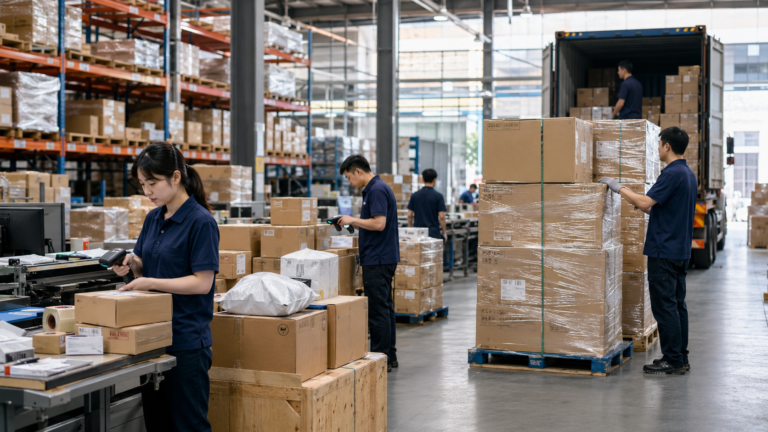
China Warehouse Consolidation Service Verified & Reviewed · Last updated May 2026 China warehouse consolidation service helps importers collect g...
Read guide →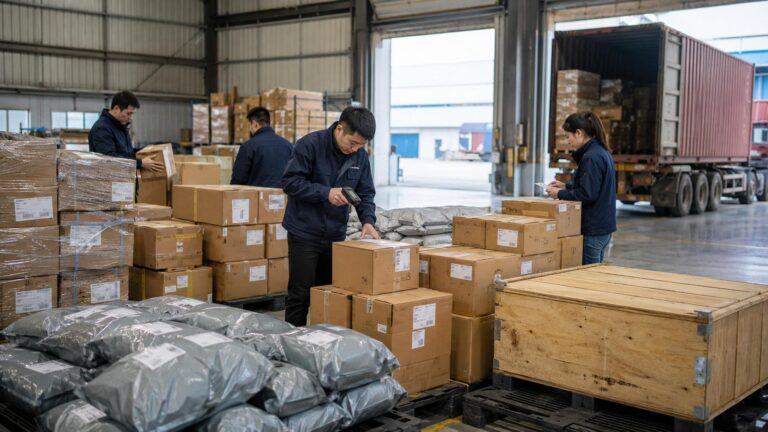
Shipping from Multiple Suppliers in China Verified & Reviewed · Last updated May 2026 Shipping from multiple suppliers in China can be difficult...
Read guide →Importing goods from China can be highly profitable—but only when you understand the necessary documents and import requirements. Whether you’re...
Learn more → Useful Resource EXW Container Shipping from ChinaEXW Container Shipping from China: Complete Guide for Importers Verified & Reviewed · Last updated April 2026 EXW container shipping from China m...
Learn more →WhatsApp us