Related Guide
China Sourcing Trip Guide
China Sourcing Trip Guide Verified & Reviewed · Last updated June 2026 China Sourcing Trip Guide for importers: A sourcing trip to China can be o...
Read guide →

Before you pay a Chinese supplier, do not rely only on an English company name, a polished website, a low quotation, or a gold supplier badge.
This guide explains how to verify a Chinese supplier before sending money, covering business license checks, Chinese company registration, bank account matching, factory evidence, samples, test reports, contracts, and red flags buyers should review before paying a deposit or balance.
Supplier verification
Business license check
Bank account matching
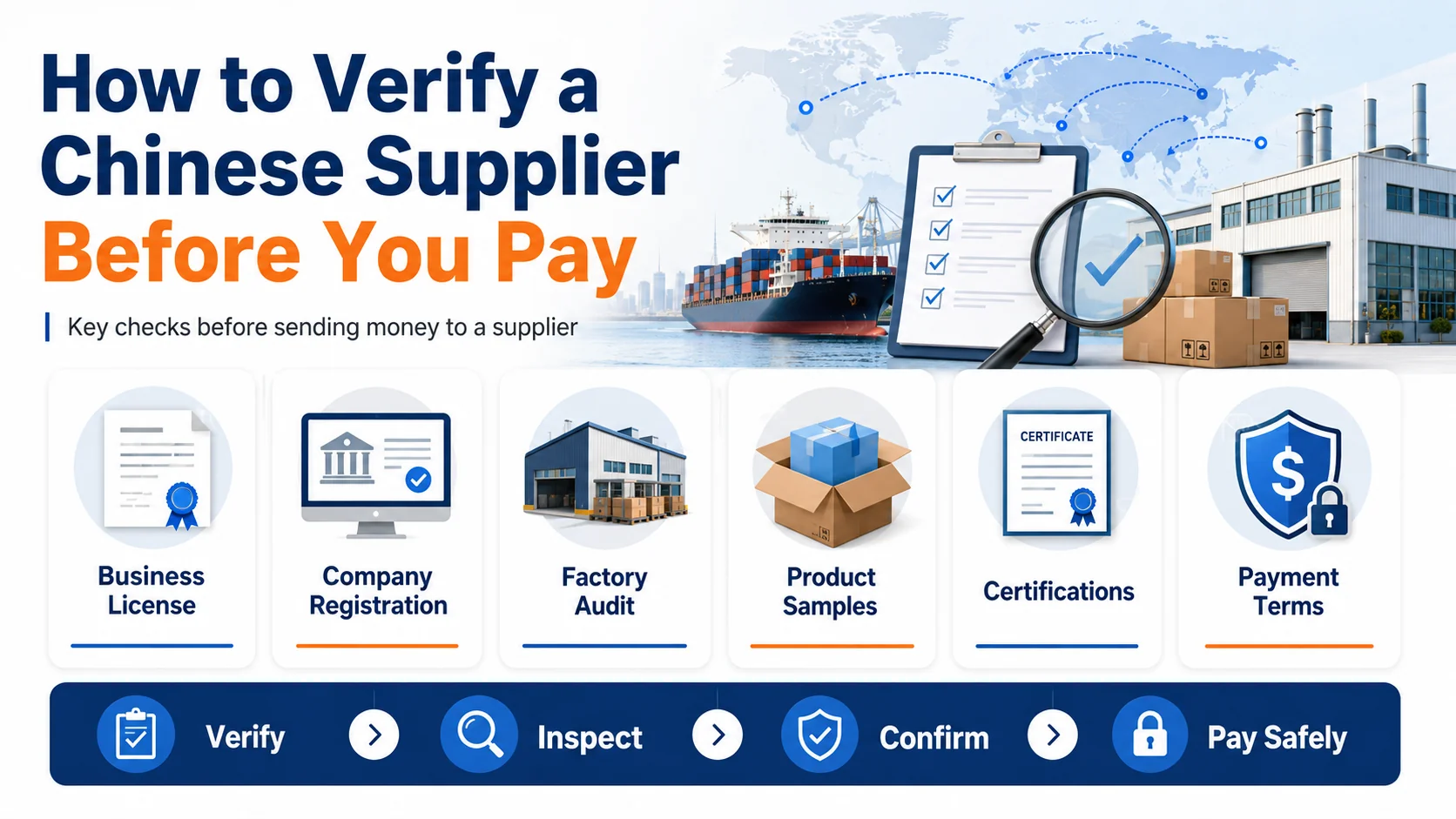
To verify a Chinese supplier before payment, start with the legal Chinese company name, business license, and Unified Social Credit Code. Then review the company record in government databases, match the bank account with the registered company name, check whether the supplier is a factory or trading company, and verify product evidence through samples, test reports, factory audit, or pre-shipment inspection.
The most important rule is simple: the registered company name, bank account beneficiary, contract party, and commercial invoice should match. If the supplier asks you to pay a personal account or an unrelated company, do not send money until the relationship is clearly verified.
| Check | What It Confirms | Red Flag |
|---|---|---|
| Business license | Legal company name, USCC, legal representative | Blurry license or different company name |
| Government database record | Company status, registration date, business scope | Abnormal records or serious violations |
| Bank account | Whether payment goes to the registered company | Personal account or unrelated offshore account |
| Factory evidence | Real production capability | Only catalog photos, no live video |
| Sample order | Product quality before bulk production | Sample differs from final goods |
| Test report | Product-specific compliance information | Report belongs to another product or company |
| Factory audit | Equipment, staff, production line, quality control | Supplier refuses an audit |
| Contract review | Payment terms, specifications, dispute handling | Contract name differs from bank account |
A business license is important, but it is not proof of reliability. Supplier verification should combine legal checks, payment checks, product checks, and practical risk control.
Most buyers do not lose money because they forgot to ask for a catalog. They lose money because they paid too early with too little confirmation.
A supplier may reply quickly, offer a competitive price, and send professional product photos. But these signs do not prove that the company legally exists, controls production, or has the right to receive payment under the name shown on the invoice.
The risk usually appears in small details. The supplier may use one company name on the quotation, another name on the bank account, and a different stamp on the contract. Or the business scope may only cover trade and wholesale, while the salesperson claims to own several production lines.
Before you pay, your goal is to check whether the whole deal is consistent. The company should exist legally, the business license should match the supplier’s claims, the bank account should belong to the registered company, and the product evidence should support what the supplier says it can produce.
If these points match, the risk is lower. If they conflict, the supplier is not ready for payment yet.
The legal Chinese company name is the starting point for supplier verification. Many suppliers use English names on Alibaba, Made-in-China, Global Sources, websites, catalogs, email signatures, and WhatsApp profiles. However, an English name may only be a translation or marketing name.
The official registered name in China is usually in Chinese. This is the name connected to the business license, Unified Social Credit Code, legal representative, registered capital, and business scope.
If you only have the English company name, you may not be able to verify the correct entity. Some suppliers use different English translations in different places. This does not always mean fraud, but it can make company checks unreliable.
The Chinese company name allows you to search government databases, review market regulation records, check court records, and compare the supplier’s documents. It also helps you confirm whether the company on the contract is the same company receiving the payment.
A serious supplier should be able to provide its registered Chinese company name before payment. If the supplier says this information is private or unnecessary, treat it as a warning sign.
Ask the supplier to provide the following details before you pay a deposit:
Registered Chinese company name
English company name if available
Business license copy
Unified Social Credit Code
Legal representative
Registered address
Establishment date
Registered capital
Business scope
Company bank account details
The registered company name should remain consistent across the business license, proforma invoice, contract, company stamp, bank account, and commercial invoice. If the names do not match, ask for a written explanation before sending money.
Every legitimate Chinese company should have a valid business license. This document confirms that the company legally exists and shows what kind of business activities it is registered to conduct.
A Chinese business license usually includes the registered company name, Unified Social Credit Code, legal representative, company type, registered capital, establishment date, registered address, business scope, and registration authority.
When reviewing the license, first check whether the document is complete and readable. A cropped, blurry, or edited image is not enough. Ask for a clear full copy if any part is missing.
Then compare the license with the supplier’s other documents. The company name should match the name on the quotation, contract, invoice, and bank account. If a different company appears, the supplier needs to explain the relationship clearly.
A business license confirms legal existence. It does not prove that the supplier is honest, financially stable, or able to manufacture your product.
A company can be legally registered but still have poor quality control, weak production capacity, repeated quality disputes, or payment risks. This is why supplier verification should not stop at the business license.
Use the business license as the first filter, then continue with company registration checks, bank account matching, factory evidence, samples, test reports, contracts, and inspection terms.
Government databases help you compare the supplier’s claims with official company information. This is important because sales messages can be polished, but registration records are harder to manipulate.
You can use the company name or Unified Social Credit Code to search official government databases, including the National Enterprise Credit Information Publicity System. The result should match the supplier’s business license.
For broader company risk checks, buyers may also refer to official sources such as the State Administration for Market Regulation and Credit China. These platforms can help review market regulation information, abnormal operation records, and certain credit-related risk signals.
Start by checking the company status. If the company is active and normally registered, that is a good starting point. If the record shows abnormal operation, cancellation, revocation, or severe violations, you should investigate carefully before payment.
The registration date also matters. A company registered only a few months ago can still be legitimate, but the risk is higher if it also has no factory evidence, no trade references, low registered capital, and strong pressure for fast payment.
Registered capital should not be judged alone. A high amount does not guarantee reliability, and a low amount does not always mean fraud. It is one signal to read together with company history, business scope, factory capability, and payment terms.
The business scope tells you what the company is registered to do. It may include manufacturing, processing, technology development, wholesale, retail, import and export, consulting, or service activities.
If the business scope only mentions trade, wholesale, import and export, or consulting, the company may be a trading company rather than a real factory. That is not always a problem. Many trading companies are useful for small orders, mixed products, export documents, and supplier coordination.
The problem appears when the supplier claims to be a manufacturer but the business scope, address, and factory evidence do not support that claim.
You should also look for abnormal records, market regulation issues, serious violations, court records, and enforcement-related risk information. For enforcement checks, the China Enforcement Information Publicity Network can be used as an additional reference.
A few ordinary disputes may not be a major problem, especially for a large company. But repeated contract disputes, unpaid debts, quality issues, or enforcement records can indicate higher payment risk.
The bank account check is one of the most important steps before sending money. The beneficiary name should match the registered company name shown on the business license and contract.
Before payment, compare these documents:
Business license
Proforma invoice
Sales contract
Bank account details
Commercial invoice
Company stamp
Email signature
If the supplier asks you to pay a personal account, a manager’s private account, a separate finance company, or an unrelated offshore company, stop and verify the reason. In normal international trade, payment should go to a corporate bank account connected to the registered company.
A personal account is a major red flag. It can make disputes harder to handle and may weaken your ability to prove the business relationship later.
Sometimes a supplier may use a related Hong Kong company or export agent to receive international payments. This is not always fraud, but it must be clearly documented. The relationship between the registered company, contract party, and payment receiver should be explained in writing before you pay.
Many suppliers on B2B platforms are actually trading companies. Some are honest about it. Others present themselves as factories because buyers often prefer to buy directly from manufacturers.
The key question is not whether a supplier is a factory or trading company. The real question is whether the supplier is honest about its role and capable of delivering what you need.
A trading company can be a good option in many situations. It may help buyers source from several factories, consolidate products, manage small MOQs, communicate more efficiently, and handle export documents.
For standard products, low-volume orders, mixed items, or general consumer goods, a reliable trading company may be easier to work with than a factory.
However, if your order involves custom molds, strict tolerances, private-label packaging, electrical safety, chemical compliance, batteries, children’s products, or marketplace certification, you need to know who is actually manufacturing the goods.
A trading company is not the problem. A trading company pretending to be a real factory is the problem.
To check whether the supplier is a real factory, ask for evidence that is difficult to fake. Polished photos are not enough because they may be copied from another manufacturer.
Request a live video walkthrough. Ask the supplier to show the factory gate, office, production line, machines, raw material area, warehouse, packing area, and quality control station in one continuous video call.
You can also ask for factory address, production line video, equipment list, worker and workshop view, quality control process, recent production cases, product samples, or a factory audit report.
During the video call, ask simple questions about materials, lead time, tolerances, common defects, packaging, and production capacity. A real manufacturer should be able to explain the process clearly.
If the supplier avoids video calls, only sends catalog images, or cannot explain how the product is made, you may be dealing with a middleman.
Supplier verification is not only about the company. You also need to verify whether the supplier can deliver the product you expect.
A company may be legitimate but still unsuitable for your order. It may lack the right equipment, use different materials, misunderstand your specifications, or have weak quality control.
A product sample helps you evaluate quality before placing a larger order. Check the sample against your required material, size, color, function, finish, packaging, labeling, and performance.
Do not judge only by appearance. For many products, the real risk is hidden in material quality, internal components, durability, safety, or consistency during mass production.
A good sample should lead to a clear written specification. Before production starts, confirm the exact product details in the contract or purchase order. Include model number, material, dimensions, color, logo, packaging, labeling, tolerance, and inspection standard.
Remember that sample quality may differ from bulk production. That is why a pre-shipment inspection is important before paying the balance.
Certificates and test reports can reduce compliance risk, but they should be checked carefully. Fake certificates and unrelated reports are common in international sourcing.
When reviewing a test report, check the company name, product name, model number, tested standard, issue date, laboratory name, report number, tested sample description, and whether the report covers the finished product.
Do not accept a certificate only because it looks official. A report may belong to another company, another product, another model, or only one component.
This is especially important for electronics, batteries, toys, food contact products, medical items, cosmetics, chemicals, and products sold through strict marketplaces. If the product has compliance risk, ask for relevant information before production starts, not after the goods are finished.
Not every order needs a full factory audit. For a small trial order, a business license check, sample order, video call, and inspection may be enough. For larger or customized orders, stronger verification is usually worth the cost.
Factory audits and inspections are different tools. A factory audit checks supplier capability before or during cooperation. A pre-shipment inspection checks the actual goods before they leave China.
A factory audit verifies a supplier’s manufacturing capabilities. It helps confirm whether the supplier has the equipment, staff, production line, warehouse, and quality control system needed for your order.
A useful factory audit should check whether the factory actually exists, whether the supplier controls or owns it, what equipment is used, how many workers are present, how raw materials are managed, and how quality control is handled during production and before packing.
A factory audit answers this question: can this supplier produce the order properly?
A pre-shipment inspection answers a different question: are these finished goods acceptable before I pay the balance and ship them?
For higher-risk orders, both may be useful. The factory audit reduces supplier risk before production, while the inspection reduces quality risk before shipment.

Verifying a supplier does not end after checking the company details. The payment structure and contract terms are equally important because they determine how much control you have after production starts.
A supplier may be a legitimate Chinese company, but poor payment terms can still create problems if the order is delayed, the quality does not meet expectations, or the supplier refuses to make corrections.
The payment method should consider the order value, product complexity, customization requirements, and your previous relationship with the supplier.
For a new supplier, paying the full amount before production or shipment creates unnecessary risk. Once the supplier receives all payment, the buyer has limited leverage if there are production delays, quality problems, or unexpected changes.
For most manufacturing orders, a common arrangement is a deposit before production and the remaining balance after the goods are completed and inspected.
The exact payment terms depend on the product and supplier relationship. A small sample order may require full payment, but larger production orders should usually include milestones that protect the buyer.
Do not release the balance payment only because the supplier sends finished product photos. Photos can show selected items and may not reveal problems such as incorrect quantities, material changes, damaged packaging, labeling mistakes, or hidden quality issues.
A pre-shipment inspection allows buyers to check the actual goods before shipment. If problems are found, the supplier has the opportunity to repair, replace, or correct the goods before the final payment is released.
For high-value or customized orders, inspection can be one of the most effective ways to reduce quality disputes.
A clear contract helps protect both sides and provides a reference if a dispute occurs. Before production starts, confirm that the contract includes:
Registered company name
Product specifications and materials
Quantity and price
Packaging and labeling requirements
Production schedule
Quality standards
Inspection requirements
Payment terms
Warranty or after-sales responsibilities
The information across the sales contract, proforma invoice, commercial invoice, packing list, and bank details should remain consistent.
If the contract is signed with one company but payment is requested to another company or personal account, ask the supplier to explain the relationship before making any transfer.
Even after checking a supplier’s basic information, there are situations where you should delay payment until the risk is clarified. A low price, urgent production schedule, or pressure from the salesperson should not replace proper supplier verification.
Before sending money, make sure the company information, payment details, product documents, and production capability are consistent. If important information is missing or does not match, it is better to pause the transaction and investigate further.
You should not pay yet if you notice any of the following situations:
The supplier refuses to provide a business license or registered company information
A legitimate Chinese company should be able to provide basic registration details, including the company name, Unified Social Credit Code, and business license. Without this information, you cannot confirm who you are actually dealing with.
The bank account does not match the registered company name
Payment should normally be made to a corporate account under the same registered company shown on the contract and invoice. Requests to pay a personal account or unrelated company require additional verification.
The supplier uses different company names across documents
If the quotation, contract, business license, and bank details show different entities, ask the supplier to explain the relationship before making payment.
The supplier claims to be a factory but cannot provide production evidence
A real manufacturer should be able to show a factory address, production line, equipment, workers, or a live video walkthrough. Only using catalog images or product photos is not enough.
The price is significantly lower than other suppliers
A lower quotation may be caused by different materials, lower quality standards, hidden costs, or misleading initial pricing. Compare specifications, not only the final price.
The supplier refuses samples, inspection, or quality confirmation
Reliable suppliers should accept reasonable quality checks, especially for customized products or larger orders. Refusing inspection before shipment increases risk.
The certificates or test reports do not clearly match the product
Check whether the company name, product model, testing standard, and report details match your actual order. A document from another product or supplier does not provide real protection.
The supplier pressures you to pay immediately
Urgent requests such as “today only price,” “last production slot,” or “material price increase tomorrow” should not force you to skip basic verification.
One warning sign may have a reasonable explanation. However, several warning signs appearing together usually indicate higher risk. In that situation, consider requesting more documents, arranging an inspection, using a sourcing agent, or choosing another supplier.
The goal of supplier verification is not to avoid every possible risk. It is to make sure you understand who you are paying, what you are buying, and what protection you have before the money leaves your account.
A supplier does not need to be perfect, but the deal should make sense. If basic information is hidden, inconsistent, or difficult to verify, the risk increases.
| Red Flag | Why It Matters | Safer Action |
|---|---|---|
| Supplier refuses to provide business license | You cannot confirm legal existence | Ask for the Chinese company name and USCC |
| Company name changes across documents | Legal responsibility becomes unclear | Require consistent documents before payment |
| Bank account does not match the registered company | Payment may go to another party | Request a corporate account under the registered company |
| Supplier asks for personal account payment | Recovery and dispute handling become difficult | Do not pay until proper account details are provided |
| Claims to be a factory but business scope shows only trade | Supplier may be a middleman | Request factory evidence or arrange audit |
| Price is far below competitors | May indicate bait pricing, poor materials, or fraud | Compare specifications, MOQ, terms, and quality level |
| Refuses inspection or factory audit | May be hiding production or quality issues | Make inspection part of payment terms |
| Test report does not match the product | Compliance risk may remain | Ask for product-specific documents |
| Company has repeated disputes or serious violations | Payment and delivery risk may be higher | Use deeper risk analysis or choose another supplier |
The goal is not to reject every supplier with a small issue. The goal is to understand whether the risk is explainable, documented, and manageable before you pay.
Use this checklist before paying a new supplier in China:
Confirm the official Chinese company name.
Request a clear business license.
Check the Unified Social Credit Code.
Search the company in government databases.
Review company status, registration date, registered capital, and legal representative.
Check the business scope.
Confirm whether the supplier is a factory or trading company.
Request live video, factory photos, or production evidence.
Review product samples before bulk production.
Check certificates and test reports carefully.
Search for court records, complaints, abnormal operations, and serious violations.
Match the bank account with the registered company name.
Avoid personal account payments.
Sign contracts with clear product and payment terms.
Arrange inspection before paying the balance.
Keep the contract, invoice, packing list, and payment records consistent.
This checklist is not only for fraud prevention. It also helps reduce misunderstandings, quality issues, shipment delays, and payment conflicts.
Verifying a Chinese supplier is the first step, but managing the shipment process after purchasing is equally important. Even when a supplier has passed basic checks, buyers still need visibility before the goods leave China.
Tonlexing helps importers control the logistics side by providing warehouse receiving, cargo checking, consolidation, and export preparation services. When goods arrive at our warehouse, buyers can confirm key details before international shipping, including:
Carton quantity and package condition
Cargo measurements and weight
Product labels and outer packaging
Photos of the received goods
Consolidation status for multiple suppliers
Export documents before shipment
This is especially useful for buyers purchasing from multiple Chinese suppliers. Instead of arranging separate shipments from different factories, goods can be collected, checked, consolidated, and shipped together, reducing communication problems and unnecessary logistics costs.
Start with the official Chinese company name and Unified Social Credit Code. Use them to check the business license, company registration status, legal representative, registered capital, registration date, and business scope in government databases. Then compare the result with the supplier’s invoice, contract, bank account, and product documents.
A legitimate Chinese supplier should provide a valid business license, consistent company details, a corporate bank account, product evidence, and clear communication. You should also check whether it is a factory or trading company, whether the business scope supports its claims, and whether there are abnormal records, serious violations, or repeated court records.
No. A business license proves legal existence, but it does not prove manufacturing capability, product quality, financial health, or delivery reliability. You still need to check factory evidence, samples, test reports, bank details, contracts, and inspection results.
For many manufacturing orders, paying a deposit before production is common. However, you should verify the supplier first and avoid paying 100% upfront. A safer method is to pay a deposit after checking the company and pay the balance after inspection.
It is risky. For normal international trade, payment should usually go to a corporate bank account that matches the registered company name. If the supplier asks for payment to a personal account, unrelated company account, or offshore account, verify the reason carefully before paying.
Useful freight, customs and importing resources related to this shipping guide.
China Sourcing Trip Guide Verified & Reviewed · Last updated June 2026 China Sourcing Trip Guide for importers: A sourcing trip to China can be o...
Read guide →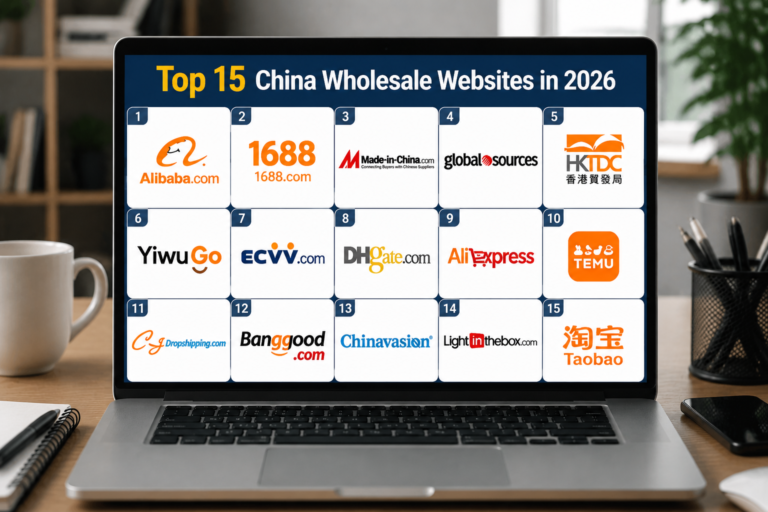
Top 15 China Wholesale Websites in 2026 Verified & Reviewed · Last updated May 2026 Sourcing products from China has become a key strategy for gl...
Read guide →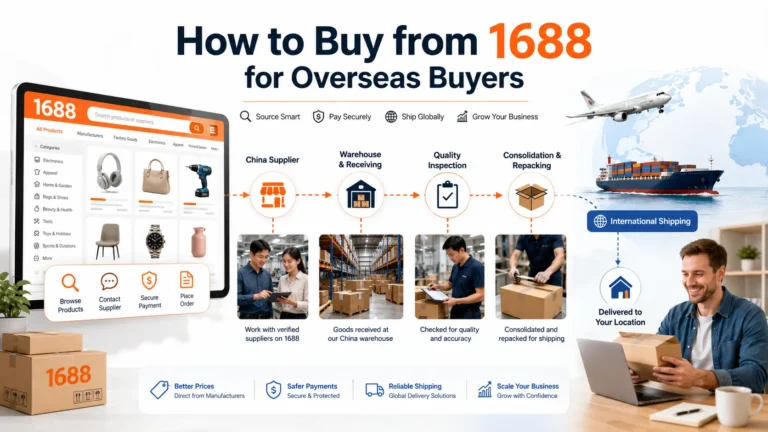
Why Overseas Buyers Are Turning to 1688 1688.com is a major Chinese wholesale marketplace used by manufacturers, wholesalers and domestic buyers...
Read guide →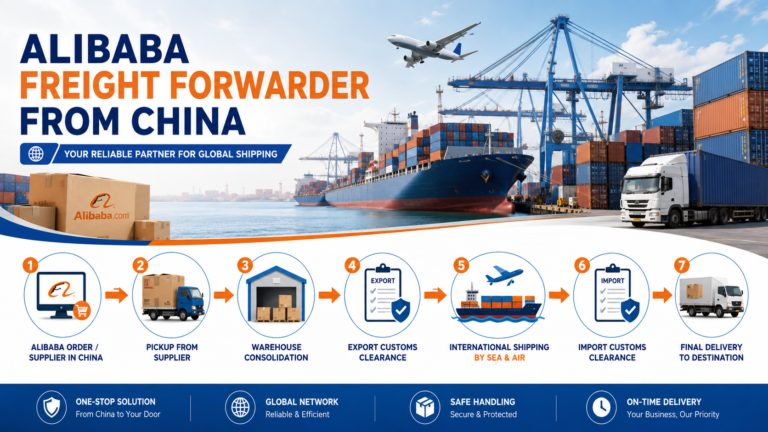
Alibaba Freight Forwarder from China Verified & Reviewed · Last updated July 2026 Finding a reliable Alibaba freight forwarder from China can mak...
Read guide →Importing goods from China can be highly profitable—but only when you understand the necessary documents and import requirements. Whether you’re...
Learn more → Useful Resource How to Choose a Reliable DDP Freight Forwarder in ChinaHow to choose a reliable DDP freight forwarder in China is a critical question for importers dealing with complex international shipping. Selecti...
Learn more →WhatsApp us