Related Guide
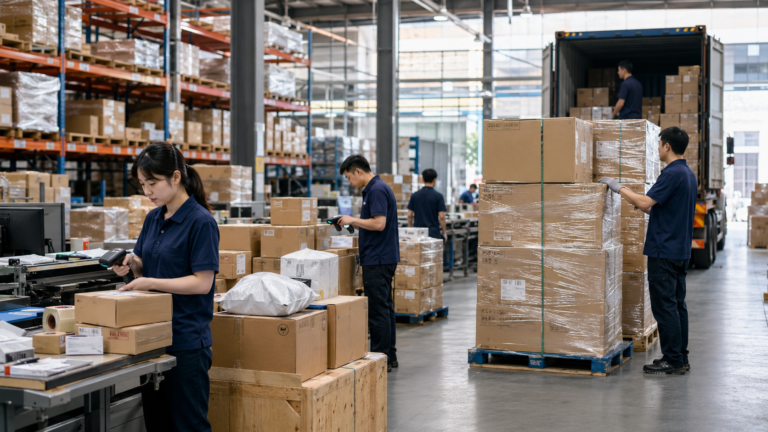
China Warehouse Consolidation Service
China Warehouse Consolidation Service Verified & Reviewed · Last updated May 2026 China warehouse consolidation service helps importers collect g...
Read guide →

Shipping from multiple suppliers in China can be difficult when each supplier sends goods separately, creating higher shipping costs, repeated customs clearance fees, and multiple delivery schedules.
This guide explains how to consolidate goods from different Chinese suppliers into one shipment, covering China warehouse consolidation, sea freight, air freight, DDP door to door shipping, customs clearance, required documents, and how to choose the right freight forwarder.
Consolidated shipping
Multiple suppliers
Customs clearance
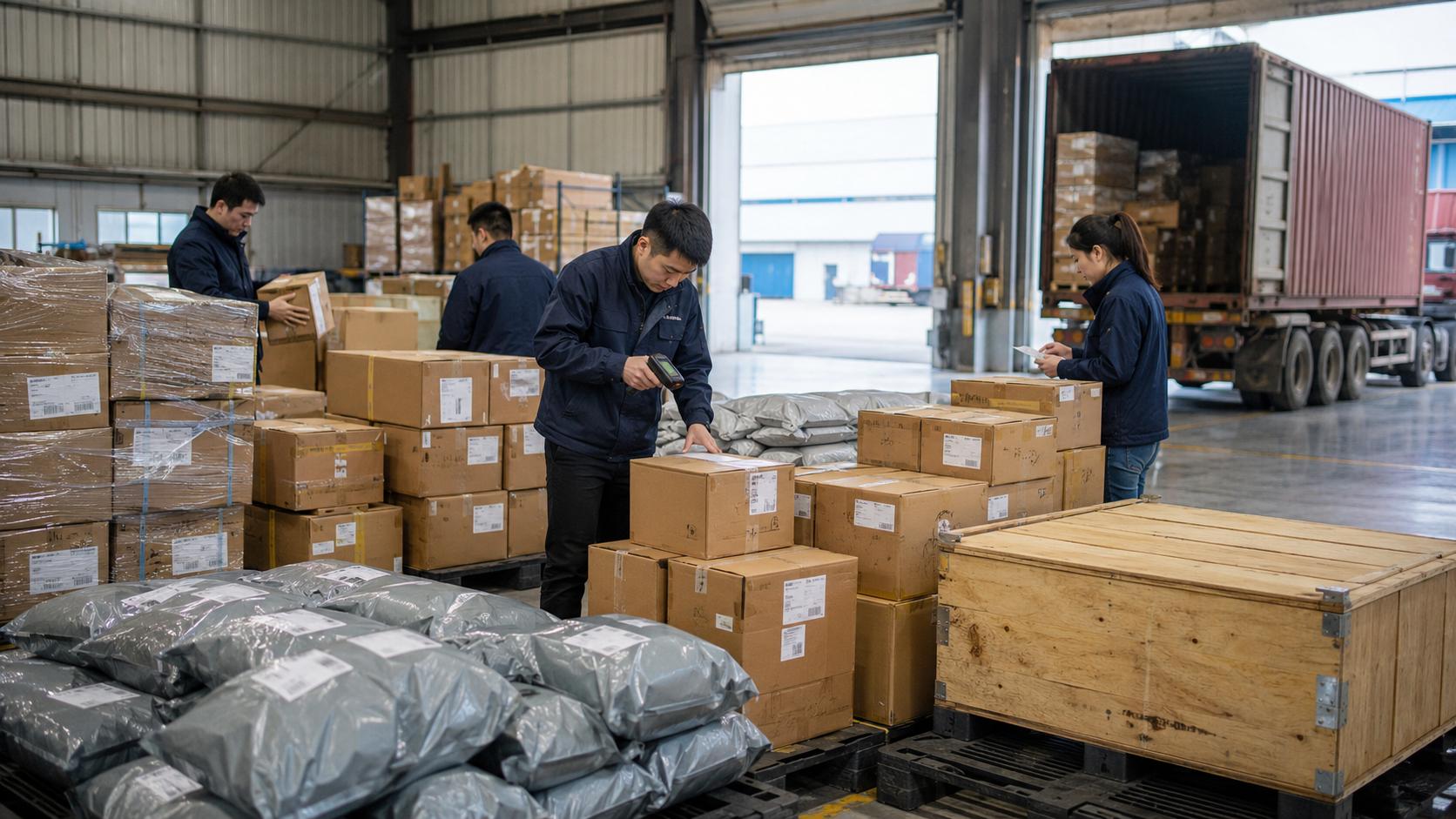
Shipping from multiple suppliers in China means collecting goods from several Chinese suppliers and arranging them under one international shipping plan.
Instead of asking each supplier to ship products directly to your destination country, you can ask all suppliers to deliver goods to one warehouse in China. The freight forwarder then combines products, checks the shipment, prepares documents, and arranges international transportation.
This method is commonly used by:
wholesalers
small business importers
brand owners
buyers sourcing from Alibaba suppliers
buyers purchasing from 1688
companies working with multiple Chinese suppliers
For many importers, consolidated shipping is more cost effective than paying separate shipping fees for every supplier.
When you buy from different suppliers, separate shipping may look simple at first. Each supplier sends its own goods, and you receive multiple tracking numbers. However, this often leads to higher shipping costs and more customs problems.
If you ship multiple shipments separately, you may need to pay for:
repeated pickup or domestic delivery charges
separate export customs clearance
multiple customs clearance fees at destination
several minimum freight charges
additional local handling fees
separate final delivery costs
extra storage fees if goods arrive at different times
Consolidated shipping helps combine these scattered costs into one organized logistics plan. Instead of managing many shipments from many suppliers, you manage one shipment with one freight forwarder.
This can reduce transportation costs, save time, simplify communication, and make customs clearance easier to manage.
The consolidated shipping process starts before your suppliers deliver goods. A professional freight forwarder should help you plan the whole process, not only arrange transportation.
Before shipping starts, collect detailed information from each supplier.
You should confirm:
supplier name and contact person
factory or warehouse address
product name
carton quantity
gross weight
carton dimensions
product value
HS codes if available
expected delivery date
labeling requirements
destination address
This information helps the freight forwarder estimate shipping rates, plan warehouse receiving, and choose the most suitable shipping method.
After the warehouse address is confirmed, your suppliers deliver goods to the freight forwarder’s warehouse in China.
Suppliers may use domestic express, local truck delivery, or China domestic logistics. If some suppliers are in different provinces, the freight forwarder can help compare domestic transportation costs and arrange pickup when needed.
Each supplier should mark the cartons clearly. The shipping mark should include your name, supplier name, order number, carton number, or warehouse code. Clear marks help avoid missing goods and sorting mistakes.
When goods arrive, the warehouse should record each delivery and update you with receiving details.
A reliable freight forwarder may check:
supplier name
number of cartons
outer carton condition
carton marks
gross weight
carton dimensions
product photos if requested
damaged or missing packages
label accuracy
This step is important because problems are easier to fix while goods are still in China. If carton damage, wrong labels, or missing items are discovered after export, the cost and delay can be much higher.
Different suppliers often use different packing standards. Some cartons may be too weak, too large, or unsuitable for international shipping.
The warehouse can help with:
carton repacking
palletizing
barcode labeling
Amazon FBA label attachment
shipping mark correction
removing unnecessary packaging
combining small cartons
fragile cargo protection
measuring final weight and volume
Good packaging helps reduce shipping costs because air freight and sea freight are often calculated by weight, volume, or container load efficiency.
There is no single best shipping method for every importer. The right choice depends on cargo size, urgency, destination country, product type, and budget.
| Shipping Method | Best For | Key Point |
|---|---|---|
| Express Shipping | Samples and small parcels | Fast but expensive for heavy goods |
| Air Freight | Urgent cargo | Faster than sea freight |
| LCL Sea Freight | Small to medium shipments | Cost effective when cargo cannot fill a container |
| FCL Sea Freight | Large shipments | Best for full container load cargo |
| DDP Shipping | Door to door delivery | Easier for buyers who want customs and delivery handled together |
| Amazon FBA Shipping | Amazon sellers | Requires correct labels and carton rules |
LCL sea freight is often the best choice when your total cargo is too large for express but not enough for a full container.
With LCL shipping, your goods share container space with other shipments. The freight forwarder consolidates your cargo, books space, arranges export customs clearance, and ships the goods to the destination port or final address.
LCL is suitable when you have a few suppliers, medium cargo volume, flexible delivery time, and a strong need to reduce shipping costs.
FCL means full container load. If your combined cargo volume is large enough, using one container can be more cost effective.
FCL is suitable when your suppliers deliver big volume cargo, the goods are bulky or fragile, or you want better control during container loading. The goods can be loaded into one container at the warehouse and shipped as a single container to the destination.
Air freight is suitable for urgent stock replenishment, high-value goods, seasonal products, and lightweight cargo. If you are buying from multiple suppliers, the freight forwarder can consolidate products first and arrange one air freight shipment.
Express shipping is better for samples, small orders, and urgent packages. However, it is usually not suitable for heavy or bulky goods because the shipping fee can become very high.
DDP shipping is popular among small business importers and eCommerce sellers because it can simplify the whole process.
With DDP, the freight forwarder may handle pickup, warehouse consolidation, export customs clearance, international shipping, import customs clearance, duties, taxes, and final delivery.
DDP is convenient, but it is not suitable for every product. Some goods require special licenses, certificates, compliance documents, or formal importer records.
The final cost is not based only on international freight. When you ship from multiple suppliers, several cost factors can affect the total price.
Main cost factors include:
domestic transportation costs inside China
warehouse receiving fees
storage fees
repacking or labeling fees
final cargo weight and volume
shipping method
customs clearance fees
duties and taxes
destination delivery charges
special handling for fragile or oversized cargo
A low shipping rate does not always mean a low total cost. You need to compare the full logistics cost from supplier pickup to final delivery.
The main purpose of consolidated shipping services is to help importers reduce shipping costs and simplify the whole process.
Do not let each supplier ship internationally unless it is urgent. Ask your chosen suppliers to deliver goods to one warehouse in China.
This can reduce repeated shipping charges, customs clearance fees, and destination delivery costs.
Oversized cartons increase chargeable volume. Weak cartons may cause damage. Unnecessary packaging can increase both air freight and sea freight costs.
A consolidation warehouse can help repack goods, remove empty space, strengthen cartons, and combine products safely.
Small packages may use express. Urgent goods may use air freight. Medium shipments may use LCL sea freight. Large shipments may use FCL sea freight.
Choosing the wrong method is one of the most common reasons for high shipping costs.
Before confirming the shipping method, ask each supplier for carton weight and dimensions. After all goods arrive at the warehouse, the freight forwarder should measure the final shipment again.
This helps avoid unexpected shipping rates and additional fees.

Customs clearance is one of the most important steps when shipping from multiple suppliers in China. Since one consolidated shipment may include different products, different HS codes, and documents from several suppliers, all information must be accurate before export.
If one supplier provides unclear product descriptions, wrong values, or missing documents, the entire consolidated shipment may be delayed during customs clearance.
Every international shipment from China usually requires several core documents for export, customs clearance, and cargo release at destination.
Commercial Invoice: Shows the buyer, seller, product description, quantity, unit price, total value, currency, and payment terms. Each supplier should provide accurate invoice details for their own goods.
Packing List: Shows carton quantity, gross weight, net weight, dimensions, packaging type, and total volume. The packing list must match the goods received at the consolidation warehouse.
Bill of Lading or Air Waybill: Used as the main transport document. A bill of lading is used for sea freight, while an air waybill is used for air freight.
Certificate of Origin: Shows where the goods were made. Some destination countries may require this document for customs review or tariff treatment.
Import or Export Declaration: Used for formal customs filing. The freight forwarder or customs broker usually helps prepare and submit this information based on the shipment details.
Some products may require extra documents depending on the destination country and product type. This is especially important when you consolidate goods from different suppliers into one shipment.
Additional documents may be needed for:
chemicals
medical products
cosmetics
food-contact products
branded goods
machinery
These products may require test reports, safety certificates, import licenses, compliance documents, or brand authorization. If these requirements are not confirmed before shipping, the cargo may face customs inspection, extra charges, or delivery delays.
Consolidated shipping is not only about saving money. It also gives you one chance to check goods before they leave China.
A freight forwarder can usually help with basic warehouse checks, such as:
carton count
photo confirmation
outer packaging check
label check
SKU check
barcode check
shipping mark check
Amazon FBA label check
For deeper product inspection, you may need a professional quality control company. This is especially important for high-value goods, customized products, electronics, or products with strict compliance requirements.
Doing a quality check before export can prevent costly returns, customs problems, and customer complaints.
Many importers buy from Alibaba suppliers, 1688 sellers, direct factories, and trading companies at the same time. This is normal, but it requires better logistics planning.
Alibaba suppliers may offer international shipping, but their rates are not always the most cost effective. Some suppliers only quote based on their own order and cannot combine products from other suppliers.
1688 suppliers usually focus on domestic delivery inside China. They may not understand export documents, customs clearance, or overseas delivery requirements.
In this situation, using a freight forwarder in China is often better. The forwarder gives you one warehouse address, receives goods from all suppliers, consolidates the shipment, and arranges international shipping based on your final destination.
Many buyers confuse freight forwarders, shipping agents, and sourcing agents. They may all help with China trade, but their roles are different.
A freight forwarder focuses on logistics services, including warehouse consolidation, sea freight, air freight, export customs clearance, import customs clearance support, and final delivery.
A shipping agent may help arrange transportation or book cargo space, but the service scope may be narrower depending on the company.
A sourcing agent helps find suppliers, negotiate prices, follow up production, and sometimes arrange quality control.
If you already have suppliers and mainly need to ship goods together, you usually need a freight forwarder. If you also need help finding suppliers or purchasing products, you may need a sourcing agent or trading company.
To better understand how shipping from multiple suppliers in China works, here is a simple example.
An eCommerce importer in Los Angeles buys home office products from four Chinese suppliers. The products include office chairs, desk lamps, wooden organizers, and gaming desks. Instead of shipping each order separately, the buyer uses a freight forwarder’s consolidation warehouse in Shenzhen to combine all goods into one shipment.
| Supplier | Location | Product | Volume / Weight | Shipping Terms |
|---|---|---|---|---|
| Supplier A | Ningbo | Office chairs | 12 CBM / 1,500 kg | FOB Ningbo |
| Supplier B | Shenzhen | LED desk lamps | 4 CBM / 400 kg | EXW Factory |
| Supplier C | Yiwu | Wooden desk organizers | 6 CBM / 800 kg | EXW Factory |
| Supplier D | Guangzhou | Gaming desks | 6 CBM / 1,200 kg | FOB Shenzhen |
The total consolidated cargo is around 28 CBM / 3,900 kg, which is suitable for a 20ft container or an optimized LCL shipping plan, depending on the final loading details and destination requirements.
The freight forwarder first confirms the supplier information, cargo details, packing lists, and delivery schedules. Suppliers B and C ship their goods to the Shenzhen warehouse by domestic logistics, while the forwarder coordinates with Suppliers A and D based on their FOB shipping terms.
After all goods arrive at the consolidation warehouse, the warehouse team checks carton quantity, confirms shipping marks, inspects outer packaging, measures the final volume, and updates the buyer with photos.
If some cartons are weak or oversized, the warehouse can arrange repacking, labeling, or palletizing before loading. Once the cargo is ready, the forwarder prepares the export documents, arranges customs clearance, and loads the goods into one container for sea freight from China to the USA.
Without consolidation, the buyer may need to manage four separate shipments, four delivery schedules, different documents, and higher destination charges.
By using consolidated shipping services, the buyer can:
combine products from different suppliers into one shipment
reduce transportation costs inside China
avoid repeated international shipping fees
simplify customs clearance
lower the risk of missing cartons
manage one container instead of multiple shipments
receive goods under one delivery plan
This is why consolidated shipping is often the most cost effective solution when importing from multiple suppliers in China.
When shipping from multiple suppliers in China, choosing the right freight forwarder is important. A reliable forwarder should not only give you a shipping fee, but also help manage the whole process from supplier coordination to final delivery.
Before choosing a logistics provider, check whether they can help with:
supplier coordination with multiple Chinese suppliers
warehouse receiving and cargo updates in China
carton checking, photo confirmation, repacking, and labeling
LCL and FCL sea freight consolidation
air freight and express shipping options
DDP door to door shipping if needed
export customs clearance and import customs support
commercial invoice and packing list review
Amazon FBA labeling and delivery requirements
transparent shipping rates and clear additional fees
experience with your destination country
Tonlexing helps importers consolidate goods from multiple suppliers in China and ship them by sea freight, air freight, express, DDP, and door to door delivery. Our team can review your supplier list, cargo details, delivery time, and destination address, then recommend a cost effective shipping plan based on your real shipment needs.
Yes. One freight forwarder can receive goods from multiple suppliers, store them in a consolidation warehouse, and ship everything as one shipment.
In many cases, yes. Consolidated shipping can reduce shipping costs, customs clearance fees, local handling charges, and final delivery costs.
Yes. You can ask each Alibaba supplier to deliver goods to your freight forwarder’s warehouse in China. The forwarder can consolidate products and arrange international shipping.
Yes. Many 1688 suppliers mainly handle domestic delivery, so using a freight forwarder is often necessary. Your 1688 suppliers can send goods to the warehouse, and the forwarder can arrange export and international shipping.
For small parcels, express may work. For urgent goods, air freight is better. For medium cargo, LCL sea freight is often cost effective. For large cargo, FCL sea freight may be the best option.
Useful freight, customs and importing resources related to this shipping guide.
China Warehouse Consolidation Service Verified & Reviewed · Last updated May 2026 China warehouse consolidation service helps importers collect g...
Read guide →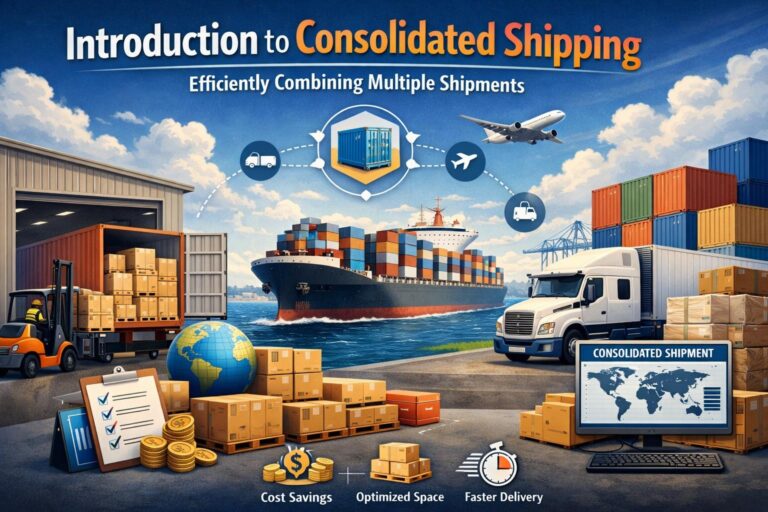
Introduction to Consolidated Shipping Verified & Reviewed · Last updated January 2026 Consolidated shipping is a freight strategy that combines m...
Read guide →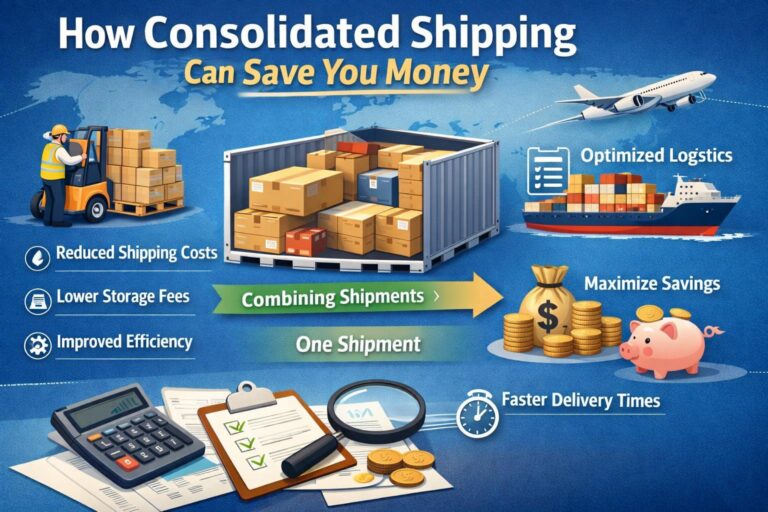
How Consolidated Shipping Can Save You Money Verified & Reviewed · Last updated January 2026 Consolidated shipping is a proven shipping strategy...
Read guide →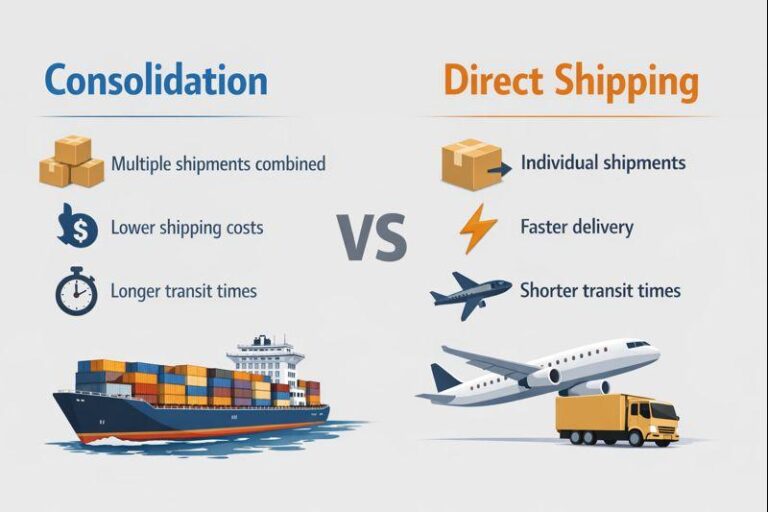
Consolidation vs Direct Shipping Verified & Reviewed · Last updated January 2026 Consolidation vs direct shipping affects shipping costs, deliver...
Read guide →LCL vs FCL Shipping: What They Mean, Key Differences, and Which One to Choose Verified & Reviewed · Last updated January 2026 FCL vs LCL shipping...
Learn more → Useful Resource Pre-Shipment Inspection in China for ImportersPre-Shipment Inspection in China for Importers Verified & Reviewed · Last updated July 2026 A pre-shipment inspection helps importers identify de...
Learn more →WhatsApp us