Related Guide
Electronics Import and Shipping Guide from China
Importing electronics from China has become a lucrative business opportunity for companies and individuals worldwide. China is the global leader...
Read guide →

Reliable & Cost-Effective Shipping from China
Tailored Logistics Solutions for Your Business
Importing beauty equipment from China has become a highly profitable and strategic move for businesses in the global beauty and wellness industry. Thanks to China’s well-established manufacturing infrastructure, competitive pricing, and wide range of high-quality products, many importers now rely on Chinese suppliers to meet growing market demand.
Whether you’re sourcing skin care equipment, laser treatment machines, or general cosmetic products, understanding the importing process and selecting the right shipping methods are critical to success. However, the journey involves more than just placing an order—it includes selecting reliable suppliers, complying with international trade regulations, managing customs clearance, and ensuring safe and timely international shipping.
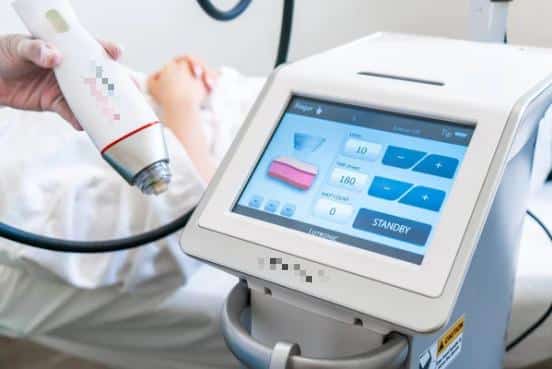
In this guide, we’ll walk you through everything you need to know about how to import and ship beauty equipment from China, including:
How to find reliable beauty equipment suppliers
Regulatory compliance with authorities like FDA and NMPA
Choosing the most suitable shipping method (e.g., air freight, sea freight, or full container load)
Ensuring product quality and documentation
Navigating customs clearance and import duties
Reducing shipping costs while maintaining speed and safety
Whether you’re new to the import-export business or expanding an existing beauty products brand, this article is designed to provide a clear roadmap for importing from China with confidence.
Choosing the right supplier is the first—and most important—step in importing beauty equipment from China. A good supplier ensures not only product quality, but also consistent communication, after-sales service, and compliance with international trade regulations.
Focus on beauty equipment suppliers with experience in your specific product category, such as:
Laser treatment equipment
Skin care equipment
Medical-grade devices
Cosmetic machines for salons and clinics
Use platforms like Alibaba, Made-in-China, or Global Sources to locate Chinese manufacturers with verifiable track records and export certifications. Many Chinese manufacturers offer extensive product offerings across various cosmetic products segments.
Before placing an order, request the following:
Business licenses and export registration
CE/FDA/ISO certifications for medical devices
Product test reports and quality control procedures
Compliance documents for cosmetic labeling requirements and safety
These steps are especially crucial when sourcing high-value or sensitive equipment.
Ask for product samples to test functionality, safety, and packaging. Reliable suppliers will offer samples at a reasonable cost and allow for feedback before mass production.
Trade events like Canton Fair, China Beauty Expo, or Cosmoprof Asia are great opportunities to meet beauty equipment suppliers face-to-face or virtually. These events showcase innovation, market trends, and emerging product quality standards in the Chinese market.
If you are unfamiliar with the Chinese market or lack the time to vet factories, working with a local sourcing agent or freight forwarder can help you find reliable suppliers while managing price negotiation and factory audits.
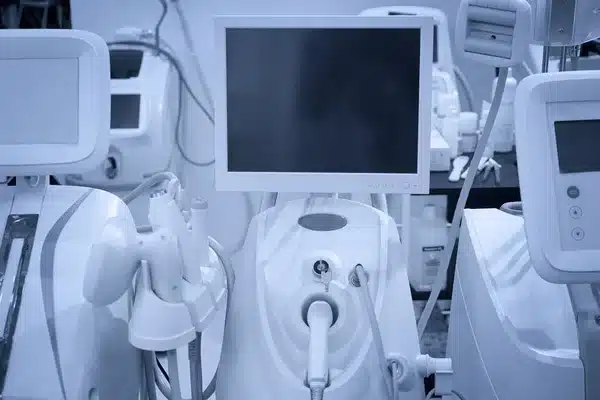
When importing beauty equipment or medical devices from China, compliance with international trade regulations is crucial to avoid delays, rejections, or legal issues. Different countries impose different import regulations, especially for equipment related to health, skincare, and medical aesthetics.
Before importing, classify your products correctly. Beauty equipment may fall into:
Non-medical beauty equipment (e.g. facial steamers, RF devices)
Medical-grade devices (e.g. IPL, laser, ultrasound machines)
Depending on classification, you may need special documentation or FDA approval, particularly in the United States.
To ensure product safety and market access, the following certifications may apply:
FDA Registration: Required for devices classified as medical in the U.S.
CE Marking: Mandatory for sales in the European Union
ISO 13485: Quality system standard for medical devices
ROHS/EMC/LVD: For electronics compliance
Certificate of Free Sale: Useful for some regions
Check whether the product needs FDA premarket approval or can be self-declared under FDA’s Class I guidelines.
United States: Ensure compliance with the Cosmetic Act, Federal Food, Drug, and Cosmetic Act, and FDA regulations. Importers must prepare for customs clearance, including providing commercial invoices, product specifications, and labeling.
EU Markets: CE certification and compliance with REACH and MDR (Medical Device Regulation) are essential.
Asia, Middle East, Latin America: Requirements may vary; consult local import authorities or partner with a licensed customs broker.
Products must include:
Country of origin (“Made in China”)
Technical specifications
Product labels in local language (where required)
Manufacturer/importer contact info
Usage and safety warnings
Improper labeling requirements can delay the clearance process or result in seizure by customs.
Reliable suppliers or freight forwarders often provide assistance with:
Filing registration with local authorities
Preparing documentation for customs
Understanding regulatory requirements in your destination country
If you’re shipping high-risk equipment, working with a professional experienced in international shipping and compliance can save time and reduce risk.
When shipping beauty equipment from China, you can choose between air freight, sea freight, and door-to-door DDP shipping. Each shipping method has its own cost structure, delivery speed, and suitability depending on your cargo volume and urgency. Here’s a breakdown of typical rates as of 2025:
Destination | 20ft Container | 40ft Container | Transit Time |
|---|---|---|---|
USA (Los Angeles) | $1100 – $1200 | $1,250 – $1,400 | 15–30 days |
Russia (Vladivostok) | $450 – $550 | $600 – $750 | 20–35 days (via Dalian) |
UAE (Dubai) | $700 – $800 | $900 – $1,000 | 18–28 days |
South Korea (Busan) | $190 – $200 | $300 – $360 | 5–8 days |
Best for large volume shipments over 15 CBM. Recommended for commercial importers who want the lowest shipping costs per unit.
Destination | Cost per KG | Transit Time |
|---|---|---|
USA | $3.00 – $5.50 | 3–7 days |
Russia (Moscow) | $3.00 – $5.00 | 5–10 days |
UAE (Dubai) | $2.80 – $4.50 | 3–6 days |
South Korea (Seoul) | $1.80 – $3.80 | 2–5 days |
Ideal for mid-sized, time-sensitive shipments like electronic beauty devices or high-value equipment.
Destination | DDP Cost per KG | Transit Time |
|---|---|---|
USA (West Coast) | $0.57 – $1.00 | 15–30 days |
Russia (Moscow) | $0.77 – $1.80 | 20–30 days |
UAE (Dubai) | $0.55 – $1.00 | 18–25 days |
South Korea (Seoul) | $0.40 – $0.80 | 7–12 days |
DDP (Delivered Duty Paid) includes pickup, shipping, customs clearance, taxes, and delivery to your door. Best for buyers who want a hassle-free shipping method.
To find out about shipping costs from China to the rest , you can click:
20ft & 40ft Container Shipping Costs from China to the UK
20ft & 40ft Container Shipping Costs from Taiwan to the USA
Shipping Costs for 20ft & 40ft Containers from China to Russia

Successfully importing beauty equipment from China requires a clear understanding of customs clearance procedures and documentation compliance. To ensure a smooth and delay-free import process, importers must prepare the right documents and follow both Chinese export and destination country import regulations.
Commercial Invoice: Includes product description, HS code, declared value, and Incoterms.
Packing List: Details the quantity, weight, and dimensions of each item.
Bill of Lading or Air Waybill: Acts as the transport contract and cargo receipt.
Certificates (if applicable): For medical devices, laser equipment, or electronic items, authorities may require CE/FDA certificates or conformity reports.
Proper documentation ensures your goods pass smoothly through customs and minimizes the risk of fines, delays, or rejections.
USA: The FDA regulates certain types of beauty and medical devices. If your product claims therapeutic functions (e.g., laser treatment), it may require FDA approval or premarket notification (510k).
Russia: Certain devices may need certification under the EAEU framework and should comply with Russian import regulations.
UAE: Requires registration with the Ministry of Health for specific aesthetic and skincare equipment.
South Korea: Importers must submit product information to the Ministry of Food and Drug Safety (MFDS), especially for electronic or treatment-related items.
Work with a licensed customs broker or an experienced freight forwarder to interpret requirements and avoid clearance issues.
Double-check your HS code to ensure correct duty classification.
Declare an accurate customs value to avoid under- or over-invoicing.
Include product brochures or manuals if requested by customs authorities.
For shipments under DDP shipping, your forwarder will handle most clearance steps on your behalf.
At Tonlexing, we support clients with full customs clearance services, including document verification, regulatory consulting, and assistance with special cargo. Whether you’re importing beauty equipment to the USA, Russia, UAE, or Korea, we ensure your goods meet destination standards and reach you without delays.
Ensuring the quality control and compliance of beauty equipment is a crucial step when importing from China. Poor-quality or non-certified products can result in customs delays, safety concerns, or even market entry rejection in your target country.
Many countries have strict technical standards and regulatory requirements for beauty equipment, especially those classified as medical devices or high-risk electronics. Products like laser therapy devices, RF machines, or ultrasonic beauty tools often require formal product certification.
Certification | Applicable Region | Description |
|---|---|---|
CE Certification | Europe / UAE / Korea | Mandatory for electronics and devices under the EU Medical Device Regulation (MDR). Confirms product meets health and safety standards. |
FDA Registration (510k or Exempt) | Required for medical beauty devices claiming therapeutic effects (e.g., anti-aging lasers, microdermabrasion machines). | |
EAEU Certification (TR CU) | Russia / CIS | Applicable for electric beauty tools and medical devices sold in Russia, Kazakhstan, Belarus, etc. |
MOHAP Registration | UAE | Medical devices must be registered with the Ministry of Health and Prevention. |
KC Certification | Electronics and radio frequency devices must pass Korea’s safety certification. |
Ensuring the quality control and compliance of beauty equipment is a crucial step when importing from China. Poor-quality or non-certified products can result in customs delays, safety concerns, or even market entry rejection in your target country.
Pre-production Inspection
Evaluate raw materials and factory production setup before mass manufacturing.
In-line Inspection (During Production)
Check semi-finished units to detect early quality issues or non-compliance.
Final Random Inspection (FRI)
Inspect a random sample from the finished batch to ensure consistent quality and adherence to buyer specifications.
Lab Testing (if needed)
For compliance with FDA regulations, CE safety directives, or EMC/RoHS standards.
Labeling & Packaging Compliance
Ensure all product labels, warnings, and manuals meet destination labeling requirements, including voltage info, usage warnings, and traceability.
Tonlexing works with certified third-party inspectors and testing labs to guarantee your goods meet the strictest quality and regulatory requirements for export.
By prioritizing quality control and obtaining proper product certification, you can protect your brand reputation, reduce return rates, and streamline customs clearance when importing beauty equipment from China.
Choosing the right shipping method for your beauty equipment depends on the product size, weight, urgency, and destination country. Whether you’re shipping to the USA, Russia, Dubai (UAE), or South Korea, selecting an optimal route ensures faster transit time, lower shipping costs, and smoother customs clearance.
Shipping Method | Best For | Transit Time | Notes |
|---|---|---|---|
Air Freight | Urgent or high-value beauty machines (≥45kg) | 5–12 days | Reliable balance of speed and cost. Ideal for small to medium-sized shipments. |
Sea Freight (FCL/LCL) | Bulk or large-volume equipment (e.g. salon sets) | 20–40 days | Cost-effective for full container load or shared space (LCL). |
Express Shipping (≤10kg) | Samples, portable devices, light goods | 3–7 days | Fastest option. Carriers include DHL, UPS, FedEx. Higher rates per kg. |
Door-to-Door Service (DDP) | Beginners or e-commerce sellers | 12–35 days (by air or sea) | Includes pickup, customs clearance, and delivery. Hassle-free for small businesses. |
Choosing the right shipping method for your beauty equipment depends on the product size, weight, urgency, and destination country. Whether you’re shipping to the USA, Russia, Dubai (UAE), or South Korea, selecting an optimal route ensures faster transit time, lower shipping costs, and smoother customs clearance.
Region | Express Shipping (≤10kg) | Air Freight (≥45kg) | Sea Freight (per CBM) |
|---|---|---|---|
USA | $3.50 – $8.50/kg | $3.50 – $5.20/kg | $80 – $120 |
Russia | $2.20 – $7.50/kg | $2.80 – $5.50/kg | $60 – $90 |
UAE | $3.80 – $8.20/kg | $3.00 – $5.80/kg | $50 – $80 |
Korea | $3.20 – $6.00/kg | $1.80 – $4.60/kg | $30 – $50 |
Prices vary based on weight, dimensions, incoterms, and shipping mode. Always consult a freight forwarder for exact rates.
Consolidate small shipments into a full container load (FCL) when possible.
Choose sea freight for large quantities or when time is flexible.
For lighter goods, use express shipping services during non-peak seasons to avoid delays.
Opt for door to door service (DDP) to simplify the entire shipping process and avoid extra local fees.
With the right shipping method, beauty equipment suppliers and importers can ensure safe delivery, predictable transit time, and better profit margins.
Successfully importing beauty equipment from China requires strict attention to customs clearance procedures and regulatory requirements in your destination country. Ensuring compliance with all import regulations will help avoid shipment delays, penalties, or product rejections.
Country/Region | Regulatory Agency | Key Requirements |
|---|---|---|
USA | FDA (Food and Drug Administration) | Medical devices may require FDA approval or registration under applicable device class. |
Russia | EAC Certification, Russian Customs | Importers need EAC marking and translated manuals. |
UAE | MOHAP, Dubai Municipality | Products classified as medical must comply with UAE health product registration. |
South Korea | MFDS (Ministry of Food and Drug Safety) | Requires product classification; some items may be considered medical devices. |
Check whether your equipment (e.g., laser treatment equipment, radio frequency machines) falls under “regulated medical devices” in the destination country.
To ensure smooth clearance process, prepare the following documents:
Commercial Invoice: Must match the declared customs value.
Packing List
Bill of Lading or Airway Bill
Product Manual & Technical Specs
Certificates: CE, EAC, or FDA (if applicable)
Import License (if required)
Make sure the product labels, usage instructions, and certification documents meet local labeling requirements.
Import duties vary depending on the HS code, country of destination, and declared value. For example:
USA: 0–5% for most non-invasive beauty equipment; plus Section 301 tariffs may apply (7.5%–25%).
Russia: 0–15% import duty, plus VAT.
UAE: 5% customs duty, no VAT on approved medical devices.
Korea: 8%–13% duty + VAT depending on classification.
Use the correct HS code (e.g., 8543709990 or 9018909000) to calculate import duty precisely.
A licensed customs broker or freight forwarder with regulatory experience can help:
Classify goods correctly
Calculate applicable duties and VAT
Submit proper documentation
Handle customs clearance on your behalf
Tonlexing partners with experienced brokers in over 50 countries to assist with end-to-end import compliance.
Double-check certifications before production.
Avoid vague product descriptions—be accurate and specific.
Ensure commercial invoice values align with contract terms.
Submit documents at least 48 hours before cargo arrival.
By understanding the import compliance landscape and working with trusted partners, you can streamline your shipping process and reduce customs-related risks for your beauty equipment business.
Ensuring consistent product quality and proper packaging is essential when importing beauty equipment from China. Whether you are sourcing devices like skin care machines, laser treatment equipment, or microdermabrasion tools, strong quality control measures reduce the risk of product failure, regulatory rejection, and customer complaints.
Reliable quality control starts at the factory level. Work with reliable suppliers that offer:
Pre-production sample inspection (ensure design accuracy and functionality)
In-process quality checks (especially for electronic and medical-grade parts)
Final random inspection (before packaging and shipment)
You can also hire third-party inspection agencies such as SGS, TÜV, or Intertek to verify product safety, compliance, and manufacturing processes.
Tip: Include a clause in your contract that allows independent QC checks before shipment.
Proper packaging is crucial to protect fragile beauty equipment during international shipping. Packaging should:
Use shock-proof, foam-lined, or molded interiors
Include user manuals in the destination language
Have compliant labeling with voltage, warnings, and certification marks
Be customized to meet Amazon FBA or local retail channel requirements
For high value devices, consider double-layer cartons and waterproof wrapping to prevent damage from handling or climate exposure.
Many countries require:
CE or EAC certification labels
Safety warnings
Manufacturer/importer info
Voltage and plug type (especially for electronic devices)
If you’re selling directly to consumers, make sure your packaging meets retail and customs labeling requirements to avoid border delays or penalties.
To build trust and brand loyalty, offer a clear after sales service policy. Standard practices include:
6–12 month factory warranty
Free replacement parts for defects
Repair guides or video support
Local service center partnerships (for larger brands)
Make sure your product offerings are documented with service terms before shipping. This also helps with customs valuation and legal compliance.
Requirement | Best Practice |
|---|---|
Quality Control | Pre-shipment inspection by certified agency |
Packaging | Export-grade, anti-shock packaging with clear labeling |
Documentation | Include CE/FDA certificates, manuals, and warranty sheets |
Labeling | Comply with cosmetic labeling requirements and safety warnings |
After-Sales Service | Provide clear contact info, repair policies, and spare parts availability |
By implementing these measures, you ensure your beauty equipment not only arrives safely but also performs reliably in international markets—enhancing your brand reputation and customer satisfaction.
Importing and shipping beauty equipment from China can be a profitable and scalable business opportunity—if handled correctly. Whether you are a start-up importing skincare products, a distributor dealing with medical devices, or an eCommerce seller expanding your product line, understanding the full importing process is essential to ensure compliance, cost-efficiency, and customer satisfaction.
Here are the key takeaways for a successful operation:
Vet beauty equipment suppliers through trade shows, factory audits, or online platforms with verified credentials.
Confirm their certifications, manufacturing capacity, and experience in handling international trade.
Products like lasers, ultrasound, or micro-needling tools may be classified as medical devices.
Review the latest FDA regulations, international trade regulations, and check if your product requires FDA premarket approval.
For lightweight urgent shipments, express shipping or air freight is ideal.
For larger volumes, opt for sea freight (FCL/LCL) to reduce shipping costs.
If you want a simplified process, consider door-to-door service with a trusted freight forwarder.
Accurately prepare commercial invoices, HS codes, certificates, and product labels.
Work with a licensed customs broker to reduce the risk of delays or customs duties miscalculations.
Be aware of destination-specific import regulations and documentation like the cosmetic labeling requirements.
Implement pre-shipment quality control and demand proper packaging that meets international standards.
Ensure products are safe, tested, and clearly labeled with instructions, warranty, and safety warnings.
Partnering with a freight forwarder that understands the beauty industry and cosmetic imports can help you reduce shipping costs, avoid compliance risks, and simplify the entire shipping process.
At Tonlexing, we specialize in shipping from China to destinations like the USA, Russia, Dubai, and South Korea. Whether you’re moving bulk cosmetic devices or launching a new product line, we offer full-service solutions—air freight, sea freight, express shipping, customs clearance, and more.
Contact us for a tailored quote and compliance consultation for your next beauty equipment shipment.
Useful freight, customs and importing resources related to this shipping guide.
Importing electronics from China has become a lucrative business opportunity for companies and individuals worldwide. China is the global leader...
Read guide →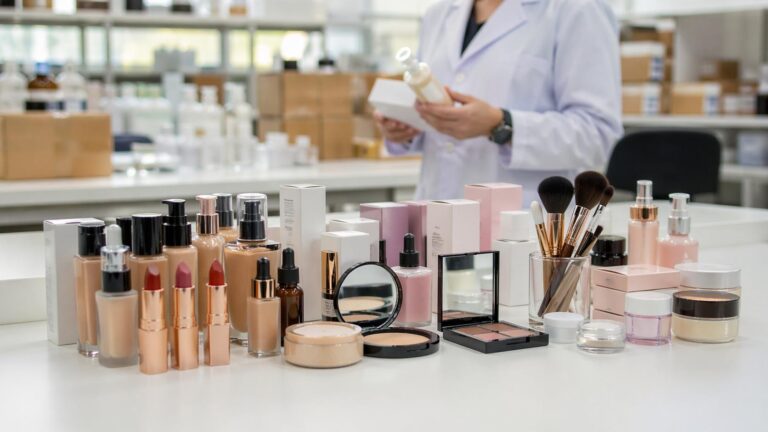
Importing Makeup and Cosmetics Into the US Verified & Reviewed · Last updated April 2026 Importing makeup and cosmetics into the US requires more...
Read guide →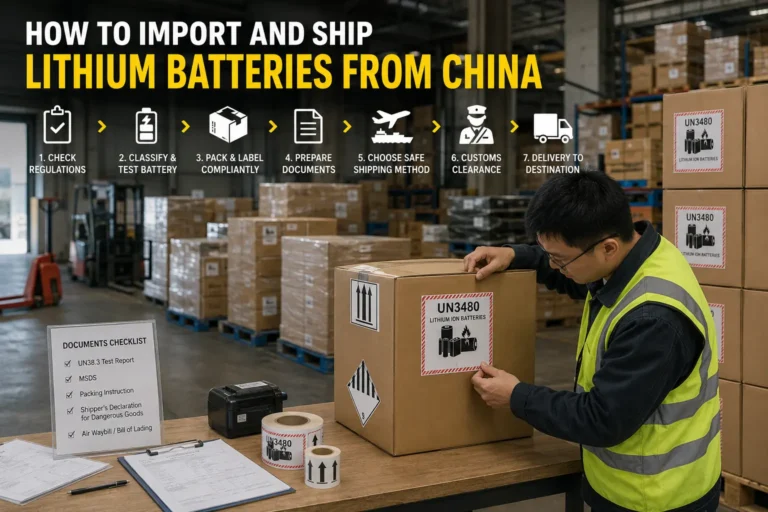
Importing and shipping lithium batteries from China requires more preparation than moving ordinary cargo. Lithium batteries are regulated as dang...
Read guide →
Introduction: Why Import Packaging Supplies from China How to import and ship packaging supplies from China is a question many businesses ask whe...
Read guide →CE certification is a critical requirement for any electronic product sold within the European Union (EU). This certification signifies that the...
Learn more → Useful Resource How to Verify a Chinese Supplier Before You PayHow to Verify a Chinese Supplier Before You Pay Verified & Reviewed · Last updated July 2026 Before you pay a Chinese supplier, do not rely only...
Learn more →WhatsApp us