
How Do I Know the HTS Code of My Product?
- Verified & Reviewed · Last updated April 2026
How to find HTS code for your product is one of the most important steps when importing goods into the United States. The correct HTS code determines duty rates, customs clearance, additional duties, and overall import compliance.
This updated 2026 guide explains how to find HTS code step by step, how the Harmonized Tariff Schedule works, where to check classification, and how to verify the correct code before import. Whether you are a first-time importer or an experienced buyer, this guide will help you avoid costly mistakes and delays.
What is an HTS Code
How to Find the Correct Code
Verify Before Import

- Experienced China-based logistics specialists
Table of Contents
What Is an HTS Code?
An HTS code is a tariff classification number used for merchandise imported into a country. In the United States, HTS usually refers to the code used in the Harmonized Tariff Schedule for imported goods. Many businesses also use HTS as a general way to talk about customs classification codes, tariffs, and product classification in international trade.
The system behind these codes starts with the Harmonized System, sometimes described as the international harmonized system for classifying traded products. It is administered by the World Customs Organization and is used around the world as a standardized numerical method for classifying traded products in most world trade.
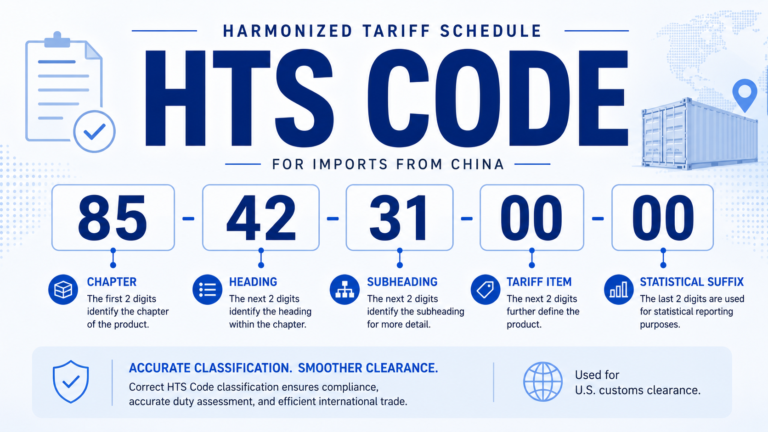
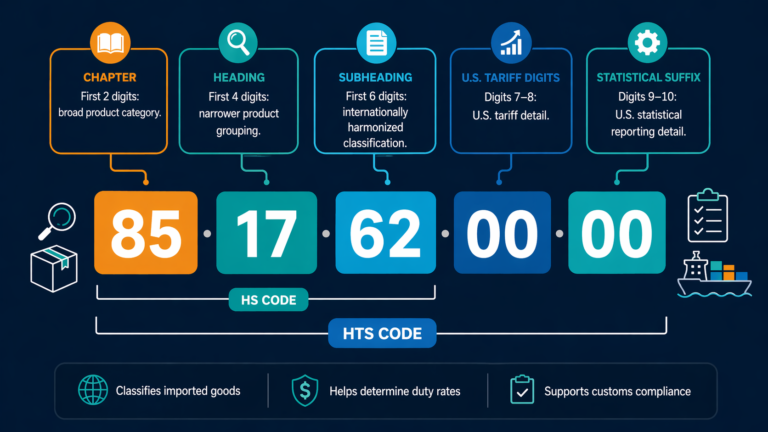
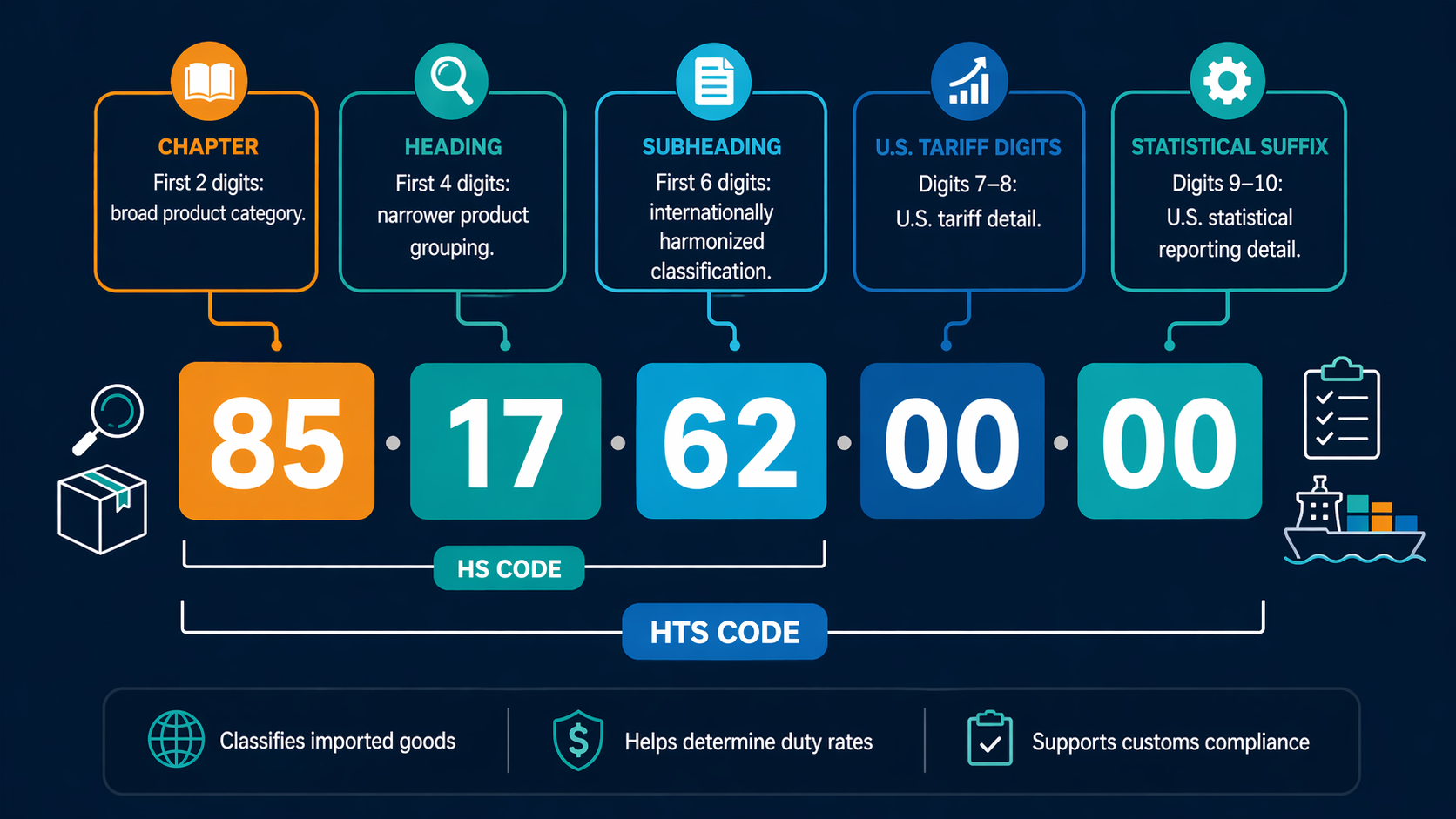
The first 6 digits are internationally aligned across the global system. After that, countries can add more digits for local tariff rates, statistical categories, and customs purposes. That is why the first part of a code may match globally, but the full code may change by country.
You may also see related terms such as:
HTS code
HTS number
HS tariff code
harmonized tariff code
product classification code
customs tariff code
In short, the HS code is the global base, while the HTS code is the more detailed national tariff classification built on that structure.
Why the Correct HTS Code Matters
The correct HTS code matters because it affects more than classification. It affects cost, documents, timing, and legal compliance.
Using the correct code helps you:
determine tariff rates and customs duty rates
prepare the commercial invoice and other customs documents more accurately
support smoother USA customs clearance
check whether additional duties apply
reduce the risk of delays, reclassification, or penalties
improve landed cost planning
If the wrong code is used, the importer may pay the wrong duty, submit the wrong customs data, or face review by customs authorities. In some cases, the issue may only appear after the goods imported have already arrived. That can delay release and create extra work for the importer.
A correct classification is especially important when products may be affected by additional duties, trade remedies, licensing requirements, or anti dumping orders.
HTS Code vs HS Code: What Is the Difference?
Many people use HS code and HTS code as if they mean exactly the same thing, but there is an important difference.
The HS code is the base code from the Harmonized System, the global framework used in world trade. The first 6 digits are internationally standardized.
The HTS code is a country-specific extension used to classify imported goods in more detail. In the United States, that means the Harmonized Tariff Schedule used for imports. So the product’s HS code may be the starting point, but the product’s HTS code is the more detailed code used for actual import declaration.
In simple terms:
HS code = international base classification
HTS code = country-specific tariff classification
Schedule B = U.S. export classification
That is why a supplier may give you an HS code, but you still need to verify the final import code for the destination country.
How to Read an HTS Code
HTS and HS codes are structured in layers. The first 6 digits come from the international HS system, while the remaining digits are added by the importing country for national tariff and statistical purposes. The example below shows how a code becomes more specific step by step.
| Code Segment | What It Means | Example Description |
|---|---|---|
| 39 | Chapter | Plastics and articles thereof |
| 3924 | Heading | Tableware, kitchenware, and other household articles of plastics |
| 3924.10 | Subheading | Tableware and kitchenware |
| 3924.10.40 | National tariff line | A more specific U.S. tariff classification within that product group |
| 3924.10.4000 | Statistical suffix | Additional reporting detail used in the full U.S. HTS code |
This structure shows why the first 6 digits are only the starting point. The final code used for customs filing may still depend on the destination country’s tariff system.
Step-by-Step: How to Find the Correct HTS Code
Start With a Clear Product Description
Begin with a plain, specific product description. Do not rely on marketing language or a vague label.
Weak descriptions include:
accessory
smart device
household item
industrial tool
Better descriptions include:
stainless steel insulated bottle
ceramic kitchen knife
plastic food container
electric toothbrush
lithium battery pack
A more accurate description makes your search much more reliable.
Identify the Main Function
Next, identify what the product mainly does. Customs classification often follows principal function.
Ask:
Is it a finished product or a part?
Is it electrical, mechanical, decorative, or chemical?
Is it for household use, retail use, or industrial use?
Does it serve one main purpose or several?
Two similar-looking goods can be classified differently if they are used for different purposes.
Check Material and Composition
Material often changes the classification result. A steel product, ceramic product, textile product, or plastic product may not fall under the same heading even if the items seem similar.
This matters in many chapters of the harmonized tariff schedule. For example, ceramic products, vegetable products, and live animals are classified in completely different parts of the schedule. Even two food items may not be treated the same way. A search for green tea may lead to one code, while another processed tea product may be classified elsewhere. In other words, small differences in composition can change the result.
Search the Harmonized Tariff Schedule
Once you understand the product, search the Harmonized Tariff Schedule using specific terms. Search by product type, material, and function.
A broad search engine result can help you start, but it should not be your only source. The first result you find on a website is not always the right one. If you are using an official customs tool, make sure the search is detailed enough to narrow the results.
It is often better to search for “ceramic kitchen knife” than simply “knife,” or “green tea in retail packs” rather than just “tea.”
Compare Headings and Subheadings
After you find a likely result, compare nearby headings and subheadings carefully. The first match is not always the best match.
Check:
heading language
subheading language
material references
use of the product
exclusions
related notes
This comparison step is often what separates a rough guess from the correct classification.
Read the General Rules and Notes
The tariff schedule is not only a list of names. It also contains general rules, section notes, chapter notes, and exclusions that explain how goods should be classified.
These general rules help determine:
whether classification follows material or function
whether a set should be treated as one item
whether an item should be treated as a part
what gives a product its essential character
If you skip this step, you are much more likely to use the wrong code.
Example: How to Search for Tea in the HTS Tool
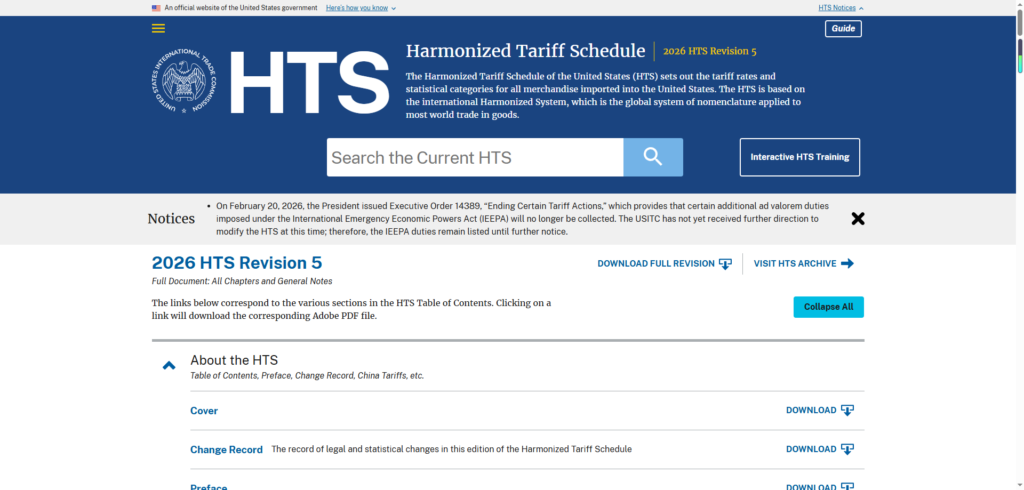
Step 1: Search for the product term
In the HTS search bar, enter a clear keyword such as tea. This helps you find the main heading related to the product category.
Step 2: Find the main heading
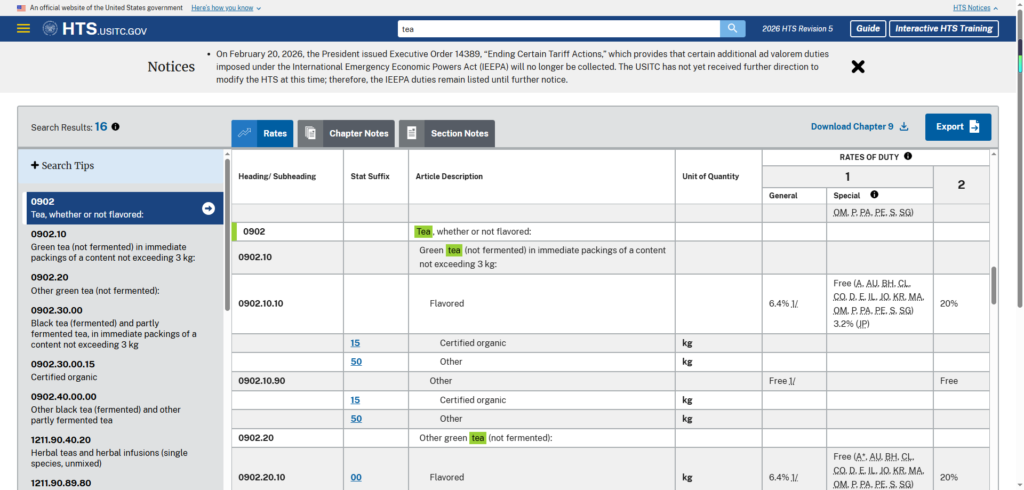
In the search results, look for the heading that best matches the product. In this example, 0902 covers tea, whether or not flavored, which is the main category for standard tea products.
Step 3: Narrow the product type
After identifying the heading, review the subheadings shown in the left panel. This is where the classification becomes more specific. For tea, the results may separate:
green tea
black tea
flavored tea
herbal teas
immediate packings not exceeding 3 kg
other bulk or non-retail forms
Step 4: Match the description to the actual product
Suppose the product is green tea in retail packaging under 3 kg. In that case, you would review 0902.10 rather than stopping at the broader heading 0902. If the product is black tea, flavored tea, or herbal tea, the correct result may be different.
Step 5: Check the article description and notes
Before choosing a code, compare the article description carefully with the actual product details. Then review any relevant chapter notes or section notes if the classification is still unclear. This is especially important when products look similar but differ in material, ingredients, or packaging form.
Step 6: Confirm before using the code
A search result is only the starting point. Before using the code in shipping documents or customs filing, make sure the product type, packaging, and description all match. If the product includes additional ingredients or does not fit neatly into the listed description, it may need a different classification.
Where to Check an HTS Code
The most reliable place to check an HTS code is the official customs tariff resource used by the destination market.
Useful sources may include:
the official tariff schedule
customs search tools
customs ruling databases
government trade portals
a licensed customs broker
supplier technical documents for reference
Many official tools are free and publicly accessible, which makes them a good starting point. In the United States, importers often use the official HTS search tool and related customs resources. For export topics, the Census Bureau’s Schedule B tool is also widely used. The Census Bureau’s export classification resource is helpful for understanding how export codes differ from import codes, even though it does not replace the import HTS process.
If you are checking the product’s HTS code, always confirm that you are using the right country’s tariff system rather than a random third-party website.
Common Mistakes When Finding an HTS Code
Searching by brand or model name
Searching by a product name alone often leads to weak or misleading results. It is usually better to search by the product’s general description, material, and use.
Treating the supplier’s HS code as the final code
A supplier’s code can be a reference, but it may not match the tariff system of the destination country. The final code should always be verified before filing.
Skipping notes and exclusions
A heading may look correct at first glance, but chapter notes and exclusions can change the result completely. Ignoring them increases the risk of using the wrong code.
Confusing function with material
Products that serve a similar purpose may still be classified differently because of material or essential character. This is why appearance alone is not enough.
Stopping at the first possible match
The first result is not always the best result. A more accurate code often appears only after comparing nearby headings and subheadings.
Waiting too late to verify
If classification is checked only when the shipment is ready, there may be too little time to fix mistakes. It is safer to confirm the code before documents are prepared.issues.
Frequently Asked Questions
No. The HS code is the international base code from the Harmonized System. The HTS code is the more detailed national tariff code used for import classification.
You can use a supplier’s HS tariff code as a starting point, but you should still verify whether it matches the destination country’s tariff schedule.
In practice, the importer is responsible for using the right code in customs documents, even if a supplier or customs broker gave a reference.
Usually no. The first 6 digits are the international base, but many countries require additional digits for import declaration and tariff treatment.
If you are importing into the United States, the code used for merchandise imported is based on the Harmonized Tariff Schedule. You should verify the code carefully because it can affect tariff rates, customs duty rates, and USA customs clearance.
Related Shipping Cost & Import Planning Guides
Get a Shipping Quote Based on Your Product Classification
- Support for HS and HTS code-related shipment planning
- Door-to-door, air freight, sea freight, and DDP options
- Clear pricing based on cargo details, destination, and customs needs
Send us your product details, shipping route, and delivery requirements to receive a tailored freight solution and quote.