

Net Weight vs Gross Weight
- Verified & Reviewed · Last updated April 2026
Net weight vs gross weight is a key topic in shipping, customs, product labeling, and freight planning. Understanding the difference helps importers, exporters, and sellers avoid weight errors, shipping fee disputes, and document inconsistencies.
This guide explains net weight vs gross weight, how to calculate net weight, gross weight, and tare weight, and when each measurement should be used in international shipping, customs clearance, and packing lists.
Net weight definition
Gross weight calculation
Tare weight in shipping
- Experienced China-based logistics specialists
Table of Contents
Net Weight vs Gross Weight: Quick Answer
The easiest way to understand net weight vs gross weight is this:
Net weight is only the weight of the product
Gross weight is the total shipment weight
Tare weight is the weight of the packaging or empty container
So if you are asking about the actual goods, use net weight. If you are asking about the shipment’s weight for freight or handling, use gross weight.
A simple formula looks like this:
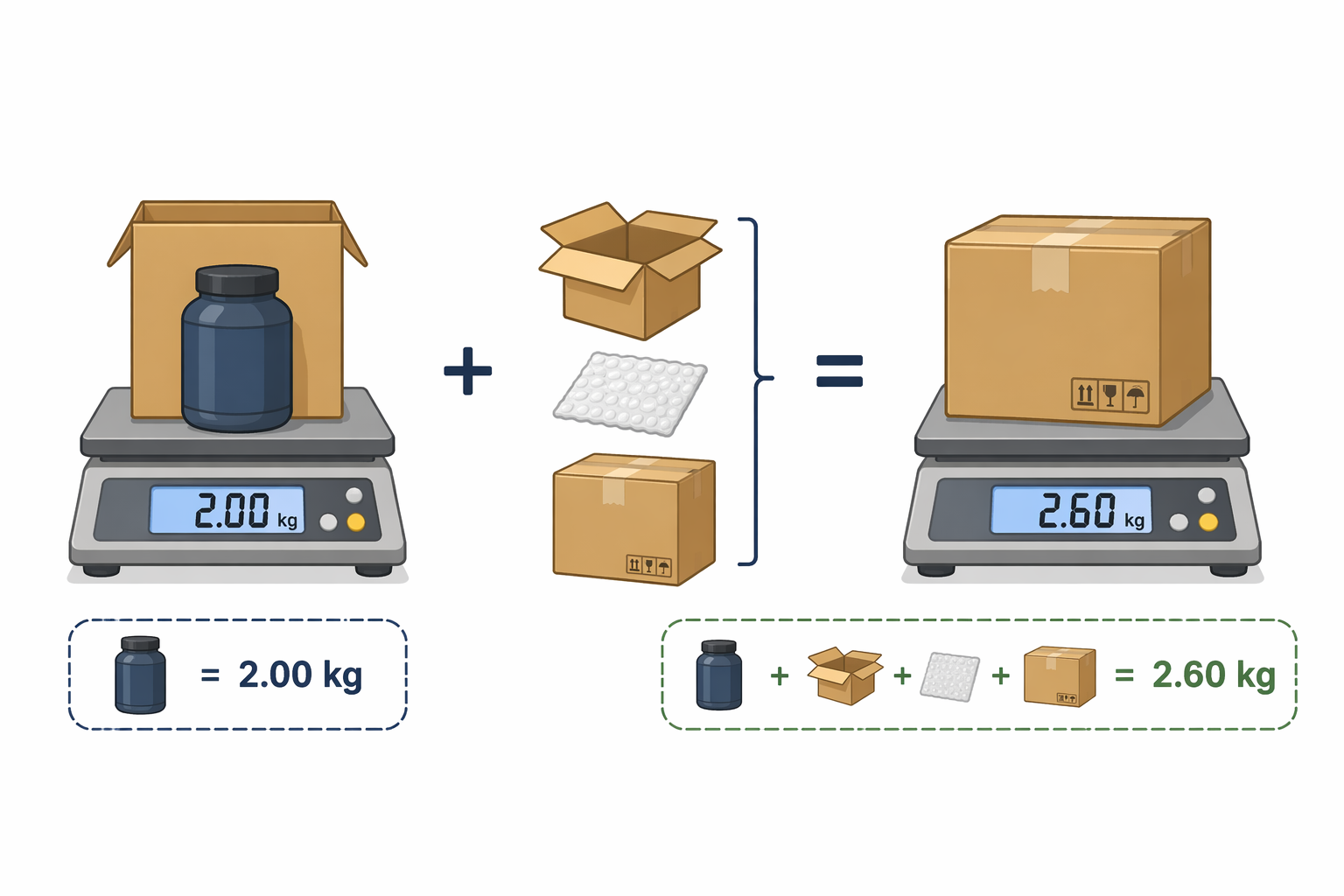
Gross weight = net weight + tare weight
This is why net weight excludes the packaging, while gross weight includes the packaging weight and other support materials used in transport.
What Is Net Weight?
Define net weight in the simplest way: it is the weight of the product itself, with no carton, no pallet, no retail box, no shipping boxes, and no extra wrapping. It is the actual weight of the goods being sold or shipped.
If a company exports raw beans, canned food, machinery parts, or chemicals, the product’s net weight is the weight of the goods only. It is the number most buyers care about when they want to know how much product they are actually receiving.
For example:
If you ship canned beans preserved in liquid, the net weight is the weight of the beans and product content as defined for sale
If you export raw beans in bags, the net weight is only the beans
If you ship glass plates, the net weight is the weight of the glass, not the crate, bubble wrap, or pallet
This is why understanding net weight is essential for sales, labeling, and inventory control.
Where Net Weight Is Used
Net weight is commonly used in:
product labeling
customs declarations for certain products
sales contracts based on quantity
food and retail packaging
manufacturing and inventory records
international shipping documents where cargo data must be clearly separated
In many industries, net weight is the commercial figure because it reflects the real goods, excluding packaging.
What Is Gross Weight?
Gross weight refers to the combined weight of the goods plus all packaging materials. It is the total weight that the carrier, warehouse, truck, or aircraft actually handles.
A proper gross weight measurement may include:
product weight
inner packaging
outer cartons
pallet weight
crate weight
shrink wrap
bubble wrap
blocking or protection material
other cargo protection equipment
In other words, gross weight includes everything that moves with the cargo.
If a product weighs 800 kg and the cartons, pallet, and wrapping add another 120 kg, then the total gross weight is 920 kg. This total is important because freight companies do not move just the product. They move the entire load.
Why Gross Weight Matters
Gross weight is commonly used for:
freight booking
warehouse handling
road transport gross weight checks
air cargo planning
maximum cargo weight control
legal weight limits for trucks
shipping documentation
loading and unloading safety
For logistics, the shipment’s weight is usually more important than the product weight alone. That is why gross weight is central to determining shipping costs and ensuring proper handling during transport.
What Is Tare Weight?
To fully understand net weight vs gross, you also need to understand tare weight.
Tare weight is the weight of the empty packaging or container without the goods inside. This could be:
a carton
a pallet
a crate
a drum
an IBC tank
an empty container
In simple terms:
Net weight = goods only
Tare weight = packaging only
Gross weight = goods plus packaging
That is why net and tare weight together create the gross figure.
Tare Weight Formula
Tare weight = gross weight – net weight
So when you tare weight subtract from gross, you get the weight of the goods alone. When you subtract the packaging from the shipment total, you can calculate net weight.
This is especially useful when the cargo is loaded in a drum, on a pallet, or inside a container where the container’s tare weight is significant.
Net Weight vs Gross Weight: Main Differences
Here is a quick comparison table that makes the difference clear:
| Term | Meaning | Includes Packaging | Main Use |
|---|---|---|---|
| Net Weight | Weight of the goods only | No | Product quantity, labeling, trade |
| Gross Weight | Combined weight of goods and packaging | Yes | Freight, transport, handling |
| Tare Weight | Weight of the package or empty container | Packaging only | Weight calculation and shipment planning |
The most important distinction is this: gross weight is usually higher than net weight because it includes the total packaging weight.
If the numbers are the same, there may be no packaging, or the data may be incomplete.
How to Calculate Net Weight and Gross Weight
To calculate gross weight, add the net weight of the product to the weight of all packaging materials.
Calculate Gross Weight
Gross weight = net weight + packaging weight
This gross weight calculation includes the full weight of cartons, pallets, crates, wrapping, and transport supports.
Example 1
Net weight of goods: 500 kg
Packaging weight: 40 kg
Gross weight = 500 kg + 40 kg = 540 kg
Example 2
A shipment of export glass plates may include:
Glass plates: 1,200 kg
Wooden crate: 180 kg
Bubble wrap and corner protection: 20 kg
Total gross weight = 1,400 kg
This is the number the carrier uses for handling and transport planning.
Calculate Net Weight
To calculate net weight, subtract the packaging or tare weight from the total shipment weight.
Net Weight Formula
Net weight = gross weight – tare weight
Or more simply:
Net weight = total shipment weight – packaging weight
If a shipment weighs 540 kg in total and the packaging weighs 40 kg, then:
Net weight = 540 kg – 40 kg = 500 kg
This is the standard way to separate the product weight from the package weight after confirming the full shipment weight.
Practical Reminder
If you need to calculate net weight accurately, follow this sequence:
Confirm the full shipment weight
Confirm the packaging or tare weight
Subtract tare weight from gross weight
Verify the result against the product count or unit weight
This helps avoid weight discrepancies across the invoice, packing list, and booking data.
Why Accurate Weight Calculations Matter
In international trade, accurate weight calculations are not just a detail. They affect freight, compliance, warehousing, and customer trust.
If you use the wrong number, you can face:
incorrect freight quotes
delayed cargo booking
customs review problems
misdeclared cargo data
warehouse receiving issues
disputes over final billing
That is why businesses need accurate weight measurements and good accurate weight management across the full supply chain.
Impact on Freight and Cost Calculation
Weight directly affects:
shipping costs
shipping fees
trucking charges
cargo handling fees
warehouse charges
air freight rates
transport safety planning
For many shipments, calculating shipping costs starts with the correct gross weight. If the gross figure is wrong, the full cost calculation can be wrong as well.
This is especially true for large shipments, palletized cargo, and export cargo where pallets and wooden crates add significant packaging weight.

Net Weight vs Gross Weight in Shipping
In the real shipping process, gross weight is often the more operational figure, while net weight is the more commercial figure.
In Freight Booking
Carriers need the total shipment weight because that is what they actually transport. A truck, vessel, or aircraft is loaded based on the full load, not just the goods inside.
For example:
a truck’s weight allowance must respect legal weight limits
a plane’s weight planning depends on cargo load and balance
a container shipment must stay within the maximum weight
a vessel booking may be affected by maximum cargo weight
This is why road transport gross weight matters in trucking and inland delivery.
In Air Freight
Air freight may also involve dimensional weight or billable weight, which is different from net and gross weight. Gross weight measures what the cargo actually weighs, while billable weight may be based on size if volume is large.
Even so, the declared gross weight must still be accurate.
In Ocean Freight and Container Shipping
In container transport, the container’s weight matters too. The cargo weight plus the container’s tare weight must stay within equipment limits. This is why containerized shipping relies on careful weight declaration and compliance with weight regulations.
Net Weight vs Gross Weight in Customs and Documentation
For customs and trade paperwork, both net and gross weight may appear on documents.
Common documents include:
bill of lading
customs declaration
shipping instruction
A correct weight declaration helps customs verify:
what goods are being imported
how much product is involved
how much total cargo arrived
whether the declared shipment data is reasonable
If the packing list says one number and the transport document shows another, customs may question the shipment. Accurate data reduces delays and avoids costly corrections.
Real Examples to Make It Simple
Here are a few easy examples that help explain weight vs gross in practical terms.
Example 1: Retail Food Product
A jar of food contains 500 grams of product.
Product only: 500 g
Glass jar and lid: 250 g
Net weight = 500 g
Gross weight = 750 g
Example 2: Industrial Cargo
A machine part is packed for export.
Machine part: 900 kg
Wooden crate: 140 kg
Protection material: 25 kg
Net weight = 900 kg
Gross weight = 1,065 kg
Example 3: Palletized Shipment
A seller ships 100 cartons on one pallet.
Goods: 700 kg
Cartons: 45 kg
Pallet: 20 kg
Stretch wrap: 5 kg
Net weight = 700 kg
Gross weight = 770 kg
These examples show that gross weight remove the packaging and you get net weight. Add the packaging back, and you get gross weight again.
Common Mistakes Businesses Make
Many companies still confuse net weight and gross figures. The most common mistakes include:
Using Net Weight for Freight Quotes
Freight companies usually need gross weight, not just the actual weight of the goods. If only net weight is given, the quote may be too low at first.
Ignoring Packaging Materials
Pallets, wooden cases, shipping boxes, shrink wrap, and bubble wrap can add a lot more weight than expected.
Missing the Tare Weight
If no one records the tare weight, it becomes harder to verify the final gross figure and harder to calculate net weight accurately.
Poor Document Consistency
A wrong figure on the invoice, packing list, or booking confirmation can create weight discrepancies and delay shipment release.
Best Practice for Importers, Exporters, and Sellers
To avoid errors, every shipment should be prepared with clear weight data before booking.
A practical checklist includes:
product description
unit quantity
net weight per unit
total net weight
total packaging weight
total gross weight
carton dimensions
pallet count
container details if applicable
This supports better accurate weight management, smoother coordination, and fewer corrections later in the supply chain.
If the cargo is heavy or export packed, always recheck the final gross number before loading. This is especially important when working close to maximum weight thresholds.
Frequently Asked Questions
Usually, actual weight in a product sense means net weight, but in shipping the term actual weight may sometimes refer to the measured shipment weight. Always check the context.
Yes. Gross weight includes cartons, pallets, wrapping, crates, and other packaging materials.
Net weight is the weight of the goods. Tare weight is the weight of the package or empty container.
Usually no. Freight bookings normally require gross weight, because that reflects the full cargo load.
Because carriers move the complete shipment. Gross weight is often used in calculating shipping costs and final transport charges.
Related Shipping Weight & Document Guides
Need Help Confirming Net Weight and Gross Weight?
- Avoid weight errors in freight quotes
- Improve packing list and shipping accuracy
- Get support before booking your shipment
Send us your cargo details and get help checking shipment weight, packaging data, and freight planning before delivery.