

How the Strait of Hormuz Situation Is Affecting Shipping From China in 2026
- Verified & Reviewed · Last updated April 2026
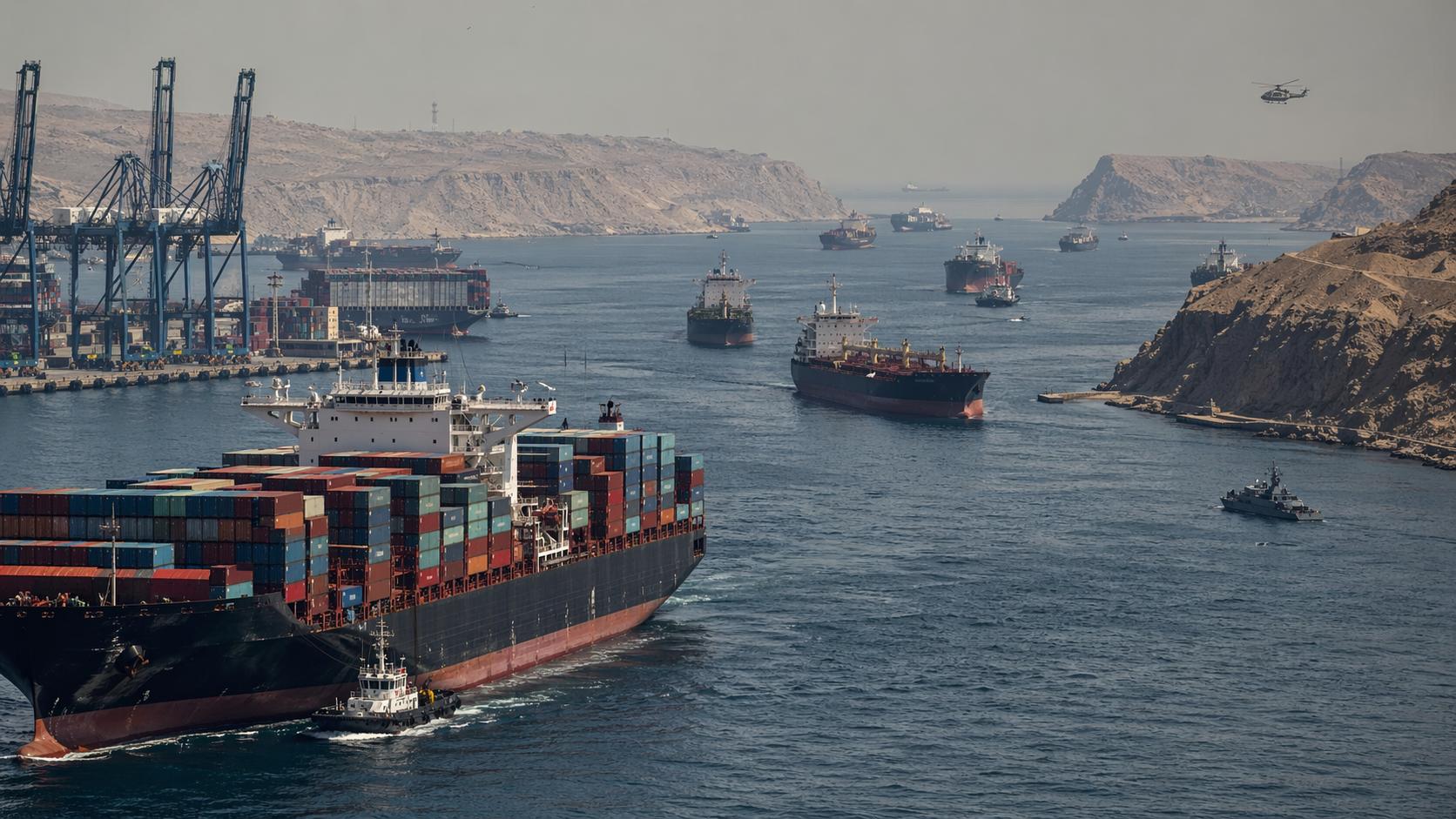
The Strait of Hormuz situation is becoming one of the most important logistics and trade issues of 2026, creating direct pressure on shipping from China, global supply chains, and commercial shipping across the Middle East.
This guide explains how the Strait of Hormuz crisis is affecting shipping from China, covering rising freight risk, oil prices, route disruption, insurance pressure, supply chain instability, and the wider impact on trade with the Gulf region.
Shipping risk
Oil prices / Supply chains
Gulf region
- Experienced China-based logistics specialists
Table of Contents
Why the Strait of Hormuz Matters in 2026
The Strait of Hormuz remains one of the most important chokepoints in the global economy. A large share of crude oil, Iranian oil, liquefied natural gas, petrochemical feedstock, and other energy cargoes passes through this corridor every day. That makes it vital to Gulf states, major importers in Asia, and interconnected markets across the world.
In 2026, the latest escalation has added new uncertainty to commercial traffic through the strait. Once that happens, even cargo that is not directly linked to energy can be affected because freight markets respond to risk before a full shutdown occurs.
This is why the Strait of Hormuz situation matters so much for shipping from China. It influences:
global supply chains
supply disruptions in the Gulf region
oil prices and transport costs
commercial vessels and booking confidence
insurance pricing
shipping flows across the Middle East
cargo planning for major importers
the wider stability of global trade
What Triggered the Latest Market Concern
The latest market concern was triggered by a clear sequence of events. After the conflict escalated in late February 2026, the Strait of Hormuz stopped operating like a normal shipping corridor. The blockade began, commercial vessels faced growing restrictions, and the market quickly realized that the risk was no longer political tension alone. It had become a real threat to commercial shipping, energy flows, and global supply chains.
A second turning point came in mid-April, when Iran said the waterway was open again during a temporary ceasefire period, and U.S. President Donald Trump also suggested that progress was being made and that the route could reopen. Those statements briefly improved market sentiment because traders and freight buyers hoped the Strait of Hormuz would return to more normal operating conditions.
However, that optimism faded almost immediately because official messaging did not match actual shipping conditions. The U.S. blockade on ships linked to Iranian ports was still in place, Iran still maintained tight control over passage, and carriers could see that vessel movement, insurance pricing, and routing risk had not normalized. In practice, the strait was being described as open, but it was still not functioning like a reliable trade route.
That mismatch is what truly triggered the latest market concern. Once shipowners, insurers, and freight buyers understood that normal operations had not been restored, confidence weakened again. Oil prices moved higher, commercial shipping became more cautious, and concern spread quickly across the Gulf region, the Middle East, and wider global supply chains.
How the Strait of Hormuz Situation Is Affecting Shipping From China in 2026
The Strait of Hormuz situation is affecting shipping from China in 2026 through four major channels: freight risk, energy-linked cost pressure, route instability, and supply chain disruption.
Freight Risk Is Rising Across the Middle East
For Chinese exporters and importers, the first impact is higher freight uncertainty. When carriers assess the Gulf region as a higher-risk zone, they often become more cautious about accepting bookings, deploying vessels at full capacity, or maintaining normal service patterns.
This can lead to:
tighter booking windows
new emergency surcharges
higher insurance costs
selective cargo acceptance
delayed sailing confirmation
more conservative routing decisions
Even if trade does not stop completely, the market becomes harder to navigate. Commercial shipping may continue, but under more pressure and with less confidence.
Oil Prices Are Raising Transport Costs
Because the Strait of Hormuz is central to the global oil market, disruptions in the strait often push Brent crude prices higher or make prices more volatile. This matters because oil prices influence ocean freight, inland trucking, warehousing costs, and the broader cost base of international logistics.
As a result, shipping from China can become more expensive even when the cargo itself has nothing to do with crude oil or liquefied natural gas. Higher fuel and transport costs feed directly into the landed cost of goods moving into the Middle East.
That is why this issue affects not only energy buyers, but also businesses importing machinery, building materials, electronics, medical equipment, and retail goods.
Supply Chains Are Becoming Less Predictable
The Hormuz crisis is putting additional pressure on supply chains that already face volatility from other corridors. If Hormuz traffic slows while Suez Canal traffic remains under pressure, the result can be a wider strain on shipping routes, vessel deployment, and cargo timing.
For shipping from China, this may mean:
longer lead times
less reliable discharge schedules
customs planning delays
higher inventory risk
weaker delivery visibility
slower inland distribution after port arrival
Modern supply chains depend on timing, not only movement. If schedules become unstable, the damage can spread from freight planning to purchasing, warehousing, production, and sales.
Insurance and Risk Control Are Tightening
A shipping crisis in a sensitive region usually leads to closer review by insurers and logistics operators. Cargo descriptions, consignee data, declared values, and destination details may receive more scrutiny. Some shipments may still move, but under stricter conditions.
This is especially important for businesses shipping commercial cargo into the Gulf region. In a high-risk environment, small documentation mistakes can turn into costly delays.
The Energy Connection Behind the Shipping Disruption
One reason the Hormuz crisis is so important is that it affects both shipping activity and energy-linked industrial costs. The strait is a core artery for global seaborne oil trade and for the movement of liquefied natural gas into energy-hungry markets.
If flows become unstable, the effect can spread through:
crude oil pricing
natural gas production costs
petrochemical feedstock supply
nitrogen fertilizer manufacturing
sulfuric acid input costs
export infrastructure planning
energy infrastructure investment decisions
This is particularly important during the spring planting season in the northern hemisphere, when nitrogen fertilizer demand is highly sensitive to feedstock cost. It also matters for industries such as semiconductor manufacturing, where chemicals, industrial gases, and stable energy supply all shape production economics.
In that sense, the Strait of Hormuz is not only a shipping issue. It is a cost and supply issue for the wider global economy.
The Role of Iranian Ports and Regional Shipping Behavior
Another reason this story matters is that risk is not evenly distributed across all ports and operators. Market participants are closely watching activity at Iranian ports, non Iranian ports, and terminals around the Gulf region to understand how shipping flows are changing.
Attention has also increased around sanctioned tanker activity, especially where cargo movements involve Iranian oil, iranian naphtha, or vessels linked to Russian and Iranian oil trades. In some cases, market observers have focused on whether a sanctioned tanker, a medium range tanker, or other vessels are changing their declared routing or operational behavior.
Shipping data from Kpler data, LSEG data, and other industry sources has become central to understanding the market. Kpler data showed and LSEG data showed shifts in traffic patterns, though the bigger takeaway is not only vessel count. It is the overall decline in confidence.
Reports have also highlighted unusual attention on specific vessel movements, including references to the handy tanker Murlikishan, a medium range tanker profile, ships with Chinese crew, and names linked to Shanghai Xuanrun Shipping Co or Shanghai Xuanrun Shipping. Whether or not every reported case changes the market directly, these details reinforce the perception that commercial traffic is now being judged through a geopolitical lens.
What Shipping Data Is Telling the Market
In a crisis like this, data showed that the biggest market reaction often comes from reduced confidence rather than total paralysis. Shipping data helps importers see whether the market is operating normally, cautiously, or under stress.
Recent market interpretation has focused on:
how many commercial vessels are still moving
whether vessels transiting the strait are doing so in normal patterns
whether at least three vessels or more are pausing before entry
whether other vessels are waiting outside the risk zone
which last port records are being reported
whether Hamriyah Port or other regional points are seeing changes in flow
whether commercial traffic is returning to pre war levels
Data showed that shipping flows have slowed materially from pre war levels, and industry sources continue to monitor whether weekend peace talks or diplomatic signals can restore confidence. But until sustained stability returns, the market is likely to remain cautious.
Country-Level Effects for Chinese Shippers
The Strait of Hormuz crisis is not affecting every Gulf destination in the same way. For Chinese shippers, the difference is not only about geography. It is also about port dependence, customs efficiency, inland delivery conditions, and how much disruption each market can absorb.
Markets With Stronger Logistics Flexibility
Some Gulf destinations are better positioned to handle short-term disruption because they have stronger port infrastructure, better warehousing capacity, and more flexible distribution networks. In these markets, importers may still face higher freight rates and insurance pressure, but they often have more room to adjust booking plans, delivery schedules, and cargo handling arrangements.
For Chinese exporters, this usually means the risk is more manageable, even when the overall shipping environment becomes more volatile.
Markets With Higher Maritime Exposure
Other destinations are more exposed because they depend more heavily on stable maritime access and consistent regional shipping services. When commercial traffic becomes cautious, these markets can feel the impact faster through tighter booking space, weaker schedule reliability, and more delivery uncertainty.
In this situation, even a moderate disruption in the Strait of Hormuz can create noticeable pressure on arrival planning, cargo release, and final delivery coordination.
Markets Where Post-Arrival Operations Matter More
For some destinations, the main issue is not only whether the cargo arrives at port, but how smoothly it moves after arrival. Shipping disruption can quickly extend into customs clearance, inland trucking, warehouse turnover, and destination handling.
For Chinese shippers moving machinery, building materials, commercial goods, or project cargo, this kind of operational delay can be just as important as ocean freight disruption itself.
Why Chinese Shippers Need a Different Strategy
The key takeaway is that the Gulf should not be treated as a single logistics market. Different destinations respond differently to the same regional shock, and shipping strategy should be based on operational conditions rather than a one-size-fits-all regional assumption.
Chinese exporters and importers should pay closer attention to:
booking flexibility
transit reliability
customs release efficiency
inland delivery complexity
landed cost visibility
the market’s ability to absorb delay
A more localized shipping strategy usually performs better during periods of regional instability. The businesses that plan based on logistics profile, rather than simply destination name, are often in a stronger position to protect supply chains and reduce delivery risk.

Key Risks for Importers and Exporters
Businesses moving cargo from China to the Gulf should pay attention to the following risks in 2026.
Rising Landed Cost
Transit time is no longer the only concern. The bigger issue is whether cargo can move from booking to final delivery without disruption.
Delivery Uncertainty
The full cost of importing is likely to rise when oil prices, insurance premiums, and operational fees increase. This can affect profit margins even if the base ocean freight quote seems manageable.
Capacity Pressure
When the market becomes cautious, carriers may not operate with full capacity, and that can reduce flexibility for shippers that rely on steady weekly departures.
Documentation Risk
How Businesses Can Reduce Risk
The best response is preparation, not panic. Companies shipping from China into the Middle East should strengthen planning before disruption becomes more expensive.
Book Earlier Than Usual
Early booking gives you more room to respond if conditions change.
Compare Total Landed Cost
Do not evaluate freight only by the base rate. Include oil prices, insurance, customs delays, and inland delivery costs.
Review Documentation Carefully
Make sure your shipping documents are accurate before booking and before departure.
Build Backup Routing Plans
Alternative shipping routes, split shipments, or flexible discharge planning can reduce exposure.
Work With an Experienced Freight Forwarder
A reliable freight forwarder can help you manage supply disruptions, booking changes, customs coordination, and destination delivery under difficult market conditions.
Final Thoughts
The Strait of Hormuz situation is affecting shipping from China in 2026 through higher freight risk, weaker schedule reliability, rising oil prices, insurance pressure, and broader supply chain instability. Because the strait supports global seaborne oil trade, energy markets, and the movement of cargo through the Gulf region, disruption in this narrow waterway can quickly affect global trade and the wider global economy.
For Chinese shippers, importers, and logistics teams, the most important priority is to stay flexible, monitor shipping data closely, and build stronger routing and cost-control plans. Companies that act early will be in a far better position than those waiting for the market to return to normal.
Frequently Asked Questions
Yes. The Strait of Hormuz situation is affecting shipping from China in 2026 through higher risk premiums, rising oil prices, weaker schedule reliability, and growing uncertainty across the Gulf region. Even when commercial shipping continues, the market can still become more expensive and less predictable.
The Strait of Hormuz matters because it is central to global seaborne oil trade, crude oil movement, liquefied natural gas flows, and wider shipping routes linked to the Middle East. Disruption there can spread into global supply chains, energy markets, and commodity markets.
When oil prices rise, the cost of ocean freight, trucking, warehousing, and other logistics services often rises as well. This increases the total landed cost for importers and exporters moving cargo from China.
Commercial vessels may still be transiting, but often under more cautious conditions. The issue is not always a full shutdown. Reduced confidence, insurance pressure, and slower shipping flows can already cause major disruption.
The most relevant destination markets discussed in this article are the UAE, Saudi Arabia, Qatar, Kuwait, Oman, and Bahrain. These countries are important for regional trade, industrial imports, and commercial shipping from China.
Related Gulf Shipping Guides
Talk to a Freight Forwarder About Gulf Shipping Risk
- Assess current Strait of Hormuz shipping risk
- Compare routing, cost, and transit options
- Get support for Gulf region shipments from China
Get tailored routing advice, freight planning support, and practical solutions for shipments affected by the Strait of Hormuz situation.