Related Guide
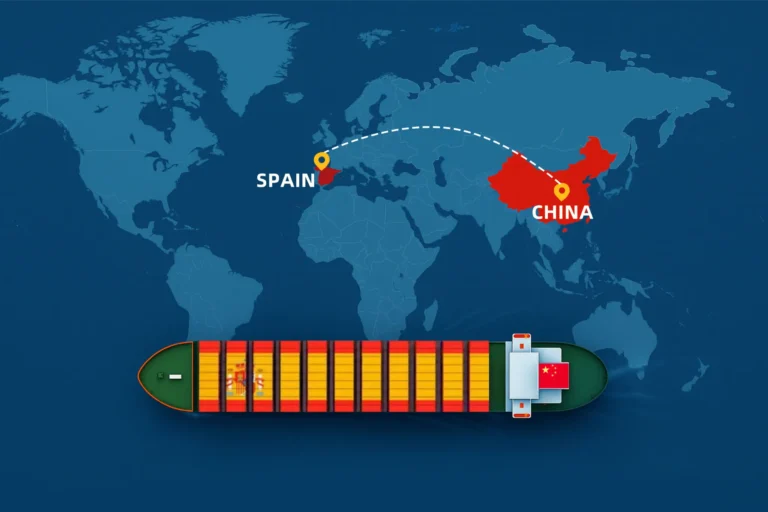
Shipping from China to Spain
Shipping from China to Spain – Sea, Air & DDP in 2026 Fast, reliable shipping from China to Spain for B2B importers, eCommerce sellers,and projec...
Read guide →

Sea freight from China to Spain is a cost-effective shipping solution for importers moving large shipments, bulk cargo, furniture, machinery, electronics, retail goods, and general cargo.
This guide explains sea freight costs, transit time, FCL and LCL options, major Chinese ports, Spanish ports such as Valencia and Barcelona, customs clearance, duties, VAT, and door-to-door delivery from China to Spain.
Sea freight cost
Transit time range
FCL / LCL shipping
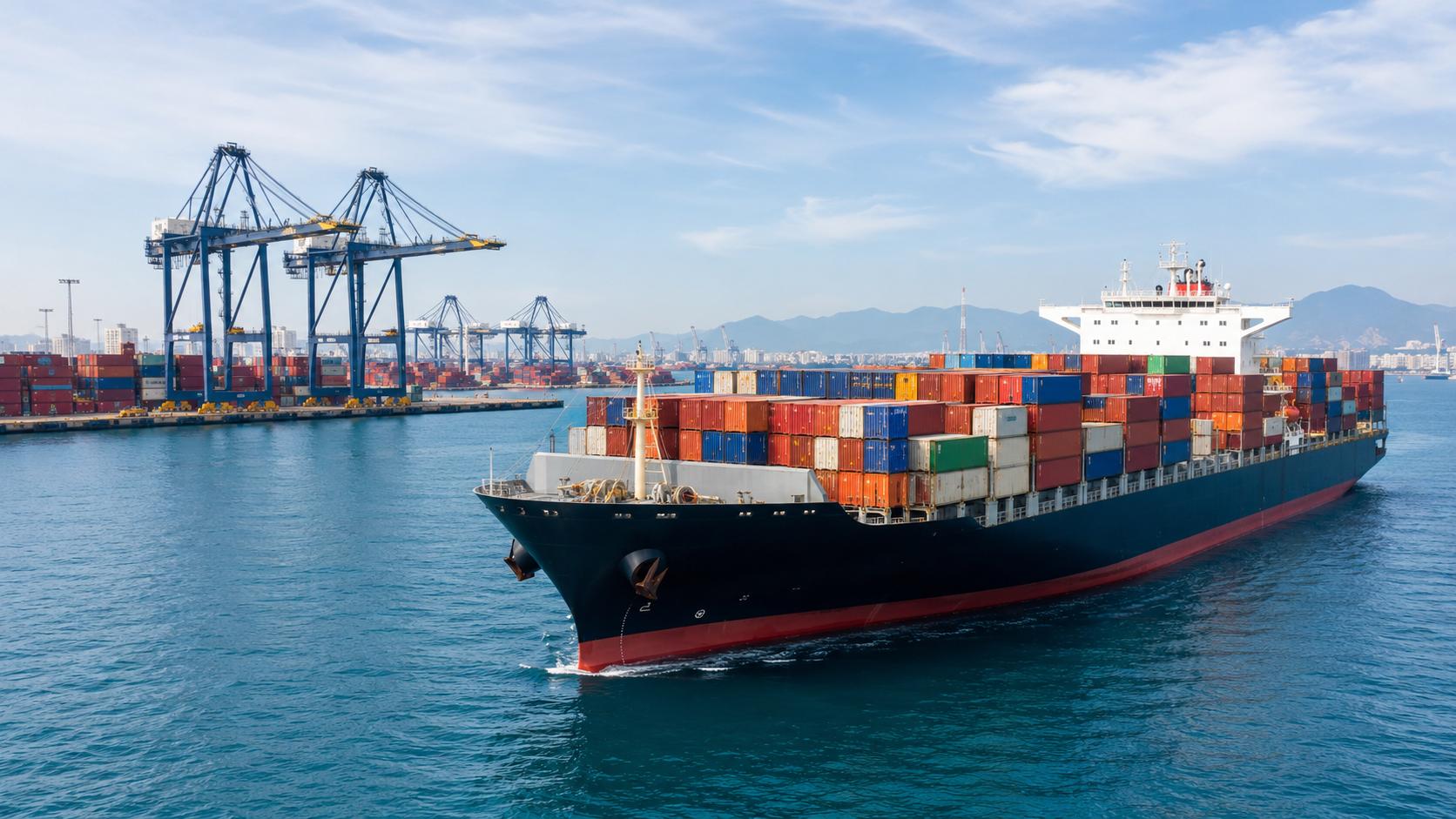
Many importers choose sea freight because it offers a better balance between shipping costs, cargo capacity, and delivery reliability. Spain is an important market in western Europe and a key entry point for international trade within the European Union.
Sea freight is commonly used when importers need to ship goods from China to Spain in large volume. It is especially suitable when delivery speed is not the top priority and the main goal is to reduce the total freight shipping cost.
Sea freight is suitable for many types of commercial cargo, especially products with large volume or heavy weight.
Common cargo types include:
Machinery, tools, spare parts, and industrial products
Electronics, accessories, and e-commerce inventory
General cargo, bulk cargo, and regular replenishment shipments
Full container load and less than container load freight shipping
Air freight is useful for high value cargo, high value shipments, and time sensitive goods. Express courier services are convenient for small parcels. However, for most commercial shipping cargo, ocean freight remains the most practical shipping mode from China to Spain.
Importers usually choose between FCL ocean freight, LCL ocean freight, and door to door sea freight. The right shipping method depends on cargo volume, cargo value, delivery deadline, budget, and whether the importer can handle customs clearance in Spain.
FCL, LCL, and door to door services all belong to ocean freight services, but they are used for different shipment sizes and delivery needs.
FCL shipping is ideal for larger shipments exceeding 15 cubic meters. With a full container load, your goods use an entire container exclusively. This makes FCL faster, safer, and more cost-effective per unit for large shipments.
A full container load is commonly used for furniture, machinery, building materials, retail goods, heavy cargo, and bulk shipments. Since your cargo does not share container space with other shipments, cargo handling is simpler and the risk of damage is lower.
Common container options include:
Less than container load shipping is recommended for smaller quantities, usually between 2 CBM and 14 CBM. With LCL shipping, your goods share container space with other shipments. This makes LCL more affordable for small cargo shipments.
LCL ocean freight is often used for small cartons, samples, spare parts, accessories, first-time trial orders, and medium-volume e-commerce shipments. However, LCL shipments may take longer than FCL because the cargo must be consolidated at the origin warehouse and separated again at the destination.
LCL is usually a good choice when:
Your cargo volume is not enough for an entire container
You want to control initial shipping costs
Your goods are not extremely urgent
You can accept a slightly longer transit time
Door to door services are suitable for importers who want a simpler shipping process. A freight forwarder can arrange pickup in China, export customs, ocean freight, Spanish customs clearance, import duties coordination, and final delivery to your warehouse or business address in Spain.
Door to door sea freight is useful if you do not have your own customs broker, trucking company, or warehouse team in Spain. It can also help reduce communication problems during the shipping process.
This shipping solution is often used by:
Small and medium importers
E-commerce sellers
Amazon and warehouse stock importers
First-time importers from China
Companies needing one-stop customs clearance and final delivery
Shipping costs from China to Spain depend on cargo origin, destination, shipping mode, container load, cargo volume, gross weight, shipping route, shipping line, season, cargo insurance, customs clearance, and final delivery address.
Choosing a port near the origin factory can reduce domestic trucking costs in China. For example, cargo from Zhejiang often ships through Ningbo, while cargo from Guangdong usually moves through Shenzhen, Shekou, or Nansha.
| Shipping Mode | Estimated Cost | Transit Time | Best For |
|---|---|---|---|
| Sea freight 20GP container | From $1,200–$1,500 basic ocean freight reference | 25–31 days | Heavy cargo and full container load |
| FCL 20GP to Valencia or Barcelona | Around $1,980–$2,420 | 25–31 days | Large shipments and regular imports |
| FCL 40HQ to Valencia or Barcelona | Around $2,970–$3,630 | 25–31 days | Large-volume cargo and bulk shipments |
| LCL ocean freight | Around $45/CBM | 26–35 days | Smaller cargo volume |
| Door to door sea freight | Based on volume, weight, and address | 30–40+ days | Importers needing customs and delivery |
The final China to Spain shipping cost may also include export handling, port charges, customs clearance, customs duties, VAT, cargo insurance, and inland delivery. Importers should compare the full landed cost, not only the basic ocean freight rate.
The choice between LCL and FCL mainly depends on cargo volume. LCL is more affordable for smaller shipments, while FCL is faster, safer, and more cost-effective per unit for large shipments.
Less than container load shipping is recommended for smaller quantities, usually between 2 CBM and 14 CBM. Full container load shipping is ideal for larger shipments exceeding 15 cubic meters.
Choose LCL ocean freight when your cargo is small or medium in volume and does not need a full container. It allows you to pay only for the container space you use.
LCL is suitable when:
Cargo volume is around 2–14 CBM
You are testing a new supplier or product
You want to reduce initial shipping costs
Your shipment is not urgent
You can accept consolidation and deconsolidation time
Choose FCL ocean freight when your cargo volume is large enough to use most of the container space. FCL shipping gives better control, lower unit cost, and fewer cargo handling steps.
| Option | Best For | Main Advantage | Key Point |
|---|---|---|---|
| LCL ocean freight | 2–14 CBM small cargo | Lower cost for small shipments | Shares container space with other shipments |
| FCL ocean freight | Over 15 CBM large cargo | Faster and more secure | Uses an entire container for one shipment |
| 20GP container | Heavy cargo | Good for dense products | Suitable for machinery, tiles, tools, and metal goods |
| 40HQ container | Large-volume cargo | More loading space | Suitable for furniture, retail goods, and light bulky cargo |
For small cargo shipments, LCL is usually cheaper than FCL. For large shipments, FCL shipping costs are lower per unit because the entire container is used for one shipment.
FCL is also better when cargo security is important. Since the container is sealed for one shipment, there is less cargo handling during the shipping process.
Major Chinese ports and Spanish ports play an important role in shipping costs, transit time, shipping routes, and final delivery arrangements. Choosing the right port can reduce domestic trucking costs, improve vessel schedule options, and make the overall shipping process more efficient.
For China to Spain cargo, importers usually ship from major Chinese ports to Valencia Port, Barcelona Port, Algeciras Port, or Bilbao Port.
Major Chinese ports for shipping from China to Spain include Shanghai, Ningbo-Zhoushan, Shenzhen, Shekou, Guangzhou, Nansha, Qingdao, and Xiamen. These ports offer strong ocean freight services and regular shipping routes to Spain.
Common China origin ports:
Shanghai Port: Suitable for general cargo, electronics, machinery, and large export shipments.
Ningbo-Zhoushan Port: Strong container shipping capacity and competitive ocean freight rates.
Shenzhen / Shekou Port: Good for South China suppliers, electronics, consumer goods, and e-commerce cargo.
Guangzhou / Nansha Port: Useful for Pearl River Delta cargo and mixed shipments.
Qingdao Port: Common for North China cargo, machinery, tires, chemicals, and industrial goods.
Xiamen Port: Suitable for Fujian suppliers, shoes, garments, stone products, and general cargo.
Choosing a port near the supplier can reduce inland trucking cost in China. It can also help avoid unnecessary delays before export customs and vessel loading.
Main Spanish ports include Valencia Port, Barcelona Port, Algeciras Port, and Bilbao Port. These ports support ocean shipping, container ships, cargo handling, customs clearance, and inland distribution across Spain.
Main destination ports include:
Valencia Port: Spain’s largest container port and a major gateway for China to Spain cargo.
Barcelona Port: Suitable for Catalonia, northeast Spain, retail goods, and Mediterranean distribution.
Algeciras Port: Important transshipment hub with strong container shipping connections.
Bilbao Port: Useful for northern Spain and nearby industrial regions.
For inland destinations such as Madrid, Zaragoza, Seville, and other major cities in Spain, intermodal transport can move cargo from coastal ports to the final address.

Most ocean shipping routes from China to Spain move through the South China Sea, Indian Ocean, Suez Canal, and Mediterranean Sea before arriving at Spanish ports such as Valencia, Barcelona, or Algeciras.
Some container ships use direct services, while others use transshipment through major international hubs. Direct services may offer better transit time and fewer cargo handling steps. Transshipment routes may provide more flexible sailing schedules or lower shipping costs.
When choosing a shipping route, importers should consider:
Origin port in China
Destination port in Spain
Vessel schedule and shipping line reliability
Shipping capacity during peak season
Port congestion and weather conditions
Customs clearance speed
Final delivery distance in Spain
The cheapest route is not always the best route. A slightly higher ocean freight rate may be better if it offers more stable transit time, fewer delays, and better final delivery control.
Customs clearance is a key part of shipping goods internationally. Spanish customs requires accurate HS codes for imported goods. Tariffs and VAT regulations are based on Harmonized System product codes, so the correct HS code directly affects customs duties, import duties, and customs clearance requirements.
A clear commercial invoice and packing list can help reduce customs clearance problems. Importers should avoid vague descriptions, wrong HS codes, and unrealistic declared values.
To complete customs clearance in Spain, importers should prepare clear and accurate shipping documents before the vessel arrives. Spanish customs mainly checks the product description, declared value, HS code, quantity, and shipment details.
Common documents include:
Bill of lading
Certificate of origin if required
Product certificates if required
Import license for controlled goods if applicable
Cargo insurance document if used
The commercial invoice should clearly show the seller, buyer, product description, quantity, unit value, total value, currency, and trade terms. The packing list should show carton quantity, weight, volume, and package details.
Customs duty applies to shipments over €150 in Spain. VAT in Spain is generally 21% on the customs value plus duties and related import costs.
Important customs points:
Spanish customs requires accurate product descriptions and HS codes.
Customs duties depend on product type, declared value, HS code, origin, and European Union customs regulations.
VAT is calculated based on customs value, duties, and related import costs.
Incorrect customs documentation may cause customs delays, inspections, storage fees, or revised declaration requests.
A freight forwarder or customs broker can help check documents before arrival.
A reliable freight forwarder can assist with customs clearance processes, check shipping documentation, coordinate with customs brokers, and help ensure compliance with Spanish import regulations.
Sea freight from China to Spain usually involves five main phases. Understanding the shipping process helps importers plan shipments, prepare documents, and avoid unnecessary delays.
The process starts before the cargo leaves the factory. A freight forwarder usually confirms cargo details, shipping method, pickup address, destination address, and customs documentation before booking space with the shipping line.
Main phases:
Cargo pickup in China
Goods are collected from the supplier, factory, or warehouse.
Export handling and booking
The cargo is delivered to the port or warehouse. LCL cargo is consolidated, while FCL cargo is loaded into an entire container.
Ocean freight to Spain
The shipment moves by container ship through the selected shipping route.
Spanish customs clearance
Spanish customs checks the commercial invoice, packing list, HS code, declared value, duties, and VAT.
Final delivery in Spain
After customs release, the cargo is delivered to the warehouse, store, Amazon facility, or business address.
For door to door services, the freight forwarder manages the full shipping process from pickup in China to final delivery in Spain.
Sea freight, air freight, rail freight, and express shipping are different shipping solutions for different cargo needs. The best shipping mode depends on cargo volume, delivery deadline, cargo value, and budget.
Sea freight is the best choice for large shipments, bulk cargo, full container load shipments, and less urgent goods. It provides the lowest shipping costs for large-volume cargo and is widely used in international trade.
Air freight is better when delivery speed is more important than shipping cost. Importers often prefer air freight for urgent shipments, high value cargo, and time sensitive goods.
Air freight is suitable for:
High value cargo
High value shipments
Urgent shipments
Time sensitive goods
Product launches
Emergency spare parts
Small but valuable commercial cargo
Major Spanish airports such as Madrid Airport and Barcelona El Prat Airport are commonly used for air freight. Direct flights can reduce transit time, especially for urgent goods moving through an international airport.
Rail freight can be considered for medium-urgency shipments, but it is not always the most flexible shipping mode for Spain. It may be useful when importers want a faster option than ocean freight but lower cost than air freight.
Express services and express courier services are suitable for:
Samples
Documents
Small parcels
Urgent e-commerce orders
Lightweight high value goods
Express shipping can deliver quickly, but the cost is high for commercial cargo. For most freight shipping from China to Spain, sea freight remains the most balanced option for cost, capacity, and long-term supply chain planning.
Reducing shipping costs starts with proper planning. Many importers only compare the ocean freight rate, but the real cost also includes pickup, export charges, customs clearance, import duties, VAT, cargo insurance, and inland delivery.
The best way to reduce costs is to choose the right shipping method based on cargo volume and delivery urgency.
Practical cost-saving tips:
Use LCL ocean freight for small shipments between 2 CBM and 14 CBM.
Use FCL shipping when cargo volume exceeds 15 CBM.
Choose a China port close to the supplier to reduce domestic trucking cost.
Book space early before peak season or holiday pressure.
Prepare accurate customs documentation before the vessel arrives.
Compare Valencia Port and Barcelona Port based on destination city.
Use cargo insurance for high value cargo or fragile goods.
Work with a freight forwarder who can compare several shipping line options.
A professional freight forwarder can also consolidate shipments to reduce costs, provide real-time tracking, and recommend better shipping solutions based on your cargo type.
The right freight forwarder can make shipping from China to Spain easier, safer, and more predictable. A good freight forwarder should understand ocean freight, air freight, customs clearance, cargo handling, Spanish customs, and European Union import rules.
Most freight forwarders can provide a quote, but not all of them can manage the full shipping process smoothly. The right freight forwarder should help you avoid hidden fees, wrong shipping mode selection, customs problems, and delayed delivery.
A reliable freight forwarder should provide:
FCL and LCL ocean freight services
Air freight, rail freight, and express shipping options
Door to door services in Spain
Customs clearance support
Assistance with commercial invoice and packing list
Real-time tracking and shipment updates
Cargo insurance options
Transparent shipping costs
Flexible shipping solutions for different cargo types
For importers shipping from China to Spain regularly, working with the right freight forwarder can improve cost control, reduce risks, and make the supply chain more stable.
Sea freight costs depend on cargo volume, container load, origin port, destination port, shipping line, season, customs clearance, and final delivery address. A 20GP container may start from around $1,200 to $1,500 as a basic ocean freight reference, while common FCL rates to Valencia or Barcelona may be higher depending on market conditions.
FCL sea freight to Spain typically takes 25 to 31 days port to port. LCL shipments usually take 26 to 35 days because of consolidation. Door to door sea freight may take 30 to 40 days or longer.
LCL is usually cheaper for small shipments because you only pay for the container space you use. FCL is more cost-effective for large shipments because the entire container is used exclusively for one shipment.
Valencia Port and Barcelona Port are two of the most common choices. Valencia is Spain’s largest container port, while Barcelona is suitable for northeast Spain and Mediterranean distribution.
Yes. Imported goods must go through customs clearance in Spain. You need documents such as a commercial invoice, packing list, bill of lading, HS code, and other product documents if required.
Choose sea freight for large shipments, bulk cargo, and lower shipping costs. Choose air freight for urgent shipments, high value cargo, and time sensitive goods.
Useful freight, customs and importing resources related to this shipping guide.
Shipping from China to Spain – Sea, Air & DDP in 2026 Fast, reliable shipping from China to Spain for B2B importers, eCommerce sellers,and projec...
Read guide →
Shipping Cost from China to Spain (2026 Guide) Verified & Reviewed · Last updated June 2026 Shipping cost from China to Spain in 2026 typically r...
Read guide →
How long does it take to ship from China to Spain? This is one of the most common questions asked by importers looking to optimize delivery times...
Read guide →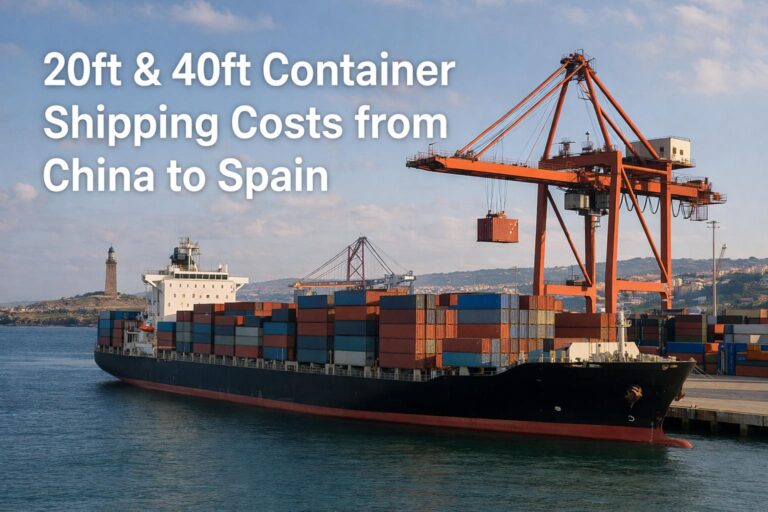
20ft & 40ft Container Shipping Costs from China to Spain Verified & Reviewed · Last updated June 2026 20ft 40ft Container Shipping Costs from Chi...
Read guide →Air freight from China to Spain is one of the most efficient and reliable international shipping solutions for businesses that need fast delivery...
Learn more → Useful Resource DDP Shipping from China to SpainWhy DDP Shipping Is the Preferred Choice for Spain Shipping goods from China to Spain has never been easier, thanks to the increasing popularity...
Learn more →WhatsApp us