

40HQ Shipping from China to the USA
- Verified & Reviewed · Last updated April 2026
Shipping a 40HQ container from China to the USA is a cost-effective option for importers moving large-volume cargo such as furniture, machinery parts, building materials, packaging products, textiles, and e-commerce inventory.
This updated guide explains the key costs, transit time, shipping routes, customs clearance, ISF filing, port-to-port options, and door-to-door delivery solutions for 40HQ container shipping from China to the USA.
40HQ
Transit Time
Door-to-Door Delivery
- Experienced China-based logistics specialists
Table of Contents
What Is a 40HQ Container?
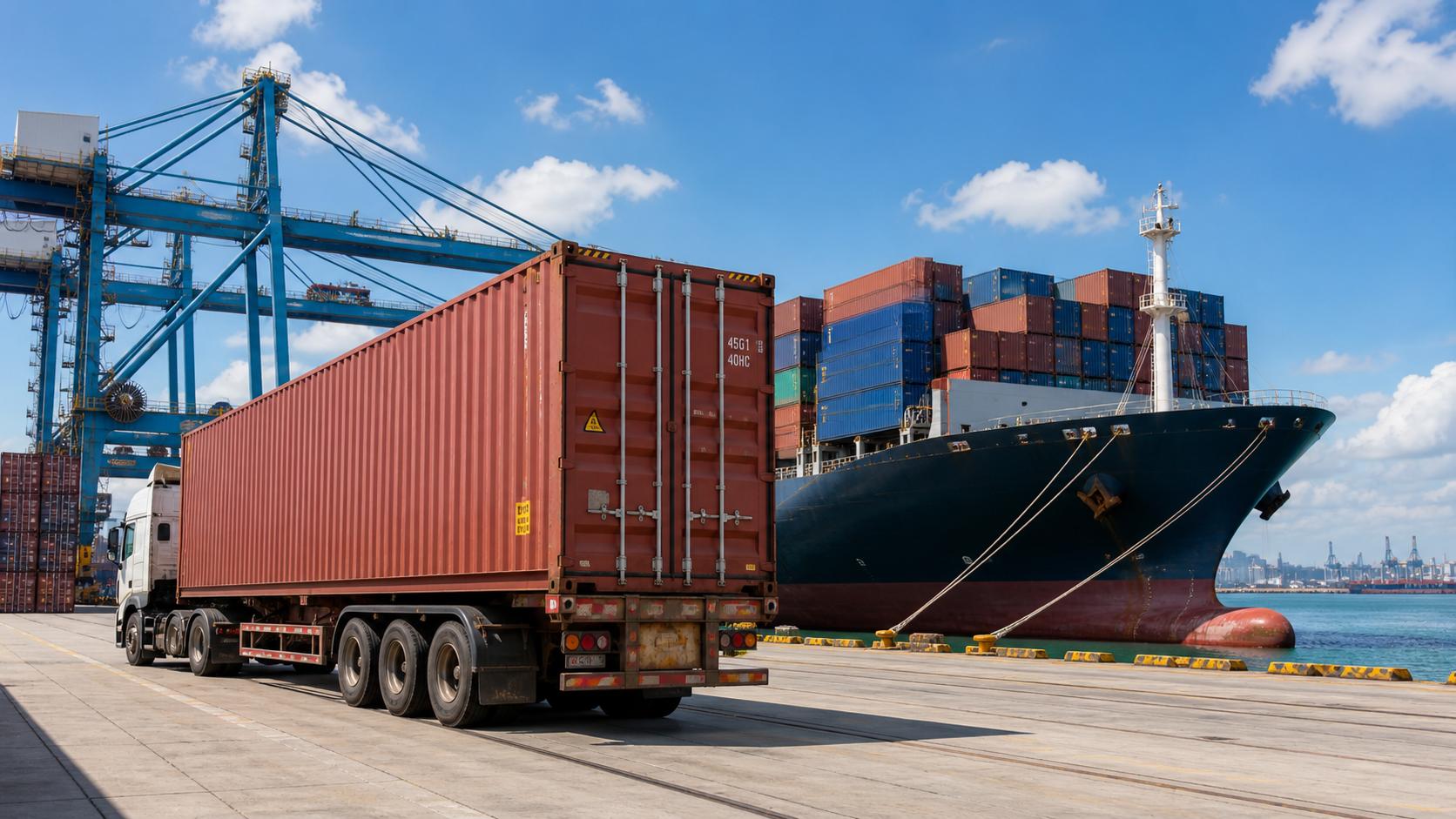
A 40HQ container is a 40ft high cube container. It has the same length as a standard 40ft container but offers extra height, which gives importers more loading space for bulky cargo.
It is commonly used for furniture, home goods, lighting products, textiles, packaging materials, machinery parts, building materials, and e-commerce inventory.
For 40HQ shipping from China to the USA, this container is often more cost effective than LCL shipping when the cargo volume is large enough. Since the goods move as one full container load, it also reduces repeated handling and gives importers better cargo control.
China origin charges
A 40HQ container has about 76 cubic meters of internal volume. In real shipping, the practical loading volume is usually around 68–72 CBM because cartons, pallets, cargo shape, and loading method all affect usable space.
| Item | 40HQ Container Reference |
|---|---|
| External length | 40 ft |
| External height | 9 ft 6 in |
| Internal volume | About 76 CBM |
| Practical loading volume | About 68–72 CBM |
| Standard pallet capacity | About 20–24 pallets |
| Maximum payload | Usually around 26,000–28,000 kg |
The actual container load depends on both volume and weight. Some cargo fills the container by space first, while heavy cargo may reach the weight limit before the container is fully used.
This is why a reliable freight forwarder will always check both shipping volume and total cargo weight before confirming whether 40HQ shipping is the right choice.
When Should You Choose 40HQ Shipping?
You should choose 40HQ shipping from China to the USA when your cargo volume is large, your delivery schedule is not extremely urgent, and you want a more cost effective solution than air freight or express shipping.
A 40HQ container is usually suitable when your cargo volume is close to 60 CBM or more, your goods are bulky but not extremely heavy, your supplier can load a full container, or you want to avoid repeated handling in LCL shipping.
For large shipments, 40HQ sea freight usually offers better freight costs per cubic meter. It is also more stable than less than container load shipping because the cargo is not repeatedly handled at different warehouses.
If your shipment is small, LCL shipping may be better. If your goods are urgent, air freight or express shipping may be faster. But for large-volume cargo, sea freight by 40HQ container is usually the best balance between cost, capacity, and reliability.
40HQ Shipping Cost from China to the USA
The 40HQ shipping cost from China to the USA depends on the destination port, shipping route, carrier space, cargo details, and final delivery address. Rates are more stable than during the most volatile market periods, but they can still change with peak season, fuel costs, port congestion, and vessel capacity.
Basic Ocean Freight Reference
As a general market reference, the base ocean freight for a 40HQ container may fall within these ranges:
| Route | Estimated 40HQ Ocean Freight |
|---|---|
| China to US West Coast | USD 2,300–3,100 |
| China to US East Coast | USD 3,300–4,200 |
| China to inland USA | USD 3,400–4,500+ |
US West Coast routes are usually cheaper and faster because the voyage is shorter. US East Coast routes often cost more because the sailing time is longer. Inland delivery costs more because rail or truck transportation must be added after port arrival.
What Is Included in the Total Cost?
The basic ocean freight is only one part of the total shipping cost. A complete 40HQ shipment may also include:
Origin port charges
Export customs declaration
Document fees
ISF filing
US customs clearance
Import duties and taxes
Destination port charges
Chassis fees
Final truck delivery
Storage or exam fees if inspection occurs
This is why importers should compare the full landed cost, not only the sea freight rate.
Why 40HQ Shipping Rates Change
40HQ freight rates can change because of carrier capacity, fuel cost, port congestion, equipment availability, and seasonal demand. Rates often rise before major holidays, retail restocking periods, and Chinese New Year.
The final delivery address also affects the quote. Shipping to Los Angeles or Long Beach is different from shipping to Chicago, Dallas, Atlanta, or another inland destination.
Common Shipping Routes from China to the USA
For 40HQ shipping from China to the USA, the main routes usually fall into two categories: US West Coast routes and US East Coast routes. The route you choose affects both shipping cost and transit time.
China to the US West Coast
US West Coast routes are usually the fastest and most commonly used for 40HQ ocean freight. After crossing the Pacific, the container arrives directly at major western ports.
Common destination ports include:
Los Angeles
Long Beach
Oakland
Seattle
Transit time is usually around 12–20 days, depending on the origin port, carrier schedule, and whether a fast service is available.
This route is often a good choice for cargo going to California and nearby western states. It is also commonly used for shipments that will continue inland by rail after arriving at the West Coast.
China to the US East Coast
US East Coast routes take longer, but they may be more suitable for cargo delivered to the eastern or southeastern United States.
Common destination ports include:
New York
Savannah
Norfolk
Charleston
Transit time is usually around 30–45 days, depending on the route and carrier arrangement. Some services move through the Panama Canal, while others may use longer routing options.
Although East Coast routes usually cost more than West Coast routes, they can help reduce inland trucking distance if the final destination is near the East Coast.
Main Loading Ports in China

Transit Time for 40HQ Shipping from China to the USA
The transit time for 40HQ shipping from China to the USA depends on the origin port, destination port, shipping route, customs clearance, and final delivery distance.
| Route | Estimated Sea Freight Transit Time | Total Delivery Notes |
|---|---|---|
| China to US West Coast | 15–25 days | Faster ocean route, suitable for western states |
| China to US East Coast | 30–45 days | Longer route, suitable for eastern and southeastern states |
| China to inland USA | 25–60 days | Requires port arrival plus rail or truck delivery |
West Coast routes are usually faster, while East Coast routes may reduce inland delivery distance for cargo going to eastern states.
For inland destinations such as Chicago, Dallas, Atlanta, or Ohio, importers should allow extra time for rail transfer, truck delivery, customs clearance, port release, and delivery appointments.
Customs Clearance, Documents, and ISF Filing
For 40HQ shipping from China to the USA, customs clearance should be prepared before the container arrives at the US port. Missing or inconsistent documents may cause customs delays, storage fees, or cargo holds.
ISF Filing
For ocean freight to the USA, ISF filing must be completed before the container is loaded at the China port. Importers should provide seller, buyer, importer information, consignee, manufacturer, ship-to party, HS code, country of origin, and container stuffing details as early as possible.
Late or inaccurate ISF filing may lead to penalties or clearance delays.
Required Documents
Common documents include:
Packing list
Bill of lading
ISF information
Customs bond
Arrival notice
Importer of record details
Product certificates if required
All document details should be consistent, especially product name, quantity, weight, value, consignee information, and HS code.
Customs Clearance and Import Duties
US customs duties are calculated based on the HS code, declared value, country of origin, and product type. Some goods from China may also face additional tariffs, anti-dumping duties, or special import requirements.
Before shipping, importers should confirm the correct HS code and check whether the product needs extra certificates, labeling, or agency review. This is especially important for electronics, batteries, textiles, chemicals, food-contact products, and regulated goods.
Clear product information and accurate documents can help reduce customs delays and support smoother cargo release.
Door-to-Door vs Port-to-Port 40HQ Shipping
For 40HQ shipping from China to the USA, importers usually choose between door-to-door shipping and port-to-port shipping. The right option depends on your shipping experience, budget, customs resources, and final delivery needs.
Port-to-port shipping usually covers ocean freight from the China port to the US destination port. It is suitable for importers who already have their own customs broker, destination agent, and trucker in the USA. This option gives more control over each cost item, but the importer needs to handle customs clearance, destination charges, port pickup, and final delivery separately.
Door-to-door shipping is easier for importers who want one logistics partner to manage the full process. It can include supplier pickup in China, export customs declaration, ocean freight, customs clearance coordination, port release, and final delivery to the warehouse or business address.
For new importers, e-commerce sellers, and businesses without local US logistics resources, door-to-door delivery is usually more convenient. For experienced importers with their own broker and trucker, port-to-port shipping may offer more flexibility and cost control.
Shipping Lines, Cargo Insurance, and Supply Chain Planning
For 40HQ shipping from China to the USA, choosing the right shipping line is not only about finding the lowest rate. Different shipping companies and major carriers may offer different sailing schedules, transit times, container availability, and schedule reliability.
Common carriers for China to USA container shipping may include Maersk, COSCO, CMA CGM, ONE, Hapag-Lloyd, Evergreen, and Mediterranean Shipping Company. The best option depends on the origin port, destination port, cargo type, and required delivery time.
For example, shipments from Shanghai Port, Ningbo Zhoushan Port, Shenzhen, Qingdao, or Tianjin may connect to different US ports, including Los Angeles, Long Beach, Seattle, New York Port, Savannah, Norfolk, and other East Coast ports.
Importers should also consider cargo insurance for high-value, fragile, seasonal, or time-sensitive goods. Although ocean freight is widely used to transport cargo in large volumes, delays, damage, customs hold, or port congestion can still affect the supply chain.
Working with a trusted freight forwarding partner helps importers compare US ocean freight options, plan the right route, support seamless customs clearance, and arrange final delivery. This can help reduce unexpected costs and ensure timely delivery from China to the USA.
How to Choose a Reliable Freight Forwarder for 40HQ Shipping
Choosing the right freight forwarder is important for 40HQ shipping from China to the USA. A good forwarder should not only offer a price, but also explain the full shipping process clearly.
A reliable freight forwarder should help you:
Compare suitable shipping routes
Check ocean freight rates
Arrange 40HQ FCL shipping
Coordinate pickup from the supplier’s warehouse
Handle export customs declaration
Support ISF filing
Coordinate US customs clearance
Arrange port release and final delivery
Explain destination charges clearly
The cheapest quote is not always the best choice. For container shipping, clear communication, accurate documents, stable schedules, and transparent pricing are just as important as freight rates.
Tonlexing can help importers arrange 40HQ shipping from China to the USA, including supplier pickup, ocean freight booking, customs clearance coordination, door-to-door delivery, and final delivery planning.
Frequently Asked Questions
The cost depends on the China origin port, US destination port, shipping line, freight rates, cargo weight, customs clearance, and final delivery address. Port-to-port ocean freight may range from about USD 2,300 to USD 4,500 or more. Door to door delivery costs more because it includes additional logistics services.
Sea freight from China to the US West Coast usually takes about 15–25 days. Shipping to the East Coast usually takes about 30–45 days. Inland delivery may add another 7–15 days or more.
40HQ shipping is better when your cargo volume is large enough for a full container load. LCL shipping is better for small shipments. If your cargo volume keeps increasing, FCL shipping may become more cost effective than LCL.
A 40HQ container is taller than a standard 40ft container. It offers more internal space and is better for bulky cargo. A standard 40ft container may be enough for heavy cargo that does not need extra height.
Yes. Freight forwarders can collect cargo from different suppliers and load everything into one 40HQ container. This is common for importers buying from several factories.
Related China–USA Container Shipping Guides
Get a 40HQ Shipping Quote from China to the USA
- 40HQ ocean freight from major China ports
- Port-to-port and door-to-door delivery options
- Customs clearance and final delivery support
Compare 40HQ container shipping costs, transit time, and routes from China to the USA with a practical freight solution.