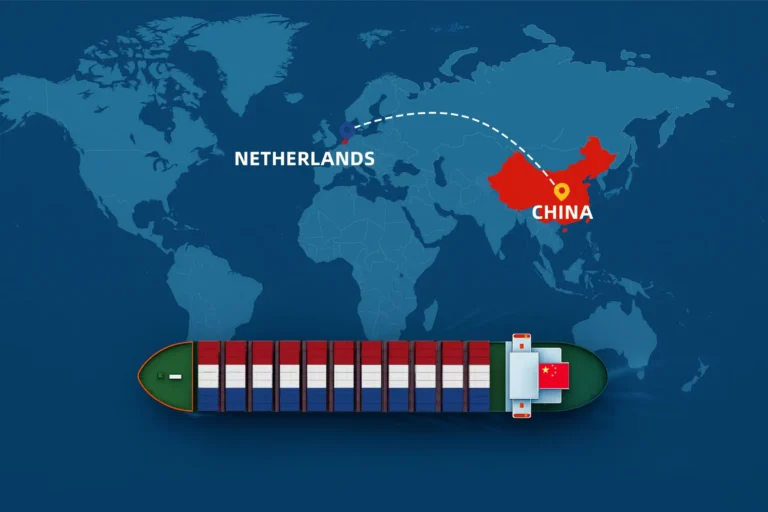
Related Guide
Shipping from China to the Netherlands
Shipping from China to the Netherlands – Sea, Air & DDP in 2026 Reliable shipping from China to the Netherlands for importers, distributors, and...
Read guide →

The Netherlands is a key logistics hub in the European Union. With Rotterdam Port serving as Europe’s largest port and one of the busiest container gateways in the world, many Dutch importers use the Netherlands not only as a final market but also as a distribution point for Germany, Belgium, France, and other European countries.
This guide explains shipping costs, transit time, major Chinese ports, shipping route options, customs clearance, import duties, VAT, and how to choose the right freight forwarder for sea freight from China to Netherlands.
Shipping method / Mode
Transit time range
DDP / Door to Door
The cost of sea freight from China to the Netherlands depends on the shipping method, cargo volume, container load, departure port, destination address, carrier schedule, customs clearance requirements, and current freight market conditions.
| Shipping Method | Best For | Estimated Cost |
|---|---|---|
| LCL Sea Freight | Smaller shipments, pallets, cartons | USD 35–250 per CBM |
| 20ft Full Container | Heavy cargo, medium orders | USD 1,400–1,800 per container |
| 40ft Full Container | Larger commercial shipments | USD 2,200–2,800 per container |
| 40HQ Container | Bulky but lightweight goods | Usually close to 40ft container rate |
Final shipping costs depend on cargo volume, container type, departure port, shipping route, customs clearance, destination handling, and final delivery address. For door-to-door shipping, pickup, import duties, VAT, and local trucking should also be included.
Importers usually choose between LCL shipping and FCL shipping. The best shipping method depends on shipment size, delivery schedule, budget, cargo type, and how much control you need over the container.
LCL sea freight is suitable when your cargo does not fill a full container. Your goods are consolidated with other shipments in one container and then separated after arrival.
This option is commonly used for:
Smaller shipments
Trial orders from suppliers
E-commerce stock
Cartons and pallets
Cargo below 15 CBM
Importers who do not need a full container
The main advantage of less than container load shipping is flexibility. You only pay for the space your cargo uses. This makes LCL shipments useful for new importers, small businesses, and buyers shipping goods from several suppliers.
However, LCL may involve more handling. Cargo needs to be received at a warehouse, consolidated before loading, unloaded after arrival, and separated before delivery. This can increase the chance of more delays compared with a full container.
FCL shipping is better when your cargo is large enough to use an entire container. A full container gives you more control, fewer handling steps, and usually better value when the shipment volume is high.
Full container load shipping is often used for:
Home appliances
Auto parts
Lighting products
Bulk wholesale goods
High value or fragile cargo
A 20ft container is often suitable for heavy goods because it has less space but can carry strong weight. A 40ft or 40HQ container is better for large quantities or bulky products.
For many importers, FCL offers the best value once cargo volume reaches a certain level. It can reduce handling risk, simplify customs documentation, and improve delivery planning.
Transit time for ocean freight depends on the shipping route, departure port, carrier schedule, vessel availability, weather conditions, port congestion, and customs clearance speed.
In general, port-to-port delivery from major Chinese ports to Rotterdam Port takes around 25 to 35 days. Door-to-door delivery usually takes around 35 to 45 days after adding supplier pickup, export customs, terminal handling, customs processing, and final trucking.
| Shipping Route | Estimated Port-to-Port Transit Time |
|---|---|
| Shanghai to Rotterdam | 26–35 days |
| Ningbo to Rotterdam | 27–36 days |
| Shenzhen Port to Rotterdam | 28–38 days |
| Yantian to Rotterdam | 28–38 days |
| Qingdao to Rotterdam | 30–40 days |
| Xiamen to Rotterdam | 28–38 days |
| Tianjin to Rotterdam | 32–42 days |
Delivery times may change during peak season, port congestion, blank sailings, vessel delays, or severe weather conditions. If timely delivery is important, it is better to confirm the sailing schedule before cargo is ready and book space earlier.
The Netherlands is one of the main European destinations for cargo exported from China. Most sea freight shipments depart from large coastal ports that have stable vessel schedules, strong container handling capacity, and regular ocean freight services to Europe.
The most commonly used ports for shipping from China to the Netherlands include:
The main ocean freight route from China to the Netherlands is the route connecting major Chinese ports with Rotterdam Port. Rotterdam is Europe’s largest port and one of the most important logistics centers in the European Union.
Under normal conditions, most vessels travel through:
China → South China Sea → Strait of Malacca → Indian Ocean → Suez Canal → Mediterranean Sea → Atlantic Ocean → Rotterdam Port
This is the traditional and most commonly used shipping route because it offers stable transit time and efficient carrier schedules.
Typical transit time is around:
25–35 days for port-to-port shipping
35–45 days for door-to-door delivery
However, shipping times may change because of:
Port congestion
Weather conditions
Carrier schedule adjustments
Customs processing
Peak season demand
Route changes around Africa
In some periods, shipping lines may reroute vessels around the Cape of Good Hope instead of using the Suez Canal. This longer shipping route increases sailing distance and may add 7–15 extra days to delivery times.
After cargo arrives at Rotterdam Port, shipments can continue to:
Amsterdam
Utrecht
Eindhoven
Tilburg
Breda
Dutch warehouses
Other European Union destinations
For full container shipments, the container can often be delivered directly to the consignee warehouse. For LCL shipments, cargo is usually moved to a warehouse for deconsolidation before final delivery.
Importers shipping from China to the Netherlands can choose sea freight, air freight, or rail freight. The best option depends on cargo size, delivery time, budget, and product value.
| Shipping Route | Estimated Port-to-Port Transit Time |
|---|---|
| Shanghai to Rotterdam | 26–35 days |
| Ningbo to Rotterdam | 27–36 days |
| Shenzhen Port to Rotterdam | 28–38 days |
| Yantian to Rotterdam | 28–38 days |
| Qingdao to Rotterdam | 30–40 days |
| Xiamen to Rotterdam | 28–38 days |
| Tianjin to Rotterdam | 32–42 days |
Sea freight is the most economical choice for bulk cargo, heavy goods, furniture, machinery, building materials, and full container load shipments. It has longer delivery times, but the cost per unit is much lower.
Air freight is suitable for time-sensitive goods, samples, electronics, medical products, and high-value cargo. It offers faster delivery but much higher shipping costs than ocean freight.
Rail freight can be a middle option between sea freight and air freight. It is faster than sea shipping and cheaper than air freight, but route availability and customs processing may be less flexible.
For most regular commercial shipments, sea freight offers the best balance of cost efficiency and stable capacity.

Customs clearance in the Netherlands is usually efficient compared with many other European countries. For most standard sea freight shipments, customs processing at Rotterdam Port normally takes 1–3 working days if the documents are complete and the cargo is not selected for inspection.
Because the Netherlands is a major logistics gateway in the European Union, many importers choose Dutch customs clearance for faster cargo release and better inland distribution efficiency.
After the shipment arrives at Rotterdam Port, the customs clearance process usually includes the following steps:
Arrival notice from the shipping line
Submission of customs declaration
Customs review and risk assessment
Import duties and VAT processing
Cargo inspection if required
Customs release and final delivery arrangement
Most shipments are released automatically after document review. However, customs may still inspect cargo if there are issues with the declared value, HS code, product description, or import documentation.
To avoid delays during customs processing, importers should prepare complete and accurate documents before the shipment arrives.
Common required documents include:
Packing list
Bill of lading
EORI number
Import declarations
Product certificates if required
The commercial invoice should clearly show the product name, quantity, unit price, total value, and trade terms. The packing list should match the actual cargo details, including cartons, weight, dimensions, and packaging type.
Incorrect customs documentation may cause customs inspection, storage charges, additional fees, or delivery delays.
Import duties in the Netherlands depend on the HS code, cargo type, and declared customs value. Some products have low customs duties, while others may have higher duty rates.
The standard import VAT rate in the Netherlands is 21%. VAT is usually calculated based on:
Product value
Ocean freight cost
Insurance if applicable
Customs duties
One major advantage of Dutch customs clearance is the Article 23 VAT deferment system.
With Article 23, eligible importers can defer import VAT instead of paying it immediately when the shipment arrives. This helps improve cash flow for businesses importing goods regularly into the European Union.
Many Dutch importers and e-commerce companies use Rotterdam customs clearance because of this tax advantage.
To reduce the risk of delays or customs inspection:
Use the correct HS code
Prepare accurate customs documentation
Declare the real cargo value
Confirm import requirements before shipping
Work with an experienced freight forwarder or customs broker
For sea freight shipments with batteries, liquids, branded products, food-contact items, or regulated goods, importers should confirm compliance requirements before cargo departure.
Door to door services are useful for importers who want one freight forwarder to handle the full shipping process from supplier pickup in China to final delivery in the Netherlands.
A standard door-to-door process usually includes:
Supplier pickup in China
Delivery to export warehouse or port
Export customs declaration
Container loading or LCL consolidation
Ocean freight to Rotterdam Port
Destination port handling
Import customs clearance
Payment of duties and import taxes
Final truck delivery to the business address
Door-to-door shipping is especially suitable for new importers, e-commerce sellers, Amazon sellers, wholesalers, and companies that do not have their own logistics team.
The total cost for door-to-door delivery is higher than port-to-port freight because it includes more service steps. However, it can save time, reduce communication problems, and make the shipment easier to manage.
For small parcels, express shipping is usually faster and easier, but the cost per kilogram is higher.
For samples or urgent high value goods, air freight may be better. Cargo flights, direct flights, China Cargo Airlines, China Southern Airlines, and other carriers may be used depending on route and space availability. Air freight transit time is much shorter, but it is not the best choice for bulky or heavy cargo.
For regular commercial cargo, sea shipping is usually the most economical choice. It is suitable for furniture, machinery, textiles, hardware, lighting, packaging materials, household goods, auto parts, and other non-urgent products.
For very large quantities, full container shipping usually gives the best value. For smaller shipments, less than container load service can keep the cost flexible.
For importers comparing different shipping modes, the decision should be based on cargo value, delivery urgency, shipment size, budget, and final delivery requirements.
Most international shipping carriers provide vessel information after booking. Your freight forwarder can help track shipments by using the bill of lading number, container number, booking number, or carrier system.
For sea freight, tracking normally includes:
Cargo received at origin warehouse
Container loading
Export customs release
Vessel departure
Transshipment if any
Vessel arrival at Rotterdam
Customs clearance status
Final delivery arrangement
Real time tracking may vary by carrier and service type. For full container shipments, container tracking is usually easier. For LCL shipments, updates may depend on the consolidation warehouse, carrier, and destination agent.
If timely delivery is important, it is better to book earlier and keep enough buffer time for customs clearance, port congestion, weather conditions, and final trucking.
A professional freight forwarder helps manage the full shipping process, not just book ocean freight space. This is important when shipping from China to the Netherlands because the shipment may involve suppliers, warehouses, carriers, terminals, customs brokers, truckers, and destination agents.
The right freight forwarder can help you:
Compare LCL and FCL options
Choose the best shipping method
Arrange supplier pickup in China
Consolidate cargo from multiple suppliers
Prepare export customs documents
Check commercial invoice and packing list
Book reliable ocean freight space
Coordinate customs clearance
Arrange final delivery
Track shipments during transit
Provide real time tracking updates when available
Explain additional costs before shipping
For importers shipping regularly, a reliable forwarder can also help build a more stable supply chain. Instead of reacting to problems after they happen, the forwarder can help plan shipment timing, reduce handling risk, avoid delays, and choose the most suitable shipping route.
Port-to-port shipping usually takes around 25 to 35 days. Door-to-door delivery times are usually around 35 to 45 days, depending on supplier pickup, customs clearance, port handling, final trucking, and the delivery address.
A 20ft full container usually costs around USD 1,400–1,800, while a 40ft container usually costs around USD 2,200–2,800. Rates change based on shipping route, season, carrier space, fuel surcharge, and destination charges.
Yes. LCL is suitable for smaller shipments that do not require a full container. It is usually charged by cubic meter and works well for cartons, pallets, trial orders, and e-commerce inventory.
Rotterdam Port is the main destination port for ocean freight from China. It is Europe’s largest port and a major logistics gateway for Dutch and EU importers.
Yes. All commercial goods imported from China need customs clearance. Importers usually need a commercial invoice, packing list, bill of lading, HS code, EORI number, declared value, and product details.
Useful freight, customs and importing resources related to this shipping guide.
Shipping from China to the Netherlands – Sea, Air & DDP in 2026 Reliable shipping from China to the Netherlands for importers, distributors, and...
Read guide →
Shipping Cost from China to Netherlands (2026 Guide) Verified & Reviewed · Last updated June 2026 Shipping cost from China to the Netherlands in...
Read guide →
How long does it take to ship from China to Netherlands? This is one of the most common questions asked by importers and logistics professionals...
Read guide →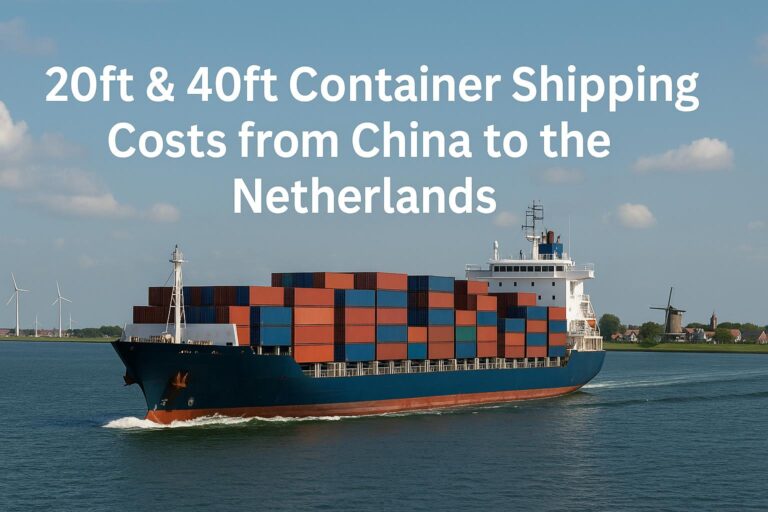
20ft & 40ft Container Shipping Costs from China to the Netherlands Verified & Reviewed · Last updated June 2026 20ft & 40ft Container Shipping Co...
Read guide →Air freight from China to the Netherlands has become one of the most popular shipping options for businesses engaged in international shipping. W...
Learn more → Useful Resource DDP Shipping from China to NetherlandsDDP Shipping from China to Netherlands Verified & Reviewed · Last updated June 2026 DDP shipping from China to the Netherlands provides an all-in...
Learn more →WhatsApp us