
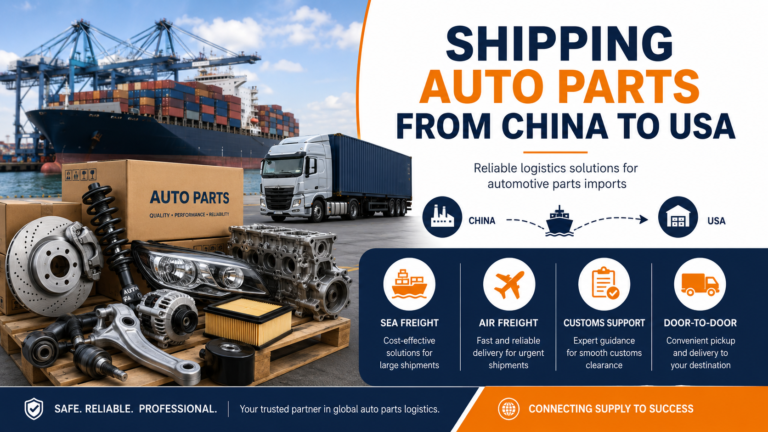
Auto Parts Shipping from China: Complete Import Guide

Shipping auto parts from China depends on cargo type, weight, volume, shipping method, transit times, customs clearance, and final delivery requirements.

This updated 2026 guide explains how to ship auto parts from China, covering major shipping options such as express courier, air freight, LCL/FCL sea freight, and rail freight, and detailing what importers should consider regarding documentation, packaging, and customs clearance. It also highlights tips for shipping from multiple suppliers and protecting shipments with cargo insurance.

Shipping method / Mode

Transit Times

Customs & Documentation

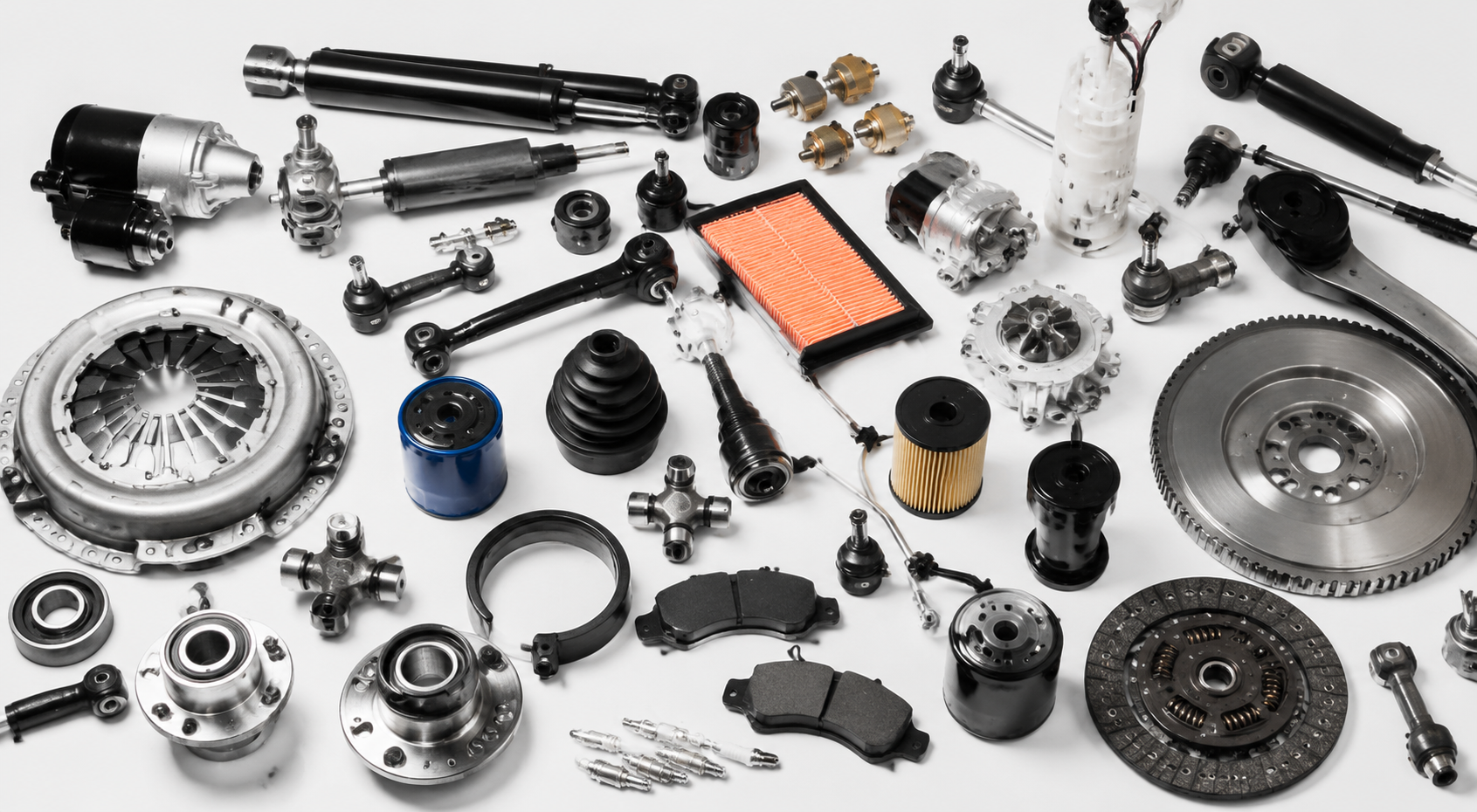
Auto parts from China including brakes, filters, mirrors, sensors, and engine components arranged for international shipping
10,000+ international shipments handled    Global sea, air & DDP shipping solutions    24/7 shipment tracking & customer support

Table of Contents

What Auto Parts Can You Ship from China?

Common Automotive Parts

Importers can ship a wide variety of car parts, including braking systems, suspension and steering components, engine parts, electrical and electronic parts, body panels, interior accessories, tires, wheels, and aftermarket or OEM components.

Examples of commonly shipped items include:

  • Brake pads, brake discs, and calipers

  • Control arms, shock absorbers, and tie rods

  • Radiators, filters, belts, and fuel injectors

  • Sensors, switches, wiring harnesses, and headlights

  • Bumpers, mirrors, doors, grilles, dashboards, and mats

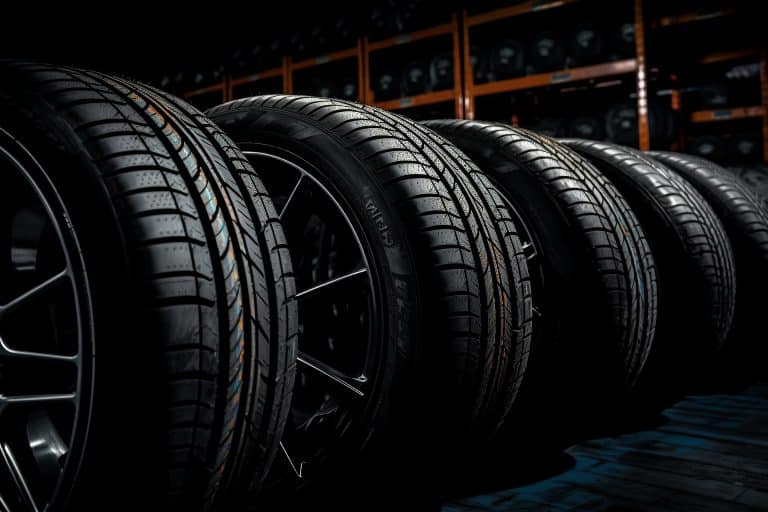
  • Wheels, tires, and other vehicle accessories

For bulk orders, importers often consolidate parts from multiple suppliers to reduce shipping costs and simplify logistics.

Parts That Need Extra Checks

Some products need special handling, documentation, or approval before shipping. These include batteries, airbags, lubricants, paints, used engines, catalytic converters, and components containing oil, gas, or magnets. Safety-sensitive and electronic parts may also require compliance certificates.

Before arranging shipment, importers should identify the product name, material, part function, vehicle application, country of origin, and HS code. Proper documentation reduces customs delays and import risks.

Choosing a Reliable Supplier

A reliable supplier is crucial for maintaining product quality, timely delivery, and compliance. Low price alone is not sufficient, especially when importing high-value or OEM auto parts.

Check Product Quality

Importers should verify suppliers by checking:

  • Product photos, specifications, and test reports

  • OEM part numbers or vehicle model references

  • Packaging quality and protective measures

  • Production lead times and delivery schedules

Confirm Clear Communication

Effective communication is key to avoiding mistakes. Importers should ensure suppliers provide:

  • Accurate carton sizes and weights

  • Clear product descriptions

  • Properly prepared export documents

  • Timely updates regarding shipment status

Working with a trustworthy supplier reduces the risk of wrong parts, poor packaging, and delayed shipments.

Best Shipping Methods for Auto Parts

Choosing the right shipping method for auto parts from China depends on shipment size, weight, urgency, destination, and budget. Different methods offer trade-offs between speed, cost, and cargo handling.

Express Courier

Express courier services such as DHL, FedEx, and UPS are ideal for small parcels, samples, and urgent replacement parts. They provide fast delivery, usually within 3–7 days, and simplify customs procedures for small shipments.

Best for:

  • Sensors, switches, small lighting parts

  • Electronic components and control modules

  • Urgent replacement parts or e-commerce parcels

Pros: Fast and convenient, door-to-door service.
Cons: Can be expensive for heavy or bulky items due to dimensional weight.

Air Freight

Air freight is suitable for medium-sized shipments that require faster delivery than sea freight. It balances speed and capacity, typically taking 5–10 days from major Chinese airports like Shanghai, Shenzhen, Guangzhou, and Hong Kong.

Best for:

  • High-value auto parts

  • Medium-size wholesale orders

  • Urgent repair or production-critical components

Air freight is especially useful for headlights, fuel injectors, sensors, and electronic modules. Compared to express courier, it can handle larger cartons at a lower cost per kilogram.

Sea Freight

Sea freight is the most cost-effective solution for large, heavy, or bulky shipments. It is widely used for wholesale auto parts, OEM orders, and inventory replenishment.

Types:

  • LCL (Less than Container Load):

    • Suitable when cargo does not fill a full container

    • Shipments are consolidated with other cargo and charged by CBM

    • Good for small orders, mixed parts, or trial shipments

  • FCL (Full Container Load):

    • Best for bulk orders or high-volume shipments

    • Provides full control over container space and cargo protection

    • Common container sizes: 20ft for dense cargo, 40ft for bulky parts like bumpers, doors, or wheels

Transit time: LCL 25–45 days, FCL 25–40 days depending on route and destination.

Rail Freight to Europe

Rail freight offers a middle ground between sea and air for China-to-Europe shipments. Transit time usually ranges from 15–25 days. It is faster than sea freight but more cost-effective than air freight.

Best for:

  • Germany, Poland, Hungary, Netherlands, and nearby markets

  • Mixed container shipments from multiple suppliers

Rail freight is often used for automotive electronics, medium-size components, or parts needed on a tighter schedule than sea freight allows.

Door-to-Door Services

Door-to-door shipping covers the entire process from supplier pickup in China to delivery at the buyer’s warehouse or fulfillment center. It simplifies import logistics by combining freight forwarding, customs clearance, and final delivery into a single solution.

Best for:

  • Importers with multiple suppliers

  • Businesses seeking hassle-free logistics

  • Shipments requiring consistent tracking and documentation

Pros: Consolidation of all steps reduces delays and simplifies communication.
Cons: Slightly higher cost compared to self-managed shipments.

Customs Clearance for Auto Parts

Clearing customs is a critical step when importing auto parts from China. Proper classification and documentation help avoid delays, extra fees, or shipment rejection.

HS Code Classification

Correct HS codes determine duty rates and inspection requirements. Auto parts such as brake pads, headlights, wiring harnesses, and fuel injectors may each have different codes. Misclassification can cause customs delays or penalties. Always verify the HS code before shipment.

Required Documentation and Duties

Essential documents for smooth clearance include:

  • Commercial invoice: product name, quantity, unit price, total value, origin

  • Packing list: carton quantity, weight, dimensions

  • Bill of lading (sea) or air waybill (air)

  • Certificates or compliance documents for regulated items (e.g., electronics, airbags, batteries)

Customs duties and taxes vary by part type, country of destination, and trade policies. Importers should calculate the total landed cost including import duties, VAT/GST, and port fees.

By focusing on proper classification, accurate documentation, and correct duties, auto parts shipments from China can clear customs faster and with fewer complications.

Packaging Auto Parts for International Shipping

Proper packaging is essential when shipping auto parts from China. Many parts are heavy, fragile, or irregularly shaped, and poor packaging can lead to damage, scratches, or rejected deliveries.

Key considerations for packaging:

  • Small or fragile parts: Sensors, switches, lamps, and electronic components should be packed in strong cartons with foam, bubble wrap, or dividers to prevent breakage.

  • Heavy parts: Brake discs, suspension components, and engine parts require reinforced cartons, pallets, or wooden crates to support weight during handling.

  • Bulky parts: Bumpers, doors, fenders, and body panels should have edge protection, corner guards, and cushioning to avoid deformation or scratches.

  • Labeling: Clearly mark cartons with part names, quantity, weight, and handling instructions to assist warehouse staff and customs inspection.

Good packaging not only protects auto parts during transport but also reduces claims, improves handling efficiency, and ensures a smoother customs clearance process.

Shipping from Multiple Suppliers

Many importers source auto parts from several Chinese suppliers. Shipping from multiple factories can increase complexity and cost if not managed properly.

Using a China warehouse consolidation service allows importers to:

  • Receive goods from different suppliers in one location

  • Inspect cartons and take photos for verification

  • Repack weak or fragile cartons for safe transport

  • Apply standardized labels and shipping marks

  • Combine shipments into a single container or air/express freight

This approach reduces the number of shipments, lowers per-unit shipping cost, and simplifies customs clearance. Consolidation is especially useful for small wholesale orders or buyers importing mixed auto parts from multiple suppliers.

Transit Time for Auto Parts Shipping

The transit time for auto parts shipped from China depends on several factors rather than a fixed schedule. Understanding these factors helps importers plan inventory and manage delivery expectations.

Key factors that influence transit time

  • Shipping method: Express courier, air freight, rail, LCL (Less than Container Load) sea freight, FCL (Full Container Load) sea freight, and door-to-door services each have different handling speeds.

  • Cargo size and volume: Heavy or bulky parts may require special handling, which can extend transit time.

  • Departure port or airport: Major Chinese hubs like Shanghai, Shenzhen, and Guangzhou typically have faster schedules and more frequent services.

  • Customs clearance: Both export clearance in China and import clearance at the destination can affect delivery times.

  • Final delivery location: Last-mile delivery or inland trucking at the destination adds additional time.

How to estimate transit time

  • Express courier is usually fastest for small parcels and samples.

  • Air freight provides faster delivery than sea freight for medium-sized shipments but is more expensive.

  • Sea freight (LCL or FCL) is cost-effective for large orders; transit varies based on port frequency and container consolidation.

  • Rail freight is an alternative for China-to-Europe shipments, balancing cost and speed.

  • Door-to-door services include supplier pickup, international transport, customs, and final delivery, so total transit time depends on all these stages.

By evaluating these factors and consulting your freight forwarder, importers can plan more reliable delivery schedules without relying on fixed transit days.

Cargo Insurance for Auto Parts

Protecting shipments with cargo insurance is highly recommended when importing auto parts from China. Carrier liability is usually limited and may not cover the full value of damaged or lost goods.

Why Insurance Matters

Auto parts are often heavy, fragile, or high in value. Damage during transit can result in financial loss, delays, and disputes with suppliers or buyers. Cargo insurance ensures that importers can recover the declared value in case of:

  • Loss during transport

  • Damage due to handling or accidents

  • Theft or pilferage

Types of Coverage

Insurance policies typically cover:

  • Full replacement value of goods

  • Transport from supplier to final delivery

  • LCL and FCL sea freight, air freight, and express shipments

  • Fragile, high-value, or OEM auto parts

Best Practices for Auto Parts Insurance

  • Declare accurate cargo value on the insurance policy

  • Keep commercial invoices, packing lists, and cargo photos for claims

  • Include coverage for handling, storage, and transit from multiple suppliers

  • Work with your freight forwarder to arrange insurance before shipment

With proper cargo insurance, importers reduce risk and gain peace of mind knowing that valuable auto parts are financially protected throughout international shipping.

Common Mistakes to Avoid

Importing auto parts from China can be straightforward if key pitfalls are avoided. Paying attention to these common mistakes helps prevent delays, damage, and unexpected costs.

Using Vague Product Names

Declaring items simply as “auto parts” can trigger customs inspections or delays. Always provide:

  • Specific part name (e.g., brake pads, headlights, wiring harnesses)

  • Material or function

  • Vehicle application or model compatibility

Clear descriptions improve customs clearance and reduce the risk of shipment rejection.

Choosing the Cheapest Freight Option

Selecting the lowest freight price may seem cost-effective but can lead to:

  • Poor handling and higher risk of damage

  • Delays due to slower schedules or consolidation

  • Hidden fees or additional charges

Compare total landed cost, including freight, customs, duties, and final delivery, rather than focusing solely on base shipping price.

Ignoring Packaging Quality

Poor packaging is a major cause of damaged shipments. Common issues include:

  • Fragile items like sensors, lamps, or switches without padding

  • Heavy parts like brake discs or suspension components packed in weak cartons

  • Bulky items like bumpers or doors without corner protection

Reinforced cartons, pallets, crates, and protective padding are essential to prevent damage and claims.

Lack of Supplier Coordination

Buying from multiple suppliers without proper coordination can result in:

  • Shipment delays if one supplier is late

  • Higher cost due to multiple separate shipments

  • Difficulties in consolidation and customs documentation

Using a freight forwarder or warehouse consolidation service can help coordinate suppliers and streamline shipping.

Frequently Asked Questions

Get an Auto Parts Shipping Quote from China

  • Suitable for small, heavy, bulky, or fragile auto parts
  • Sea freight, air freight, express, and door-to-door options
  • Support for customs clearance, packaging, and supplier consolidation

Get tailored shipping solutions for auto parts from China, with transparent pricing and support from pickup to final delivery.