Related Guide
Complete Guide to Importing Car Parts from China
The auto parts industry is a fast-growing market, with global demand increasing steadily. Whether for maintenance, repairs, or upgrades, car part...
Read guide →

Shipping auto parts from China to the USA requires careful planning around freight costs, transit time, packaging, customs clearance, and product compliance.
This guide explains the best shipping methods for car parts, including express courier, air freight, LCL, and FCL sea freight. It also covers estimated costs, delivery times, packaging requirements, US customs procedures, and important EPA and DOT considerations.
Shipping method
Transit time range
Customs clearance
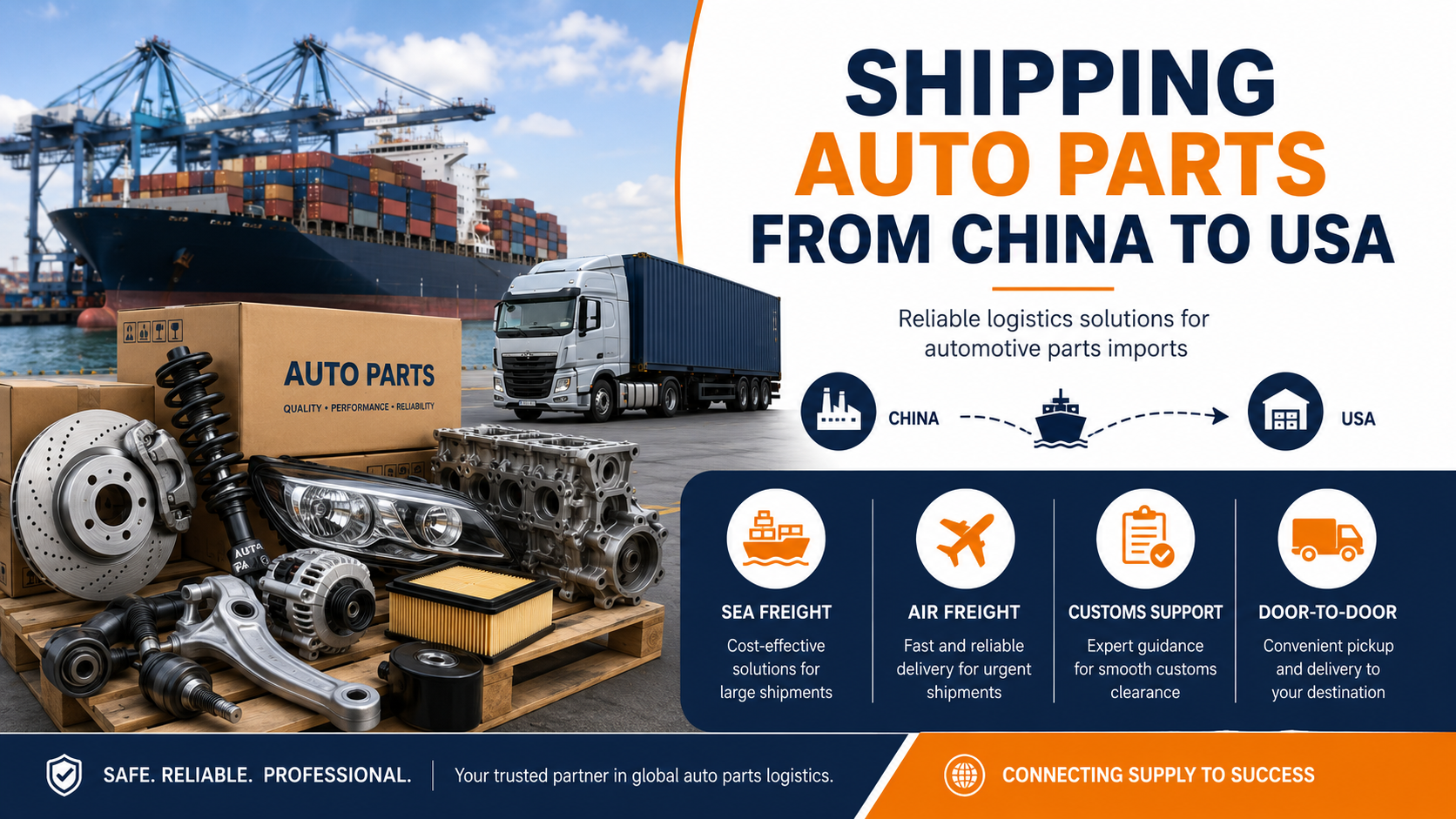
China manufactures a broad range of automotive components for passenger vehicles, commercial trucks, electric vehicles, motorcycles, and industrial equipment. Both OEM parts and aftermarket products can be exported, provided that the goods meet applicable US safety, environmental, labeling, and intellectual property requirements.
Common auto parts shipped from China include:
Brake pads, brake discs, calipers, and related components
Engine parts, filters, pistons, radiators, and cooling systems
Gearboxes, transmission parts, and drive shafts
Wiring harnesses, sensors, lights, and electronic modules
Bumpers, mirrors, grilles, body panels, and interior trim
Wheels, tires, suspension parts, and steering components
Replacement tools, repair kits, and vehicle accessories
Small, non-restricted parts are usually straightforward to transport. However, engines, gearboxes, shock absorbers, airbags, lithium batteries, catalytic converters, and components containing residual fluids need closer review before booking.
Selecting the right shipping method for auto parts from China to the USA depends on several factors, including shipment size, urgency, product type, packaging requirements, and overall cost expectations. Because automotive components vary from small electronic sensors to heavy engine blocks, there is no single universal shipping solution.
In most cases, importers choose between express courier, air freight, sea freight LCL, and sea freight FCL. Each option has different advantages in terms of speed, cost, and handling capacity.
Express courier services such as DHL Express, FedEx, and UPS are commonly used for small auto parts shipments, especially samples, urgent replacement components, or lightweight aftermarket products.
This method is fully integrated, meaning pickup in China, international transport, customs clearance, and final delivery in the USA are handled under one system. It is the fastest option for most small shipments.
Typical delivery time is around 3 to 7 days, depending on the destination city and customs inspection.
Express courier is best suited for:
Small quantity auto parts
Samples for testing or supplier approval
Lightweight electronic components
Urgent repair parts needed for inventory gaps
However, pricing is based on chargeable weight, which includes both actual and volumetric weight. Bulky but lightweight items may therefore result in higher-than-expected shipping costs.
Air freight is widely used for medium-sized commercial shipments where delivery speed is important but express courier is too expensive.
It is commonly chosen for wiring harnesses, brake components, sensors, electronic modules, and higher-value aftermarket inventory.
Air freight is faster than sea freight, typically delivering within 5 to 12 days door to door depending on flight schedules, export processing, and US customs clearance.
This method is ideal when:
Shipment volume exceeds courier limits
Delivery deadlines are tight
Cargo value is relatively high
Inventory turnover speed is important
Air freight pricing is based on chargeable weight, so dense metal components are more cost-efficient compared to bulky packaging.
LCL (Less than Container Load) sea freight is suitable for medium-volume shipments that do not require a full container.
Multiple importers share space in one container, making it a cost-effective option for smaller wholesale orders. However, because cargo must be consolidated and later separated at destination ports, handling is more complex.
This can result in:
Longer total transit time
Additional destination handling charges
Higher risk of cargo mixing or delays during consolidation
LCL is commonly used for mixed auto parts orders such as brake kits, filters, lighting components, and general aftermarket inventory.
FCL (Full Container Load) is the most cost-effective method for large-volume auto parts shipments. The entire container is dedicated to one importer, which reduces handling risks and improves overall efficiency.
FCL is commonly used for:
Engine blocks and transmissions
Bulk aftermarket inventory
Wheels, bumpers, and body panels
Consolidated shipments from multiple suppliers in China
Although transit time is similar to LCL, FCL offers better stability, lower per-unit cost, and fewer handling stages, making it ideal for long-term supply chain planning.
Freight costs for auto parts from China to the USA vary depending on transport mode, cargo weight, volume, and shipment urgency. The following table shows typical market ranges for different shipping methods.
| Shipping Mode | Average Base Cost | Transit Time | Best For |
|---|---|---|---|
| Ocean FCL (20ft Container) | $3,000–$5,300 | 14–25 days | Heavy parts such as engines, rotors, and wheels |
| Ocean FCL (40ft Container) | $4,200–$7,200 | 14–25 days | High-volume body panels and bulk inventory |
| Ocean LCL (Per CBM) | $40–$110/CBM | 20–40 days | Mid-sized palletized shipments under 15 CBM |
| Standard Air Freight | $3.50–$7.75/kg | 3–7 days | High-value, lightweight electronics or samples |
| Express Courier (DHL/FedEx) | $6.50–$17.80/kg | 2–5 days | Small, urgent aftermarket accessories |
These rates are base freight charges only, meaning they do not include destination handling fees, customs clearance, import duties, or last-mile delivery in the USA.
In real shipping operations, the final landed cost is usually affected by:
Cargo density (heavy metal parts vs bulky plastic parts)
Packaging method (carton, pallet, wooden crate)
Pickup location in China
Destination city in the USA
Customs inspection or documentation issues
Peak season surcharge and fuel adjustment
For example, engine blocks or brake rotors are usually more cost-efficient by sea freight, while wiring harnesses or electronic modules are often shipped by air freight due to value-to-weight ratio.

Proper packaging is one of the most important factors when shipping auto parts from China to the USA. Automotive components vary widely in weight, fragility, and material type, so incorrect packaging can lead to damage, delays in customs clearance, or additional handling charges during transport.
Good packaging not only protects the cargo during long-distance international shipping but also helps ensure smoother customs inspection and more efficient warehouse handling.
Small automotive components such as sensors, wiring harnesses, filters, switches, and electronic modules should be individually protected before being placed into export cartons.
Recommended packaging practices include:
Individual plastic or foam wrapping for each item
Internal dividers to prevent movement inside cartons
Strong double-wall export cartons for stacking strength
Moisture-proof packaging for electronic components
Clear labeling with product name, quantity, and carton number
These steps help reduce vibration damage during air freight and prevent compression damage during sea freight consolidation.
Heavy automotive components such as brake discs, suspension arms, wheel hubs, and engine parts require reinforced packaging to ensure safe handling during loading and unloading.
Best practices include:
Wooden pallets or wooden crates for structural support
Steel or heavy-duty plastic strapping for fixation
Anti-slip materials to prevent movement during transit
Weight concentration control to avoid pallet imbalance
Forklift-accessible base design for warehouse handling
For sea freight shipments, especially FCL or LCL cargo, proper palletization also improves container loading efficiency and reduces the risk of cargo shifting during ocean transport.
Engines, transmissions, and other mechanical assemblies require special attention due to potential residual oil, weight, and mechanical sensitivity.
Key requirements include:
Complete drainage of oil, fuel, and hydraulic fluids
Leak-proof plastic wrapping or protective film
Reinforced wooden crates for heavy impact protection
Internal fixing to prevent vibration and movement
Clear declaration of non-hazardous condition when required
Improper preparation of these components may lead to airline rejection or customs delays due to safety concerns.
Clear labeling is essential for smooth logistics handling and customs processing. Each package should include:
Product description (specific auto part name)
Quantity per carton or pallet
Gross weight and dimensions
Handling instructions (fragile, heavy, this side up)
Shipment reference number or purchase order
Accurate labeling helps freight forwarders, customs brokers, and warehouse operators correctly identify and process the shipment.
US customs clearance for auto parts is strictly regulated due to product safety, environmental compliance, and trade enforcement requirements. All shipments entering the United States must be declared to US Customs and Border Protection (CBP), and may also be reviewed by Partner Government Agencies (PGAs) depending on the type of automotive components involved.
A standard auto parts shipment from China to the USA requires a complete set of documents so the customs broker can classify the goods, calculate duties, and submit the entry to US Customs and Border Protection.
The main documents usually include:
Importers should understand applicable shipping regulations before the shipment arrives, since auto parts are classified under specific Harmonized Tariff Schedule codes for entry and duty purposes.
In addition to CBP requirements, certain auto parts may fall under the oversight of US regulatory agencies depending on their function and risk category.
DOT regulations apply to safety-related automotive components. These may include:
Brake hoses and braking system parts
Tires and wheels
Lighting systems and headlights
Safety equipment such as seatbelts or glazing materials
Compliance is based on Federal Motor Vehicle Safety Standards (FMVSS), and proper declarations may be required during import clearance.
EPA regulations primarily apply to emissions-related components, such as:
Engines and engine assemblies
Fuel injection systems
Catalytic converters
Exhaust and emissions control parts
Importers may need to provide documentation confirming compliance with US environmental requirements.
Correct HS code classification is essential for determining duty rates and compliance requirements for auto parts imported from China, and product descriptions should be precise enough to reflect OEM fit and original manufacturer specifications.
Different product categories are classified separately, for example:
Brake systems and mechanical components
Electrical and electronic automotive systems
Body parts and exterior components
Emission-related or regulated automotive systems
Incorrect classification may lead to customs delays, re-assessment of duties, or additional inspection.
In addition, some automotive products may be subject to additional trade measures, and because tariffs on Chinese auto parts have changed significantly in recent years, the applicable US tariff policies should be reviewed before shipment.
Shipping auto parts from China to the USA usually follows seven stages, and correct classification depends on accurate product specifications, materials, and function.
Collect cargo details: Confirm product names, quantities, HS codes, package sizes, gross weight, supplier addresses, and cargo-ready dates.
Check product compliance: Identify whether the parts involve batteries, fluids, emissions systems, safety standards, trademarks, or special certificates.
Choose the shipping method: Compare courier, air freight, LCL, and FCL based on urgency, volume, and total cost.
Prepare export packaging: Use suitable cartons, pallets, or wooden cases. Drain fluids and secure heavy items before collection.
Arrange pickup and consolidation: Cargo from multiple suppliers can be delivered to one warehouse in China for inspection, labeling, and combined shipping.
Complete export and import customs clearance: Submit accurate documents, values, product descriptions, and tariff classifications. Many importers also coordinate paperwork and clearance support early to reduce holds and delays; additionally, this helps avoid costly corrections later.
Deliver to the final destination: After customs release, the shipment moves by courier, truck, or local delivery service to the buyer’s warehouse or business address.
A reliable freight forwarding partner should have experience with automotive cargo rather than only general consumer goods. Heavy components, oily machinery parts, restricted batteries, and mixed-product shipments of automotive parts require more careful handling.
Buyers should evaluate whether the forwarder can provide:
Clear quotations with included and excluded charges
Experience with air and sea transportation
Packaging and warehouse inspection
US customs coordination
Cargo insurance options
Shipment tracking and regular updates
A proven track record with similar products and manufacturers
The forwarder should also ask detailed questions before quoting. A company that provides a final price without confirming dimensions, packaging, product type, and delivery ZIP code may later add unexpected charges. Additionally, many importers review paperwork with their broker or forwarder before departure to avoid customs holds.
The cost depends on the weight, dimensions, transportation mode, origin, destination, packaging, customs charges, and final delivery requirements. Small parcels may be charged per kilogram, LCL cargo by volume, and FCL shipments per container.
Sea freight is usually the most cost-effective option for heavy or bulk cargo. LCL is suitable for smaller commercial shipments, while FCL often provides better cost effectiveness when the cargo can use a large portion of the container.
Yes, but they must normally be fully drained, cleaned, packed securely, and approved by the carrier. Documentation confirming the absence of fuel or hazardous residue may be required.
Many auto parts are subject to normal customs duties, and some may also face additional tariffs. The exact amount depends on the HTS classification and current US trade policy.
Cargo insurance is legally required for carriers, but it is not automatically included in every freight quotation and the protection may be limited. Full cargo insurance protects against loss, damage, or theft. As one of the key tips for safer shipping, insurance is especially important for fragile auto parts during transit.
Useful freight, customs and importing resources related to this shipping guide.
The auto parts industry is a fast-growing market, with global demand increasing steadily. Whether for maintenance, repairs, or upgrades, car part...
Read guide →
Importing car tires from China presents a lucrative opportunity due to the affordable prices, variety of products, and access to many suppliers...
Read guide →
China is now a global leader in vehicle manufacturing and exports, becoming the largest automobile exporter in 2023 with over 5.22 million vehicl...
Read guide →
Shipping used cars from China to other countries is becoming increasingly popular, particularly for businesses looking to diversify their car inv...
Read guide →How to ship cars from China to USA is a topic that has gained major attention in recent years. With the rapid growth of China’s auto industry and...
Learn more → Useful Resource How to Ship Cars and Electric Vehicles (EVs) from China to the USAChina’s Growing Export of Cars and EVs to the USA China has emerged as a key player in the global car and EV export market, sending millions of v...
Learn more →WhatsApp us