

Rail Freight from China to Germany
- Verified & Reviewed · Last updated June 2026
Rail freight from China to Germany offers a balanced shipping solution for importers who need faster delivery than sea freight and lower costs than air freight.
This guide explains rail freight from China to Germany, including transit time, rail routes, rail freight rates, customs clearance, suitable cargo, door-to-door service, and how to choose the right freight forwarder.
Rail freight rates
Transit time range
Door to Door service
- Experienced China-based logistics specialists
Table of Contents
Quick Answer: Rail Freight from China to Germany
Rail freight from China to Germany usually takes 12 to 20 days for terminal-to-terminal service and around 20 to 30 days for door-to-door delivery. The actual transit time depends on the Chinese city, German destination, rail route, border crossings, customs clearance, and final delivery arrangement.
Compared with sea freight, rail freight can reduce transit time significantly. Compared with air freight, rail transport is usually more economical for medium and large shipments.
| Shipping Method | Estimated Transit Time | Cost Level | Best For |
|---|---|---|---|
| LCL Rail Freight | 20–30 days door to door | Medium | Cartons, pallets, e-commerce goods |
| FCL Rail Freight | 18–28 days door to door | Medium | Full container shipments |
| Sea Freight | 30–40+ days door to door | Low | Large-volume cargo with flexible timing |
| Air Freight | 5–10 days door to door | High | Urgent and high-value cargo |
| Express Shipping | 3–7 days | Very high | Samples, documents, small parcels |
The main advantage of rail freight from China to Germany is balance. It is faster than sea shipping and usually much cheaper than air shipping, making it a cost effective alternative for importers who need reliable delivery without paying premium air freight rates.
What Is Rail Freight from China to Germany?
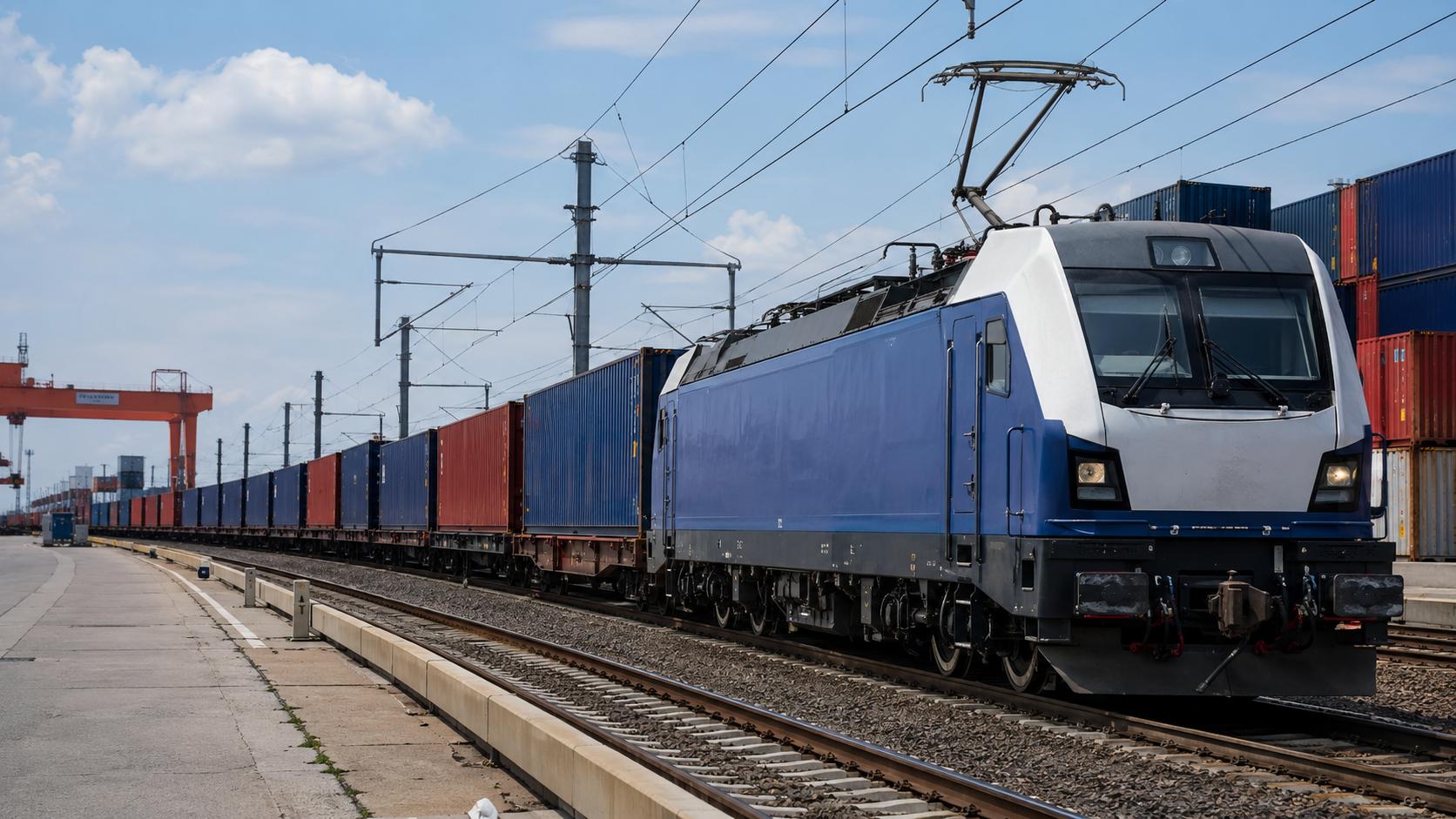
Rail freight from China to Germany means cargo is transported by freight train through the China to Europe railway network. Goods are loaded into containers at Chinese rail terminals, moved across Asia and Europe, and then delivered to a German rail terminal or final destination by truck.
Common rail freight services include:
LCL rail freight from China to Germany
FCL container shipping by rail
Station-to-station rail transport
Door to door service
DDP rail freight for eligible goods
Final delivery within Germany and other EU markets
Rail freight transport is especially useful when cargo is not urgent enough for air freight but cannot wait for long ocean freight transit time. It provides a middle solution between lower costs and faster delivery.
For importers shipping regular commercial cargo, rail is often easier to plan than mixed sea and inland delivery routes, especially when the final destination is close to major rail terminals in Germany.
Main Rail Routes from China to Germany
The main rail routes from China to Germany operate through the Eurasian Land Bridge. These routes connect China’s industrial zones with Germany’s major logistics hubs through Central Asia, Eastern Europe, and the European railway network.
Northern Corridor
The Northern Corridor is the most commonly used route for China to Europe rail freight. It usually runs through China, Kazakhstan, Russia, Belarus, Poland, and then Germany.
This corridor has mature rail infrastructure, stable train departures, and strong capacity for freight from China to Germany. It is widely used for e-commerce goods, industrial cargo, auto parts, machinery, and regular container shipments.
Middle Corridor
The Middle Corridor passes through China, Central Asia, the Caspian Sea, Turkey, and Europe. It is often considered when businesses need more routing flexibility, especially during sea freight disruption, port congestion, or Red Sea crisis-related delays.
This route can be useful for importers who want alternative rail transport options between China and Europe, although the exact transit time and cost may vary depending on border handling and route capacity.
Major Rail Hubs in China and Germany
Common departure hubs in China include:
Xi’an
Chongqing
Chengdu
Zhengzhou
Yiwu
Wuhan
Suzhou
Hefei
Key rail terminal options in Germany include:
Duisburg
Hamburg
Munich
Nuremberg
Mannheim
Frankfurt area
Leipzig area
Duisburg is one of the most important rail terminals for China and Europe train services. Hamburg is also a major logistics hub because it connects German railway, ocean freight, warehousing, and last mile delivery networks.
Some rail operations in Germany may also connect with local rail networks and operators such as Deutsche Bahn, depending on the terminal and delivery arrangement.
Transit Time from China to Germany by Rail
Transit times for rail freight from China to Germany typically range from 12 to 20 days for terminal-to-terminal service. For door-to-door delivery, importers should usually allow 20 to 30 days, including pickup in China, export customs clearance, rail transport, import customs clearance, and final delivery in Germany.
Typical Rail Transit Times
| Rail Route | Estimated Transit Time |
|---|---|
| Zhengzhou to Hamburg | About 15–18 days |
| Xi’an to Duisburg | 12–18 days |
| Chongqing to Duisburg | 15–20 days |
| Chengdu to Nuremberg | 16–22 days |
| Yiwu to Hamburg | 18–24 days |
| Wuhan to Germany rail hubs | 17–24 days |
For example, transit time from Zhengzhou to Hamburg is often around 15 days, depending on train departure time, border crossings, customs procedures, and terminal congestion.
Compared with sea freight, rail freight can save significant time. Sea freight from China to Germany typically takes 30 to 40+ days, while rail freight is often much faster. Compared with air freight, rail is usually around 7 to 10 days slower, but it offers much lower costs for medium and large shipments.
What Affects Rail Transit Time?
Rail transit time may be affected by:
Departure time
Border crossings
Customs procedures
Rail terminal congestion
Container availability
Route complexity
Final destination distance
Last mile delivery arrangement
Rail schedules are generally less vulnerable to weather-related disruption than ocean shipping, but delays can still happen during peak season, high demand periods, or at busy border points.
Rail Freight Cost from China to Germany
Rail freight rates from China to Germany depend on cargo weight, volume, container type, origin city, German destination, route demand, distance, and seasonal capacity.
For full container shipments, 20ft rail container rates may range from USD 2,200 to USD 6,200, depending on market demand and route conditions. For LCL shipments, rail freight rates may start from around USD 1.20 per kg, but the final price depends on chargeable weight, cargo type, and available rail space.
LCL Rail Freight Rates
LCL rail freight is usually priced by chargeable weight or CBM. It is suitable for smaller shipments, cartons, pallets, and e-commerce cargo that cannot fill a full container.
Estimated LCL rail freight rates may start from around USD 1.20 per kg, but actual freight rates depend on cargo density, route demand, warehouse handling, customs clearance requirements, and final delivery address.
FCL Container Rail Freight Rates
FCL rail freight is priced by container. A 20ft rail container may range from USD 2,200 to USD 6,200, while 40ft and 40HQ container rates vary by route, season, and available capacity.
| Service Type | Estimated Cost Range | Best For |
|---|---|---|
| LCL Rail Freight | From USD 1.20 per kg | Cartons, pallets, smaller shipments |
| LCL by CBM | USD 180–400 per CBM | Bulky but lighter cargo |
| 20ft Rail Container | USD 2,200–6,200 | Medium-volume cargo |
| 40ft / 40HQ Rail Container | Based on route and season | Large commercial shipments |
| Door-to-Door Rail Freight | Based on full shipment details | Importers needing complete service |
Main Factors That Affect Shipping Cost
Rail freight costs increase with distance and route complexity. Costs may also rise when there is high demand, limited rail space, border congestion, or additional final delivery requirements.
Important factors include:
Cargo weight and volume
LCL or FCL service type
Chinese city of departure
German final destination
Route and border crossings
Container availability
Customs clearance requirements
Last mile delivery distance
Peak season and market demand
Rail freight can be significantly cheaper than air cargo, often by 30% to 50% depending on shipment size, cargo type, and route. For better cost control, importers should compare the total door-to-door shipping cost instead of only checking the rail terminal rate.

LCL and FCL Rail Freight Services
Rail freight services from China to Germany are usually arranged as LCL or FCL. The right option depends on cargo volume, weight, budget, and delivery requirements.
LCL Rail Freight from China to Germany
LCL shipments are suitable when your cargo cannot fill a full container. Your goods are consolidated with other shipments and moved by freight train to Germany or a nearby European rail terminal.
LCL rail freight is commonly used for:
E-commerce inventory
Electronics accessories
Auto parts
Tools and hardware
Household products
Machinery parts
Clothing and textiles
Industrial components
General commercial cargo
The main advantage of LCL rail freight is flexibility. Importers can ship goods in smaller quantities without paying for a whole container. It is faster than LCL sea freight and usually more cost effective than air shipping.
However, LCL shipments may require extra time for warehouse handling, consolidation, customs documents, and sorting after arrival. If your cargo is very urgent, air freight may still be the better option.
FCL Rail Freight from China to Germany
FCL rail freight is suitable when one shipper books a full container. The cargo is loaded and sealed in China, then transported by train to Germany or another European rail terminal.
FCL container shipping is commonly used for:
Industrial machinery
Automotive parts
High-value electronics
Large e-commerce stock
Retail inventory
Seasonal products
Manufacturing components
Stable monthly shipments
This option is often chosen by companies shipping parts used for German cars, industrial equipment, and retail supply chain cargo.
Compared with LCL, FCL rail freight reduces cargo handling and improves shipment control. For some rail routes, 40HQ containers may be more common than 20ft containers, so it is better to check availability before booking.
Customs Clearance for Rail Freight to Germany
Customs clearance is an important part of rail freight from China to Germany. The shipment must complete export customs clearance in China and import customs clearance in Germany or another EU entry point.
Required Customs Documents
Common customs documents include:
Packing list
Rail transport document
EORI number
Certificate of origin if required
Product certificates if required
Import license for controlled goods if applicable
The commercial invoice should clearly show the seller, buyer, product description, quantity, unit value, total value, currency, and trade terms. The packing list should show carton quantity, gross weight, net weight, dimensions, and total volume.
EORI, CE Marking, and EU Regulations
An EORI number is necessary for customs clearance in Germany and other EU countries. For certain products entering Germany, CE marking may also be required before import.
Rail freight shipments must comply with EU regulations. Incorrect HS codes, unclear product descriptions, missing certificates, or low declared value may cause customs delays.
When documents are prepared correctly, customs procedures for rail freight can be more predictable than fragmented air or sea freight processes. A reliable freight forwarder can help check the customs process before shipment, confirm document requirements, and reduce the risk of delay at border crossings or German customs.
Rail Gauge, Border Crossings, and Cargo Tracking
Rail freight from China to Germany involves multiple countries, border crossings, railway systems, and customs procedures. This is why route planning, document accuracy, and tracking visibility are important.
Rail Gauge Differences
One important factor in China to Germany rail transport is rail gauge difference. China and most European countries use the standard gauge of 1,435 mm, while some countries along the transit route use the wider 1,520 mm gauge.
Because of this difference, containers may need to be transferred at border points. This is a normal part of Eurasian rail freight transportation and is usually handled through established rail terminal operations.
Although gauge changes add handling steps, modern rail freight services use established transfer systems to keep containers moving efficiently across China, Central Asia, Eastern Europe, and Germany.
GPS Tracking and Cargo Visibility
Modern rail freight services often provide better cargo visibility than before. Many door-to-door rail freight solutions include tracking support, GPS updates, and milestone notifications.
Common tracking updates may include:
Warehouse receiving status
Train departure updates
Border crossing updates
Rail terminal arrival notices
Customs clearance status
Final delivery tracking
This makes rail freight useful for importers who need better inventory planning and shipment control.
Suitable Cargo for Rail Transport
Rail transport is suitable for many types of general cargo that require a balance between cost and speed. It transports goods across long distances with better stability than many importers expect.
Recommended Cargo Types
Common suitable goods include:
High-value electronics
Industrial machinery
Auto parts
Machinery components
E-commerce products
Household goods
Furniture parts
Clothing and textiles
Tools and hardware
Non-dangerous commercial cargo
Rail freight is widely used by businesses connected with German automotive supply chains, industrial manufacturing, retail distribution, and European market inventory planning.
Restricted or Sensitive Cargo
Restricted cargo may include:
Pure batteries
Liquids
Powders
Chemicals
Flammable products
Counterfeit branded goods
Products without required certificates
Before booking rail freight from China, importers should confirm the cargo name, material, HS code, battery status, and certificate requirements.
Door-to-Door Rail Freight from China to Germany
Door-to-door rail freight from China to Germany is useful for importers who want one freight forwarder to manage the full shipping process from supplier pickup to final delivery.
A complete door to door service may include:
Pickup from supplier or warehouse in China
Delivery to the China rail terminal
Export customs clearance
Freight train transportation to Europe
Import customs clearance in Germany
Duty and VAT handling if required
Last mile delivery to the final destination
Door to door service is especially useful for e-commerce sellers, wholesalers, manufacturers, and importers without their own customs broker in Germany.
DDP rail freight may also be available for eligible goods. Under DDP service, the freight forwarder can provide services including customs clearance, duties, taxes, and delivery to the consignee’s address.
How to Reduce Rail Freight Shipping Cost
Rail freight shipping cost can change quickly during peak season or periods of high demand. Importers can reduce costs by planning early and improving shipment accuracy.
Useful cost control tips include:
Book before peak season
Provide accurate weight and volume
Avoid oversized cartons
Combine small shipments
Use FCL when cargo volume is large enough
Prepare customs documents correctly
Confirm EORI and CE requirements before shipping
Compare total door-to-door cost
Use rail instead of air freight for non-urgent cargo
Confirm whether final delivery is included
The lowest freight rates are not always the best choice. A good shipping solution should balance cost, transit time, customs clearance, cargo safety, and delivery stability.
How to Choose a Freight Forwarder for Rail Freight from China to Germany
A reliable freight forwarder is important because rail freight from China to Germany involves multiple countries, railway operators, customs procedures, border crossings, and final delivery partners.
When choosing a freight forwarder, check whether they can provide:
Regular China to Germany rail freight services
LCL and FCL railway freight options
Pickup from different cities in China
Access to major logistics hubs in Germany
Customs clearance support
EORI and document guidance
Door to door service
DDP options for eligible goods
Cargo tracking and shipment updates
Clear quotation with no hidden charges
Tonlexing provides rail freight solutions from China to Germany for both LCL shipments and full container cargo. Whether your goods are shipped from major Chinese cities such as Xi’an, Zhengzhou, Chengdu, Chongqing, Yiwu, or Wuhan, Tonlexing can help arrange pickup, rail transport, customs support, and final delivery to key German destinations.
Frequently Asked Questions
Rail freight from China to Germany usually takes 12 to 20 days for terminal-to-terminal service and around 20 to 30 days door to door. The actual transit time depends on the Chinese city, German destination, route, border crossings, customs clearance, and final delivery arrangement.
Yes. Rail freight is usually cheaper than air freight for medium and large shipments. Depending on shipment size and route, it can be 30% to 50% cheaper than air cargo while still offering faster delivery than sea freight.
Yes. Rail freight is much faster than sea freight on most China to Germany routes. Sea freight may take 30 to 40+ days, while rail freight often takes 12 to 20 days for terminal service and around 20 to 30 days door to door.
Common documents include a commercial invoice, packing list, rail transport document, HS code, EORI number, and product certificates if required. Certain regulated products may also need CE marking before entering Germany.
Important rail terminals in Germany include Duisburg, Hamburg, Munich, Nuremberg, Mannheim, and the Frankfurt area. Duisburg is one of the most important hubs for China to Europe railway services.
Related China to Germany Shipping Guides
Get a Rail Freight Quote from China to Germany
- Faster than sea freight
- Lower cost than air freight
- LCL & FCL rail options
- Door-to-door delivery available
Get tailored rail shipping options, transparent pricing, customs support, and final delivery solutions for your China to Germany shipment.