Related Guide
Shipping from China to Canada
Shipping from China / Shipping from China to Canada China–Canada Shipping Guide · Updated August 2026 Shipping from China to Canada Compare sea f...
Read guide →

Shipping cost from China to Canada in 2026 typically ranges from $3–$7 per kg for air freight, $6–$15 per kg for express shipping, and $65–$200 per CBM for sea freight, depending on shipment size, delivery speed, and destination.
For large shipments, ocean freight (FCL or LCL) is usually the most cost-effective option, while air freight and express shipping are better suited for urgent shipments that require faster delivery times.
Choosing the right shipping method is essential for balancing shipping costs, transit times, and overall efficiency, especially when managing international shipping and complex supply chain requirements.
Understanding key factors such as shipping rates, customs clearance in Canada, dimensional weight, and shipping methods can help you reduce total costs, avoid customs delays, and ensure timely delivery.
Shipping method / Mode
Transit time range
DDP / Door to Door
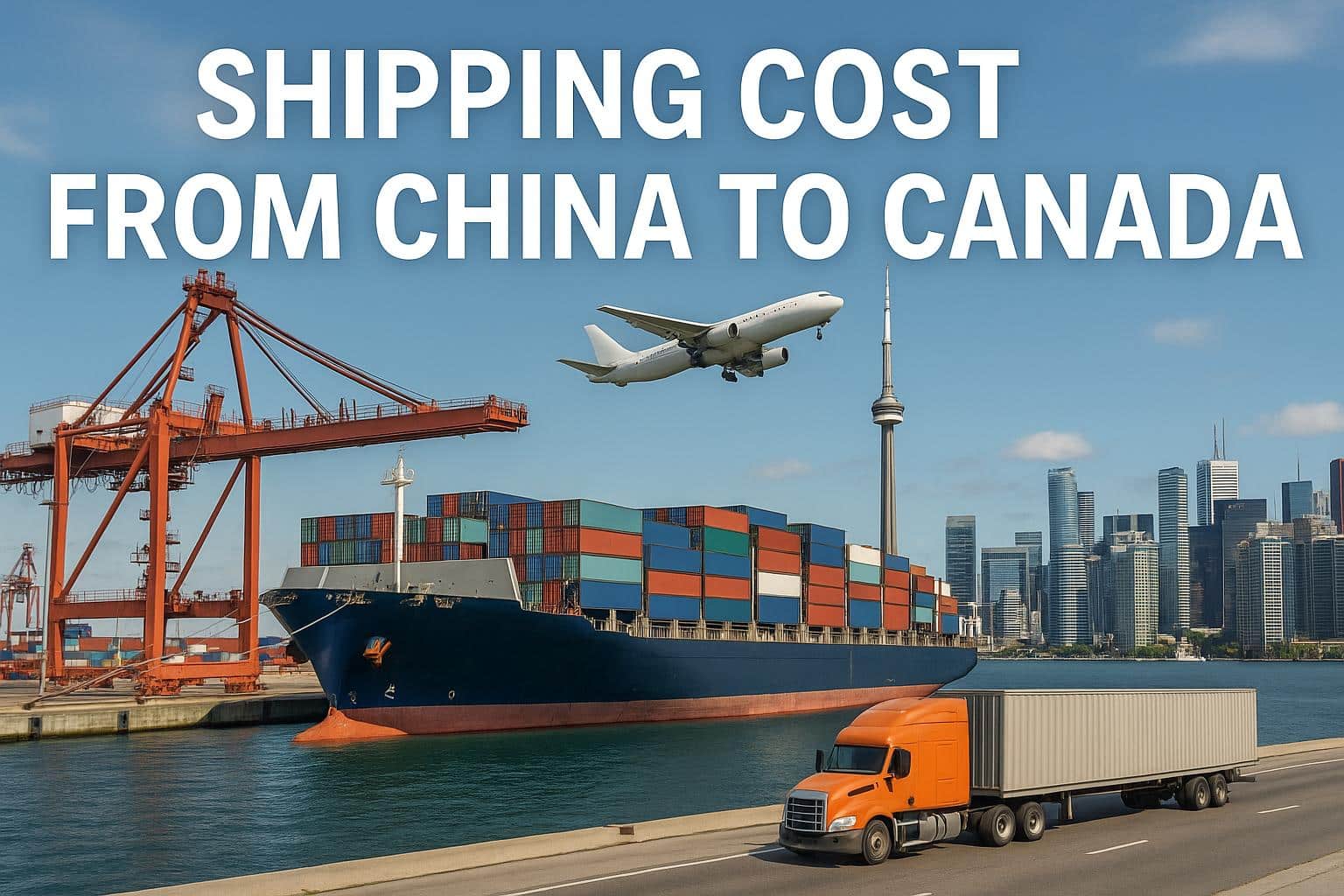
Shipping costs from China to Canada vary depending on shipping methods, shipment size, and delivery speed. Below is a quick overview of the most common shipping options, including air freight, sea freight, and express shipping.
| Shipping Method | Cost Range | Transit Time | Best For |
|---|---|---|---|
| Air Freight | $3–$7 per kg | 3–7 days | Urgent shipments, high-value goods |
| Express Shipping | $6–$15 per kg | 1–3 days | Small packages, fastest delivery |
| Sea Freight (LCL) | $65–$200 per CBM | 25–40 days | Small to medium shipments |
| Sea Freight (FCL 20ft) | $2,000–$4,500 per container | 30–40 days | Large shipments |
| Sea Freight (FCL 40ft) | $3,500–$7,500 per container | 30–45 days | Bulk cargo |
Shipping costs from China to Canada are influenced by several factors, including shipping mode, cargo volume, weight, and seasonal demand.
Choosing the right shipping method depends on your shipment size, urgency, and budget:
Air freight is one of the most popular shipping methods for businesses that require fast and reliable delivery when shipping goods from China to Canada. In 2026, air freight rates typically range from $3 to $7 per kg, depending on cargo type, airline capacity, and seasonal demand. For a detailed breakdown, see our guide to air freight from China to Canada.
For smaller shipments, standard air freight offers a balance between cost effectiveness and timely delivery, while premium services provide faster transit times at higher shipping rates.
Air freight pricing is usually calculated based on chargeable weight, which is the higher of actual weight and dimensional weight. You can use our CBM calculator to estimate volumetric weight and better understand your air freight costs. Optimizing packaging and reducing cargo volume can significantly lower total shipping costs.
Air freight from China to Canada generally takes 3 to 7 days, making it ideal for urgent shipments, high-value goods, and time-sensitive supply chain operations.
Transit times may vary depending on:
For faster delivery, express air services can reduce transit times to 1–3 days, especially for Canada express shipping to major cities like Vancouver and Toronto.
Air freight is the best option when:
However, for large quantities or bulky cargo, air freight may not be the most cost-effective shipping method compared to sea freight.
To optimize your air shipping costs from China to Canada:
Sea freight is the most cost-effective shipping method for transporting large volumes of goods from China to Canada. In 2026, ocean freight rates typically range from $65 to $200 per CBM for LCL shipping, while full container load (FCL) shipping costs range from approximately:
These shipping rates can vary depending on shipment size, port of departure, destination, and market conditions such as fuel surcharges and peak seasons.
LCL shipping is ideal for businesses that do not have enough cargo to fill a full container. Instead of paying for an entire container, you only pay for the space your cargo occupies.
Key advantages of LCL shipping:
However, LCL shipments may involve longer transit times and additional handling, which can increase the risk of delays or minor damage during consolidation and deconsolidation.
FCL shipping is recommended for larger shipments, where you use an entire container exclusively for your cargo.
Key benefits of full container load shipping:
FCL is typically the best option when shipping large quantities or bulky goods, especially when consistency and cargo safety are priorities.
Sea freight transit times from China to Canada generally range from 25 to 45 days, depending on the shipping route and destination port.
Typical transit times:
Transit times can be affected by:
Sea freight is the best choice when:
Compared to air freight, ocean freight offers significantly better cost effectiveness, especially for bulk shipments and container load cargo.
To lower your ocean freight costs from China to Canada:
Shipping time from China to Canada depends on the shipping method and route. Below is a quick comparison of transit times:
Express shipping: 1–3 days (fastest option for urgent shipments)
Air freight: 3–7 days (fast and reliable)
Sea freight (FCL): 20–35 days
Sea freight (LCL): 25–40 days
Actual transit times may vary due to customs clearance, port congestion, and peak seasons.
To avoid delays and ensure timely delivery:
Plan shipments before peak seasons
Prepare accurate commercial invoice, packing list, and HS codes
Work with experienced freight forwarders
Choosing the right shipping method helps balance delivery times and shipping costs.
The cheapest shipping method depends on your shipment size:
Small parcels (<50 kg) → Express shipping (fast but higher cost per kg)
Medium shipments (50–500 kg) → Air freight (balanced cost and speed)
Large shipments (500 kg+ / 1+ CBM) → Sea freight (lowest cost)
Full container loads → FCL shipping (best cost per unit)
To lower shipping costs from China to Canada:
Reduce dimensional weight with better packaging
Consolidate cargo for better freight rates
Avoid peak seasons
Compare shipping options with reliable freight forwarders
Sea freight remains the most cost-effective shipping method for bulk cargo, while air freight offers faster delivery at a higher cost.

DDP (Delivered Duty Paid) shipping is a door to door service where the freight forwarder handles the entire shipping process, including international shipping, customs clearance, import taxes, and final delivery to your address in Canada.
With DDP shipping, you do not need to deal with complex customs procedures or coordinate multiple shipping companies. Everything is managed under one solution, making it one of the most convenient shipping methods for importing goods from China to Canada.
DDP shipping costs are typically higher than standard shipping methods because they include:
Freight charges (air freight or sea freight)
Export and import customs clearance
Duties, GST, and other import taxes
Local delivery and handling fees
In general, DDP shipping from China to Canada ranges from $5 to $12 per kg for air freight, depending on shipment size, delivery location, and cargo type.
For larger shipments, sea freight DDP solutions offer better cost effectiveness, especially when combined with container load shipping.
Choosing DDP door to door service provides several advantages:
Simplified shipping process with one point of contact
No need to manage customs clearance or documentation
Predictable total cost with fewer hidden fees
Reduced risk of customs delays
Convenient final delivery to your warehouse or business address
This makes DDP shipping especially suitable for businesses new to importing or those looking to streamline their supply chain operations.
DDP shipping is the best option when:
You want a fully managed shipping solution
You are not familiar with Canadian customs regulations
You prefer a fixed total cost including import fees
You need door to door service with minimal coordination
For experienced importers who can handle customs clearance themselves, DAP or port-to-port shipping may offer lower costs, but with more responsibility.
When using DDP shipping to Canada, it is still important to understand key import requirements:
All shipments are subject to customs clearance by relevant authorities
Goods must be correctly classified using HS codes
Accurate documents such as commercial invoice and packing list are required
Import taxes include 5% GST and possible provincial taxes (PST/HST)
Working with a reliable freight forwarder helps ensure compliance and reduces the risk of delays or additional charges.
Freight forwarders act as intermediaries between shippers and transportation services, handling much of the logistics involved in shipping goods internationally.
They assist with:
Choosing the best shipping methods
Managing documentation and essential documents
Handling customs clearance efficiently
Tracking shipment’s progress from origin to destination
Selecting a reputable freight forwarder ensures a smoother shipping process and helps avoid common issues such as customs delays and unexpected costs.
All shipments from China to Canada must go through customs clearance, where authorities verify documents, assess duties, and approve entry.
Import costs may include:
GST (5%)
PST / HST depending on province
Import duties (0–25%) based on HS codes
Brokerage fees
These fees can significantly impact total shipping costs.
To avoid customs delays, prepare:
Commercial invoice
Packing list
Bill of lading / Airway bill
HS codes
Common issues include incorrect HS codes, missing documents, or inaccurate declarations.
To ensure smooth clearance:
Provide accurate product information
Prepare complete documents
Work with experienced freight forwarders
Understanding key shipping routes helps optimize both cost and transit times when shipping from China to Canada.
Shanghai
Shenzhen
Ningbo
Guangzhou
Qingdao
These ports serve as major export hubs with strong international shipping connections.
Vancouver (fastest and most cost-effective for West Coast)
Toronto (inland delivery via rail)
Montreal (East Coast gateway)
Shipping to Vancouver is usually faster and cheaper, while inland destinations may require additional transit time and cost.
Shipping costs typically range from $3–$7 per kg for air freight, $6–$15 per kg for express shipping, and $65–$200 per CBM for sea freight, depending on shipment size and delivery speed.
Sea freight is usually the cheapest option, especially for large shipments. For smaller shipments, LCL shipping or standard air freight may offer better cost efficiency.
Transit times vary by method:
Express shipping: 1–3 days
Air freight: 3–7 days
Sea freight: 20–45 days
Yes. Most imports are subject to 5% GST, with additional provincial taxes (PST/HST) depending on the destination. Duties vary based on HS codes.
DDP shipping is ideal if you want a door to door service where the freight forwarder handles customs clearance, taxes, and delivery. It is the most convenient option for new importers.
Useful freight, customs and importing resources related to this shipping guide.
Shipping from China / Shipping from China to Canada China–Canada Shipping Guide · Updated August 2026 Shipping from China to Canada Compare sea f...
Read guide →
How long does it take to ship from China to Canada? This is one of the most common questions asked by importers and supply chain managers. Shippi...
Read guide →
Shipping goods from China to Canada by sea is one of the most cost-effective ways to transport large quantities of products. With the growth of g...
Read guide →
International shipping is a complex process that involves the transportation of goods from one country to another. It requires a deep understandi...
Read guide →DDP Shipping from China to Canada Verified & Reviewed · Last updated May 2026 DDP shipping from China to Canada helps importers ship goods door t...
Learn more → Useful Resource Shipping Costs for 20FT and 40FT Containers from China to CanadaShipping Costs for 20FT and 40FT Containers from China to Canada Verified & Reviewed · Last updated June 2026 Shipping costs for 20FT and 40FT co...
Learn more →WhatsApp us