Related Guide
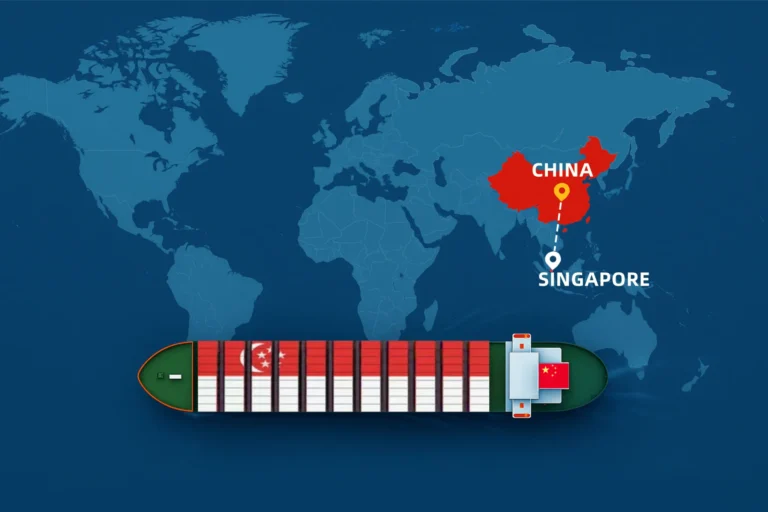
Shipping from China to Singapore
Shipping from China / Shipping from China to Singapore China–Singapore Shipping Guide · Updated August 2026 Shipping from China to Singapore Comp...
Read guide →

20ft and 40ft container shipping costs from China to Singapore vary depending on sea freight rates, origin ports, container load, customs clearance, and final delivery requirements.
This guide explains container shipping costs from China to Singapore, covering FCL and LCL sea freight, transit times, major shipping routes, GST, import duties, and door-to-door or DDP shipping options.
FCL & LCL
Transit time range
DDP / Door to Door
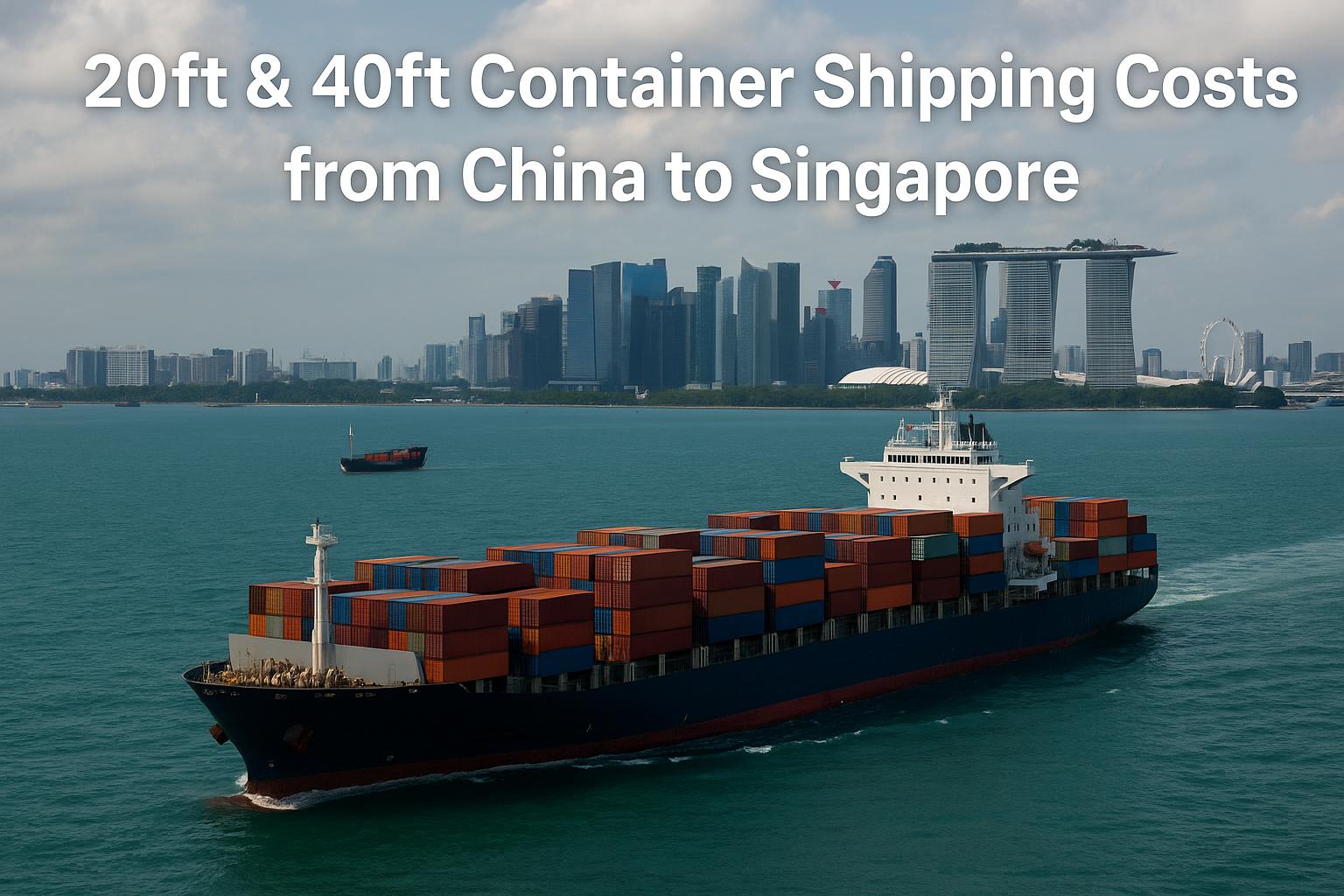
The average cost to ship a full container load from China to Singapore is relatively low compared with long-haul routes to Europe, the Middle East, or North America. The sailing distance is short, vessel frequency is high, and major Chinese ports offer regular services to the Port of Singapore.
For general dry cargo, importers can use the following estimated price range:
For general dry cargo, importers can use the following estimated price range as a 2026 reference:
| Container Type | Estimated Ocean Freight Cost | Best For |
|---|---|---|
| 20ft Container | USD 250 – 660 | Heavy cargo, machinery, tiles, hardware, smaller FCL shipments |
| 40ft Container | USD 500 – 1,000 | Furniture, textiles, electronics, mixed commercial goods |
| 40ft High Cube | USD 550 – 1,100 | Bulky cargo requiring more loading space |
| LCL Shipping | USD 15 – 60 / CBM | Small shipments that do not fill a full container |
These prices usually refer to base port-to-port ocean freight. They do not always include China pickup, export customs, terminal handling charges, Singapore import permit, GST, customs clearance, port storage, or final delivery.
If you need a more accurate quote, the freight forwarder should calculate the total transport costs based on:
origin city or port in China
container size and cargo volume
cargo weight and product type
shipping terms such as FOB, EXW, CIF, DAP, or DDP
delivery address in Singapore
customs clearance and GST requirements
This is why two shipments using the same container size may still have different final shipping costs.
Shipping rates from China to Singapore also vary by origin port. South China ports such as Shenzhen, Yantian, Shekou, Guangzhou, and Nansha usually provide shorter transit times because they are closer to Singapore. Eastern and northern ports may cost slightly more due to longer sailing distance and different carrier schedules.
| Route | 20ft Container | 40ft Container | Estimated Transit Time |
|---|---|---|---|
| Shenzhen / Yantian to Singapore | USD 250 – 450 | USD 500 – 750 | 3 – 5 days |
| Guangzhou / Nansha to Singapore | USD 280 – 500 | USD 520 – 800 | 4 – 6 days |
| Xiamen to Singapore | USD 300 – 550 | USD 550 – 850 | 4 – 6 days |
| Ningbo to Singapore | USD 380 – 620 | USD 580 – 950 | 5 – 7 days |
| Shanghai to Singapore | USD 400 – 660 | USD 600 – 1,000 | 5 – 7 days |
| Qingdao to Singapore | USD 500 – 660 | USD 750 – 1,000 | 7 – 10 days |
These estimated rates are not fixed. Container shipping prices can change due to fuel surcharges, peak season demand, port congestion, container availability, and carrier space.
For urgent shipments, importers can also compare air freight from China to Singapore. Air freight is much faster, usually 1–3 days airport-to-airport, but it is charged by weight and is much more expensive than sea freight for large shipments.
Choosing the right container size has a direct impact on your total shipping cost. A 20ft container is not simply “half” of a 40ft container in practical shipping terms. The best choice depends on cargo volume, weight, product type, and loading method.
A 20ft container is commonly used for heavy cargo or medium-sized shipments. It has less loading volume than a 40ft container, but it can carry a similar maximum payload. This makes it suitable for dense products where weight is the main concern.
Typical use cases include:
machinery and spare parts
tiles, stone, metal products, and hardware
industrial equipment
batteries and heavy cartons
commercial goods below 25–28 CBM
A 20ft container is often the better option when the cargo is too heavy to maximize the space of a 40ft container.
A 40ft container provides more loading volume and usually gives better cost savings per CBM. It is ideal for large-volume but lighter cargo. A 40HQ container provides extra height and is often used when the shipment is bulky.
Typical use cases include:
furniture and home goods
garments and textiles
electronics and appliances
plastic products
e-commerce inventory
mixed commercial cargo
If your shipment is around 40–60 CBM, a 40ft or 40HQ container usually offers better value than booking multiple LCL shipments.
The shipping routes from China to Singapore are among the busiest in the world, primarily passing through the South China Sea and entering the Malacca Strait.
Depending on where your cargo originates in China, the journey follows one of three geographical coastal tracks before converging into a single path to Singapore:
The South China Route (Shortest)
The East China Route
The North China Route (Longest)
Your container will arrive through the main Singapore port gateway, the Port of Singapore, a major transshipment hub with advanced container facilities, at one of the mega-terminals managed by PSA Singapore:
Tuas Port: Singapore’s newest, fully automated mega-port handles the newest generation of ultra-large container vessels.
Pasir Panjang Terminals: The primary hub for major shipping alliances.
Tanjong Pagar / Brani / Keppel Terminals: Older city terminals (mostly handling regional feeder traffic as operations gradually shift to Tuas).
When calculating container shipping costs from China to Singapore, it is important to understand that ocean freight is only one part of the total shipping cost. The final amount can vary depending on the shipping method, cargo details, customs requirements, and delivery location.
A typical shipment may include:
Ocean freight or sea freight charges
Origin port handling charges in China
Export customs clearance
Singapore destination charges
Import customs clearance fees
Goods and Services Tax (GST)
Customs duties, if applicable
Local trucking and final delivery
For door to door shipping, many of these costs are bundled into a single quotation. However, for port-to-port shipments, importers may need to arrange customs clearance and local transportation separately.
To avoid unexpected costs, always request a detailed quote from your freight forwarder showing exactly what services and charges are included.
Both FCL and LCL are common shipping methods from China to Singapore. The right choice depends on how much cargo you have and how urgently you need it delivered.
FCL means Full Container Load. Your cargo uses one full 20ft, 40ft, or 40HQ container. It is usually the best option when your shipment is large enough to justify a dedicated container.
FCL is recommended when:
your cargo is above 20–25 CBM
you need better cargo security
you want faster loading and unloading
your products are fragile or high-value
you ship regularly from China to Singapore
Because the cargo is not mixed with goods from other importers, FCL has fewer handling steps and lower risk of damage.
LCL means Less than Container Load. Your goods are consolidated with cargo from other importers in one shared container. This is a practical option for small shipments that do not need a full container.
LCL is recommended when:
your cargo is around 1–15 CBM
you are testing a new supplier
you do not want to hold too much inventory
your shipment is not urgent
you want to reduce upfront freight costs
However, LCL can involve more warehouse handling, consolidation charges, and destination fees. When your cargo reaches around 15–20 CBM, it is worth comparing LCL and 20ft FCL side by side.
Singapore is one of the world’s most trade-friendly economies and operates as a major free port. For most importers, customs clearance is straightforward, and the majority of commercial goods can enter Singapore without customs duties. However, importers must still comply with import customs procedures and pay Goods and Services Tax (GST) before cargo can be released.
To complete customs clearance in Singapore, importers generally need:
Packing list
Bill of lading
Import permit
Certificate of origin, if required
The information provided on the shipping documents should accurately match the cargo description, quantity, value, and packaging details to avoid customs delays.
Most goods imported into Singapore are subject to a 9% Goods and Services Tax (GST). The tax is generally calculated based on the CIF value of the shipment, which includes:
Cost of goods
Cargo insurance
International freight charges
GST is one of the most important import costs to consider when calculating the total shipping cost from China to Singapore.
Unlike many countries, Singapore does not impose customs duties on most general commercial goods. Products such as machinery, furniture, electronics, textiles, construction materials, and household goods are generally imported duty-free.
Additional customs duties typically apply only to specific categories, including:
Alcoholic beverages
Tobacco products
Motor vehicles
Petroleum products
Importers shipping these products should confirm the applicable duty rates before arranging shipment.
For importers who do not want to manage multiple logistics steps, door-to-door shipping is often the most convenient option. Instead of only arranging port-to-port ocean freight, the freight forwarder handles pickup in China, export clearance, sea freight, Singapore import clearance, GST coordination, and final delivery.
DDP shipping from China to Singapore goes one step further. Under Delivered Duty Paid service, the logistics provider arranges the main transport process and includes import taxes and delivery in the quotation. This is especially useful for importers who want predictable costs and fewer customs procedures.
Door-to-door and DDP services are suitable for:
first-time importers
e-commerce sellers
small and medium businesses
buyers without a Singapore customs account
companies that want a single all-in logistics quote
Before choosing DDP, confirm whether GST, customs clearance, delivery, unloading, and any storage fees are included in the quoted price.
An experienced freight forwarder can help you choose the right shipping method, compare container shipping quotes, reduce unexpected costs, and manage customs clearance smoothly. This is especially important if you are importing from multiple suppliers or shipping goods under EXW, FOB, CIF, DAP, or DDP terms.
Our China to Singapore shipping services include:
20ft, 40ft, and 40HQ container shipping
LCL consolidation for small shipments
door-to-door delivery
DDP shipping solutions
export customs clearance in China
Singapore import clearance support
cargo insurance
supplier coordination and shipment tracking
With transparent pricing and practical logistics planning, Tonlexing helps importers reduce delays, avoid hidden charges, and receive goods safely in Singapore.
The cost to ship goods from China to Singapore varies depending on cargo volume, shipping method, origin port, and delivery address. As a 2026 reference, LCL shipping usually costs around USD 60 to USD 280 per CBM. For FCL shipping, the average price is around USD 650 to USD 2,050 for a 20ft container and USD 1,050 to USD 3,050 for a 40ft container.
Sea shipping is usually the cheapest and most cost effective shipping option for large-volume cargo. LCL sea freight is suitable for smaller shipments, while full container load shipping is better for bulk cargo or larger commercial orders.
FCL is better when your cargo can fill an entire container or when you need faster handling. LCL is better for smaller shipments because you can share container space and pay based on CBM. If your cargo reaches around 15–20 CBM, compare both options to reduce shipping costs.
Sea freight from China to Singapore usually takes around 8 to 15 days when port handling and delivery arrangements are included. South China routes are often faster, while East China and North China routes may take longer depending on vessel schedules and peak season demand.
Yes. Most imported goods are subject to GST, which is usually calculated based on the CIF value, including cargo value, insurance, and freight. Duties normally apply only to selected product categories such as alcohol, tobacco, motor vehicles, and petroleum products.a
Useful freight, customs and importing resources related to this shipping guide.
Shipping from China / Shipping from China to Singapore China–Singapore Shipping Guide · Updated August 2026 Shipping from China to Singapore Comp...
Read guide →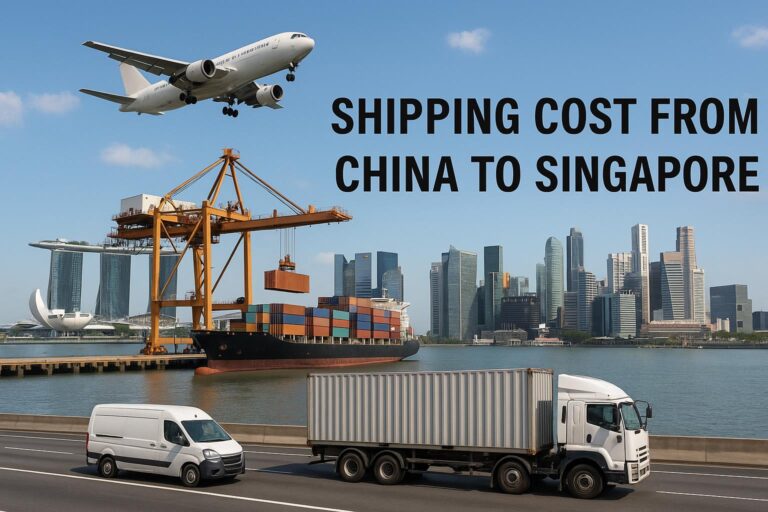
Shipping Cost from China to Singapore (2026 Guide) Verified & Reviewed · Last updated May 2026 Shipping cost from China to Singapore in 2026 typi...
Read guide →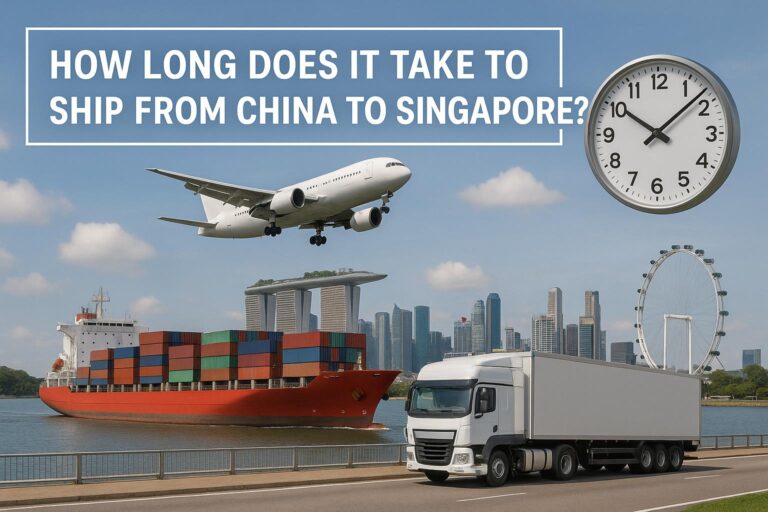
Introduction: Shipping Efficiency in Asia’s Trade Corridor How long does it take to ship from China to Singapore? This is one of the most common...
Read guide →
Sea freight is the most cost effective shipping method for large volumes and container load cargo. It is ideal for businesses looking to reduce s...
Read guide →Shipping goods via air freight from China to Singapore is a fast, reliable solution for businesses needing speed and efficiency. With one of Asia...
Learn more → Useful Resource DDP Shipping from China to SingaporeDDP Shipping from China to Singapore Verified & Reviewed · Last updated July 2026 DDP shipping from China to Singapore helps importers, e-commerc...
Learn more →WhatsApp us