Related Guide
Shipping from China to Singapore
Shipping from China / Shipping from China to Singapore China–Singapore Shipping Guide · Updated August 2026 Shipping from China to Singapore Comp...
Read guide →

Shipping cost from China to Singapore in 2026 typically ranges from $1.57–$4.00 per kg for air freight, $5.00–$12.00 per kg for express shipping, $15.00–$30.00 per CBM for LCL sea freight, and $342–$650 per 20ft container for FCL sea freight, depending on shipment size, delivery speed, cargo type, and final delivery address.
For larger shipments, sea freight is usually the most cost-effective option, especially for LCL cargo, FCL container load shipments, furniture, machinery, building materials, and wholesale goods.
For urgent shipments, air freight and express services are better suited for small parcels, samples, electronics, automotive parts, and time-sensitive cargo that requires faster delivery times.
Choosing the right shipping method helps importers balance shipping costs, transit time, customs requirements, and landed cost. Understanding shipping rates, actual weight, dimensional weight, chargeable weight, Singapore customs clearance, and proper packaging can also help reduce unexpected costs and make the shipping process smoother.
Air · Sea · Express
Transit time range
DDP / Door to Door
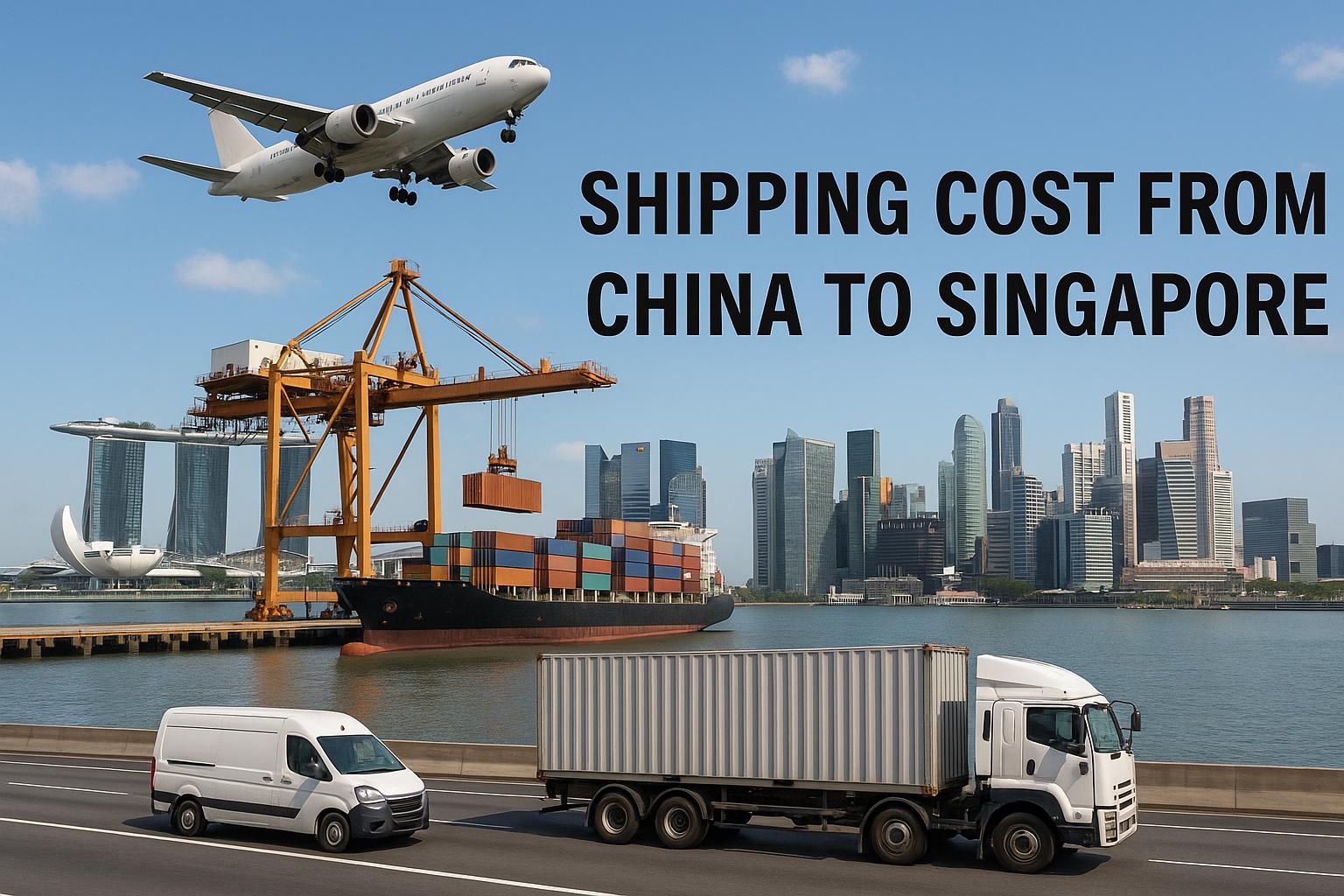
Shipping costs are not fixed. Final freight rates depend on cargo details, current market space, product type, customs requirements, and delivery address.
| Shipping Method | Estimated Cost | Pricing Basis | Best For |
|---|---|---|---|
| Express Services | USD 5.00–12.00/kg | Actual or dimensional weight | Small parcels, samples, and urgent packages |
| Air Freight | USD 1.57–4.00/kg | Chargeable weight | Medium-urgent commercial cargo |
| LCL Sea Freight | USD 15.00–30.00/CBM | CBM or revenue ton | Small and medium loose cargo |
| FCL 20GP | USD 342–650/container | Per 20ft container | Heavy or compact full-container cargo |
| FCL 40GP | USD 520–900/container | Per 40ft container | Large-volume cargo |
| FCL 40HQ | USD 580–980/container | Per 40HQ container | Bulky cargo needing more loading space |
| Sea Door-to-Door Shipping | USD 80–180/CBM | Full-route quotation | Importers needing pickup, sea freight, customs coordination, and delivery |
| Air Door-to-Door Shipping | USD 2.50–6.50/kg | Chargeable weight | Faster delivery with pickup and final delivery included |
A quotation may include different service items depending on the shipping method and trade terms. Before comparing prices, importers should confirm what is included.
Common cost items include:
Pickup in China
Export customs declaration
Warehouse handling
International freight
Destination handling
Singapore customs clearance
Taxes and duties
Final delivery
Insurance if required
A low freight rate does not always mean a low landed cost. The total cost should include both freight and destination-side charges.
Shipping rates can change due to season, carrier space, fuel cost, port conditions, customs inspection, and cargo type. Sensitive goods or controlled goods may require extra checks, which can also affect the final price.
Shipping costs are calculated based on the selected shipping method and cargo details. Different methods use different pricing rules.
For air freight, express services, and courier services, carriers usually compare actual weight and dimensional weight, then charge whichever is higher.
Actual weight means the real package weight.
Dimensional weight is calculated based on package dimensions.
Chargeable weight is the weight used for billing.
If the cargo is large but light, dimensional weight may be higher than actual weight. This is why carton size matters.
LCL sea freight is usually calculated based on CBM. If the goods are very heavy, the cost may be calculated by revenue ton instead.
LCL is suitable when the shipment does not fill a full container. Your cargo shares container space with other shippers.
FCL shipping is quoted by container type, such as 20GP, 40GP, or 40HQ. It is suitable for larger shipments that need a full container load.
Although FCL may look more expensive at first, the unit cost can be lower when the cargo volume is large enough.
A shipping cost calculator helps importers estimate freight costs before booking. It is useful when comparing air freight, sea freight, express services, courier services, and door-to-door delivery.
To get a more accurate estimate, prepare:
A cost calculator can provide a quick estimate, but the final shipping fee should still be confirmed by a freight forwarder. Warehouse measurements, carrier space, customs requirements, controlled goods, and final delivery conditions can all affect the actual cost.
Sea freight is the best option for importers who want lower costs and can accept longer transit time. The China to Singapore route has frequent sailings and is suitable for both LCL and FCL shipments.
LCL is suitable for small and medium shipments that do not require a full container. It is commonly used for 1–15 CBM cargo, mixed supplier shipments, wholesale goods, and regular inventory replenishment.
LCL is good for:
FCL is suitable for larger shipments that can use a full container load. It offers better loading control, less handling, and lower unit cost when shipment volume is large.
Common FCL cargo includes:
Air freight is faster than sea freight and is commonly used for urgent commercial shipments. Most air cargo arrives through Singapore Changi Airport before customs clearance and final delivery.
Air freight is suitable when:
Common air freight cargo includes electronics, samples, automotive parts, replacement parts, precision products, and time sensitive shipments.
For air freight, importers should always confirm actual weight, volumetric weight, package dimensions, and chargeable weight before booking.
Door-to-door shipping is suitable for importers who want a simpler shipping process. It can include pickup in China, export handling, international freight, customs coordination, and final delivery in Singapore.
Door-to-door service may include:
Door-to-door shipping is suitable for:

Singapore customs clearance is usually efficient, but importers still need accurate documents and correct product information. Streamlined customs procedures depend on complete documents, correct HS code classification, and accurate declared value.
Common documents include:
Some products may be treated as controlled goods and require additional approval before import. These may include certain food products, electronics, chemicals, batteries, wireless devices, branded goods, and automotive parts.
If your shipment contains controlled goods, it is better to confirm customs requirements before shipping. This helps avoid delays, storage fees, inspection issues, and unexpected changes to landed cost.
Importers should consider taxes, duties, freight charges, customs clearance, and delivery fees when calculating landed cost.
The final amount depends on product type, declared value, HS code, shipping method, and Singapore customs requirements.
Proper packaging helps reduce damage risk and unexpected costs. It is especially important for fragile goods, electronics, machinery parts, automotive parts, and LCL sea freight shipments.
For air freight and courier services, package dimensions directly affect dimensional weight. Oversized cartons may increase chargeable weight even if the actual weight is low.
Before shipping, check:
For sea shipping, strong packaging helps protect goods during warehouse handling, container loading, unloading, and final delivery.
Depending on the product type, importers may need cartons, pallets, wooden crates, moisture protection, or reinforced packaging.
Importers can reduce shipping costs by planning early and choosing the right shipping method.
Use express services only for small parcels and urgent samples. Use air freight for urgent commercial cargo. Use sea freight for non-urgent heavy or bulky shipments.
Choosing the right method can reduce unnecessary costs and improve delivery reliability.
If you buy from several suppliers in China, consolidation can help reduce warehouse handling, duplicate pickup fees, and repeated export costs.
A freight forwarder can collect goods from different cities, combine them in one warehouse, and ship them together to Singapore.
Accurate package weight, dimensions, and volume help avoid price changes after warehouse measurement.
Importers should confirm packing details before production is finished, especially for bulky goods or products charged by dimensional weight.
An experienced freight forwarder helps importers compare shipping options, check documents, manage customs requirements, and control the overall shipping process.
A reliable freight forwarder can help with:
Tonlexing provides shipping services from China to Singapore, including air freight, sea freight, LCL, FCL, courier solutions, and door-to-door delivery.
Our team can help compare freight rates, arrange pickup, check commercial invoice and packing list, coordinate customs clearance, and provide a practical shipping plan based on cargo size, delivery time, and budget.
Costs depend on cargo weight, volume, shipping method, pickup city, destination address, customs requirements, and delivery service. Air freight may range from USD 1.8–4.5/kg, while LCL sea freight may range from USD 15–45/CBM. Final rates should be confirmed case by case.
Sea freight is usually the cheapest option for heavy or bulky goods. LCL is suitable for smaller shipments, while FCL is better for full container load cargo.
Express services usually take 3–7 days. Air freight usually takes 3–6 days. Sea freight usually takes 7–15 days depending on departure port, sailing schedule, customs clearance, and final delivery.
Common documents include commercial invoice, packing list, bill of lading or air waybill, HS code, and import permit if required.
Chargeable weight is the weight used to calculate air freight cost. It is based on actual weight or volumetric weight, whichever is higher.
Useful freight, customs and importing resources related to this shipping guide.
Shipping from China / Shipping from China to Singapore China–Singapore Shipping Guide · Updated August 2026 Shipping from China to Singapore Comp...
Read guide →
Introduction: Shipping Efficiency in Asia’s Trade Corridor How long does it take to ship from China to Singapore? This is one of the most common...
Read guide →
Sea freight is the most cost effective shipping method for large volumes and container load cargo. It is ideal for businesses looking to reduce s...
Read guide →
Shipping goods via air freight from China to Singapore is a fast, reliable solution for businesses needing speed and efficiency. With one of Asia...
Read guide →DDP Shipping from China to Singapore Verified & Reviewed · Last updated July 2026 DDP shipping from China to Singapore helps importers, e-commerc...
Learn more → Useful Resource 20ft & 40ft Container Shipping Costs from China to Singapore20ft & 40ft Container Shipping Costs from China to Singapore Verified & Reviewed · Last updated June 2026 20ft and 40ft container shipping costs...
Learn more →WhatsApp us