Related Guide
Drayage in the USA Explained
Drayage in the USA Explained: Services, Costs, Types, and How It Works Verified & Reviewed · Last updated March 2026 Drayage in the USA explained...
Read guide →

Intermodal rail drayage in the USA connects rail terminals with warehouses and distribution centers through local trucking, handling the first and last miles of intermodal freight transportation.
This 2026 guide covers rail drayage services, major U.S. intermodal hubs, shipping costs, transit times, container pickup, and ways to avoid additional fees and delivery delays.
Rail Drayage Costs
Transit Times
Rail Ramp Delivery
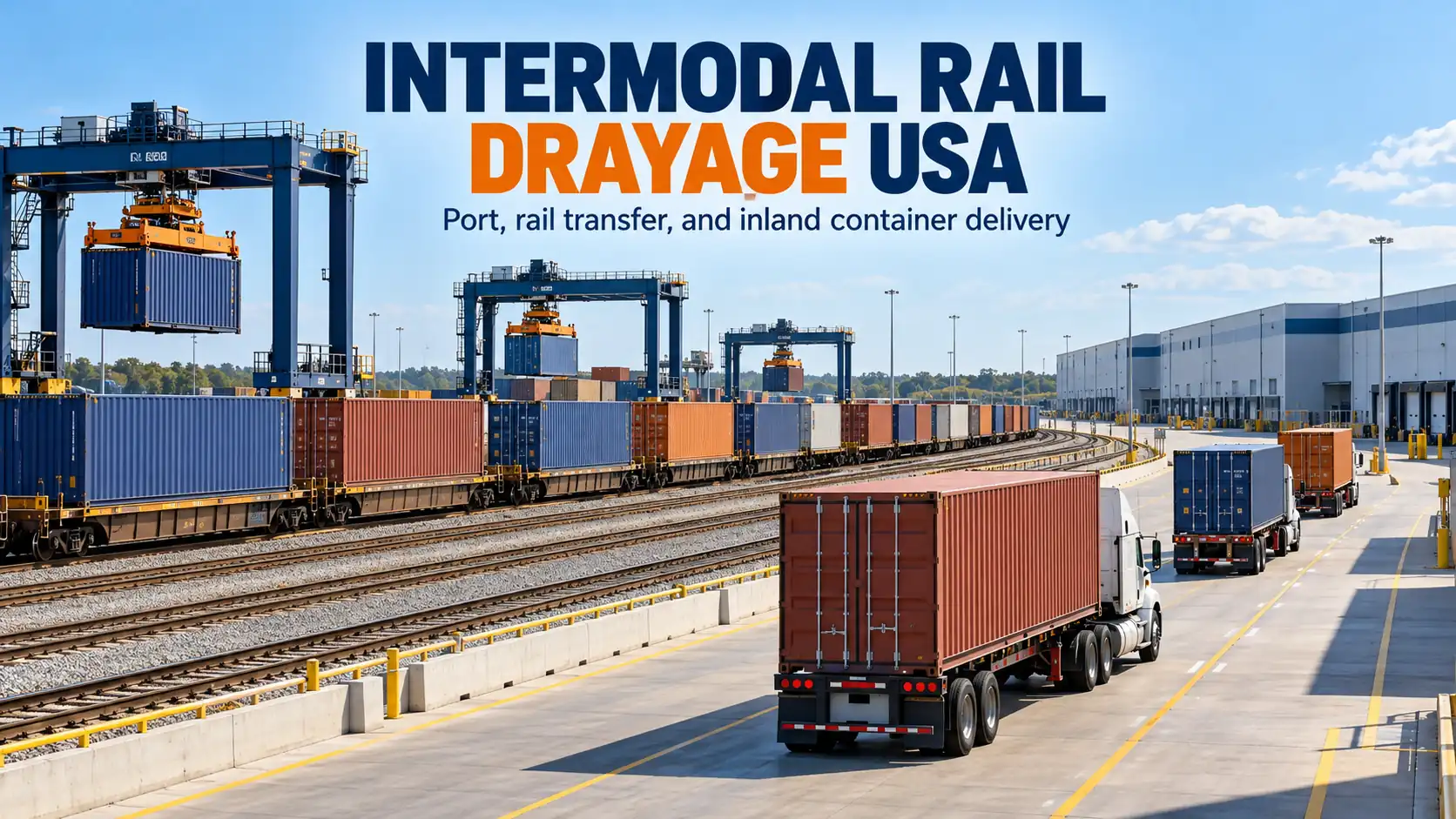
Intermodal rail drayage is the short-distance truck movement of containers or trailers between an intermodal terminal and a warehouse, port, distribution facility, or customer location.
In intermodal transportation, trains handle the long-haul portion of a shipment, while drayage carriers provide local pickup and delivery. Both transportation modes work together to move freight across the country.
For example, a shipment arriving at a Chicago terminal may be collected by truck and delivered to a warehouse in Joliet, Illinois. The cargo can remain inside the same shipping unit throughout the transfer.
Common equipment includes:
20-foot and 40-foot international shipping containers
53-foot domestic intermodal containers
Specialized equipment for eligible heavy or refrigerated cargo
Unlike general drayage in the USA, this service specifically supports freight moving through intermodal rail facilities. It provides an essential connection between the national transportation network and local supply chains.
Intermodal and drayage operations connect origin pickup, long-distance transportation, and destination delivery. The process depends on whether the shipment is moving toward or away from an inland terminal.
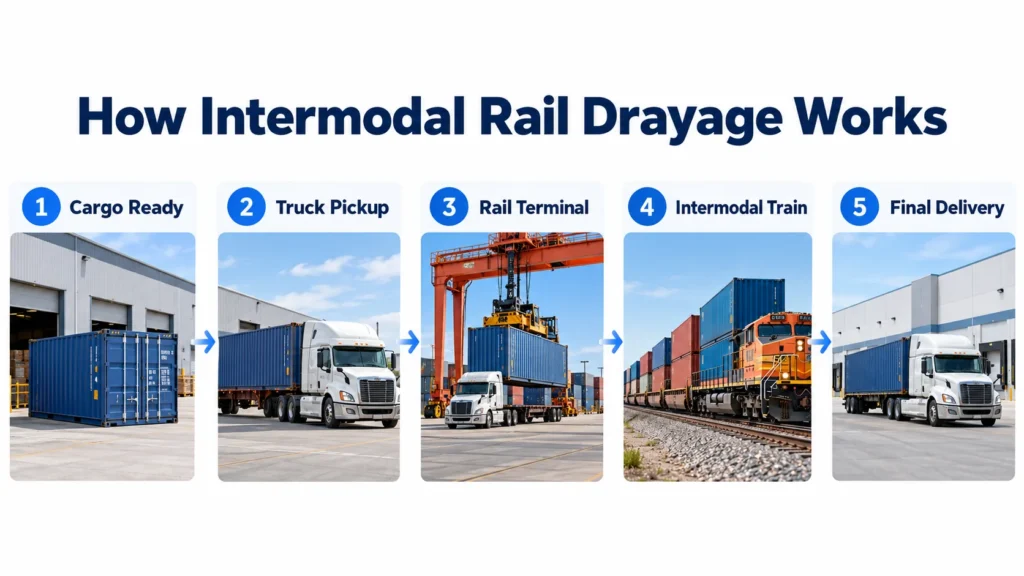
For outbound shipments, a trucking company collects a loaded shipping unit from the shipper and delivers it to the departure terminal.
Equipment coordination: Confirm the container type, chassis requirements, and departure schedule.
Warehouse pickup: Collect the loaded equipment from the shipper’s facility.
Terminal delivery: Deliver the shipment before the receiving cutoff.
Rail departure: The terminal loads the unit onto a train for onward transportation.
This door-to-ramp process is commonly used for domestic intermodal freight moving between major U.S. markets.
At the destination, local trucking completes the final portion of the shipment.
Arrival confirmation: Verify equipment availability, release status, and the last free day.
Truck dispatch: Arrange an authorized carrier and compatible chassis.
Terminal pickup: Collect the shipment after completing the required procedures.
Final delivery: Transport the loaded unit to the receiving warehouse.
Empty return: Return equipment according to the applicable instructions.
For international imports, customs clearance from China to the USA may also be required before the shipment is released.
Coordinating each stage helps reduce terminal storage, missed appointments, and unnecessary truck waiting time.
Intermodal drayage services support container transportation between inland terminals and nearby commercial facilities. Available services depend on the shipping route, equipment type, and local carrier capacity.
Drayage carriers collect loaded equipment from designated terminals and deliver it to warehouses, factories, or distribution centers. Services include release coordination, truck dispatch, and scheduled delivery.
Door-to-ramp transportation moves freight from a shipper’s location to the departure terminal. Ramp-to-door service provides final truck delivery after the long-distance train journey.
These arrangements help connect inland freight transportation with the broader U.S. logistics network.
Cross-town drayage moves intermodal equipment between different railway terminals within the same metropolitan area. These transfers require coordination between carriers and facilities to meet connecting service cutoff times.
Container drayage may include chassis rental, equipment repositioning, pre-pull services, and empty returns. Transloading can also be arranged when cargo must be transferred between international and domestic shipping equipment.
For businesses arranging shipping from China to the USA, these services can support inland distribution after ocean freight arrival.
The United States has an extensive intermodal network connecting coastal gateways, inland freight centers, and major warehouse markets. Cities with established terminal infrastructure provide important connections between long-distance transportation and local trucking.
The following table highlights major U.S. logistics hubs and common service areas.
| Intermodal Hub | Common Drayage Service Areas | Main Logistics Role |
|---|---|---|
| Chicago, IL | Joliet, Elwood, Hodgkins | Midwest distribution and cross-country freight connections |
| Los Angeles, CA | Long Beach, Ontario, Inland Empire | West Coast imports and inland transportation |
| Dallas–Fort Worth, TX | Dallas, Fort Worth, Alliance | Texas distribution and domestic intermodal freight |
| Kansas City, KS/MO | Edgerton, Olathe, Kansas City | Central U.S. freight distribution |
| Memphis, TN | Memphis and surrounding warehouse areas | Mid-South and Southeast connections |
| Atlanta, GA | Atlanta, Fairburn, McDonough | Southeast regional distribution |
| New York / New Jersey | Newark, Kearny, Elizabeth | Northeast import distribution |
| Seattle / Tacoma, WA | Seattle, Tacoma, Kent, Auburn | Pacific Northwest freight transportation |
| Oakland, CA | Oakland, Tracy, Stockton | Northern California distribution |
These locations represent major logistics markets rather than guaranteed service coverage. Specific terminal access, available routes, and trucking capacity vary by provider.
International ocean containers arriving at U.S. ports may move inland by train before final delivery by truck.
For example, cargo entering through Los Angeles or Long Beach can continue to Chicago, where a local carrier handles delivery to a nearby warehouse.
Importers arranging sea freight shipping from China to the USA should confirm the inland destination terminal, equipment release, chassis availability, and delivery address before scheduling pickup.
Tonlexing can help coordinate international freight and inland transportation arrangements in the USA, depending on the shipment route and available services.
Intermodal drayage costs depend on trucking distance, terminal location, equipment availability, cargo weight, and delivery requirements. Most movements are priced per load rather than using a fixed nationwide rate per mile.
The following amounts are illustrative budgeting ranges for local and regional movements.
| Drayage Distance | Estimated Cost per Container |
|---|---|
| Local (0–25 miles) | $250–$600 |
| Regional (25–50 miles) | $500–$900 |
| Extended Local (50–100 miles) | $800–$1,400 |
| Long-Distance (100+ miles) | Custom quotation |
These figures are planning estimates, not verified nationwide averages or fixed carrier tariffs. Actual quotations may fall outside these ranges. Long-haul train transportation is not included.
Besides the base trucking rate, additional services and equipment requirements may increase the total cost.
| Additional Fee | Illustrative Budget | Description |
|---|---|---|
| Fuel surcharge | Varies by carrier | Adjustment based on fuel costs and pricing policy |
| Chassis rental | $30–$80/day | Equipment used to transport shipping units |
| Chassis split | $50–$150 | Separate chassis pickup or repositioning |
| Driver waiting time | $75–$125/hour | Charged after the agreed free waiting period |
| Pre-pull service | $100–$200 | Early pickup and temporary staging |
| Rail storage | Varies by terminal | Storage charges after permitted free time |
The amounts above are illustrative allowances, not confirmed 2026 carrier charges. Some services may already be included in the quoted rate.
Coordinating trucking and terminal operations before cargo arrival can reduce unnecessary expenses.
Confirm availability: Monitor arrival notifications and the last free day.
Book trucking early: Arrange suitable equipment and drivers before pickup.
Reduce waiting time: Coordinate warehouse unloading and equipment returns.
Compare complete quotations: Check fuel, chassis, storage, and accessorial charges.
One of the benefits of intermodal shipping is the potential for lower total transportation costs on suitable long-distance routes. However, comparisons with direct trucking must include line-haul rates, terminal handling, and both ends of the local delivery process.
For international imports, these charges should also be considered when calculating the overall shipping cost from China to USA.
Contact Tonlexing for a customized intermodal drayage quote, including pickup, inland trucking, and applicable equipment charges.
Delivery times depend on terminal operations, local trucking distance, shipment availability, and receiving appointments.
For a local movement within approximately 30 miles, the pickup, trucking, and unloading process may take around 3–6 hours under favorable operating conditions. The overall arrangement can take one or more business days when truck scheduling or terminal delays are involved.
The following estimates illustrate a local pickup and warehouse delivery operation after equipment becomes available.
| Transportation Stage | Estimated Time |
|---|---|
| Terminal gate processing | 30–60 minutes |
| Equipment handling and chassis loading | 45–90 minutes |
| Local trucking (within 30 miles) | 30–90 minutes |
| Warehouse unloading | 1–2 hours |
| Total local movement | Approximately 3–6 hours |
These are indicative planning times. Actual operations depend on traffic, terminal congestion, equipment readiness, and warehouse conditions.
Several factors influence when a shipment can be collected:
Cargo availability: The shipping unit must be unloaded, available, and released for pickup.
Free time: Some terminals provide 24–48 hours, while others apply different rules depending on the service and facility.
Gate hours: Drivers must follow terminal operating schedules and applicable access procedures.
Receiving appointments: The destination warehouse must be ready to accept delivery.
For outbound freight, the loaded unit must also reach the departure terminal before the applicable cutoff time.
Drop & Hook: The driver leaves the loaded equipment at an approved location and may collect another available unit. This can reduce waiting time when suitable facilities and equipment are available.
Live Unloading: The driver remains at the delivery location while the cargo is unloaded, often requiring 1–2 hours or longer.
To keep shipments moving on time, logistics providers should confirm truck capacity, delivery appointments, and equipment availability before dispatch.
Unexpected delays can increase transportation costs and disrupt your supply chain. The most common problems involve terminal congestion, release holds, equipment shortages, and missed delivery appointments.
Terminal congestion: Long gate queues or delayed unloading from trains can affect pickup schedules.
Release problems: Customs holds, incomplete documentation, or unpaid charges may prevent collection.
Equipment shortages: Limited chassis or driver capacity can disrupt scheduled movements.
Warehouse delays: Restricted receiving hours or slow unloading may postpone equipment returns.
Rail storage charges generally apply when equipment remains at a terminal beyond the permitted free period. Detention or per diem may apply when equipment is kept outside the facility beyond the agreed allowance.
For international shipments, demurrage fees imposed by ocean carriers may follow different rules from railroad terminal storage charges.
To reduce these risks, shippers should:
Track arrival notifications, release status, and last free day.
Confirm trucking capacity and terminal access in advance.
Schedule warehouse delivery and unloading appointments.
Verify empty return instructions with the equipment provider.
Real-time tracking tools and regular status updates can improve shipment visibility, although the available tracking information varies by carrier and terminal.
Coordinated drayage operations help minimize waiting time, storage exposure, and disruptions to inland distribution.
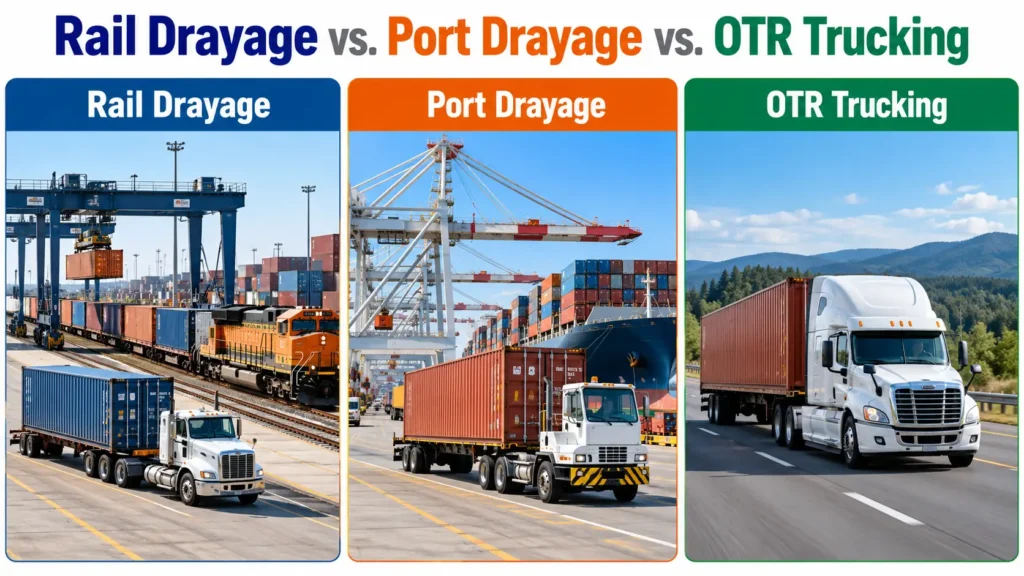
Rail drayage, port drayage, and over-the-road (OTR) trucking serve different functions in freight transportation. Each connects cargo with the appropriate facilities and transportation modes.
| Feature | Rail Drayage | Port Drayage | OTR Trucking |
|---|---|---|---|
| Pickup Location | Intermodal terminals | Marine terminals | Warehouses or factories |
| Main Purpose | First- and last-mile rail connections | Seaport pickup and delivery | Direct road transportation |
| Typical Equipment | 20ft, 40ft, and 53ft containers | Primarily ocean containers | Dry vans, reefers, flatbeds |
| Transport Distance | Usually local or regional | Usually local or regional | Short- or long-distance |
| Main Cost Factors | Terminal access, chassis, distance | Port access, chassis, waiting time | Mileage, fuel, truck capacity |
| Best For | Freight using intermodal networks | Ocean imports and exports | Direct or time-sensitive deliveries |
This service is suitable when freight moves long distances by train and requires local pickup or delivery at either end.
Intermodal transportation may provide cost and capacity benefits on established corridors, particularly for shipments moving between major distribution markets.
Port drayage applies to truck movements connected with marine terminals, while direct OTR trucking may be more practical for urgent deliveries, shorter routes, or locations without convenient railway access.
Selecting a reliable drayage provider helps ensure efficient equipment pickup, predictable delivery schedules, and transparent transportation costs.
When comparing logistics providers, consider:
Terminal Coverage: Confirm service at the required facilities and delivery locations.
Trucking Capacity: Evaluate driver availability, equipment access, and local operating experience.
Chassis Management: Check compatibility and availability for international or domestic shipping units.
Transparent Pricing: Review base rates, fuel adjustments, chassis fees, and accessorial charges.
Shipment Visibility: Request tracking updates covering arrival, pickup, delivery, and equipment returns.
Customer Support: Choose a provider that can coordinate appointments and respond to unexpected delays.
Also verify that the trucking company has appropriate operating authority, insurance, and applicable safety compliance. The equipment provider should maintain roadworthy chassis for interchange.
For an accurate quotation, provide the origin or destination terminal, delivery ZIP code, container size, cargo weight, expected pickup date, and any special handling requirements.
International freight forwarders can help coordinate ocean transportation, inland services, customs procedures, and final delivery. Businesses requiring door-to-door shipping from China to USA may benefit from planning these movements as one connected logistics process.
Tonlexing can help arrange intermodal transportation and destination drayage in the USA, subject to route availability, carrier capacity, and shipment requirements.
No. Intermodal shipping combines different transport modes, while drayage handles the local truck movement between terminals and customer facilities.
Selected local movements may be budgeted at approximately $250–$600 per load within 25 miles. Actual rates depend on the terminal, equipment, distance, and additional charges.
Local pickup and delivery may take a few hours after equipment becomes available. Scheduling, release requirements, and warehouse appointments can extend the overall process.
A rail ramp is a terminal where intermodal containers or trailers are transferred between trains and trucks for onward transportation.
Yes. International shipping units can travel from coastal ports to inland terminals, where local carriers complete the final delivery.
Useful freight, customs and importing resources related to this shipping guide.
Drayage in the USA Explained: Services, Costs, Types, and How It Works Verified & Reviewed · Last updated March 2026 Drayage in the USA explained...
Read guide →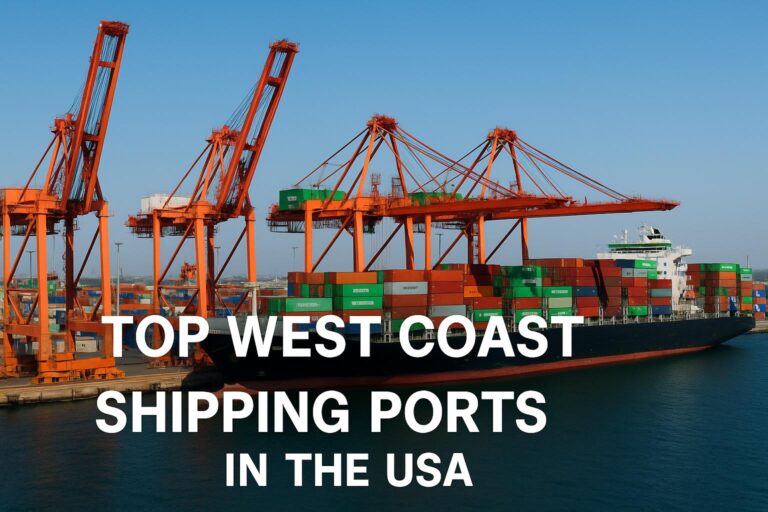
The top West Coast shipping ports in the USA play a vital role in supporting international trade, facilitating container shipping, and driving ec...
Read guide →
Why East Coast Ports Are Vital to U.S. Trade The East Coast of the United States is home to some of the busiest and most strategically located co...
Read guide →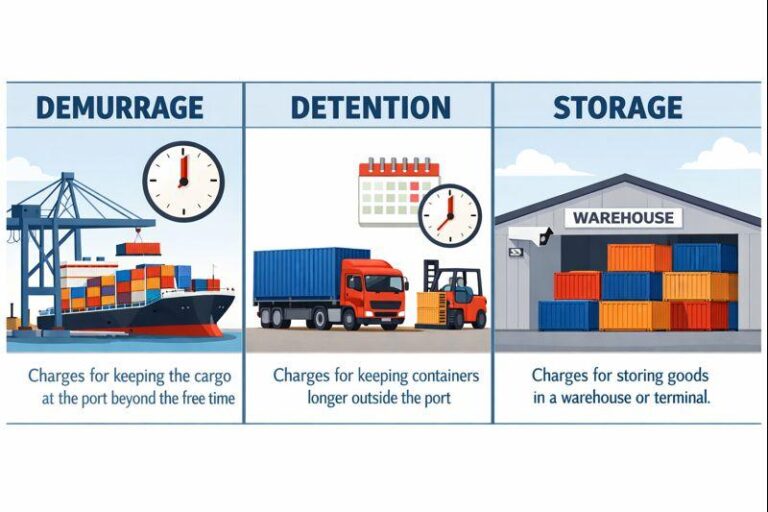
Demurrage vs Detention vs Storage Verified & Reviewed · Last updated January 2026 Demurrage vs detention vs storage is one of the most expensive...
Read guide →When dealing with international shipping, one of the common costs importers and exporters encounter is Terminal Handling Charges (THC). These cha...
Learn more → Useful Resource Customs Bond for USA ImportsCustoms Bond for USA Imports: The Complete Guide Verified & Reviewed · Last updated March 2026 If you import into the United States, a customs bo...
Learn more →WhatsApp us