

AMS Filing Explained for USA Imports in 2026
- Verified & Reviewed · Last updated January 2026
AMS filing is a mandatory advance cargo reporting requirement for shipments entering the United States. When AMS data is late, incomplete, or inconsistent, it can trigger CBP penalties, increased inspections, cargo holds, and shipment delays at discharge ports.
This 2026 guide explains how the Automated Manifest System works, what must be filed, and how to prevent common errors that lead to rejections and delays. It also covers the 24 hour rule for ocean cargo, plus how AMS aligns with ISF and ACAS for smoother CBP compliance.
AMS filing checklist
Deadlines and 24 hour rule
AMS vs ISF and ACAS
- Experienced China-based logistics specialists
Table of Contents
What Is the Automated Manifest System (AMS)?
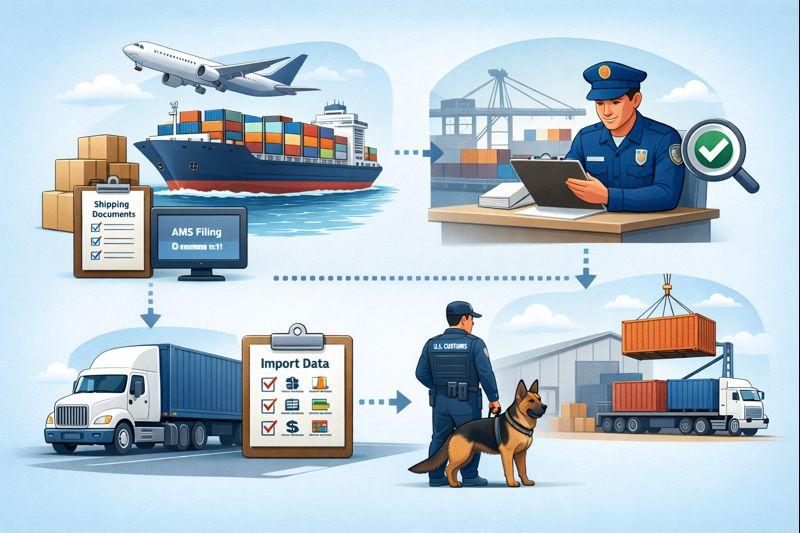
The Automated Manifest System is an electronic system used by U.S. Customs and Border Protection to receive advance cargo manifest data before arrival. It allows CBP to screen shipment details early and decide whether a shipment can move normally or needs additional review.
AMS applies to both ocean shipments and air cargo. For importers, forwarders, and carriers, the practical goal is simple: submit complete, accurate shipment details early enough to avoid rework near cutoff times and reduce the chance of cargo holds at the port.
Why Accurate AMS Filing Is Critical
Accurate AMS data is essential for ensuring that shipments clear customs without unnecessary delays. Filing errors or incomplete data can significantly disrupt the flow of goods, causing delays and penalties.
Non-compliance with AMS requirements can lead to:
Penalties of up to $10,000 per violation
Increased inspections by CBP, slowing down processing time
Cargo holds at discharge ports, potentially causing missed deadlines
Furthermore, recurring data issues can create a longer customs clearance timeline and increased inspection frequency, resulting in further delays and operational inefficiency.
High-quality shipment data enhances operational efficiency, improves supply chain visibility, and maintains a reputation as a trusted trader in international trade.
AMS, ISF, and ACAS: Key Differences and How They Work Together
AMS, ISF , and ACAS are separate but interconnected compliance programs that work together to facilitate smooth, secure, and efficient cargo processing.
AMS
AMS primarily manages manifest data filed by the carrier or NVOCC (Non-Vessel Operating Common Carrier) for both ocean shipments and air cargo. AMS data is used by CBP to assess risks and perform early security screening before the cargo arrives in the U.S.
ISF
The Importer Security Filing (ISF), commonly known as the “10+2” filing, applies specifically to ocean cargo. ISF requires importers to submit security-related data about their cargo before it reaches U.S. ports. AMS and ISF data must be consistent to avoid discrepancies that could trigger CBP inspections.
ACAS
Air Cargo Advance Screening (ACAS) is focused on air freight. It requires air cargo shipments to undergo earlier screening for security threats before they are loaded onto flights. AMS, ISF, and ACAS share data elements and work together to provide comprehensive security information to CBP.
AMS Filing Deadlines and Timing Rules
Timely AMS filing is one of the most important aspects of the process. Filing deadlines must be met to ensure compliance and prevent shipment delays.
Ocean Shipments
For ocean shipments, AMS data must be submitted at least 24 hours before cargo is loaded at the foreign port. Failing to submit AMS data within this timeframe may lead to delays in customs clearance, which can result in costly operational setbacks.
Air Shipments
Air cargo shipments generally follow shorter deadlines, depending on flight schedules. The exact deadline for AMS submission will vary, but air freight often has more stringent timing requirements than ocean freight.
Rail and Trucking
For rail and trucking shipments, AMS data must be transmitted as soon as possible to ensure that goods can be processed efficiently at the U.S. border. Short lead times make it crucial to meet filing deadlines promptly.
What AMS Filings Must Include
A strong AMS filing starts with one clean shipment data package. The goal is simple: every key field should match across the commercial invoice, booking information, and bill structure. If the data is complete and consistent, you reduce AMS rejections, cargo holds, and shipment delays.
Before filing, confirm these required elements:
Shipper and consignee details: Full legal name and address, plus IRS or EIN numbers when required
Commodity description: Specific wording that matches the commercial invoice, not broad terms
HS codes: Correct codes aligned with invoice line items and the commodity description
Declared values, weights, and dimensions: Consistent across the invoice and shipment details
Container and seal numbers: Accurate numbers for ocean shipments, with no typos
Bill alignment: Master bill and house bill details match, especially for consolidated shipments
Carrier identifiers and routing: SCAC and routing references match the booking and discharge plan
If any of these items change after booking, update the source documents first, then confirm the corrected AMS filing is accepted and the filing status is clean.
How AMS Is Submitted: EDI, ACE, ABI, and Filing Methods
AMS data is transmitted electronically through Electronic Data Interchange (EDI). Some companies integrate their AMS filing with the Automated Commercial Environment (ACE) system for more efficient customs filing. Others use the Automated Broker Interface (ABI) for filing through customs brokers.
The method of submission impacts the speed of error detection, the correction workflow, and the ability to track filing status. High-volume importers may benefit from direct AMS filing, while smaller businesses may rely on carriers, freight forwarders, or NVOCCs for timely and accurate submission.
Who Submits AMS: Carrier, NVOCC, Freight Forwarders, and Customs Brokers
AMS is usually filed by the ocean carrier or an authorized agent such as an NVOCC. The key is clear ownership and consistent shipment details across the commercial invoice, booking data, and bill structure.
Responsibility Matrix
| Party | Primary responsibility |
|---|---|
| Importer | Provide accurate shipment details and confirm filing status |
| Freight forwarders | Collect shipment data and coordinate documents |
| NVOCC | File AMS at house bill level for consolidated shipments |
| Ocean carrier | File manifest data for ocean cargo |
| Ocean carrier | Support customs compliance checks and ISF alignment |
Even when a third party files AMS, the importer should still confirm filing status and ensure the shipment details remain consistent across documents.
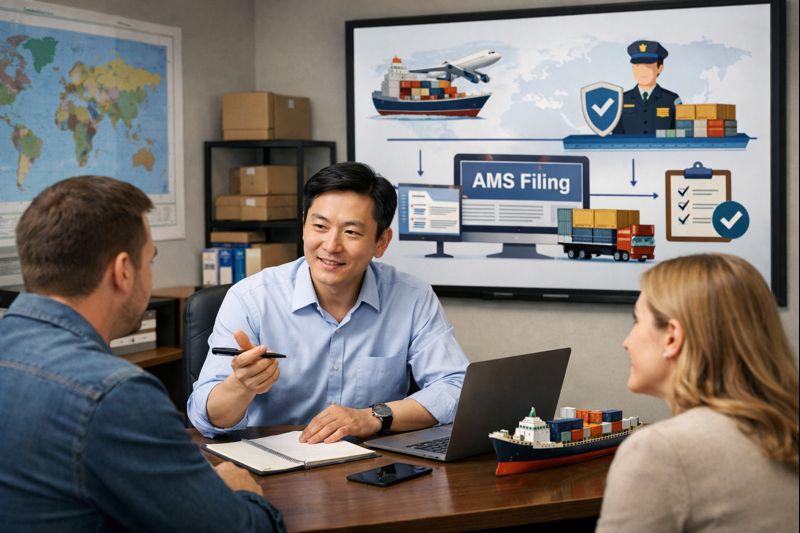
Keep Shipment Details Consistent Across Documents
Most AMS rejections and delays come from a handful of repeat issues. Fixing these improves customs clearance predictability and reduces cargo holds.
High-frequency problems:
Commodity descriptions that are too broad and do not match invoice wording
HS codes that do not align with the commodity description or invoice line items
Missing consignee details or inconsistent party information across documents
Container numbers or seal numbers entered incorrectly, especially for ocean shipments
Routing details that do not match the booking or discharge port plan
Discrepancies between AMS and ISF filing for ocean cargo
Best practice: run a simple pre-filing cross-check that compares the commercial invoice, house bill, and shipment data package before transmission. Fast corrections before the cutoff reduce shipment delays more than any after-the-fact fix.
AMS Penalties and Compliance Risks
AMS compliance is not only about avoiding delays. Poor data quality can create a pattern of scrutiny that slows down future shipments and increases operational cost.
What non-compliance can trigger
Monetary penalties that can reach up to 10,000 per violation depending on the case
Higher inspection rates, cargo holds, and longer customs clearance timelines
Additional fees tied to storage, demurrage, and rehandling when a hold happens at the port
Reputation risk with partners who depend on reliable delivery performance
Practical controls that reduce risk
Lock shipment details early and restrict last-minute edits close to the filing cutoff
Validate shipper and consignee details at the start of each booking
Standardize HS code assignment for repeat products and verify against invoice line items
Keep a change log for any amendment to shipment data and confirm acceptance after resubmission
Monitor filing status proactively instead of waiting for arrival
Technology Solutions for AMS Filing
Many importers and logistics teams improve AMS compliance by using software that connects shipment data, document management, and status tracking in one workflow.
What good tools typically help with
Data validation for key fields such as consignee details, HS codes, container numbers, and seal numbers
Deadline monitoring with automated reminders based on mode and cutoff time
Filing status tracking so teams can respond quickly to rejections or correction requests
Version control when shipment details change after booking
Centralized audit records for internal review and compliance checks
If your operation is still relying on manual copy-paste from emails and spreadsheets, errors are more likely. Even lightweight automation and a structured template can reduce filing errors and improve supply chain visibility.
Frequently Asked Questions
Yes, AMS applies to both ocean and air shipments, ensuring compliance for all types of cargo entering the U.S.
Yes, NVOCCs can file AMS data, especially when they issue house bills of lading for consolidated shipments.
Common causes of delays include vague commodity descriptions, HS code mismatches, incorrect consignee details, and discrepancies between AMS and ISF filings.
Monitor the filing status regularly. If corrections are requested, respond promptly to avoid delays and cargo holds.
Yes, submitting accurate and timely filings helps avoid penalties and ensures smooth customs clearance.
Yes, but corrections close to vessel loading are the highest risk. If shipment details change, update the source documents first, then confirm the updated filing is accepted and the filing status is clean.
Ask who is filing AMS, what the cutoff time is, and what fields must be locked before submission. Also confirm how filing status will be shared and who is responsible for fixing rejections.
Related AMS Filing & Customs Compliance Guides
Get a Shipping Quote for AMS Filing Compliance
Seamless AMS compliance
End-to-end customs support
Experienced U.S. Import Compliance Team
Get tailored AMS filing solutions, transparent pricing, and expert support for smooth U.S. imports.