

CFR Incoterms 2020
- Verified & Reviewed · Last updated September 2026
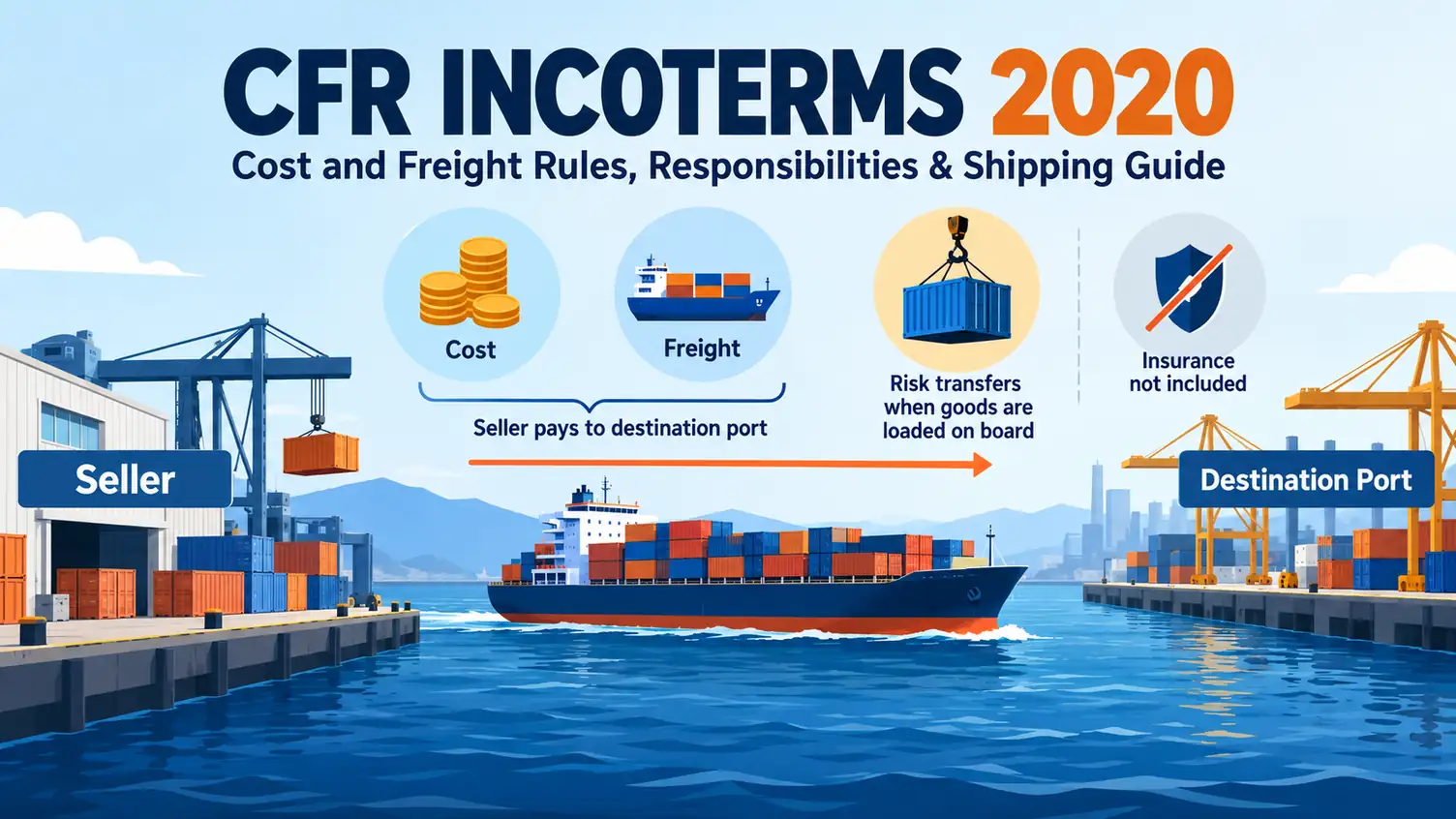
CFR (Cost and Freight) is an Incoterms 2020 rule for sea and inland waterway transport. The seller pays export costs and ocean freight to the named destination port, while the buyer assumes risk after the goods are loaded on board the vessel.
Learn how CFR works, including seller and buyer responsibilities, risk transfer, shipping costs, and the differences between CFR, CIF, and FOB.
CFR Incoterms 2020
Seller vs Buyer Responsibilities
CFR vs CIF & FOB
- Experienced China-based logistics specialists
10,000+ international shipments handled Global sea, air & DDP shipping solutions 24/7 shipment tracking & customer support
Table of Contents
What Is CFR Incoterms 2020?
CFR stands for Cost and Freight. It is an Incoterms 2020 rule where the seller pays the transportation cost to the named destination port, while the buyer assumes the risk after the goods are loaded on board the vessel at the origin port.
Under CFR:
The seller handles export clearance and ocean freight.
The buyer handles import clearance, taxes, and final delivery.
Marine insurance is not included.
CFR applies only to sea and inland waterway transport.
What Does CFR Mean in Shipping?
CFR means Cost and Freight and defines how costs and risks are divided between sellers and buyers in international shipping.
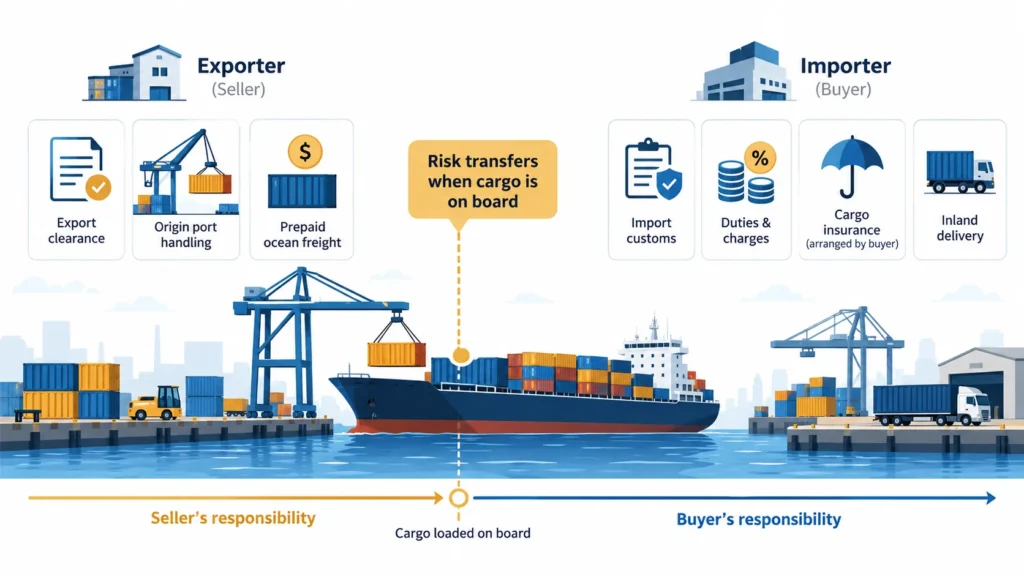
Under CFR Incoterms 2020, the seller must:
Prepare export documents
Complete export customs clearance
Deliver goods to the port of shipment
Load goods on board the vessel
Pay ocean freight to the destination port
The buyer must:
Arrange cargo insurance if needed
Handle import customs clearance
Pay import duties and taxes
Arrange delivery after arrival
A key point of CFR is that the seller pays the freight, but the buyer takes the transportation risk after loading.
How CFR Incoterms 2020 Works
The CFR shipping process includes several important stages.
Export Preparation
The seller prepares the shipment and completes export procedures.
This usually includes:
Commercial invoice
Packing list
Export declaration
Cargo preparation
The seller is responsible for making sure the goods are ready for international transportation.
Loading on Board the Vessel
The most important point under CFR is when the goods are loaded on board the vessel.
At this stage:
Seller responsibility for risk ends
Buyer responsibility for risk begins
Although the seller continues paying ocean freight, the buyer carries the transportation risk during the sea voyage.
Ocean Freight to Destination Port
The seller arranges and pays the ocean freight to the named destination port.
The seller may work with a freight forwarder to manage:
Vessel booking
Export handling
International transportation
Import and Final Delivery
After arrival at the destination port, the buyer manages:
Import customs clearance
Import duties and taxes
Port handling charges
Inland transportation
CFR does not include door-to-door delivery.
CFR Seller and Buyer Responsibilities
The responsibilities under CFR Incoterms 2020 can be summarized as follows:
| Responsibility | Seller | Buyer |
|---|---|---|
| Export clearance | Yes | No |
| Export documents | Yes | No |
| Delivery to origin port | Yes | No |
| Loading on vessel | Yes | No |
| Ocean freight | Yes | No |
| Marine insurance | No | Optional |
| Import clearance | No | Yes |
| Import duties and taxes | No | Yes |
| Final delivery | No | Yes |
The seller manages export transportation, while the buyer takes responsibility after arrival at the destination country.
CFR Cost and Freight: Who Pays What?
Many buyers misunderstand CFR because the seller pays the freight. However, CFR only covers costs up to the named destination port.
The buyer may still need to pay additional charges after arrival.
| Cost Item | Responsible Party |
|---|---|
| Factory pickup | Depends on agreement |
| Export customs clearance | Seller |
| Ocean freight | Seller |
| Cargo insurance | Buyer |
| Destination charges | Buyer |
| Import clearance | Buyer |
| Import taxes | Buyer |
| Local delivery | Buyer |
Before agreeing on CFR terms, buyers should confirm all destination costs with their local customs broker or logistics provider.
CFR Risk Transfer Point Explained
Under CFR Incoterms 2020, the point where risk transfers is different from the point where the seller pays the freight. This is one of the most important concepts buyers need to understand before choosing CFR.
The seller is responsible for arranging export procedures, delivering the goods to the port of shipment, loading them on board the vessel, and paying the ocean freight to the named destination port. However, the seller’s risk ends once the goods are loaded on board the vessel at the port of shipment.
After loading:
The buyer assumes the risk of loss or damage during ocean transportation.
The buyer is responsible for arranging cargo insurance if protection is required.
The seller is still responsible for paying the agreed ocean freight to the destination port.
In simple terms:
CFR cost responsibility: Seller pays ocean freight to the destination port.
CFR risk responsibility: Buyer takes the risk after the goods are loaded on board the vessel.
For example, under CFR Shanghai Port to Los Angeles Port, Incoterms 2020, the seller arranges export clearance and ocean freight from Shanghai. Once the cargo is loaded onto the vessel in Shanghai, the buyer becomes responsible for transportation risks during the sea voyage.
Understanding this difference helps importers avoid a common mistake: assuming that the seller is responsible for the goods until they arrive at the destination port.
CFR vs CIF vs FOB: Key Differences
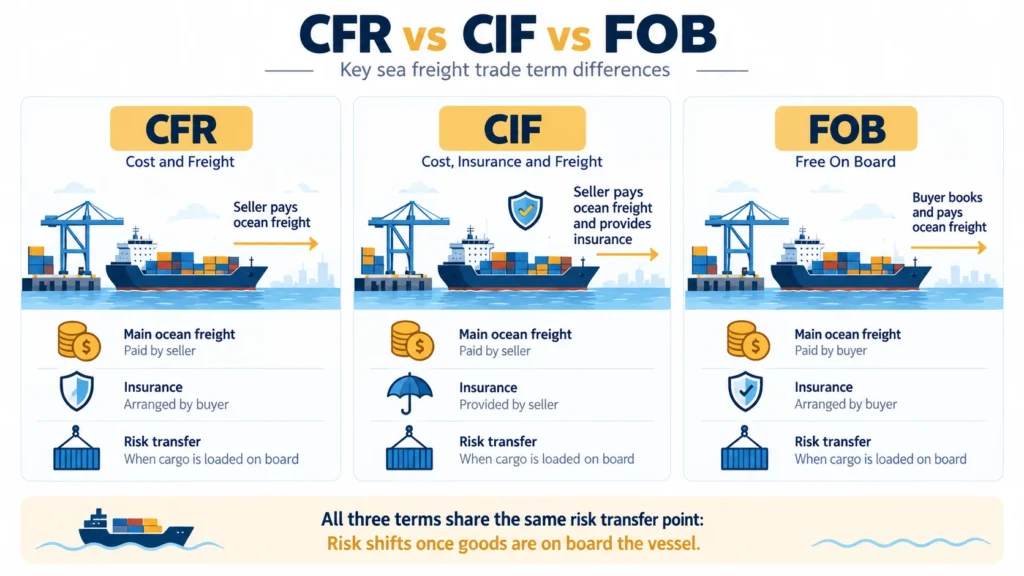
CFR, CIF, and FOB are commonly used Incoterms for sea freight shipments.
| Incoterm | Freight Payment | Insurance | Risk Transfer |
|---|---|---|---|
| CFR | Seller pays | Buyer arranges | When goods are loaded on vessel |
| CIF | Seller pays | Seller provides insurance | When goods are loaded on vessel |
| FOB | Buyer pays | Buyer arranges | When goods are loaded on vessel |
CFR vs CIF
The main difference between CFR and CIF is insurance.
Under CFR:
Seller pays ocean freight.
Buyer arranges insurance.
Under CIF:
Seller pays ocean freight.
Seller provides minimum cargo insurance.
CFR vs FOB
The difference is mainly freight control. Learn more about FOB Incoterms and how FOB works for China imports.
Under FOB:
Buyer selects the carrier.
Buyer pays ocean freight.
Under CFR:
Seller arranges and pays ocean freight.
FOB is often used by experienced buyers with established shipping arrangements, while CFR can be convenient when buyers prefer the seller to manage ocean freight.
When Should You Use CFR Incoterms?
CFR can be suitable for companies shipping goods by sea when the buyer can manage destination procedures.
Common situations include:
Sea Freight Shipments
For China export shipments, sea freight from China is commonly used for CFR shipments.
CFR is commonly used for:
Container shipments
Bulk cargo
General commercial goods
Buyers With Import Experience
CFR works better when buyers understand:
Local customs requirements
Import documentation
Destination charges
Buyers Want Seller-Arranged Freight
CFR allows the seller to handle international freight arrangements while the buyer manages import operations.
Common CFR Incoterms Mistakes
Although CFR Incoterms 2020 clearly defines the responsibilities of sellers and buyers, many importers misunderstand how freight costs, risks, and destination charges are divided. These mistakes may lead to unexpected costs or confusion during international shipping.
Assuming Seller Is Responsible Until the Cargo Arrives
One of the most common misunderstandings is believing that the seller remains responsible for the goods until they reach the destination port.
Under CFR, the seller pays the ocean freight, but the risk transfers to the buyer once the goods are loaded on board the vessel at the port of shipment.
Buyers should understand that freight payment and risk responsibility are separate concepts.
Thinking CFR Includes Marine Insurance
CFR does not require the seller to provide cargo insurance.
The buyer is responsible for arranging insurance if coverage is needed, especially for:
High-value cargo
Long-distance ocean shipments
Goods with higher transportation risks
If the buyer wants the seller to provide insurance, CIF may be a more suitable option.
Ignoring Destination Costs
Another common mistake is focusing only on the ocean freight cost and overlooking charges at the destination port.
Under CFR, the buyer may need to pay:
Destination terminal charges
Import customs clearance fees
Import duties and taxes
Local transportation costs
Before agreeing to CFR terms, buyers should confirm all potential destination expenses.
Using CFR for the Wrong Type of Transportation
CFR is designed for:
Sea freight
Inland waterway transport
It is not suitable for:
Road freight
For shipments involving multiple transport modes, buyers should consider other Incoterms that match the actual transportation method.
Not Specifying the Destination Port Clearly
CFR requires a named port of destination in the sales contract.
For example: CFR Los Angeles Port, Incoterms 2020 clearly identifies where the seller’s freight responsibility ends.
A vague destination description may create disagreements about freight costs and delivery responsibilities.
Frequently Asked Questions
What does CFR stand for in shipping?
CFR stands for Cost and Freight. It means the seller pays ocean freight to the named destination port, while the buyer assumes risk after the goods are loaded on board the vessel.
Who pays freight under CFR?
The seller pays the ocean freight under CFR. The buyer is responsible for import costs, destination charges, and final delivery.
Does CFR include insurance?
No. CFR does not include marine insurance. The buyer must arrange insurance if coverage is needed.
When does risk transfer under CFR?
Risk transfers when the goods are loaded on board the vessel at the port of shipment.
What is the difference between CFR and CIF?
Both CFR and CIF require the seller to pay ocean freight. CIF includes seller-provided insurance, while CFR does not.
Related Logistics Guides
Useful freight, customs and importing resources related to this shipping guide.
Related Guide
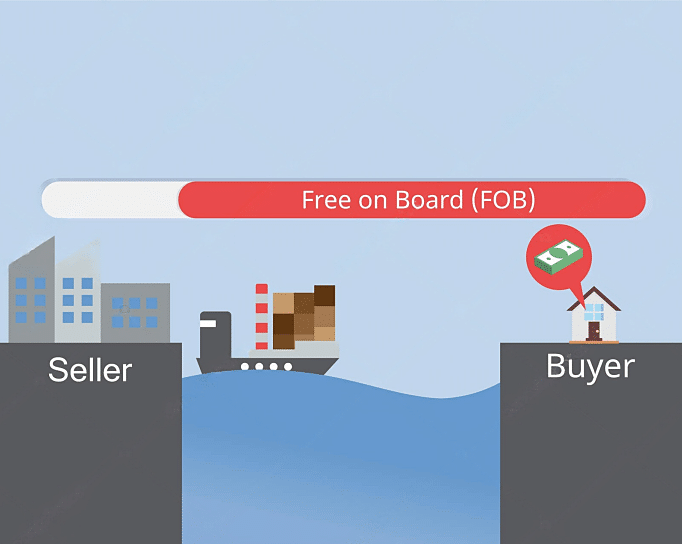
What Is FOB? Importing from China: A Comprehensive Guide
When importing goods from China, understanding trade terms is essential to managing logistics, costs, and responsibilities effectively. One of th...
Read guide →
Related Guide
DDP vs CIF vs FOB: Which Incoterm Is Best for Your China Shipment?
DDP vs CIF vs FOB: Which Incoterm Is Best for Your China Shipment? Verified & Reviewed · Last updated July 2026 Choosing between DDP, CIF and FOB...
Read guide →
Related Guide
DAP vs DDP Incoterms
DAP vs DDP: Customs Clearance, Import Duties, and Who Pays What Verified & Reviewed · Last updated January 2026 Choosing between DAP and DDP dete...
Read guide →
Useful Resource
Exw Ex Works Incoterms
Explore this related Tonlexing logistics guide for freight, customs and importing support.
Learn more → Useful Resource What Is Cargo Insurance and How Does It Work?What Is Cargo Insurance and How Does It Work? Verified & Reviewed · Last updated April 2026 Cargo insurance protects goods against physical loss...
Learn more →