

DDP vs CIF vs FOB: Which Incoterm Is Best for Your China Shipment?
- Verified & Reviewed · Last updated July 2026
Choosing between DDP, CIF and FOB is one of the most important decisions when importing from China. These Incoterms affect who pays for freight, who handles customs clearance, who pays import duties and taxes, and who takes responsibility at each stage of the shipment.
This guide explains the key differences between DDP, CIF and FOB, how each term works in real shipping, the total cost comparison, common mistakes, and how to choose the best Incoterm for your China shipment.
Incoterm Comparison
Costs & Responsibilities
China Shipping Guide
- Experienced China-based logistics specialists
Table of Contents
DDP vs CIF vs FOB: Quick Comparison
| Comparison Item | FOB | CIF | DDP |
|---|---|---|---|
| Full Name | Free on Board | Cost, Insurance and Freight | Delivered Duty Paid |
| Delivery Point | Origin port after loading | Destination port | Final destination |
| Main Freight | Buyer pays | Seller pays to port | Seller pays |
| Import Customs | Buyer handles | Buyer handles | Seller handles |
| Duties & Taxes | Buyer pays | Buyer pays | Seller pays |
| Best For | Experienced importers who want freight control | Buyers who only need port-to-port shipping | New importers, Amazon FBA sellers, door-to-door shipments |
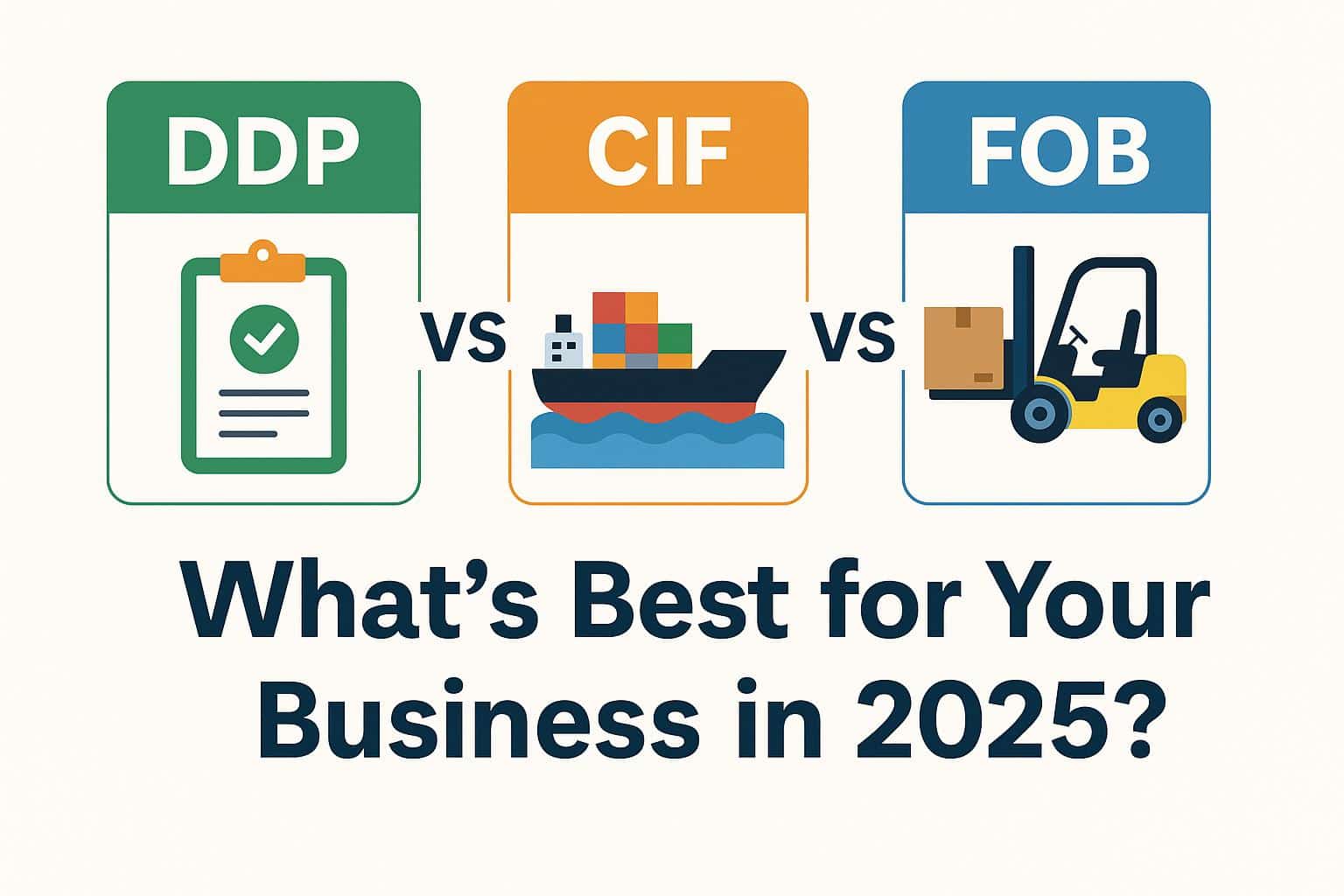
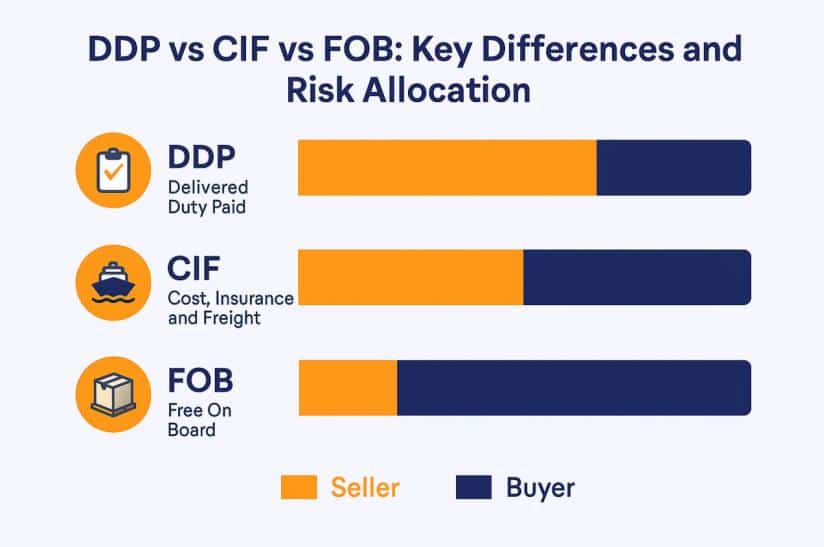
In short, FOB vs DDP is a choice between buyer control and seller responsibility. CIF vs DDP is a choice between port delivery and duty-paid door delivery. FOB vs CIF is mainly about who books and pays for the international sea freight.
What Do DDP, CIF and FOB Mean?
DDP, CIF and FOB are Incoterms used in international trade contracts. They help buyers and sellers define responsibilities during shipping, but they do not replace a sales contract, payment agreement, or customs compliance requirements.
What is FOB?
FOB means Free on Board. Under FOB, the seller is responsible for delivering the goods to the named port of loading and loading them onto the vessel.
Once the goods are on board, the buyer takes responsibility for:
Ocean freight
Destination port charges
Import customs clearance
Import duties and taxes
Final delivery from port to warehouse
FOB is commonly used for sea freight shipments from China ports such as Shanghai, Ningbo, Shenzhen, Guangzhou, Qingdao and Xiamen.
For example, if your supplier quotes FOB Shenzhen, the supplier handles local delivery and export procedures up to Shenzhen port. After the cargo is loaded on board, your freight forwarder manages the ocean freight, customs clearance and delivery to your destination.
What is CIF?
CIF means Cost, Insurance and Freight. Under CIF, the seller arranges and pays for ocean freight and insurance to the named destination port.
However, CIF does not mean the seller delivers the goods to your warehouse. The buyer still handles:
Destination port unloading charges
Import customs clearance
Import duties and VAT/GST
Port storage if delays occur
Trucking from port to final address
A common example is CIF Los Angeles or CIF Rotterdam. The supplier pays for the goods to arrive at the port, but the buyer must clear customs and arrange delivery after arrival.
The key point many importers misunderstand is that CIF includes freight and insurance, but it does not include import duty, customs clearance or door delivery.
What is DDP?
DDP means Delivered Duty Paid. Under DDP, the seller takes the highest level of responsibility. The seller is responsible for delivering the goods to the buyer’s named destination, including import customs clearance and import duties.
DDP usually includes:
Pickup from supplier
Export customs declaration in China
International freight
Cargo insurance if included in the quote
Import customs clearance
Import duties and taxes
Final delivery to the buyer’s warehouse, office, Amazon FBA center or home address
DDP is popular with Amazon sellers, small businesses, first-time importers and buyers who do not have a customs broker in the destination country.
Who Pays for Freight, Insurance, Customs and Duties?
This is the most practical way to compare DDP vs CIF vs FOB, because each term changes who pays the major shipping costs and who handles customs at different stages.
| Cost or Responsibility | FOB | CIF | DDP |
|---|---|---|---|
| China inland delivery to port | Seller | Seller | Seller |
| China export customs | Seller | Seller | Seller |
| Origin port charges | Usually seller before loading | Usually seller before loading | Seller |
| Ocean freight | Buyer | Seller | Seller |
| Cargo insurance | Buyer | Seller | Usually seller or included by agreement |
| Destination port charges | Buyer | Buyer | Seller |
| Import customs clearance | Buyer | Buyer | Seller |
| Import duties and taxes | Buyer | Buyer | Seller |
| Final delivery | Buyer | Buyer | Seller |
The key difference is the handover point. Under FOB, the buyer takes control after the cargo is loaded on board at the China port. Under CIF, the seller pays for freight to the destination port, but the buyer still manages the import side after arrival. Under DDP, the seller or freight forwarder keeps responsibility until the goods reach the named final address.
Which Incoterm Should You Use?
There is no single best Incoterm for every shipment. The best choice depends on your experience, cargo type, destination country, customs capability and need for control.
Use FOB for Regular Importing
FOB is often the best option for importers who ship regularly from China. It allows you to use your own forwarder, compare sea freight rates, avoid hidden CIF destination charges and manage the full import process more professionally.
FOB is especially suitable for:
Repeat orders
High-value cargo
Buyers with customs brokers
Importers who want cost control
Use CIF for Simple Port-to-Port Shipping
CIF may work if you only need the supplier to arrange sea freight to the destination port. It is easier than FOB before shipment, but it does not remove your responsibility after arrival.
CIF is suitable when:
You can handle import customs
You have a local broker at destination
You only need delivery to port
You understand destination charges
You want the supplier to arrange sea freight
Use DDP for Door-to-Door Delivery
DDP is useful when you want the shipment delivered directly to your door with duties paid. It reduces operational work and can make importing easier for small businesses.
DDP is suitable for:
Amazon FBA shipments
E-commerce sellers
Small commercial orders
First-time importers
Buyers without customs experience
Common Mistakes When Buying from Chinese Suppliers
Many importers choose an Incoterm based only on the supplier’s product quote. This can lead to unexpected costs later.
The most common mistakes include:
Comparing FOB and DDP prices without calculating the total landed cost
Accepting a CIF quote without checking destination port charges
Thinking CIF includes import duty and final delivery
Using FOB for air freight instead of FCA
Accepting very low DDP prices without checking customs compliance
Not confirming who is the importer of record
Ignoring VAT, GST or import duty in the destination country
Failing to confirm whether insurance is included
A good freight forwarder can compare FOB, CIF and DDP based on the same shipment details, including cargo volume, weight, HS code, destination address and delivery requirements.
DDP, CIF and FOB for Different Shipping Methods
DDP, CIF and FOB are not used in the same way for every shipping method. When importing from China, the Incoterm should match the transport mode, the delivery point, and the actual handover between the seller and buyer.
Sea Freight
FOB and CIF are most commonly used for sea freight. They are suitable for container shipping from China because the responsibility can be clearly linked to the loading port or destination port.
With FOB, the supplier delivers the cargo to the China port and loads it onto the vessel. The buyer then controls the ocean freight, destination customs clearance and final delivery. With CIF, the supplier arranges sea freight and insurance to the destination port, but the buyer still handles the import side after arrival.
DDP can also be used for sea freight when the buyer wants a full door-to-door solution, especially for small businesses or importers without customs experience.
Air Freight and Express Shipping
For air freight and express courier shipments, FOB and CIF are often not the most accurate terms. In many cases, FCA, CPT, CIP, DAP or DDP may describe the shipment responsibility more clearly.
Some Chinese suppliers may still say “FOB airport” or “FOB air freight” in daily communication. Buyers should clarify what this actually means before payment.
Check these points before confirming an air freight quote:
The exact handover point
Whether export customs declaration is included
Whether airport handling fees are included
Whether import clearance and duty payment are included
Whether final delivery is included
For small urgent shipments, DDP air freight or express delivery is often easier because customs clearance, duty payment and final delivery can be arranged together.
Amazon FBA and E-commerce Shipments
For Amazon FBA, Shopify sellers and e-commerce cargo, DDP is usually the most convenient option. These shipments often require not only international freight, but also customs clearance, tax handling, delivery appointments and warehouse compliance.
A DDP quote for Amazon FBA should clearly state whether it includes:
Pickup in China
Export and import customs clearance
Import duties and taxes
Amazon appointment booking
Carton labeling or pallet requirements
Final delivery to the fulfillment center
For regular container shipments to an overseas warehouse, FOB may be better if you want more control over freight cost, customs arrangements and long-term shipping planning.
How Tonlexing Helps You Choose the Right Incoterm
Tonlexing helps importers ship from China by sea freight, air freight, rail freight, express courier and DDP door-to-door service.
Instead of only comparing product prices, we help you compare the full shipping cost under FOB, CIF and DDP, including freight, customs clearance, duty, tax, insurance and final delivery.
With Tonlexing, you can get:
FOB shipping from major China ports
CIF port-to-port sea freight solutions
DDP door-to-door delivery from China
Amazon FBA shipping solutions
Customs clearance support
Freight cost comparison
China pickup and export documentation
If you are not sure whether FOB, CIF or DDP is best for your shipment, send us your cargo details, supplier city and destination address. Our team will recommend the most suitable Incoterm and shipping method based on your real shipment.
Frequently Asked Questions
FOB is better if you want more control over freight, customs and delivery cost. DDP is better if you want an easier door-to-door solution with duties paid. Experienced importers often prefer FOB, while new importers and Amazon sellers often prefer DDP.
CIF delivers the goods to the destination port, but the buyer still handles import customs, duties, taxes and final delivery. DDP delivers the goods to the final address with import duties and taxes paid by the seller.
FOB means Free on Board. C&F usually means Cost and Freight, now commonly written as CFR under Incoterms. CIF means Cost, Insurance and Freight. FOB, CFR and CIF are mainly used for sea freight.
CIF usually looks cheaper than DDP because it only covers shipment to the destination port. After arrival, the buyer still pays port charges, customs clearance, import duties, taxes and inland delivery. DDP includes more services, so the quote is usually higher but easier to understand.
Yes, DDP normally means the seller is responsible for import customs clearance and import duties at the named destination. Buyers should still confirm whether VAT, GST, customs brokerage and final delivery are included in the quote.
Related Incoterms & Shipping Guides
Get the Right Incoterm Quote for Your China Shipment
- Compare FOB, CIF and DDP shipping options
- Understand freight, customs, duties and final delivery costs
- Get expert advice from a China-based freight forwarder
Send your cargo details and destination address to get a tailored FOB, CIF or DDP shipping solution.