

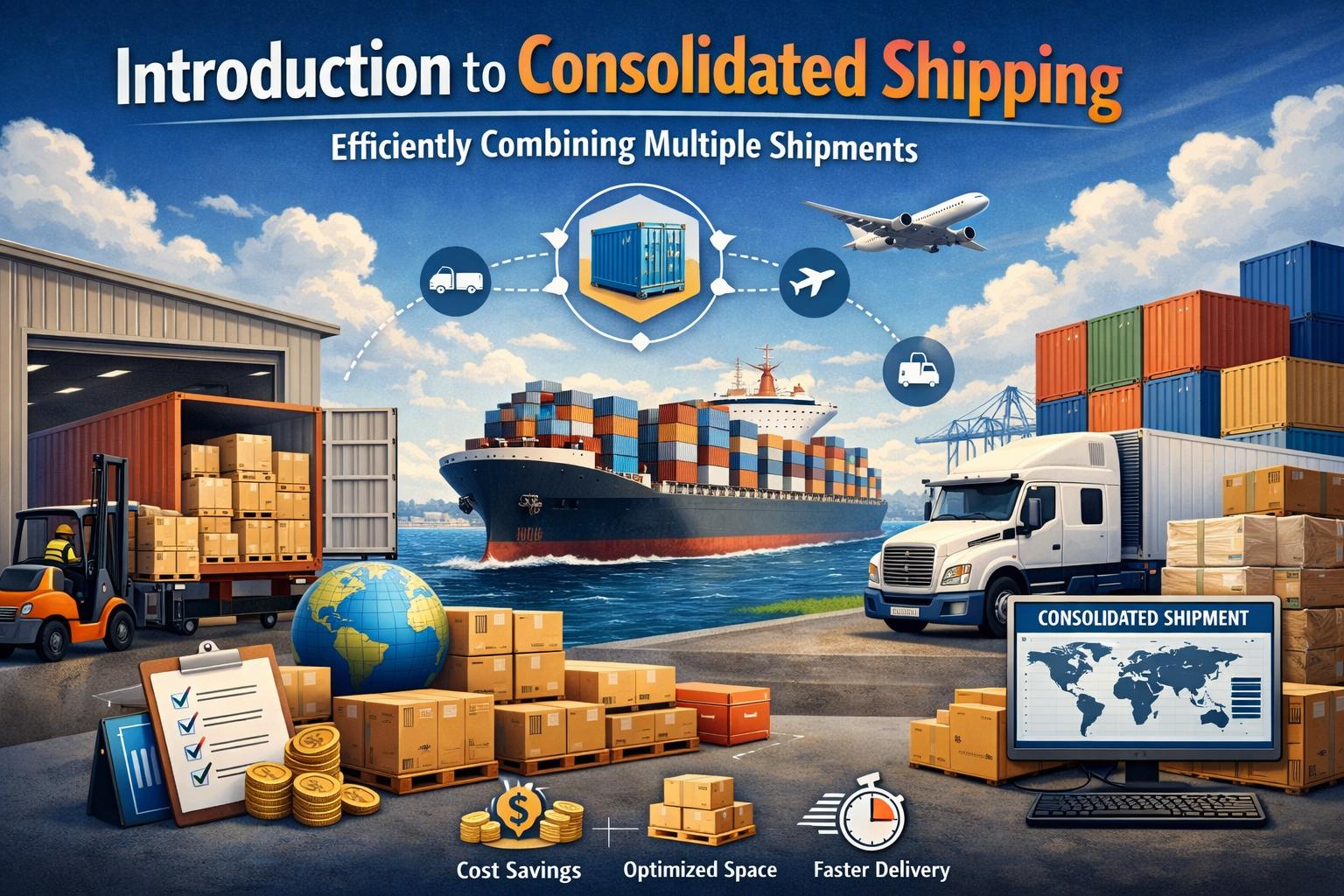
Introduction to Consolidated Shipping
- Verified & Reviewed · Last updated January 2026
Consolidated shipping is a freight strategy that combines multiple smaller shipments into one larger load, so they move together as a single shipment. Instead of paying separate minimum charges for each order, shippers share line-haul capacity across trucks or containers and reduce total shipping costs.
This guide is a practical introduction to consolidated shipping. It explains how freight consolidation works from pickup to deconsolidation, what consolidated shipping costs include, and how to reduce delays, damage risk, and documentation issues for both domestic and international shipments.
Consolidation process
Cost & pricing logic
Risks & best practices
- Experienced China-based logistics specialists
Table of Contents
What Is Consolidated Shipping?
Consolidated shipping is a shipping method used in freight operations to combine multiple shipments into one shipment. The combined load is transported as a single shipment to a destination region, where it is deconsolidated and delivered to individual recipients.
A key point is that consolidated shipping can occur no matter how many packages are involved. It may be a few cartons from multiple suppliers, several pallets from different shippers, or mixed freight that needs to move together to meet delivery deadlines.
Because consolidated shipments share line-haul transportation, shippers pay for space used rather than paying individual shipment rates that often include minimum charges. That is why consolidated shipping offers cost efficiency and cost effectiveness for businesses that would otherwise spend more on partial loads.
Why Consolidated Freight Shipping Matters in Modern Supply Chains
In many industries, shipment volume is uneven. Some weeks you may have enough cargo for a container load. Other weeks you may have only a small batch.
If you ship those small batches separately, shipping costs rise quickly. The problem is not just the base freight rate. It is also the repeated handling, repeated paperwork, repeated pickups, and the inefficiency of moving partially filled trucks or containers.
Freight consolidation helps businesses avoid spending more on partial loads. It reduces the number of shipments, lowers transportation costs, and improves resource utilization by maximizing the available capacity.
It can also improve planning. Consolidated shipping offers more predictable delivery schedules when the consolidation process is run on a consistent cadence, which supports customer satisfaction and customer expectations.
Core Concepts You Need to Know
Consolidation
Consolidation is the act of combining multiple smaller shipments into one consolidated shipment. This can include shipments from multiple shippers, various shippers, or multiple suppliers.
Deconsolidation
The consolidated shipment is transported to its destination, where it is deconsolidated into the original orders and distributed to final destinations.
Consolidator and logistics providers
A consolidator is usually a freight forwarder, 3PL, or logistics company that manages consolidated shipments. Third party logistics providers often operate consolidation centers and warehouses that support consolidation services at scale.
The Freight Consolidation Process
The consolidated shipping process typically involves multiple shippers sending their small shipments to a consolidation center or central warehouse. From there, the freight consolidation process follows repeatable phases.
Phase 1: Data collection and analysis
This phase focuses on collecting shipment details such as dimensions, weight, commodity type, shipment volume, origin points, and delivery deadlines. Accurate data drives carrier selection, container load planning, and final shipping costs.
Phase 2: Grouping and combining shipments
Compatible shipments are organized based on predefined criteria such as destination region, service level, temperature requirements, and hazardous restrictions. The objective is to create one consolidated shipment that moves efficiently as a single shipment.
Phase 3: Coordination and logistics planning
Pickups are scheduled across multiple origins, timelines are aligned across multiple suppliers, and transit time targets are set. This is often the most complex part of managing consolidated shipments.
Phase 4: Carrier selection and negotiation
Logistics providers choose carriers based on cost and service level. Consolidated freight shipping can improve negotiation power by presenting larger combined volume for discounted rates.
Phase 5: Loading, transportation, and tracking
Shipments are combined into trailers or shipping containers and transported. Tracking systems maintain visibility and provide updates, which supports inventory management and customer expectations.
Phase 6: Delivery, deconsolidation, and post-delivery review
At destination, freight is deconsolidated and distributed. Post-delivery evaluation reviews delays, damage rates, and paperwork accuracy to reduce errors over time.
Consolidated Shipping for International Shipments
International shipments are more complex, but consolidated freight shipping can still be efficient when documentation and planning are clear.
What makes international shipments different
Customs clearance is the main difference. Delays usually come from paperwork issues, not from the transport itself.
How consolidation helps with customs clearance
Freight consolidation can simplify customs clearance because documents can follow a consistent format across consolidated shipments. When invoices, packing lists, HS codes, and consignee details match, clearance is usually smoother.
What documents you should prepare
A practical set usually includes:
commercial invoice with clear product descriptions and values
packing list that matches carton count, weight, and dimensions
HS codes and country of origin
shipper and consignee details that match across all paperwork
certificates required for the commodity or destination, if needed
Common mistakes that cause delays
product descriptions that are vague or inconsistent
invoice values that do not match purchase records
HS codes missing or clearly incorrect
consignee details that differ across documents
Transport options for consolidated freight
Consolidated freight can move by ocean freight, air freight, or cross-border trucking depending on the lane, shipment volume, and delivery speed needs. With experienced logistics providers, consolidated shipping services can reduce transportation costs while keeping schedules predictable for international shipping.
Benefits of Consolidated Shipping
Consolidated shipping can deliver meaningful cost savings and operational improvements, especially for smaller shipments.
Lower shipping costs by sharing transportation costs across multiple shippers
Reduced transportation costs through fewer line-haul moves
Better resource utilization by minimizing partially filled trucks or containers
Fewer errors and improved inventory management through standardized handling
More predictable delivery schedules that support customer satisfaction
Reduced fuel consumption and a smaller carbon footprint over time
Common Examples of Consolidated Shipping
Examples help clarify when consolidation works and what a consolidated shipment looks like in real freight operations.
Example 1: Multiple suppliers shipping to one destination region
A buyer sources products from multiple suppliers. Each supplier ships a few cartons or a small pallet. Instead of moving each shipment separately, the freight is sent to a consolidation center and combined into one shipment. The buyer receives one consolidated shipment at the destination, then final delivery is arranged for each purchase order.
Example 2: Weekly replenishment for smaller shipments
A business restocks weekly with smaller shipments. Individual shipments trigger repeated minimum charges and extra terminal fees. Consolidation groups the week’s freight into fewer line-haul moves. This reduces overall shipping costs while keeping a predictable schedule.
Example 3: Ocean freight with LCL shipments
A shipper does not have enough cargo for an entire container. LCL shipments allow multiple shippers to share a shipping container. The container is loaded at origin, moved by ocean freight, then deconsolidated at destination for final delivery.
Example 4: Domestic consolidation into fewer truck moves
A company has several LTL shipments going to nearby final destinations. A logistics provider consolidates them into one shipment for the line-haul portion, then separates them for final delivery. This reduces transportation costs and improves delivery planning.
Costs and Pricing Logic
Shipping costs in consolidated freight depend on a few drivers. If you understand these, you can estimate costs faster and avoid surprise fees.
Shipment volume and space used: How much room your cargo takes in a truck or shipping container.
Chargeable weight and dimensions: Larger cartons can increase billed weight even if the cargo is not heavy.
Handling complexity and commodity risk: Fragile, irregular, or restricted goods usually cost more to handle.
Origin and final destinations: Longer distances and complex last-mile delivery raise costs.
Delivery speed and service level: Faster services cost more.
Accessorial charges: Liftgate, residential delivery, appointment delivery, and terminal handling can add fees.
International shipping compliance: Customs paperwork, inspections, and special documentation can increase total costs.
Consolidated shipping aims to reduce shipping expenses by maximizing capacity, but it can add consolidation fees for receiving, sorting, and reloading. A clear quote should separate line-haul freight costs from consolidation service charges so you can compare options correctly.
Consolidated Shipping vs Other Shipping Methods
| Shipping method | Best for | Typical cost result | Typical delivery speed |
|---|---|---|---|
| Consolidated shipping / consolidated freight | Smaller shipments from multiple shippers | Lower overall shipping costs | Medium |
| Ocean freight LCL | International shipments without enough volume for an entire container | Lower shipping costs vs separate small loads | Slower |
| Ocean freight FCL | High shipment volume that fills an entire container | Lowest per-unit cost at scale | Medium to fast |
| Air freight | High-value cargo and urgent international shipments | Higher shipping costs | Fast |
| Express shipping | Small parcels that must arrive quickly | Highest cost per kg | Fastest |
Ocean freight LCL and container planning
Ocean freight is one of the most common lanes for freight consolidation. When a shipper does not need an entire container, LCL shipments let multiple shippers share one shipping container to reduce shipping costs. Container load LCL planning matters because freight must be balanced and secured to reduce the risk of damage.
Domestic consolidation in simple terms
In domestic networks, consolidation often means combining several LTL moves into fewer full truckload moves, consolidating partial loads into scheduled consolidated full truckloads, or using regional milk runs that feed a consolidation hub. These approaches reduce the number of shipments and can strengthen negotiation leverage with carriers.

Risks, Challenges, and How to Reduce Them
Consolidated shipping has trade-offs that must be managed.
Complex coordination across multiple shippers, carriers, and logistics providers
Longer lead times when shipments must wait for grouping
Increased handling points that can raise the risk of damage, loss, or misplacement
Cargo theft concerns when freight passes through multiple facilities
Minimum volume requirements from some carriers
To reduce risk, use strong packaging standards, require clear handling SOPs, choose secure facilities, and prioritize tracking visibility from consolidation to final delivery.
How to Choose a Provider and Manage Consolidated Shipments
Finding a reliable provider is crucial for successful consolidated shipping. Use this checklist:
proven experience managing consolidated shipments in your lanes
clear SOPs for receiving, labeling, and damage prevention
strong tracking and monitoring systems for shipment visibility
customs and documentation expertise for international shipments
transparent pricing that separates transport from consolidation services
secure facilities and partner vetting processes
clear escalation path when exceptions happen
Simple checklist before you consolidate
This short checklist keeps the process clean and avoids common mistakes.
confirm ready dates from all suppliers before booking
confirm carton count, dimensions, and total weight
confirm product type and any restrictions
confirm cutoffs at the consolidation center
confirm destination address format and delivery requirements
What to send your logistics provider
Providing clear information reduces back and forth and speeds up the shipment process.
supplier pickup addresses and contacts
packing list and commercial invoice drafts
HS codes and country of origin if available
photos of cartons or pallets for fragile cargo
delivery deadline and preferred shipping method
Best practices for consistent results
standardize packaging and labeling to reduce misplacement risk
align shipping calendars with multiple suppliers for predictable cutoffs
use tracking to protect customer expectations and customer satisfaction
review performance after delivery to reduce recurring errors and delays
Frequently Asked Questions
Consolidated shipping is a shipping method that combines multiple smaller shipments from different shippers into one consolidated shipment. It reduces costs by sharing transportation costs and maximizing available capacity.
The consolidation process includes receiving multiple shipments at a consolidation center, grouping shipments based on criteria, loading them into a larger unit, transporting the consolidated freight, and deconsolidating at the destination for final delivery.
Freight consolidation is the process of combining dispersed shipments into a single freight container or trailer. It helps reduce transportation costs, avoid partial loads, and improve operational efficiency.
It can simplify customs clearance when paperwork is standardized and managed by experienced logistics providers. It also reduces shipping expenses when international shipments do not need an entire container.
Key risks include cargo theft, extra handling points that increase damage risk, minimum volume requirements, and documentation errors that delay customs clearance.
Look for transparent pricing, strong tracking systems, proven lane experience, secure facilities, clear handling procedures, and strong customs compliance capability.
Look for transparent pricing, strong tracking systems, proven lane experience, secure facilities, clear handling procedures, and strong customs compliance capability.
Look for transparent pricing, strong tracking systems, proven lane experience, secure facilities, clear handling procedures, and strong customs compliance capability.
Look for transparent pricing, strong tracking systems, proven lane experience, secure facilities, clear handling procedures, and strong customs compliance capability.
Look for transparent pricing, strong tracking systems, proven lane experience, secure facilities, clear handling procedures, and strong customs compliance capability.
Look for transparent pricing, strong tracking systems, proven lane experience, secure facilities, clear handling procedures, and strong customs compliance capability.
Related Shipping Guides & Tools
Get a Consolidated Shipping Quote
Lower total shipping cost for smaller weekly or monthly shipments
One plan for pickup, consolidation, line-haul, and final delivery
Clear documentation support for cross-border and international consolidation
Get transparent pricing, consolidation schedules, and shipment visibility from pickup to delivery.